Reviewed · COOKING CLASSES
Ramen and Gyoza Cooking Class in Tokyo
Tokyo has no shortage of food classes, but this one gives you more than a meal. You make miso ramen with kelp and chicken, scallop, or vegetable broth, then shape and cook three kinds of gyoza: regular, cheese, and kimchi. A short lesson explains how these foods became part of Japanese cooking.
In This Article
- Key points at a glance
- Why this class is more than a bowl of noodles
- Arriving in Yanaka at 11:00 a.m.
- The opening lesson: ramen, gyoza, and Japanese food culture
- Making the miso ramen broth
- Folding and frying three kinds of gyoza
- What the private format changes
- A close look at the $91.76 price
- Who will enjoy this most
- Small details that matter before booking
- Should you book the Yanaka ramen and gyoza class?
- FAQ
- Where does the ramen and gyoza class take place?
- What time does the class start?
- How long does the experience last?
- Is the class private?
- How many people are required to book?
- What kind of ramen do you make?
- What are the gyoza varieties?
- Is a vegan option available?
- Can I cancel for a full refund?
I like the small private setting in a Japanese-style house and the practical recipes you can repeat at home. I also like the clear care given to vegan cooking. The main drawback is the short 90-minute schedule, which leaves little room for a long discussion or a slow meal.
Key points at a glance

- Three gyoza styles in one class: Make regular fried dumplings, cheese dumplings, and kimchi dumplings.
- Ramen as a food guide: Learn how noodles and broths differ across Japan, useful context for eating ramen during the rest of your trip.
- Vegan broth is available: The vegan version uses kelp and vegetables rather than chicken or scallops.
- Private Yanaka setting: Only your group takes part, in a Japanese-style home near Ueno and Nippori.
- Shoji and translation support: The host leads the class, with a translator available to help communication.
- A practical 90-minute format: The class begins at 11:00 a.m. and finishes back at the meeting point.
Why this class is more than a bowl of noodles

Ramen and gyoza may feel like everyday Japanese foods, but both have traveled and changed. This class gives you a short history lesson on how each dish developed in Japan after being introduced from elsewhere. That context matters because ramen is not one fixed recipe.
Across Japan, you will find major differences in broth, noodles, and toppings. Miso ramen is strongly associated with Hokkaido, while other areas are known for different styles and soup bases. This class focuses on miso ramen, but the larger lesson helps you understand what you are ordering at ramen shops in Tokyo, Kyoto, Osaka, or farther north.
The gyoza lesson has the same practical angle. You are not simply shown one filling and one cooking method. You prepare three versions, so you can compare how cheese and kimchi change the flavor and texture of the familiar fried dumpling.
The class is designed for hands-on participation. You do not sit back while someone else cooks your lunch. You help make the food, then eat what you have prepared. That makes the experience useful for anyone who wants a recipe to take home, not just another restaurant meal.
Other cooking classes in Tokyo
Arriving in Yanaka at 11:00 a.m.
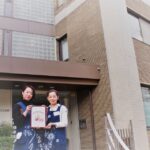
The meeting point is at Yanaka Space, 1-chome 2-10 Yanaka, Taito City, Tokyo 110-0001. The area is near public transportation and is described as convenient to Ueno Station and Nippori Station.
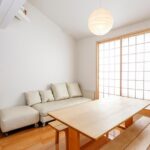
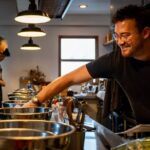
Yanaka is a practical location for a food class because it gives you a different side of Tokyo from the bright commercial districts. You are not meeting in a large restaurant kitchen or a tourist attraction. The setting is a Japanese-style house, and the private format means only your group participates.
The start time is fixed at 11:00 a.m. Plan to arrive with enough time to find the address. Since the meeting point is in a residential-style area, you should not treat this as a place where you can wander in at the last minute and expect an obvious storefront.
This time also works well in a Tokyo day plan. You can take the class before an afternoon in Yanaka, Ueno, or Nippori. The activity ends back at the same meeting point, so you are free to continue exploring without arranging a separate return transfer.
The opening lesson: ramen, gyoza, and Japanese food culture
The class begins with a mini lecture on the background of ramen and gyoza. It is brief, not a full cooking-school seminar, but it gives you a reason to pay attention to the ingredients and methods that follow.
Shoji leads the experience, and a translator helps with communication. This is important because the class involves more than memorizing steps. You may want to ask why one broth uses kelp and chicken, how scallop broth fits into the recipe, or how the three gyoza fillings differ.
The teaching style is aimed at beginners. The instructions are presented as recipes you can reproduce at home, rather than techniques that require professional equipment. One useful feature is the sense that you are learning a dish for your own kitchen, not trying to pass a culinary exam.
The class has been running as a Japanese food experience since 2018, apart from the COVID-19 period, and more than 500 foreign visitors have taken part. That history suggests a format built around explaining Japanese food to people who may not already know the vocabulary or cooking methods.
Making the miso ramen broth

The ramen portion centers on miso ramen with an original soup. The standard broth uses kelp together with chicken or scallops, both identified as basic ingredients in Japanese broth. If you choose the vegan version, the soup is made with kelp and vegetables.
That choice is worth clarifying when you book. Vegan cooking is available, but you should make sure the provider knows your dietary needs in advance so the right broth can be prepared. The class has experience with vegetarian and vegan participants, including groups where only some members avoid animal products.
Kelp gives the broth a savory base, while the other ingredients create a different character. The class does not promise a restaurant-style production line. Instead, you learn how the soup comes together and then add toppings to your bowl.
The toppings are part of the finished ramen, though the available details do not specify a complete topping list. You should think of this as a focused miso ramen lesson rather than a chance to choose from a large menu of regional styles.
The most valuable part for you may come after the class. Once you understand that broth, noodles, and toppings vary by region, a ramen menu becomes easier to read. You can start noticing why a bowl in one city tastes different from one in another.
Folding and frying three kinds of gyoza

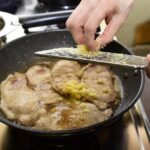
The dumpling section gives you three styles to make: regular fried gyoza, cheese gyoza, and kimchi gyoza. That is a good amount of variety for a 90-minute class because each version changes the final bite while using the same basic dumpling idea.
The regular version gives you the familiar reference point. Cheese adds a richer filling, while kimchi brings a sharper, more assertive flavor. You can compare the results at the table rather than trying to remember the difference from a lecture.
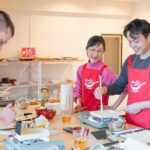
For beginners, the hands-on nature is useful. Folding dumplings can look easy until you try to keep the filling inside and close the wrapper neatly. A patient instructor and translator can make the process less frustrating, especially if you are cooking with children or with people who have no experience handling gyoza wrappers.
The class is also a good fit for a mixed group. One person can focus on shaping, another can help with fillings, and everyone can taste all three styles. The private setup gives your group room to work at its own pace, although the fixed 90-minute duration means the pace cannot be completely leisurely.
Other cooking classes in Tokyo
What the private format changes

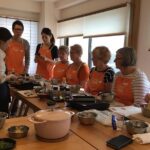
This is a private activity, not a large shared class. Only your group takes part, which gives you more control over the social atmosphere and makes the experience easier to fit around different cooking abilities.
A private format is especially useful for families. Children can take part in shaping dumplings, while adults can pay closer attention to the broth and cooking steps. The information provided does not give a specific minimum age, so families should confirm that point before booking if they have young children.
It also works well for couples and small groups of friends. You can ask questions without raising your voice across a crowded kitchen, and the host can adjust explanations to the group. The tradeoff is that the per-person price is not a budget meal, particularly for a very small booking.
A close look at the $91.76 price

At $91.76 per person, this class costs more than simply ordering ramen and gyoza at a neighborhood restaurant. You are paying for instruction, ingredients, a private setting, translation help, and the chance to prepare several dishes yourself.
The value improves if you care about learning recipes you can use at home. You make one ramen style and three gyoza styles, and the class explains enough food background to help you understand Japanese menus later. For someone who only wants lunch, the price is harder to justify.
The private format is another part of the calculation. If you are traveling as a family or a small group and want an activity built around your own party, the cost may feel reasonable. If you are a solo visitor, this class is not available as a one-person booking because a minimum of two participants is required.
The experience is booked an average of 37 days ahead, so you should not assume you can leave it until the last morning. Confirmation is sent within 48 hours, subject to availability. That timing matters if you are building a tight Tokyo schedule.
Who will enjoy this most

I would choose this class if you enjoy food but want to understand it, not just eat it. It suits first-time cooks because the recipes are presented in a way that participants can repeat at home.
It is also a strong option for:
- Vegan or vegetarian diners: A vegetable and kelp broth is available for the ramen.
- Families: The relaxed house setting and dumpling work can suit a family group.
- Couples and small groups: The private format keeps the experience personal.
- Ramen fans: The regional discussion gives you useful context for eating ramen across Japan.
- People with a limited schedule: The class takes about 90 minutes and starts at 11:00 a.m.
You may want a different activity if you are looking for a long professional cooking course, a market visit, or a broad tour of many Japanese dishes. This class stays focused on ramen and gyoza.
Small details that matter before booking
The activity uses a mobile ticket, which is convenient if you keep your Tokyo plans on your phone. The exact confirmation is subject to availability and should arrive within 48 hours of booking.
The cancellation policy is flexible up to a point. You can cancel at least 24 hours before the local start time for a full refund. Cancellations or changes made inside that 24-hour window are not accepted for a refund.
The experience requires at least two participants. If the minimum is not met and the provider cancels, you are offered another date or experience, or a full refund.
Dietary needs deserve attention. Vegan ramen is explicitly available, but the standard broth may use chicken or scallops. Tell the provider your requirements before the class rather than waiting until you arrive.
Communication should be manageable because a translator is available. Still, the class is only about an hour and a half, so prepare your most important questions in advance if you want to ask about ingredients, regional ramen, or cooking at home.
Should you book the Yanaka ramen and gyoza class?
Book it if you want a private, practical food lesson with enough background to make Japanese eating more meaningful. The strongest parts are the three gyoza styles, the vegan broth option, the patient instruction associated with Shoji and the translator, and the fact that you can take the recipes home.
Think twice if your main goal is the cheapest possible lunch, or if you want a full-day food tour with several stops. At $91.76, the value comes from the teaching and private setting, not from the amount of food alone.
For a pair, family, or small group planning to explore Yanaka or Ueno afterward, this is a compact and useful Tokyo activity. You leave with a meal, a better sense of how ramen changes across Japan, and recipes you can try again long after your flight home.
FAQ
Where does the ramen and gyoza class take place?
The class takes place at Yanaka Space, 1-chome 2-10 Yanaka, Taito City, Tokyo 110-0001. It is near public transportation and close to Ueno Station or Nippori.
What time does the class start?
The scheduled start time is 11:00 a.m.
How long does the experience last?
The activity lasts approximately 1 hour and 30 minutes.
Is the class private?
Yes. Only your group participates in the activity.
How many people are required to book?
A minimum of two people is required.
What kind of ramen do you make?
You make miso ramen with an original soup and toppings.
What are the gyoza varieties?
You make regular fried gyoza, cheese gyoza, and kimchi gyoza.
Is a vegan option available?
Yes. The vegan ramen uses broth made from kelp and vegetables.
Can I cancel for a full refund?
Yes, if you cancel at least 24 hours before the experience start time. Cancellations made less than 24 hours before the start time are not refunded.
More Workshops & Classes in Tokyo
More Cooking Classes in Tokyo
More Cooking Classes in Tokyo
More tours in Tokyo we've reviewed












Cooking Classes, compared.
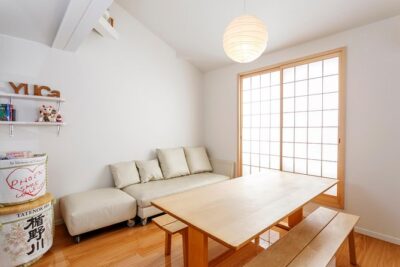 ★ 5.0Ramen & Gyoza Cooking Class in Tokyo with Local Supermarket VisitFrom $122
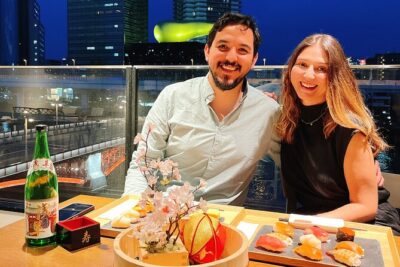 ★ 5.0Ramen and Sushi Cooking Class with Sake Pairing Set in TokyoFrom $79
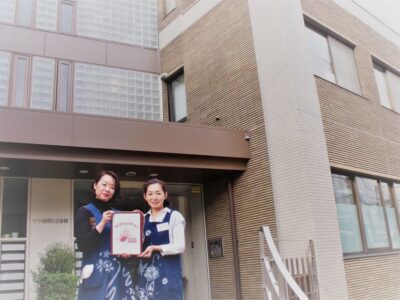 ★ 4.9Tokyo: Wagyu and 7 Japanese Dishes Cooking ClassFrom $673 hours
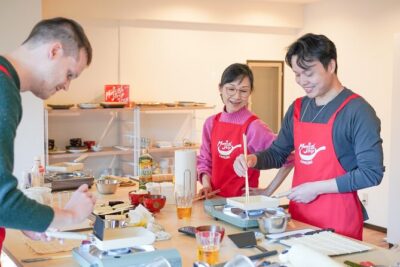 ★ 5.0Tokyo Washoku 4-hour Cooking Class: From Market to TableFrom $79
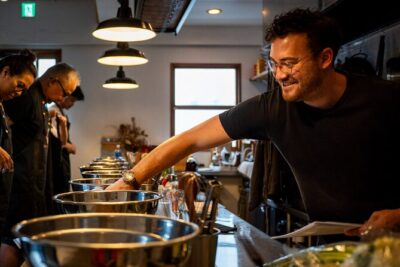 ★ 5.0Professional Ramen & Gyoza with Ramen Chef in a restaurant!From $159
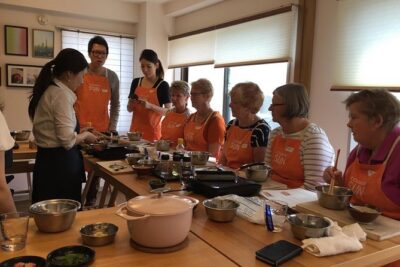 ★ 5.0Small-Group Wagyu Beef and 7 Japanese Dishes Tokyo Cooking ClassFrom $72