Reviewed · FULL-DAY
Full Day Private Tokyo Tour for Wheelchair Users
Tokyo can be a hard city to tackle from a wheelchair, especially when you are trying to link distant sights by train. This private eight-hour tour takes away much of that strain, using a private vehicle and a guide who can shape the day around your interests, pace, and mobility needs.
In This Article
- Key points to know before booking
- A wheelchair-friendly way to cross Tokyo
- Tsukiji Outer Market: a practical first taste of Tokyo
- Hama Rikyu Gardens: greenery beside the city
- Ginza and the Imperial Palace from the vehicle
- Senso-ji Temple and old Tokyo in Asakusa
- Omotesando, Harajuku, and Meiji Jingu
- Shibuya Crossing from a less stressful angle
- Daikanyama and Nakameguro to finish the day
- What the $731.60 price buys you
- How the guide support affects the day
- Timing, pickup, and practical planning
- Should you book this Tokyo tour?
- FAQ
- How long does the tour last?
- How many people can join the private tour?
- Where does the tour begin and end?
- Is transportation included?
- Is the tour designed for wheelchair users?
- Are food and drinks included?
- Is Hama Rikyu Gardens included in the price?
- Can the tour be canceled for a full refund?
I like the door-to-door style and the small-group format, with only your party taking part. I also like the human help: Umi and Roberto handled a mobility scooter for one pair, while Gen adjusted the route for another family. The main tradeoff is that several stops are viewed from the vehicle, and the $731.60 group price makes the most sense when shared by several people.
Key points to know before booking
- Private transport links far-flung Tokyo sights: You avoid arranging trains and buses between Tsukiji, Asakusa, Harajuku, Shibuya, and Daikanyama.
- The route can change to fit you: Guides such as Umi, Roberto, and Gen can focus the day on your preferred sights and schedule.
- Mobility support is part of the experience: Umi and Roberto took care of a mobility scooter during one very hot day, easing the practical burden on the group.
- Eleven stops cover several sides of Tokyo: You get food culture, gardens, temples, imperial landmarks, youth fashion, modern architecture, and city views.
- Not every stop is a full visit: Ginza, the Imperial Palace, the National Diet Building, Omotesando, Harajuku, Shibuya, and Daikanyama are listed as sightseeing through the car window.
- Small extras make the long day easier: The air-conditioned vehicle includes bottled water, snacks, Wi-Fi, and private transportation.
A wheelchair-friendly way to cross Tokyo
The biggest strength here is not any one attraction. It is the way the day connects places that are spread across Tokyo. Tsukiji sits in one part of the city, Senso-ji in another, and the Meiji Shrine, Shibuya, and Daikanyama area farther west. On public transport, that can mean repeated transfers, station navigation, crowds, and questions about lifts or platform access.
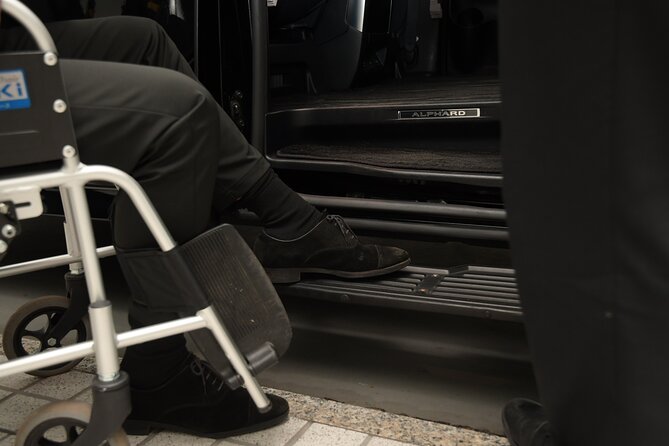
Here, your guide and vehicle do the linking. You can spend your energy seeing Tokyo rather than working out the next connection. That matters even more on a full day, when heat, traffic, and the sheer size of the city can wear you down.
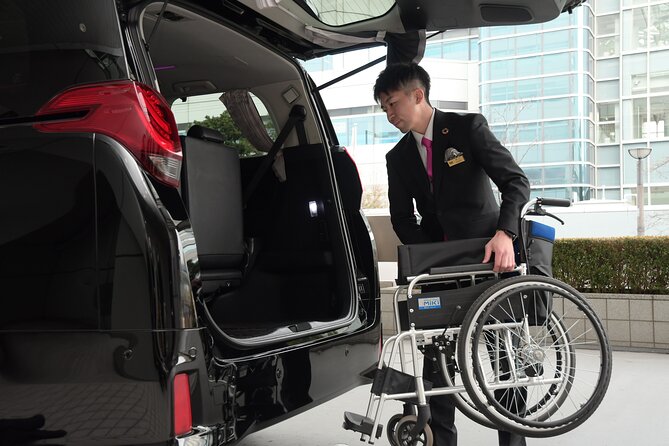
The tour is private for your group, with capacity for up to nine people. That gives you more control than a standard sightseeing coach. You can tell the guide which stops matter most, ask to adjust the pace, and make better use of the time if a particular sight is less suitable for your group.
Still, set your expectations carefully. This is an accessible sightseeing plan, not a promise that every path, entrance, restroom, or attraction in Tokyo will suit every wheelchair. The information confirms a tour designed for wheelchair users, but it does not provide detailed measurements for the vehicle, ramp, door width, or chair limits. If those details are important, ask the operator before booking.
Other private tours in Tokyo


Tsukiji Outer Market: a practical first taste of Tokyo
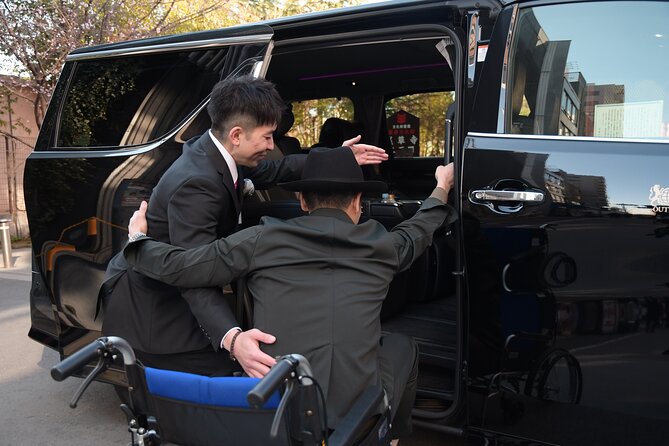
The day begins at Tsukiji Jogai Market, the outer market that remains after the main wholesale market moved to Toyosu in 2018. You have about an hour here, with no admission charge listed.
This is a good opening stop because it offers an immediate sense of Tokyo food culture without asking you to understand the whole city first. Shops and restaurants fill the area, and you can browse Japanese food items and other interesting goods at your own pace.
The distinction between Tsukiji and Toyosu matters. You are not visiting the current main wholesale market. You are visiting the older outer-market district, which continues to serve shoppers and diners. If your main goal is the working wholesale auction, this itinerary does not provide that experience.
For wheelchair users, the private vehicle helps with arrival and departure, but the exact route through the market is not described. Market lanes can be busy, and individual shop entrances may vary. Keep your guide involved and make this a flexible stop rather than a rushed checklist item.
Hama Rikyu Gardens: greenery beside the city
Next comes Hama Rikyu Gardens, with about an hour allotted. Admission is not included, so budget separately for the entrance fee.
The garden began as a feudal lord’s Tokyo residence and duck-hunting grounds between the seventeenth and nineteenth centuries. Later, it became a public garden. That long change in use gives the stop a useful sense of Tokyo’s past without requiring a museum visit.
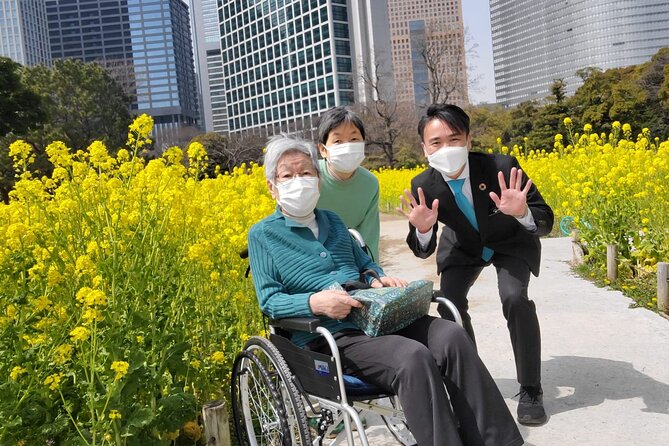
I like this part of the route because it breaks up the harder urban sights. After the market, a garden gives you room for a quieter hour. You can also see how an old estate now sits within modern Tokyo, a contrast that helps explain the city’s character.
The tour does not state which garden paths are suitable for your particular chair or scooter, so confirm the practical details with the guide. Hama Rikyu is the only stop with an admission charge specifically noted as not included. If your group prefers more time at the market or wants to avoid an uncertain garden visit, the private format may allow a change, but confirm that with the provider.
Ginza and the Imperial Palace from the vehicle
Ginza receives about an hour, but this portion is sightseeing through the car window. The district is known for boutiques, galleries, Japanese crafts, restaurants, and striking modern buildings.
That makes Ginza useful as a city-viewing segment rather than a shopping stop. You can see one of Tokyo’s polished central districts without needing to navigate a long pedestrian route. If you want to enter a shop, visit a gallery, or stop for a meal, ask whether the schedule and access arrangements allow it.
The Imperial Palace follows for about 30 minutes, also viewed from the vehicle. The site was once the castle of the Tokugawa shoguns, who ruled from 1603 to 1868. It became the Imperial Palace after political power returned to Emperor Meiji.
You should treat this as an exterior orientation, not a palace tour. The itinerary does not promise entry into the palace grounds or its buildings. That is a limitation, but the short stop keeps the day moving and gives you a look at a central symbol of Japan’s government and monarchy.
The National Diet Building gets another 30-minute drive-by. Built in 1936, it is one of the few Tokyo buildings to survive the air raids of 1945. Again, the value lies in seeing the exterior and hearing the context, not touring inside.
Senso-ji Temple and old Tokyo in Asakusa
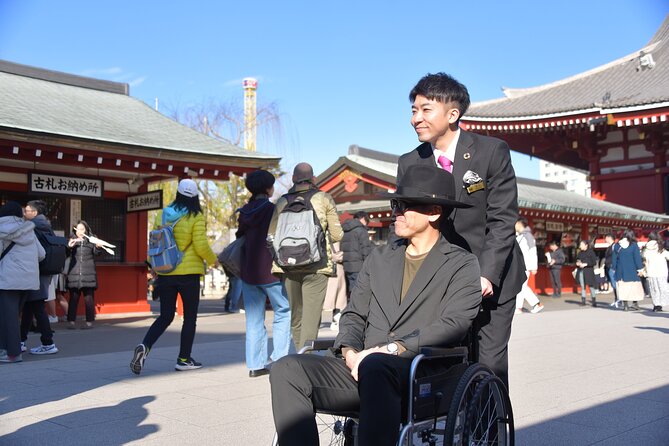
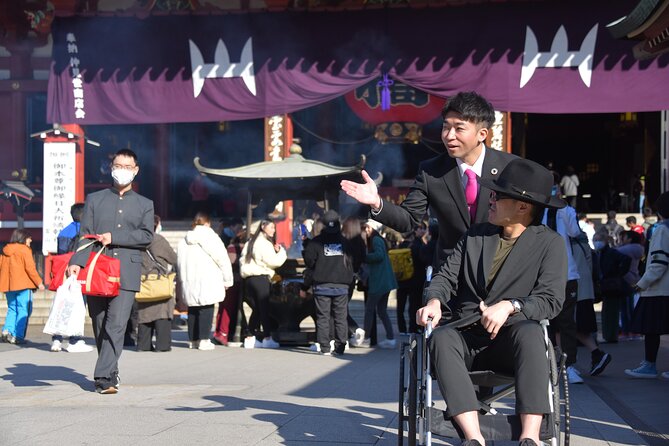
Senso-ji is the itinerary’s major temple stop, with about an hour and no admission fee listed. It is Tokyo’s oldest temple, and the story behind it reaches back to 628, when two fishermen found a small statue of Kannon in Asakusa.
This is one of the places where the tour moves beyond modern architecture and shopping districts. Senso-ji gives you a connection to older Tokyo and to the religious traditions that shaped the city long before its towers and traffic.
An hour is enough for a focused visit, but it is not a leisurely exploration of every corner. Ask your guide where the smoothest approach and most useful stopping points are for your chair. The tour is designed with accessibility in mind, yet the supplied details do not identify specific ramps, surfaces, or accessible facilities at the temple.
For many people, this will be one of the day’s most worthwhile stops. It has a strong sense of place, and your guide can provide context while helping you spend your time where it matters most.
A few more Tokyo tours and experiences worth a look


Omotesando, Harajuku, and Meiji Jingu
The route then turns west to Omotesando, Harajuku, and Meiji Jingu. Omotesando is scheduled as a 30-minute drive-by. It is known for buildings by leading architects, fashion brands, and a mix of contemporary design and shopping.
Harajuku also receives 30 minutes through the vehicle window. This area offers a glimpse of Japanese youth culture, unusual fashion, and bold building design. These two stops work best as a visual tour. If you expect to shop, browse independently, or spend time on foot, you will need to ask for a change in the plan.
Meiji Jingu gets a full hour and is the more substantial visit in this section. The shrine provides a calmer break from the surrounding streets. On Saturdays and Sundays, you might see a traditional Japanese wedding ceremony, though that is not guaranteed.
I like the order here. Omotesando and Harajuku show the city’s current style, while Meiji Jingu shifts the mood toward ceremony and quiet. The three stops together give you a better picture of Tokyo than a list of famous buildings would.
Again, access details are limited. The tour operator presents the day as suitable for wheelchair users, but you should discuss the route, chair type, and preferred amount of walking before departure. A mobility scooter was handled by Umi and Roberto on one outing, which suggests useful hands-on support, but it does not replace a direct check of your own equipment and needs.
Shibuya Crossing from a less stressful angle
Shibuya Crossing is allotted 30 minutes and is also sightseeing through the vehicle window. The crossing is famous for its huge pedestrian flow and has become one of Tokyo’s defining city scenes.
The drive-by approach may disappoint you if crossing the intersection is a personal must-do. On the other hand, it can be a sensible choice if getting out, finding an accessible viewing position, and rejoining the vehicle would take more effort than it is worth. You can still see the scale and motion of the area without building the whole day around one crossing.
Tell the guide if Shibuya is a priority. Since the route can be customized, your group may be able to discuss whether a longer stop fits the schedule. The published plan only promises sightseeing through the car window, so do not book assuming you will have an extended on-foot visit.
Daikanyama and Nakameguro to finish the day
The final listed area is Daikanyama, with about 30 minutes of sightseeing through the vehicle window. Daikanyama and nearby Nakameguro are known for boutiques and cafés and have a slower feel than Tokyo’s more famous districts.
This is a pleasant way to end a packed day. After the temple, shrine, major roads, and central districts, the route shifts to smaller-scale shopping and café streets. It may not offer a headline attraction, but it gives you another side of Tokyo.
The stop is brief and does not include a meal. Lunch and dinner are not included, so plan your food needs with the guide. Snacks and bottled water are supplied, which helps between stops, but they are not a substitute for a proper meal during an eight-hour outing.
What the $731.60 price buys you
The listed rate is $731.60 per group of up to nine people. That is a high total for a private day, but the comparison changes with group size. Split nine ways, it is about $81 per person. With five people, it is about $146 each, while a solo guest or couple would carry much more of the cost.
You are paying for more than admission tickets. Most stops have no admission charge, and Hama Rikyu’s entry is not included. The main value is the private air-conditioned vehicle, guide support, flexible routing, and the time saved by not arranging public transport across the city.
For a larger family or group with a wheelchair or mobility scooter, that convenience may justify the price. A standard sightseeing tour may cost less, but it is less likely to let you set the pace or change priorities. Here, the ability to ask for help with mobility equipment can also remove a major source of stress.
The price is harder to defend if you mainly want a few central sights or prefer independent exploration. Seven of the eleven listed stops are drive-by segments or primarily viewed from the vehicle. If you want long visits at each place, this schedule will feel rushed.
How the guide support affects the day
The strongest personal touch comes from the guides. Umi and Roberto made a point of keeping a group comfortable during a very hot day, asked which experiences mattered most, and handled the mobility scooter. That kind of attention can change the feel of an outing, especially when heat and equipment make every transfer more demanding.
Gen also adjusted the sightseeing plan to suit a family’s preferences. This confirms that customization is not just a line in the description. You should still state your priorities clearly before the tour begins. Tell the guide which stops you want to enter, which ones are fine as drive-bys, and how much time you need for transfers.
The experience provider is listed as アウテック. The tour has a five-star rating from three published reviews, so the feedback is strongly positive but based on a small number of experiences. I would treat the warm comments about Umi, Roberto, and Gen as useful evidence of attentive service, not as a guarantee that every future guide or situation will be identical.
Timing, pickup, and practical planning
The tour lasts about eight hours and begins at Tokyo Station, at 1 Chome-9 Marunouchi, Chiyoda City. It ends back at the meeting point. Pickup is offered, but the supplied details specifically identify Tokyo Station as the start, so confirm the exact pickup arrangement when you book.
The vehicle is air-conditioned and includes Wi-Fi, bottled water, and snacks. Those details matter in Tokyo’s heat, especially when you are spending a full day moving between outdoor and urban stops. Wi-Fi can also help you stay in touch while on the road.
The stated operating hours are 7:00 AM to 2:00 PM every day during the listed date ranges. Confirmation is sent within 48 hours, subject to availability. Free cancellation is available if you cancel at least 24 hours before the start time. Changes or cancellations inside that window are not accepted for a refund.
The tour is near public transportation, but you do not need to use trains or buses during the sightseeing day. Most people can participate, though your own chair, scooter, transfer needs, and preferred access should be discussed in advance.
Should you book this Tokyo tour?
Book it if accessible logistics are your top concern, you want to cover several parts of Tokyo in one day, and you are traveling with enough people to share the group price. The private vehicle, guide flexibility, air conditioning, Wi-Fi, snacks, and hands-on help with a mobility scooter can make a demanding city far easier to manage.
It is also a good choice if you want a broad first look at Tokyo rather than a deep visit to one neighborhood. You will see Tsukiji, a historic garden, Asakusa, the Imperial Palace area, the National Diet, Meiji Jingu, Shibuya, and western Tokyo in one carefully linked day.
Skip it if you want long independent visits, extensive shopping, or a full interior tour at every stop. Several locations are drive-bys, lunch and dinner are not included, and the price is substantial for a small party.
Before paying, contact アウテック with your wheelchair or scooter details and your top three priorities. Ask which stops can be adjusted, how the vehicle accommodates your equipment, and where you will be able to leave the vehicle. If the answers fit your needs, this is a practical way to see a wide slice of Tokyo without making accessibility planning your full-time job.
FAQ
How long does the tour last?
The tour lasts approximately eight hours.
How many people can join the private tour?
The private vehicle and tour can accommodate a group of up to nine people.
Where does the tour begin and end?
The stated meeting point is Tokyo Station at 1 Chome-9 Marunouchi, Chiyoda City, Tokyo. The activity ends back at the meeting point.
Is transportation included?
Yes. The tour includes private transportation in an air-conditioned vehicle.
Is the tour designed for wheelchair users?
Yes. The experience is designed with accessibility in mind for wheelchair users. The supplied details do not specify vehicle measurements or equipment limits, so confirm those points with the provider before booking.
Are food and drinks included?
Bottled water and snacks are included. Lunch and dinner are not included.
Is Hama Rikyu Gardens included in the price?
The itinerary includes a visit to Hama Rikyu Gardens, but its admission ticket is not included.
Can the tour be canceled for a full refund?
Yes, if you cancel at least 24 hours before the experience start time. Cancellations or changes made less than 24 hours in advance are not accepted for a refund.
More Full-Day in Tokyo
More Private Tours in Tokyo
More tours in Tokyo we've reviewed


Full-Day, compared.
 ★ 4.5From Tokyo: Mount Fuji Full-Day Sightseeing TripFrom $6810 hours
 ★ 4.9From Tokyo: Mount Fuji Full Day Customizable Private TourFrom $407
 ★ 5.0Tokyo Private Full-Day Tour by Car or VanFrom $321
 ★ 4.5Tokyo: Mt. Fuji and Kawaguchiko Full-Day English Guided TourFrom $82
 ★ 4.7From Tokyo: Must-Visit Mount Fuji Highlight Full-Day TourFrom $6911 hours
 ★ 4.5Mt. Fuji, Hakone Full-Day Private Tour with English Driver GuideFrom $495