Reviewed · SUMO EXPERIENCES
Tokyo: Sumo Tournament with Guide & Assigned Reserved Seat
Tokyo sumo is not simply a series of wrestling bouts. It is a formal show of discipline, ritual, ranking, and raw power, all played out inside Ryogoku Kokugikan. I like the reserved second-floor seat, which takes the stress out of finding a ticket, and I like having a guide such as George, Lily, Cesar, or Miki explain what is happening before and during the tournament.
In This Article
- Key points to know before you book
- Why a live sumo tournament feels different
- Starting near Matsuura-Bungo Mansion Site
- The 30-minute orientation at Ryogoku Kokugikan
- Four hours inside the stadium
- The guide’s role during the bouts
- What the $209 price really buys
- Food, drinks, and comfort
- Who will enjoy this most
- Small details that improve the afternoon
- Should you book the Tokyo sumo tournament tour?
- FAQ
- Where does the sumo experience take place?
- How long does the experience last?
- What kind of ticket is included?
- Can I choose my exact seat?
- Is a guide included?
- Which languages are available?
- Are food and drinks included?
- Is the experience suitable for people with mobility impairments?
- Can I cancel for a refund?
The main drawback is price. At $209 per person, this is a costly way to attend an event whose basic ticket can be far cheaper. You are paying for access, an assigned seat, and an English-language guide, so the value depends on how much help you want with the rules and customs.
Key points to know before you book
- Ryogoku Kokugikan is the real deal: You watch an official tournament in Tokyo’s historic sumo district, not a staged demonstration.
- A guide turns confusion into context: Expect explanations of rituals, rankings, rules, techniques, and the cultural role of sumo.
- Your seat is reserved, but not chosen: You receive a B or C class seat on the second floor, and exact placement may be assigned at random.
- Plan on four to five hours: The experience includes about 30 minutes of guided orientation and roughly four hours at the stadium.
- The price is the serious question: Guaranteed access can be useful when official tickets are hard to obtain, but the markup is substantial.
- Come ready to listen and walk: Food and drinks are not included, and the experience is not suitable for people with mobility impairments.
Why a live sumo tournament feels different
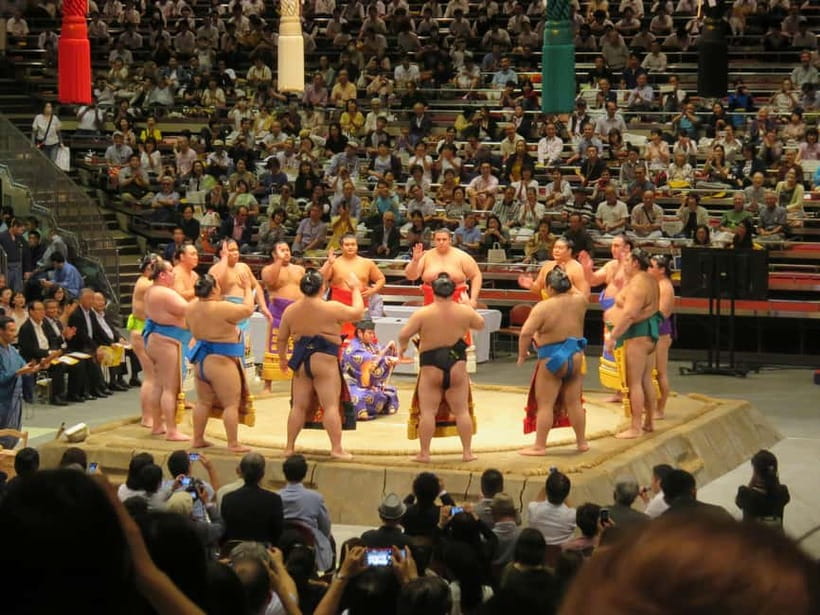
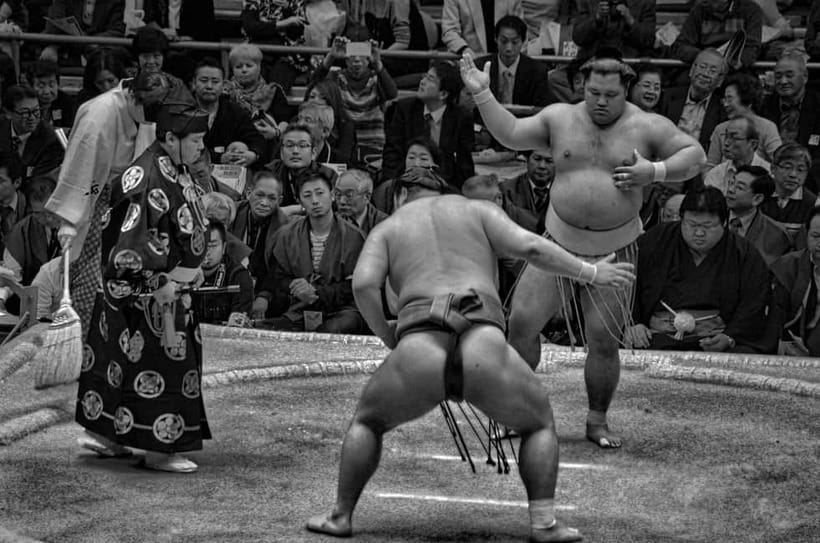
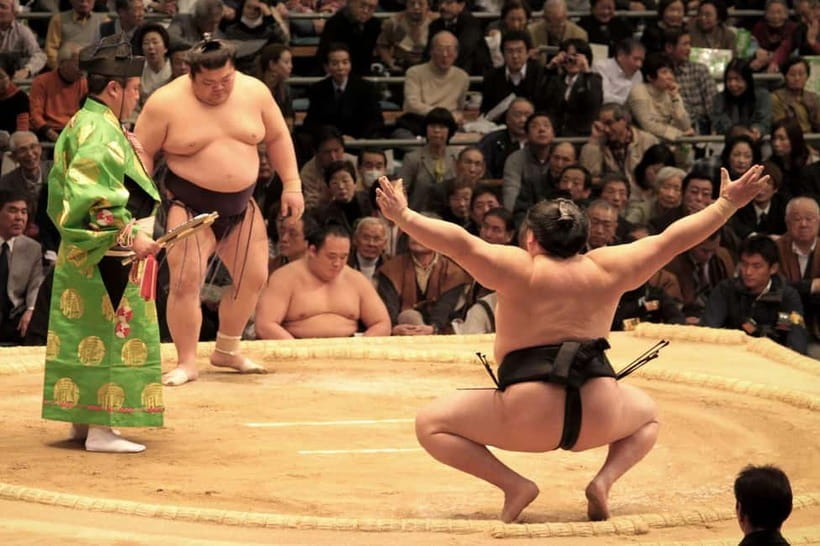
Sumo makes more sense once you see the rituals in person. Before the bout begins, the wrestlers follow a set sequence of gestures and movements. The ring is prepared, the competitors face one another, and the tension builds long before the actual charge.
That ceremony is part of the sport, not decoration added for tourists. Sumo carries rules about rank, behavior, training, and public conduct. Without some explanation, you may see two large athletes crouch, slap the ring, and collide in a few seconds without understanding why the build-up matters.
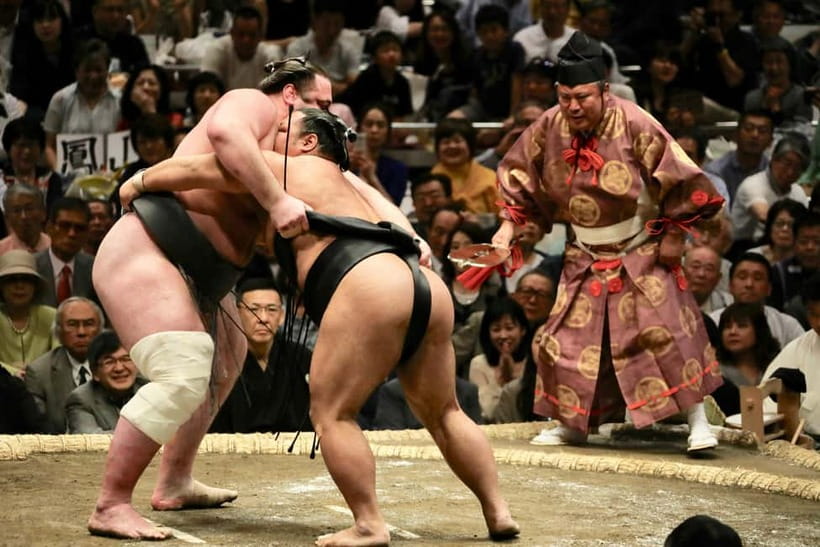
The tournament also has a strong rhythm. Some bouts are brief and explosive. Others involve careful positioning, balance, and patience. A wrestler wins by forcing his opponent out of the ring or making him touch the ground with something other than the soles of his feet. Your guide can point out these details as the action unfolds.
I would not call this a casual sporting event. It is closer to an afternoon of theater, ceremony, and competition combined. The wrestling is the center, but the rules around it are what make the event distinctly Japanese.
A few more Tokyo tours and experiences worth a look
Starting near Matsuura-Bungo Mansion Site
The meeting arrangement offers two starting options listed at the Matsuura-Bungo Mansion Site. The exact meeting point can vary according to the option you book, so read your confirmation carefully before setting out.
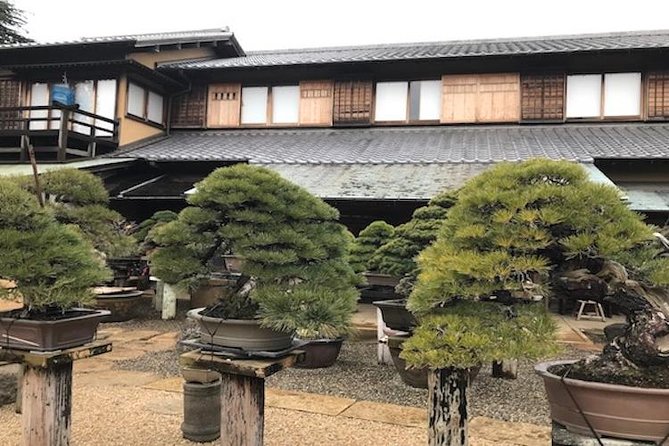
The opening portion is designed to get you oriented before you enter the arena. Some guides have also included nearby points of interest, such as Ekoin Temple and a garden close to the stadium. These additions can give you a feel for Ryogoku, the Tokyo neighborhood most closely linked with sumo.
I like this introduction because it places the tournament in its local setting rather than treating the stadium as an isolated attraction. The area has sumo associations, temples, cemeteries, and small streets tied to the sport’s long presence in Tokyo.
There is one practical catch. If your guide gives the opening talk on a noisy street, hearing every detail can be difficult, especially with a large group. One useful improvement would be to spend more of the briefing in a quieter spot.
The 30-minute orientation at Ryogoku Kokugikan
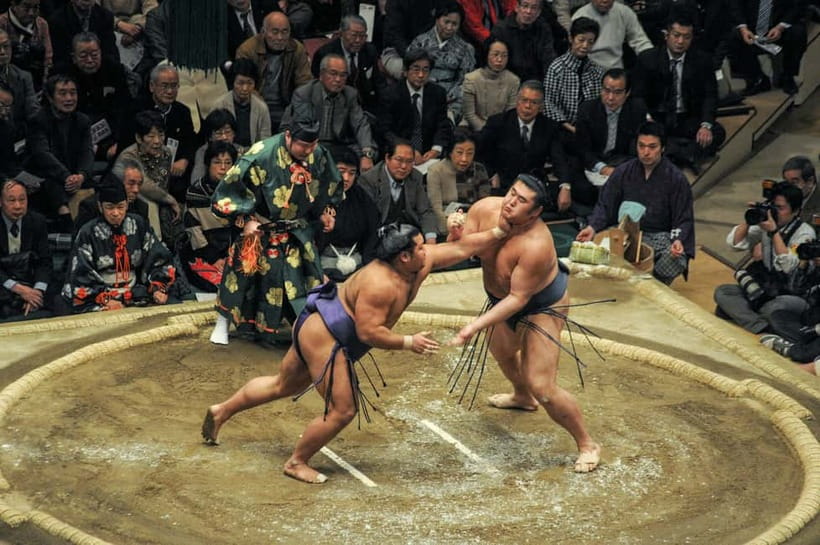
The guided introduction at Ryogoku Kokugikan lasts about 30 minutes. This is where you can ask the basic questions that make the rest of the afternoon easier to follow.
Expect the guide to explain:
- How the ranking system works
- Why wrestlers advance or fall in rank
- What the pre-bout rituals mean
- How a wrestler wins or loses
- The roles of ceremony and discipline in sumo
- The names and status of prominent wrestlers
The strongest part of the guiding, based on the experience offered by guides such as George, Mili, Cesar, Lily, Erik, and Miki, is their willingness to answer questions. Several guides are active sumo fans, and that personal interest makes a difference when explaining why one match matters more than another.
The briefing could be more technical. Some people want a fuller explanation of throws, pushes, belt techniques, and ring tactics. Others mainly want to know what is happening and why everyone is waiting so long before the charge. If you already have some sumo knowledge, you may wish the guide spent less time on general background and more time on technique.
I suggest doing a little reading before you go. Even a short introduction to rankings, winning conditions, and the names of major wrestlers will help you get more from the live event. The guide can then fill in the cultural details instead of covering every basic rule from scratch.
Four hours inside the stadium
After the introduction, you spend about four hours at the tournament. Your B or C class reserved seat is on the second floor. The seat is assigned rather than selected from a detailed seating map, and people in the same booking may not always sit together.
That lack of control is worth noting if you are visiting with family or friends. The seat assignment solves the problem of getting inside, but it does not promise a precise view or a cluster of seats chosen by you. Still, the seating position has generally been considered clear enough to follow the fights and take in the atmosphere.
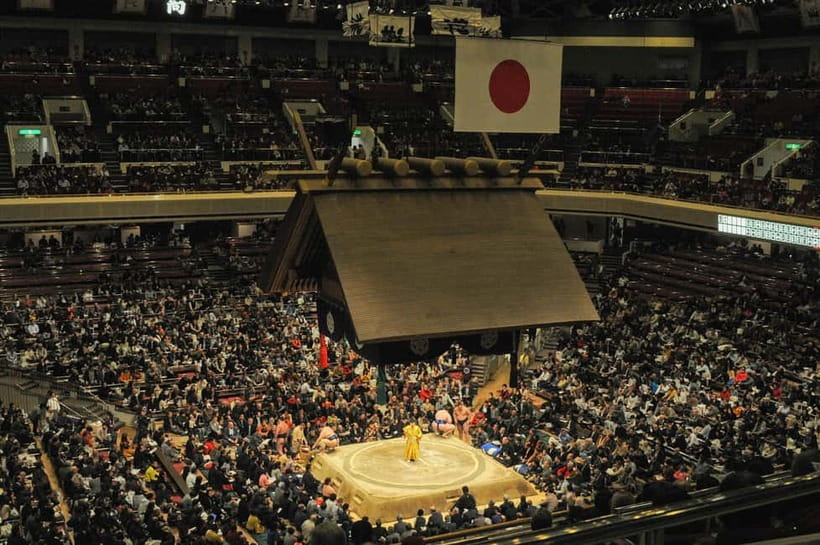
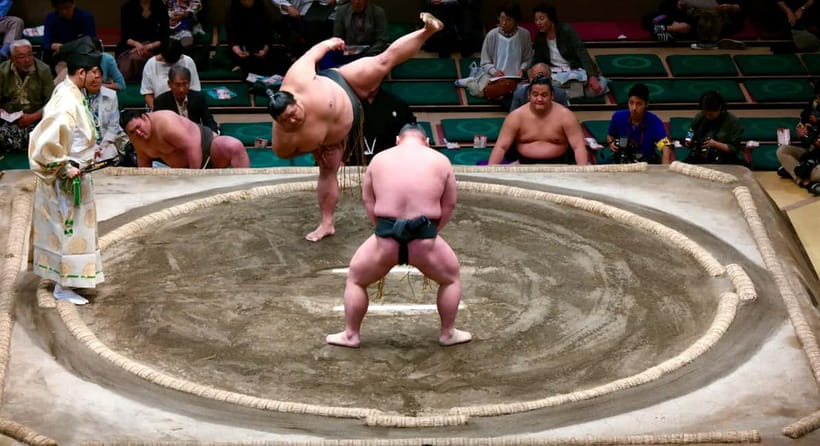
The second floor gives you a broad view of the dohyo, the raised sumo ring. You may not feel as close as someone in a premium ringside position, but you can see the overall shape of each bout. For a first visit, that wider perspective is useful because it lets you watch the wrestlers’ positioning and the crowd’s reaction at the same time.
A sumo tournament is not one single match. It is a long program of bouts, with wrestlers appearing according to their rank. The later matches usually carry more weight, and the atmosphere builds as the top-ranked competitors take their turns.
This is why the four-hour block matters. If you arrive only for the headline bouts, you miss the gradual rise in energy. The earlier matches help you learn the patterns, while the later bouts give you the biggest names and the strongest sense of occasion.
The guide’s role during the bouts
The guide is not merely there to lead you to your seat. The useful part of the service is having someone explain the action in plain English.
Guides may move between sections or check in with different parts of the group during the tournament. If the group is large, it can be hard to hear every explanation. Seating may also be divided, so you should not expect one continuous private commentary beside your chair.
Even so, the guidance adds real value if you are new to sumo. A short bout can be over before you have worked out why one wrestler won. A guide can clarify whether the victory came from a push, a throw, a belt grip, a sidestep, or a mistake in balance.
The best guide reports describe warm, attentive personalities. George is repeatedly praised for humor and clear explanations. Lily is noted for friendly energy and care with the group. Cesar is praised for answering questions and explaining rankings, names, and traditions. Erik is described as helpful and well informed about sumo. These individual guides can shape the afternoon, although you cannot assume which person will lead your group.
One fair criticism is that the guide may spend too much time on general history or nearby buildings when you would rather hear about the fight itself. If technique is your priority, ask directly about the rules, grips, throws, and tactical choices.
Other guided tours in Tokyo



What the $209 price really buys
At $209 per person, this is not a budget activity. The price is easiest to justify when official tickets are sold out, difficult to purchase from overseas, or unavailable for your travel dates.
The basic seat value is the sore point. Some people calculate that a B or C class ticket can cost roughly ¥5,000 to ¥6,000, far below the full tour price. That leaves a large difference to account for the guide, ticket sourcing, organization, and guaranteed access.
You should be honest about what you are buying. This is not a bargain ticket. It is a convenience package for a high-demand event. You pay more to avoid the uncertainty of trying to secure a seat yourself, and you receive an English-language explanation that can make an unfamiliar sport easier to follow.
The guide can be worth a lot if you have no prior sumo experience. It is harder to justify the cost if you already understand the ranking system, know the basic rules, and are comfortable attending without help.
I would compare the price with your priorities:
- If seeing an official Tokyo tournament is a top trip goal, the guaranteed seat may be worth the premium.
- If you are flexible about dates, investigate official ticket options first.
- If you mainly want to see the wrestlers up close, remember that B or C class is second-floor seating.
- If you want cultural context in English, the guide is the main reason to consider this option.
- If you are traveling on a tight budget, the markup will likely bother you.
The booking process itself is described as simple, with clear tournament dates, quick confirmation, and assigned seating provided soon after purchase. Some people would still prefer a seat map, exact seat selection, or a reminder closer to the event.
Food, drinks, and comfort
Food and drinks are not included, and the activity information says food and drinks are not allowed. Do not plan on carrying snacks into the experience.
The total duration is four to five hours, including the orientation and tournament. That is a long sitting period, so think about your comfort before booking. The experience is also not suitable for people with mobility impairments, and the meeting point may require walking through the surrounding area.
The group size can affect the quality of the explanations. A small group makes it easier to ask questions and hear the answers. In a larger group, the guide may need to repeat information or divide attention among several seating areas.
Who will enjoy this most
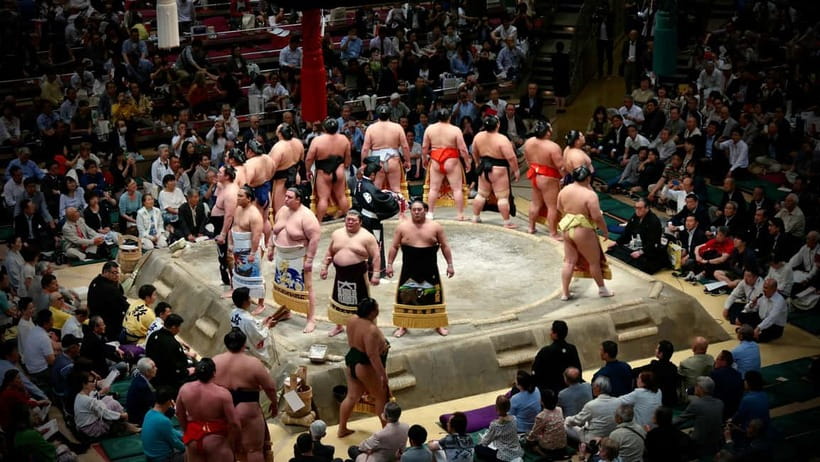
This is a strong choice for a first-time sumo audience. You do not need to arrive as a fan. The rituals, ranking system, and live setting give you plenty to watch even if you know little about the sport.
It also suits visitors who want a cultural event rather than another sightseeing stop. You are not just looking at a famous building. You are watching a formal Japanese tradition in its working setting, surrounded by a crowd that understands the ceremony and stakes.
Families with older children may enjoy the spectacle, but the long duration, assigned seating, and formal atmosphere may not suit very young children. The available information does not specify a minimum age, so check the booking conditions if that matters to you.
I would be more cautious if you have limited mobility, need food or drinks during a four-hour event, or strongly prefer sitting beside your companions. The assigned-seat system may not solve those concerns.
Small details that improve the afternoon
Read the meeting instructions closely because the starting point can vary. Arrive knowing the correct location, especially if your option begins near the Matsuura-Bungo Mansion Site.
Learn three basics before you go: the difference between ranks, how a wrestler wins, and what the opening rituals are doing. You will recognize much more once the bouts begin.
Ask your guide for the details you care about. If you want technique, say so. If you want the cultural meaning of the ceremony, ask about that. Guides such as Cesar and George have been praised for answering questions, and direct questions can help shape the experience.
Do not assume the cheapest seat will feel like a poor seat. The B and C sections are on the second floor, but a clear overall view can be more useful for a beginner than an extremely close angle.
Finally, treat the price as the cost of access and interpretation, not as the cost of a normal sports ticket. That mindset will not make the premium smaller, but it will help you decide honestly if the service fits your trip.
Should you book the Tokyo sumo tournament tour?
Book it if an official sumo tournament is one of your main Tokyo goals and you want an English-speaking expert to explain the action. The guides are the heart of the experience, and the combination of reserved seating, neighborhood orientation, and live competition can produce a memorable afternoon.
Skip it if the $209 price feels unreasonable compared with the likely face value of the seat, or if you are willing to spend time pursuing official tickets yourself. You should also look elsewhere if you need exact seat selection, guaranteed seats together, food and drinks, or an accessible format.
My practical verdict is simple: excellent cultural access, weak price value. For a once-only Tokyo visit, the convenience may be worth it. For a repeat visit or a budget-conscious trip, try official ticket channels first.
FAQ
Where does the sumo experience take place?
The tournament takes place at Ryogoku Kokugikan in Tokyo, on Honshu, Japan.
How long does the experience last?
The total duration is approximately four to five hours. The guided portion at Ryogoku Kokugikan lasts about 30 minutes, followed by roughly four hours at the tournament.
What kind of ticket is included?
The package includes an assigned reserved seat in B or C class on the second floor.
Can I choose my exact seat?
No exact seat choice is specified. The seat is assigned, and seating may be random. People in the same booking may not always be seated together.
Is a guide included?
Yes. An English-speaking sumo guide is included to explain the rules, rituals, ranking system, techniques, and cultural meaning of the sport.
Which languages are available?
The live tour guide operates in English.
Are food and drinks included?
No. Food and drinks are not included, and food and drinks are not allowed according to the activity information.
Is the experience suitable for people with mobility impairments?
No. The activity is listed as unsuitable for people with mobility impairments.
Can I cancel for a refund?
No. The activity is non-refundable.
More Guided Tours in Tokyo
More Sumo Experiences in Tokyo
More tours in Tokyo we've reviewed












Sumo Experiences, compared.
 ★ 4.8Tokyo: Sumo Show Experience with Chicken Hot Pot and a PhotoFrom $1032 hours
 ★ 4.8Tokyo: Sumo Show and Dining ExperienceFrom $7990 minutes - 2 hours
 ★ 5.0the SUMO showFrom $89
 ★ 5.0Tokyo Sumo Entertainment Show with Chicken Hot Pot and PhotoFrom $106
 ★ 4.6Tokyo: Sumo Tournament Tour with Chair Seat TicketsFrom $141
 ★ 5.0Tokyo Grand Sumo Tournament Viewing Tour with TicketsFrom $124