Reviewed · ASAKUSA TOURS
Asakusa Classic Ramen & Crispy Gyoza Cooking Class
A bowl of ramen is easy to eat and surprisingly hard to make well. This Asakusa class lets you see the work behind it, from broth and toppings to the final assembly, while you also fold and cook crispy gyoza. Masa and Junko lead the class in clear English, with plenty of humor and practical instruction.
In This Article
- Key points at a glance
- Making ramen and gyoza in one Asakusa morning
- Meeting Masa and Junko at Chagohan Tokyo
- The ramen lesson: useful knowledge, with one limit
- Folding gyoza and getting the bottoms crisp
- What makes the teaching work
- The meal at the end
- Is $167.81 a fair price?
- Who should book this class?
- Practical timing for your Tokyo plans
- Should you book the Asakusa ramen and gyoza class?
- FAQ
- Where does the cooking class start and finish?
- How long does the class last?
- How many people can join?
- Are aprons and cooking utensils provided?
- Can vegetarians and vegans take part?
- What happens if the class is canceled because of weather?
I like the useful mix of dishes: you learn gyoza by hand, then build a full bowl of ramen. I also like the small maximum of eight people and the recipes you receive afterward. The main consideration is price: at $167.81 per person, this is a serious splurge for a three-hour class, and you do not personally cook every part of the ramen broth from start to finish.
Key points at a glance
- Two Japanese staples in one class: Prepare gyoza filling and folds, then work through ramen broth, toppings, and bowl assembly.
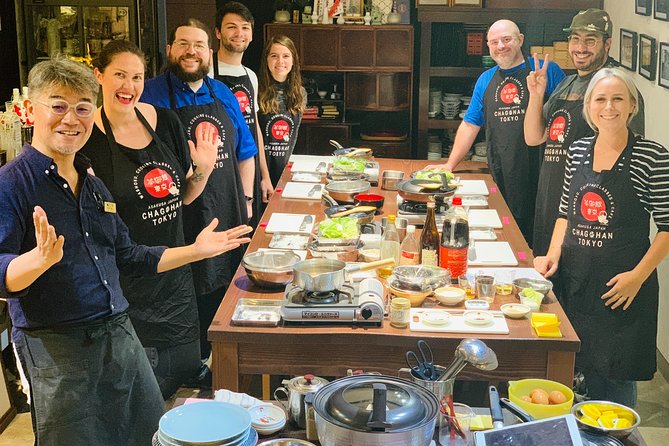
- Masa and Junko teach together: Masa handles the main instruction while Junko helps, takes photos, and keeps the class moving.
- A small group of up to eight: The format gives you room to ask questions and get help with knife work and dumpling folds.
- A real kitchen near Asakusa’s Kappabashi area: You meet at Chagohan Tokyo in Nishiasakusa, close to public transportation.
- A meal at the end: Expect about eight gyoza and a full bowl of chicken ramen, according to the class details.
- Recipes go home with you: Gyoza is the more practical recipe to repeat, while ramen requires more time and preparation.
Making ramen and gyoza in one Asakusa morning
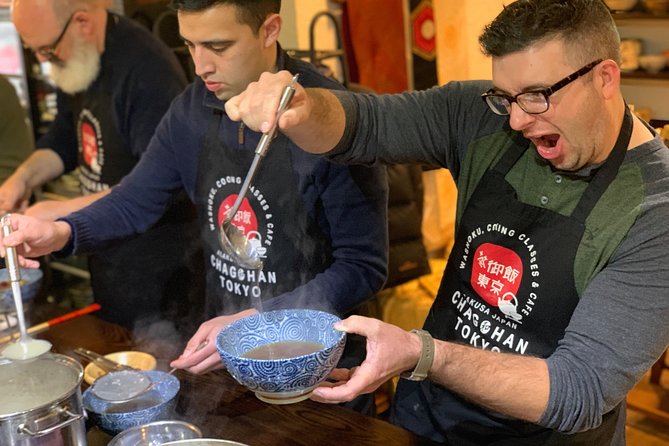
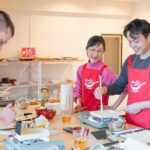
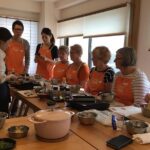
This is not a demonstration where you sit quietly and watch a chef do everything. You take part in the preparation, cutting vegetables, mixing gyoza filling, folding dumplings, and assembling your ramen bowl.
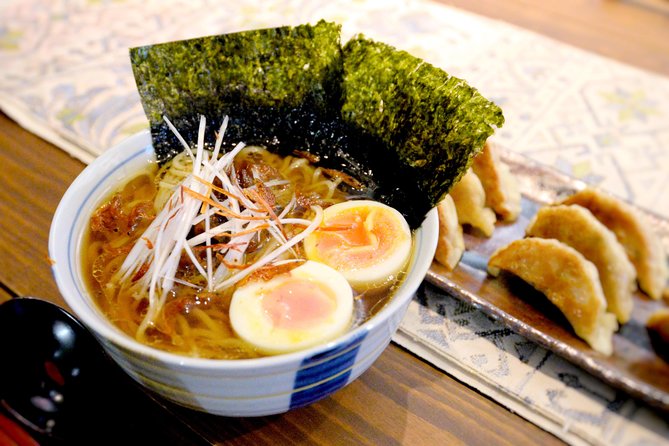
The class focuses on shoyu ramen, the soy-sauce-based style familiar from many Japanese ramen shops. You learn about the base, broth, toppings, and the balance that turns separate ingredients into a finished bowl.
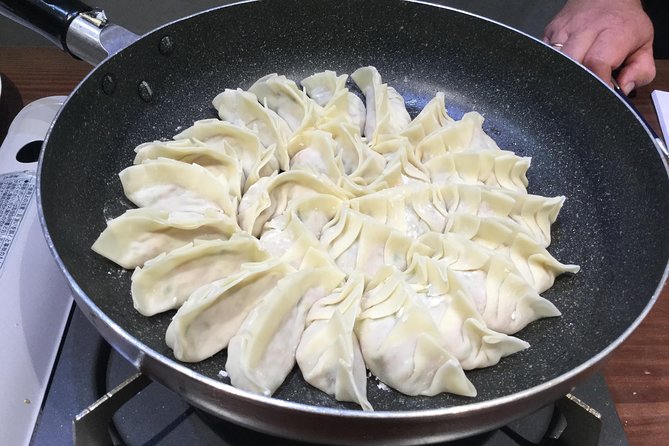
The gyoza portion gives you the most direct hands-on practice. You prepare the filling, fold the dumplings by hand, and cook them so the bottoms turn crisp while the centers stay juicy. If you have made dumplings before, the folding may feel familiar, but the Japanese approach and cooking method still make this worthwhile.
At the end, you sit down and eat what you prepared. That matters. You are not simply taking notes about ramen or practicing a single technique. You finish with a proper meal, including roughly eight gyoza and a full bowl of chicken ramen.
The class runs about three hours. You can choose a morning session from 10 a.m. to 1 p.m. or an afternoon session from 3 p.m. to 6 p.m. The listed start time for the available booking is 10 a.m., so check your selected session carefully.
A few more Tokyo tours and experiences worth a look

Meeting Masa and Junko at Chagohan Tokyo
The meeting point is 茶御飯東京 Chagohan Tokyo, at 2-chome 17-13, Nishiasakusa, Taito City, Tokyo 111-0035. The activity begins and ends at this location, and it is near public transportation.
You are in the Asakusa area, close to the kitchenware district commonly known as Kappabashi. That makes this a sensible addition to a day spent exploring Asakusa, though the cooking class itself is the main event rather than a guided neighborhood walk.
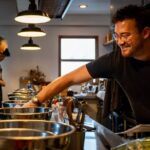
The setting is a real, clean, well-organized kitchen rather than a meal prepared inside someone’s home. That gives the class a practical feel. You are working in a proper cooking space with the tools and ingredients arranged for the lesson.
Masa leads much of the teaching, explaining the food, methods, and Japanese cooking customs in English. Junko assists throughout and takes photos and videos during the session, a thoughtful extra if you want a record of the experience without stopping to photograph every step yourself.
The small-group setup is important here. With a maximum of eight people, you are not lost at the back of a large room. Couples, families, friends, solo food lovers, and company groups can all fit the format. A larger party should contact the provider directly.
The ramen lesson: useful knowledge, with one limit
The ramen lesson begins with the base and broth. You learn how the components are prepared and how toppings contribute to the finished bowl. Masa also explains different kinds of ramen and the food’s place in Japanese cooking.
The ingredients are described as natural, with no MSG or artificial additives. That will appeal to cooks who want to understand the flavor of the food rather than rely on a premixed product.
You help prepare toppings and learn the steps behind the broth. The class then brings those pieces together in a photogenic bowl of ramen. This final assembly is satisfying because you can see the result of the earlier work, from the prepared ingredients to the finished presentation.
Here is the honest distinction: you do not appear to execute every stage of the broth independently. One detailed description of the class explains that the instructor carries out much of the shoyu stock preparation while explaining the process, and participants mainly assemble the bowl.
That is not necessarily a flaw. A proper stock can involve many steps and may take longer than a three-hour lesson allows. The benefit is that you get a clear look at a method you could attempt at home, without spending the entire class waiting for broth to develop.
Still, set your expectations correctly. You will learn how the broth is made and receive the recipe, but ramen is not a quick weeknight project. The gyoza technique is easier to repeat soon after returning home. The ramen recipe is more of a cooking project for a free afternoon.
Folding gyoza and getting the bottoms crisp
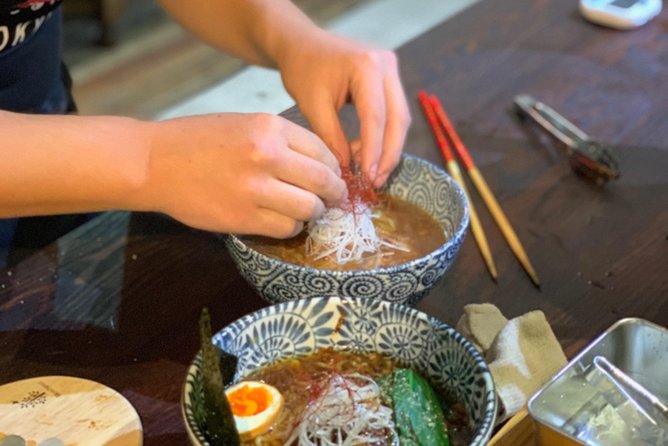
The gyoza section is likely the most active part of the class. You cut vegetables, prepare the filling, and learn how to fold the dumplings by hand.
Knife work is part of the preparation, so this class suits older children and teenagers better than very young children. Families with teens can take part together, but parents should know that the lesson is not entirely child-safe craft activity. There is real chopping involved.
The instructors guide you through the folds step by step. You do not need to arrive with dumpling-making experience. The lesson is designed for beginners, while still leaving room for more experienced cooks to ask questions.
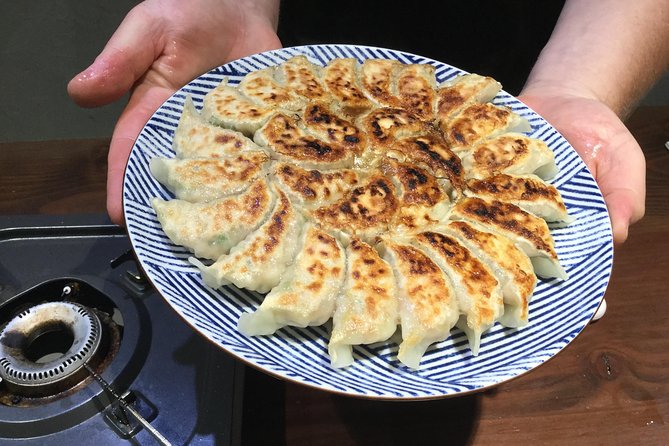
The cooking technique is the key payoff. Gyoza should be juicy inside and crisp underneath, and the class shows you how to get that contrast. You then eat the results, which gives you an immediate sense of how your folding and cooking worked.
I find this part especially good value for anyone who has bought frozen dumplings and wondered why the homemade version never turns out as crisp. The class connects preparation, folding, and pan cooking instead of treating each step as a separate trick.
You also get enough food to make this more than a tasting. Around eight gyoza and a full ramen bowl should leave you well fed. If you plan to eat a large meal immediately afterward, schedule accordingly.
What makes the teaching work
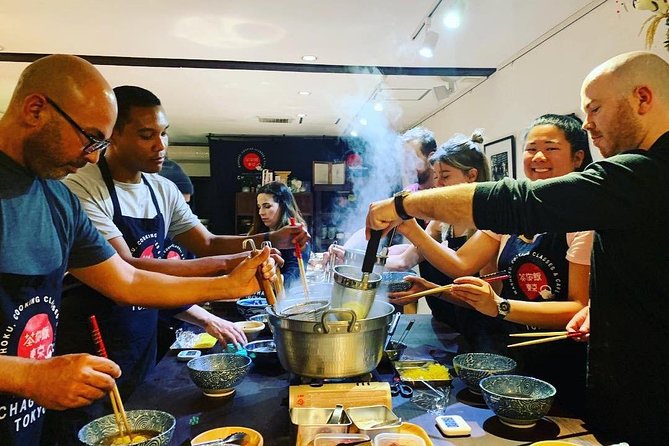
Masa’s instruction is described as clear and detailed, with excellent English. He explains not only what to do but also why the steps matter. That is useful in cooking, where a recipe can tell you what to add but not always what the texture or timing should look like.
The teaching also includes background about ramen, gyoza, and Japanese food culture. It is not a formal lecture, but the context helps connect the kitchen work to the dishes you have been eating around Tokyo.
Junko’s role adds warmth and organization. She assists with the cooking and takes photos and videos, letting you concentrate on cutting, folding, and cooking. The husband-and-wife format gives the class a friendly, personal rhythm without requiring you to cook in their private home.
The tone seems relaxed and funny, which helps when your first dumpling looks less than perfect. Cooking classes work best when mistakes are treated as part of the lesson, and this one is aimed at complete beginners as well as people with more kitchen experience.
The photos are a useful bonus, but do not book the class solely for them. The real value is the instruction, the meal, and the recipes. The photos simply make it easier to remember the day.
Other cooking classes in Tokyo
The meal at the end
After the preparation, you assemble your ramen and sit down to eat. This gives the three-hour class a clear finish instead of ending with a pile of uncooked ingredients and a recipe sheet.
The meal includes chicken ramen and the gyoza you made. The finished ramen is designed to look good as well as taste good, so have your phone ready before you start eating if food photos matter to you.
The food itself receives the strongest praise. The gyoza are described as crisp and delicious, while the shoyu ramen is a highlight for people who already enjoy that style. The recipes are sent afterward, giving you a chance to repeat the meal at home.
You should keep the two recipes in perspective. Gyoza can become a practical home skill after one guided session. Ramen broth demands more ingredients, time, and attention, so your first home attempt may not match the class bowl.
That difference does not reduce the value of the ramen lesson. Understanding the process can change the way you order ramen in Japan. You begin to notice the broth, toppings, noodles, and balance rather than treating the dish as one mysterious, steaming bowl.
Is $167.81 a fair price?
At $167.81 per person, this is not a budget food activity. You are paying for a three-hour small-group class, the ingredients, the meal, kitchen use, instruction, an apron, utensils, and recipes.
The price makes more sense if you value instruction and participation rather than simply eating ramen. A cheaper restaurant meal will give you ramen and gyoza faster, but it will not show you how to make the filling, fold the dumplings, or understand the broth.
The small group also affects the value. A maximum of eight people allows direct help and questions. If you are comparing this with a large cooking event where you watch from a distance, the higher price may be justified.
The provided apron and utensils mean you can arrive without special equipment. Natural ingredients and the included recipes add practical value, especially if you plan to cook Japanese food after your trip.
I would not choose this class only because you want a cheap lunch. I would choose it if ramen and gyoza are a major part of your Tokyo food plans, or if you enjoy learning a skill you can carry home.
Booking about 27 days ahead is the average pattern, so leave room in your Tokyo schedule early. The class has limited places, and the maximum group size is eight.
Who should book this class?
This suits ramen fans, dumpling fans, and anyone who wants a structured food activity in Asakusa. Couples and friends get a shared project, while families with teens can turn lunch into an activity everyone contributes to.
It is also a good choice for a person who does not think of themselves as a strong cook. The instructions are designed for beginners, and the step-by-step format keeps the work manageable.
Experienced home cooks should still find useful details, especially in the gyoza folding and crisping method. The ramen broth may be less hands-on than an advanced cook expects, since the instructor handles much of the stock preparation.
Vegetarians and vegans can request suitable options in advance. Do not leave that request until the day of the class, since the ingredients need to be planned.
This is less suitable for anyone who wants a quick activity or a short restaurant-style tasting. Three hours is a meaningful block of time, and the cooking involves knife work, preparation, instruction, and a sit-down meal.
The activity requires good weather, and if poor weather causes cancellation, you are offered another date or a full refund. The same applies if the minimum number of participants is not reached. The stated cancellation policy is otherwise strict: the booking is non-refundable and cannot be changed for any reason.
Practical timing for your Tokyo plans
The morning session runs from 10 a.m. to 1 p.m., while the afternoon option runs from 3 p.m. to 6 p.m. Since the class ends where it begins, you can plan nearby sightseeing before or after it.
The morning class leaves your afternoon open for Asakusa. The afternoon class lets you explore earlier and finish with a substantial dinner-like meal. Since class times are estimates, avoid scheduling an important timed attraction immediately after the lesson.
Wear comfortable clothes you do not mind cooking in. An apron is provided, along with utensils, so you do not need to pack cooking equipment.
Allow a little extra time to find Chagohan Tokyo in Nishiasakusa. The location is near public transportation, and the Japanese address is useful to keep on your phone if you need help with directions.
Should you book the Asakusa ramen and gyoza class?
I would book this if you want more than a restaurant meal and can accept the high price. The strongest reasons are the small group, the clear English instruction from Masa, the warm help from Junko, the hands-on gyoza work, and the chance to eat a full meal you helped prepare.
I would hesitate if you expect to make every component of ramen yourself. The broth is explained in detail, but much of its execution remains with the instructor. I would also skip it if your schedule is tight or if $167.81 feels too high for a three-hour activity.
For food-focused visitors, this is a well-rounded Tokyo class. You leave with a better idea of how ramen is built, a repeatable gyoza method, recipes, and a memorable meal in the Asakusa area. Book early if the timing fits, and request vegetarian or vegan ingredients in advance.
FAQ
Where does the cooking class start and finish?
It starts and ends at 茶御飯東京 Chagohan Tokyo, located at 2-chome 17-13, Nishiasakusa, Taito City, Tokyo 111-0035. The location is near public transportation.
How long does the class last?
The class lasts approximately three hours. The morning session runs from 10 a.m. to 1 p.m., and the afternoon session runs from 3 p.m. to 6 p.m. Times may vary slightly.
How many people can join?
The maximum group size is eight people. Groups of eight or more should contact the provider directly.
Are aprons and cooking utensils provided?
Yes. An apron and utensils are provided, so you do not need to bring your own cooking equipment.
Can vegetarians and vegans take part?
Yes, vegetarian and vegan options are available with advance notice. Make the request before the class so the ingredients can be arranged.
What happens if the class is canceled because of weather?
If poor weather causes cancellation, you are offered a different date or a full refund. If the minimum number of participants is not reached, you are also offered a different date, another experience, or a full refund.
More Cooking Classes in Tokyo
More Cooking Classes in Tokyo
More Asakusa Tours in Tokyo

More tours in Tokyo we've reviewed












Asakusa Tours, compared.
 ★ 4.8Tokyo: Japanese Dance Cabaret Theater Asakusa-Kaguwa TicketFrom $492 hours
 ★ 4.7Tokyo: Meiji Shrine, Asakusa, Skytree Bus Tour and CruiseFrom $12210 hours
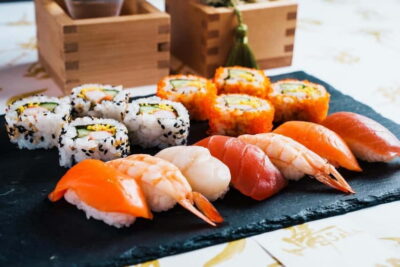 ★ 4.9Tokyo: Roll and Authentic Sushi Making Class in AsakusaFrom $581h 40m
 ★ 4.8Tokyo: Asakusa Walking Tour with Sensoji Temple VisitFrom $222 hours
 ★ 5.0Tokyo Asakusa Rickshaw TourFrom $42
 ★ 4.5Tokyo Panoramic 1 Day: Meiji Shrine, Asakusa, Odaiba and SKYTREE®From $85