Reviewed · SAMURAI & NINJA EXPERIENCES
Tokyo Samurai Experience: Kyudo (Archery) and Swordsmanship
Put on a hakama, pick up a Japanese bow, and learn how to hold a katana in the heart of Asakusa. This one-hour class turns samurai culture into a hands-on activity, with costumes, a playful rank game, archery practice, sword poses, photos, and snacks.
In This Article
- Key Points at a Glance
- Arriving at the Heiwa Building in Asakusa
- Changing Into a Hakama
- A Quick Introduction to Samurai Traditions
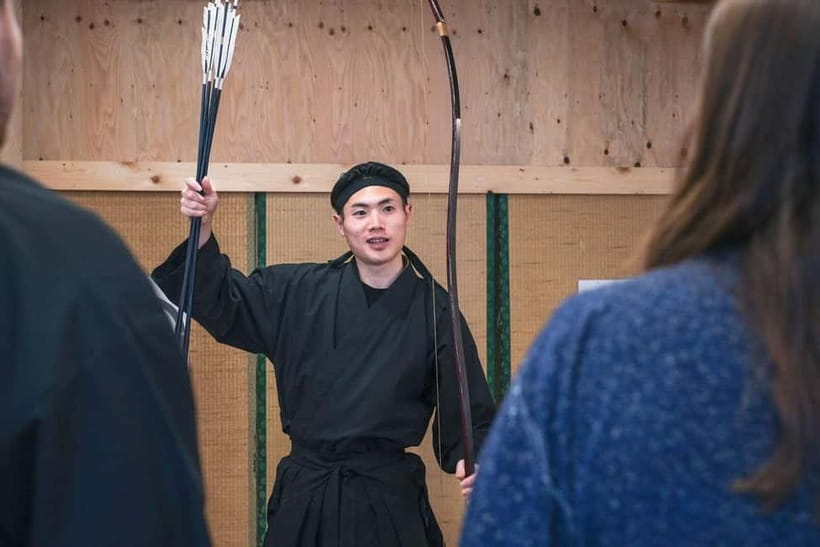
- Learning Kyudo With a Traditional Japanese Bow
- Learning the Katana Stance
- Japanese Snacks and the Social Side of the Class
- English Instruction With Mori and Joe
- Who Will Get the Most From This Activity
- Is $96 a Fair Price?
- Practical Tips Before You Book
- Should You Book the Tokyo Samurai Experience?
- FAQ
- How long does the Tokyo Samurai Experience last?
- Where does the activity take place?
- Do I need prior archery or sword experience?
- Is the activity taught in English?
- What is included in the price?
- What should I wear or bring?
- Is the activity suitable for families and wheelchair users?
- Can I cancel the booking?
I like the mix of kyudo archery and katana technique, since you get two very different sides of samurai training in a short session. I also like the practical setup: several clothing sizes, English-speaking staff, and no prior experience required.
The main drawback is the short length. At $96 per person, you are paying for a polished cultural activity and guided photo opportunity, not a full martial arts course. If you want serious archery training, this will feel more like an introduction.
Key Points at a Glance
- Dress in a hakama: Traditional clothing helps turn a simple class into a memorable photo experience.
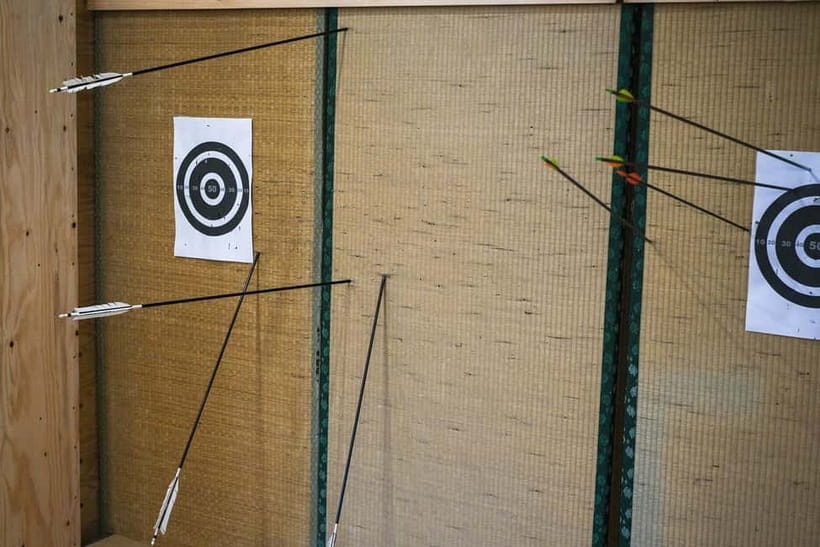
- Try Japanese kyudo: The bow technique differs from Western archery and gives the class a distinctly Japanese feel.
- Learn katana basics: You practice the pose and grip of a single-edged sword rather than taking part in combat.
- Compete for shogun: A short samurai rank game adds humor and friendly competition before training begins.
- Meet English-speaking instructors: Coaches such as Mori and Joe are praised for patience, clear teaching, and a friendly manner.
- Plan for one focused hour: The session suits a busy Tokyo itinerary, families, and first-time visitors.
Arriving at the Heiwa Building in Asakusa
The activity takes place at the BUB Activity Center in Tokyo’s Taito-ku district, at Asakusa 2 Chome 6-11, Heiwa Building. Take the elevator to the fifth floor. The directions are simple once you are at the building, but the fifth-floor location means you should allow time to identify the entrance and elevator.
I would arrive 10 minutes early. That gives you a little breathing room for finding the building, checking in, and changing clothes without cutting into the one-hour class.
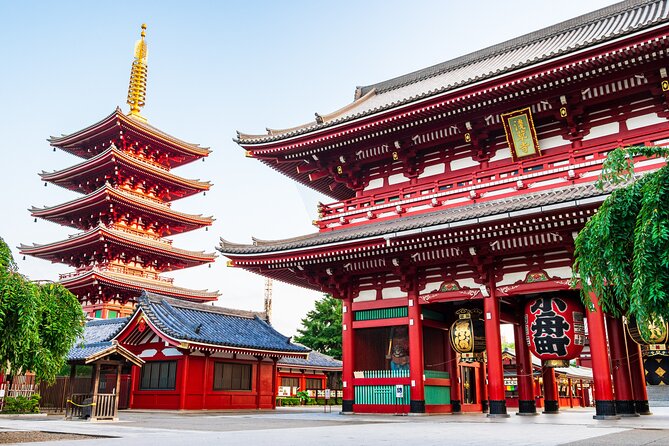
Asakusa is a practical setting for this activity. You can combine the class with sightseeing in the district, but keep your schedule sensible. The class itself is short, and arriving late would matter more here than on a casual drop-in attraction because the costume change and instruction are packed into a tight timetable.
The activity is listed as wheelchair accessible. If you have specific mobility needs, contact the provider before booking so the staff can confirm how the current setup will work for you.
A few more Tokyo tours and experiences worth a look
Changing Into a Hakama
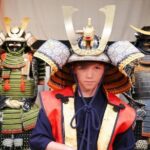
The session begins with a change into a traditional samurai outfit, including the hakama. This is more than a quick costume prop. The clothing gives you the right posture for the photographs and helps separate the class from a standard archery lesson.
Different heights and sizes are available, which is useful for families and mixed groups. You should still wear comfortable clothes underneath and bring comfortable shoes. The provided information does not specify whether footwear is removed during each activity, so practical, easy-to-manage shoes are the safest choice.
The outfit also helps younger participants understand the activity at once. Instead of listening to a long lecture about samurai, you are dressed for the part and ready to learn. That visual change makes the class accessible even if you know little about Japanese martial arts.
Expect the clothing section to be part of the fun rather than a formal ceremony. You will have time for photos, and staff can help you pose. The photos matter because the class moves quickly. You may not get many chances to stop and arrange a perfect shot on your own.
A Quick Introduction to Samurai Traditions
Before the physical training starts, the instructor gives a brief introduction to samurai history and traditions. The word brief matters. This is not a museum lecture or a detailed study of feudal Japan. It is enough context to explain why posture, discipline, and rank are part of the activity.
The lesson then moves into a mini-game that determines your samurai rank. It gives the group an easy way to learn the basic idea of status and competition without turning the class into a serious test.
The useful part is the tone. You can lose the game and still take part fully, since the real training follows. That keeps the activity family-friendly and removes pressure from anyone who does not enjoy competitive games.
I would treat the rank game as an icebreaker. It helps a group relax, especially when several people are meeting the instructor for the first time. It also gives the class a clear story: you begin as a new samurai, train with the bow and sword, and compete for the shogun position.
Learning Kyudo With a Traditional Japanese Bow
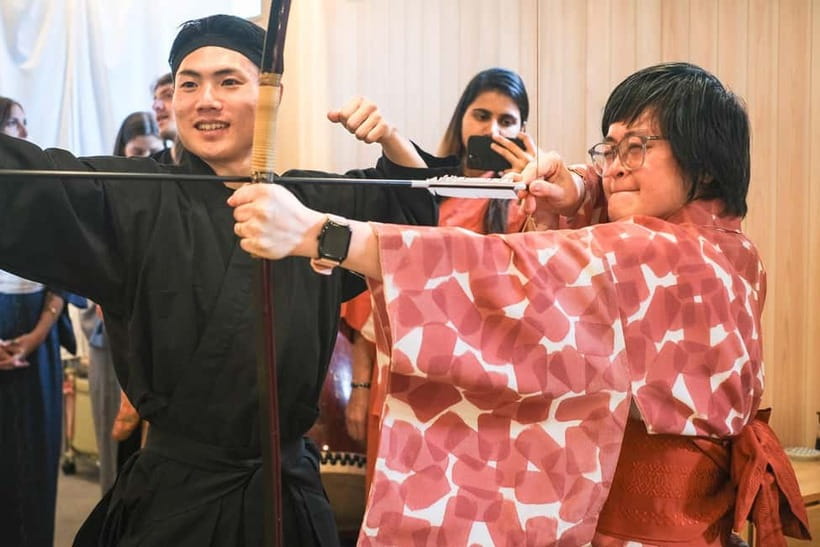
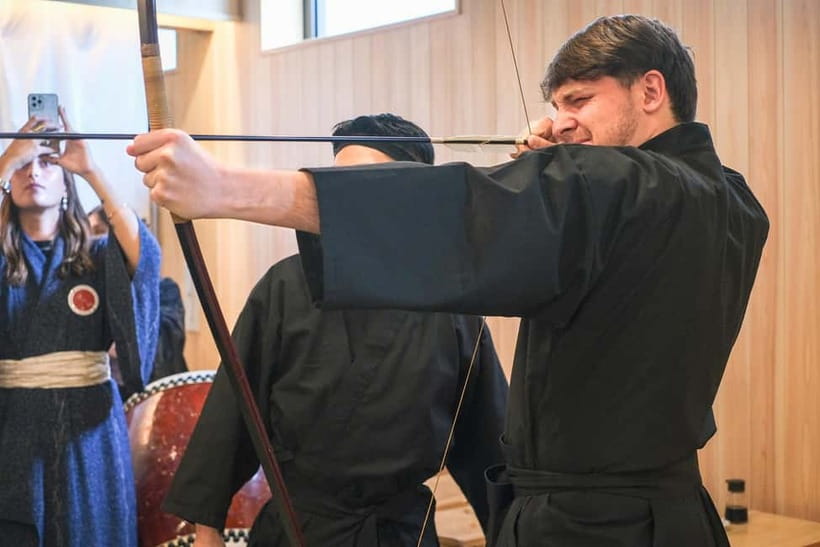
Kyudo is the most distinctive part of the session. Although it uses a bow, it is not simply Western archery with Japanese equipment. The stance, handling, and overall approach are different, and the instructor introduces the basic technique in a way suitable for beginners.
You will use a traditional Japanese bow and compete with friends for the general, or shogun, position. The competitive element gives you a reason to focus, but the class is still designed for people with no prior experience.
The one-hour format means you should expect an introduction to kyudo rather than mastery. The instructor needs to explain safe handling, show the correct posture, and allow each participant to try the technique. Your attention will be split between learning the movement and enjoying the novelty of the equipment.
That is also where the price needs context. At $96, the class costs more than a basic photo stop, but you are receiving instruction, use of traditional equipment, clothing, snacks, and staff assistance with pictures. The value depends on what you want. If you are looking for a memorable cultural activity that includes participation, the package makes sense. If you want repeated practice and detailed correction, the short session may not satisfy you.
The class may be particularly appealing to anyone who has tried target shooting or Western archery and wants to see how a Japanese tradition differs. You should not expect a full technical comparison, but even a short introduction shows that kyudo has its own posture and rhythm.
Learning the Katana Stance
The sword portion focuses on how to hold a single-edged katana and how to create the correct pose. This is a controlled introduction, not a sword-fighting lesson.
That distinction is important. You are learning presentation, grip, posture, and the look of a samurai stance. The instructor helps you find the position that works for photographs and explains how to hold the sword properly.
I like this part because it gives you something concrete to take away. Many costume activities stop at dressing up. Here, you also learn a small piece of technique, even if the class does not have time to cover advanced movement.
Staff help take lots of photos, which is useful when your hands are occupied. You can focus on following instructions instead of trying to set up a phone or ask another participant to capture the moment. Bring your phone if you want extra pictures, but do not assume you will have unlimited time for a personal photo session.
For safety and clarity, follow the instructor’s directions closely. Alcohol and drugs are not allowed, and the activity is intended to be a supervised cultural lesson. Families should find the sword section approachable because it centers on controlled poses rather than fighting.





Japanese Snacks and the Social Side of the Class
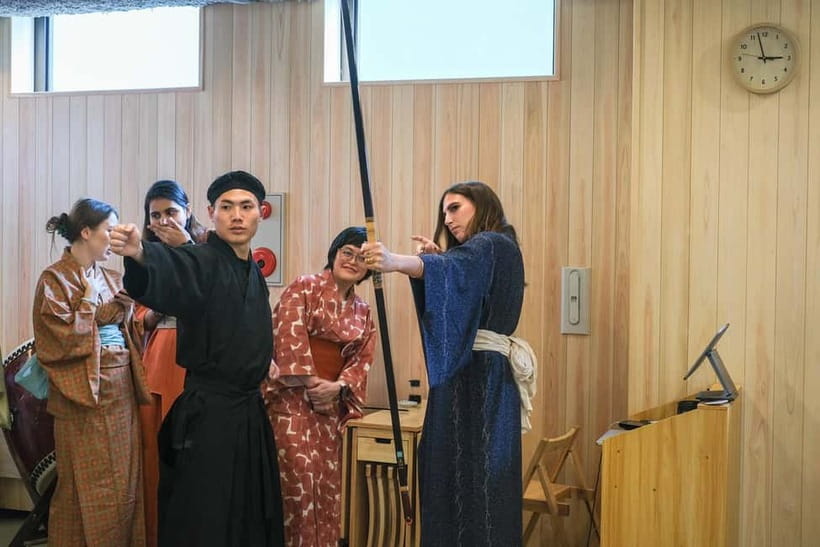
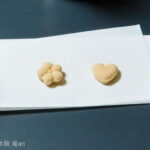
Traditional clothing and Japanese snacks are included. The snacks add a small but welcome cultural touch, especially after you have spent the session concentrating on unfamiliar movements.
Do not book this expecting a meal. The available information describes snacks, not lunch or a tasting course. Think of them as a brief refreshment and another chance to connect the activity with Japanese daily culture.
The class works best when you join in with the playful spirit. The rank game, costume change, archery competition, sword poses, and photos are designed to be shared. If you prefer a quiet, technical lesson with no group activities, this may feel too lighthearted.
For families and groups of friends, that social quality is a strength. Younger participants can enjoy the game and costumes, while adults can focus on the cultural background and the unusual bow technique. The activity is specifically described as family-friendly and suitable for people without previous experience.
English Instruction With Mori and Joe
English is the instructional language, and bilingual staff explain the activities in simple terms. That matters here because posture and grip are easier to learn when instructions are short and clear.
Coach Mori is praised for being patient and friendly, while Joe is noted for clear, helpful instruction. You may not be assigned to either instructor on every date, but their teaching style gives you a sense of the atmosphere to expect: approachable, active, and adapted to different levels of English.
The staff can also offer advice about other experiences and shopping in the area. That can be handy if you are spending the day in Asakusa and want ideas for what to do next. Still, treat that as an extra rather than part of the main product.
A good instructor makes a major difference in a short class. There is no time for a long explanation, so the coach needs to show the movement, correct you quickly, and keep the group moving. The strong feedback on friendliness and patience is especially useful for families, first-time participants, and anyone nervous about English instruction.
Who Will Get the Most From This Activity
I would recommend this class most strongly to:
- First-time visitors who want an interactive Japanese culture activity
- Families with children and young adults
- Couples or friends looking for unusual photographs in Asakusa
- Anyone curious about kyudo but unable to commit to a longer course
- People who enjoy light competition and guided group activities
- Visitors who want a short booking that fits around sightseeing
It is less suitable for a serious martial arts student seeking advanced instruction. One hour is enough to learn basic handling and posture, but not enough to develop a high level of skill.
It is also not the best choice if you dislike dressing up or being photographed. Costumes and pictures are central to the appeal, even though the activity includes genuine instruction.
Is $96 a Fair Price?
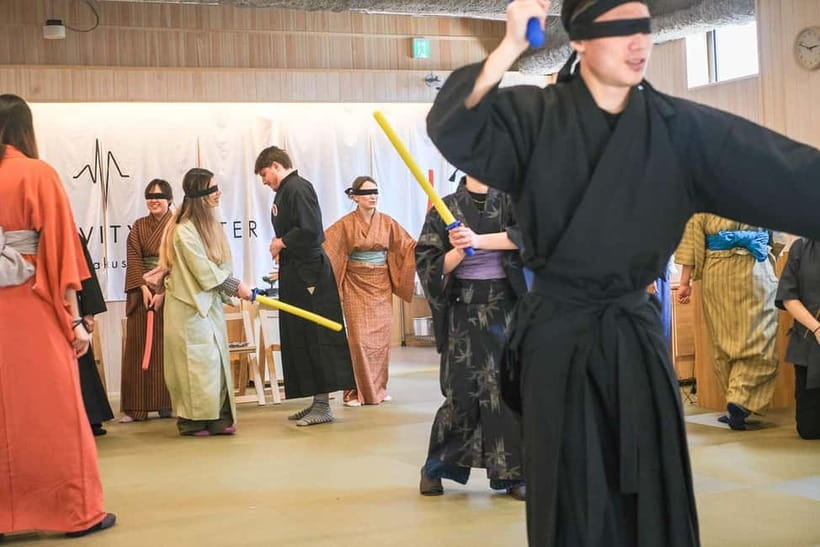
The price is $96 per person. That is not a bargain basement activity, so you should compare it with what you would otherwise spend on a cultural attraction, a guided class, and souvenir-style photographs.
The package includes the hakama outfit, use of a traditional Japanese bow and katana, English instruction, Japanese snacks, and help with photos. You also receive a structured class rather than simply renting costumes for a few minutes.
The strongest value comes from the combination. You are not paying only to hold a sword. You are getting a short program with a beginning, middle, and end: costume change, cultural introduction, rank game, kyudo, katana technique, and pictures.
Still, the price will feel high if you measure value by instruction time alone. The activity lasts one hour, and the archery and sword sections must share that hour with changing, explanation, and the game. I would book it when the experience itself is the priority, not when you are searching for the cheapest way to try archery.
Free cancellation up to 24 hours before the start and a reserve-now, pay-later option make it easier to fit into a changing Tokyo schedule. Check the available starting times before you commit, since the duration is fixed at one hour.
Practical Tips Before You Book
Arrive 10 minutes early and go to the fifth floor of the Heiwa Building by elevator. If you have trouble locating the entrance, contact BUB Activity Center rather than wandering around Asakusa and arriving late.
Wear comfortable clothes under the outfit and choose comfortable shoes. Avoid alcohol and drugs before the class, since they are not allowed.
You do not need previous archery or sword experience. The instructor adapts explanations to your English level, so you can book this even if you know only the basics of Japanese martial arts.
Give yourself enough time after the session if you want to continue sightseeing in Asakusa. The class may leave you with photos and snacks, but it does not include transportation or a wider walking tour of the district.
Should You Book the Tokyo Samurai Experience?
Book it if you want a lively, photo-friendly introduction to samurai culture with real equipment, simple instruction, and a clear one-hour schedule. The mix of kyudo, katana poses, traditional clothing, snacks, and the shogun game gives you more to do than a standard costume rental.
I would especially choose it for families, friends, and first-time visitors who value participation over a long historical lecture. The friendly teaching style associated with Mori and Joe is another reason it works well for mixed ages and English-speaking groups.
Skip it if your main goal is serious kyudo training or advanced swordsmanship. At $96, the activity earns its price through the complete package and the memorable setting, not through lengthy technical practice.
FAQ
How long does the Tokyo Samurai Experience last?
The activity lasts one hour. Check the available starting times when booking.
Where does the activity take place?
It takes place at the BUB Activity Center in the Heiwa Building at Tokyo, Taito-ku, Asakusa, 2 Chome 6-11. Take the elevator to the fifth floor.
Do I need prior archery or sword experience?
No. Prior experience is not necessary.
Is the activity taught in English?
Yes. English-speaking staff provide the instruction, using explanations that can be adapted to your level of English.
What is included in the price?
The activity includes traditional clothing, use of a traditional Japanese bow and katana, Japanese snacks, and bilingual staff.
What should I wear or bring?
Bring comfortable shoes and wear comfortable clothes. The traditional outfit is provided.
Is the activity suitable for families and wheelchair users?
The activity is family-friendly and listed as wheelchair accessible. Contact the activity provider if you need to discuss specific access requirements.
Can I cancel the booking?
You can cancel up to 24 hours in advance for a full refund. A reserve-now, pay-later option is also available.
More Samurai & Ninja Experiences in Tokyo


More tours in Tokyo we've reviewed






Samurai & Ninja Experiences, compared.
 ★ 4.5Tokyo: Samurai Restaurant Show Ticket with 2 DrinksFrom $551h 30m
 ★ 4.6Tokyo: Samurai Ninja Museum Guided tour and ExperienceFrom $27
 ★ 5.0Skip the lines Basic Ticket at SAMURAI NINJA MUSEUM TOKYOFrom $28
 ★ 5.0Tokyo: Authentic Samurai Training at a DojoFrom $211
 ★ 5.0Best Samurai Experience in TokyoFrom $65
 ★ 4.6Tokyo: Legend Samurai Entertainment Night in Kanda ShrineFrom $44