Reviewed · E-BIKES
Tokyo: 3-Hour E-Bike Tour of the City’s Riverside Areas
Tokyo is at its most interesting when you leave the big crossing crowds behind. This three-hour electric-bike ride links Ginza, the old Tsukiji fish-market district, quiet riverside neighborhoods, temples, and Kiyosumi Gardens, giving you a useful look at both polished and everyday Tokyo.
In This Article
- Key points at a glance
- Why this route works so well for Tokyo
- Starting beside Hibiya Park and entering Ginza
- Kabuki-za and the road toward Tsukiji
- Tsukiji Hongan-ji and the Outer Market
- Tsukishima Monja Street and the waterfront districts
- Sumiyoshi Jinja and a quieter Tokyo
- Kiyosumi Gardens: the tour’s calm center
- Fukagawa Fudō-dō and the finish
- What the $78 price gets you
- Who should book this ride?
- Practical details before you reserve
- Should you book it?
- FAQ
- Where does the Tokyo e-bike tour begin?
- Where does the tour finish?
- How long does the bike tour last?
- Is food included in the tour price?
- Do I need to pay to enter Fukagawa Fudō-dō?
- Who can take part in the tour?
I like the small group of up to eight and the route’s mix of famous sights and harder-to-reach streets. I also like that Kiyosumi Gardens admission and bike insurance are included. The main consideration is cycling through Ginza traffic, which one rider found a little challenging, and the tour is not suitable for children under 12 or anyone who cannot ride a bike.
Key points at a glance
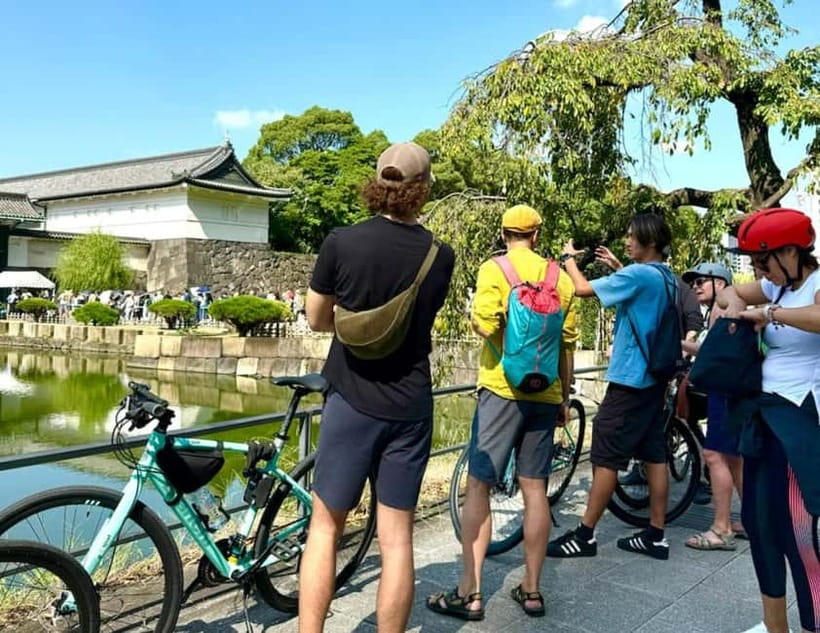
- A different side of Tokyo: Move from Ginza and Kabuki-za to old market lanes, temple grounds, and quieter eastern neighborhoods.
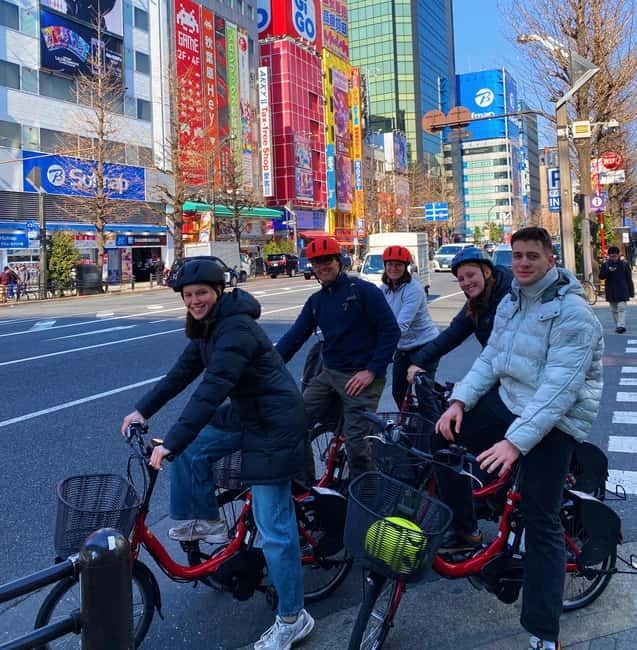
- Electric bikes with baskets: The bikes are supplied with a basket for your bag, making the ride easier for casual cyclists.
- Small-group guidance: A maximum of eight participants allows the guide to keep the ride personal and manageable.
- Several useful stops: Tsukiji Outer Market, Tsukishima Monja Street, Kiyosumi Gardens, and Fukagawa Fudō-dō each show a different part of the city.
- Built for active sightseeing: You cover more ground than on foot, including places that can be awkward to reach by bus.
- Good flexibility: You can cancel up to 24 hours before departure for a full refund, and reserve now while paying later.
Why this route works so well for Tokyo
Tokyo can feel hard to read from a train window. One minute you are beside glass towers and department stores. A few minutes later, you are facing a small shrine, an old shopping street, or a quiet canal.
This ride makes those changes easier to understand. You begin near Hibiya Park and finish in Fukagawa, on the eastern side of central Tokyo. Along the way, you pass through Ginza, Tsukiji, Tsukishima, and Kiyosumi, with stops that explain how commerce, religion, food, gardens, and waterways shaped the city.
I see this as a good first or second Tokyo activity. It is not a full city sightseeing tour, and it does not cover places such as Asakusa, Shibuya, or the Imperial Palace interior. Instead, it gives you a focused look at central and eastern Tokyo, with the advantage of moving between districts under your own power.
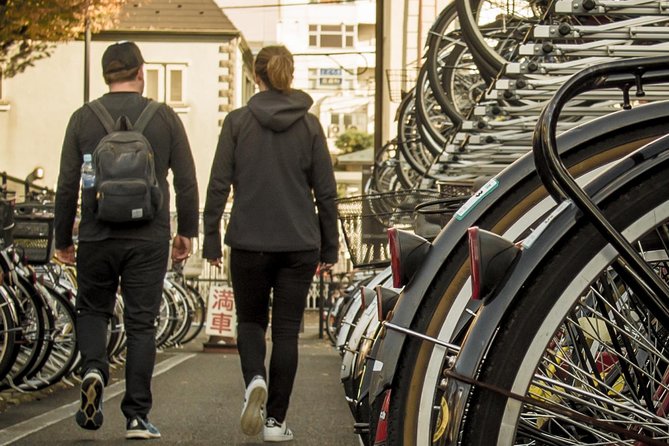
The electric bikes matter. You still pedal, but the bikes make a three-hour ride more realistic for casual cyclists. The operator describes them as high-quality road bikes with baskets, and bike insurance is included. You need to be comfortable riding in an urban setting, though. This is not a traffic-free park circuit.
Other cycling tours in Tokyo
Starting beside Hibiya Park and entering Ginza
The meeting point is to the right of the kiosk in Hibiya Park, at 1-3 Hibiyakōen. Arrive about 10 minutes early so you can find the guide and get ready without rushing.
The first major stop is Ginza, where you have about 10 minutes for a guided visit and photos. Ginza is known for its grand shopping streets, polished storefronts, and broad avenues. It gives the tour an immediate taste of modern Tokyo before the route turns toward older districts.
This is also the part of the ride that deserves the most care. Ginza has heavier traffic than many of the later streets, and one account of the ride specifically noted that crossing the area was a little difficult. Your guide will lead the group, but you should stay alert, keep a steady pace, and follow local cycling instructions.
If you are nervous on a bike, Ginza may be the deciding factor. If you already ride in towns or cities, it should be manageable, but do not expect the entire route to feel like a relaxed riverside path.
Kabuki-za and the road toward Tsukiji
The next stop is Kabuki-za, Tokyo’s famous kabuki theater. The tour allows roughly 10 minutes for photos, a visit, and an explanation from the guide.
Even if you do not attend a performance, the theater is a useful cultural marker. It shows how traditional Japanese stage arts remain part of a modern commercial district. The stop is short, so think of it as an introduction rather than a theater tour.
From there, the route heads toward Tsukiji. This is where the ride begins to feel less like a standard Tokyo highlights tour. You are moving through a district shaped by food, wholesale trade, temples, and the waterfront rather than simply passing between major train stations.
Tsukiji Hongan-ji and the Outer Market
Tsukiji Hongan-ji receives about 15 minutes. The temple is an unexpected sight in this part of the city, with an architectural character that differs from the smaller neighborhood shrines you may see elsewhere in Tokyo.
Your guide can give the stop meaning rather than leaving it as a quick photo background. Pay attention to the contrast between the temple and the commercial streets around it. That contrast is one of the pleasures of this route.
You then spend about 20 minutes at Tsukiji Outer Market. This is one of the most useful stops for anyone interested in Japanese food. You can look around the market area, learn how it relates to Tokyo’s former fish-market trade, and possibly buy a snack.
Food and drinks are not included, so bring money if you want to eat. One rider particularly enjoyed having delicious snacks here. Twenty minutes is enough for a quick taste, but it is not enough for a long, leisurely market meal. You will need to balance browsing, listening, and staying with the group.
The market can also be busy, so you should not expect to cycle through every lane. The bike is most useful for getting you to the district and then helping you continue onward, not for riding inside crowded market spaces.
Tsukishima Monja Street and the waterfront districts
The ride continues to Tsukishima Monja Street, with about 10 minutes for a guided stop. Monjayaki is a Tokyo specialty associated with Tsukishima, and the street gives the tour another food connection after Tsukiji.
The stop is brief, so it is mainly about orientation and local context. If you want a full monjayaki meal, you would need to return on your own another time. The tour price does not cover food.
This section also shows why cycling is useful here. A bus can get you from one major district to another, but it will not give you the same sense of small transitions between neighborhoods. Cycling lets you notice the changes in street scale and pace as the route moves away from Ginza.
A ride through or across the Sumida River area is part of the experience described by participants. The river is not just scenery here. It helps explain why these districts developed around transport, markets, warehouses, temples, and old residential areas.
Other city tours we've reviewed in Tokyo

Sumiyoshi Jinja and a quieter Tokyo
Sumiyoshi Jinja is another short stop, with about 10 minutes for photos and a guided visit. Small shrines such as this can be easy to miss if you are following a standard first-time Tokyo route.
You may find this stop especially valuable if you want a break from department stores, major stations, and crowds. The guide’s stories are an important part of the visit because the shrine itself may not take long to see.
Several guides have led this experience, including Nooki, Casey, Naoki, and Show. The guide assigned to your date may be different, but the tour is offered in English or Japanese. The strongest part of the guiding is not simply naming each sight. It is helping you connect the places, from fish-market commerce to neighborhood worship and river transport.
Kiyosumi Gardens: the tour’s calm center
Kiyosumi Gardens is the longest stop, at about 25 minutes, and admission is included. For many people, this will be the visual and emotional pause of the ride.
Japanese gardens reward slower looking. Rather than racing through for a single photograph, use the time to notice the arrangement of water, paths, plants, and stones. The tour does not promise a long garden visit, but 25 minutes is enough to reset after city riding and enjoy a quieter setting.
The included entrance fee adds real value. You do not have to decide at the gate whether the garden is worth an extra charge, and the stop gives the tour more variety than a simple street ride.
Keep your expectations sensible. This is a guided cycling tour, not a dedicated garden visit. If Kiyosumi Gardens is high on your Tokyo list, you may want to return independently for more time. On the tour, its purpose is to offer a concentrated look at one of Tokyo’s formal green spaces while keeping the larger route moving.
Fukagawa Fudō-dō and the finish
The final stop is Naritasan Fukagawa Fudō-dō, also called Fukagawa Fudō-dō or the Tokyo branch of Naritasan. The guided visit lasts about 20 minutes, and the tour ends here.
This temple gives the route a fitting finish. After seeing commercial Tokyo, market Tokyo, neighborhood shrines, and a garden, you end in a religious setting in Fukagawa. One participant described seeing a Buddhist gathering during the ride, which points to the kind of local activity you might encounter, though it should not be treated as a guaranteed part of every departure.
Entrance to Fukagawa Fudō-dō is optional and costs ¥1,000 per person, payable in cash. The tour ends at the temple, so you do not need to pay or enter if you would rather finish outside.
This is worth planning for. If you want to see inside, carry ¥1,000 in cash for each person. If not, the tour still reaches its official endpoint without that added cost.
What the $78 price gets you
At $78 per person, the tour is not the cheapest way to see Tokyo. You are paying for a three-hour guided route, an electric bike, a basket, bike insurance, a small group, local explanations, and admission to Kiyosumi Gardens.
The value depends on how you like to sightsee. If you are happy using trains and walking between a few major sights, you can spend less. But you will need to plan the route yourself, rent a bike separately, manage city traffic, and find your own way through the less familiar eastern neighborhoods.
I think the price is reasonable for visitors who want access to places that are awkward by bus. It also makes sense for return visitors who have already seen Tokyo’s best-known districts and want a different route. The electric bike and small group reduce some of the effort and uncertainty.
Food, drinks, and the ¥1,000 temple entrance are extra. Budget for your own market snacks and water. You should also bring sunscreen and wear sunglasses if the day is bright.
Who should book this ride?
This experience suits adults and older children who can ride a bike confidently. The minimum age is 12, and the tour is not suitable for pregnant women, people with back problems, or anyone unable to ride.
You should book it if you like active sightseeing, local food areas, temples, gardens, and neighborhoods that do not appear on every first-time Tokyo plan. It is also a good choice if you want a guide to handle the route while you focus on the city around you.
You may prefer a walking tour or a private car if you dislike urban cycling. Ginza traffic is the main concern, and the three-hour duration means you should arrive ready to ride rather than treating this as a series of short photo stops.
The small group is a real advantage. With no more than eight participants, the guide can keep the group together and share more context than a large bus tour usually allows. Guides such as Casey, Nooki, Naoki, and Show have been praised for being friendly, fun, and clear in their explanations, but guide assignments can change.
Practical details before you reserve
Wear comfortable clothes and shoes that work for cycling. Bring water, sunscreen, and sunglasses. Smoking, alcohol, drugs, and littering are not allowed.
The tour lasts three hours, with starting times available according to the date you select. English and Japanese guiding are offered. The activity includes free cancellation up to 24 hours before departure, and you can reserve now and pay later.
Arrive 10 minutes early at the kiosk in Hibiya Park. Bring cash if you may want to enter Fukagawa Fudō-dō or buy something at Tsukiji Outer Market.
Should you book it?
Book this tour if you want real neighborhood Tokyo rather than another circuit of the most crowded sights. The route is strongest when it links places that feel hard to connect on foot: Tsukiji, Tsukishima, Sumiyoshi, Kiyosumi, and Fukagawa.
Skip it if you cannot ride comfortably in city traffic or if you want long visits inside each temple and market. For active visitors, repeat Tokyo visitors, and anyone curious about the city beyond its famous stations, $78 buys a well-planned introduction to Tokyo’s riverside and eastern districts.
FAQ
Where does the Tokyo e-bike tour begin?
The meeting point is to the right of the kiosk in Hibiya Park at 1-3 Hibiyakōen.
Where does the tour finish?
The tour ends at Fukagawa Fudō-dō, the Naritasan Tokyo branch temple.
How long does the bike tour last?
The tour lasts three hours. Starting times vary, so you should check availability for your chosen date.
Is food included in the tour price?
No. Food and drinks are not included. You can buy snacks at Tsukiji Outer Market, but you pay separately.
Do I need to pay to enter Fukagawa Fudō-dō?
Entry is optional and costs ¥1,000 per person, payable in cash. You can finish the tour without entering the temple.
Who can take part in the tour?
The tour is for people aged 12 and older who can ride a bike. It is not suitable for pregnant women, people with back problems, or people who cannot ride.
More E-Bikes in Tokyo
More City Tours in Tokyo
More Cycling Tours in Tokyo
More tours in Tokyo we've reviewed












E-Bikes, compared.
 ★ 5.0Tokyo Top Highlights 3h Guided E-bike TourFrom $63
 ★ 5.03h Tokyo E-Bike Tour: Hidden Gems, and Local Life with guideFrom $63
 ★ 4.8Tokyo: 3-Hour Bike or E-Bike City Highlights TourFrom $453 hours
 ★ 4.8Tokyo: 3-hour Guided E-Bike Tour of the City’s Hidden GemsFrom $65
 ★ 5.0Tokyo: 3-Hour Bike/E-Bike Tour of the City’s HighlightsFrom $63
 ★ 5.03-Hour Tokyo Private E-Bike Tour Starting from Your HotelFrom $145