Reviewed · SUSHI MAKING CLASSES
Tokyo: Wagyu and Sushi Gastronomic Journey
Shinjuku is at its best when you can eat your way through it. This three-hour evening tour pairs Wagyu beef and sushi with a guided walk through Kabukicho, Omoide Yokocho, Hanazono Shrine, and Golden Gai. You get dinner at two food venues, rather than simply a string of photo stops.
In This Article
- What makes this Shinjuku food tour worth considering
- Starting near the 3rd Burger
- Learning why Wagyu costs more
- Sushi prepared with traditional precision
- Kabukicho after dark
- Omoide Yokocho and old-style comfort food
- A quiet stop at Hanazono Shrine
- Golden Gai’s maze of tiny bars
- The guide makes the difference
- Is $154 a good value?
- Who should book this evening?
- Final verdict: book it for food and street life together
- FAQ
- Where does the Tokyo Wagyu and sushi tour meet?
- How long does the tour last?
- Where does the tour finish?
- What food is included?
- Are alcoholic drinks included?
- Is transportation included?
- What is the cancellation policy?
I like the small group, capped at 10 people, and the way the food comes with useful context about Japanese dining. I also like the sharp contrast between a quiet shrine, narrow restaurant lanes, and neon-lit nightlife. The main drawback is the price, $154 per person, which is fair only if you value the guide, dinner, and drinks as much as the food itself.
What makes this Shinjuku food tour worth considering

- Wagyu with context: Learn how Wagyu is valued for its flavor, texture, and regional differences while tasting it as part of dinner.
- Two major Japanese staples: The evening includes both Wagyu beef and sushi, giving you a wider food experience than a single-restaurant meal.
- A compact look at Shinjuku: Walk from Kabukicho to Omoide Yokocho, Hanazono Shrine, and Golden Gai without spending the night on public transport.
- A small English-speaking group: With no more than 10 participants, it should be easier to ask questions and stay with the guide in crowded streets.
- Tokyo nightlife with a quieter pause: Hanazono Shrine offers a calm break between the neon streets and cramped drinking alleys.
- Dinner and drinks included: Alcoholic beverages are available for participants aged 20 and above, though local transportation costs extra.
Starting near the 3rd Burger

The meeting point is just in front of the 3rd Burger at 7-chōme-10-5 Nishishinjuku. I recommend arriving early enough to locate the restaurant and settle in before the group moves off. The tour does not include hotel pickup, so you need to make your own way to the starting point.
This is a walking evening, not a vehicle tour. The stated duration is three hours, though the practical estimate is three to three and a half hours. That extra half hour matters if you have a train reservation, a theater booking, or another fixed plan later in the night.
Your guide speaks English, and the group is limited to 10. That is a useful size for Shinjuku, where large groups can clog narrow lanes and make it hard to hear. A small group also gives you a better chance to ask about ingredients, dining customs, or the streets you are passing.
A few more Tokyo tours and experiences worth a look
Learning why Wagyu costs more
The food focus begins with Wagyu, one of Japan’s best-known specialties. The useful part here is not just eating expensive beef. Your guide explains Wagyu’s background, flavor, and regional variations, giving you a better sense of why different pieces and labels can matter.
The available comments about this tour place strong emphasis on the beef’s tenderness and flavor. One participant, Dana from the United States, singled out the Wagyu as a first Japanese barbecue experience and described it as the evening’s great treat. That makes this a good choice if you have wanted to try Japanese beef but felt unsure how to judge it.
Do not expect a formal beef seminar. This is a food-and-street tour, so the information is designed to help you enjoy dinner, not turn you into a butcher. Still, learning what you are eating makes the meal more rewarding than ordering a costly plate without any background.
The precise style of the Wagyu meal is not fully specified, so you should not book this expecting a particular cut, cooking method, or restaurant name. What is clear is that Wagyu forms one of the two central food stops and that dinner is included.
Sushi prepared with traditional precision

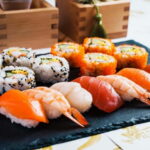
The second food focus is sushi. You watch sushi chefs prepare pieces with careful technique, using seasonal ingredients and traditional methods. The guide adds explanations about the dishes, which can help you notice details you might otherwise miss.
The food praise is especially consistent here. The sushi is repeatedly described as fresh, flavorful, and carefully prepared. That does not mean you should expect a private counter seat or a fixed number of pieces. The tour information does not give those details, so treat the sushi stop as a guided tasting within a larger evening.
I like the pairing of Wagyu and sushi because the foods show two different sides of Japanese dining. Wagyu is rich and substantial. Sushi depends more on balance, freshness, and restraint. Having both in one night gives you a broader introduction to Japanese food than a tour focused only on raw fish or grilled meat.
You visit two distinct food venues. That breaks up the meal and lets you see more of Shinjuku instead of sitting in one restaurant for the full three hours. It also means the experience has a walking rhythm, with food, stories, and street scenes alternating throughout the evening.
Kabukicho after dark
The guided portion through Kabukicho lasts about an hour and a half according to the itinerary, although the complete tour is listed as three to three and a half hours. Kabukicho is Shinjuku’s famous entertainment district, filled with neon signs, restaurants, bars, and nightlife businesses.
The point is not simply to photograph the lights. A guide helps you read the area and understand how its food streets and entertainment venues fit into Tokyo’s evening culture. You may also see the Godzilla Head on top of the Shinjuku Toho Building, a playful landmark that reflects the district’s connection to Japanese pop culture.
Kabukicho can feel intense, especially at night. The streets are crowded, signs compete for your attention, and the district changes character from one block to the next. If you prefer quiet neighborhoods and slow meals, this section may feel busy. If you want to understand why Shinjuku has such a strong nightlife reputation, it gives you a useful introduction.
Stay close to the guide here. The group is small, but Shinjuku is easy to navigate badly when you are watching signs, taking pictures, and trying to remember which lane you just left.
Omoide Yokocho and old-style comfort food
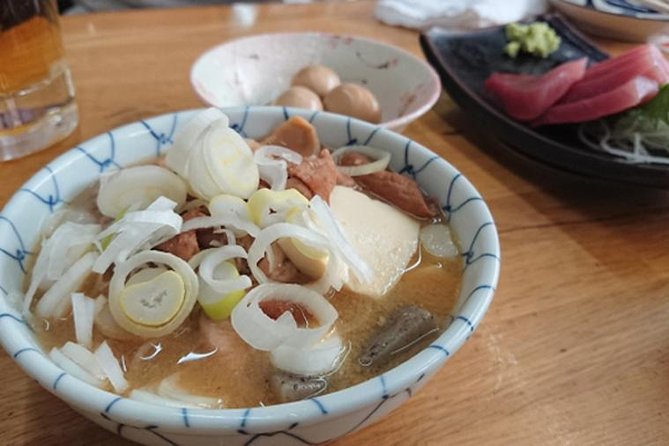
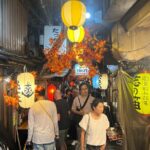
Omoide Yokocho is one of the most atmospheric stops. This narrow alley is known for tiny bars and small eateries, especially places serving yakitori and other Japanese comfort foods. The cramped setting is part of the appeal.
You will not find the spacious layout or polished calm of a large modern restaurant here. Omoide Yokocho is about compact counters, close quarters, and the feeling of food being served in a place built for regular neighborhood use. The tour gives you a way to see this side of Shinjuku without having to choose an alley restaurant at random.
The food included in the tour centers on Wagyu and sushi, while yakitori and other comfort foods are part of the wider street scene. That distinction matters. Do not assume every food mentioned along the route is included in your dinner.
Omoide Yokocho is also a good place to notice how Tokyo uses small spaces. A few seats, a narrow kitchen, and a short menu can create a complete dining world. For me, that is more interesting than simply passing a famous restaurant with a long queue.
A quiet stop at Hanazono Shrine
Hanazono Shrine provides the evening’s change of pace. Set among Shinjuku’s busy streets, it offers a quiet place to pause and learn about traditional Japanese religious practices.
This stop is valuable because it gives the route some balance. Without it, the evening would be all food, lights, and nightlife. The shrine helps you see that Shinjuku is not only a commercial district. Traditional spaces still sit close to the modern city, sometimes just a short walk from the loudest streets.
The tour description does not promise a ceremony or special religious event, so you should expect a visit and explanation rather than a scheduled ritual. Be respectful, keep your voice down, and follow the guide’s instructions about where to stand and how to behave.
For photographers, the shrine may offer a welcome visual break from neon. For everyone else, it is a chance to slow down and reset before entering Golden Gai.
Golden Gai’s maze of tiny bars

The tour finishes in Shinjuku Golden Gai, a group of narrow lanes filled with more than 200 small bars. Each bar can have its own theme and character, and the area offers an intimate look at Tokyo’s post-war drinking culture.
The lanes are famously tight. You are not wandering through a broad entertainment strip with large signs and open plazas. You are moving through a maze of tiny buildings where each doorway may lead to a completely different bar.
The included alcoholic beverages are available to participants aged 20 and above. The information does not specify the exact drink, amount, or bar admission arrangement, so ask your guide what is included when the tour begins. If you do not drink alcohol, confirm how the included beverage is handled.
Golden Gai can be fascinating, but it is not for everyone. Many bars are very small, and some may feel more suited to a quiet drink than a large social gathering. The guide’s role is especially helpful here, since the lanes can be confusing and the etiquette may not be obvious to a first-time visitor.
The tour ends in Golden Gai, rather than returning you to the original meeting point. That is convenient if you want to continue your evening nearby, but you will need to arrange your own way back to your hotel.
The guide makes the difference
The food is the headline, but the guide shapes the night. The strongest praise centers on guides who explain the dishes clearly, add stories about Tokyo dining, and create a friendly atmosphere.
Emma is specifically named in one account. She is described as personable and able to connect the food with broader dining customs and her time in the United States. Other comments describe the guides as warm, enthusiastic, and well informed about Shinjuku and Japanese cuisine.
That personal element matters in a food tour. Without a guide, you can eat Wagyu and sushi. With a good guide, you get help understanding what you are tasting, why the venues were chosen, and how the neighborhood fits together.
Guide quality can vary from one departure to another, so it is wise to arrive ready with a few questions. Ask about the Wagyu’s regional background, the sushi ingredients, and the history of Golden Gai. The small group makes those conversations easier.
Is $154 a good value?
At $154 per person, this is not a budget food walk. You are paying for dinner, two food venues, an English-speaking local guide, the guided route, and alcoholic beverages for participants aged 20 and above.
The value depends on how you would otherwise spend the evening. If you already know where to eat in Shinjuku and feel comfortable choosing restaurants, you may prefer to spend the money directly on a meal. You can explore Kabukicho, Omoide Yokocho, Hanazono Shrine, and Golden Gai without booking a tour.
But if Wagyu and sushi are high on your Tokyo list, the price becomes easier to justify. You get two major Japanese food experiences plus a guided introduction to some of Shinjuku’s most distinctive streets. The food quality receives strong praise, and the small group keeps the evening more personal than a large bus-style outing.
Transportation is not included. Allow roughly 200 to 800 yen for local transport costs, depending on where you are coming from and where you go afterward. Hotel pickup and drop-off are also not included.
Who should book this evening?
I would choose this tour if you are visiting Tokyo for the first time, want a structured night in Shinjuku, and care as much about the story behind the food as the meal itself. It suits couples, solo visitors, and small groups who enjoy walking, eating, and asking questions.
It is also a good fit if you want to try Wagyu and sushi in one evening without planning two separate restaurant reservations. The route gives you a broad look at the district, from shrine grounds to nightlife lanes.
You may want another option if you dislike narrow alleys, crowded nightlife areas, or a fixed group schedule. The tour also may not suit you if you want a long, quiet meal at one restaurant or need exact control over the menu.
The tour allows free cancellation up to 24 hours before departure and offers reserve-now, pay-later booking. If there is no contact from you on the day, the tour may be canceled, with a full refund in that situation. Check the available start time before booking, since the exact departure schedule can change.
Final verdict: book it for food and street life together
Book this tour if you want more than a restaurant meal. The strongest reason to go is the combination of highly praised Wagyu and sushi with a compact, guided walk through Shinjuku’s nightlife districts.
The food is the main draw, while Kabukicho, Omoide Yokocho, Hanazono Shrine, and Golden Gai give the evening shape. At $154, it is a considered purchase, but the included dinner, two venues, guide, and drinks make it reasonable for visitors who want an organized introduction to Japanese food and Shinjuku after dark.
If you prefer to explore independently, save the money and choose your own restaurants. If you want help finding your way through the alleys and understanding what is on your plate, this is a strong three-hour choice.
FAQ
Where does the Tokyo Wagyu and sushi tour meet?
The meeting point is just in front of the 3rd Burger at 7-chōme-10-5 Nishishinjuku.
How long does the tour last?
The listed duration is three hours, while the practical tour estimate is three to three and a half hours.
Where does the tour finish?
The tour finishes in Shinjuku Golden Gai at 新宿ゴールデン街.
What food is included?
Dinner is included, with visits to two distinct food venues. The food focus is Wagyu beef and sushi.
Are alcoholic drinks included?
Alcoholic beverages are available for participants aged 20 and above.
Is transportation included?
No. Transportation costs are not included and may range from 200 yen to 800 yen.
What is the cancellation policy?
You can cancel up to 24 hours in advance for a full refund. The tour also offers reserve-now, pay-later booking.
More Sushi Making Classes in Tokyo
More tours in Tokyo we've reviewed












Sushi Making Classes, compared.
 ★ 5.0Sushi Making Tokyo Roll and Authentic Japanese Sushi ClassFrom $59
 ★ 4.9Tokyo: Roll and Authentic Sushi Making Class in AsakusaFrom $581h 40m
 ★ 4.9Tokyo: Sushi Making Class in a Happi Coat near a Famous SpotFrom $421h 30m
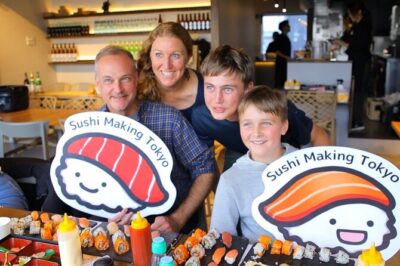 ★ 5.0Sushi Making Tokyo! Popular Maki Sushi & Japanese Sushi(+Recipe!)From $63
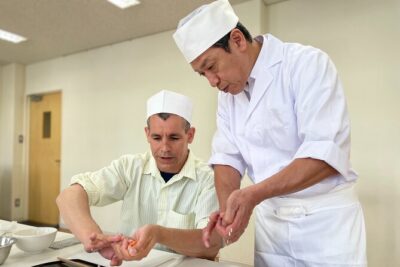 ★ 5.0Tokyo Sushi Making Class in Tsukiji with Professional ChefFrom $49
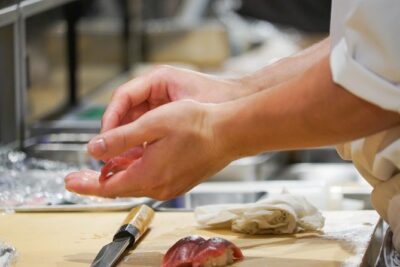 ★ 5.0Tokyo Night Foodie Tour in Shinjuku – Seasonal Sushi, Wagyu BeefFrom $111