Reviewed · TICKETS
Tokyo: Immersive Experience Anemoia Tokyo Ticket
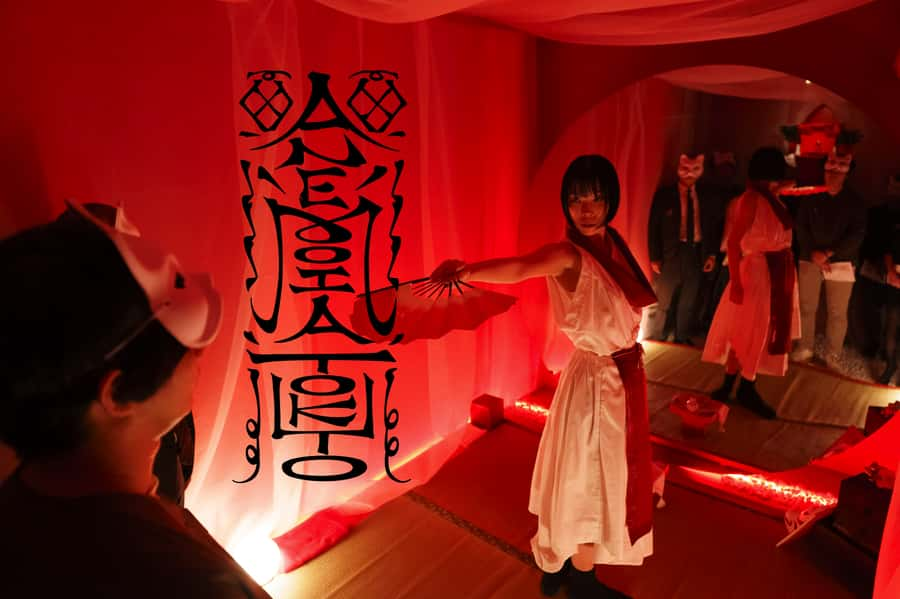
Anemoia Tokyo turns a Tokyo night out into a quiet, strange piece of theater. You enter under an elevated railway, pass through a red curtain, receive a character card, and follow performers through a world built from dance, light, media art, and silence. The show is presented as Japan’s first non-verbal immersive experience, though its unusual format matters more than the label.
In This Article
- Key points to know before booking
- What Anemoia Tokyo is trying to do
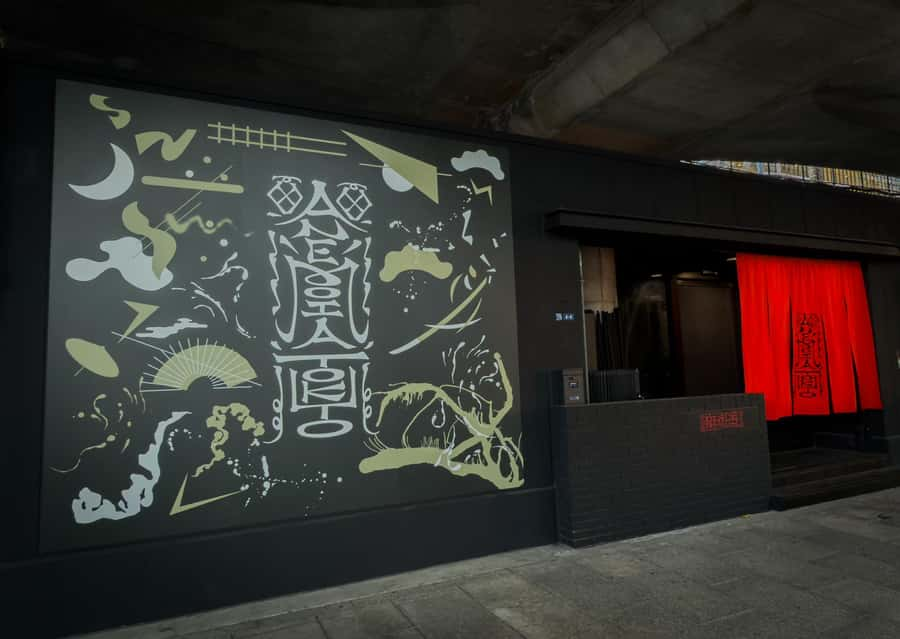
- Finding the red curtain under the railway
- The character card gives you a way in
- The 30-minute pre-show exhibition
- How the 70-minute performance unfolds
- Why the dance works even without words
- Technology and Japanese aesthetics
- The venue’s limits matter
- Timing and the best show slot
- Is $96 a fair price?
- Who will enjoy this most
- Should you book Anemoia Tokyo?
- FAQ
- How long does Anemoia Tokyo last?
- What time does the experience begin?
- How early should I arrive?
- Where is the meeting point?
- Is the performance spoken?
- Can I use my phone during the show?
- Is the experience suitable for children?
- Is Anemoia Tokyo wheelchair accessible?
I like two things right away: language is not a barrier, and every performer’s body carries real emotional force. I also like the pre-show exhibition, which gives you time to inspect the setting before the action begins. The main consideration is the price, $96 for about 70 minutes, plus the dark, cramped, stair-filled venue may not suit every visitor.
Key points to know before booking
- Follow one performer, not a fixed route: Your character card helps you choose a figure and follow that person’s mental journey.
- The audience stays silent: Conversation is not allowed once you enter, and masks are part of the experience.
- Several scenes happen at once: You will see only part of the full story, which makes each visit personal but also means you can miss major moments.
- Arrive early for the art display: Doors open 30 minutes before showtime, and photography is allowed in the exhibition until five minutes before the performance.
- Expect physical demands: Small dark areas, stairs, overhead hazards, flashing lights, smoke, and sudden blackouts are part of the production.
- The $96 ticket includes a gift: The HIS special plan includes original Anemoia Tokyo goods, adding some value to an otherwise pricey short performance.
What Anemoia Tokyo is trying to do
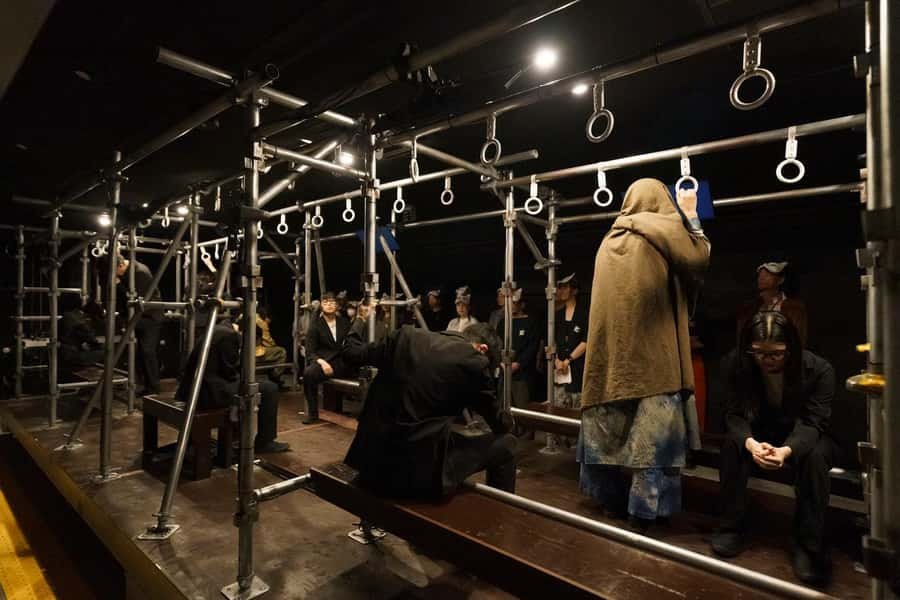
DAZZLE, the dance company behind the show, uses movement and media art to offer a modern reading of Japanese aesthetics. This is not a seated theater performance where you watch from one angle and wait for a plot to unfold in front of you.
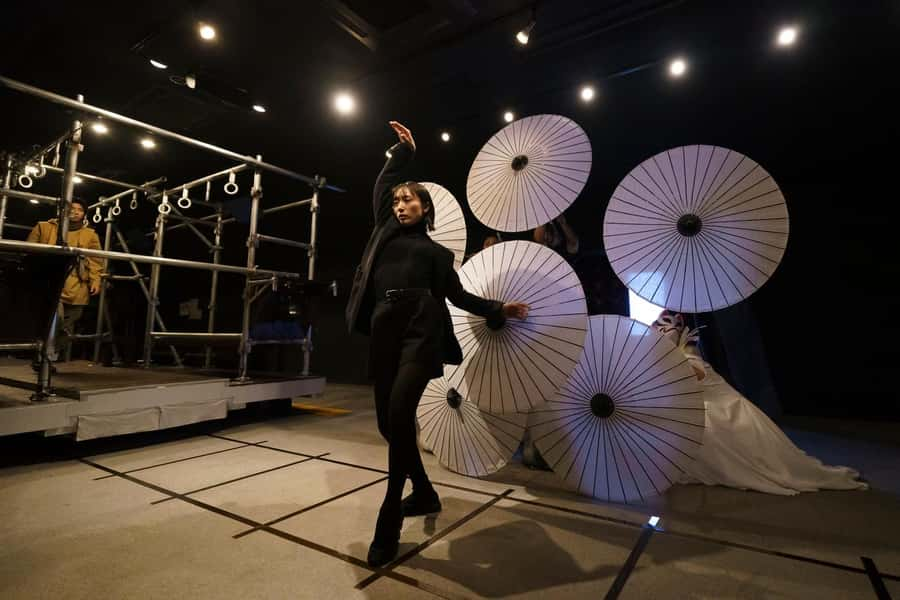
You move through the venue with the cast. Performers appear close to you, and several scenes run at the same time in different parts of the building. Your experience depends on where you stand, which character you follow, and what catches your eye.
That structure can feel personal and exciting. It can also be confusing if you prefer a clear beginning, middle, and end. Anemoia Tokyo asks you to accept incomplete information. You are not given every scene. You are not meant to discuss your reactions during the show. Instead, you watch, choose, and interpret.
The lack of spoken dialogue is a major strength. You do not need Japanese language skills, subtitles, or a long explanation of cultural references before the performance. The story is carried by posture, rhythm, facial expression, space, sound, and technology.
A few more Tokyo tours and experiences worth a look
Finding the red curtain under the railway
The meeting point is under the elevated railway. Look for the red curtain, or noren, and the Anemoia Tokyo logo. This is a useful landmark because the experience does not meet you at a conventional theater entrance with a large lobby and obvious ticket windows.
Give yourself enough time to locate the curtain and settle in. The doors open 30 minutes before the performance, and that early period is not dead time. It is part of the visit.
The venue’s setting under the railway adds to the feeling that you are stepping away from ordinary Tokyo for a while. Still, the supplied directions are simple rather than detailed, so check your route before you leave your hotel. A late arrival could mean missing the exhibition period or entering when the production has already begun.
The show has a firm age limit: children under 16 are not permitted. That rule fits the tone and physical conditions of the production, which may be intense rather than family-friendly.
The character card gives you a way in
Before the performance, you receive a character card. It outlines the personalities of important figures and offers a glimpse of the world you are about to enter.
Use it. The card is not just a souvenir or a short plot handout. It gives you a practical choice: pick a particular performer and follow that person’s mental journey. You cannot follow every character at once, so this small piece of information helps you decide where to place your attention.
I would read the card carefully before the doors open. Once the performance starts, you will have little chance to stop and work out who is who. If you find a character whose description interests you, keep that person in sight when possible.
The format also rewards a second thought after the show. You may understand one character’s path while knowing very little about another. That is not a mistake. The production is designed around separate lines of action, so your point of view becomes part of the story.
The 30-minute pre-show exhibition
From the time the doors open until five minutes before the performance, you can freely view the artworks in the venue. This is your chance to get your bearings, notice the spaces, and take photographs before the show begins.
Photography is limited to smartphones, and a few works cannot be photographed. Do not use flash. Do not touch the exhibits, make noise, or block other people while taking pictures. Staff may ask you to leave if your photography disrupts the experience.
This exhibition period adds value to the ticket, especially if you arrive early. You are not simply standing around before a show. You are looking at the visual world that will soon become the setting for the dance.
Plan your photos before the five-minute cutoff. Once the performance starts, mobile phone use is strictly forbidden except in an emergency. The restriction is firm, much like the rule against speaking.
How the 70-minute performance unfolds
When the show starts, actors guide you into the performance space. You watch them at close range, then move with the action as scenes appear around the venue.
There is no single route that everyone follows. Several story lines operate at once, with different scenes taking place throughout the building. One group might be watching a central movement sequence while another group is following a different performer into another area.
That arrangement gives the production its strongest quality: discovery. You are not looking at a stage from a fixed seat. Your attention shifts from a dancer’s physical detail to a larger media image, then back to a performer nearby.
It also creates a real trade-off. You will miss some material. If you spend too long with one character, another scene may pass elsewhere. If you are determined to see everything, you may spend the show worrying about where you should be next. My advice is to choose one character early and accept that your story will be incomplete.
The audience wears masks, and speaking is forbidden. The silence is not a minor request. It changes the mood and removes the normal social habits of a theater visit. You cannot whisper an explanation to a companion or compare reactions as the action unfolds.
That may feel restrictive at first. It can also sharpen your attention. Without conversation, you notice small changes in movement and expression. The show asks you to confront your own response rather than borrow someone else’s.
A few more Tokyo tours and experiences worth a look

Why the dance works even without words
The strongest feature of Anemoia Tokyo is the physical performance. DAZZLE’s dancers communicate through controlled movement, sudden force, and emotional shifts that do not depend on translation.
The supplied feedback points to the same strengths repeatedly: powerful body language, strong feeling, carefully designed scenes, and a visual presentation that feels both refined and spacious. Those qualities matter because a non-verbal show can easily become vague. Here, the performers give you something concrete to follow.
You may not understand every symbolic detail, and the production does not appear designed to explain itself in plain terms. But you can still read tension, isolation, pursuit, hesitation, or release through the performers’ bodies.
The close distance changes the way you watch dance. From far away, a movement reads as shape. At close range, you notice effort, stillness, breath, and the speed of a change in direction. The production uses that closeness to make the performers feel part of your immediate space.
Technology and Japanese aesthetics
Anemoia Tokyo connects traditional ideas of Japanese visual restraint with modern media and technology. The result is not a museum display of old Japan. It is a contemporary art performance that uses controlled space, masks, silence, movement, and carefully placed visual elements.
The media art is not just background decoration. It helps shape the mood and expands the performance beyond the human body. The artworks you see before the show prepare you for a setting where physical and digital elements share equal weight.
You should not expect a standard cultural lesson. There is no indication that the performance explains Japanese aesthetics through narration or a guided talk. Instead, you encounter an artistic interpretation and decide what it means to you.
That makes the show a good choice for visitors who want Tokyo’s current art scene rather than another historical attraction. It is also a good choice if you have already seen plenty of conventional theater and want a format that asks more from your attention.
The venue’s limits matter
Read the safety information before paying. Some areas are small and dark. There may be stairs and overhead hazards, sudden darkening, flashing lights, and smoke. The production may cause hyperventilation for some people.
The venue is not suitable for wheelchair users because of its structure. Food and drinks are not allowed, and smoking is prohibited. Touching the exhibits, using flash, and making noise are also forbidden.
These are not minor technical notes. You spend the show moving through a purpose-built environment, sometimes in low light and confined spaces. Wear comfortable shoes and clothing that lets you move safely, though the available information does not specify a dress code.
If flashing lights, smoke, sudden darkness, or enclosed spaces are a serious concern for you, this may not be a comfortable choice. The same applies if you need step-free access or want to keep your phone available during a performance.
Timing and the best show slot
The published times are:
- Monday to Saturday: 16:00, 18:30, and 21:00
- Sunday and holidays: 13:30, 16:00, and 18:30
The venue is closed Mondays and Wednesdays except when those days are national holidays, so check the calendar carefully. The schedule information contains both weekday times and closure exceptions. Do not assume every listed weekday slot operates on every week.
A 16:00 show gives you a practical evening afterward. The 18:30 performance fits neatly between sightseeing and dinner, though you must remember that eating and drinking are not allowed inside. The 21:00 slot is for people who enjoy late-night art and can manage a more unusual end to the day.
Arrive before the doors open if the exhibition interests you. The full visit is not just the 70-minute show. The pre-show display gives you a chance to study the venue and take permitted smartphone photos before the rules become stricter.
Is $96 a fair price?
At $96 per person, Anemoia Tokyo is an expensive 70-minute activity. You are paying for a specialized theater production, a controlled environment, close-range dance, media art, and the chance to choose your own path through the story.
The HIS special ticket plan also includes original Anemoia Tokyo goods. The exact item is not specified, so treat it as a pleasant extra rather than a reason to buy the ticket by itself.
The value depends on what you want from Tokyo. If you measure entertainment by length, the price may feel high. If you want a one-of-a-kind art event that does not depend on Japanese conversation, the cost becomes easier to justify.
I would compare it with the price of a major stage performance or a high-end cultural event, not with a basic sightseeing stop. The experience is short, but it is carefully structured and difficult to reproduce elsewhere.
The rating is 4.6 from three reviews, with especially strong approval for the language-free format, emotional dance, and visual design. That small number means you should treat the rating as encouraging rather than conclusive. The practical details about darkness, silence, stairs, and limited sight lines are more useful for deciding if it fits you.
Who will enjoy this most
Book Anemoia Tokyo if you enjoy contemporary dance, experimental theater, visual art, or unusual Tokyo nightlife. It is especially appealing if you want an artistic experience that does not require Japanese language ability.
It also suits solo visitors. You do not talk during the show, and your chosen character shapes your route, so you can concentrate without worrying about explaining every scene to a companion.
Couples and friends can enjoy it too, but plan to discuss the experience afterward rather than during it. The silence is part of the design, not an inconvenience to work around.
I would skip it if you want a clear plot, a seated show, or a relaxed attraction with no physical demands. It is also a poor match for anyone under 16, anyone using a wheelchair, or anyone sensitive to flashing lights, smoke, sudden darkness, or tight areas.
Should you book Anemoia Tokyo?
Book it if you want a serious, wordless art experience and are willing to pay $96 for 70 minutes of close-range dance and media art. Arrive early, read the character card, choose one performer to follow, and accept that you will not see every scene.
Skip it if the price feels out of proportion to the length, or if silence, masks, stairs, darkness, and changing scenes sound stressful. For the right audience, Anemoia Tokyo offers a memorable look at Tokyo’s experimental side. For everyone else, a conventional performance may be a better use of both time and money.
Free cancellation is available up to 24 hours before the start for a full refund, and you can reserve now and pay later. That flexibility helps if your Tokyo schedule is still shifting, but check the official supplier disclaimer before purchase because cast changes do not qualify for a refund.
FAQ
How long does Anemoia Tokyo last?
The performance lasts approximately 70 minutes.
What time does the experience begin?
Monday to Saturday performances are listed at 16:00, 18:30, and 21:00. Sunday and holiday performances are listed at 13:30, 16:00, and 18:30. The venue is closed Mondays and Wednesdays except on national holidays.
How early should I arrive?
Doors open 30 minutes before the scheduled start. Arriving early lets you view the on-site artworks and take permitted smartphone photographs before the exhibition period ends five minutes before showtime.
Where is the meeting point?
The meeting point is under the elevated railway. Look for the red curtain, or noren, and the Anemoia Tokyo logo.
Is the performance spoken?
It is a non-verbal performance. Once you enter, conversation is not allowed, and the audience wears masks.
Can I use my phone during the show?
Mobile phone use is strictly prohibited after the performance begins, except in an emergency. Smartphone photography is permitted during the pre-show exhibition, except for certain artworks. Flash photography is not allowed.
Is the experience suitable for children?
No. The experience is not suitable for children under 16.
Is Anemoia Tokyo wheelchair accessible?
No. The venue is not suitable for wheelchair users because of its structure. Some areas are small and dark, and the production includes stairs, overhead hazards, flashing lights, smoke, and sudden darkening.
More Tickets in Tokyo
More Tickets & Passes in Tokyo


More tours in Tokyo we've reviewed

Tickets, compared.
 ★ 4.5Tokyo: TOKYO SKYTREE® Admission ticketFrom $131 day
 ★ 4.6Tokyo: teamLab Planets TOKYO Digital Art Museum Entry TicketFrom $251 day
 ★ 3.9Tokyo: Hop-On Hop-Off Sightseeing Bus TicketFrom $301 - 2 days
 ★ 4.6Tokyo Tower: Admission TicketFrom $91 hour - 3 days
 ★ 4.8Tokyo: Japanese Dance Cabaret Theater Asakusa-Kaguwa TicketFrom $492 hours
 ★ 4.5Tokyo: Kamakura & Enoshima Day Trip including Temple TicketsFrom $589 hours - 570 minutes