Reviewed · TSUKIJI MARKET TOURS
Tsukiji Market Eating Tour, Authentic Sushi & Sake Comparison
Tsukiji is easiest to enjoy when someone helps you make sense of its many narrow lanes, food stalls, shrines, and specialty shops. This small-group tour combines market tastings and a real sushi lunch, with three types of sake available for comparison.
In This Article
- Key points to know before booking
- Why a guide helps at Tsukiji Market
- Tsukiji Hongwanji Temple sets the scene
- Tsukiji Jogai Market, where the food story begins
- Sake comparison gives the tour an adult focus
- Fresh seafood and the chance of a tuna demonstration
- Namiyoke Inari Shrine and the working market
- The sushi lunch is the main event
- What the $30 price really gives you
- Who will enjoy this food walk most
- Practical advice for making the most of it
- Should you book the Tsukiji Market Eating Tour?
- FAQ
- Where does the Tsukiji Market Eating Tour start?
- How long does the tour last?
- How many people can join the tour?
- Is the tour conducted in English?
- Is sushi included?
- What snacks are included?
- Is sake included?
- Are temple and shrine visits part of the tour?
- Is transportation included?
- Can I cancel for a full refund?
I like the small maximum of six people, which makes it easier to hear your guide and ask questions. I also like the mix of food and tradition: you visit Tsukiji Hongwanji Temple and Namiyoke Inari Shrine, not just seafood counters. The main consideration is timing and reliability, since one poor report describes a late cancellation after the customer had already reached the meeting point.
Key points to know before booking

- Ariel receives especially warm praise: She is described as friendly, enthusiastic, and easy to spend a few hours with.
- The group is capped at six people: This suits you if you want clear explanations and a more personal walk.
- Food is spread across the tour: Expect market snacks, tea, dashi, sweets, and a sushi lunch at the end.
- Sake comparison is part of the food experience: You can compare several Japanese sake brands and styles.
- The route includes two places of worship: Tsukiji Hongwanji Temple and Namiyoke Inari Shrine add local context.
- The price is low for a guided food walk: At about $30, the included tastings and lunch make the tour especially appealing if the listed inclusions are available as described.
Why a guide helps at Tsukiji Market
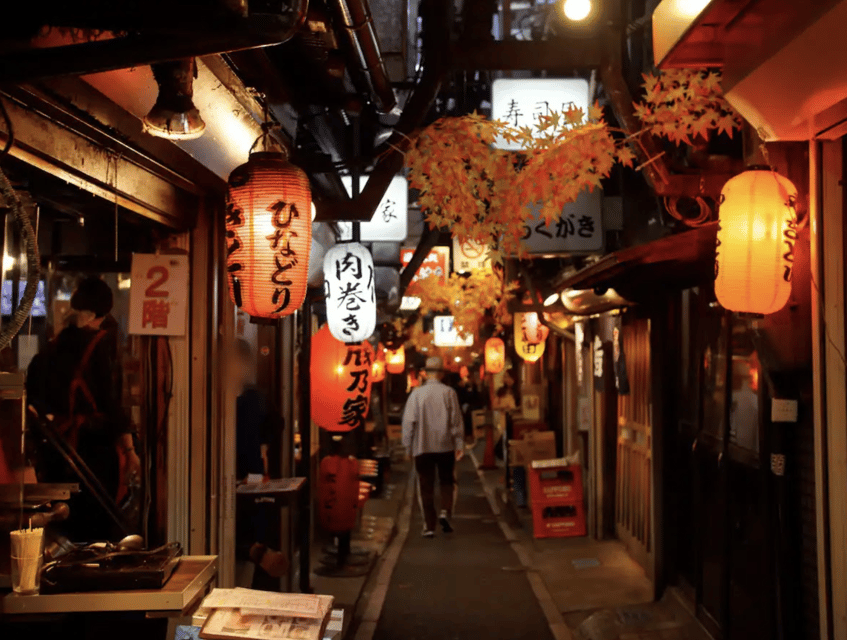
Tsukiji is not one simple fish hall. The outer market, known as Tsukiji Jogai Market, is a dense group of more than 400 shops selling seafood, knives, cooking tools, sweets, soup stock, sake, and prepared food. It is easy to walk past something interesting without knowing what it is or how it fits into Japanese cooking.
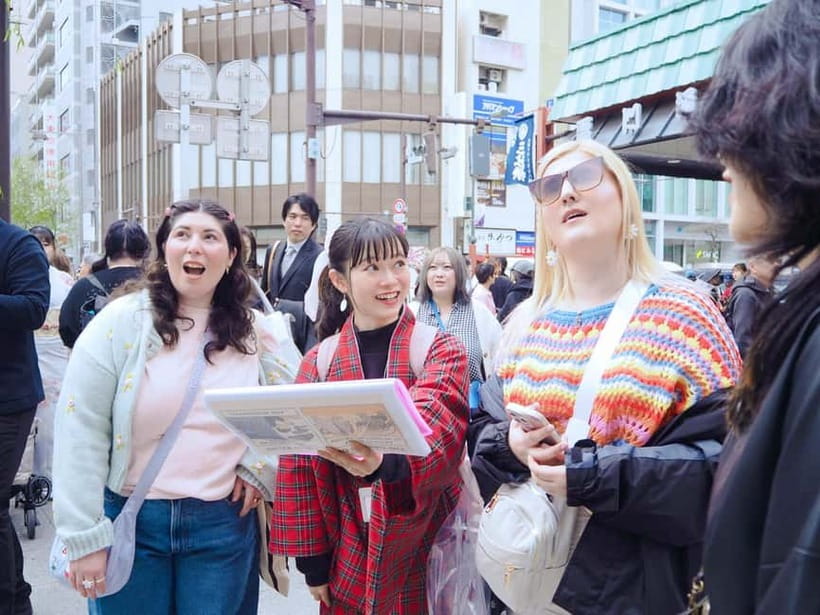
That is where this tour earns its keep. Your guide leads you through the market instead of leaving you to guess which lane to take or which stall is worth your time. You can ask questions as you go, and the small group means you should be able to hear the answers.
Ariel is the guide name that appears most often in the supplied feedback. She is praised for her energy, kindness, and ability to explain both the market and other parts of Tokyo. One family with children aged 8 and 14 found the experience easy to enjoy together, while another group described the outing as more like visiting the market with a friend than joining a formal tour.
That personal tone matters here. Tsukiji works best when you can stop to look, ask what you are seeing, and decide which foods interest you. A large group would make that harder.
A few more Tokyo tours and experiences worth a look
Tsukiji Hongwanji Temple sets the scene

The tour begins at Tsukiji Station, at 3 Chome-9 Tsukiji, and walks first to Tsukiji Hongwanji Temple. You spend about 10 minutes here, with no admission charge.
This is not a standard Japanese temple exterior. Its design draws on ancient Buddhist architecture from India and other parts of Asia. Stained glass appears at the entrance to the main hall, and animal sculptures add unusual details to the grounds.
The short stop gives you a useful change of pace before the food stalls. You get a quick look at a place of worship tied to the neighborhood, then move toward the market that has supported the area’s food trade for decades.
Do not expect a long temple visit. Ten minutes is enough for a look and a few questions, but not for an extended examination of the buildings. That is fine for this tour, since the main focus remains food and the market.
Tsukiji Jogai Market, where the food story begins
The first market visit lasts about an hour. This is the part where the tour can feel most useful, since your guide knows the area and can adjust the route to your interests.
You might see fresh seafood, Japanese knives, other cooking tools, sweets, soup stock, tea, and sake. Some tastings are included, and the food list gives you a sense of the range: egg omelet, strawberry daifuku, dashi, Japanese tea, and nuts are among the possible offerings.
That range is a strength. Tsukiji is not only about raw fish. Dashi introduces you to the savory stock used in many Japanese dishes. Tamagoyaki, or Japanese egg omelet, shows a softer and sweeter side of market food. Strawberry daifuku brings in the chewy rice cake and sweet filling found in many Japanese confectioneries.
The guide’s role is important because you may not know what to buy from a stall or how a product is normally used. You can also browse for souvenirs, particularly cooking tools, sweets, and packaged ingredients.
The precise tasting menu can vary, so I would not book this expecting a fixed list of every snack. The useful promise is variety, not a guaranteed sequence. If you have strong food preferences, tell the guide early and ask what can be adjusted.
Sake comparison gives the tour an adult focus

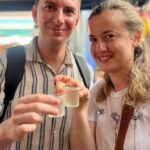
The sake portion lets you compare several types from different Japanese brands. This is a better way to approach sake than ordering one glass without context. You can notice how the flavors differ and ask your guide about what you are drinking.
The experience is described as a comparison of three kinds of sake. Alcoholic beverages are included when you choose the sake comparison option, so check that your booking includes this choice if it is important to you.
Sake adds a social and cultural layer to the market walk, but it also makes the tour less suitable for anyone who does not drink alcohol. The basic food element remains the bigger part of the experience, with tea and other snacks included as well.
If you are traveling with children, the food stops still offer plenty to sample. The supplied information also confirms that a family with children aged 8 and 14 took part successfully. The sake portion, naturally, is for adults.
Fresh seafood and the chance of a tuna demonstration

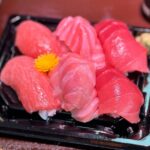
The route then includes a stop described as Tsukiji Fish Market, lasting about 45 minutes. This is a shopping center with specialty shops selling fresh seafood, and culinary buyers also come here for ingredients.
You get a close look at seafood that may be unfamiliar. The market setting gives you a more direct connection to Japanese food than a restaurant meal alone. You see the products before they appear on a plate, and your guide can help explain what you are looking at.
If the timing is right, you may also watch a tuna dismantling demonstration. Treat this as a possibility rather than a guaranteed event. Market activity and demonstration times can change, and the tour details do not promise that every group will see one.
This stop is also useful if you want to buy food-related souvenirs. Just remember that personal purchases are not included in the price. The tour takes you to the shops, but anything you buy beyond the included food is your own expense.
A few more Tokyo tours and experiences worth a look

Namiyoke Inari Shrine and the working market

The next stop is Namiyoke Inari Shrine, located in a corner of Tsukiji Market. You spend about 10 minutes here.
Fishermen and market workers pray at the shrine for safety. That detail helps explain why the shrine belongs in a food-market tour. It is not simply an extra photo stop. The shrine reflects the people whose work keeps the market supplied and operating.
A distinctive lion statue is one of the features you can see. The visit is brief, but it adds a bit of local belief and working-life context to the seafood trade.
Like the temple visit, this stop will not satisfy you if you want a long religious sightseeing tour. Its value is in the connection between the market, the people who work there, and the traditions surrounding them.
The sushi lunch is the main event

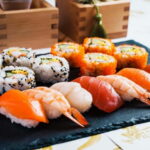
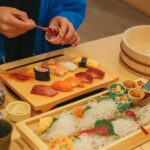
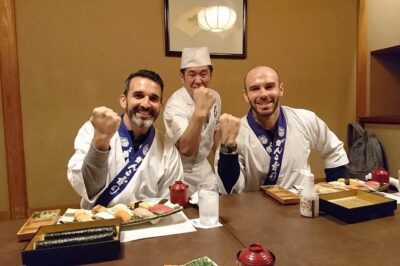
The tour ends with a 45-minute sushi lunch at an authentic sushi restaurant in the Tsukiji area. The meal uses fresh seafood from the market and is included in the tour price.
This is the part that receives the strongest praise in the supplied feedback. Several people describe the sushi lunch as the highlight, and one calls it the best sushi they have had. Another says the lunch was amazing after a food walk that included skewers, desserts, sake, and sushi.
I would treat those statements as enthusiasm rather than a guarantee that the meal will suit every palate. Still, the structure makes sense. You first see the market, taste small items, learn about sake, and then finish with sushi prepared from the same food culture you have been exploring.
The 45-minute length suggests a focused lunch rather than a long, leisurely restaurant sitting. That is helpful if you want to keep sightseeing afterward. It also means the meal is one part of a wider food walk, not the only reason to book.
If sushi is your priority, this tour offers better value than simply reserving a meal on your own because the lunch is paired with market access and guided tastings. If you only want a high-end sushi dinner, a dedicated restaurant booking may be more suitable.
What the $30 price really gives you

At about $30, this is an unusually inexpensive way to combine a guided market walk, snacks, sake comparison, and sushi lunch. The price includes an English-speaking local guide, food tastings, the sushi lunch, and the Kanji name sticker provided as a small souvenir.
The value is strongest for first-time visitors to Tsukiji. You are paying not only for food, but also for direction through a complicated market and help deciding what deserves your attention.
The price does not cover private transportation, hotel pickup, extra meals, drinks beyond the stated inclusions, or personal purchases. You meet the group at Tsukiji Station and make your own way there.
Because the tour lasts about three hours, it can fit neatly into a Tokyo day. You might schedule it before another activity in central Tokyo, but leave yourself enough time to reach the meeting point. The tour is near public transportation, which makes the start practical.
One caution is worth noting. A single poor experience describes a customer arriving at the correct meeting place and finding nobody there, followed later by notice of cancellation. The overall score is 4.9 from 52 ratings, with 98 percent recommending the experience, so this appears to be an isolated problem rather than the normal pattern. Still, I would keep your phone available on the day and confirm any last-minute updates.
Who will enjoy this food walk most
I would choose this tour if you want a guided introduction to Tsukiji without paying for a full private food itinerary. The six-person maximum gives you a better chance to talk with the guide than a large coach tour would.
It is a good fit for:
- First-time visitors who want help finding the worthwhile parts of Tsukiji
- Food-focused visitors who want more than sushi alone
- Adults interested in comparing Japanese sake
- Families who want a short, varied activity
- Shoppers looking for knives, cooking tools, sweets, seafood products, or sake
- Visitors who prefer a local guide to explain customs and ingredients
You may want another option if you dislike raw fish, do not drink alcohol, or prefer to choose every dish yourself. The tour includes a set of food experiences, and the exact snack selection may change.
It also may not suit you if you want a quiet, slow temple tour. The religious stops are short and serve as context for the market rather than as the main attraction.
Practical advice for making the most of it
Arrive at Tsukiji Station with enough time to find the meeting point. The start location is listed at 3 Chome-9 Tsukiji, Chuo City, Tokyo 104-0045, Japan.
Bring an appetite, but do not eat a large breakfast. The tour includes several snacks and a sushi lunch, so the food comes in stages rather than all at once.
Ask questions early. The value of a six-person group comes from conversation, and the guide can explain unfamiliar ingredients, cooking tools, sake, or nearby Tokyo sights.
If you want to shop, plan for personal spending. The tour lets you browse stalls, but purchases are not included. A cooking knife or packaged food item may be tempting, so leave room in your budget.
The tour provides a Kanji name sticker, which is a fun personal touch. It is not a major reason to book, but it gives you a small memento tied to the Japanese language.
Free cancellation is available if you cancel at least 24 hours before the start time. Cancellations made within 24 hours are not refunded, and changes are not accepted during that period. The cut-off uses Tokyo local time.
Should you book the Tsukiji Market Eating Tour?
I would book it if you want a low-cost, guided taste of Tsukiji with a strong food focus. The combination of market snacks, three sake styles, temple and shrine stops, and a sushi lunch gives you more range than a simple restaurant reservation.
Ariel appears to be a particularly strong guide when she leads the tour, with a warm, energetic approach that works for couples, families, and small groups. The sushi lunch is the biggest draw, but the market explanations and sake comparison make the three hours feel like a full introduction rather than a meal with a short walk attached.
Book it with realistic expectations: the tuna demonstration is not guaranteed, the tasting menu may vary, and one cancellation report suggests you should monitor messages before setting out. If those limits are acceptable, this is a practical and affordable way to get your bearings, eat well, and see the human side of Tsukiji.
FAQ
Where does the Tsukiji Market Eating Tour start?
The meeting point is Tsukiji Station, at 3 Chome-9 Tsukiji, Chuo City, Tokyo 104-0045, Japan.
How long does the tour last?
The experience lasts about three hours.
How many people can join the tour?
The group has a maximum of six travelers.
Is the tour conducted in English?
Yes. An English-speaking local guide is included.
Is sushi included?
Yes. The tour ends with a sushi lunch made with fresh seafood from Tsukiji.
What snacks are included?
The listed snacks and drinks include egg omelet, strawberry daifuku, dashi, Japanese tea, and nuts. The exact selection may vary.
Is sake included?
Sake is included when you choose the Sake Drinking Comparison option. The experience offers a comparison of several types from different Japanese brands.
Are temple and shrine visits part of the tour?
Yes. The route includes Tsukiji Hongwanji Temple and Namiyoke Inari Shrine.
Is transportation included?
No. Private transportation and hotel pickup are not included. You meet the group at Tsukiji Station.
Can I cancel for a full refund?
Yes, if you cancel at least 24 hours before the experience start time. Cancellations within 24 hours are not refunded, and changes during that period are not accepted.
More Shopping Tours in Tokyo
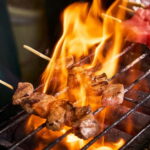
More Sushi Making Classes in Tokyo
More Tsukiji Market Tours in Tokyo
More tours in Tokyo we've reviewed












Tsukiji Market Tours, compared.
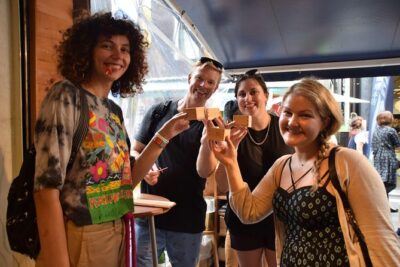 ★ 5.0Tokyo Tsukiji Fish Market Food and Culture Walking TourFrom $99
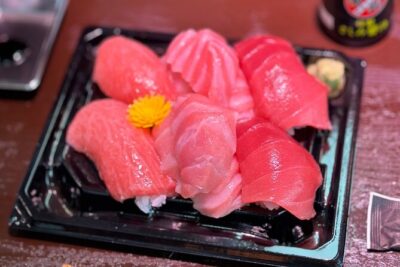 ★ 5.0Tokyo: Tsukiji Fish Market Food and Walking tourFrom $30
 ★ 4.9Tokyo: Tsukiji Fish Market Guided Walking TourFrom $222 hours
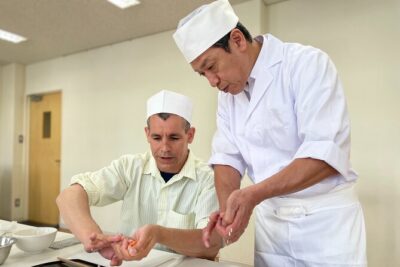 ★ 5.0Tokyo Sushi Making Class in Tsukiji with Professional ChefFrom $49
 ★ 5.0Tsukiji Fish Market Guided Tour and Sushi Making with Pro ChefFrom $104
★ 4.7Tokyo: Tsukiji Fish Market Food and Culture Walking TourFrom $963 hours
★ 5.0Tsukiji Fish Market Guided Tour and Sushi Making with Pro ChefFrom $104
★ 4.7Tokyo: Tsukiji Fish Market Food and Culture Walking TourFrom $963 hours