Reviewed · HISTORICAL TOURS
Downtown Los Angeles : Historic district & Little Tokyo
Downtown Los Angeles tells the city’s story block by block, from Broadway’s grand old movie palaces to the Japanese shops and restaurants of Little Tokyo. This 210-minute walking tour gives you a useful first look at a part of LA that many visitors skip in favor of Hollywood and the beach.
In This Article
- Key points at a glance
- Why this downtown walk matters
- Broadway and the early days of cinema
- Grand Central Market, a 1917 downtown anchor
- The Historic Core and Financial District
- Bunker Hill and a modern architectural trio
- Civic Center and the public face of Los Angeles
- Little Tokyo, the tour’s change of pace
- What the $78 price really buys
- Walking comfort, weather, and access
- Who should book this tour
- Should you book the Downtown LA and Little Tokyo walk?
- FAQ
- Where does the tour begin?
- Where does the tour finish?
- How long does the tour last?
- What language is the tour conducted in?
- Is the tour wheelchair accessible?
- What should I bring?
I like the small group, capped at 10 people, and the way the route joins several downtown districts instead of treating them as separate sights. I also like the French-speaking guide, who can explain the city’s cultural mix without forcing you to decode every detail in English.
The main consideration is simple: this is a long walk through a large urban district, rain or shine. You will need comfortable shoes, and the $78 price makes the most sense if you want context, local addresses, and a guided introduction rather than a quick stroll between photo stops.
Key points at a glance
- Broadway’s movie-palace past: See the avenue that once hosted some of Los Angeles’s biggest cinema premieres, with historic Art Deco and Beaux Arts theaters.
- Grand Central Market: Walk through a downtown institution dating from 1917, where food stalls reflect the city’s many cultures.
- Modern architecture on Bunker Hill: Connect the Broad Museum and Frank Gehry’s Walt Disney Concert Hall with the wider downtown revival.
- Several downtown districts in one walk: Cover the Historic Core, Financial District, Performing Arts area, Civic Center, and Bunker Hill.
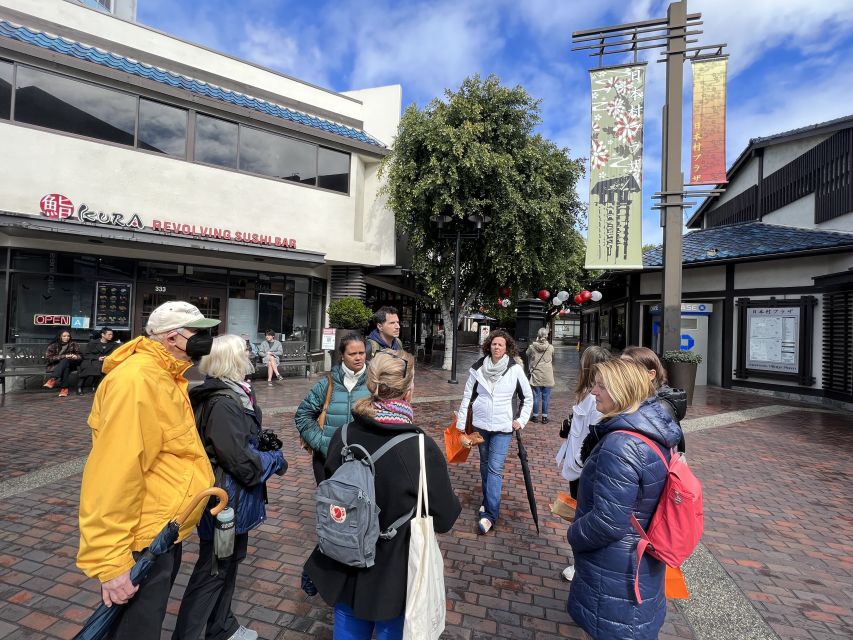
- Little Tokyo in four blocks: Finish among Japanese Village Plaza’s sushi restaurants, manga shops, and cultural landmarks.
- A French-speaking small group: The guide can adapt the conversation more easily than a large coach tour, with recent guide names including Charlotte and Eric.
Why this downtown walk matters
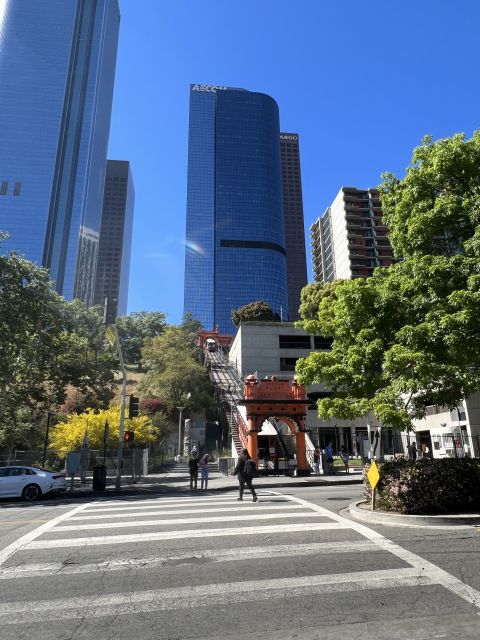
Los Angeles can feel scattered. Hollywood, Santa Monica, Beverly Hills, and Downtown LA each have their own identity, and getting between them takes time. This tour focuses on the area where the city’s business, civic, entertainment, and immigrant stories meet.
You begin outside Blue Bottle Coffee at 300 South Broadway. The starting point puts you right in the Historic Core, so there is no long transfer before the sightseeing begins. Your guide carries a Los Angeles Off Road tote-bag, making the meeting point easier to spot.
The route is on foot, with guided stops through several adjoining districts. That matters because downtown is best understood through its changes in building style and street life. One block may show early twentieth-century commercial architecture, while the next opens toward a museum or concert hall designed in a far newer style.
I would use this tour early in your Los Angeles stay. It can help you understand where downtown fits into the city before you decide which museums, food halls, or performances deserve a return visit.
If you're still narrowing it down, here are other tours in Los Angeles we've reviewed.
Broadway and the early days of cinema
Broadway gives the tour its strongest opening. In the early years of cinema, this avenue was lined with prestigious theaters and premiere venues. More than a dozen cinemas here featured Art Deco or Beaux Arts design, so the street still provides a clear sense of the era when moviegoing was a formal event.
You should pay attention to the façades rather than expecting every interior to be open. The value is in seeing the scale, decoration, and placement of these buildings in their original setting. Broadway helps explain why Downtown LA once mattered so much to the film industry before the industry’s center of gravity shifted elsewhere.
This is also a good place to ask your guide questions. A French-speaking guide can give you the cultural context behind the city’s early cinema boom and explain how entertainment, commerce, and downtown development worked together.
The street is not a preserved movie set. It is a working urban avenue, and that is part of the appeal. You get a mixture of old theater fronts, newer businesses, and everyday city movement rather than a neatly packaged historical zone.
Grand Central Market, a 1917 downtown anchor
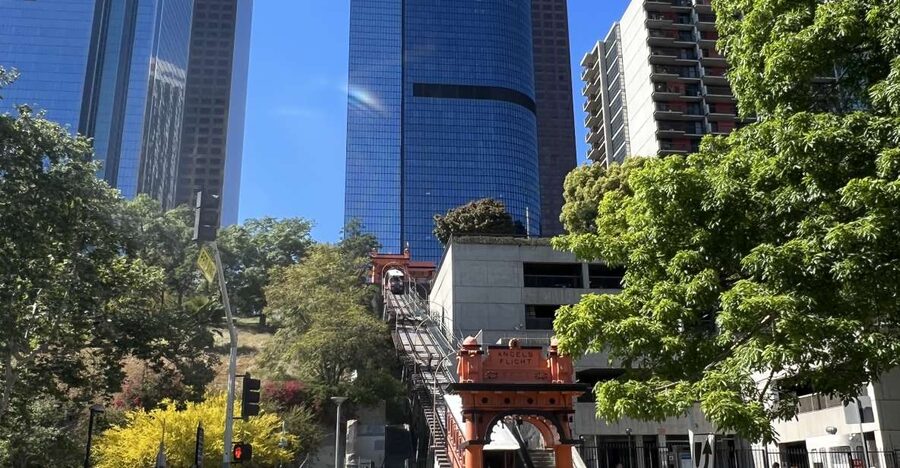
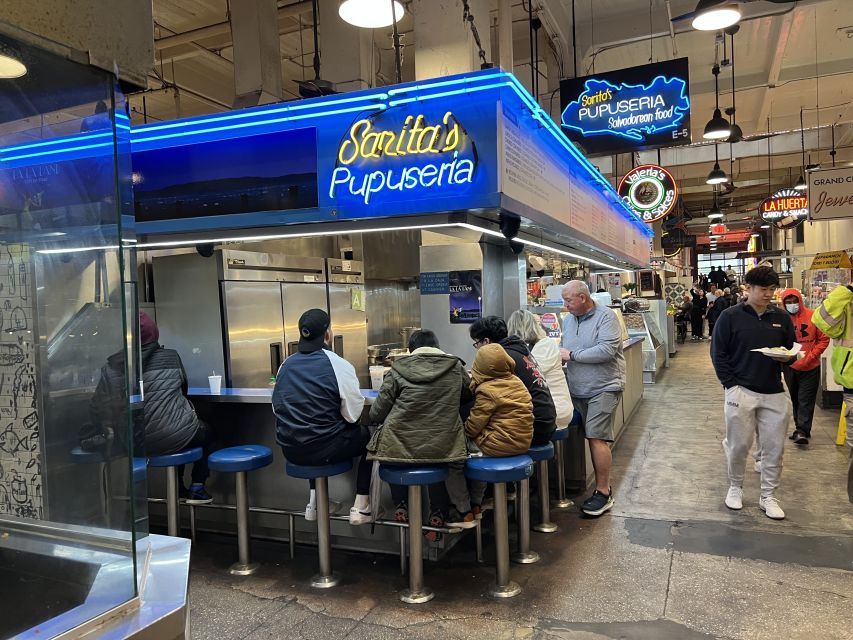
Grand Central Market is one of the most useful stops for understanding LA’s cultural variety. The market has been recognized as a heritage site since 1917, and its food kiosks reflect the many communities that have shaped the city.
The guided portion helps you read the market as more than a place to grab lunch. You can see how a central food hall brings different cuisines and local habits into one public space. The tour does not include beverages or personal purchases, so budget separately if you want to eat or drink here.
I like this stop because it gives the walking route a sensory break. After looking up at theaters and office buildings, you move into a place organized around food, conversation, and quick decisions about what to try.
Allow yourself some restraint. The market is one stop within a 210-minute route, not a dedicated food tour. If something catches your eye, you may need to return later for a slower meal.
The Historic Core and Financial District
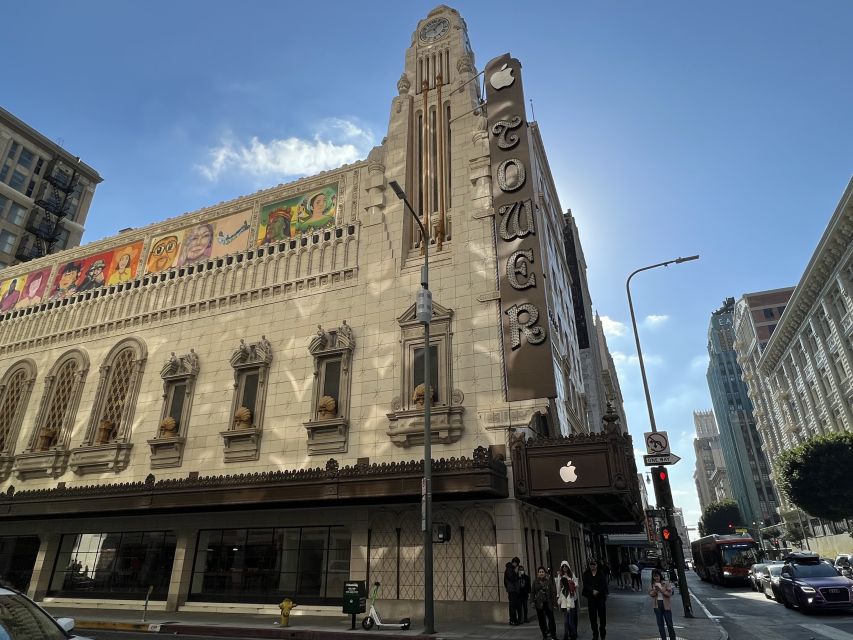
The Historic Core shows the part of downtown that carried much of the city’s commercial weight in earlier decades. Your guide leads you through the district while connecting its buildings to the city’s growth and changing fortunes.
The Financial District offers a different visual rhythm. Here, the older downtown fabric meets taller office buildings and more contemporary development. The contrast is useful because it shows how Los Angeles has repeatedly rebuilt itself without erasing every earlier layer.
Until the early 2000s, downtown often emptied after office hours. The district’s recent revival brought residents, cultural venues, museums, and performances back into the center. You will not get every detail of that change in one walk, but the route gives you a clear framework for seeing it.
I would not expect a quiet, postcard-style stroll. The downtown streets are part of a large working city, and conditions can change from one block to the next. That makes the guide especially useful for pointing out what you are seeing instead of leaving you to guess at the significance of each building.
Bunker Hill and a modern architectural trio
Bunker Hill is where the tour shifts from historic downtown to some of Los Angeles’s most recognizable modern buildings. The route includes the Broad Museum and Frank Gehry’s Walt Disney Concert Hall, two major pieces of the city’s newer cultural identity.
These buildings are worth seeing even if you do not have time for an interior visit. The Broad is known for its bold contemporary form, while the Walt Disney Concert Hall has the sculptural metal design associated with Gehry. Together, they show how museums and performance spaces helped change the feel of downtown.
Your guide can make this section more useful by explaining how these venues fit into the district rather than treating them as isolated photo opportunities. The point is not only to admire unusual shapes. It is to see how major cultural institutions helped draw people downtown beyond standard office hours.
The tour is not a museum admission package. If you want to visit the Broad, you will need to arrange that separately, and the walking schedule may not leave time for a full gallery visit. Think of this section as architectural orientation, then return on your own if a particular building deserves more time.
Civic Center and the public face of Los Angeles
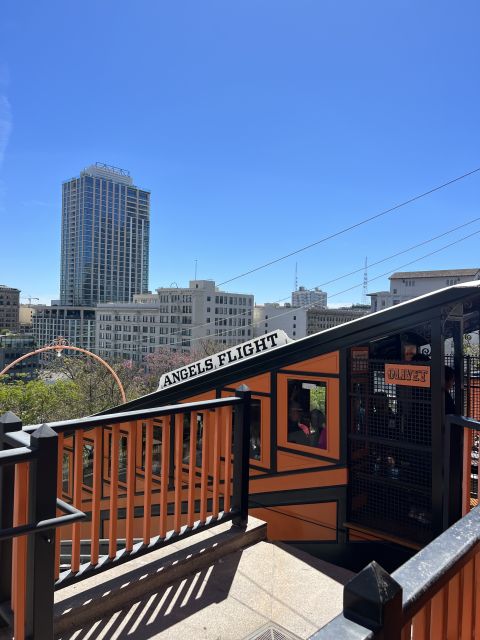
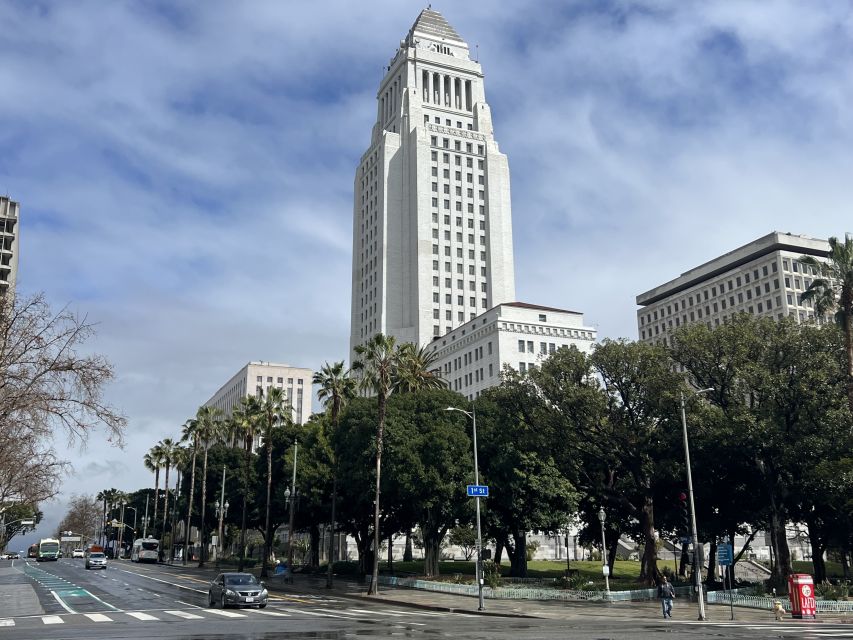
The Civic Center adds another side of the city. Here, the focus turns toward public institutions and the buildings that represent Los Angeles as a government center.
This part of the walk helps balance the entertainment and food stops. Broadway tells the story of cinema, Grand Central Market reflects everyday culture, and the Civic Center shows the city’s official face. The route makes more sense when you see all three together.
Because this is a guided walk rather than a list of disconnected attractions, you can ask how the districts relate to one another. That is one of the better reasons to choose a small group. With no more than 10 people, the guide has a reasonable chance to answer questions without holding up a large crowd.
The Civic Center may be less immediately exciting than the theaters or Little Tokyo. Still, it adds necessary context, especially if you want to understand why downtown is more than a cluster of museums and old façades.
Little Tokyo, the tour’s change of pace
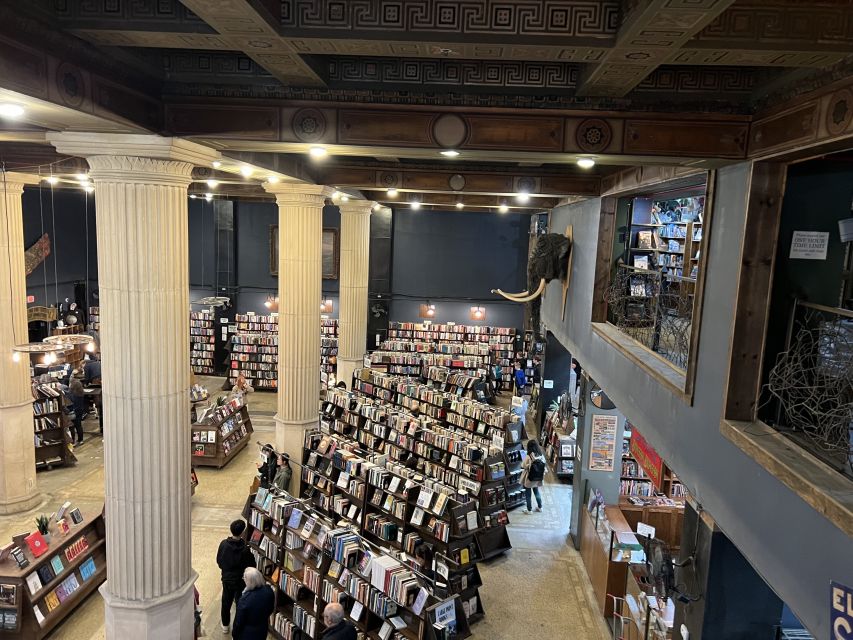
The final section takes you into Little Tokyo, described as a concentrated center of Japanese culture spread across about four blocks. The change is clear. After the grand commercial streets and large cultural buildings of central downtown, you move into a more focused neighborhood identity.
Japanese Village Plaza is the main point of interest. You can expect Japanese restaurants, sushi spots, and manga stores, along with a sense of place that differs sharply from the districts earlier in the route.
This is a strong ending because it leaves you with practical ideas for a later visit. You may want to return for a meal, browse the shops, or use the neighborhood as a starting point for more downtown exploring. The included map lists recommended addresses, which is particularly useful here because a short guided visit cannot cover every shop and restaurant.
The tour ends in Little Tokyo rather than returning to Broadway. That is convenient if you plan to continue exploring the area, but you should remember it when arranging your next activity. You finish in a different neighborhood from where you began.
What the $78 price really buys
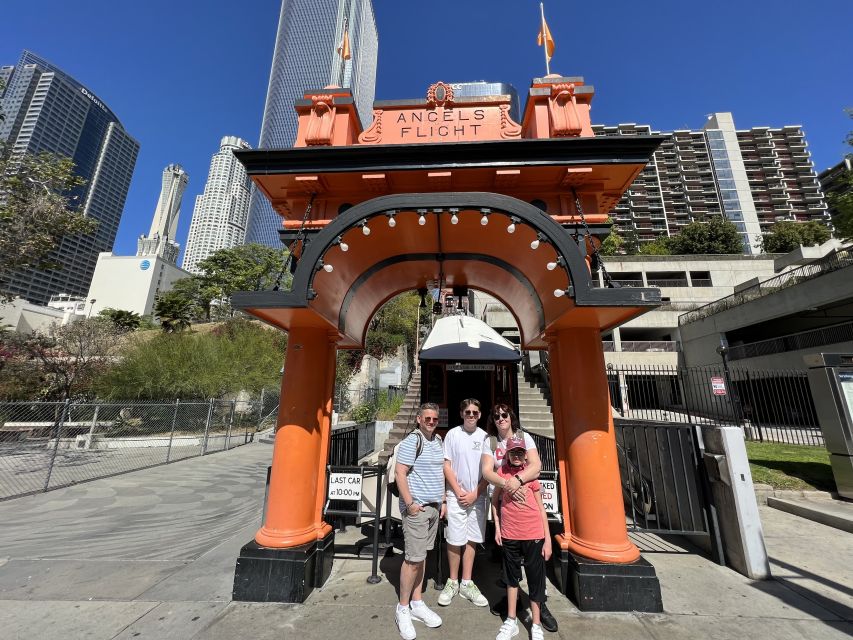
At $78 per person, this is not the cheapest way to see downtown. You can walk Broadway and Little Tokyo independently, and Grand Central Market is open to the public. The price is easier to justify if you value a French-speaking guide, a planned route, and explanations that connect the districts.
The group limit is important. A 10-person maximum is small enough for a more personal exchange, yet large enough to keep the price below that of a private tour. Recent guide names include Charlotte and Eric, and the strongest praise attached to those visits focuses on their friendly manner, useful answers, and strong familiarity with Los Angeles.
You also receive a map of the places visited with recommended addresses. After the tour, an email recaps the stops and includes a souvenir photo. Those extras will not transform the experience, but they make it easier to remember where you want to return.
I see this as a good-value orientation tour for a first visit, especially if French is your preferred language. It is less compelling if you already know downtown well or mainly want extended time inside museums and historic theaters.
Walking comfort, weather, and access
Wear comfortable shoes. The tour lasts three and a half hours and takes place on foot through several downtown districts, so even a keen walker should dress for a sustained outing.
The tour operates rain or shine. Check the forecast before leaving, and bring suitable protection because the route does not shift indoors simply because the weather turns poor.
The circuit is wheelchair accessible, with an adapted route for wheelchair users. If that applies to you, confirm the adapted arrangements when booking so the guide can provide the right version of the route.
The guide speaks French, and the group is limited to 10 participants. The tour does not include drinks, food, or personal shopping, so bring your own spending plan if Grand Central Market or Little Tokyo tempts you.
Cancellation is free up to 24 hours before the start time, and you can reserve now while paying later. Those terms are useful when your Los Angeles schedule still has moving parts.
Who should book this tour
I would recommend it to French-speaking visitors who want a clear introduction to Downtown LA without arranging several separate stops. It suits curious first-time visitors, architecture fans, cinema enthusiasts, and anyone who wants more cultural context than a self-guided walk usually provides.
It is also a good match if you want to see how different parts of the city connect. The route moves from early film theaters to a historic market, office districts, modern cultural buildings, public institutions, and Japanese American culture in one outing.
You may want a different plan if your main goal is shopping, a long meal, or extended museum time. The route includes these areas but does not turn into a food tour, museum tour, or theater-inside tour. It is a broad introduction, not a deep visit to one attraction.
Recent guide feedback gives special weight to the people leading the walk. Charlotte and Eric are both named in connection with highly praised visits, with comments pointing to friendly conversation, useful answers, and a pleasant pace. Guide assignment can vary, but the French-speaking format is consistent.
Should you book the Downtown LA and Little Tokyo walk?
Book it if you want to understand downtown through its streets, buildings, and cultural districts rather than ticking off one attraction at a time. The combination of Broadway, Grand Central Market, Bunker Hill, Civic Center, and Little Tokyo gives you a strong overview in one half-day.
Skip it if you prefer to explore independently and spend long stretches inside museums or restaurants. At $78, the tour earns its price through the guide, small group, route planning, map, and follow-up email, not through included food or admission tickets.
For most French-speaking visitors making a first visit to Los Angeles, I would place it early in the schedule. You finish in Little Tokyo with several good options for continuing the day, and you leave with a better sense of where Downtown LA fits into the much larger city.
FAQ
Where does the tour begin?
Meet your French-speaking guide outside Blue Bottle Coffee at 300 S Broadway, Los Angeles, California 90013. The guide will carry a Los Angeles Off Road tote-bag for recognition.
Where does the tour finish?
The tour ends in Little Tokyo.
How long does the tour last?
The walking tour lasts 210 minutes, or three and a half hours. Starting times depend on availability.
What language is the tour conducted in?
The live guide speaks French.
Is the tour wheelchair accessible?
Yes. The tour is wheelchair accessible, with an adapted circuit for wheelchair users.
What should I bring?
Bring comfortable shoes. The tour takes place on foot and operates rain or shine. Beverages and personal purchases are not included.
More tours in Los Angeles we've reviewed
Historical Tours, compared.
 ★ 4.9Tokyo: Imperial Palace Japanese History Walking TourFrom $32
 ★ 5.0Tokyo: Shinjuku Historical Walking Tour & Secret BackstreetsFrom $25
 ★ 5.0Yanaka Walking Tour: Historic and Traditional District of TokyoFrom $72
 ★ 4.5Mt. Fuji Heritage Tour: Traditional Villages, Lakes & ShrineFrom $5010 hours
 ★ 4.9Tokyo: The Best of Izakaya in Shinjuku Food & Cultural TourFrom $1293 hours
 ★ 5.0Yanaka Historical Walking Tour in Tokyo’s Old TownFrom $81