Reviewed · WALKING TOURS
Los Angeles Chinatown and Little Tokyo Walking Tour
Los Angeles reveals its past in two compact neighborhoods on this two-hour walking tour. You begin among Chinatown’s gates, plazas, bakeries, and movie-location traces, then ride the Metro to Little Tokyo for a closer look at Japanese American history, religion, gardens, and community life. I like the way the tour connects the two districts instead of treating them as separate photo stops. I also like the short train ride, since it shows you how easily these parts of downtown relate to one another.
In This Article
- Key points before you book
- Starting among Chinatown’s gates and plazas
- A movie location and the art of Tyrus Wong
- Blossom Plaza and the Chinatown that came before
- Riding the Metro from Chinatown to Little Tokyo
- Understanding Little Tokyo’s Japanese American story
- Japanese Village Plaza in the center of Little Tokyo
- The Japanese American Cultural & Community Center
- What $38 buys you
- Who will enjoy this walk most
- Practical planning for the morning
- Should you book the Chinatown and Little Tokyo walk?
- FAQ
- How long does the Chinatown and Little Tokyo Walking Tour last?
- What time does the tour start?
- Where does the tour begin?
- Where does the tour finish?
- Is Metro Rail included in the ticket price?
- Do I need to use the Metro after the tour?
- What places are visited in Chinatown?
- What places are visited in Little Tokyo?
- How many people can join the tour?
- Can I cancel for a full refund?
The local guides are a major reason to consider booking. Chris is praised for making the tour especially memorable, while Robert is noted for patient explanations at each stop. The main drawback is pace: two hours is enough for an introduction, not a full food crawl or museum visit. You will also need to pay for the Metro fare separately and make your own way back to Chinatown afterward.
Key points before you book
- Two cultures in two hours: The route links Chinatown and Little Tokyo, giving you a useful first look at both districts.
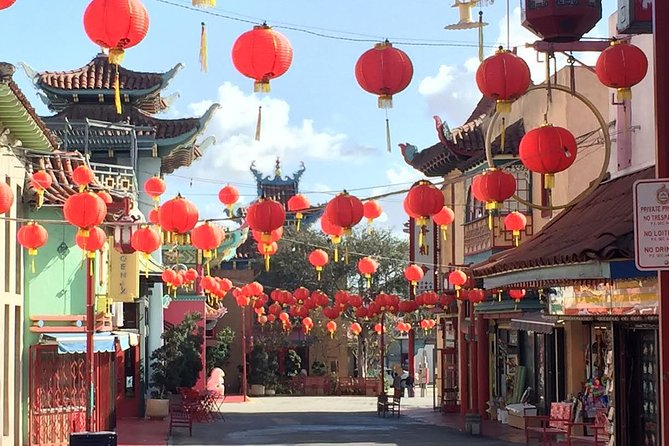
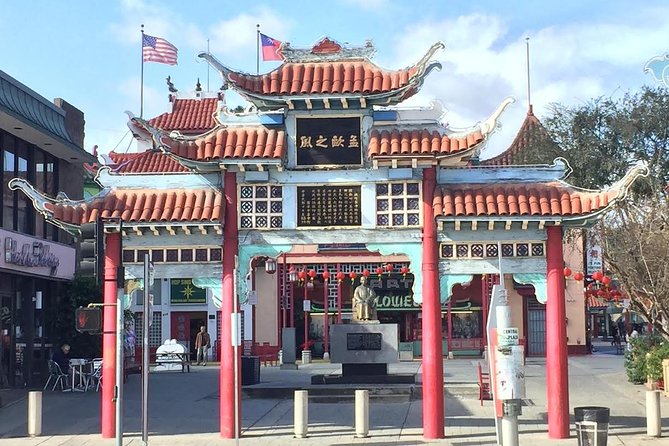
- Chinatown begins with landmarks: You visit Chinatown Plaza, the Celestial Dragon, Hop Louie restaurant, Wonder Bakery, and the East and West Gates.
- A movie site and Tyrus Wong artwork add variety: The Chinatown walk is not only about dates and names.
- The Metro ride is part of the lesson: You travel between the neighborhoods by rail, with the fare paid separately.
- Little Tokyo focuses on community: Japanese Village Plaza and the Japanese American Cultural & Community Center show how the district functions today.
- Small-group scale: The tour accepts a maximum of 20 people, which should make it easier to hear the guide and ask questions.
Starting among Chinatown’s gates and plazas
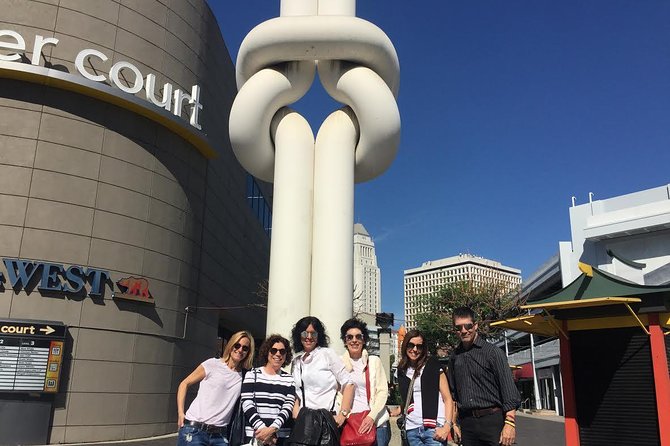
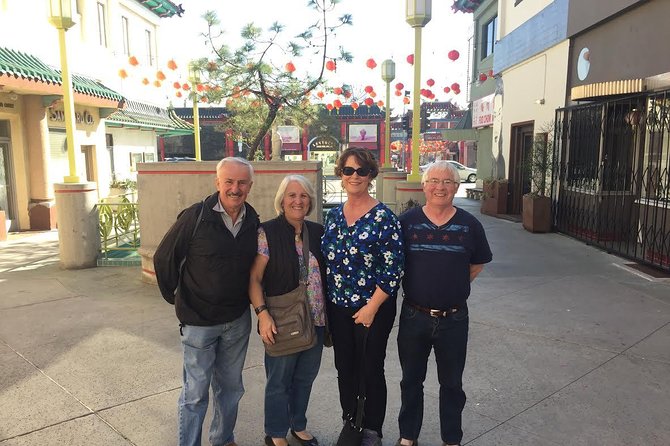
Meet at 943 North Broadway at 10:30 a.m. The tour starts in Chinatown’s central zone, where the guide helps you read the neighborhood through its public spaces, architecture, and immigrant story. You are not simply walking past storefronts. The aim is to understand how Chinese immigrants shaped Los Angeles and how present-day policies affect the people who live in these districts.
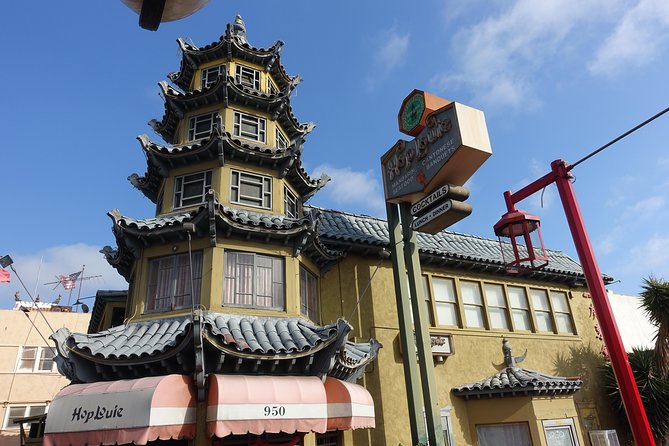
The first portion lasts about 30 minutes and includes several quick stops. Chinatown Plaza gives you a visual introduction, while the Chinatown Celestial Dragon offers the sort of recognizable landmark that helps you get your bearings. The East and West Gates frame the area and make clear that this is a neighborhood with a strong public identity.
Hop Louie restaurant and Wonder Bakery add a practical, everyday side to the walk. These stops connect the cultural story to places where people eat and work. The tour does not include food, so do not arrive expecting a tasting schedule. Still, having a bakery and restaurant in the route gives you useful ideas for returning on your own after the walk.
The Chinatown portion is brief, so listen closely. A guide can supply context that is easy to miss when you explore alone, but you will not have much time to linger at every location. If you want photographs, take them quickly and stay near the group.
Other walking tours we've reviewed in Los Angeles
A movie location and the art of Tyrus Wong
The route also includes a movie location site, though no specific film is identified. That makes this a small but appealing detour for anyone interested in the way Los Angeles neighborhoods appear on screen. The point is less about a major attraction and more about noticing how familiar city streets can serve several roles at once.
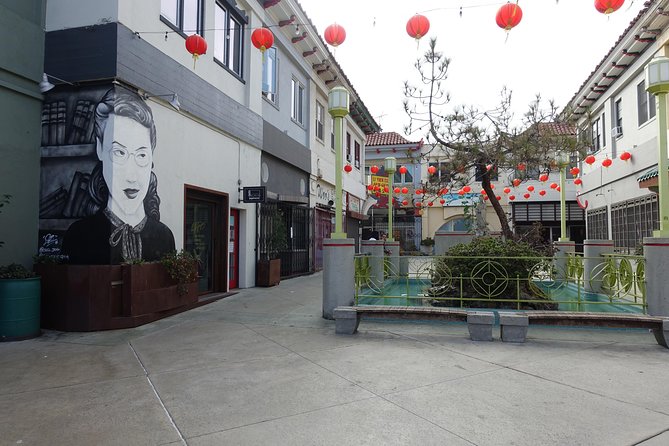
You also see artwork by Tyrus Wong. Including an artist’s work gives the Chinatown section more depth than a standard walk focused only on immigration dates or restaurant signs. Wong’s name provides a link between Chinese American identity and the wider cultural life of Los Angeles.
Since the tour description does not specify the exact artwork or movie production, you should treat these as guided points of interest rather than a guaranteed major attraction. Their value comes from the explanation around them. A good guide can show you why a particular place matters, even when it takes only a few minutes to see.
Blossom Plaza and the Chinatown that came before
Blossom Plaza receives a short stop of about four minutes. It marks the location of old Little Italy and introduces the Italian side of Los Angeles’s immigrant story. This is one of the tour’s more useful reminders: neighborhoods change, and the cultural map of a city is never fixed.
The stop is short, so you will not get a long treatment of Italian Los Angeles. Instead, it works as a compact piece of context before the tour shifts toward Little Tokyo. I like this kind of connection because it keeps you from viewing Chinatown as an isolated pocket. The same streets have carried different communities, businesses, and memories over time.
Riding the Metro from Chinatown to Little Tokyo
The group then takes the Metro Rail from Chinatown toward Little Tokyo. The ride lasts about 10 minutes, and the rail fare is not included in the $38 tour price. The guide can help you obtain the fare at the time of the tour, but you should still arrive ready for this extra cost.
This transfer is simple, but it matters. You are not being driven between attractions in a private vehicle. You move through the city as local residents do, and the change of setting becomes part of the experience. It also breaks up the walking and keeps the tour manageable for most people.
The stated return arrangement deserves attention. The walk ends at the Japanese American Cultural & Community Center, and the starting point is two Metro Rail stops away. The guide can point you in the right direction, but getting back to North Broadway is your responsibility, and the return fare is also not included.
That is not a serious problem, though it is easy to overlook when booking. If you prefer tours that finish exactly where they begin, this route may require a little extra planning. If you are comfortable using public transportation, the ending is straightforward.
Understanding Little Tokyo’s Japanese American story
The Little Tokyo portion shifts the focus to the history of Japanese Americans in Los Angeles. You learn how Japanese immigrants established a community in the city and how the neighborhood continues to be affected by current policies. This present-day angle is important. It keeps the tour from becoming a simple parade of old buildings and cultural symbols.
The route also discusses the religions of Japanese people. That subject helps explain why temples, community spaces, gardens, festivals, and public plazas matter beyond their appearance. The tour data does not identify a specific temple visit, so you should expect discussion and neighborhood interpretation rather than a detailed religious-site tour.
I especially like this part for readers who want more than a sightseeing checklist. A guide can explain how a neighborhood works as a place of faith, family, business, and public memory. You will get more from the walk if you remain open to the connections between those subjects.

Japanese Village Plaza in the center of Little Tokyo
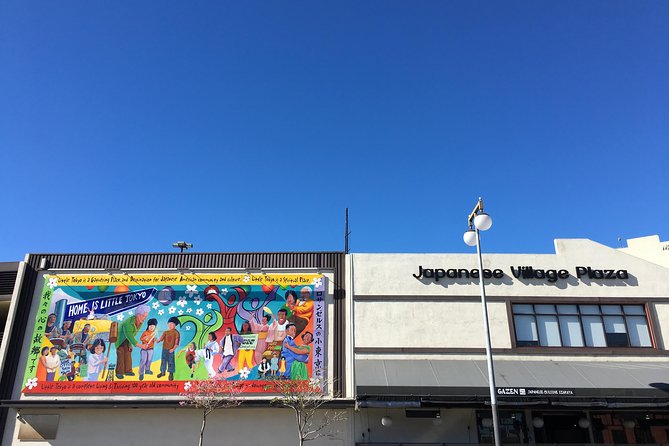
Japanese Village Plaza is described as the center of Little Tokyo in Los Angeles, and the tour spends about 15 minutes here. This is a natural place to pause because it gives you a clear sense of the district’s public heart.
The plaza helps you connect the earlier discussion to a functioning neighborhood. You can expect the guide to explain the cultural meaning of Little Tokyo and how Japanese American life is represented in the district. The stop is long enough for a short explanation and some photographs, but not for a leisurely meal or extended shopping visit.
The tour price does not include food or shopping, so plan a separate visit if you want to eat or browse. That can be an advantage. The walk gives you orientation, then you can return with a better idea of where to spend your own time.
The Japanese American Cultural & Community Center
The final stop is the Japanese American Cultural & Community Center at 244 San Pedro Street. The tour spends about 15 minutes here. The center is home to the Nisei festival and Japanese gardens, giving the final section a strong community focus.
The Nisei festival reference points to the continuing role of Japanese American organizations in Little Tokyo. The gardens add a quieter visual element after the streets and plazas. Together, these features help the tour finish with community life rather than simply ending at a landmark.
This is also where the logistics matter most. You finish at the cultural center, not at the original meeting point. From here, you are two Metro Rail stops from Chinatown, and the guide can direct you toward the return route. Allow a few extra minutes after the official finish if you need help finding the train.
What $38 buys you
At $38 per person, the tour is reasonably priced for a guided introduction to two major downtown neighborhoods. You are paying for a local guide, route planning, historical explanation, and the convenience of connecting Chinatown with Little Tokyo in one outing.
The value depends on how you like to explore. If you already know both neighborhoods and mainly want to eat, shop, or visit museums, a self-guided walk may give you more free time. If you want the background that ties the places together, the fee is easier to justify.
The tour lasts about two hours and has a maximum of 20 people. That is large enough to create a social group but still more manageable than a mass sightseeing outing. The strongest praise goes to the guides, especially Chris and Robert. Chris is described as excellent, while Robert receives specific credit for clear explanations and patience. Those comments point to the part of the tour that carries the most value: the human interpretation.
Rail fare is the one required extra listed in the details. The amount is not specified, so budget for it separately. The mobile ticket makes arrival simple, and confirmation is provided at booking.
Who will enjoy this walk most
I would recommend this tour to you if you are visiting Los Angeles for the first time and want a focused introduction to downtown’s Chinese and Japanese American communities. It also suits anyone who prefers historical context over a long list of attractions.
The route should work for most people, and service animals are allowed. It is near public transportation, which makes the start and finish practical if you are already using the Metro. Because the tour involves walking and a rail transfer, you should be comfortable moving through city streets for roughly two hours.
Families, older visitors, and mixed-interest groups may find the format useful because the walking sections are broken into short stops. However, the tour does not promise extensive sitting, food sampling, or indoor visits. Anyone seeking a full culinary tour or a museum-heavy outing should choose a different plan.
The group size limit of 20 is worth noting. If you want the best chance of hearing every explanation, stay close to the guide, especially during the Chinatown portion where several stops come in quick succession.
Practical planning for the morning
Start with comfortable walking shoes. The exact distance is not provided, but this is a walking tour with several neighborhood stops and a rail transfer. Bring a little extra time for the Metro fare and keep your ticket available on your phone.
The tour requires good weather. If poor weather causes cancellation, you are offered another date or a full refund. The tour also requires a minimum number of participants, so a cancellation is possible if that minimum is not met. In either case, you are offered another date or experience, or a full refund.
Free cancellation is available until 24 hours before the start time. After that point, the payment is not refunded, and changes made inside the 24-hour window are not accepted. The cut-off uses local Los Angeles time.
Book this for the morning, then leave the afternoon open for your own exploration. Since the walk finishes in Little Tokyo, you can continue there after the guide departs, or take the two-stop Metro ride back toward Chinatown. The tour itself does not include a meal, so you will have room to choose your own food afterward.
Should you book the Chinatown and Little Tokyo walk?
Book it if you want clear local storytelling, a small-group format, and a quick way to connect two important Los Angeles neighborhoods. The route has enough variety to keep the two hours moving: gates and plazas, a bakery and restaurant, a movie site, Tyrus Wong artwork, a Metro ride, Japanese American history, religion, gardens, and community spaces.
Skip it if you want a slow, unstructured day or a tour built around food and shopping. The short timing means some stops are introductions rather than detailed visits, and you must pay for the Metro ride and handle your return from Little Tokyo.
For most first-time visitors, $38 is a fair price for the orientation and context. Guides such as Chris and Robert appear to be the key strength, with patience and clear explanations making the difference. If that sounds like the kind of help you want in Los Angeles, this is a sensible two-hour choice.
FAQ
How long does the Chinatown and Little Tokyo Walking Tour last?
The tour lasts approximately two hours.
What time does the tour start?
The tour starts at 10:30 a.m.
Where does the tour begin?
It begins at 943 N Broadway, Los Angeles, California 90012.
Where does the tour finish?
It ends at the Japanese American Cultural & Community Center at 244 San Pedro Street, Los Angeles, California 90012.
Is Metro Rail included in the ticket price?
No. The rail fare between Chinatown and Little Tokyo is not included. The guide can assist with obtaining the fare during the tour.
Do I need to use the Metro after the tour?
The tour ends two Metro Rail stops from the starting point. The guide can point you in the direction of the return route.
What places are visited in Chinatown?
The route includes Chinatown Plaza, the Chinatown Celestial Dragon, Hop Louie restaurant, Wonder Bakery, the East and West Gates, a movie location site, artwork by Tyrus Wong, and Blossom Plaza.
What places are visited in Little Tokyo?
The route includes Japanese Village Plaza and the Japanese American Cultural & Community Center. The tour also covers the history of Little Tokyo, Japanese Americans, and Japanese religions.
How many people can join the tour?
The maximum group size is 20 travelers.
Can I cancel for a full refund?
Yes. You can cancel up to 24 hours before the experience start time for a full refund. Cancellations made less than 24 hours before the start time are not refunded.
More Walking Tours in Los Angeles
More tours in Los Angeles we've reviewed
Walking Tours, compared.
 ★ 5.0Tokyo Tsukiji Fish Market Food and Culture Walking TourFrom $99
 ★ 4.9Tokyo: Shinjuku Local Bar and Izakaya Guided Walking TourFrom $343 hours
 ★ 5.0Tokyo: Tsukiji Fish Market Food and Walking tourFrom $30
 ★ 4.8Tokyo: Asakusa Walking Tour with Sensoji Temple VisitFrom $222 hours
 ★ 4.9Tokyo: Tsukiji Fish Market Guided Walking TourFrom $222 hours
 ★ 4.7Tokyo Castle & Imperial PalaceーShogun Walking TourFrom $232 hours