Reviewed · ASAKUSA TOURS
Asakusa: 2-Hour History Walking Tour & Local Food Tasting
Asakusa gives you one of Tokyo’s clearest links to the past, and this two-hour walking tour brings its main sights and small local shops into one easy route. You’ll visit Senso-ji, Tokyo’s oldest temple, then move through nearby streets for traditional snacks and practical souvenirs.
In This Article
- Key Points at a Glance
- Why Asakusa Makes a Good First Tokyo Walk
- Starting at the Kaminarimon Police Box
- Senso-ji and More Than 1,400 Years of History
- Asakusa Shrine and the Meeting of Two Traditions
- Local Street Food: A Small Taste of Asakusa
- The Pro Knife Shop and Practical Japanese Craft
- Samurai Swords, Ninja Gear, and Japanese Tableware
- What the $16 Price Really Gets You
- Who Will Get the Most from This Walk
- Timing, Cash, and Comfort Tips
- Should You Book the Asakusa Walking Tour?
- FAQ
- How long is the Asakusa walking tour?
- Where does the tour begin?
- What language is the tour offered in?
- Is food included in the price?
- Do I need to bring cash?
- Does the tour include hotel pickup?
I like the mix of history and food, since the temple visit gains flavor when you stop for something sweet or savory afterward. I also like the unusual shopping stops, especially the pro-level knife shop and the samurai and ninja goods store. The main consideration is time: two hours goes quickly, so this is an introduction to Asakusa rather than a full neighborhood tour.
Key Points at a Glance
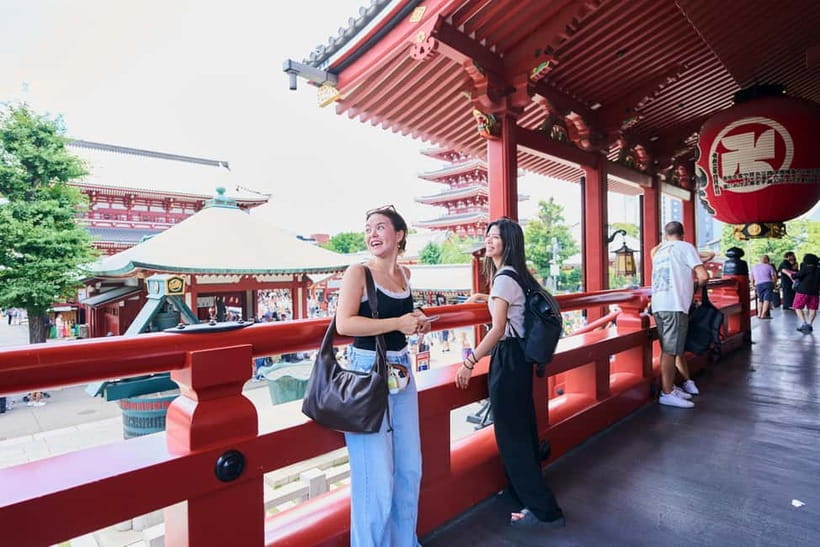
- Senso-ji dates to 628: Walk through more than 1,400 years of religious and local history at Tokyo’s oldest temple.
- Food is part of the route: Try a traditional sweet or savory snack, with the cost of food and drinks paid separately.
- Buddhism and Shinto meet nearby: Visit both Senso-ji and Asakusa Shrine and learn how the traditions coexist.
- Shopping goes beyond standard souvenirs: Browse a professional knife shop, samurai and ninja goods, and Japanese tableware.
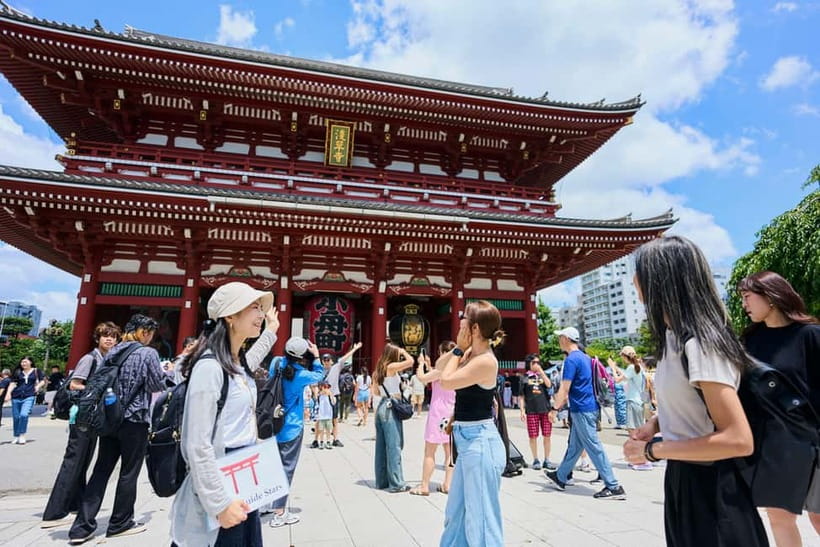
- The tour starts and ends at Asakusa Station: Meet by the Kaminarimon Police Box and look for a guide holding a Local Guide Stars sign.
- The price is modest: At $16 per person, the tour offers a useful orientation for first-time visitors, though snacks and purchases cost extra.
Why Asakusa Makes a Good First Tokyo Walk
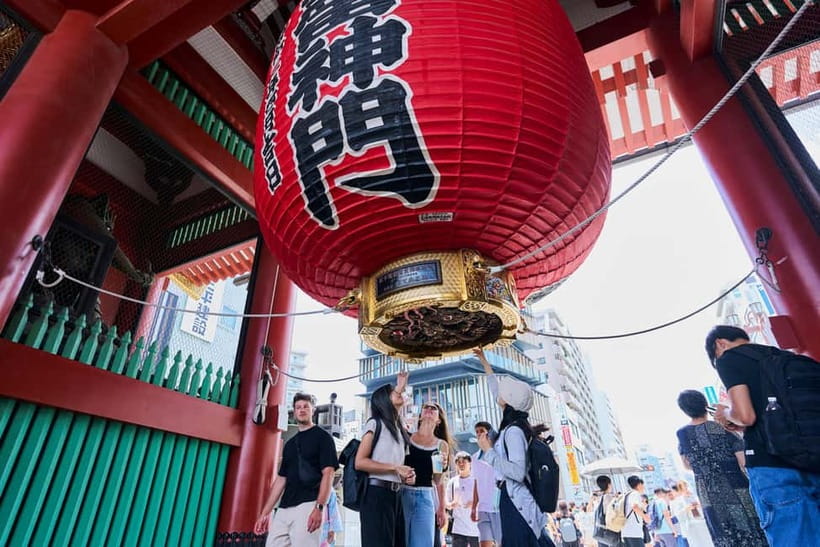
Asakusa is one of Tokyo’s oldest neighborhoods, and it feels different from districts built around modern towers, department stores, and neon signs. Here, the focus is on temple grounds, traditional shops, food stalls, and long-standing customs.
That makes this tour a good choice if you want more than a quick photograph of Senso-ji’s famous entrance. A local guide can point out what you are seeing and help connect the temple, shrine, food, and shops into one story.
The route is also easy to understand. You begin at Asakusa Station, walk through the historic center, and return to the same meeting point. You do not need to arrange hotel transport or work out a complicated route across Tokyo.
The tour is conducted in English. Since no guide name is provided, you should identify the guide by the Local Guide Stars sign at the Kaminarimon Police Box.
A few more Tokyo tours and experiences worth a look



Starting at the Kaminarimon Police Box
Your meeting point is in front of the Kaminarimon Police Box at Asakusa Station. This gives you a clear landmark and keeps the beginning simple, especially if you are visiting Asakusa for the first time.
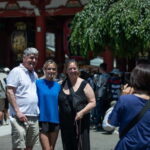
Look for the guide holding a sign marked Local Guide Stars. The activity ends back at this point, so you can continue exploring Asakusa on your own afterward or return easily to the station.
There is no hotel pickup or drop-off. That is normal for a short central Tokyo walk, but remember to allow enough time to reach Asakusa Station before the start.
Bring comfortable shoes. Two hours on foot may not sound long, but temple grounds, shopping streets, and food stops add up. Weather can also change your comfort level, so dress for the conditions and be prepared for rain or heat.
Senso-ji and More Than 1,400 Years of History

Senso-ji is the center of the tour. It is Tokyo’s oldest temple, founded in 628, and has been loved for more than 1,400 years. The temple’s long story gives you a useful counterpoint to Tokyo’s modern image.
The guide will introduce the temple’s role and explain why it matters to Asakusa. You will also hear that the area was once protected by samurai, a detail that helps connect the religious site to the wider history of the neighborhood.
The value here is not only the building itself. A temple visit can feel confusing if you do not know what you are looking at or how people use the space. A local guide gives you context while you walk, so you can focus on the setting instead of trying to read every sign.
Take your time with the atmosphere, but remember that this is a group walking experience with more stops ahead. You should not expect a long private visit at every temple feature. The appeal is the overall picture: Senso-ji, nearby streets, food, and local shopping in one compact route.
Asakusa Shrine and the Meeting of Two Traditions
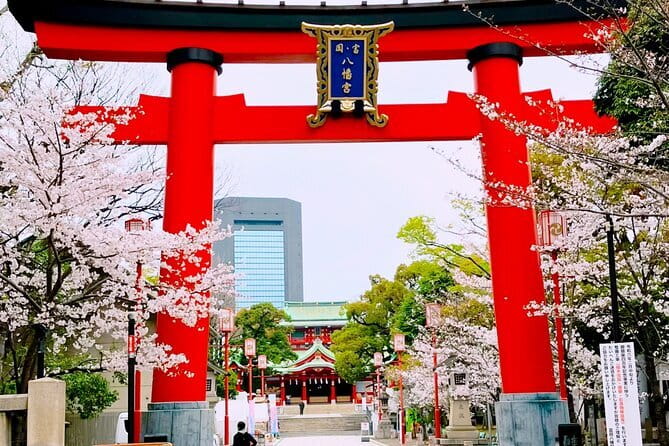
Right beside Senso-ji is Asakusa Shrine. Seeing the temple and shrine together gives this walk one of its more useful lessons: Buddhism and Shinto both have a place in Japanese life, and their presence can overlap in the same neighborhood.
The tour includes an explanation of how these traditions coexist in Japan. This is especially helpful if you are new to Japanese religious sites and want more than a simple list of names.
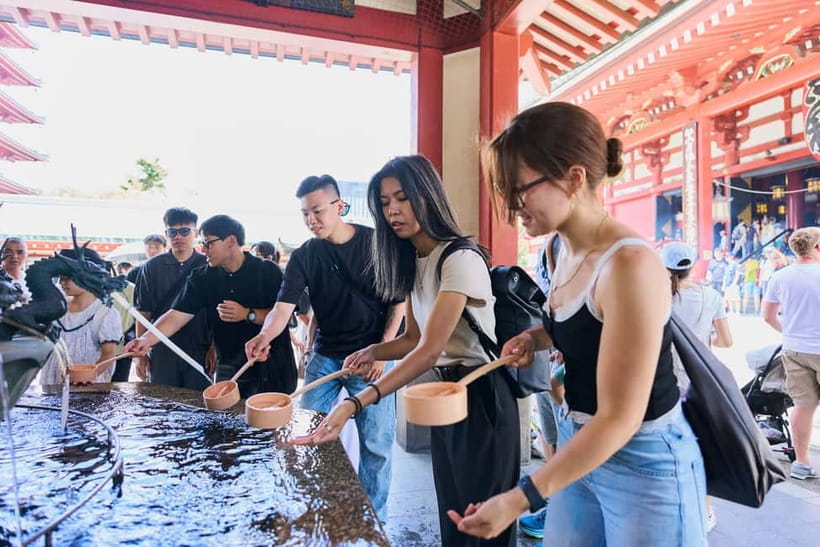
You may feel like making a small offering or drawing an omikuji, a fortune-telling paper, while you are there. These extras are not required, and they are not included in the tour price. Bring some cash if you want the option, since cashless payment is not accepted for these temple activities.
The same advice applies to food stalls and small shops: carry cash if you plan to buy something. The tour itself has no extra required fees, but the experience gives you plenty of chances to spend a little if something catches your eye.
Local Street Food: A Small Taste of Asakusa
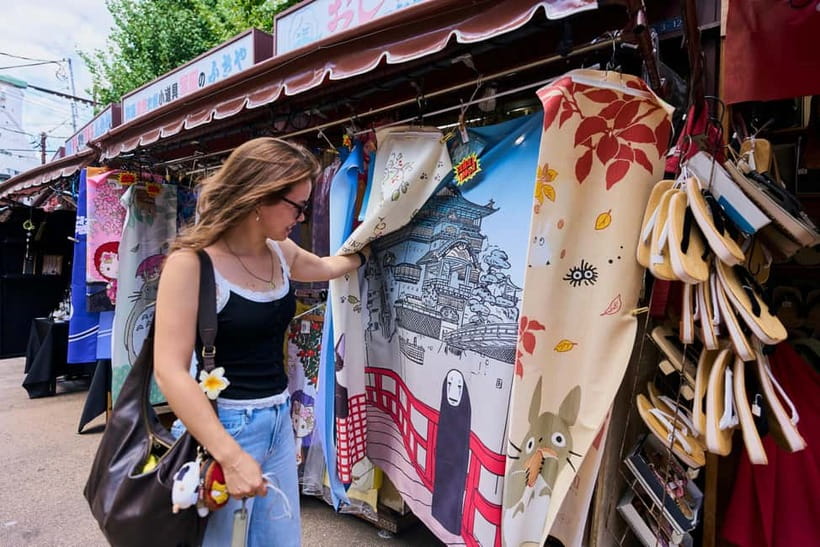
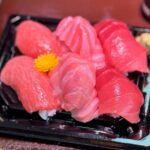
The food portion keeps the walk from becoming a long sequence of monuments. You’ll stop for a local treat, with the choice described as sweet or savory. The exact food is not fixed in the tour details, so you should think of this as a guided tasting opportunity rather than a set meal.
That distinction matters. A tasting is useful for sampling the neighborhood without committing to a full restaurant visit, but it will not replace lunch or dinner. Meals and drinks are not included, so budget separately if you want more than the provided food stop.
I like this part because it gives you a direct connection to everyday Asakusa. Traditional food is not just something to photograph. It is a reason to pause, notice how the streets work, and try something you might not have chosen on your own.
If you have dietary restrictions, the available food options are not specified, so you should ask the guide at the start. Do not assume that a sweet or savory choice will meet your needs.
Other walking tours we've reviewed in Tokyo



The Pro Knife Shop and Practical Japanese Craft
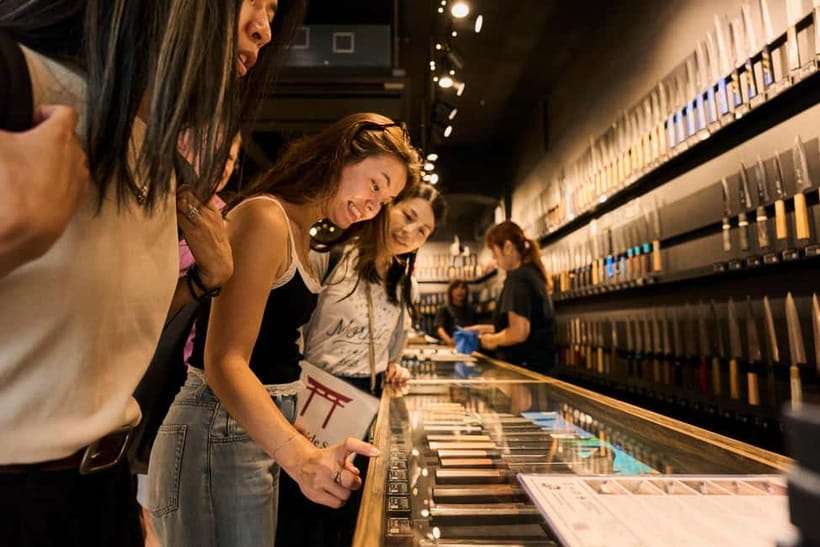
The knife shop is one of the tour’s more distinctive stops. You’ll visit a renowned shop with professional-level knives, which makes this more interesting than a standard souvenir browse.
You do not need to be a chef to appreciate the stop. A good knife connects food, craftsmanship, and daily life, and the shop gives you a look at a type of Japanese product that many visitors may not find by wandering without a plan.
This is also a place where you should keep your expectations practical. The tour includes a visit, not a knife purchase, demonstration, or shipping service. If you are considering a purchase, check the product details, price, and transport rules yourself before buying.
The stop suits cooks and design-minded shoppers best. If you have no interest in kitchen tools, you may find it less exciting than the temple or food portions. Still, it adds variety and gives the tour a more local shopping angle.
Samurai Swords, Ninja Gear, and Japanese Tableware
The route also includes a samurai sword and ninja goods shop. This stop leans more playful and visual than the knife shop, making it a good fit if you want a souvenir tied to Japanese popular culture and historical imagery.
The details provided do not promise a live sword performance, martial arts lesson, or historical exhibit. Expect a shop visit, with a chance to browse the kinds of samurai and ninja items sold there.
You’ll also visit a Japanese tableware shop. This may be the most useful stop for an everyday souvenir. Small dishes and tableware can bring home a stronger sense of Japan than a generic logo item, though you will need to consider how safely you can pack anything fragile.
These shops give the tour a nice range. The knife store points toward professional craft, the samurai and ninja store offers fun souvenirs, and the tableware shop focuses on domestic design. You can browse without making a purchase, but bring spending money if you want to buy something.
What the $16 Price Really Gets You
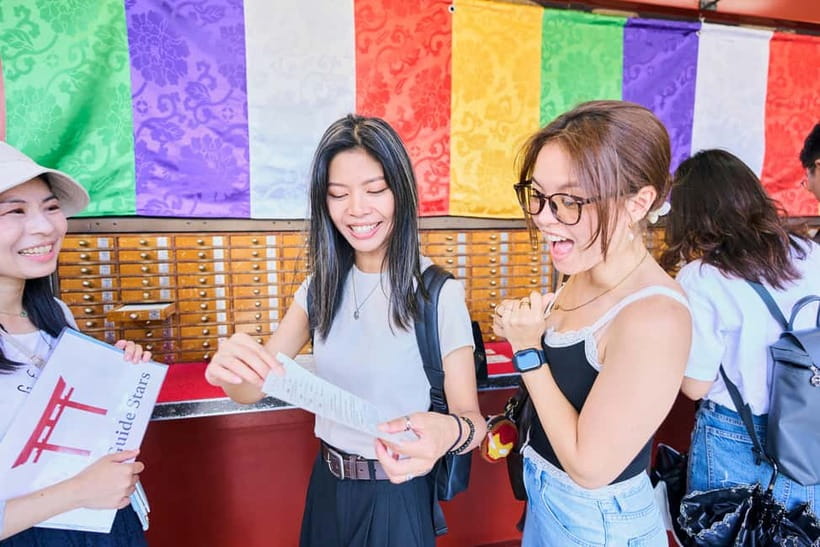
At $16 per person, this is an inexpensive way to get a basic introduction to Asakusa. The value comes from having a local guide connect the major temple, shrine, food stop, and specialty shops in two hours.
If you tried to plan the same route alone, you could visit Senso-ji and Asakusa Shrine without paying a guide. The price is therefore not for access to the temple. You are paying for direction, English explanations, local food suggestions, and a more organized look at the neighborhood.
That value is strongest for first-time visitors. You get a quick sense of where Asakusa’s major sights are and what kinds of shops and snacks deserve a closer look later.
The price is less compelling if you already know Asakusa well or prefer to explore slowly. Two hours is efficient, but it also means the tour cannot give every stop unlimited attention. Purchases, meals, drinks, and optional temple offerings cost extra.
Who Will Get the Most from This Walk
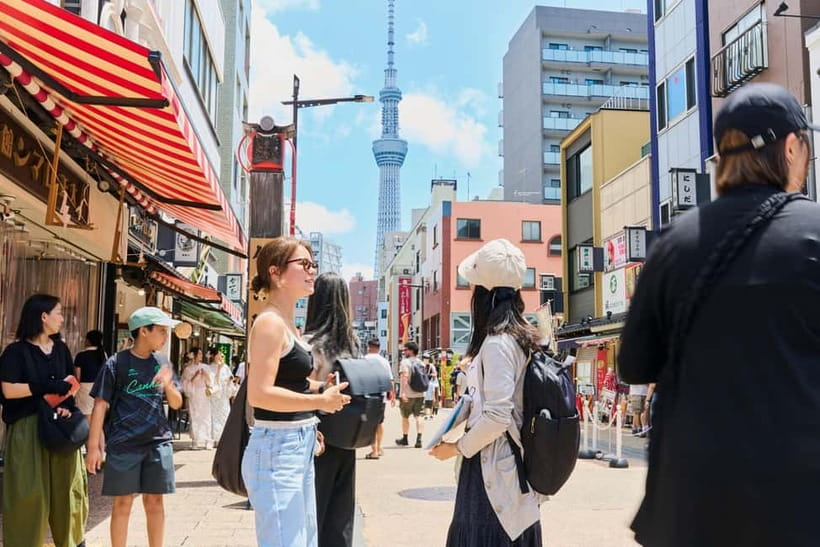
I would recommend this experience to first-time Tokyo visitors who want a gentle introduction to traditional Asakusa. It also suits people who enjoy mixing sightseeing with small food and shopping stops rather than spending two hours inside a single monument.
Families and curious older children may like the samurai and ninja store, while cooks may focus on the knife shop. The tableware stop is useful for anyone searching for a practical Japanese souvenir.
The tour is also a good fit if you want an English-speaking guide but do not want to commit to a full-day excursion. You can learn the basics in two hours and still have most of the day available for other parts of Tokyo.
You may want something else if you are seeking a detailed religious tour, a serious food crawl, or a specialist craft lesson. None of those is promised here. This is a compact neighborhood walk with several different themes.
Timing, Cash, and Comfort Tips
Wear shoes you can walk in comfortably. The route lasts two hours, and standing around temple grounds and shops can be tiring if your footwear is poor.
Bring cash. The tour has no required extra fees, but you may want a temple offering, an omikuji, street food, or a small purchase. Cashless payment is not accepted for temple offerings and fortune papers, so having yen gives you more freedom.
Allow for changing weather. The activity takes place outdoors and includes walking between stops, so rain, heat, or cold can affect the experience.
The tour begins and ends at the same Asakusa meeting point. That makes planning easier, but it also means you must arrange your own way to and from the station. There is no hotel pickup.
You can reserve now and pay later, which is useful if your Tokyo schedule is still changing. Cancellation is available up to 24 hours before the tour for a full refund.
Should You Book the Asakusa Walking Tour?
Book it if you want a low-cost, well-rounded introduction to one of Tokyo’s oldest neighborhoods. The strongest reasons are the combination of Senso-ji, Asakusa Shrine, a local snack, and specialty shops that you might not choose on your own.
At $16, the tour is easy to justify for a first visit, especially if you value a guide’s explanations and want help finding local food and souvenir stops. Just remember that two hours provides a starting point, not a complete Asakusa experience.
Skip it if you prefer to set your own pace, already know the area, or want a full meal and extensive temple study. For everyone else, bring comfortable shoes, some cash, and room in your schedule for a short but useful look at traditional Tokyo.
FAQ
How long is the Asakusa walking tour?
The tour lasts two hours and ends back at the starting meeting point.
Where does the tour begin?
Meet in front of the Kaminarimon Police Box at Asakusa Station. The guide will be holding a Local Guide Stars sign.
What language is the tour offered in?
The tour is offered in English.
Is food included in the price?
Meals and drinks are not included. The route includes a local street food tasting, described as a sweet or savory snack, but you should budget separately for additional food and drinks.
Do I need to bring cash?
Cash is recommended. You may want to make a temple offering or draw an omikuji, and cashless payment is not accepted for those activities.
Does the tour include hotel pickup?
No. Hotel pickup and drop-off are not included. You must make your own way to the meeting point at Asakusa Station.
More Food Experiences in Tokyo


More Walking Tours in Tokyo
More Asakusa Tours in Tokyo

More tours in Tokyo we've reviewed












Asakusa Tours, compared.
 ★ 4.8Tokyo: Japanese Dance Cabaret Theater Asakusa-Kaguwa TicketFrom $492 hours
 ★ 4.7Tokyo: Meiji Shrine, Asakusa, Skytree Bus Tour and CruiseFrom $12210 hours
 ★ 4.9Tokyo: Roll and Authentic Sushi Making Class in AsakusaFrom $581h 40m
 ★ 4.8Tokyo: Asakusa Walking Tour with Sensoji Temple VisitFrom $222 hours
 ★ 5.0Tokyo Asakusa Rickshaw TourFrom $42
 ★ 4.5Tokyo Panoramic 1 Day: Meiji Shrine, Asakusa, Odaiba and SKYTREE®From $85