Reviewed · UENO & YANAKA WALKS
Ueno and Yanaka Culture Art Walking Tour in Old Tokyo
Tokyo can feel like a city built for speed, but this seven-and-a-half-hour walk shows you its quieter face. You move from the National Museum of Nature and Science and Ueno’s temple grounds to old shopping streets, artists’ homes, and the peaceful lanes of Yanaka.
In This Article
- Why this route shows you an older side of Tokyo
- Starting at Ueno Station at 9:30 a.m.
- The National Museum of Nature and Science in one focused hour
- Ueno Park, shrines, temples, and a lake
- Ameyoko brings in the noise and the lunch break
- Yanaka’s art and the former home of a sculptor
- Yanaka Ginza and the cat-themed shopping street
- A Buddhist temple and the quiet paths of Yanaka Cemetery
- What the $148.93 price includes
- Walking comfort, timing, and what to bring
- Who will get the most from this Ueno and Yanaka walk?
- Should you book this tour?
- FAQ
- How long does the Ueno and Yanaka Culture Art Walking Tour last?
- What time does the tour begin?
- Where does the tour begin?
- Where does the tour end?
- Is transportation included?
- Is lunch included?
- What admissions are included?
- How many people can join the tour?
- Can I cancel for a full refund?
I like the thoughtful mix of museum time and outdoor strolling, and I like that lunch is left open in Ameyoko, where you can choose what suits you. The main caution is simple: this is a long walking day with no private vehicle, so good shoes and reasonable stamina matter.
- Ueno’s museum and park pairing: See major exhibits, then step outside to temples, shrines, and a lake.
- A guided look at Ameyoko: Learn why this old shopping street feels so different from polished central Tokyo.
- Yanaka’s artist connection: Visit a museum housed in the former workshop and family home of a Japanese sculptor.
- Small-group format: The maximum is 15 people, giving the guide room to answer questions.
- A practical one-way route: Begin at Ueno Station and finish at Nippori Station, with no need to return to the starting point.
- Guide Beth’s personal touch: Her gentle explanations and ability to adapt the day have been especially praised.
Why this route shows you an older side of Tokyo
This tour works because it connects places that are often treated as separate stops. Ueno gives you major cultural institutions, broad park paths, shrines, and a lively market district. Yanaka then slows the pace with old houses, small museums, religious sites, and local shopping streets.
I especially like the change in mood across the day. You begin near one of Tokyo’s best-known cultural areas, then move into neighborhoods where the streets feel more domestic and less polished. That contrast gives you a better sense of how Tokyo can hold modern city life and older traditions side by side.
The tour is led in English by a local guide. Beth is named in the available feedback, and her style comes through clearly: polite, calm, ready to answer questions, and attentive to individual interests. One useful detail is that the guide can point out places you might otherwise skip, including parts of Ueno Park and museum displays that are easy to pass without context.
Starting at Ueno Station at 9:30 a.m.
Meet at Ueno Station at 9:30 a.m. The suggested arrival route is the JR Yamanote Line, using the Park Gate exit to be closest to the meeting point at 7 Chome-1 Ueno.
That detail matters. Ueno Station is large, and arriving through the wrong exit can add an unwelcome march before the actual walk begins. Give yourself enough time to find the Park Gate area, especially if you are not used to Tokyo’s station signs.
The tour finishes at Nippori Station, not back at Ueno. That makes the route useful if you plan to continue toward another part of Tokyo or return to your hotel from Nippori. Trains before and after the tour are not included, so you will need to handle those separately.
The group can include up to 15 people. That is not a private tour, but it is still small enough for questions and conversation without the guide addressing a huge crowd.
A few more Tokyo tours and experiences worth a look

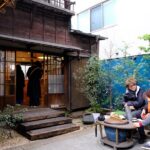

The National Museum of Nature and Science in one focused hour
The first museum visit lasts about one hour, with admission included. Rather than leaving you to wander a large institution on your own, the guide provides an introduction to the museum and its background, then points out some of the main displays.
The named highlights include a life-sized blue whale model, a steam locomotive, and taxidermied animals. These give the opening stop a broad appeal. You do not need to be a museum specialist to enjoy the scale and variety, and the guide’s role is useful when you want a quick orientation rather than a full day inside every gallery.
One hour is enough for an introduction, not an exhaustive museum visit. If natural science museums are your main interest, you may wish you had longer. For this tour, though, the limited time helps keep the day moving and leaves room for Ueno’s outdoor sites.
I also like that the guide draws attention to the beauty of the building itself, not only the objects inside. That small shift can change the way you approach a museum. You are not simply checking off an indoor attraction. You are learning how the institution fits into Ueno’s cultural setting.
Ueno Park, shrines, temples, and a lake
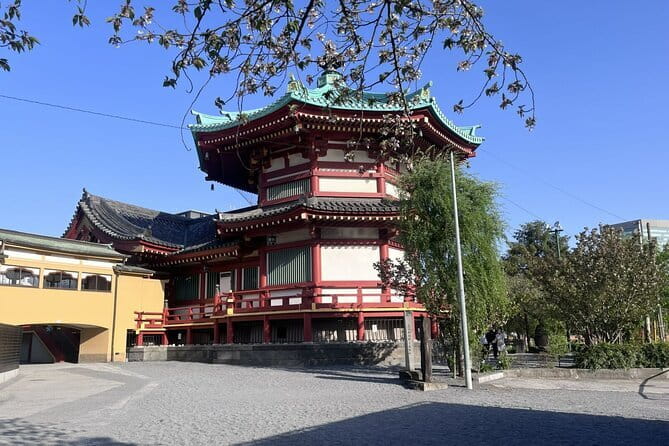
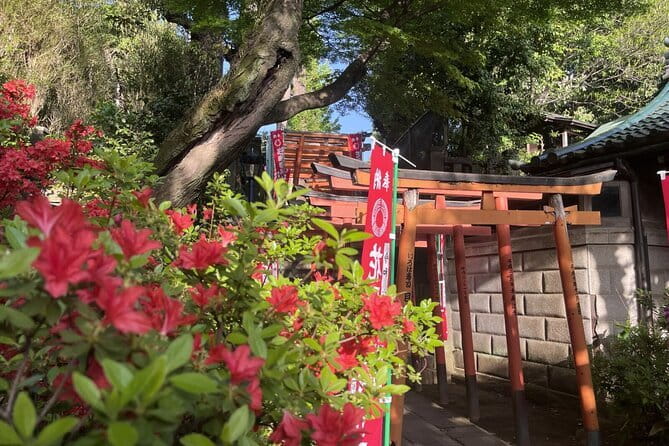
Next comes roughly 90 minutes in Ueno Park. This is the part of the tour that gives your feet a break from enclosed galleries, even though you are still walking. The route includes temples, shrines, the park’s lake, and quieter green areas where you can step away from Tokyo’s traffic.
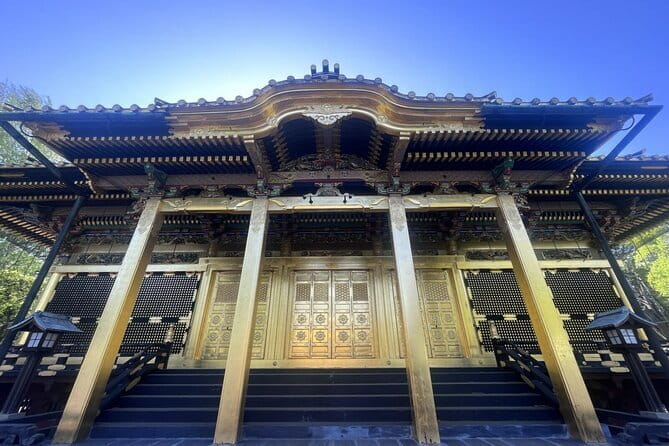
Admission to Toshogu Shrine is included among the tour’s museum and shrine fees. The provided details do not specify every exact shrine or temple visited, so the guide’s route on the day may shape the balance of the stop. What you can count on is a guided look at the park’s religious sites and natural areas.
Ueno Park is valuable with an informed guide because its paths can seem straightforward while its monuments and buildings carry layers of meaning. A guide can help you notice a pagoda, shrine detail, or temple statue that you might otherwise walk past.
This section is also a good counterpoint to the museum. You have time to slow down, look around, and ask questions. The pace is described as relaxed, but do not confuse that with very little walking. The day continues on foot, and the park stop is only the first major outdoor stretch.
Ameyoko brings in the noise and the lunch break

After the calm of Ueno Park, the tour heads to Ameyoko Shopping Street for about 80 minutes. This is a retro shopping and restaurant district with a very different feel from the park and museum quarter.
The guide explains the area’s past and importance before giving you time for lunch and personal browsing. Food is not included, which is sensible here because the appeal is having a choice. You can use the break to select a restaurant or food stall that catches your eye, though the supplied details do not promise a specific meal or food tasting.
I like this pause in the schedule. A full-day walking tour needs a point where you can make your own choices, and Ameyoko provides one without forcing the whole group into the same restaurant. It also lets you see a more everyday commercial side of Ueno.
The tradeoff is that lunch timing is less structured. If you prefer a planned meal with a fixed menu, this may feel loose. If you enjoy browsing and deciding as you go, it is a useful chance to take control of part of the day.
Yanaka’s art and the former home of a sculptor
The route then shifts to Yanaka, a traditional lower-city neighborhood. The first stop there is a museum tied to Yanaka’s art scene and local story. It occupies both the workshop and family home of a well-known Japanese sculptor.
This is one of the tour’s most distinctive stops. You are not only looking at art in a formal gallery. You are seeing it in a setting connected to the artist’s daily life and working practice. That kind of place can make the art feel more grounded and personal.
The visit lasts about 70 minutes, with admission included. The available details do not identify the sculptor or list the full collection, so you should think of this as a guided introduction rather than a specialist museum study. The guide can provide the background that turns a small art stop into a meaningful part of the neighborhood walk.
For me, this is where the tour earns its focus on old Tokyo. Yanaka is not presented only as a pleasant street scene. Its homes, studios, and local institutions are part of what makes the neighborhood worth your time.
Other walking tours we've reviewed in Tokyo




Yanaka Ginza and the cat-themed shopping street

Yanaka Ginza follows with about an hour of guided walking. The shopping district is known for its calm, cozy feel and its cat theme. Keep an eye out for cat statues and cat-related goods along the street.
This is a lighter section after the museum. You can browse, take in the shopfronts, and watch the neighborhood operate at a slower pace. The street is free to enter, but purchases are your responsibility.
Yanaka Ginza is a good match for you if you prefer small-scale local shopping to department stores. It is also a pleasant place to look for modest souvenirs that feel connected to the neighborhood rather than mass-produced Tokyo icons.
The practical point is that this is still a walking tour, not a dedicated shopping trip. You will have time to look around, but the group must keep moving to complete the later temple and cemetery section. If you spot something you want, do not assume you will have a long return visit built into the schedule.
A Buddhist temple and the quiet paths of Yanaka Cemetery
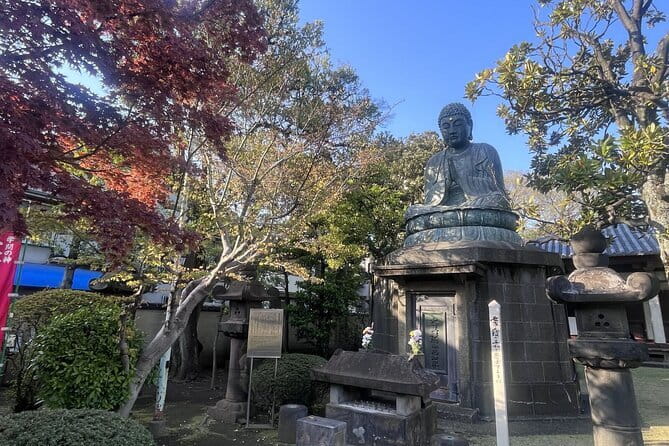
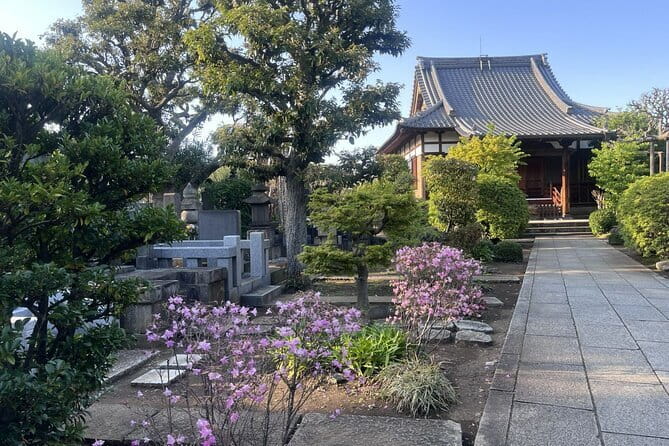
The final hour brings you to a peaceful Buddhist temple with impressive Buddha statues, followed by Yanaka Cemetery and Sakura Dori. This is a quieter finish than the noisy start at Ameyoko.
The temple provides a place to pause, and the cemetery offers a different way to see the neighborhood. Instead of rushing from attraction to attraction, you walk through a space tied to local religious life and remembrance. Sakura Dori adds another traditional street setting to the route.
The available description calls this a tranquil section, but it is important to remember that tranquility does not mean sitting for most of the hour. You will continue on foot through the temple grounds and cemetery area.
Ending at Nippori Station is practical. By this point you have crossed a clear slice of northeastern Tokyo, from major cultural sites to older residential streets. The finish also means you can continue your day from a different station rather than retracing the route.
What the $148.93 price includes
At $148.93 per person, this is not a cheap orientation walk. The value depends on how much you want from a guide-led day rather than a self-planned visit.
The price includes admission to the museums and Toshogu Shrine, plus an English-speaking local guide. Food, drinks, and train transport before and after the tour are extra. The included admissions matter because they remove some small planning tasks and make the museum and shrine visits part of one organized route.
You are also paying for interpretation. Ueno Park, Ameyoko, and Yanaka are all possible to visit independently, but doing so requires deciding which buildings matter, locating the less obvious sites, and understanding how the districts connect. A guide can help you spend your limited Tokyo time with less guesswork.
The value is strongest for a first visit, a short stay, or anyone who wants cultural context without arranging several separate admissions and walks. It is weaker for a confident independent visitor who already knows Ueno and Yanaka well, speaks Japanese comfortably, or prefers to spend as long as desired in one museum.
The tour is often reserved far in advance, with an average booking lead time of about 185 days. That suggests you should not leave it until the last moment if the date matters to you.
Walking comfort, timing, and what to bring
The experience lasts approximately seven hours and 30 minutes. You are outdoors for several hours and move between six main parts of the route, so comfortable walking shoes are essential.
There is no private vehicle. Public transport is used to reach the meeting point and afterward, but those train costs are not included. Plan your route to Ueno Station before the start and Nippori Station after the finish.
Food and drinks are also not included. The Ameyoko lunch break is your main chance to choose something to eat, so it is sensible not to arrive without any plan for the long day. The tour information does not specify whether bottled water is provided.
Most people can participate, but the length and outdoor nature of the route are the key considerations. If you need frequent seated breaks or want a low-walking sightseeing day, this may not be the right fit.
Who will get the most from this Ueno and Yanaka walk?
I would choose this tour if you want several kinds of Tokyo in one day: science exhibits, old religious sites, a park, a market street, local art, neighborhood shopping, and a cemetery walk.
It suits you particularly well if you:
- Prefer cultural sites over large modern districts
- Want an English-speaking guide to explain what you are seeing
- Like quieter areas and older streets
- Enjoy a balance of planned visits and free time
- Are comfortable walking outdoors for most of a day
- Want to finish in Nippori rather than return to Ueno
It is less suitable if your priority is luxury transport, a fixed lunch, extensive free shopping time, or a deep museum visit. The schedule is broad by design. You see many types of places, but no single stop receives an entire day.
The guide can make a real difference. Beth’s calm manner and willingness to answer questions are especially useful on a route where the value often lies in small details: a building’s design, a statue’s setting, or the reason a neighborhood developed as it did.
Should you book this tour?
Book it if you want a well-paced introduction to old Tokyo and would rather have someone connect the sites for you. The combination of Ueno’s major cultural attractions and Yanaka’s quieter streets is the strongest reason to go.
Skip it if you dislike long walks or prefer to set your own museum schedule. At $148.93, the tour is best viewed as a guided cultural day, not simply a means of getting from one attraction to another.
For the right person, it offers a rare balance: enough structure to prevent missed sights, enough free time to make the day feel personal, and a route that ends in a different part of Tokyo than where it began.
FAQ
How long does the Ueno and Yanaka Culture Art Walking Tour last?
The tour lasts approximately seven hours and 30 minutes.
What time does the tour begin?
The start time is 9:30 a.m.
Where does the tour begin?
The meeting point is Ueno Station, at 7 Chome-1 Ueno, Taito City, Tokyo 110-0005, Japan. The JR Yamanote Line and Park Gate exit are recommended.
Where does the tour end?
The tour ends at Nippori Station, at 2 Chome-19 Nishinippori, Arakawa City, Tokyo 116-0013, Japan.
Is transportation included?
No. Trains and transport before and after the tour are not included, and the tour does not use a private vehicle.
Is lunch included?
No. Food and drinks are not included. You have a lunch break in the Ameyoko Shopping Street area.
What admissions are included?
Admission fees for the museums and Toshogu Shrine are included.
How many people can join the tour?
The maximum group size is 15 people.
Can I cancel for a full refund?
Yes. You can cancel up to 24 hours before the experience start time for a full refund. Changes or cancellations made less than 24 hours before the start time are not accepted for a refund.
More Walking Tours in Tokyo
More Ueno & Yanaka Walks in Tokyo
More tours in Tokyo we've reviewed







Ueno & Yanaka Walks, compared.
 ★ 5.0Eat and Drink Like a Local: Tokyo Ueno Food Tour-Taverns&RamenFrom $95
 ★ 4.5The Old Quarter of Tokyo – Yanaka Walking TourFrom $40
 ★ 5.0Yanaka Walking Tour: Historic and Traditional District of TokyoFrom $72
 ★ 4.8Tokyo: Old Quarter Yanaka Walking TourFrom $323 hours
 ★ 5.0Tokyo: Food Tour in Ueno with 10+ Tastings of Japanese ClassicsFrom $142
 ★ 4.9Tokyo:Stroll in Old traditional culture towns~Yanaka & NezuFrom $293h 30m