Reviewed · AQUARIUMS
Tokyo Art Aquarium Museum E-Ticket with optional Tokyo Metro Pass
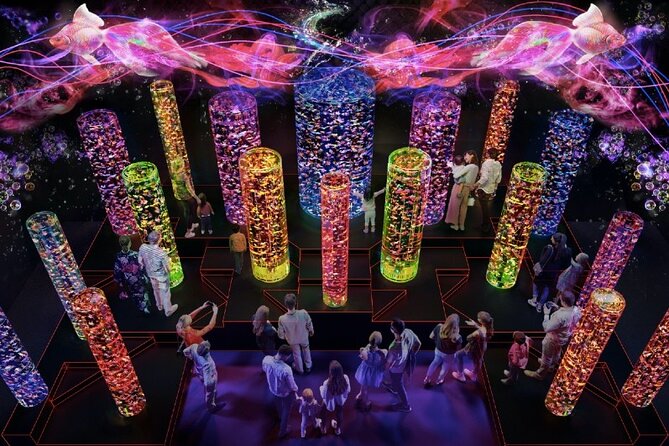
Tokyo’s Art Aquarium turns goldfish into moving art. Inside Ginza Mitsukoshi, you’ll see ornamental fish swimming through specially designed displays shaped by Japanese culture, flowers, light, sound, and fragrance. It feels closer to a small art show than a standard aquarium.
In This Article
- Key points
- Goldfish as Japanese Art, Not Just Aquarium Fish
- Inside Ginza Mitsukoshi
- What the Hyakka Ryoran Theme Means
- A One to Two-Hour Visit
- What You Will Actually See
- How the Displays Feel in Practice
- Price and the Optional Tokyo Metro Pass
- Timing, Tickets, and Entrance Rules
- Who Will Enjoy This Most
- Should You Book the Art Aquarium Museum GINZA?
- FAQ
- Where is Art Aquarium Museum GINZA located?
- How long does the visit take?
- What does the admission ticket include?
- Is the Tokyo Metro Pass included?
- Do I need to bring identification?
- Can I use my phone to enter?
- Can I bring food, drinks, or luggage inside?
- Can I cancel or change my ticket?
I like the short one to two-hour visit, which fits neatly between Ginza shopping, Tokyo Station, and the Imperial Palace Plaza. I also like the variety of goldfish displays, from small containers to flower-filled scenes and larger fantasy settings. The main drawback is that this is a compact, highly designed attraction, not a full aquarium with many species or a long list of exhibits.
Key points
- Goldfish are the main subject: The museum focuses on kingyo, ornamental fish that have been admired in Japan since the Edo period.
- Japanese art shapes every display: Expect flowers, traditional motifs, lighting, sound, fragrance, and carefully arranged tanks.
- Ginza location saves time: The museum is inside Ginza Mitsukoshi, close to Tokyo Station and the Imperial Palace Plaza.
- Plan for one to two hours: It works well as a short indoor stop rather than a full-day attraction.
- Bring photo ID: You must show a valid passport or other accepted photo identification at the entrance.
- The $29 price buys atmosphere as much as fish: This makes the most sense if you enjoy visual art, photography, or unusual Tokyo attractions.
Goldfish as Japanese Art, Not Just Aquarium Fish
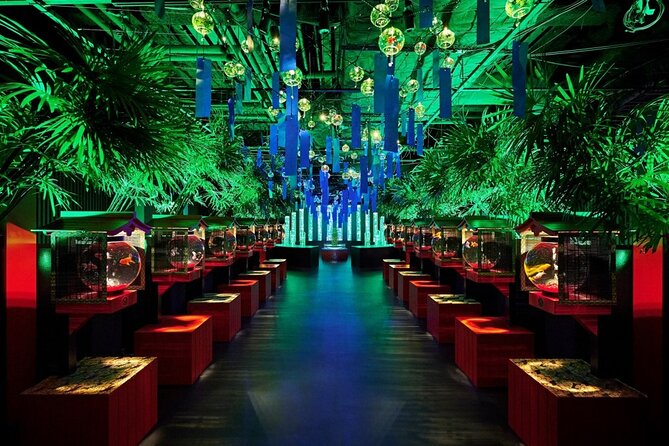
The central idea is simple but unusual: the fish are the artwork’s living element. Goldfish, known in Japan as kingyo, have been kept and admired as ornamental fish for centuries. Their popularity goes back to the Edo period, from 1603 to 1867, when goldfish appreciation became part of Japanese culture.
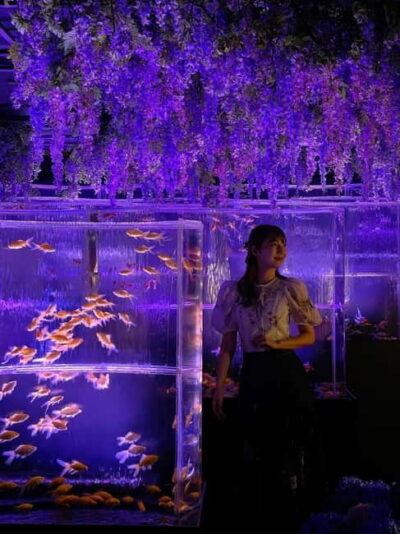
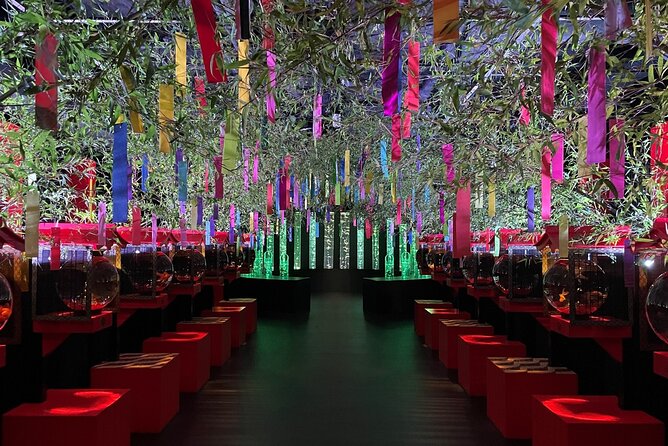
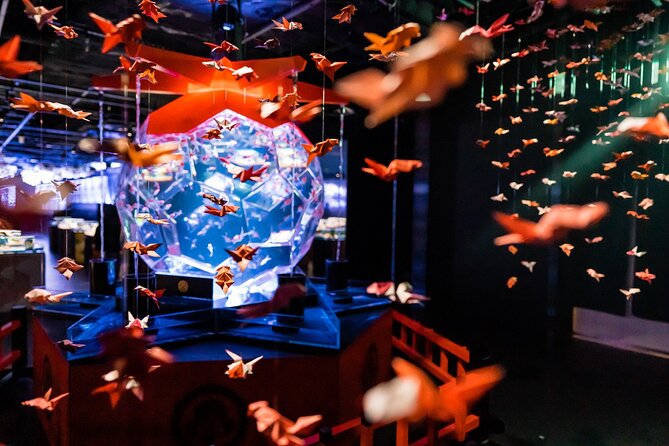
At Art Aquarium Museum GINZA, that tradition is given a modern setting. The tanks are not plain glass boxes lined up in rows. They are arranged as part of carefully built scenes, with color, illumination, sound, fragrance, and flowers shaping the mood around the fish.
You should arrive ready for a visual experience rather than a science lesson. The focus is not on fish biology, conservation, or a large range of aquatic life. Instead, you’re looking at how the goldfish move through an artistic setting and how traditional Japanese beauty can be presented in a modern room.
That distinction matters. If you want sharks, penguins, coral reefs, or educational signs, this is not the right aquarium. If you enjoy design and want something that feels distinctly Japanese, the concept is much more appealing.
A few more Ginza tours and experiences worth a look

Inside Ginza Mitsukoshi
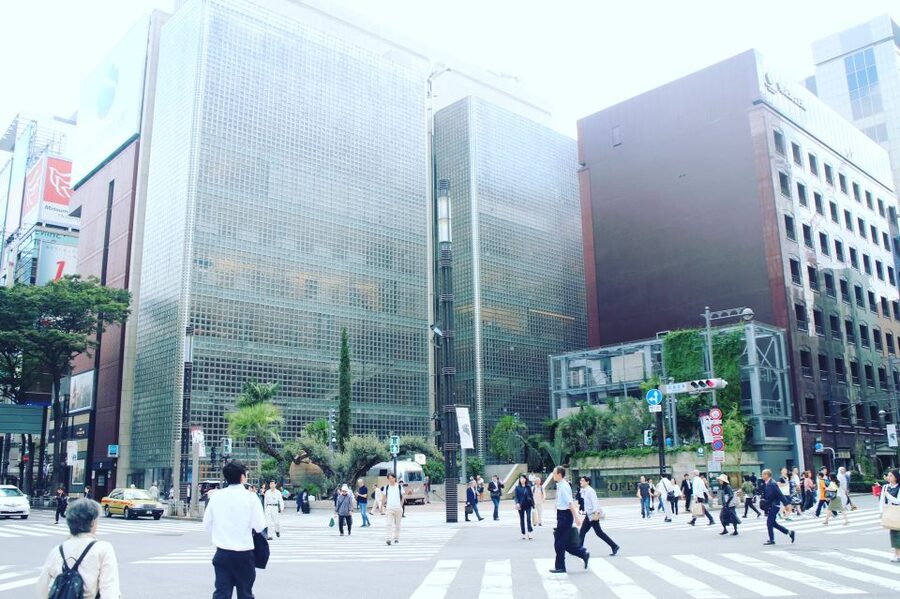
The museum is located inside Ginza Mitsukoshi, one of Tokyo’s well-known department stores. That gives you an easy sightseeing pairing: spend time with the goldfish, then continue through Ginza’s shops, restaurants, and older cafes.
The location is one of the experience’s strongest practical features. Ginza sits close to Tokyo Station and the Imperial Palace Plaza, so you can place this visit into a day that already includes central Tokyo landmarks. You do not need to build an entire day around the museum.
Ginza also gives the visit a useful sense of place. This is not an isolated attraction on the edge of the city. Afterward, you can walk through a district known for long-established restaurants, department stores, and retro cafes. The contrast works well: a modern light-and-fish installation followed by an older side of Tokyo.
You’ll need to find your way to the museum within the department store, so leave a little extra time if the building is unfamiliar. Pickup is not provided, and food, drinks, and luggage cannot be brought inside. Travel light and keep your phone ready for the digital ticket.
What the Hyakka Ryoran Theme Means
The museum’s main theme is Hyakka Ryoran, described as evolving art. The phrase suggests a profusion of flowers in bloom, and flowers are an important part of the visual setting. One display noted in the experience uses cherry blossoms, which can give the room a distinctly seasonal Japanese feel even when you are visiting outside spring.
The attraction has a history of about 15 years and has presented limited-time exhibitions in different places in Japan and abroad. The Ginza museum is described as a second chapter, with a permanent museum setting and a focus on colorful Japanese beauty.
You might find the scenes delicate and calm, or slightly theatrical, depending on your taste. The goldfish move naturally, while the lighting and surrounding objects change how you see them. A small fish container can feel intimate. A flower-filled arrangement can feel more like a stage set.
This is also why the experience can be relaxing. You are not racing from one large tank to another. The displays invite you to pause and look at the fish, their colors, and the reflections around them. The atmosphere is part of the point.
A One to Two-Hour Visit
The expected duration is about one to two hours. That makes Art Aquarium Museum GINZA especially useful when you have a spare part of the day but do not want another major sight that demands several hours.
I would plan it as one stop in a central Tokyo route. For example, you could visit the museum, have lunch in Ginza, and continue toward Tokyo Station or the Imperial Palace Plaza. You could also place it after shopping, using the museum as a quiet change of pace.
The short duration is a benefit, but it also affects the value. At $29 per person, you are paying for a compact art installation, not an all-day attraction. You should expect to spend enough time to appreciate the displays, but not a whole afternoon unless you move very slowly or take many photographs.
The museum suits people who prefer focused experiences. You can see the main displays without tiring yourself out, which is helpful during a packed Tokyo schedule. Families, couples, solo visitors, and anyone looking for an indoor activity can fit it into a broader day.
What You Will Actually See
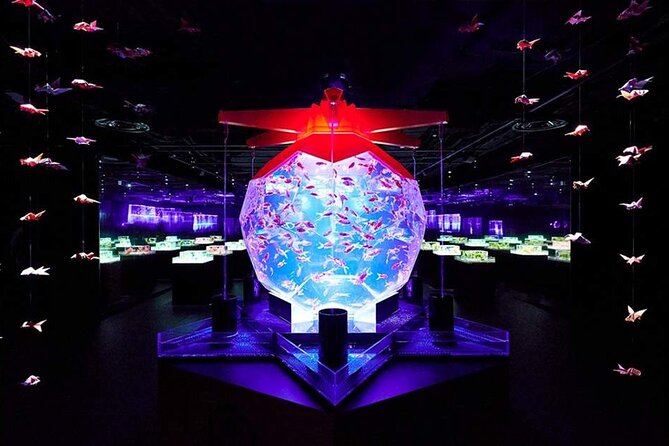
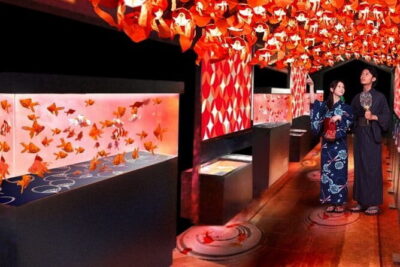
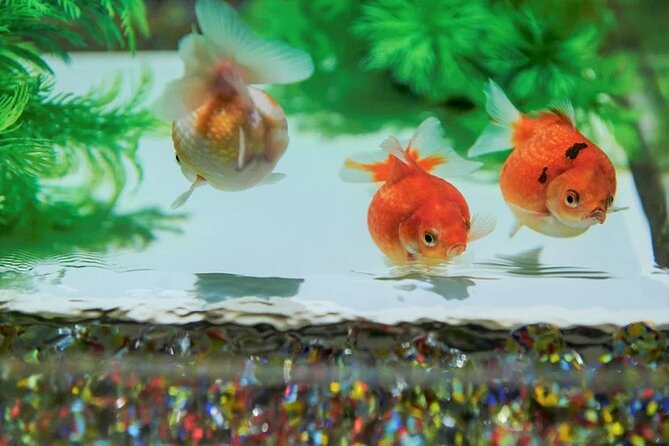
The displays use several types of goldfish, with each arrangement designed around a different artistic idea. You may see fish swimming in small containers, flower-based settings, and larger compositions that combine water, lighting, and traditional Japanese imagery.
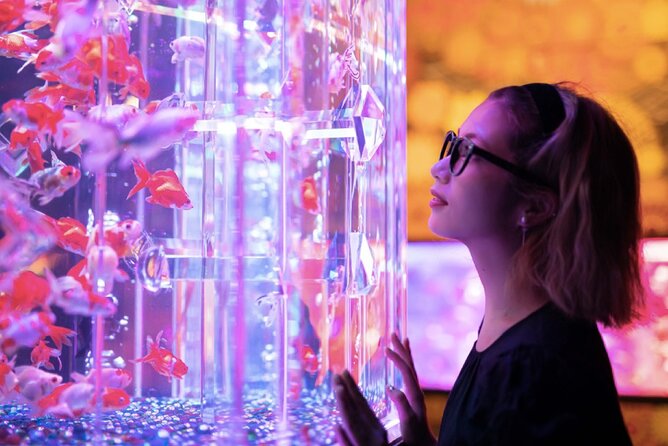
The fish themselves are varied and visually distinctive. Their shapes and colors become more noticeable because the displays are arranged for close viewing. The design team uses the tanks as part of the artwork, so you are watching both the fish and the way the entire scene has been built around them.
Light is a major part of the experience. It can make the water glow, change the mood of a display, or draw your attention to one particular group of fish. Sound and fragrance are also included, adding sensory layers beyond what you would find in a normal aquarium.
That combination may be the attraction’s biggest strength. You are not simply looking at goldfish. You are seeing them placed inside a controlled artistic environment that connects ornamental fish with Japanese flowers, color, and traditional beauty.
Still, the experience is not likely to satisfy everyone. If you prefer natural exhibits, factual interpretation, or open spaces, the theatrical presentation may feel too decorative. The museum asks you to appreciate mood and composition more than information.



How the Displays Feel in Practice
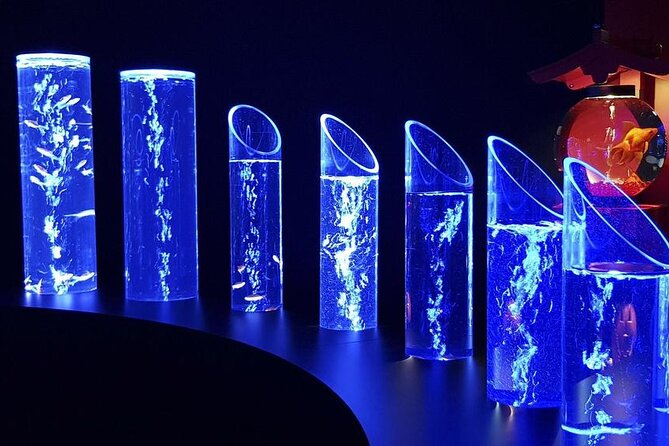
The best way to approach the museum is slowly. Give each arrangement time to settle into view instead of treating the rooms like a checklist. Look for how the fish move through the water, then notice the flowers, lighting, and surrounding forms.
Cherry blossoms are one particularly memorable design element. Their use gives the displays a soft seasonal character and connects the fish to a familiar Japanese image. Other floral arrangements may create a more formal or fantastical effect.
The experience is also a good choice for photography, though your enjoyment should not depend entirely on taking perfect pictures. Reflections, colored light, and moving fish can make photographs unpredictable. Your phone may capture the general mood, but the live movement is part of what makes the displays work.
Because the museum combines art and aquarium elements, the visit can appeal to different people in the same group. Someone interested in Japanese culture can focus on the flowers and traditional motifs. Someone who likes animals can watch the goldfish. Someone who enjoys design can study the tanks and lighting.
The displays are described as beautiful and unusual, but the word unusual is important. This is not an ordinary museum format. You are entering a fantasy world built around ornamental fish, and that either makes the $29 cost feel worthwhile or makes it feel like too much for a short visit.
Price and the Optional Tokyo Metro Pass
The listed price is $29 per person, with an optional Tokyo Metro Pass available as part of the booking choices. The supplied details do not specify the pass’s coverage or savings, so check the exact option before paying if you are considering it for transportation.
For the museum alone, the price is easiest to justify when you value presentation. You are paying for the entrance to a purpose-built art space, not simply admission to see goldfish in standard tanks. The use of light, sound, fragrance, flowers, and Japanese themes gives the visit a more specialized character.
I would compare the cost with your own interests. If you already enjoy art installations, Japanese design, or unusual city attractions, this can be a good central Tokyo stop. If you are mainly looking for the largest possible aquarium for your money, a conventional aquarium may suit you better.
The location helps the value. You do not have to make a long journey for a one-hour visit, and the museum can be combined with Ginza, Tokyo Station, and the Imperial Palace Plaza. The less time you spend getting there, the easier it is to make a short attraction worthwhile.
Timing, Tickets, and Entrance Rules
You select a date and time, and the ticket is valid only for that choice. Arrive on time. A no-show means no rescheduling and no refund, so this is not a place to treat your booking casually.
A Viator or TripAdvisor confirmation is not the official admission ticket. The actual e-ticket is sent by email by one day before the visit, and you can show it on your smartphone without printing it.
Bring a valid photo ID or passport. It must be shown at the entrance, so keep the same identification used for your booking close at hand.
The museum does not include food, drinks, pickup, or luggage storage. Outside food and beverages are not allowed, and luggage cannot be brought inside. Plan to eat before or after the visit and avoid arriving with large bags.
The activity requires good weather, despite taking place indoors. If poor weather causes cancellation, you are offered a different date or a full refund. Under the normal cancellation terms, however, the ticket is non-refundable and cannot be changed for any reason.
Who Will Enjoy This Most
I would recommend Art Aquarium Museum GINZA to you if you want a short, distinctive Tokyo experience in a central district. It is especially well suited to:
- People interested in Japanese culture and visual design
- Couples looking for a calm, atmospheric stop
- Families who enjoy colorful displays and fish
- Photographers who like flowers, reflections, and unusual compositions
- Visitors with a free hour near Ginza or Tokyo Station
- Anyone seeking an indoor activity that is different from a standard museum
You may want to skip it if your main goal is a large aquarium with many marine species, long educational exhibits, or a full-day attraction. The goldfish are the focus, and the museum’s artistic presentation matters more than scientific information.
The experience also works best when you are open to a little quiet looking. If you rush through, you may see the fish but miss the relationship between the tanks, flowers, sound, and light.
Should You Book the Art Aquarium Museum GINZA?
Book it if you like unusual museums, Japanese decorative art, and compact attractions that fit neatly into a busy city day. The combination of ornamental goldfish, cherry blossoms, lighting, sound, and fragrance gives you something you will not find in an ordinary aquarium.
At $29, it is not the cheapest way to see fish in Tokyo. Its value comes from the setting and the idea, not from the number of exhibits. I would choose it as a one to two-hour Ginza stop, especially when you are already planning to visit nearby central Tokyo sights.
Skip it if you want extensive animal exhibits or a traditional museum with detailed historical explanations. For the right visitor, though, this is a graceful and unusual break from Tokyo’s fast pace, with enough Japanese character to make the short visit memorable.
FAQ
Where is Art Aquarium Museum GINZA located?
It is located inside Ginza Mitsukoshi department store in Ginza, Tokyo.
How long does the visit take?
The approximate duration is one to two hours.
What does the admission ticket include?
The ticket includes admission to Art Aquarium Museum GINZA according to the selected tour grade.
Is the Tokyo Metro Pass included?
An optional Tokyo Metro Pass is available as a booking choice. The supplied details do not specify its exact coverage.
Do I need to bring identification?
Yes. You must bring a valid photo ID or passport and show it at the entrance.
Can I use my phone to enter?
Yes. The official e-ticket is sent by email by one day before the visit, and you can show it on your smartphone without printing it.
Can I bring food, drinks, or luggage inside?
No. Outside food and beverages, as well as luggage, are not allowed.
Can I cancel or change my ticket?
The experience is normally non-refundable and cannot be changed. If poor weather causes cancellation, you are offered a different date or a full refund.