Reviewed · TOKYO FOOD TOURS
Tokyo: Best Ginza Food Tour at 3 Local Eateries
Tokyo’s Ginza food scene is best understood after dark, when polished department stores give way to tiny izakayas, smoky grills, and restaurants tucked beneath railway tracks. This three-hour tour takes you through Ginza, Yurakucho, and Shimbashi, with three local food stops rather than one long meal.
In This Article
- Key points at a glance
- Why this Ginza food tour works well after dark
- Ginza at 6 p.m., polished streets and traditional food
- Yurakucho beneath the railway tracks
- Shimbashi, the final stop for a local evening
- What the $150 price really covers
- The guide makes the difference
- Timing, walking, and what to expect
- Who should book this Tokyo food tour
- Final call: book it for access, not just dinner
- FAQ
- How long does the Tokyo Ginza food tour last?
- What time does the tour begin?
- Where does the tour start and finish?
- How many people can join the tour?
- What food is included?
- Are drinks included?
- Can I cancel for a refund?
I like the small maximum of 10 people, which gives you a better chance to ask questions and keep up in narrow streets. I also like the range of food: sushi, udon, karaage, yakitori, tempura, okonomiyaki, and yakiniku can all appear during the evening. The main drawback is the $150 price, especially since extra food and drinks are not included and the exact restaurant lineup can vary.
Key points at a glance
- Three neighborhoods in three hours: Begin in Ginza, pass through Yurakucho, and finish in Shimbashi.
- Local-style evening dining: The stops focus on izakayas, bars, and traditional restaurants rather than major tourist venues.
- A broad food lineup: Expect several Japanese specialties, with sushi, udon, fried chicken, grilled meat, tempura, and more included among the possible dishes.
- A small-group format: The tour accepts no more than 10 people, with personalized help from a professional local guide.
- Useful first-night plan: The 6 p.m. start gives you an easy way to eat, walk, and get your Tokyo bearings after arrival.
- Strong guest satisfaction: The experience carries a 4.9 rating from 83 ratings, with 99 percent recommending it.
Why this Ginza food tour works well after dark
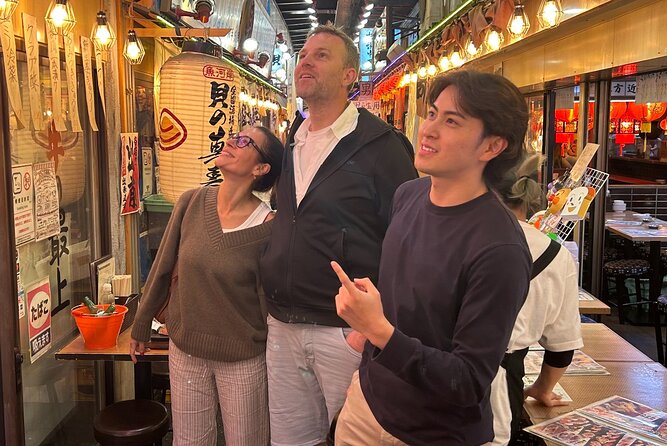
Ginza is famous for luxury shopping, polished facades, and expensive dining. Yet the best part of this tour is the contrast. You start in one of Tokyo’s most refined districts, then move toward the compact drinking streets of Yurakucho and the office-worker bars of Shimbashi.
I like this route because it gives your evening some shape. Instead of spending an hour trying to choose a restaurant, you move from place to place and sample several kinds of food. A guide also helps with the practical side of Japanese nightlife, where small menus, tight seating, and unfamiliar ordering customs can make a first attempt feel harder than it should.
The walking is part of the experience, not just transportation between meals. You may pass through streets that are easy to miss on your own, including the restaurant lanes beneath or beside the railway tracks in Yurakucho. The guide can also explain local eating customs and suggest other places to visit during the rest of your Tokyo stay.
The group limit matters here. Ten people is still enough for a social evening, but it is far more manageable than a large coach group. Several guide names appear in the experience’s guest feedback, including Doren, Yota, Yuta, and Ryo. Your assigned guide may be different, but the repeated strengths are clear: friendly conversation, English communication, food advice, and help with questions about Japanese culture.
A few more Ginza tours and experiences worth a look


Ginza at 6 p.m., polished streets and traditional food
The tour begins at 6 p.m. in Ginza, at 5-chome-2-1 Ginza. Plan to arrive early. The meeting point is near public transportation, but Ginza has many large buildings, department stores, and station exits, so a few spare minutes will make the start less rushed.
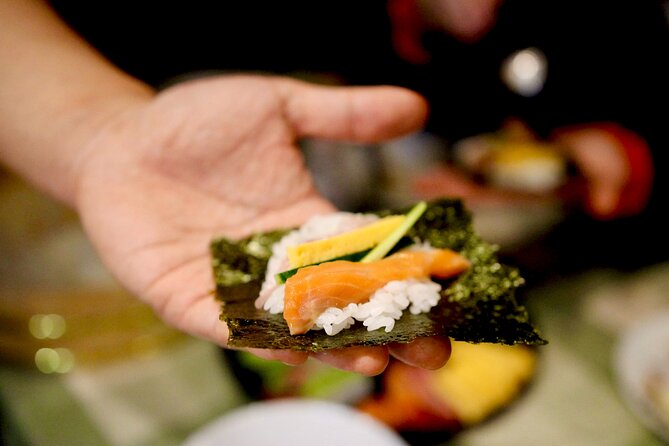
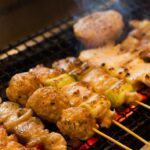
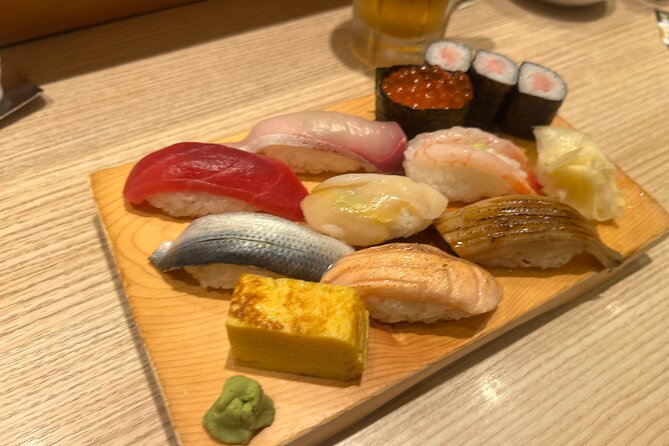
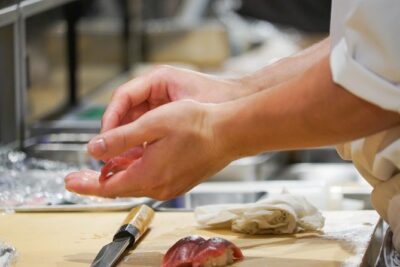
The first hour is devoted to Ginza. This is the part of Tokyo most associated with high-end shopping and modern style, but the tour aims to show you a more traditional restaurant side of the district. Your first stop may feature sushi, udon, or another classic Japanese dish. The supplied details also list yakitori, tempura, and other local foods among the included stops.
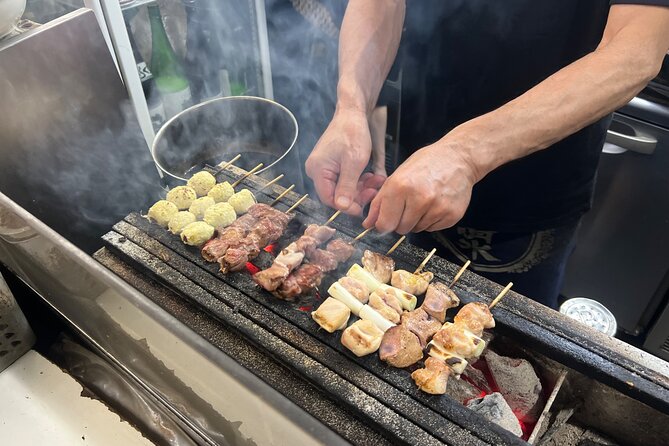
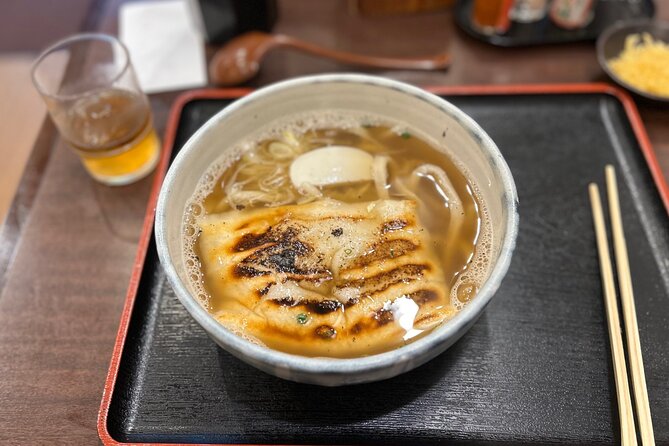
That variety is useful at the beginning of a trip. You can try familiar items such as sushi while also testing dishes you might not order alone. Karaage, for example, is Japanese fried chicken, while yakitori usually means grilled chicken served in small portions. Yakiniku brings grilled meat into the mix, and udon offers a warm, filling bowl rather than another small plate.
The exact menu is not fixed in the information provided, so you should not expect every dish listed above on every departure. Think of the food list as the range of specialties the three stops may cover. If one particular dish matters to you, ask the provider before booking.
I would also ask how the all-you-can-eat wording works in practice. The experience is described that way, but the inclusions specify three food stops, complimentary drinks, and no additional food or drinks. That could mean generous servings at the arranged restaurants, but the available details do not explain the ordering limits. Clarifying this point is sensible before paying $150.
Yurakucho beneath the railway tracks
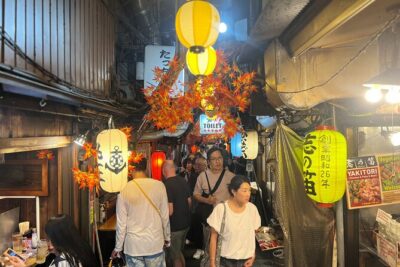
The second hour moves to Yurakucho, beside Ginza. This district has a very different feel from the luxury streets nearby. Its appeal comes from compact alleyways and small eateries, including traditional izakayas set along the railway line.
This is one of the most distinctive parts of the route. Tokyo’s rail network is usually seen as a way to get somewhere, but in Yurakucho the space around the tracks has become part of the city’s dining life. You may walk under the tracks and see the kind of close-set restaurant scene that is easy to overlook from a main avenue.
I like having this stop in the middle rather than at the end. It breaks up the evening and shows how quickly Tokyo can change from formal to casual. The guide’s role is especially useful here, since a small bar with a Japanese-only menu may be hard to identify from the street. One guest specifically praised a guide for taking the group beneath the tracks and explaining the area, which tells you what makes this section worthwhile.
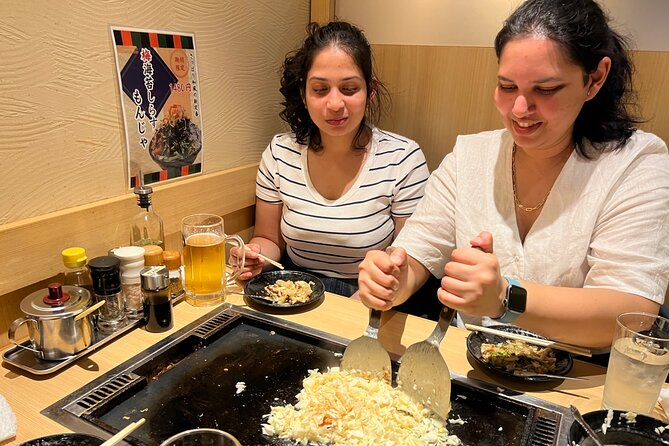
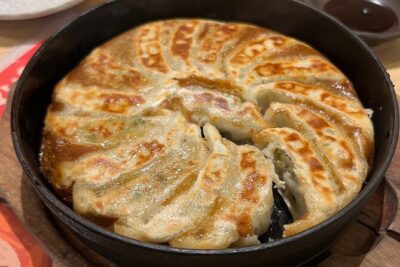
Food at Yurakucho may include sushi, tempura, okonomiyaki, or grilled items, depending on the chosen restaurants. Okonomiyaki is a savory cooked dish often made with batter and fillings, and it gives the meal a different texture from sushi or noodles. The tour’s appeal lies in that progression, not in eating three versions of the same thing.
The tradeoff is comfort. Traditional izakayas can be small, and the experience is not designed as a spacious, quiet restaurant dinner. If you want a private table, slow service, or a carefully paced tasting menu, this is not the right format. If you want to see where people go for a casual drink and several shared dishes, Yurakucho is a strong fit.
Shimbashi, the final stop for a local evening
The route finishes in Shimbashi, with the third hour focused on food, drinks, and the area’s after-work dining culture. Shimbashi is known for office workers, izakayas, and traditional eateries packed into streets close to the station.
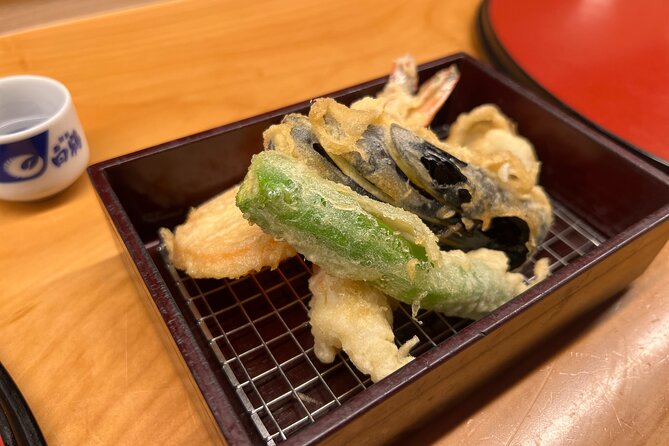
This final stop should feel like a natural ending rather than a grand finale. You may finish with yakiniku, tempura, karaage, udon, or another dish from the tour’s menu range. Some guest accounts describe combinations such as sushi, okonomiyaki, and tempura, while another mentions a stop that included steak. The point is to leave with a broad taste of Japanese casual dining, not a single signature course.
Finishing in Shimbashi is practical. You are not returned to Ginza, so check the route home before the tour begins. Shimbashi is near public transportation, and the end point is listed in Shimbashi, Minato City, but you will need to make your own way back to your hotel.
I see value in ending here because the district offers plenty of options if you want to continue your night. At the same time, do not assume the tour includes late-night bar hopping after the third stop. The paid experience finishes in Shimbashi, and any further drinks or food are your responsibility.
What the $150 price really covers
At $150 per person, this is not a bargain meal. You are paying for more than the food itself: a professional local guide, three arranged food stops, complimentary drinks, neighborhood walking, cultural context, and the convenience of not having to make several restaurant choices in an unfamiliar city.
The value is strongest if you are new to Tokyo and want a guided introduction to Japanese nightlife. You can sample several dishes in one evening and ask questions as you go. The small group also adds value, since a guide can spend more time helping individuals than on a large group outing.
The price is harder to justify if you already know Tokyo’s restaurant districts or prefer to order independently. Ginza, Yurakucho, and Shimbashi are all accessible by public transportation, and you could spend less by choosing one or two casual restaurants yourself. You would, however, give up the guide’s restaurant access, explanations, and help with the evening’s flow.
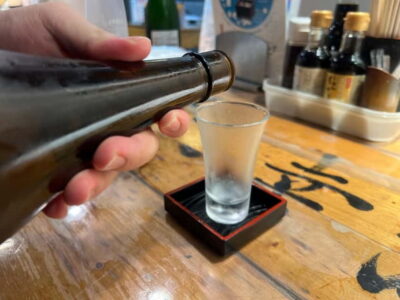
Drinks are complimentary, but additional drinks and food are not included. Alcohol is served only to people aged 20 or older, in line with Japanese law. The supplied details do not explain how many drinks are included, so I would treat complimentary drinks as part of the arranged stops rather than an open bar.
A few more Ginza tours and experiences worth a look

The guide makes the difference
A food tour lives or dies by its guide. Here, the guide is not just a person who leads you from one address to the next. The strongest part of the experience is the chance to ask about dishes, neighborhood life, restaurant customs, and what to do afterward.
Doren is described as friendly, comfortable answering questions, and able to discuss Japanese culture and local activities. Yota is praised for being charismatic and for taking the group to several food places with different styles. Yuta is described as helpful and well informed about the restaurants, while Ryo is noted for keeping a younger family member engaged during an evening affected by jet lag.
Those names are useful to know, but they do not guarantee who will lead your departure. The provider is Traveling Tokyo, and the tour includes a professional local guide. I would book this for the access and conversation, not for a specific guide unless the company confirms that person in writing.
English communication is another practical strength. The available feedback repeatedly points to easy communication, which matters when you are asking about ingredients, ordering, or local etiquette. Still, you should tell the provider about food restrictions before booking, since no specific dietary accommodation is stated.
Timing, walking, and what to expect
The experience lasts about three hours, with roughly one hour in each neighborhood. You will walk between food stops, though no exact walking distance is provided. Wear comfortable shoes and avoid arriving hungry but exhausted. The tour includes substantial food, and the evening is designed for eating at several places rather than squeezing in a quick snack.
The 6 p.m. start is well chosen for a first night in Tokyo. You can settle into the city, meet the group, and eat through the early evening. It also avoids the stress of finding your own restaurant after dark, when unfamiliar streets and small signs can make a simple meal take longer than planned.
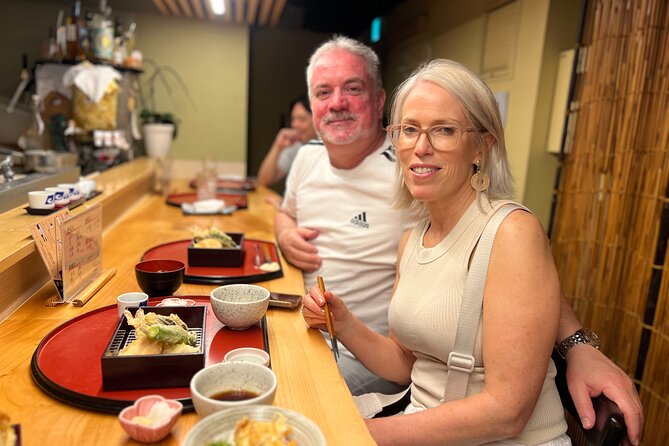
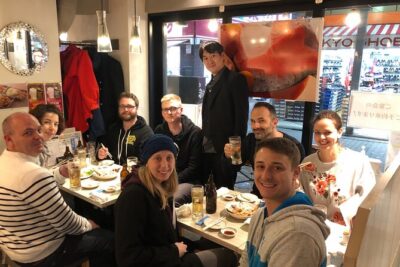
This is a social experience. The maximum group size is 10, but the group may be smaller. One couple had the tour to themselves, while another departure included a broader group. You should be ready to share tables, walk at a group pace, and try dishes in a communal setting.
The tour requires good weather. If poor weather causes cancellation, you will be offered another date or a full refund. For your own plans, avoid placing a fixed evening reservation immediately afterward. You can cancel for a full refund up to 24 hours before the start time, but changes or cancellations inside that window are not accepted.
Who should book this Tokyo food tour
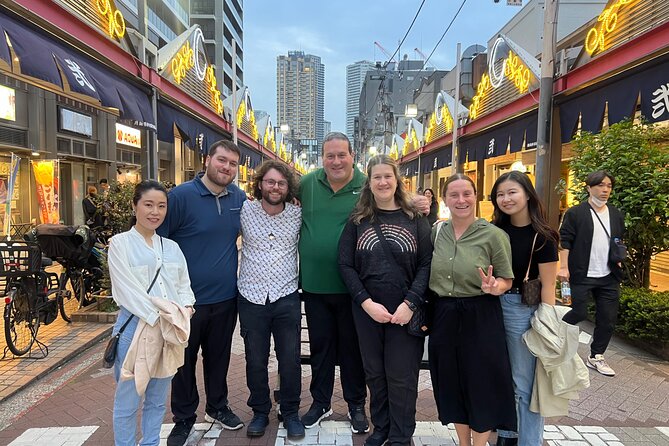
I would recommend it most strongly for first-time Tokyo visitors, solo visitors who want company, couples seeking a guided night out, and families with adult members who can drink legally. It also works well for people who want food variety but do not want to decode every menu on their own.
The tour is a good choice if you value local atmosphere over formal dining. You will likely get more from it if you enjoy small restaurants, short walks, shared plates, and casual conversation. It is also useful for an early trip night because the guide can point you toward other districts and restaurants for later.
I would hesitate if you have strict dietary needs that have not been confirmed, dislike crowded or compact restaurants, or want a precise tasting menu. The advertised dishes are varied, but the final food selection is not guaranteed in the supplied details. I would also compare the $150 price with your dining budget before booking, since extra food and drinks cost more.
Final call: book it for access, not just dinner
I would book this tour if you want a guided introduction to the after-dark side of central Tokyo. The route covers three useful neighborhoods, the group is capped at 10, and the mix of sushi, noodles, fried food, grilled dishes, and tempura gives you a broad first taste of Japanese casual dining.
The experience is less compelling if your main goal is the cheapest possible meal or a particular restaurant. In that case, explore Shimbashi or Yurakucho independently. But if you want someone to handle the restaurant choices, explain what you are eating, and help you avoid a frustrating first night, the $150 can be reasonable value.
FAQ
How long does the Tokyo Ginza food tour last?
The tour lasts approximately three hours, with about one hour in each of Ginza, Yurakucho, and Shimbashi.
What time does the tour begin?
The tour starts at 6 p.m.
Where does the tour start and finish?
It starts at 5-chome-2-1 Ginza, Chuo City, Tokyo. It finishes in Shimbashi, Minato City, Tokyo.
How many people can join the tour?
The tour has a maximum of 10 participants.
What food is included?
The tour includes three food stops, with dishes such as sushi, yakitori, tempura, udon, karaage, yakiniku, and other Japanese specialties listed among the possible foods.
Are drinks included?
Complimentary drinks are included. Additional drinks and food are not included. Alcohol is served only to participants aged 20 or older.
Can I cancel for a refund?
You can cancel at least 24 hours before the start time for a full refund. Cancellations or changes made less than 24 hours before the start time are not accepted. If poor weather causes the tour to be canceled, you will be offered another date or a full refund.
More Food Experiences in Ginza
More Tokyo Food Tours in Ginza
More Ginza Tours in Ginza
More tours in Ginza we've reviewed


Tokyo Food Tours, compared.
 ★ 5.0Tokyo: Shinjuku Food Tour (13 Dishes at 4 Local Eateries)From $86
 ★ 4.9Tokyo: Shinjuku Food Tour (13 Dishes and 4 Eateries)From $97
 ★ 5.0Tokyo Night Foodie Tour in Shinjuku – Seasonal Sushi, Wagyu BeefFrom $111
 ★ 5.0Eat and Drink Like a Local: Tokyo Ueno Food Tour-Taverns&RamenFrom $95
 ★ 5.0Tokyo: Shibuya Food Tour (13 dishes and 4 Eateries)From $77
Tokyo: Shinjuku Food Tour – 15 Dishes, 3 Drinks, 4 EateriesFrom $723 hours
★ 5.0Tokyo: Shibuya Food Tour (13 dishes and 4 Eateries)From $77
Tokyo: Shinjuku Food Tour – 15 Dishes, 3 Drinks, 4 EateriesFrom $723 hours