Reviewed · SAMURAI & NINJA EXPERIENCES
Tokyo : Authentic Samurai Experience in a Private Space.
A kimono, a samurai sword, and a target waiting to be cut: this 90-minute Bushido class gives you a hands-on taste of traditional Japanese swordsmanship without taking up your whole day. The setting is a private house more than 100 years old, and instruction comes from Musashi Oka and Yoshi San.
In This Article
- Key details before you book
- A samurai lesson in an old Tokyo house
- Putting on the kimono and getting ready
- Learning the way of the samurai
- From practice swings to cutting a target
- Tea after the sword work
- Why the private format matters
- What makes the guides important
- Language, timing, and practical planning
- Who will get the most from this experience
- Should you book the $72 samurai class?
- FAQ
- Where does the samurai experience take place?
- Where does the activity end?
- How long does the experience last?
- How many people can join?
- Is the class suitable for beginners?
- Do participants wear a kimono?
- What sword skills will I practice?
- Is the activity offered in English?
- Can I cancel for a full refund?
I like the small group limit of four, which gives you room to ask questions and receive steady coaching. I also like the calm finish over Japanese tea, when the session shifts from sword practice to conversation about culture. The main consideration is that this is a short introduction, not a full martial arts course, and the meeting point in Adachi City is outside the usual central Tokyo sightseeing zone.
Key details before you book
- A private class for up to four: Only your group takes part, so the lesson feels personal rather than like a stage show.
- A 100-year-old house: You practice in an old private home at rojicoya, adding a sense of place to the lesson.
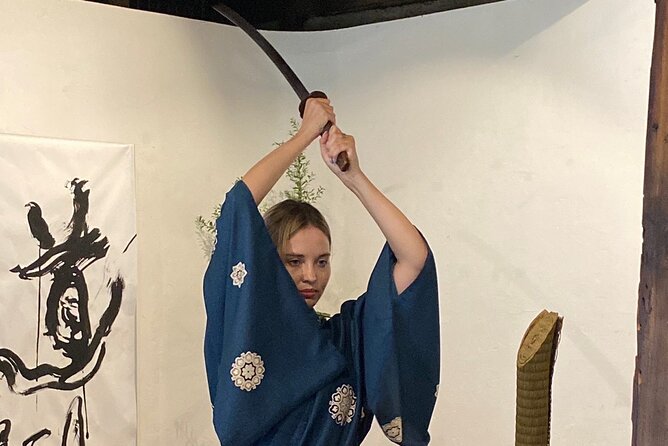
- Kimono and sword practice: You learn how to draw, hold, swing, and sheath a samurai sword under instruction.
- Target cutting included: The program includes cutting straw targets, with one participant also describing cutting tatami with a real katana.
- Tea and cultural conversation: Japanese tea follows the sword work, giving you time to ask questions.
- Short and easy to fit into a busy day: The experience lasts about one hour and 30 minutes and offers free cancellation up to 24 hours before the start time.
A samurai lesson in an old Tokyo house
The appeal here is not simply holding a sword for a photograph. You are taught a sequence of basic actions, from drawing the blade to gripping it, swinging it, and returning it to its sheath. That structure gives the session more substance than a costume stop with a quick demonstration.
The class takes place at rojicoya, an old private house over 100 years old in Adachi City. I like that setting because it puts the activity in a real neighborhood environment rather than a large entertainment venue built only for tour groups. The supplied address is 36-1 Senjuasahicho, Adachi City, Tokyo 120-0026.
Your group returns to the same meeting point at the end. The location is near public transportation, but you should allow enough time to reach Adachi City since this is not presented as a central Tokyo attraction. Check your route carefully before booking a tight connection with another activity.
The class is private, though the overall format allows up to four participants. That distinction matters. You are not necessarily booking a one-person lesson, but only your own group joins the session. For couples, families, or a few friends, this creates a more relaxed way to learn.
A few more Tokyo tours and experiences worth a look

Putting on the kimono and getting ready
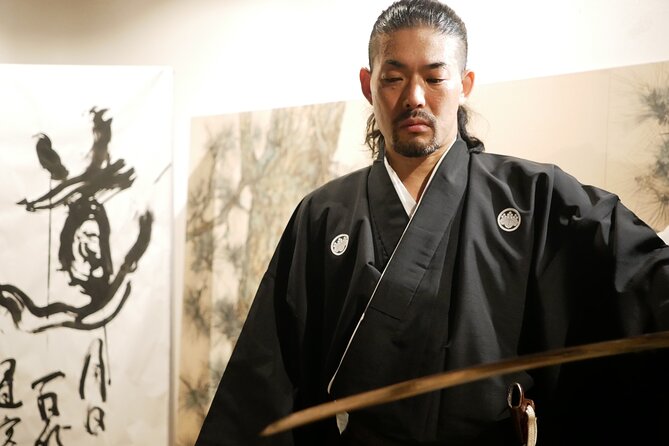
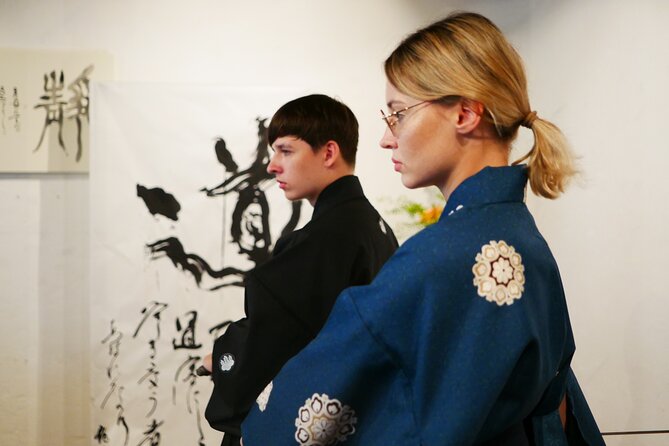
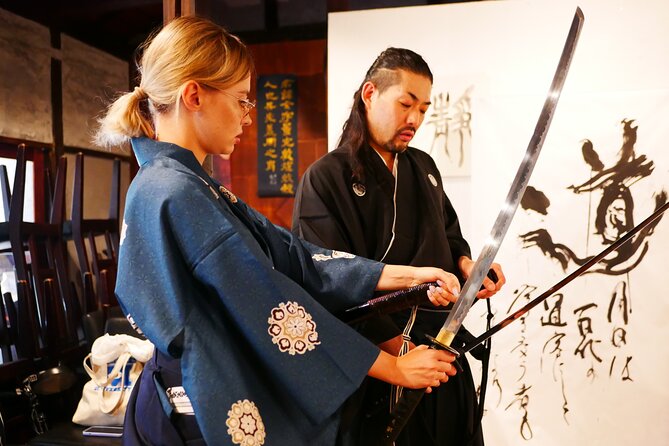
The experience begins with traditional clothing. You are dressed in a kimono before handling the sword, which helps turn the class into a cultural activity rather than a simple weapon demonstration.
The clothing also sets the tone. You are not just watching a performer in costume. You are taking part in a guided practice session, and the kimono makes the event feel connected to Japanese tradition. It is also one of the reasons this works well for visitors who want an activity with visual appeal but still want some instruction.
The supplied details do not specify changing-room arrangements, footwear, or whether the kimono is available in every size. If those points matter to you, ask the provider before the class. The program is described as suitable for men and women, and beginners are specifically welcomed.
You do not need previous sword experience. The instructor continually guides participants through the movements, so you can focus on following directions rather than trying to guess what to do. That is important when a sword is involved. Clear instruction and careful pacing matter more than athletic ability.
Learning the way of the samurai
The lesson uses sword handling to introduce Bushido, the code and values linked with the samurai tradition. You practice how to handle the sword properly, rather than simply waving it around for entertainment.
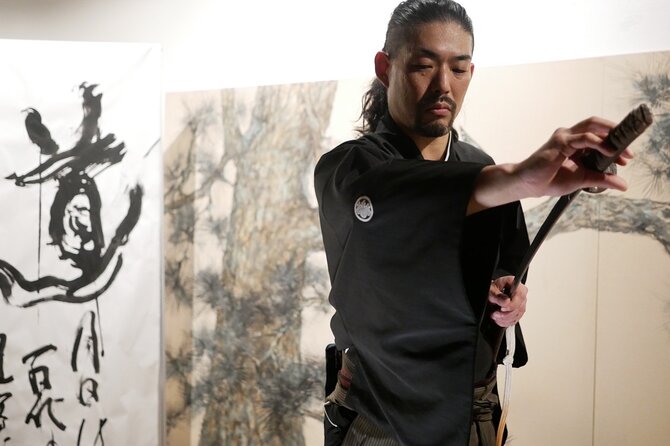
The basic skills include drawing the sword, holding it, swinging it, and sheathing it. Each action has a formal feel, and the repeated practice helps you understand that samurai swordsmanship depends on control and attention, not just strength.
Musashi Oka leads the instruction, with Yoshi San also helping create a welcoming atmosphere. English is used mainly during the course, and the activity is described as compatible with PokéTalk. The wording is unusual, but the practical point is clear: English-language communication is available, and one participant specifically found communication in English easy.
You should still pay close attention to demonstrations and hand signals. Sword movements are easier to copy when you watch carefully, even if English is not your first language. The small group makes it easier to pause and ask for clarification.
This part of the class is where the experience earns its value. You are not paying only for access to a costume and a sword. You are paying for instruction, supervision, and a chance to ask about Bushido and Japanese culture directly.
From practice swings to cutting a target
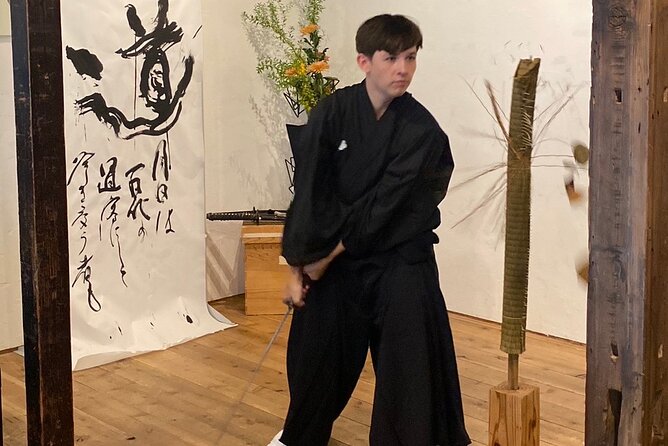
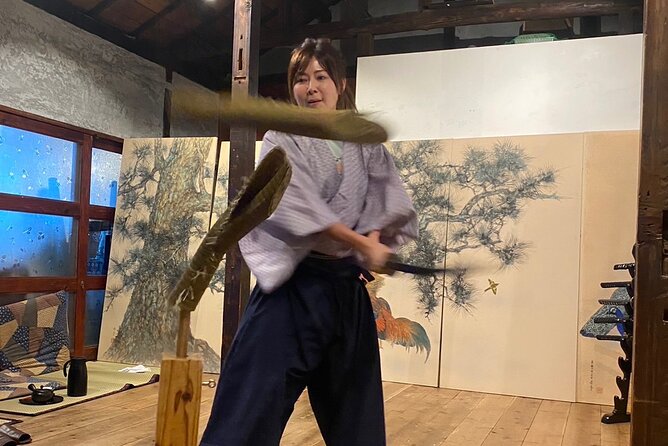
After the basic handling practice, you put the lesson to work by cutting a target. The main program describes straw targets, while a participant described cutting tatami with a real katana. Since the descriptions use different terms, do not assume the exact target material until the instructor explains it on the day.
Either way, the cutting exercise is the moment when the activity becomes memorable. It gives you a clear task and a physical test of the movements you have just practiced. Good technique matters more than force, so beginners can take part without needing to be strong or experienced.
The target cutting also adds a useful sense of purpose. You learn why the grip, angle, swing, and follow-through matter. A demonstration can look simple when an experienced instructor performs it, but trying the movement yourself makes the skill harder to fake.
Safety instructions are an essential part of this portion. Follow the teacher closely, wait for your turn, and do not treat the sword like a prop. The activity is designed for beginners, but it still involves a real blade according to the supplied participant account. That makes careful behavior part of the experience.
The program description says the instructors continue teaching throughout the session. That is reassuring for first-time participants, especially families. Still, parents should decide if younger children can listen and follow directions for the full class. No specific minimum age is provided.
Tea after the sword work
The session ends with carefully selected Japanese tea. This is more than a quick drink on the way out. It gives you a quiet period to settle down, ask questions, and talk with the instructors about Japanese culture.
I like this final part because it keeps the experience from ending with the target cut. Sword practice can easily become a single photo opportunity. Tea adds a slower cultural note and gives the instructors time to explain ideas that may not fit into the active lesson.
The cultural exchange is also useful if you are curious about Bushido beyond the sword itself. You can ask about the tradition, the instructor’s approach, and the meaning behind the practices you have just followed. The supplied details promise opportunities to talk with the lecturers during this break.
Do not expect a formal tea ceremony unless the provider says otherwise. The information describes Japanese tea served at the end, not a full ceremony with a long set of prescribed rituals. Think of it as a thoughtful closing conversation.
Other private tours in Tokyo




Why the private format matters
A group cap of four is one of the strongest features here. Sword instruction is much more useful when the teacher can see each person’s grip and movement. In a large class, you might spend much of the time watching other people. Here, the private format should give your group more direct attention.
For two people, the class may feel almost one-on-one. One participant specifically described attending with a partner as feeling like a private experience. That can be a good fit for couples who want a shared activity that is more unusual than a standard sightseeing stop.
Families can also benefit from the small size. Everyone can watch the demonstration clearly, and the teacher can keep the pace manageable. The class is described as enjoyable for both men and women, so you do not need to fit a particular athletic or cultural profile.
The trade-off is simple: a private class has a set price of $72 per person, and the lesson lasts only about 90 minutes. You are paying for the instructor’s time, the clothing, the controlled sword practice, the target exercise, and the tea. That is fair value if you want a focused cultural activity with direct teaching.
It is less attractive if you want a long history lecture, a full-day martial arts workshop, or an extensive tour of samurai sites. This is a compact introduction with practical participation.
What makes the guides important
The instructor can make or break an activity involving unfamiliar equipment. Here, Musashi Oka and Yoshi San are named as the people guiding the experience. Their role is not limited to showing a performance. They teach the steps, help the class run smoothly, and make time for questions.
The strongest praise centers on friendliness, hospitality, and clear English communication. Those qualities matter because many visitors will be trying the movements for the first time. A patient teacher helps you relax and focus on form.
You should expect demonstrations followed by hands-on practice. The precise order may vary, but the stated skills include drawing, holding, swinging, and sheathing the sword before moving on to cutting. The instructors also explain Bushido and traditional Japanese culture along the way.
One participant described the demonstration as impressive and the hands-on teaching as a highlight. That combination is useful. You first see what proper technique looks like, then try it with guidance. The gap between those two steps is where much of the learning happens.
Language, timing, and practical planning
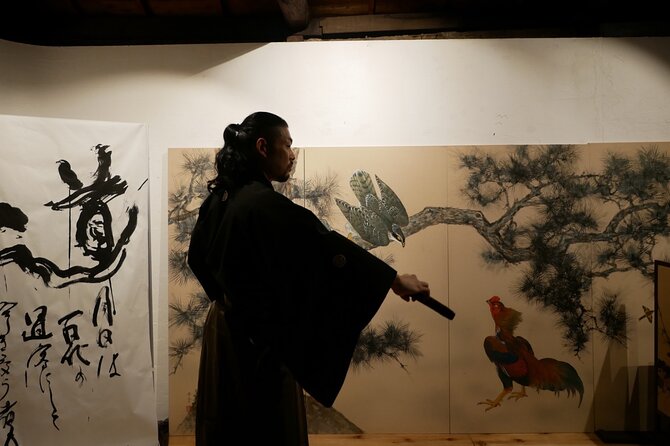
The class is mainly in English, with PokéTalk compatibility noted in the description. English communication was also specifically praised, so English-speaking visitors should feel comfortable asking questions and following the lesson.
The total duration is approximately one hour and 30 minutes. That makes it easy to place between other Tokyo plans, but do not treat the timing as a guarantee for a rushed schedule. You need time to reach the house, check in, change into the kimono, and travel onward afterward.
The meeting point is rojicoya, at 36-1 Senjuasahicho in Adachi City. The activity ends there as well. Since no pickup or hotel transfer is provided in the supplied details, you should plan your own route by public transportation.
A mobile ticket is available, which is handy when you are moving around Tokyo. Confirmation is received when you book. Free cancellation applies if you cancel at least 24 hours before the local start time. Changes or cancellations inside that 24-hour window are not accepted for a refund.
Bring an attitude suited to practice, not just photos. You will enjoy the class more if you listen closely, accept correction, and let the teacher set the pace.
Who will get the most from this experience
This class suits you best if you want an active cultural experience and have about half a day available for transport and planning around a 90-minute program. It works especially well for couples and small families who prefer a private setting.
It is also a good choice if you have already seen temples, shrines, and food markets and want something more physical. Wearing a kimono, practicing sword movements, and cutting a target gives you a different way to connect with Japanese tradition.
First-time visitors can take part without prior knowledge. The instructors teach beginners throughout the class, and the English-language format should help many international visitors follow along.
You may want to skip it if you dislike costume changes, do not want to handle a real sword, or prefer a long historical explanation to a practical lesson. The class focuses on doing. The cultural discussion is present, especially over tea, but the sword work remains the center.
Should you book the $72 samurai class?
I would book this if you want a compact, personal activity with clear instruction, a traditional setting, and a memorable physical challenge. The small group, named instructors, kimono, target cutting, and tea give the 90-minute visit several layers instead of just one photo.
The main question is location. Adachi City requires planning, so compare the travel time with your other Tokyo stops. If you can reach the meeting point without stress, the $72 price offers solid value for a private group class with equipment, clothing, teaching, and cultural conversation.
Book it for the experience of learning something under supervision, not for a polished theatrical show. If that sounds like your kind of afternoon, this Bushido session is an easy recommendation.
FAQ
Where does the samurai experience take place?
The meeting point is rojicoya, also written as 路地裏寺子屋, at 36-1 Senjuasahicho, Adachi City, Tokyo 120-0026, Japan.
Where does the activity end?
The experience ends back at the meeting point in Adachi City.
How long does the experience last?
The activity lasts approximately one hour and 30 minutes.
How many people can join?
The experience is private for your group, with participation capped at four people.
Is the class suitable for beginners?
Yes. The instructor continually teaches participants during the program, and beginners are specifically welcomed.
Do participants wear a kimono?
Yes. The program includes wearing a traditional kimono before practicing with the sword.
What sword skills will I practice?
You learn how to draw, hold, swing, and sheath a samurai sword. The program also includes target cutting.
Is the activity offered in English?
The course is mainly in English, and the description says conversations are compatible with PokéTalk.
Can I cancel for a full refund?
Yes. You can cancel for a full refund at least 24 hours before the experience start time. Cancellations or changes made less than 24 hours in advance are not accepted for a refund.
More Private Tours in Tokyo
More Samurai & Ninja Experiences in Tokyo


More tours in Tokyo we've reviewed












Samurai & Ninja Experiences, compared.
 ★ 4.5Tokyo: Samurai Restaurant Show Ticket with 2 DrinksFrom $551h 30m
 ★ 4.6Tokyo: Samurai Ninja Museum Guided tour and ExperienceFrom $27
 ★ 5.0Skip the lines Basic Ticket at SAMURAI NINJA MUSEUM TOKYOFrom $28
 ★ 5.0Tokyo: Authentic Samurai Training at a DojoFrom $211
 ★ 5.0Best Samurai Experience in TokyoFrom $65
 ★ 4.6Tokyo: Legend Samurai Entertainment Night in Kanda ShrineFrom $44