
Reviewed · TOKYO FOOD TOURS
Tokyo Allstar Food Tour
Tokyo’s best food often hides in places that look too cramped, too busy, or too local for a first-time visitor. This evening walk takes you from polished Ginza to the narrow restaurant lanes beneath the train tracks at Gado Shita, then on to Shimbashi’s old-school izakayas. The under-track setting is the star. It feels far removed from Tokyo’s sleek department stores.
In This Article
- Key points to know before booking
- From Ginza’s clock tower into Tokyo’s evening food scene
- Gado Shita, Tokyo dining beneath the train tracks
- Ginza’s food shops and the value of the contrast
- Shimbashi’s izakayas and the final meal
- What the guides add to the experience
- Dietary needs, drinks, and family considerations
- Is $231 a fair price for three hours?
- Timing, meeting point, and practical planning
- Who should book this Tokyo food walk?
- Should you book the Tokyo Allstar Food Tour?
- FAQ
- Where does the Tokyo Allstar Food Tour start?
- Where does the tour finish?
- How long does the experience last?
- What food is included?
- Is yakitori part of the tour?
- Can dietary restrictions be accommodated?
- Can children join the tour?
- What happens if bad weather cancels the tour?
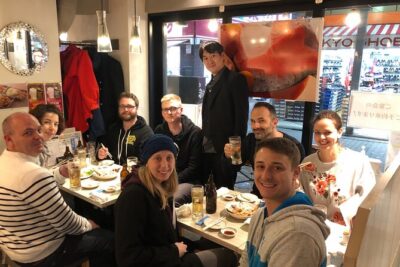
I like the small maximum of 10 people, which gives your guide room to explain customs and help with unfamiliar dishes. I also like the route’s contrast: designer melons and immaculate pastry shops in Ginza, followed by rustic pubs where yakitori and drinks are part of everyday life. Guides named Josh, Ryan, Shige, Kay, Norma, Asami, Hirotake, and Yuko have all been praised for making the food and neighborhoods easier to understand.
The main catch is the price: $231 per person is a serious bill for three hours, especially if you expect a full dinner. The amount of food can vary, and some departures include small tasting stops such as tea or cookies rather than substantial dishes. You should book this for access, guidance, and atmosphere, not simply for the lowest cost per bite.
Key points to know before booking
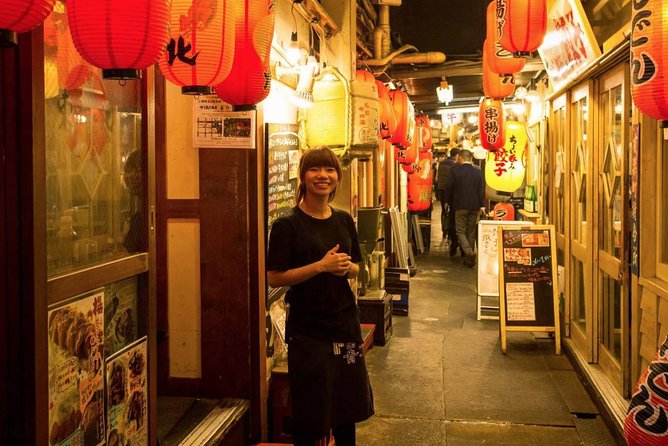
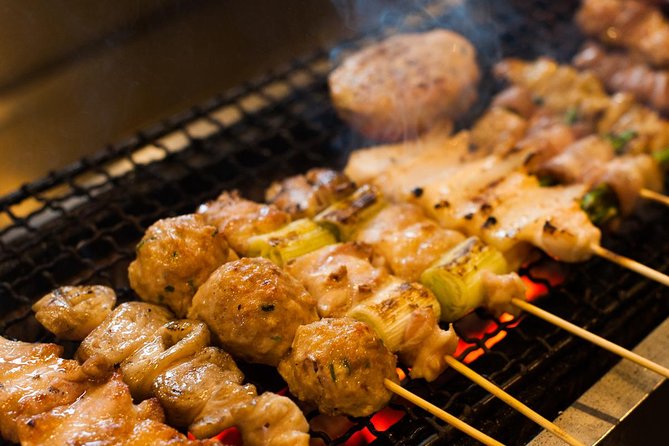
- Gado Shita offers the most distinctive setting: Explore narrow lanes tucked beneath Tokyo’s elevated train tracks, surrounded by neon, cooking smells, and local izakayas.
- The route links three different Tokyo moods: Ginza’s grand shopping streets, Gado Shita’s older restaurant lanes, and Shimbashi’s casual after-work dining scene.
- Four food stops are included: Expect regional tastings, yakitori, dessert, and one complimentary drink, with extra food and drinks paid separately.
- The group is capped at 10 people: That is useful when you need help with menus, etiquette, or dietary requests.
- Food flexibility is a real strength: Vegan, vegetarian, pescetarian, and gluten-free requests can be accommodated, but pork-free diners should check carefully.
- The tour ends near JR Shimbashi Station: You finish in a useful central location rather than returning to Ginza.
From Ginza’s clock tower into Tokyo’s evening food scene
Meet at 4 pm beside the Seiko House Ginza Clock Tower, a handy landmark at 4-chōme-5-11 Ginza. The first few minutes are used to gather the group, meet your guide, and set the pace for the evening.
This start point puts you in one of Tokyo’s most polished districts. Ginza is known for grand storefronts, department stores, luxury brands, and carefully presented food. You may pass shops selling fruit at startling prices, including designer melons that can cost around $500, and pastry windows where each item looks more like a small sculpture than a snack.
That contrast is important. This is not a tour of only hole-in-the-wall eateries. You see the refined side of Japanese food culture first, then move toward the places where office workers and local residents eat after work. The guide helps connect the two worlds.
Stops can include Wako Ginza, the Takarazuka Theater, Ginza Six, and Kabuki-za. These are not long sightseeing visits with admission tickets. They serve as landmarks and talking points while you walk, so you should not expect a theater performance or an extended museum-style presentation.
A few more Ginza tours and experiences worth a look

Gado Shita, Tokyo dining beneath the train tracks
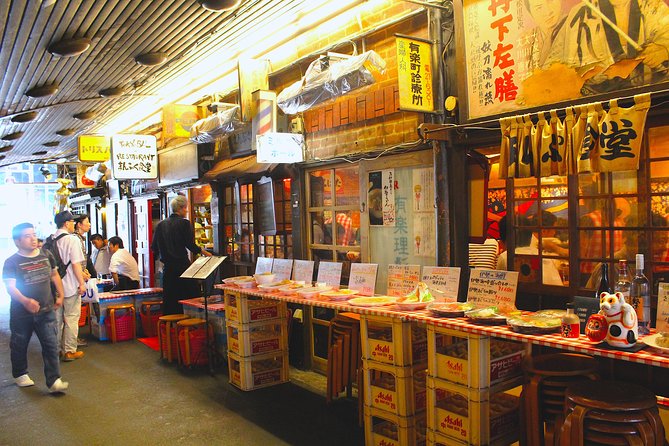
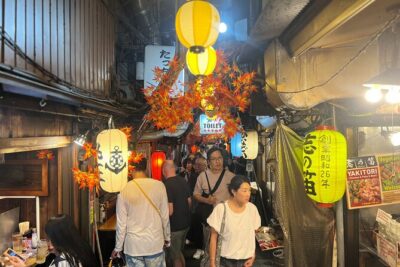
The route’s most memorable stretch is Gado Shita, a restaurant area directly below the elevated railway tracks. The name refers to the space beneath the girders, and the setting has a rougher, more improvised feel than Ginza’s grand avenues.
Here, narrow lanes run between small eateries and izakayas. Train noise, bright signs, warm kitchens, and the smell of grilled food all compete for your attention. The area recalls an older Tokyo, with much of the atmosphere associated with the city of the 1970s.
This is exactly the sort of place where a guide earns the fee. You could walk past the entrances on your own, but knowing which door to enter and how to order is another matter. A small group also makes it easier to fit into tight dining rooms, where large tour parties would be awkward.
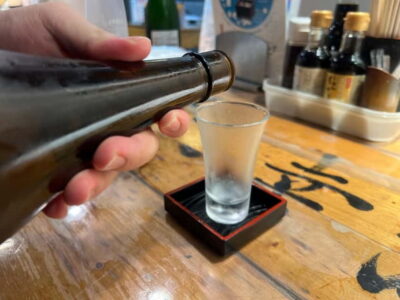
The food focus here is yakitori, grilled chicken served in small portions on skewers. You may try several varieties, often alongside a drink. The point is not just to eat chicken. Your guide can explain the social role of the izakaya, how drinks fit into an evening meal, and the customs that make these places feel different from a standard restaurant.
Some departures have included food from a southern Japanese island, seared bonito, sauces, miso, and other regional tastes. The exact dishes change because the restaurants and schedules can change. That variety is part of the appeal, but it also means you should not book this expecting a fixed menu.
Ginza’s food shops and the value of the contrast
After the older lanes of Gado Shita, the walk returns to the polished side of Ginza. The change can feel almost comic: one moment you are near tiny bars beneath railway tracks, and the next you are looking at luxury food displays and high-end retail streets.
Ginza’s food shops show how much care Japan puts into presentation, packaging, and seasonal gifts. Even a quick look at a pastry case can tell you something about local ideas of craftsmanship. The guide may use these stops to explain food customs, gift giving, regional specialties, and the importance of appearance.
Be aware that not every stop is a sit-down meal. Some departures include a tea shop or a short tasting of tea, cookies, or similar products. These stops can add cultural context, but they may feel less worthwhile if you measure value only by volume. You might also feel that a shop tasting has a sales purpose, so keep your expectations clear.
I see these brief visits as useful when the guide adds context. They are less satisfying if you are already hungry and hoping for another substantial plate. The tour includes four food stops, but the balance between full restaurant visits and quick tastings can vary.
Shimbashi’s izakayas and the final meal
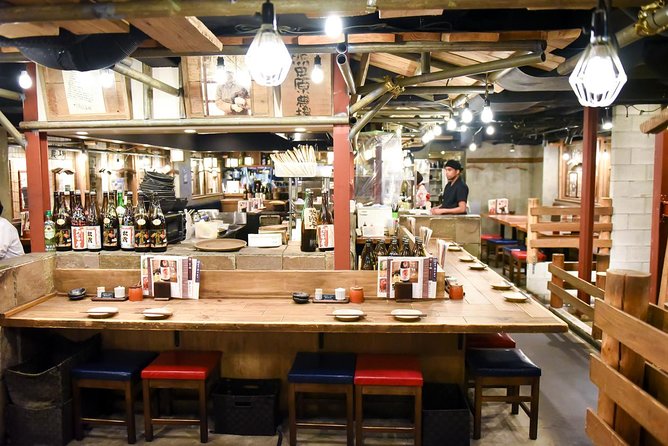
The walk finishes in Shimbashi, an area long associated with casual restaurants and after-work drinking. Compared with Ginza, Shimbashi feels more practical and less dressed up. Its small eateries are built around regular customers, quick meals, shared dishes, and conversation over drinks.
You may pass Karasumori Jinja, a small shrine near the station, before reaching the final food stops. This adds a bit of neighborhood texture without turning the evening into a formal sightseeing tour.
The food here is intended to complete the progression from polished Ginza to everyday Tokyo dining. Rustic izakayas give you a chance to try dishes and manners that can be intimidating on your own. Some participants have found the food plentiful, including a full meal at the end. Others have finished still wanting dinner. That difference is worth taking seriously.
Your appetite, the day’s exact menu, and the number of substantial dishes all matter. If you want this tour to replace dinner, eat a light lunch and avoid filling up beforehand. If you are a large eater, plan on buying something afterward rather than treating the advertised tastings as a guaranteed feast.
The official inclusions are regional food tastings, dessert, one complimentary drink, and four food stops. Additional drinks and food cost extra. The tour ends near JR Shimbashi Station at approximately 7 pm, giving you easy access to trains and more dining options if needed.
What the guides add to the experience
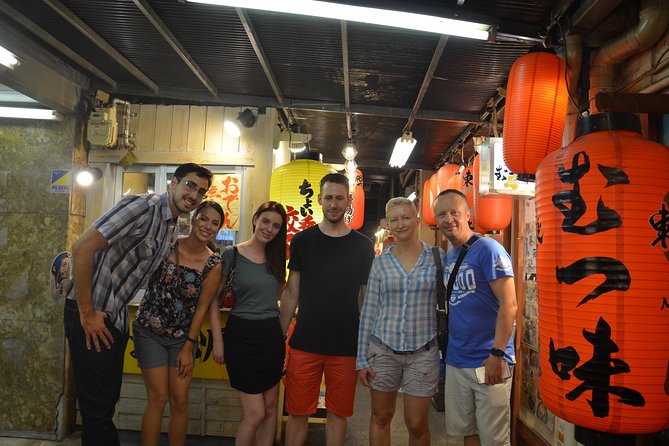
Food tours rise or fall on the guide, and this one depends heavily on the person leading your group. The strongest guides create a relaxed evening, explain Japanese customs without turning the walk into a lecture, and make it easier for you to try something unfamiliar.
Josh has been especially well regarded for mixing food, Tokyo history, and humor. Ryan has also been praised for explaining regional food and making the route educational without taking himself too seriously. Other named guides include Shige, Kay, Norma, Asami, Hirotake, and Yuko.
You should not assume a particular guide will lead your departure. Still, the pattern is encouraging: the guide role is not limited to pointing out restaurants. You can expect help with ordering, questions about etiquette, explanations of ingredients, and conversation about what makes each neighborhood different.
That help matters most if this is your first evening in Tokyo. A guide can show you how an izakaya works, explain what to do with shared plates, and make unfamiliar textures less intimidating. You also get a chance to ask the cultural questions you might not ask in a formal restaurant.



Dietary needs, drinks, and family considerations
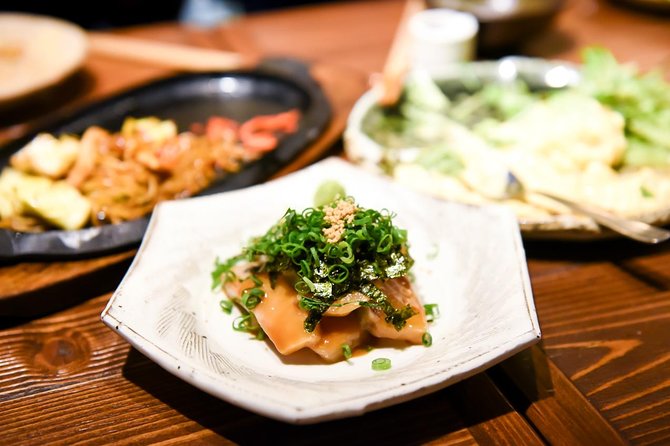
The tour can accommodate vegan, vegetarian, pescetarian, and gluten-free diets. You should provide accurate details when booking and remind the guide at the start. Menus and restaurant schedules can change, so flexibility still helps.
Pork-free diners should take extra care. Several Japanese dishes and broths may include pork, and one direct account advises that this may not be the best choice for someone who avoids pork. The supplied information does not promise a pork-free menu.
The minimum drinking age is 21. One drink is included, but further drinks are not. Children can join because the activity is family-friendly, but children must be with an adult, and a copy of passport information is required for children age 10 and above.
You will walk for about three hours, with stops along the way. A moderate level of fitness is recommended. Wear comfortable shoes, since the appeal lies in moving through several districts rather than staying at one venue.
Is $231 a fair price for three hours?
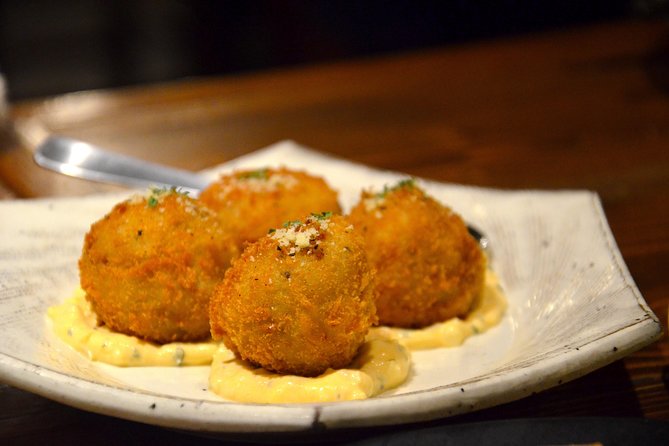
At $231, this is not a budget food walk. In Tokyo, you can eat well for far less if you choose casual restaurants yourself. The price makes more sense when you value the guide, the small group, access to places you might not enter alone, and the ease of having someone manage the evening.
The strongest value comes from local access and interpretation. You are paying to move confidently through Gado Shita and Shimbashi, not just to receive a list of dishes. You also save the time and uncertainty involved in finding several suitable venues in a city where menus and ordering systems can be difficult for a first visit.
The value is weaker if your priority is quantity. Food portions vary, and some stops may be brief samples. One person may get a generous final meal, while another departure may feel more like a series of tastings. At this price, that uncertainty is the tour’s biggest weakness.
I would compare it with your own dining plans. If you already have reservations at excellent restaurants and enjoy figuring out local eateries yourself, spend the money elsewhere. If you want a guided first taste of Tokyo’s food culture and the cost fits your budget, the structure can justify the premium.
Timing, meeting point, and practical planning
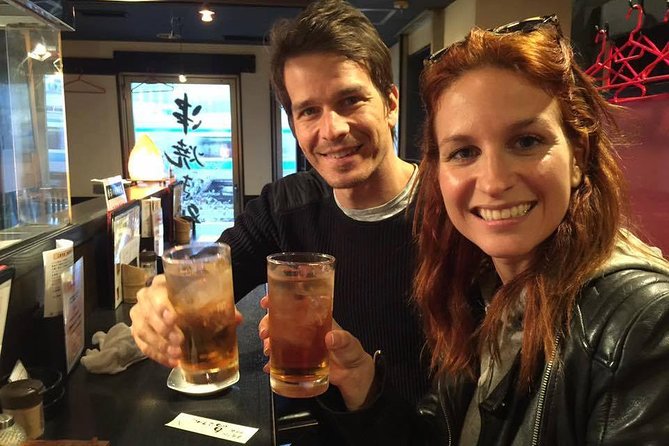
The 4 pm start is well chosen for an evening food walk. You begin in daylight, watch Ginza change as the signs come on, and reach the more atmospheric restaurant areas as dinner gets underway.
The meeting point at Wako Ginza Clock Tower is easy to identify, but Tokyo’s Ginza streets can still be confusing if you arrive late. Give yourself enough time to find the correct block. The tour does not include hotel pickup, drop-off, or transportation costs, so you handle your own route to Ginza and home from Shimbashi.
A mobile ticket is provided. Confirmation arrives when you book. The group maximum is 10, though the number can be smaller, which is helpful in compact restaurants.
Restaurant schedules, public holidays, weather, and other unexpected issues can change the route. Substitutions may be made. Bad weather can also cause cancellation, with a different date or full refund offered. For your own plans, avoid placing an important timed activity immediately after the tour.
Free cancellation is available until 24 hours before the 4 pm start time. A cancellation or change inside that window is not refunded, so check the local time carefully.
Who should book this Tokyo food walk?
I would recommend it to first-time visitors who want a friendly introduction to Japanese food and do not feel ready to enter tiny izakayas alone. It also suits couples and solo visitors who enjoy meeting a small group while walking through several central neighborhoods.
You will get the most from it if you are curious, flexible, and willing to try dishes outside your usual order. The tour is also useful for people who want cultural explanations with their food rather than a simple restaurant crawl.
I would hesitate to recommend it to anyone seeking a cheap dinner, a fixed menu, or a long list of full portions. Strict pork-free diners should also ask detailed questions before paying. The same applies if you dislike walking or prefer quiet, formal restaurants.
Should you book the Tokyo Allstar Food Tour?
Book it if you want Tokyo’s local dining atmosphere without the stress of finding it yourself. Gado Shita beneath the train tracks, Ginza’s polished food culture, and Shimbashi’s casual izakayas make a memorable three-hour arc, and a good guide can turn unfamiliar dishes into stories you remember.
Skip it if $231 feels high for tastings, or if you need a guaranteed full dinner. Before booking, confirm your dietary needs, arrive hungry but not starving, wear comfortable shoes, and keep your evening flexible. For the right person, this is less a cheap meal than a guided introduction to how Tokyo eats after work.
FAQ
Where does the Tokyo Allstar Food Tour start?
The tour starts at 4 pm at the Seiko House Ginza Clock Tower, 4-chōme-5-11 Ginza, Chuo City, Tokyo 104-0061, Japan.
Where does the tour finish?
The experience ends near JR Shimbashi Station, at 2 Chome-17 Shinbashi, Minato City, Tokyo 105-0004, Japan.
How long does the experience last?
The food walk lasts approximately three hours.
What food is included?
The tour includes regional food tastings, dessert, one complimentary drink, and four food stops. Additional food and drinks are not included.
Is yakitori part of the tour?
Yes. The itinerary includes stops at local izakayas where you sample different varieties of yakitori and drinks.
Can dietary restrictions be accommodated?
Vegan, vegetarian, pescetarian, and gluten-free requests can be accommodated. The supplied information does not guarantee a pork-free menu, so pork-free diners should check before booking.
Can children join the tour?
Yes. The experience is family-friendly, but children must be accompanied by an adult. A copy of passport information is required for children age 10 and above.
What happens if bad weather cancels the tour?
If poor weather causes cancellation, you can be offered a different date or a full refund. The tour may also be canceled if the minimum number of participants is not met, with a different date, another experience, or a full refund offered.
More Food Experiences in Ginza
More Tokyo Food Tours in Ginza
More tours in Ginza we've reviewed


Tokyo Food Tours, compared.
 ★ 5.0Tokyo: Shinjuku Food Tour (13 Dishes at 4 Local Eateries)From $86
 ★ 4.9Tokyo: Shinjuku Food Tour (13 Dishes and 4 Eateries)From $97
 ★ 5.0Tokyo Night Foodie Tour in Shinjuku – Seasonal Sushi, Wagyu BeefFrom $111
 ★ 5.0Eat and Drink Like a Local: Tokyo Ueno Food Tour-Taverns&RamenFrom $95
 ★ 5.0Tokyo: Shibuya Food Tour (13 dishes and 4 Eateries)From $77
Tokyo: Shinjuku Food Tour – 15 Dishes, 3 Drinks, 4 EateriesFrom $723 hours
★ 5.0Tokyo: Shibuya Food Tour (13 dishes and 4 Eateries)From $77
Tokyo: Shinjuku Food Tour – 15 Dishes, 3 Drinks, 4 EateriesFrom $723 hours


![Tokyo: Enjoy Sumo match and know about it! [Ticket included] - Ryogoku Sweets and Sumo Goods](https://tokyoezine.com/wp-content/uploads/2026/08/tokyo-enjoy-sumo-match-and-know-about-it-ticket-included.jpg)