Reviewed · GINZA TOURS
Ginza: Authentic Cuisine Tour in Tokyo
Tokyo’s polished Ginza district has a second life after office hours. Behind the department stores and luxury shops, narrow streets lead to traditional restaurants, izakayas, and food counters where the evening meal matters more than the neon outside. This tour takes you through three different dining areas in one night, with food stops in Ginza, Yurakucho, and Shimbashi.
In This Article
- Key points to know before booking
- Why this route gives you more than a Ginza dinner
- Starting at Tokyu Plaza Ginza at 6 pm
- Stop one: Ginza’s traditional side
- Stop two: Yurakucho and the after-work meal
- Stop three: Shimbashi’s restaurant streets
- What the food may include
- The guide’s role and the group size
- Is $151 a fair price?
- Who will enjoy this Ginza food walk?
- Practical details for a smoother evening
- Should you book the Ginza Authentic Cuisine Tour?
- FAQ
- Where does the Ginza food tour start?
- What time does the tour begin?
- How long does the experience last?
- Where does the tour end?
- Which neighborhoods are included?
- How many food stops are included?
- Is an English-speaking guide included?
- What is the cancellation policy?
I like two things right away: the small maximum group of 10, which should make restaurant visits easier, and the English-speaking local guide, who can explain customs and dishes as you go. I also like the route itself. You get Ginza’s refined side, Yurakucho’s office-worker dining scene, and Shimbashi’s famous cluster of izakayas rather than seeing only one corner of central Tokyo.
The main consideration is the price, $151 for about three hours. That can be fair if the three food stops provide a generous spread, but the exact dishes, portions, and drinks are not specified. You should also arrive hungry, since the food may amount to much more than a light tasting.
Key points to know before booking
- Three neighborhoods in one evening: Walk from Ginza to Yurakucho and Shimbashi, each with a different feel and dining culture.
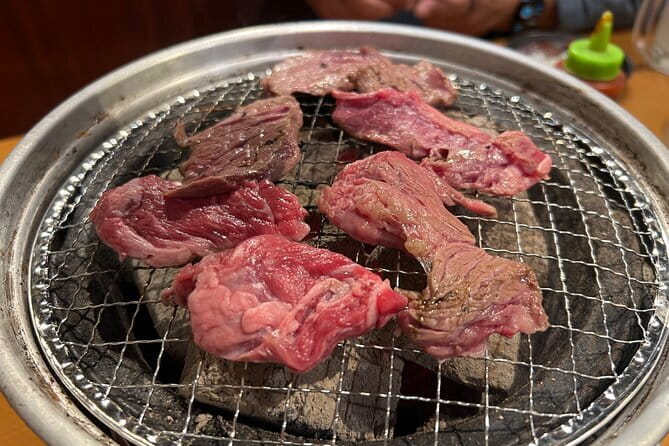
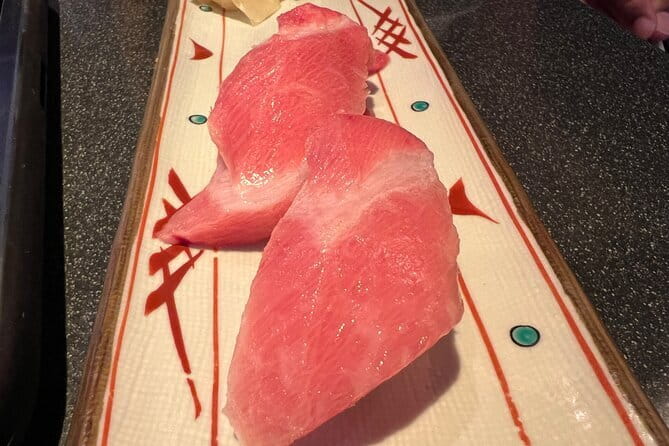
- Three traditional restaurant stops: The food may include sushi, tempura, wagyu, and other local favorites.
- English-speaking local guide: Expect help with the food, local customs, and the story of Ginza.
- Small-group format: The tour accepts a maximum of 10 people, a useful size for restaurant visits and conversation.
- A good first-night dinner plan: It suits you if you want someone else to choose the restaurants and guide you through ordering.
- Central meeting point: Start at Tokyu Plaza Ginza at 6 pm and finish back at the same meeting point.
Why this route gives you more than a Ginza dinner
Ginza is often reduced to polished storefronts, department stores, and expensive dining rooms. That picture is accurate, but incomplete. The area also contains traditional restaurants and small places that are easy to miss if you do not know where to look or how Japanese menus work.
This evening route puts Ginza in context. You begin near Tokyu Plaza Ginza, at 5-chōme-2-1 Ginza, then spend roughly an hour in each of three central districts. The movement between neighborhoods matters. You are not simply eating three courses in one restaurant. You are seeing how the character of Tokyo’s dining streets changes within a short walk.
I especially like the contrast between Ginza and Yurakucho. Ginza is known for luxury shopping and a more polished atmosphere. Yurakucho sits near many offices, so its restaurants and food stalls cater to people finishing work and looking for a relaxed meal. Shimbashi, the final stop, is also well known for izakayas and restaurants.
That mix gives the evening a useful rhythm. You begin in a famous part of Tokyo, then move toward places associated more strongly with local after-work dining. You still remain in a central, easy-to-reach part of the city, but the mood becomes less formal as the evening goes on.
A few more Ginza tours and experiences worth a look

Starting at Tokyu Plaza Ginza at 6 pm
The tour begins at 6 pm outside Tokyu Plaza Ginza. This is a practical meeting point in central Tokyo, near public transportation and easy to identify in one of the city’s best-known districts.
Arrive with enough time to find the building and locate the guide. Your confirmation is provided at booking, and the activity uses a mobile ticket, so keeping the booking details ready on your phone makes sense. The tour ends back at the meeting point, which helps if you have made plans nearby or need to continue to another part of Tokyo afterward.
The timing works well for dinner. You are starting as the workday gives way to the evening meal, especially in Yurakucho and Shimbashi. It also gives you a chance to see Ginza after the daytime shopping rush, when restaurants and izakayas become the main attraction.
The walk is described as a history and cultural walk of Ginza as well as a food tour. That is important. You are not paying only for dishes. Part of the value comes from having someone explain why these neighborhoods feel different and how the food fits into everyday Japanese life.
Stop one: Ginza’s traditional side
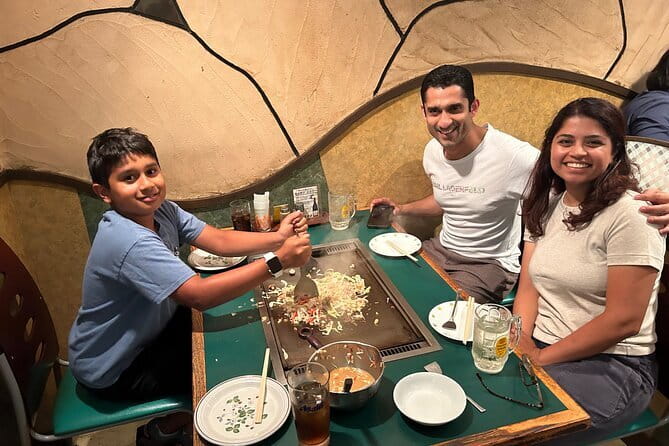
The first hour takes place in Ginza, an area famous for luxury shopping but also home to traditional Japanese restaurants. The guide leads you to a restaurant in the Ginza area, where the food may include some of the tour’s featured dishes, such as sushi, tempura, or wagyu.
The appeal here is access. Ginza has plenty of restaurants, but choosing well can be difficult when you are unfamiliar with Japanese dining customs, menus, and reservation habits. A local guide can take away much of that guesswork and direct you to a place that fits the evening’s plan.
The setting also gives you a useful first taste of Ginza’s polished character. You may pass fashionable storefronts and smartly dressed office workers before entering a restaurant that feels far more traditional than the wide streets suggest. The contrast is part of the experience.
Do not expect a formal cooking class or a market tour. The food stops are restaurant visits, supported by the guide’s explanations and the surrounding walk. If you want detailed information about ingredients, allergies, portion sizes, or drink pairings, ask before booking or at the start of the evening, since those details are not set out in the tour information.
Stop two: Yurakucho and the after-work meal
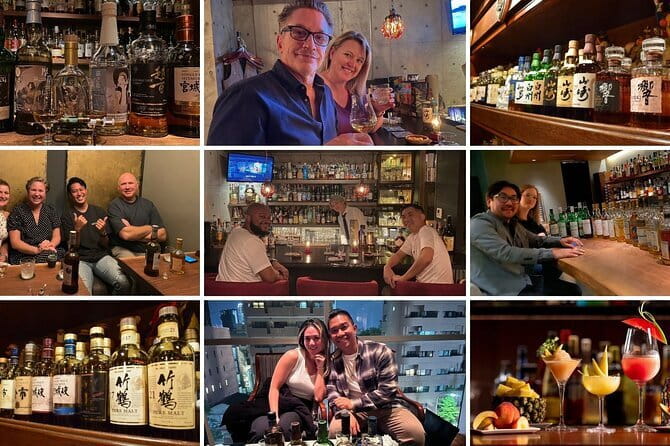
The second hour shifts to Yurakucho, where a large number of offices help support local izakayas and food stalls. This is a different dining world from Ginza’s luxury image. The area is closely tied to workers meeting after hours for food, drinks, and conversation.
You visit another traditional Japanese restaurant here. That second stop is useful because it gives you a chance to compare the atmosphere and style with the first restaurant. The food selection is described as including several Japanese favorites, so you may try something different from the first stop rather than repeating the same type of dish.
Yurakucho is a good place to watch Tokyo’s dining culture at work. The point is not simply that office workers eat here. It is that the neighborhood’s restaurants grew around a daily routine: finish work, meet colleagues or friends, order several dishes, and share the table. Your guide can help explain those habits while you eat.
This portion may be especially helpful if you are unsure how an izakaya-style meal works. Japanese dining often involves ordering several small dishes for the table instead of one large main course per person. A guide can make that format feel straightforward, particularly when the menu or ordering system is unfamiliar.
The tour does not promise a specific food stall, so keep your expectations flexible. You are guaranteed a restaurant visit in the Yurakucho area, not a particular storefront or dish.
Stop three: Shimbashi’s restaurant streets
The final hour takes you to Shimbashi, another part of central Tokyo known for izakayas and restaurants. By this stage, the three-stop structure should feel more like a full evening meal than a quick tasting route.
Shimbashi adds another layer to the tour’s central Tokyo picture. Ginza is associated with style and luxury. Yurakucho is closely linked with office dining and food stalls. Shimbashi is also known for compact restaurants and after-work eating, giving the final stop a more casual finish.
The benefit of ending here is that you have already learned the basic rhythm of the evening. You can focus on comparing the food, atmosphere, and style of the three places. Each restaurant is meant to have its own feel, and that variety is one of the strongest reasons to choose this tour over a single restaurant reservation.
The drawback is that three stops in three hours may feel quick if you prefer to linger over dinner. You will spend about an hour in each area, and walking between stops takes time. If your ideal night is one long, slow meal, this is not the right format. If you want several tastes and a guided introduction to central Tokyo dining, the pace makes sense.


What the food may include
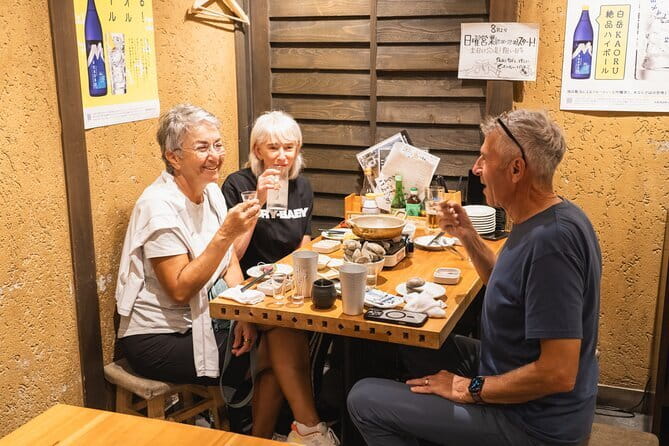
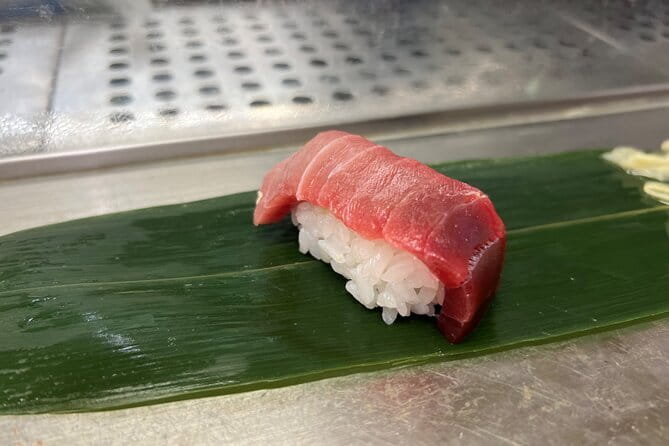
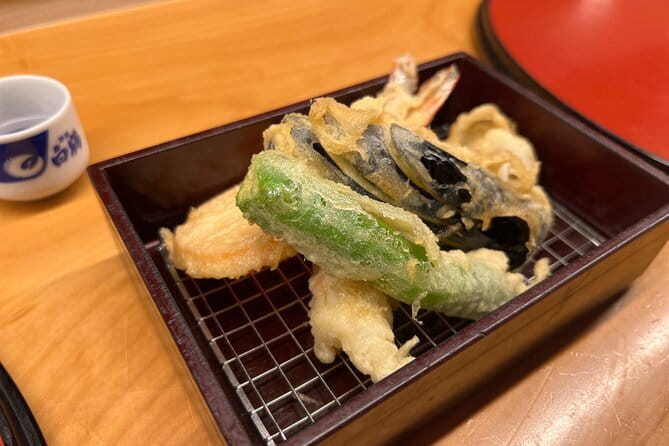
The tour specifically identifies sushi, tempura, and wagyu among the possible foods. These are useful choices for a first Tokyo food outing because they cover very different textures, cooking methods, and styles of presentation.
Sushi gives you a chance to try one of Japan’s best-known foods in a local restaurant setting. Tempura offers a contrast, with seafood or vegetables prepared in a light batter. Wagyu brings a different experience again, with beef as the focus rather than raw fish or fried food.
The wording does not provide a fixed menu, so you should not book expecting a guaranteed number of sushi pieces, a specific wagyu cut, or a particular tempura item. The selection may vary. That flexibility can be a strength, since the guide may choose food suited to the restaurants available that evening, but it makes the tour less predictable than a set tasting menu.
The three stops also mean you may receive more food than you expect from a normal dinner. I would skip a large meal beforehand and arrive ready to sample several dishes. At the same time, do not assume that every drink is included. Tips are optional, and the tour details do not list beverages or extra personal purchases among the inclusions.
The guide’s role and the group size
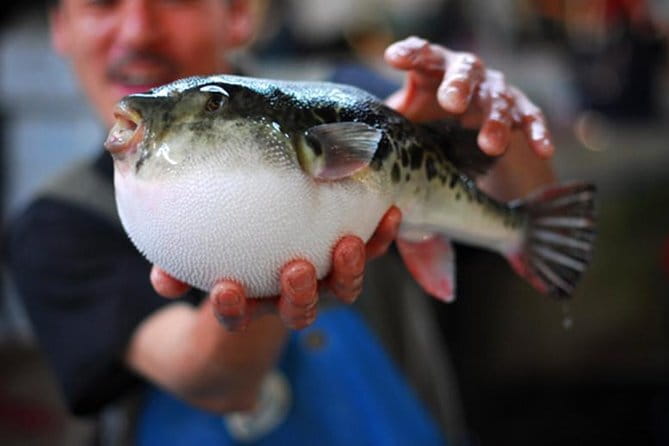
The guide is an English-speaking local who leads the food stops and the cultural walk. That language support is valuable in a restaurant setting, where small details can affect the meal: how to order, what a dish contains, and which customs are worth following.
The guide also adds the human side of the evening. The experience includes history and cultural information about Ginza, and the guide can connect the streets outside with the food inside. This is more useful than a simple list of restaurant names because it helps you understand why these districts developed such different dining scenes.
The maximum group size is 10 people. That is not a private tour, but it is small enough for a more personal evening than a large bus-style outing. A group of this size should also be easier to manage in compact restaurants, where space may be limited.
The tour includes photos, another small benefit if you want a record of the evening without stopping to take pictures constantly. Still, the guide’s exact name is not supplied, so you should not book based on a particular individual. The important point is the English-speaking local guide format.
Is $151 a fair price?
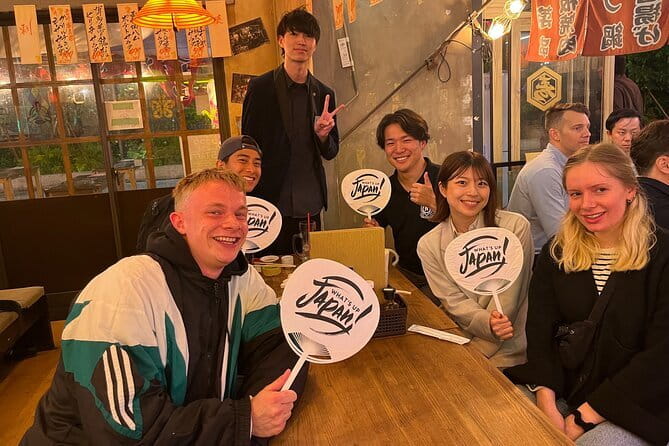
At $151, this is not a budget dinner. The price needs to cover more than food because it also includes a guide, three food stops, a cultural walk, and tour photos. The small group and restaurant access are part of what you are buying.
I see the best value for you if you are new to Tokyo, staying near Ginza, or facing your first evening without a dinner plan. You are paying to avoid guesswork and to reach three places you might not find on your own. That can save time and reduce the risk of ending up in a restaurant chosen only because its sign was easy to read.
The value is less clear if you already know Ginza well, speak Japanese, and feel comfortable choosing restaurants on your own. You could likely spend less by eating at one local place, though you would not receive the same guided route or variety.
The food quantity matters. The evening is described as providing three food stops, not merely three restaurant visits with no tasting. Past feedback supplied for this experience repeatedly treats the meal as generous, with one person warning that you may not need breakfast the next day. Since exact portions are not guaranteed, treat that as a useful expectation rather than a promise.
Tips are optional and not included. Keep that in mind when comparing the total cost with a self-guided dinner.
Who will enjoy this Ginza food walk?
I would recommend it most strongly to first-time visitors who want a confident start in Tokyo’s food scene. It is also a good fit if you are staying in or near Ginza and want more than a single hotel restaurant meal.
The route suits couples looking for a relaxed date night, small groups of coworkers, and families who want several types of food. The variety can help when everyone does not want the same dish. Several food styles are included in the plan, though the exact choices are not fixed.
It also works well for people arriving in Tokyo shortly before the tour. The 6 pm start gives you a clear first-night plan, while the guide handles the restaurant choices and cultural explanations. You can enjoy the evening without spending your first hours in Japan comparing menus online.
You may want to reconsider if you have strict dietary requirements, dislike moving between restaurants, or need a guaranteed menu. The supplied details do not state how dietary restrictions are handled, so ask the provider before booking rather than hoping the food can be changed on arrival.
The tour is open to most people, and it is near public transportation. No special participation limits are listed beyond the standard tour information, but you should still be comfortable walking between three central neighborhoods for about three hours.
Practical details for a smoother evening
Wear shoes you can walk in. The experience combines a cultural walk with restaurant visits, and the route moves from Ginza through Yurakucho to Shimbashi before returning to the starting point.
Bring a charged phone for the mobile ticket and tour photos. Keep the meeting details handy, especially if you are navigating Ginza at rush hour.
Arrive hungry, but not so hungry that you feel rushed at the first stop. Three food stops can add up quickly, and the evening is designed as a substantial food experience rather than a single snack.
If you are booking for a family or mixed group, check the food arrangements in advance. Sushi, tempura, and wagyu are listed examples, but no fixed menu or child-specific menu is provided.
Free cancellation is available if you cancel at least 24 hours before the 6 pm start time. Inside that 24-hour window, the payment is not refunded, and changes are not accepted. The cut-off uses Tokyo local time, so watch the deadline if your booking was made in another time zone.
Should you book the Ginza Authentic Cuisine Tour?
Book it if you want an easy, social introduction to Japanese food and would rather have a local guide choose three authentic restaurant stops. The strongest reasons are the route through three distinct dining districts, the small group, the English guidance, and the chance to try several Japanese specialties in one evening.
At $151, it is best viewed as a guided dinner and neighborhood walk, not a cheap meal. You are paying for access, explanation, and convenience. I would choose it for a first or second night in Tokyo, especially if Ginza is near your hotel and you do not yet know where to eat.
Skip it if you want a fixed menu, a long meal in one restaurant, or the lowest possible food cost. For everyone else, this is a practical way to see a less obvious side of central Tokyo while eating well and getting your bearings fast.
FAQ
Where does the Ginza food tour start?
The tour starts at Tokyu Plaza Ginza, 5-chōme-2-1 Ginza, Chuo City, Tokyo 104-0061, Japan.
What time does the tour begin?
The start time is 6 pm.
How long does the experience last?
The tour lasts approximately three hours.
Where does the tour end?
The activity ends back at the meeting point at Tokyu Plaza Ginza.
Which neighborhoods are included?
The route includes Ginza, Yurakucho, and Shimbashi.
How many food stops are included?
Three food stops are included, with possible dishes such as sushi, tempura, and wagyu.
Is an English-speaking guide included?
Yes. The experience includes an English-speaking local guide.
What is the cancellation policy?
You can cancel for a full refund up to 24 hours before the experience start time. Cancellations or changes made less than 24 hours before the start time are not accepted and are not refunded.
More Ginza Tours in Ginza
More tours in Ginza we've reviewed

Ginza Tours, compared.
 ★ 4.8Chopstick Making Workshop in GinzaFrom $251 hour
 ★ 4.5Tokyo: Art Aquarium Museum GINZA Entry TicketFrom $171 day
 ★ 5.0Tokyo: Best Ginza Food Tour at 3 Local EateriesFrom $150
 ★ 4.5Official Japan Go-Kart Through Tokyo Bay / Ginza (IDP Required)From $85
 ★ 5.0Private Ginza Architecture Walking TourFrom $132
 ★ 4.8Tokyo GINZA: KONPARU Japanese Cabaret Show with DrinkFrom $502 hours