Reviewed · TOKYO
Shibamata: Step Back into Old Japan!
Shibamata gives you a slower, more traditional view of Tokyo, with snack shops, old-style streets, a richly carved Buddhist temple, and a garden tea break. The Taishakuten Temple carvings are the visual high point, while the Tora-san sites add a distinctly local story.
In This Article
- Five things to know before you book
- Why Shibamata feels so different from central Tokyo
- Starting beneath the Tora-san statue
- Taishakuten Sandō: a street made for tasting
- Taishakuten Temple and its careful woodwork
- Tora-san Museum and the story of local life
- Yamamoto-tei: green tea beside a Japanese garden
- Is $90 a fair price?
- The pace, group size, and guide style
- Who should book this Shibamata experience?
- Practical details for a smooth visit
- Should you book it?
- FAQ
- Where does the tour meet?
- How long does the experience last?
- What language is the tour conducted in?
- How large is the group?
- What food can I try?
- Is entry to Taishakuten’s Sculpture Gallery and Garden included?
- Is entry to the Tora-san Memorial Hall included?
- Is Yamamoto-tei included?
- Are souvenirs included?
- Can I cancel for a refund?
- Do I need to bring cash?
I like the easy pace and the chance to taste grass dumplings, mitarashi dumplings, rice crackers, and Japanese-style omelets without having to decode every shop menu alone. I also like the small group, limited to five people, which leaves room for questions and makes the walk feel personal.
The main consideration is timing. This is sold as a three-hour experience, and the stops include plenty of walking and sightseeing. One past booking ran close to three hours rather than the shorter time originally expected, so do not squeeze this tour between tight appointments.
Five things to know before you book
- Taishakuten Temple is the visual centerpiece: Look closely at the detailed wood carvings and painted decoration rather than rushing through the grounds.
- The food stops are part of the experience: Grass dumplings, mitarashi dumplings, rice crackers, and savory omelets offer a taste of neighborhood life.
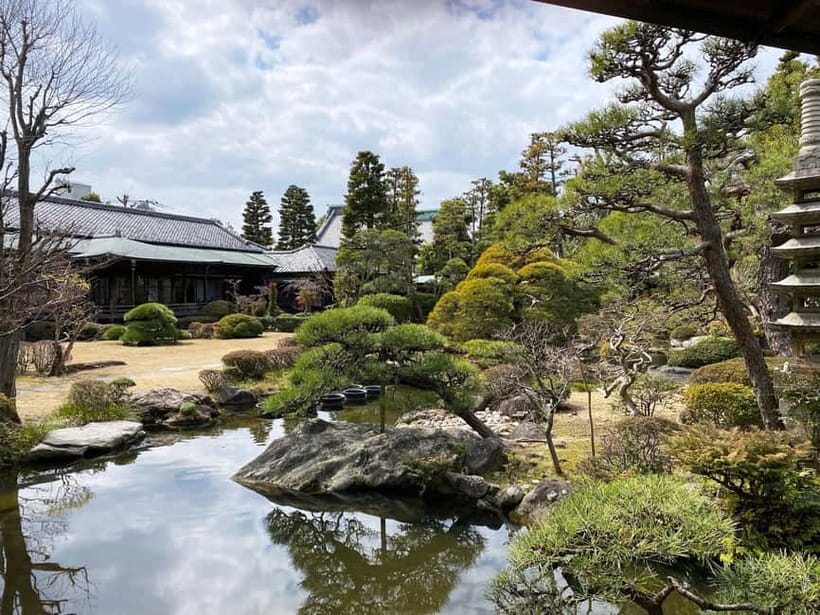
- Yamamoto-tei provides the quiet finish: You can sit with traditional green tea beside a Japanese garden.
- The group is genuinely small: With no more than five participants, you can ask about customs, food, architecture, and local stories.
- The tour meets at the Tora-san statue: Find the Futen Tora Statue and Sakura Statue in front of Keisei Shibamata Station.
- Bring cash for snacks and souvenirs: Some shops may not accept cards, and souvenir costs are separate.
Why Shibamata feels so different from central Tokyo
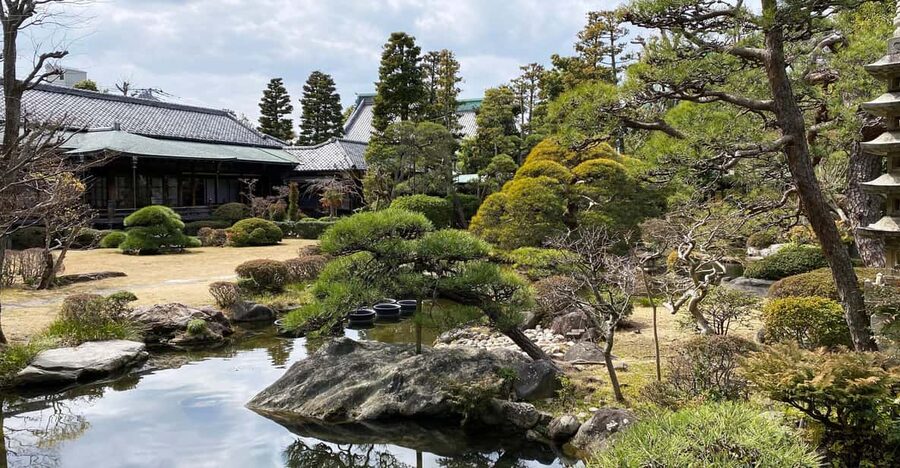
Tokyo can feel fast, crowded, and packed with bright signs. Shibamata offers another rhythm. Its streets are known for traditional Japanese character, local food shops, temple architecture, and a quieter neighborhood mood.
I would choose this outing when I wanted a break from Tokyo’s major commercial districts without giving up cultural interest. The route is not built around a single famous landmark. Instead, it connects several modest but rewarding places, allowing you to see how food, film, religion, gardens, and local memory fit together.
The district is closely linked with Tora-san, the beloved fictional character from a long-running Japanese film series. You do not need to know the films before coming. The tour introduces that local connection through the statue, museum, and streets, so even first-time visitors can follow the story.
Past bookings have praised guides named Megumi and Machiko for their warmth, clear English, and willingness to answer questions. Guide assignments can vary, but the experience is designed around a live English-speaking guide rather than a recorded explanation.
If you're still narrowing it down, here are other tours in Tokyo we've reviewed.



Starting beneath the Tora-san statue
The meeting point is in front of Keisei Shibamata Station, beside the Futen Tora Statue and Sakura Statue. This is a practical start because you do not have to search through a large temple complex or a confusing side street.
The statues introduce the neighborhood’s best-known cultural connection. Tora-san is not simply a decorative mascot. He represents a character strongly tied to Shibamata’s public identity, and the later museum visit gives the opening stop more meaning.
Use the meeting time to arrive with cash ready for food purchases. The tour includes local snacks, but the supplied information does not promise that every food item is included in the $90 price. Some shops may not accept cards, so a little yen will make the tasting stops easier.
Taishakuten Sandō: a street made for tasting
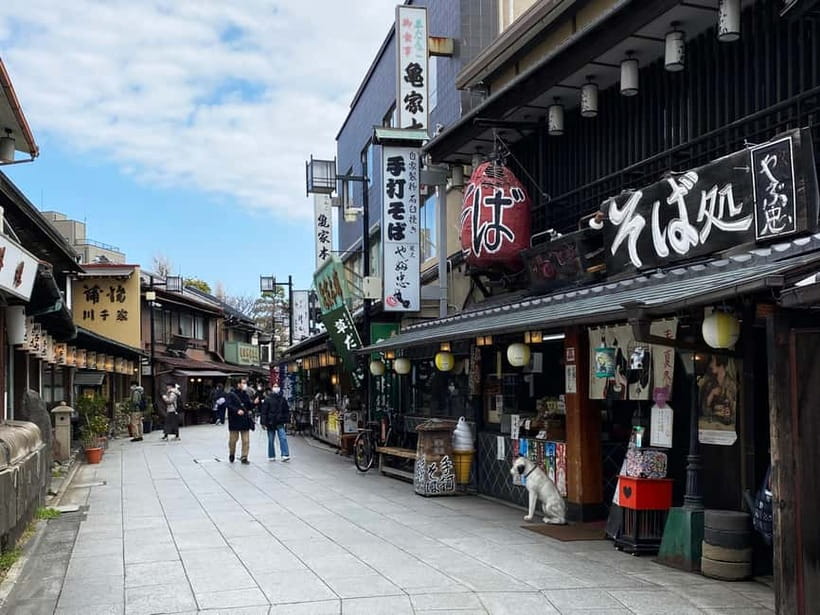
The walk along Taishakuten Sandō lasts about 30 minutes and combines a guided stroll with local snacks. This is one of the most enjoyable parts for anyone who likes to understand a place through its food.
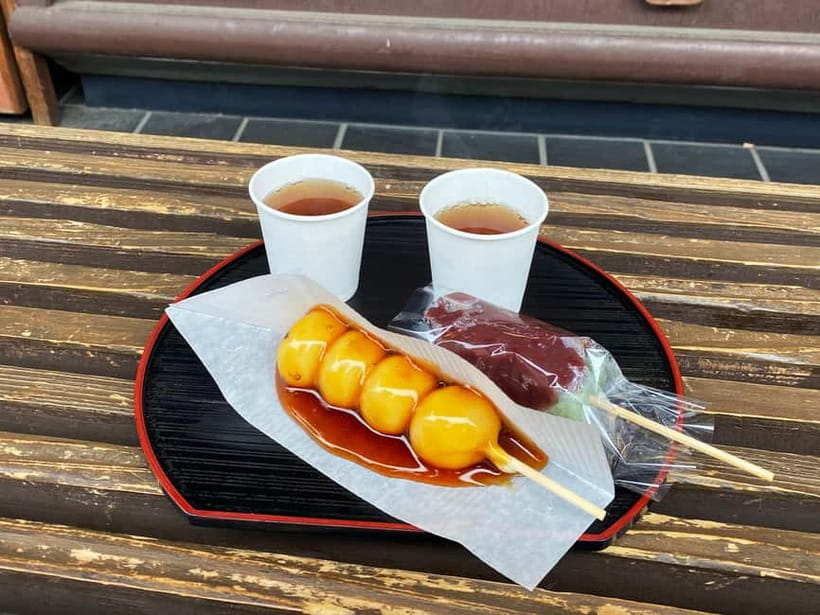
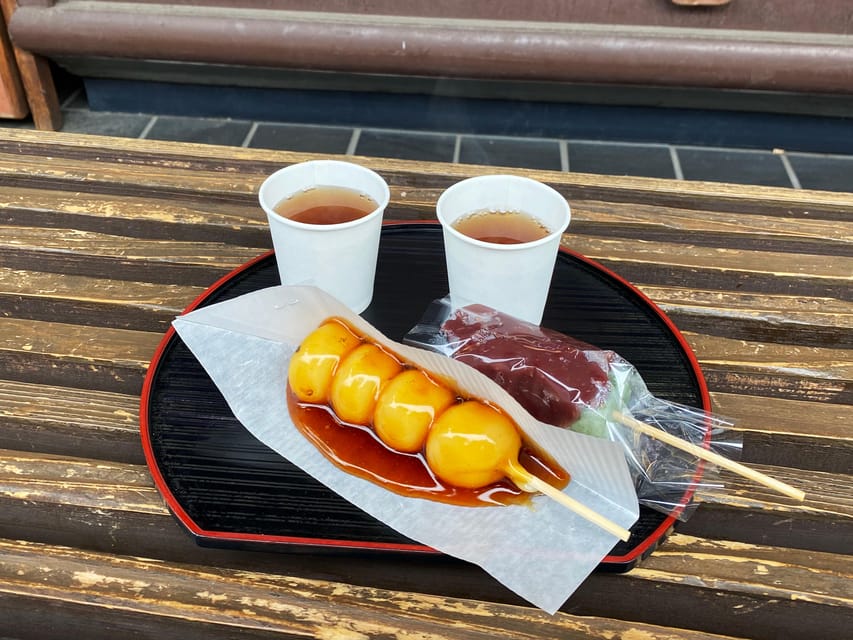
Look for familiar Japanese treats alongside less familiar choices. Grass dumplings, mitarashi dumplings, rice crackers, and savory Japanese-style omelets are all part of the tasting experience. The grass dumplings have a distinctive herbal color and flavor, while mitarashi dumplings are coated in a sweet soy-based glaze. Rice crackers bring a crisp, savory contrast.
The value here is not just the food itself. A guide can explain what you are looking at, how the snacks fit into Japanese eating habits, and which flavors may be sweet, salty, chewy, or savory. That help matters when a shop presents several similar-looking items.
This is also a good place to keep your pace relaxed. You are not being pushed through a large market with dozens of stalls. The food portion is short, so the tour works best if you treat it as a set of small tastings rather than a full meal.
If you have dietary restrictions, ask the guide before purchasing or eating. The activity information does not list allergy, vegetarian, or ingredient details, so you should not assume that every snack suits your needs.
Taishakuten Temple and its careful woodwork
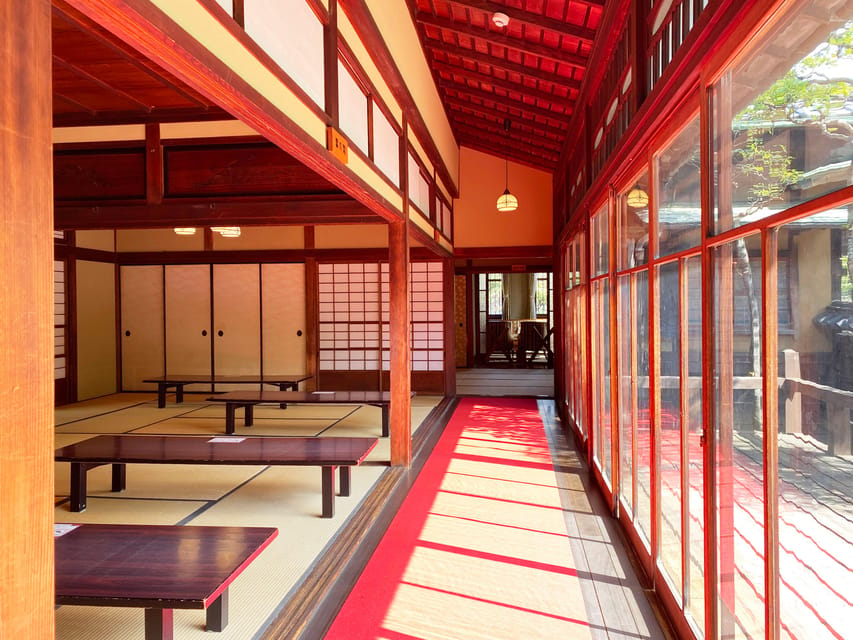
The visit to Shibamata Taishakuten takes about 40 minutes. This is the longest single stop and the part most likely to appeal to anyone interested in Japanese religious art and traditional building craft.
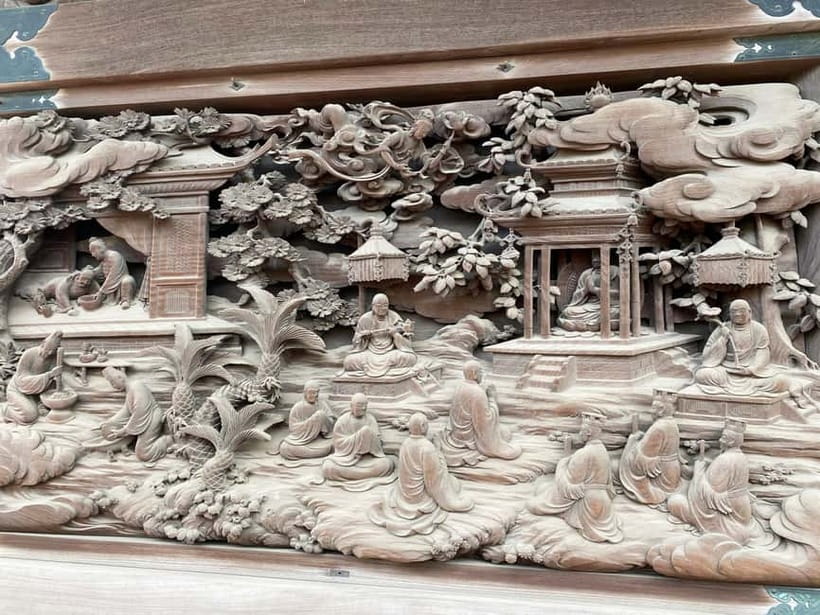
The temple is known for intricate wood carvings, detailed decoration, and strong colors. Do not only look at the roofline or the broad shape of the buildings. The pleasure comes from standing close enough to study the carved surfaces and noticing the patience behind the work.
Entry to the Sculpture Gallery and Garden at Taishakuten is included. That makes this more than a quick exterior photo stop. The gallery gives you a better chance to focus on the craftsmanship, while the garden offers a quieter counterpoint to the decorated temple structures.
I especially like the balance of this stop. The carvings provide visual drama, but the garden slows the visit down. You get both the workmanship of the temple and the calm that Japanese garden design is meant to create.
The guide’s role is important here. Architectural details can be easy to miss when you are looking at an unfamiliar building. With a small group, you can ask why certain parts are carved, what the decorations represent, or how the temple fits into Shibamata’s local identity.
The temple visit is not presented as a long religious ceremony. It is a guided sightseeing stop, so it suits people who want cultural context without committing to a formal worship experience.
Tora-san Museum and the story of local life
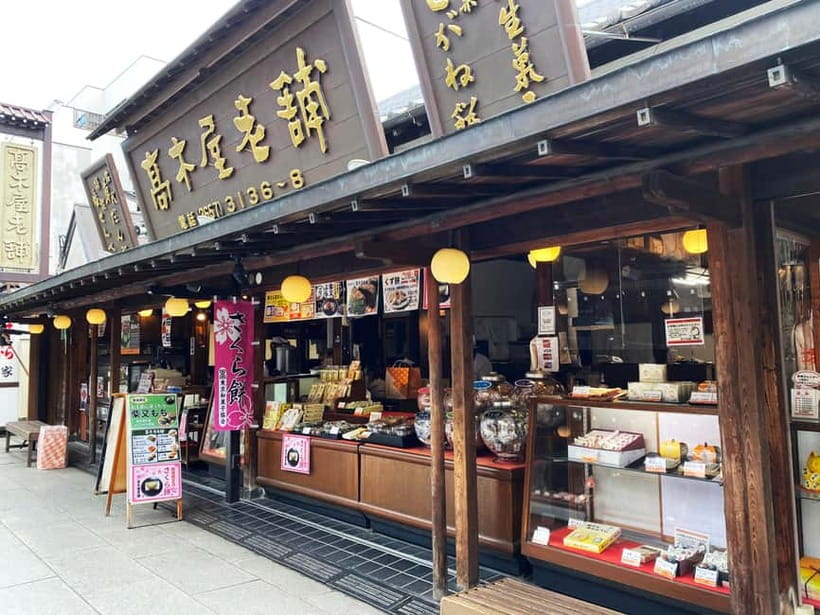
The Tora-san Museum takes about 20 minutes and includes a guided visit with time for photographs. This is the briefest stop, but it connects the neighborhood’s streets with its best-known fictional resident.
The museum presents traditional Japanese living through the world associated with Tora-san. Even if you have never seen the films, you can still appreciate the period details and the way popular culture preserves a picture of everyday life.
I would not book this tour solely for the museum. Its appeal depends partly on your interest in Japanese cinema and local storytelling. But as one piece of the route, it works well. After seeing the statue and walking the old-style shopping street, the museum gives you a clearer reason why Tora-san matters here.
The 20-minute visit also keeps the tour from becoming too film-focused. You get enough time for an introduction and photographs, then move on to the garden and tea portion.





Yamamoto-tei: green tea beside a Japanese garden
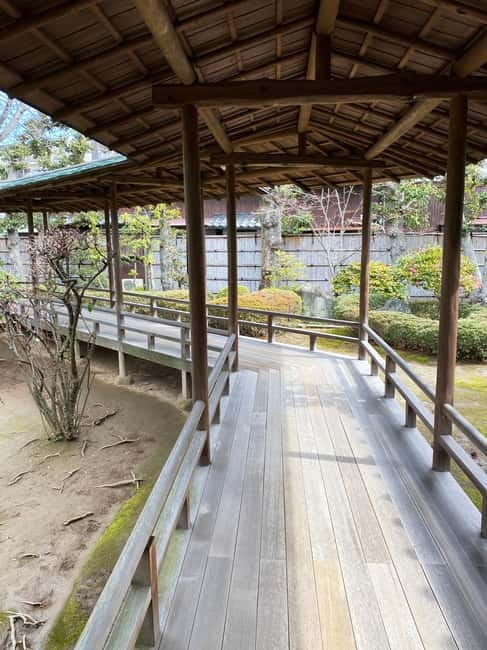
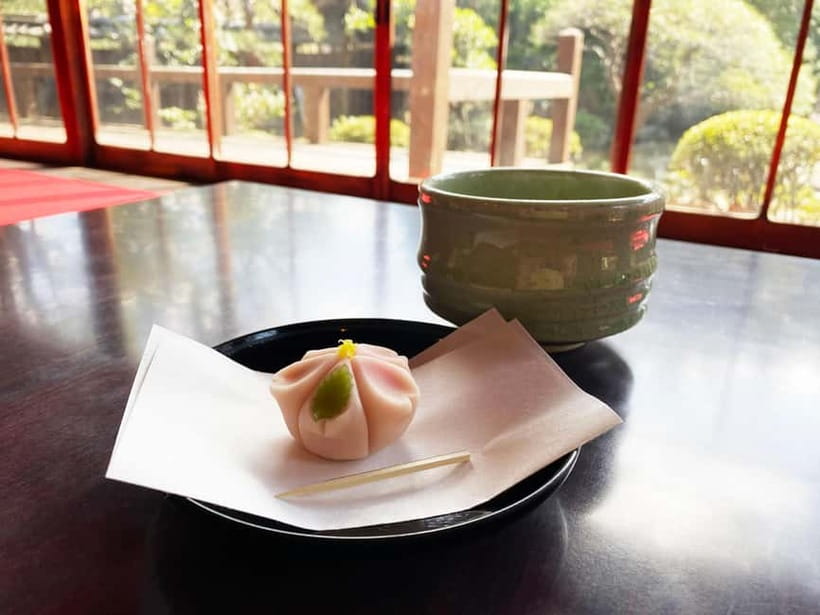
Yamamoto-tei is the gentlest stop of the day. You have about 30 minutes for a break, photographs, guided explanation, scenic views, and traditional green tea.
The house and garden provide a change in mood after the temple and museum. Instead of examining carvings or learning about a film character, you can sit, look outward, and let the neighborhood’s quieter side come forward.
Refreshments at Yamamoto-tei are included, along with access to the site. That matters when judging the $90 price because the cost covers more than guiding and admission to a single attraction. You are also paying for the temple sculpture area, the Tora-san Memorial Hall, Yamamoto-tei, and the tea break.
The garden is best treated as a pause rather than a checklist stop. You might find the 30 minutes just right for tea and photographs, though anyone hoping for a long garden visit may want more free time afterward. The scheduled tour returns to the Tora-san statue, so you can decide then if you want to continue exploring independently.
Is $90 a fair price?
At $90 per person, this is not a bargain-priced neighborhood walk. The value depends on how much help you want with context, food, and admission arrangements.
For that price, you receive a three-hour English-guided experience in a group of no more than five. Entry is included for the Tora-san Memorial Hall, the Sculpture Gallery and Garden at Taishakuten, and Yamamoto-tei. Refreshments at Yamamoto-tei are also included.
That package is strongest for first-time visitors who would otherwise pass through Shibamata without understanding what they are seeing. The guide links the snacks, temple, museum, and garden into one story. You also avoid spending time working out which attractions require admission or how the pieces fit together.
The price is harder to justify if you are comfortable exploring independently in Japanese, do not care about Tora-san, or mainly want a temple visit. In that case, you may prefer to visit the district on your own and spend only on the food and admissions you choose.
Souvenirs are not included. The activity information also does not say that all food purchases are covered, so bring extra cash beyond the tour price if tasting and shopping are important to you.
The pace, group size, and guide style
Three hours gives the route enough room to breathe. The listed stop times total about two hours, leaving time for walking between sites, questions, food, photographs, and transitions.
That extra time is useful in a district where the point is the atmosphere, not speed. I would still avoid scheduling a train departure or another timed activity immediately afterward.
A group limit of five is a major advantage. You can hear the guide more easily, ask about unfamiliar foods, and pause when a carving or garden detail catches your eye. The experience is less suited to people who prefer complete independence, but it is a good fit for visitors who want personal guidance without joining a large bus group.
Megumi and Machiko have both guided this experience. The supplied information describes the guiding language as English, and past bookings specifically praised the guides’ kindness, clear speech, and local understanding. Since the assigned guide is not guaranteed in advance, treat those names as examples rather than a promise.
Who should book this Shibamata experience?
I would recommend it most strongly to:
- First-time visitors seeking a quieter side of Tokyo
- People interested in temple art, gardens, and everyday Japanese culture
- Food lovers who enjoy small local tastings
- Solo visitors and couples who prefer a small group
- Anyone curious about Japanese film and the Tora-san character
- Visitors who want a calm half-day activity rather than a packed city tour
Families may also enjoy it, especially if children like sweets, statues, gardens, or visual details. The activity information does not provide a minimum age or child pricing, so check those details before booking for young children.
I would be more cautious if you want a major landmark, a long meal, or a full-day excursion. This is a compact neighborhood experience. Its pleasure comes from small discoveries, not from one overwhelming sight.
You should also skip the outing if you feel unwell on the day. Participation is declined for anyone who is not feeling well, so plan accordingly.
Practical details for a smooth visit
Meet in front of the Tora-san statue at Keisei Shibamata Station. The route begins and ends at the same place, which keeps the logistics simple.
Bring cash for snacks and souvenirs because some shops may not accept cards. Wear shoes suitable for walking, since the route includes a street walk, temple grounds, museum access, garden areas, and movement between stops.
The price is $90 per person, and the duration is three hours. The activity offers free cancellation up to 24 hours before the start for a full refund, and you can reserve now while paying later, useful if your Tokyo schedule is still shifting.
The language is English, and the group is limited to five participants. The stated rating is 4.9 from eight verified bookings, with praise focused on the peaceful setting, friendly guides, temple and garden, and the chance to see a less familiar part of Tokyo. One booking gave four stars because the activity lasted closer to three hours than expected, which reinforces the need to allow the full stated duration.
Should you book it?
Book this tour if you want Tokyo to feel local, quiet, and human-sized for an afternoon. The combination of Taishakuten’s wood carvings, neighborhood snacks, the Tora-san story, and green tea at Yamamoto-tei gives you more variety than a simple temple visit.
At $90, it is a guided experience rather than a cheap walk. I think the cost is reasonable if you value a very small group, English explanations, included admissions, and help making sense of places you might otherwise overlook.
Skip it if you want a famous Tokyo icon, a long food tour, or a completely self-directed day. For everyone else, especially visitors who have already seen the city center, Shibamata offers a welcome change of pace.
FAQ
Where does the tour meet?
Meet in front of the Tora-san statue beside Keisei Shibamata Station, at the Futen Tora Statue and Sakura Statue.
How long does the experience last?
The activity lasts three hours.
What language is the tour conducted in?
The live tour guide speaks English.
How large is the group?
The experience is limited to five participants.
What food can I try?
The tour includes opportunities to try local delicacies such as grass dumplings, mitarashi dumplings, rice crackers, and savory Japanese-style omelets.
Is entry to Taishakuten’s Sculpture Gallery and Garden included?
Yes. Admission to the Sculpture Gallery and Garden at Taishakuten is included.
Is entry to the Tora-san Memorial Hall included?
Yes. The fee includes entry to the Tora-san Memorial Hall.
Is Yamamoto-tei included?
Yes. Access to Yamamoto-tei and refreshments there are included.
Are souvenirs included?
No. Souvenir costs are not included.
Can I cancel for a refund?
You can cancel up to 24 hours in advance for a full refund.
Do I need to bring cash?
Yes, cash is recommended because some shops may not accept cards. You should also bring cash if you want souvenirs, which are not included.
More tours in Tokyo we've reviewed












Tokyo, compared.
 ★ 5.0Mt Fuji and Hakone 1-Day Bus Tour Return by Bullet TrainFrom $163
 ★ 5.01-Day Tokyo Bus TourFrom $129
 ★ 4.6Tokyo: teamLab Planets TOKYO Digital Art Museum Entry TicketFrom $251 day
 ★ 4.0Mt Fuji & Hakone Cruise, Drum Show Bullet Train 1 Day from TokyoFrom $149
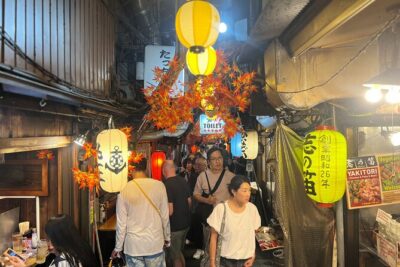 ★ 5.0Tokyo: Shinjuku Food Tour (13 Dishes at 4 Local Eateries)From $86
 ★ 4.4Tokyo Mt Fuji 5th St & Hakone Cruise Bus Tour w/Bullet TrainFrom $15410 hours