Reviewed · 3-HOUR EXPERIENCES
Discover Tokyo: 3-Hour Private Guided Photo Walking Tour
Tokyo is easiest to remember when you stop chasing a checklist and start looking closely. This private photo walk puts you in the hands of Bunga, a photographer-guide who can take you through Shibuya, Shinjuku, Akihabara, Odaiba, Asakusa, or another Tokyo district you choose. You may photograph a famous crossing, a small shrine, a neon alley, or a rooftop park that most visitors pass without noticing.
In This Article
- Key points to know before you book
- A private camera lesson disguised as a Tokyo walk
- Starting at Hachiko Square in Shibuya
- Shibuya from the east side to the west side
- Shinjuku, where neon meets narrow lanes
- Akihabara for signs, electronics, and anime culture
- Odaiba for a modern waterfront setting
- Asakusa and the older side of Tokyo
- Morning light or Tokyo after dark
- What the $114.31 price buys you
- Walking, comfort, and practical planning
- Who will get the most from this photo walk
- Should you book Bunga’s Tokyo photo walk?
- FAQ
- How long is the photo walking tour?
- Where does the tour begin?
- Where does the tour end?
- Is this a private tour?
- Which Tokyo neighborhoods can I choose?
- Can I choose a morning or nighttime tour?
- What is included in the price?
- Can I cancel for a full refund?
I like the one-to-one instruction, since Bunga can adjust the advice to your camera, phone, and skill level. I also like the choice of a morning or nighttime outing. Morning gives you a calmer city and softer light, while evening brings signs, crowds, and Tokyo’s electric streets.
The main consideration is the three-hour limit. Tokyo is enormous, and each neighborhood could fill a full day. You will need to choose your area carefully, and the walking pace may not suit you if you have limited mobility.
Key points to know before you book
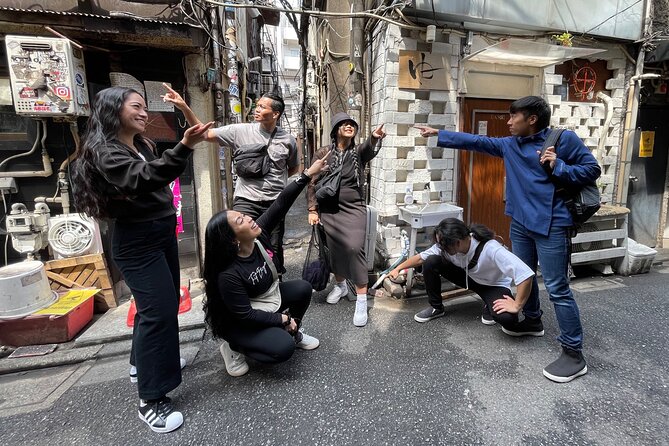
- Bunga leads a private photo walk: Your group receives direct guidance rather than a general photography lecture.
- You choose the Tokyo setting: Options include Shibuya, Shinjuku, Akihabara, Odaiba, and Asakusa.
- Morning or night is up to you: The same district can look entirely different depending on the light and hour.
- The route can go beyond postcard Tokyo: Expect back alleys, small Shinto shrines, roof parks, food lanes, and local street scenes.
- The meeting point is Hachiko Square: The walk begins at 2 Chome-1 Dogenzaka in Shibuya and ends there.
- Two back-to-back tours are possible: This is worth considering if you want to cover more than one district or compare day and night photography.
A private camera lesson disguised as a Tokyo walk
The best reason to book this experience is not simply to see Tokyo. You can do that on your own. The value comes from having Bunga look at the city with you and offer practical ways to improve the pictures you are already taking.
That might mean advice on framing a crowded street, choosing a better angle, using available light, or spotting a subject before it disappears into the crowd. The information does not promise a formal classroom course, so you should think of it as hands-on coaching while walking rather than a technical workshop.
That format works especially well if you are using a phone or a basic camera. You do not need to be an expert to benefit from a second set of eyes. One particularly useful part of this kind of tour is learning to notice what is around the main sight. Shibuya Crossing is obvious. The smaller streets, signs, shrines, stairways, and changing light are where your photos can become more personal.
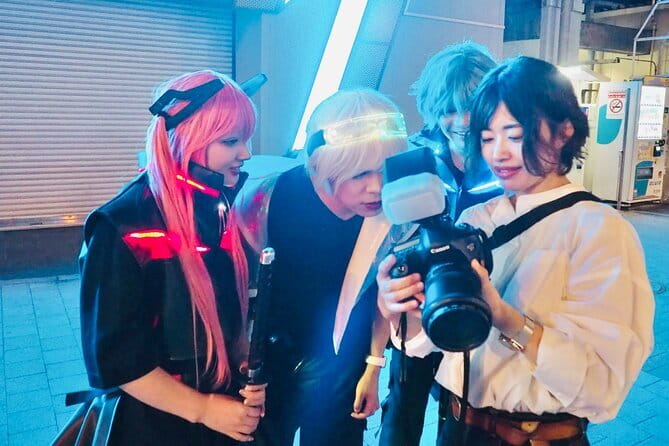
Bunga also appears to bring a photographer’s eye to family and portrait pictures. One visitor used the outing to mark a 50th birthday and came away with meaningful images from the trip. Another family combined sightseeing, photography tips, and stops such as Rainbow Pancakes. If you want pictures of yourself rather than only pictures of Tokyo, say so when arranging the tour.
Other walking tours we've reviewed in Tokyo

Starting at Hachiko Square in Shibuya
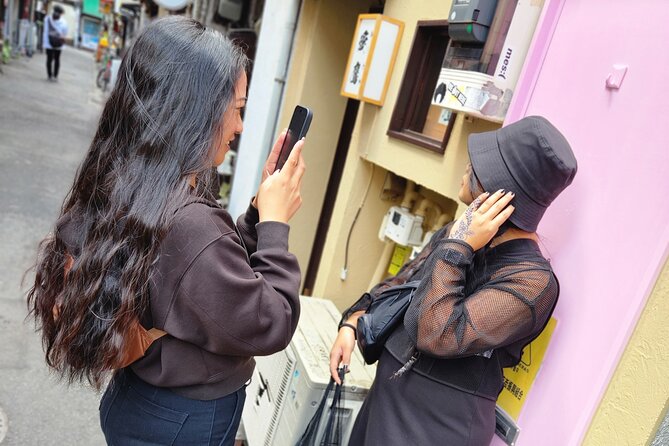
The listed meeting point is Hachiko Square, at 2 Chome-1 Dogenzaka, Shibuya, Tokyo 150-0043. It is a sensible place to begin because you are already beside one of Tokyo’s most famous public spaces, and the area offers an immediate mix of crowds, signs, architecture, and street movement.
From here, you can focus on Shibuya itself or use the meeting point as the start of a broader plan. The route is customizable, but the time is not unlimited. If Shibuya is your priority, I would tell Bunga that before you start and ask for a route built around the kind of pictures you want.
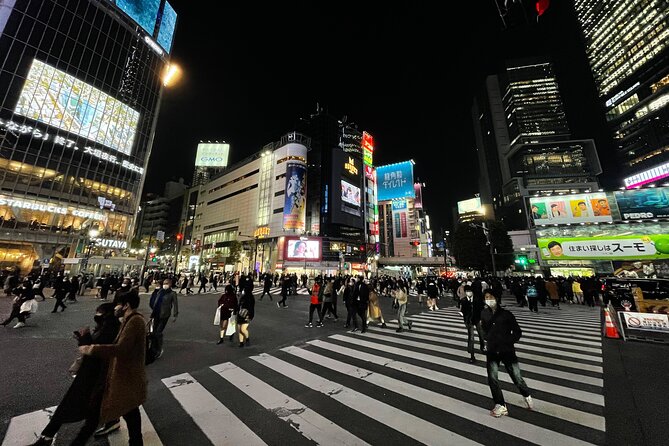
Shibuya works well for both first-time visitors and repeat visitors. You can photograph the well-known crossing, then move toward less obvious streets, small shrines, back lanes, and roof parks. The contrast is the point: giant screens and packed intersections on one side, quiet corners and traditional details on the other.
The district also rewards a flexible eye. A street photographer may prefer people, signs, and motion. A family may want portraits near recognizable sights. Someone working on composition may prefer architectural lines and layers. A private walk gives you more room to follow one of those interests than a standard group tour would.
Shibuya from the east side to the west side
The Shibuya route is described as crossing from the east side to the west side of Shibuya Station, with time for alleys, shrines, and rooftop parks. That gives you a fuller sense of the district than a quick stop at the crossing.
I like the idea of starting with the famous scene and then moving away from it. The crossing is worth photographing, but it can also become a trap. You take the same wide shot everyone else takes, then leave before seeing how the neighborhood changes a few streets away.
The smaller locations may be especially useful for learning. A quiet shrine can teach you to work with shade and detail. A rooftop park can give you a different view over the buildings. An alley can help you practice framing, color, and low-light shooting, depending on the time of day.
The morning option should appeal to anyone who prefers a more measured walk. The nighttime option is better suited to neon, signs, nightlife, and the visual energy around Shibuya Station. The supplied information does not promise a fixed list of locations, so you should treat the route as a guided exploration rather than a guaranteed sequence of stops.
Shinjuku, where neon meets narrow lanes
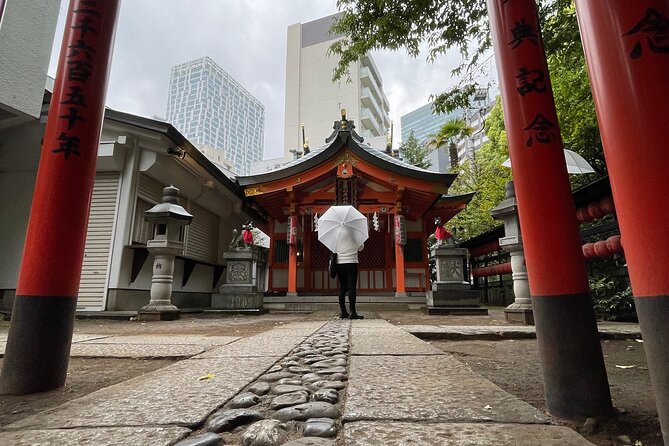
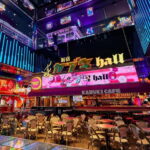
Shinjuku offers a different kind of photo walk. The route may include the Godzilla sight, hidden alleys, Golden Gai, Kabukicho Tower, and other places suited to street photography.
This is a good choice if you want modern Tokyo in full color. Neon, signs, entertainment streets, and tightly packed lanes give you plenty to work with. Golden Gai is known for its narrow alleyways and small drinking establishments, while Kabukicho supplies the brighter, more theatrical side of the district.
Shinjuku also asks for a little more awareness of your surroundings. Crowded entertainment areas can be visually exciting, but they are not the place to stop in the middle of a walkway or photograph carelessly. Bunga can help you find a workable position and suggest ways to capture the mood without turning the walk into a hurried race for pictures.
The Godzilla sight gives you a recognizable subject, while the alleys offer less predictable images. If you have already seen Tokyo’s major landmarks, Shinjuku may provide the different point of view you are looking for. If you prefer quiet temples and old streets, this is probably not the first district I would choose.
Akihabara for signs, electronics, and anime culture
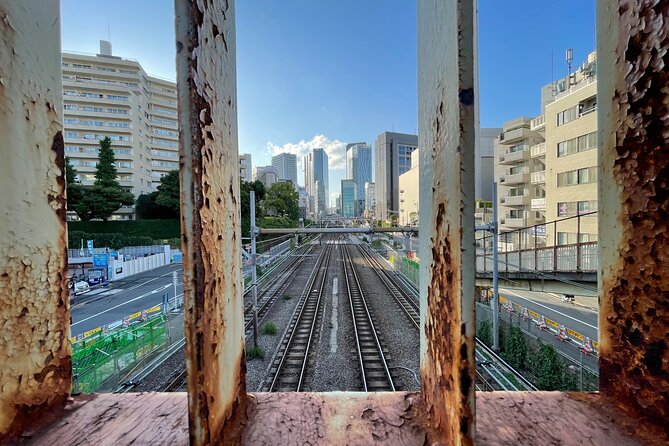
Akihabara is the natural pick for a colorful, highly specific Tokyo story. The district is known for electronics, maid cafes, and anime culture, and the photo walk takes you through its central streets and side areas.
You will find a very different visual vocabulary here than in Asakusa or Odaiba. Storefronts, posters, signs, merchandise, and electronic displays create layers of color and text. That makes Akihabara useful for practicing composition in crowded scenes, though the sheer amount of visual information can also make it hard to decide where to point your camera.
A guide can help you avoid producing a pile of busy pictures that all look alike. Ask Bunga to help you find patterns, strong lines, or one clear subject within the noise. If you are interested in Japanese pop culture, this neighborhood may be more rewarding than a general city walk because the setting itself is the subject.
The supplied details do not promise entry to specific shops or cafes, so I would think of Akihabara as an outdoor street photography route. The focus is on the neighborhood and its visual character, not on a shopping tour.
Other guided tours in Tokyo

Odaiba for a modern waterfront setting
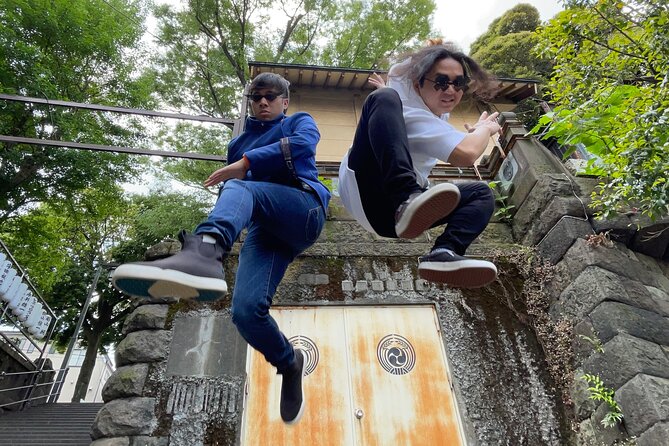
Odaiba gives you a change of pace from central Tokyo. The walk is designed around the area’s distinctive spots and lesser-known corners, with time to photograph modern Japan from a more open setting.
Unlike Shibuya or Shinjuku, Odaiba is not defined only by narrow streets and crowds. You may find broader views, large structures, open public areas, and unusual angles on the city. That makes it a useful choice if you want more space in your compositions.
The tradeoff is that Odaiba may feel less like classic street photography. If your ideal Tokyo photograph includes a packed crossing, glowing signs, and tiny lanes, Shinjuku or Shibuya will likely suit you better. If you want modern design and a different sense of scale, Odaiba is worth considering.
Because the tour starts in Shibuya, confirm how the Odaiba plan will work before booking. The experience is listed as customizable, but the supplied information does not state that transportation between districts is included. The price includes all fees and taxes, but not snacks or tips, and no separate transport arrangement is specified.
Asakusa and the older side of Tokyo
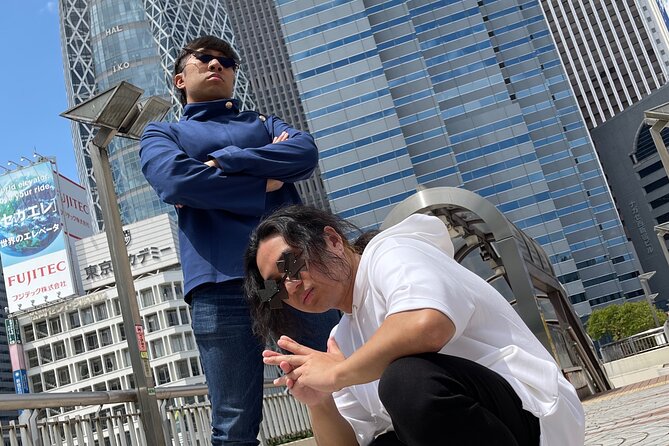
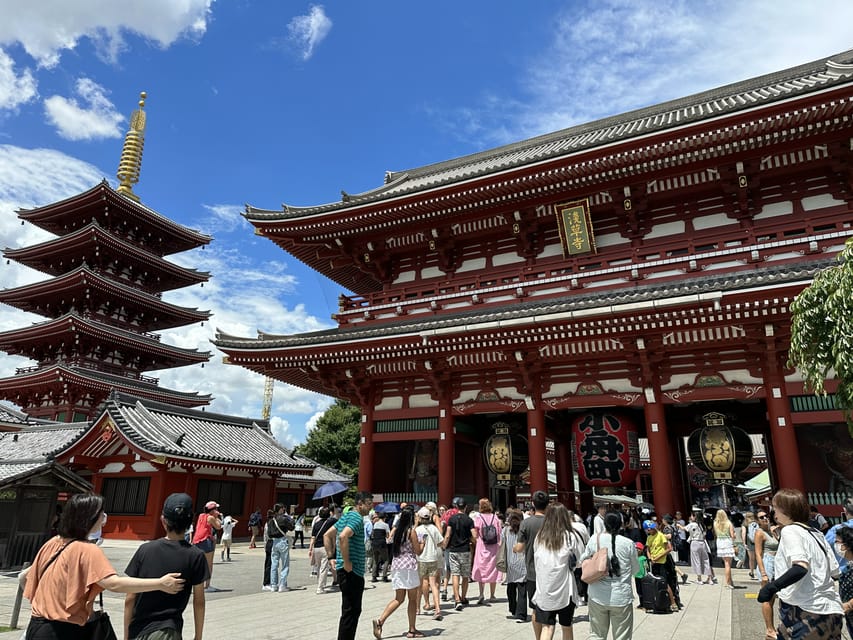
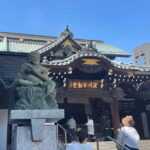
Asakusa is offered as another possible area, with historical landmarks providing a contrast to the newer districts. The details do not lay out a fixed Asakusa route, so you should ask Bunga what he recommends there before settling on it.
I would choose Asakusa if you want traditional architecture, temple surroundings, and a calmer visual mood than the entertainment districts provide. It can also be a good place to work on details, symmetry, texture, and respectful photography around religious sites.
The important point is that this is not advertised as a fixed attraction tour. You are choosing a neighborhood and shaping the photography focus with your guide. That flexibility is a strength, but it means the quality of your planning conversation matters.
Morning light or Tokyo after dark
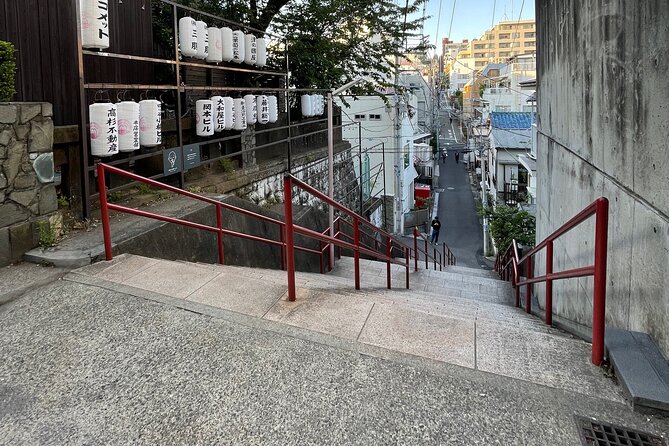
The time of day changes the character of this experience more than the three-hour length might suggest. Morning is a sensible choice if you want a less hectic walk, clearer views of streets and architecture, and a chance to concentrate on technique without as much visual commotion.
Night is the better fit for neon, nightlife, glowing shop signs, and the particular look of Shibuya or Shinjuku after dark. It also creates more challenging photography conditions. You may need to hold your camera steady, manage bright signs beside dark streets, and make quick choices as people move through the frame.
I would select the time based on your main goal, not simply your schedule. Beginners who want to practice basic composition may find morning easier. Anyone chasing Tokyo’s famous nighttime look should choose the evening and accept that the lighting will demand more from both photographer and guide.
If you want both moods, the provider suggests booking two back-to-back tours. That is a serious time commitment, but it could make sense if you have a strong photography interest and want to compare neighborhoods or morning and night conditions. It is less appealing if your Tokyo schedule is already packed.
What the $114.31 price buys you
At $114.31 per person, this is not the cheapest way to walk through Tokyo. You are paying for a private experience, direct photography help, and a route shaped around your interests rather than a standard group itinerary.
The value improves if you plan to use the instruction. Bring questions. Decide if you want portraits, street scenes, landmarks, low-light pictures, or a mix. A private guide who spends three hours responding to your needs can be more useful than a lower-priced sightseeing walk that only points out locations.
The price also works better for pairs, families, or small groups if a group discount applies. Since only your party participates, you do not have to wait for strangers to take pictures or follow a pace that does not fit your camera habits.
Still, the cost may not feel worthwhile if you only want a list of Tokyo sights. You can visit Shibuya, Shinjuku, and Akihabara independently using public transportation. Book this when the photography guidance and personal route are central to what you want.
Walking, comfort, and practical planning
The activity lasts about three hours and requires a moderate level of physical fitness. You should expect to spend the time on foot, moving through city streets and different neighborhoods rather than sitting in a vehicle.
Wear comfortable walking shoes and keep your camera or phone easy to reach. Snacks are not included, so bring or buy your own if you need food during the outing. Tips are optional.
The activity allows service animals and is near public transportation. The information does not give a detailed accessibility route, nor does it promise elevators, rest stops, or a specific walking distance. If those details matter to you, ask before confirming.
Your booking is confirmed at the time of purchase, and free cancellation is available up to 24 hours before the start time for a full refund. Changes or cancellations inside that 24-hour window are not accepted for a refund.
Who will get the most from this photo walk
I would recommend this experience most strongly to:
- A first-time visitor who wants help seeing beyond major sights
- A photographer who wants practical advice in real street conditions
- A phone photographer who wants stronger family and holiday pictures
- A repeat visitor searching for a different side of Tokyo
- A couple or family that wants private pictures during the trip
- Someone deciding between a quiet morning and a neon-lit night
It is less suited to you if you dislike walking, want a fixed historical lecture, or expect professional studio-style portraits with guaranteed locations and equipment. It is also not the best choice for a packed multi-district sightseeing plan, since three hours disappears quickly in Tokyo.
Should you book Bunga’s Tokyo photo walk?
Book it if you want to make better pictures while seeing Tokyo from street level. The strongest parts are the private format, the choice of neighborhood, and Bunga’s practical eye for both famous sights and overlooked corners.
Choose Shibuya for a balanced first outing, Shinjuku for neon and nightlife, Akihabara for pop culture and signs, Odaiba for modern open views, or Asakusa for older Tokyo. Tell Bunga what you want to photograph before the walk begins, and you will get more value from the limited time.
At $114.31 per person, this is a specialty experience rather than a bargain sightseeing tour. For a photographer, a family marking a special trip, or anyone tired of taking the same postcard pictures, it can be a smart use of three hours. For everyone else, spend the money only if personalized photography help matters as much as seeing the neighborhood.
FAQ
How long is the photo walking tour?
The tour lasts approximately three hours.
Where does the tour begin?
The listed starting point is Hachiko Square, at 2 Chome-1 Dogenzaka, Shibuya, Tokyo 150-0043, Japan.
Where does the tour end?
The activity ends back at the meeting point.
Is this a private tour?
Yes. Only your group participates in the activity.
Which Tokyo neighborhoods can I choose?
Possible areas include Shibuya, Shinjuku, Akihabara, Odaiba, and Asakusa. The route is customizable.
Can I choose a morning or nighttime tour?
Yes. You can choose between morning and nighttime street photography tours.
What is included in the price?
All fees and taxes are included. Snacks are not included, and tips are optional.
Can I cancel for a full refund?
Yes. You can cancel at least 24 hours before the experience start time for a full refund. Changes or cancellations made less than 24 hours before the start time are not accepted for a refund.
More Private Tours in Tokyo

More Guided Tours in Tokyo
More Walking Tours in Tokyo
More tours in Tokyo we've reviewed




3-Hour Experiences, compared.
 ★ 5.0Tokyo Top Highlights 3h Guided E-bike TourFrom $63
 ★ 5.03h Tokyo E-Bike Tour: Hidden Gems, and Local Life with guideFrom $63
 ★ 4.8Tokyo: 3-Hour Bike or E-Bike City Highlights TourFrom $453 hours
 ★ 4.8Tokyo: 3-hour Guided E-Bike Tour of the City’s Hidden GemsFrom $65
 ★ 5.0Tokyo: 3-Hour Bike/E-Bike Tour of the City’s HighlightsFrom $63
 ★ 5.03-Hour Tokyo Pub Crawl Nightlife Welcome Guided Tour in ShibuyaFrom $46