Reviewed · E-BIKES
Tokyo Top Highlights 3h Guided E-bike Tour
Tokyo is so large that walking tours can leave you worn out before the good parts begin. This three-hour e-bike tour from Tsukiji solves that problem neatly, carrying you from grand landmarks to quiet shrines, gardens, and local streets without asking you to pedal hard.
In This Article
- Tokyo by E-bike: Key Points
- Why Cycling Works Better Than a Bus or Walking Tour
- Choosing Between the Three Tokyo Routes
- Tokyo City Route: History, Gardens, and Central Tokyo
- Tokyo Bay Route: Neighborhood Shrines, Odaiba, and City Lights
- Tokyo Tower Route: Temples, Hills, Government, and Parks
- The Guides Make a Real Difference
- Pace, Comfort, and Safety on Tokyo Streets
- Is $63.67 a Fair Price?
- Who Should Book This Ride?
- Final Verdict: A Smart First Ride Through Tokyo
- FAQ
- Where does the Tokyo e-bike tour start and finish?
- How long does the tour last?
- Which routes can I choose?
- What is included in the tour?
- How many people are in each group?
- Are children allowed to join?
- Do I need to be physically fit?
- What happens if it rains?
I like the choice of three distinct routes and the small maximum of six people. I also like the practical extras: a helmet, gloves in winter, luggage storage, and a snack selected by the guide. The main catch is that much of the ride takes place on city streets, so you need basic cycling skill, a moderate fitness level, and comfort around traffic.
Tokyo by E-bike: Key Points

- Three routes offer three different Tokyos: Pick city sights, Tokyo Bay at sunset and night, or Tokyo Tower and central government landmarks.
- The group is limited to six people: That gives the guide room to set a sensible pace, answer questions, and help with photos.
- The bikes are simple to use: Reviews describe comfortable e-bikes with no complicated gear changes, useful on Tokyo’s hills and long stretches.
- You see more than the headline sights: Quiet temples, neighborhood streets, gardens, shrines, and local customs fill the spaces between major landmarks.
- The tour returns to Tsukiji: You do not need to solve a one-way transport problem at the end.
- The starting rules matter: Riders must be at least 12 years old, at least 147 centimeters tall, and no more than 120 kilograms.
Why Cycling Works Better Than a Bus or Walking Tour
An e-bike gives you a useful middle ground. You are close enough to notice shopfronts, temple gates, canals, and neighborhood life, but you can cover far more ground than you would on foot. A bus can show you Tokyo’s scale, yet it keeps you behind glass and often drops you at only a few major sights.
The electric assistance is especially helpful in Tokyo. You still pedal, but the bike takes the sting out of hills and long urban stretches. Atago Shrine, for example, sits up a hill that can feel punishing on a regular bicycle. Here, the motor makes the climb manageable for a rider with only moderate fitness.
The bikes are described as easy to operate, with no complex gear changes. That matters if you have not ridden an e-bike before. You receive a briefing 15 minutes before departure, and the guide leads the group back to the same shop in Tsukiji.
This is not a car-free park ride. You will cycle on public roads and deal with traffic signals, pedestrians, and other bicycles. One account praised the guide’s careful handling of city traffic, while another raised a serious concern about moving too fast and following through signals. The sensible approach is to stay alert, leave space, and follow traffic rules yourself. The guide leads, but you remain responsible for your own riding.
Other cycling tours in Tokyo
Choosing Between the Three Tokyo Routes
The tour’s greatest strength is also a booking detail you must handle carefully: the routes are not interchangeable. The stops depend on the option you choose, so check the route details before paying.
Tokyo City Route: History, Gardens, and Central Tokyo
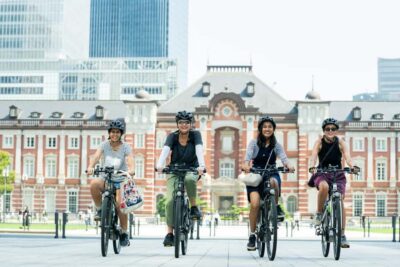
The city route gives you the broadest mix of Tokyo scenes. You pass through Ginza, the city’s luxury shopping district, but you are only riding through it, so your wallet gets a rest. From there, the route moves toward Tokyo Station.
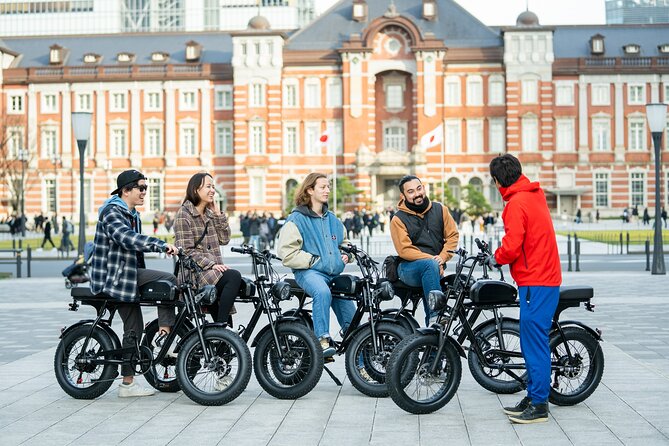
Tokyo Station is a handsome first major stop. Originally built in 1914, its Western-style architecture makes an interesting contrast with the high-rise buildings around it. You have about 15 minutes here, enough for photographs and a short explanation without turning the visit into a long architecture lecture.
Next comes Ningyocho, known historically as doll town. The dolls are no longer the main attraction, but the district still provides a look at an older side of central Tokyo. The planned stop lasts about 20 minutes, with a traditional sweet to try. This is the kind of small food moment that makes a cycling tour feel connected to the neighborhood rather than simply a race between famous buildings.
Kiyosumi Teien brings a quieter change of pace. This Japanese garden is less visited than Tokyo’s best-known parks, and the schedule allows about 25 minutes with admission included. You leave the bikes and walk through the garden, giving your legs a break while you take in the carefully arranged scenery and calmer atmosphere.
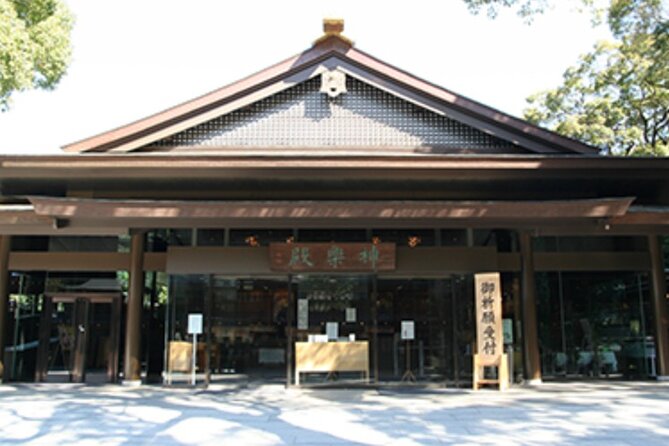
The route then reaches Tomioka Hachimangu in the historic Fukagawa area. This important Shinto shrine is linked to the early development of sumo. You have around 30 minutes, making it one of the more substantial stops on this route. The shrine gives your guide a chance to explain Shinto customs and the role of religious sites in everyday Tokyo.
This city option suits a first visit best if you want a balanced introduction. You get architecture, sweets, a garden, a shrine, local streets, and a taste of Tokyo beyond the standard postcard stops. The tradeoff is that it does not focus on the dramatic bay skyline or Tokyo Tower.
Tokyo Bay Route: Neighborhood Shrines, Odaiba, and City Lights
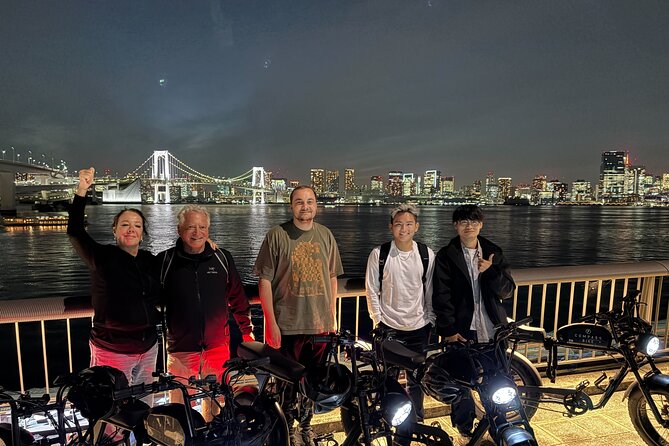
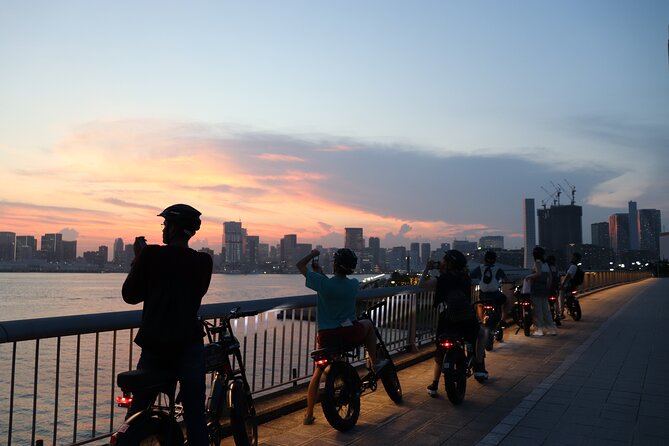
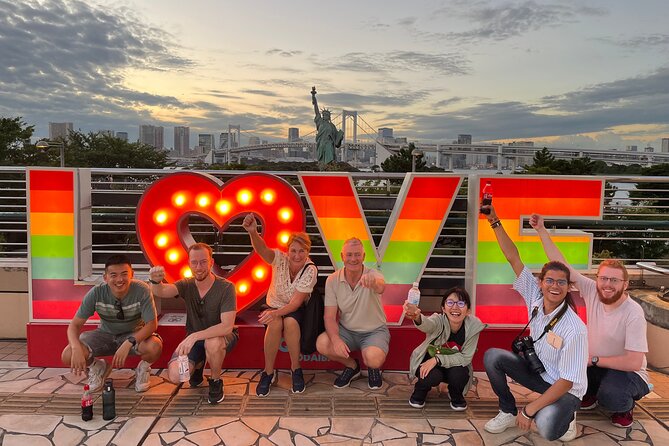
The Tokyo Bay route is the one to consider for strong evening views. The timing can place you around the bay at sunset, then among the lights after dark. A late afternoon departure, such as the 3:45 or 4 p.m. timing described in the feedback, can be especially appealing, though you should confirm the exact departure available for your date.
The ride begins with Sumiyoshi Shrine, a local religious site away from the main tourist circuit. The stop lasts about 15 minutes, and the ride there lets you see residential Tokyo and get a sense of how people live outside the central shopping zones.
Tsukuda Tendai Jizoson is smaller and easy to miss without a guide. You spend only about five minutes here, but that short pause is part of the route’s appeal. It is not another major attraction added to every guidebook. It is a brief look at a tucked-away religious site that you would be unlikely to find while planning a standard sightseeing day.
The route passes Tokyo Skytree, the world’s tallest radio tower, and teamLab Planets TOKYO, the well-known modern art museum. These are pass-by points, listed at about one minute each, not admissions or extended visits. That distinction matters. You can photograph or view them from outside, but this tour is not a substitute for booking either attraction.
Tokyo Big Sight is the next proper stop, with around 10 minutes to see its unusual architecture and take photos. The building is Japan’s largest exhibition hall, and its bold design gives you a fun change from shrines and office towers.
At Aqua City Odaiba, you get about 30 minutes for a break and a Japanese convenience snack chosen by the guide. This is a practical pause late in the ride. Odaiba also provides open views and a good setting for seeing Tokyo’s modern waterfront development.
The Gundam Base Tokyo stop adds a touch of pop culture. The Gundam statue is about 19.7 meters high, and you have around 10 minutes to appreciate its scale and detail. Even if you are not an anime fan, the enormous figure is an amusing photo subject and a clear sign that Tokyo does not take only one visual style.
The bay route is best for you if you want scenery, modern architecture, and a strong sunset-to-night progression. It is less useful if your priority is entering museums or spending long periods inside each attraction. Several locations are viewed from outside or passed on the way.
Tokyo Tower Route: Temples, Hills, Government, and Parks
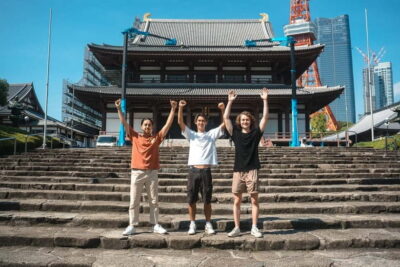
The Tokyo Tower route concentrates on central landmarks and adds more religious and civic context. It begins at Zojo-ji Temple, a major Buddhist temple associated with the powerful shogun family that ruled Japan for centuries. The stop lasts about 30 minutes, giving you time to look at the temple grounds and hear how religious institutions connected with political power.
You pass Tokyo Tower, the 333-meter red-and-white landmark. This is another exterior viewing point rather than a tower admission. You get the fun of seeing the structure up close while continuing through the city instead of spending the tour inside one attraction.
Atago Shrine is the route’s physical test. The shrine sits on a small mountain, and the ride includes a hill. The e-bike assist is genuinely useful here. Without it, the climb could be unpleasant for a casual rider; with it, you can focus more on the shrine and less on your burning legs. The stop lasts about 20 minutes.
The National Diet Building provides a look at Japan’s government center. Built in 1936, it has a formal, efficient design and makes a useful contrast with the temple and shrine earlier in the route. The stop itself is brief, about five minutes, but the ride toward it includes a traditional snack picked up near Hibiya Park.
You also pass the Imperial Palace area, once the site of a large castle. The route highlights a pond where ducks swim, offering a gentler view after the formal government buildings. Again, this is a pass-by experience, not a palace tour.
The final stop is Hibiya Park, where you spend about 20 minutes with the snack. The park is known for a wide range of trees and flowers, with around 150 tree types and 350 flower types cited in the tour details. This is a pleasant finish because you can park the bike, slow down, and talk about the sights before returning to Tsukiji.
Choose this route if you want Tokyo Tower, temples, shrines, civic buildings, the Imperial Palace area, and a park in one compact outing. It offers more hills than the city route, but the e-bike makes the hardest section reasonable.
Other guided tours in Tokyo


The Guides Make a Real Difference
A small group is only valuable if the guide uses it well. The strongest guide feedback centers on safety, clear explanations, friendly conversation, and a willingness to adjust the pace.
Hiro is repeatedly praised for looking after riders, explaining history in English, and using an iPad to show background at some stops. One family group found him especially reassuring when riding on busier roads. Shinobu is noted for creating a good family experience and adding a mochi snack. FK appears on both city and bay rides, with praise for explaining customs and lesser-seen parts of Tokyo.
Other named guides include Miky, Takuro, Sho, YK, Taiki, Mihori, and Javi. The exact guide depends on the date, so you should not book expecting a particular person. Still, the pattern is clear: the experience depends heavily on the guide’s road judgment and storytelling.
The best use of your guide is not just asking where to take a picture. Ask about shrine etiquette, the neighborhood names, the difference between Shinto and Buddhist sites, or why Tokyo’s modern buildings sit beside older religious spaces. Those short explanations turn a pleasant ride into a useful introduction to the city.
Pace, Comfort, and Safety on Tokyo Streets
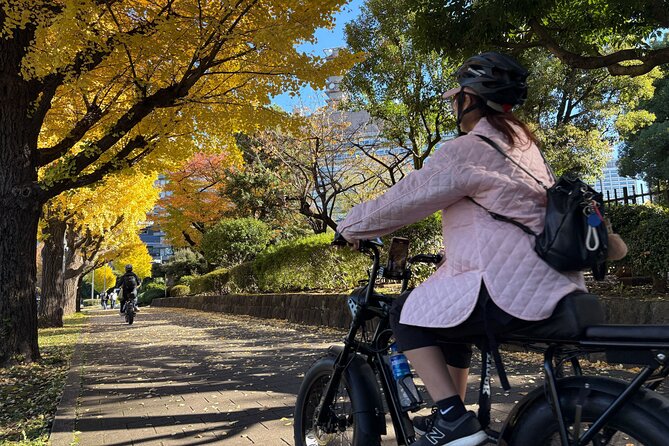
You need to know how to ride a bicycle before joining. You do not need a high level of athletic ability, but you should be comfortable starting, stopping, turning, and riding in a group.
The route lasts about three to four hours, and the end can run roughly 30 minutes late because of traffic. Build that extra time into your plans. A reservation for dinner immediately after the ride could become stressful, especially on a busy evening.
The small group size helps the guide keep people together, but city riding still demands attention. Do not assume the electric motor makes the experience effortless. You will be outside for several hours, and Tokyo can be very hot in summer. Riders have found the bikes manageable even in August, but you should still dress for the weather and expect some exposure to sun and humidity.
The operator supplies helmets and winter gloves. Luggage can stay at the e-bike shop, and a knapsack is available to rent for free. That is useful because you do not want a large daypack shifting around while you ride.
The tour is not suitable for children 12 and younger, people under 147 centimeters, or anyone over 120 kilograms. The minimum fitness requirement is moderate, and the age and height rules should be checked for every member of your group before booking. Also note that food allergies and vegetarian requirements cannot be accommodated.
Is $63.67 a Fair Price?
At $63.67 per person, the tour is reasonably priced for a three to four-hour guided experience that includes the e-bike, helmet, winter gloves when needed, luggage storage, and a Japanese snack. You are also paying for the guide’s route planning, traffic management, local explanations, and the chance to cover several districts without arranging separate trains and taxis.
The value is strongest if you are new to Tokyo or short on time. In one ride, you can see a garden, shrine, temple, civic building, waterfront, or major tower, depending on your route. The price is less attractive if you prefer long museum visits or want to explore every stop independently.
Admission is included for Kiyosumi Teien on the city route. The other listed stops are free or exterior viewing points, so you should not expect the price to cover entry to Tokyo Skytree, teamLab Planets, Tokyo Tower, or other paid attractions. Think of this as a guided orientation by bicycle, not a package of attraction tickets.
Free cancellation is available up to 24 hours before the start time. If rain or another weather problem cancels the ride, you can be offered another date or a full refund. The operator may also offer an altered itinerary, a rental ride, or a special non-bike tour, with the available choice communicated by email.
Who Should Book This Ride?
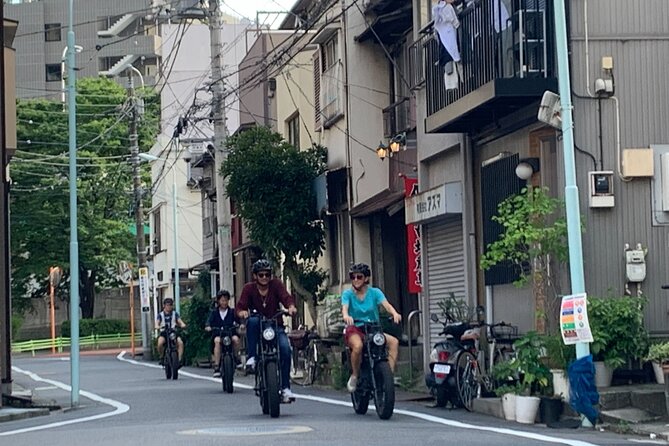
I would recommend it to first-time visitors who want a quick sense of Tokyo’s scale and character. It is also a good fit for couples, families with teenagers who meet the height and age rules, and active adults who want something more engaging than a bus loop.
The city route is the safest all-purpose pick. Choose Tokyo Bay for sunset, modern waterfront views, Odaiba, and city lights. Choose Tokyo Tower for temples, a hill climb, government buildings, and Hibiya Park.
I would hesitate if you dislike riding near traffic, need a fully accessible sightseeing experience, have food restrictions the operator cannot handle, or want guaranteed time inside major attractions. I would also avoid booking it on a tightly packed day when a 30-minute delay could ruin your next plan.
Arrive before the meeting time. The shop may be closed if you come too early, but the guide arrives 15 minutes before departure for the bike briefing. Late arrivals cannot join partway through the group ride, so punctuality is not optional.
Final Verdict: A Smart First Ride Through Tokyo
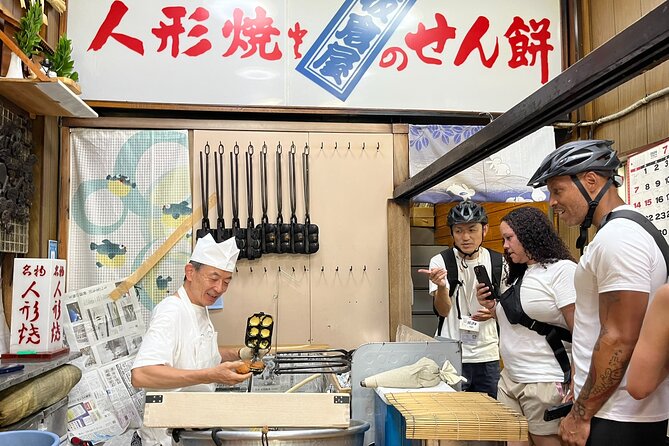
You should book the Tokyo Top Highlights 3h Guided E-bike Tour if you can ride confidently and want to see several sides of Tokyo in one outing. The e-bike takes care of the worst hills, the routes return to Tsukiji, and the six-person limit gives the guide room to provide personal help.
My first choice for a general introduction would be the Tokyo City Route. For the most memorable photographs, I would choose the Tokyo Bay route near sunset. For a mix of major landmarks and cultural stops, the Tokyo Tower route is the better match.
This is not a flawless experience. Traffic, weather, food restrictions, age rules, and route differences deserve attention. But at this price, the tour offers a useful combination of movement, local context, and variety. You finish with a better feel for how Tokyo’s temples, gardens, neighborhoods, government buildings, and futuristic waterfront fit together.
FAQ
Where does the Tokyo e-bike tour start and finish?
The tour starts at 6-chōme-11-5 Tsukiji, Chuo City, Tokyo 104-0045. Every route returns to the same meeting point at the end.
How long does the tour last?
The experience lasts approximately three to four hours. The end may be delayed by about 30 minutes because of traffic.
Which routes can I choose?
You can choose the Tokyo City Route, Tokyo Bay Route Sunset and Night, or Tokyo Tower Route. The stops vary by route, so check the chosen option before booking.
What is included in the tour?
The tour includes an e-bike, helmet, winter gloves, luggage storage, and a Japanese snack. A knapsack can also be rented free of charge.
How many people are in each group?
The tour has a maximum of six participants.
Are children allowed to join?
Participants must be at least 12 years old and at least 147 centimeters tall. Children aged 12 and younger are not permitted.
Do I need to be physically fit?
You need moderate physical fitness and must know how to ride a bicycle. The e-bike reduces the effort, including on the hill to Atago Shrine, but this remains a several-hour city ride.
What happens if it rains?
The tour requires suitable weather. If poor weather causes cancellation, you may be offered another date or a full refund. The operator may also present alternative tour options by email.
More E-Bikes in Tokyo


More Guided Tours in Tokyo
More Cycling Tours in Tokyo

More tours in Tokyo we've reviewed












E-Bikes, compared.
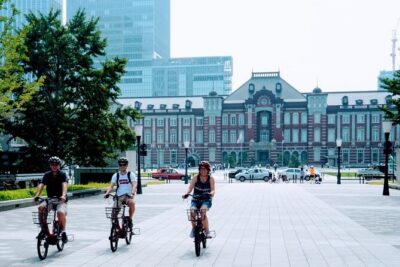 ★ 5.03h Tokyo E-Bike Tour: Hidden Gems, and Local Life with guideFrom $63
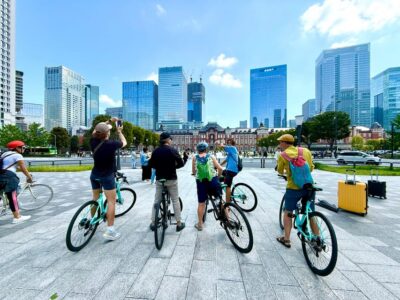 ★ 4.8Tokyo: 3-Hour Bike or E-Bike City Highlights TourFrom $453 hours
 ★ 4.8Tokyo: 3-hour Guided E-Bike Tour of the City’s Hidden GemsFrom $65
 ★ 5.0Tokyo: 3-Hour Bike/E-Bike Tour of the City’s HighlightsFrom $63
 ★ 5.03-Hour Tokyo Private E-Bike Tour Starting from Your HotelFrom $145
 ★ 4.7Tokyo: 3-Hour Bike or E-Bike Tour of City’s Hidden GemsFrom $603 hours