Reviewed · SHIBUYA TOURS
:Tokyo,Shibuya /Meiji Shrine tour in KIMONO/English-friendly
Meiji Shrine is one of Tokyo’s best places to pair a traditional kimono with a meaningful cultural visit. This three-hour experience lets you choose your own outfit, walk to the shrine, and learn how its gates, offerings, forest, and worship spaces fit into Shinto practice.
In This Article
- Key points at a glance
- Why this kimono and shrine pairing works
- Finding Harajuku Kimono SHIBUI
- Picking a kimono, yukata, and accessories
- Walking through the torii gates
- Sake barrels, wine barrels, and the shrine forest
- The main shrine and Shinto prayer hall
- One hour with an English-speaking guide
- Photo help without carrying a photographer
- Free time for the museum, garden, or more photos
- What the three-hour schedule means for your day
- Who will get the most from this experience
- Should you book the SHIBUI kimono and Meiji Shrine tour?
- FAQ
- How long does the kimono and Meiji Shrine tour last?
- Where do I meet the guide?
- How far is the shop from Meiji Shrine?
- Is the tour conducted in English?
- How many people can join the tour?
- Are kimono included in the tour price?
- Are accessories included?
- Is hair styling included?
- Are Meiji Jingu Museum and Inner Garden admission fees included?
- Can the guide take photographs?
I like the short walk from the shop to Meiji Shrine and the chance to choose matching slippers, bags, and accessories without an extra charge. I also like the personal photo help, especially for families or friends who want more than a quick phone snapshot. The main drawback is the meeting point: the shop is inside an apartment building on the fourth floor, so you need to find Jingumae Room 413 rather than a typical street-front store.
Key points at a glance
- Choose your own kimono or yukata: The collection includes formal kimono and more casual yukata for different ages, colors, and tastes.
- Walk to six Meiji Shrine highlights: The route covers torii gates, sake barrels, wine barrels, the shrine forest, the main shrine, and the Shinto prayer hall.
- Learn with an English-speaking guide: The guided presentation lasts about 50 to 60 minutes and explains shrine customs and history.
- Get help with photos: Guides can take photographs, and video capture is also possible during the sightseeing portion.
- Stay close to Harajuku’s biggest sights: The shop is about five minutes from Meiji Shrine and two minutes from Takeshita Street.
- Plan for optional extras: Hair styling costs 2,000 JPY, while admission to the Meiji Jingu Museum and Inner Garden is not included.
Why this kimono and shrine pairing works
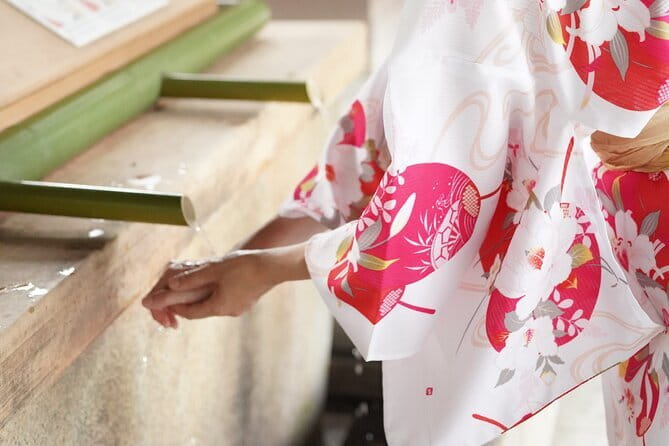
Many kimono rental sessions are mainly about clothing and photographs. This one adds a guided visit to Meiji Shrine, so you get some cultural context instead of simply posing at the entrance.
That matters at Meiji Shrine. The grounds are easy to reach, but the meaning of the torii gates, donated sake barrels, forest, and prayer spaces is not always obvious if you are exploring alone. An English-speaking guide gives you a clearer way to understand what you are seeing and how Shinto practices appear in everyday shrine life.
The location is particularly useful. Harajuku Kimono SHIBUI is close to both Meiji Shrine and Takeshita Street. You can reach the shrine on foot, then return to the shop to change clothes after your free time. The arrangement avoids a long ride across Tokyo in formal clothing.
The listed price is $137 per group of up to one person, so check the booking screen carefully for the exact party pricing that applies to your reservation. The value depends on how much you want from the outing. If you only want to rent a kimono for photographs, a simple rental may cost less. If you want clothing, accessories, a guide, shrine interpretation, and photo help in one short activity, the package is easier to justify.
A few more Tokyo tours and experiences worth a look


Finding Harajuku Kimono SHIBUI
The meeting point is Jingumae Room 413, Harajuku Cope Annex. The shop is in an apartment building, not a large shop with an obvious storefront. Give yourself time to locate the building and go to the fourth floor.
This is the most important practical tip from the available information. One participant specifically noted that the shop is in an apartment building on the fourth floor. Look for the correct room number rather than relying only on a shop sign.
The location is handy once you arrive. The shop is described as roughly a five-minute walk from Meiji Shrine and about two minutes from Takeshita Street. That puts you near two very different sides of Harajuku: the busy shopping street and the quieter shrine grounds.
The activity lasts three hours, but the shrine visit includes a guided presentation of about 50 or 60 minutes, followed by free time. You then meet again approximately 1.5 hours later and return to SHIBUI to change. Confirm the exact starting time when you book, since start times depend on availability.
Picking a kimono, yukata, and accessories
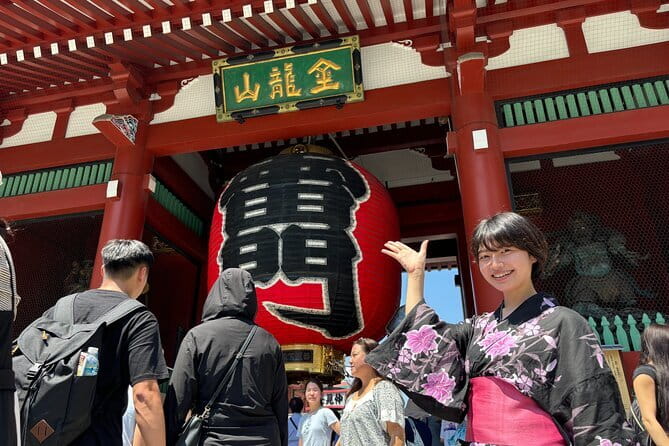
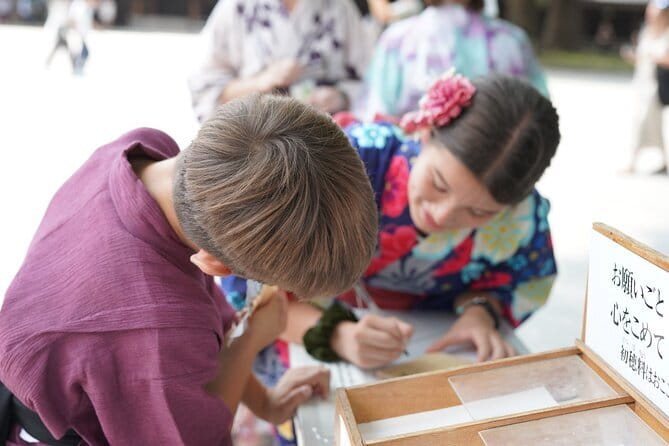
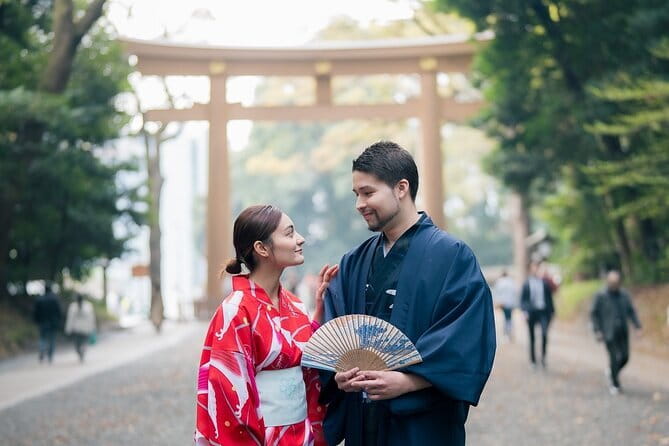
The clothing choice is one of the most personal parts of the experience. You can freely select from a varied collection of kimono and yukata. Kimono are formal traditional clothes, while yukata are lighter, more casual traditional garments.
The collection includes different colors and choices for all ages. That makes the activity easier for families and mixed-age groups, since you are not limited to one standard outfit. You can also choose slippers, a bag, and accessories to suit your clothing without an added fee.
I like this arrangement because the free accessory choice helps the outfit feel less like a costume picked by someone else. You can select a style that suits your taste, then carry that look into the shrine visit and photographs.
Hair styling is optional and costs 2,000 JPY, paid at the shop. It is not included in the advertised package, so budget for it only if a finished traditional look matters to you.
The practical issue is timing. You need to be ready for a walk and a guided visit, not just a quick studio session. A kimono can be more restrictive than ordinary sightseeing clothes, so comfortable pacing and sensible footwear matter. The tour does provide suitable slippers, but the information does not specify the exact style or walking conditions.
Walking through the torii gates
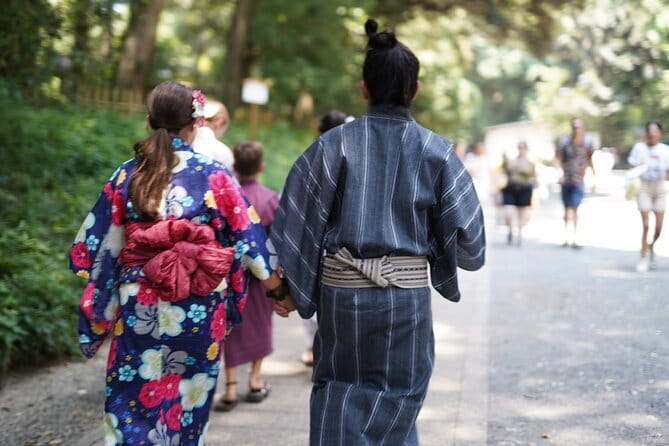
The guided shrine portion begins with the torii gates. These gates mark the entrance into the shrine grounds and help frame the change from Harajuku’s commercial streets to Meiji Shrine’s wooded setting.
This is a good place for the guide to explain basic Shinto etiquette and the meaning of entering a sacred area. You will also have a natural first stop for photographs, with your kimono set against one of Meiji Shrine’s most recognizable features.
The setting changes quickly from the nearby shopping streets. Takeshita Street is only a short walk away, yet the shrine grounds offer a much calmer atmosphere. The contrast is one of the reasons this outing works well in a Harajuku schedule.
Sake barrels, wine barrels, and the shrine forest

The route includes both the sake barrels and the wine barrels. These displays show different connections between Meiji Shrine and the people, businesses, and places that have offered support to the shrine.
A guide can make these stops more useful than a quick photograph. Without an explanation, the rows of barrels can look like decorative backdrops. With context, they become part of the shrine’s story and its ties to Japanese culture and international goodwill.
The shrine forest is another important stop. It gives the visit a sense of place beyond the main buildings. You are not simply moving between photo points. You are walking through a large wooded shrine setting near one of Tokyo’s busiest districts.
The tour information does not promise a particular seasonal display, but it does say the guide will point out seasonal highlights. The appearance of the grounds can vary with the time of year, so the forest and outdoor route may look different on your visit.
A few more Tokyo tours and experiences worth a look





The main shrine and Shinto prayer hall
The main shrine is the central destination on the route. Here, the guide explains more about Meiji Shrine and the customs connected with worship.
The Shinto prayer hall is also included. This is where the practical side of the visit becomes useful. If you are unsure how to behave at a shrine, an English-speaking guide can explain the basic process and help you understand what you are seeing.
You should think of this as an introduction to Shinto practice rather than a religious class. The presentation is designed to make the shrine more understandable during your visit. It is especially useful if this is your first time at a major Japanese shrine.
The formal clothes add a visual connection to the setting, but the guide’s explanation is what gives the stop substance. You get a chance to learn while standing in the place being discussed, rather than hearing a general talk in a shop.
One hour with an English-speaking guide
The guided explanation lasts about 50 to 60 minutes. The group is limited to 10 participants, which should make it easier to hear the guide and ask questions than on a large bus tour.
The supplied information identifies the guide as Japanese and the tour language as English, but it does not provide individual guide names. You should expect a friendly English-speaking staff member rather than a named specialist selected in advance.
The experience received a perfect score from four verified ratings, with specific praise for the friendly and accommodating staff and the selection of kimono. That is a small sample, so I would not treat it as proof that every visit will be identical. Still, it points to the service style you can reasonably expect: personal help with clothing, a nearby shrine walk, and staff who work with English-speaking customers.
The small-group format is a real advantage for the photo portion. You are not part of a large line moving from point to point, although the tour still has a set structure and meeting time.
Photo help without carrying a photographer
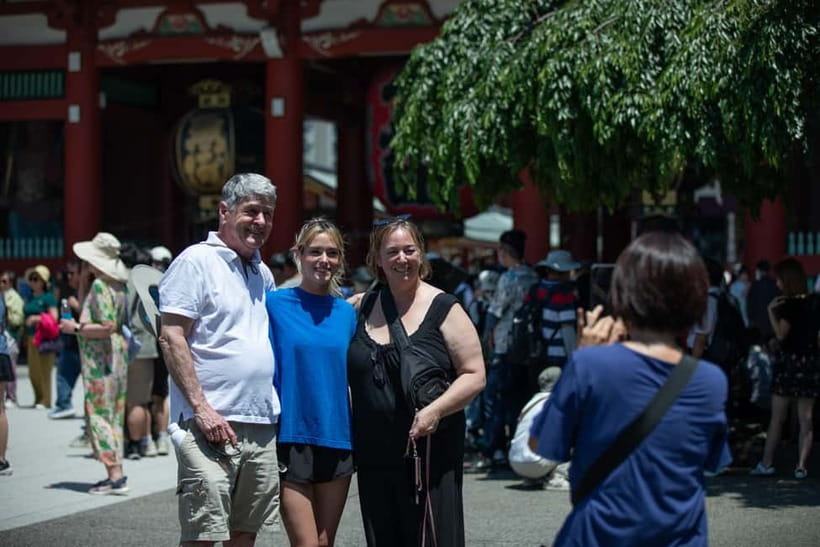
The guides can take personal photographs during the shrine visit. You can ask for photos alone, with friends, or with family. Video capture is also possible.
This is useful because kimono photographs are often the main reason people book this kind of activity, yet arranging a good group shot can be awkward. Having a guide handle the camera means you can all appear in the picture.
The service is practical rather than a separate professional photo shoot. The details do not state how many photos you receive, what equipment is used, or whether edited images are provided. Bring your own phone or camera if you have a preference, and clarify any photo expectations at the shop.
The shrine offers several settings in one compact route: torii gates, barrel displays, trees, the main shrine, and the prayer hall. That gives you more variety than staying in one rental studio.
Free time for the museum, garden, or more photos
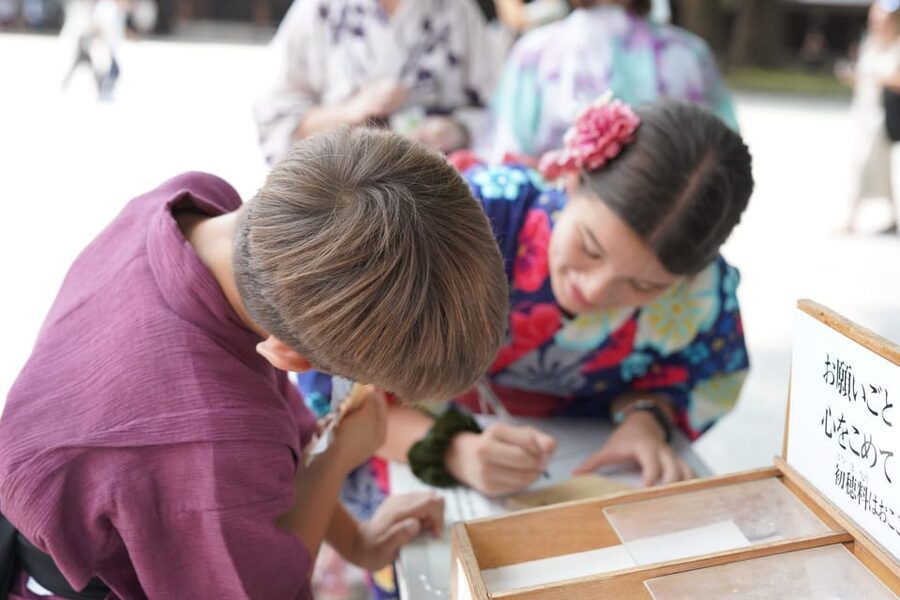
After the 50 to 60-minute presentation, you have free time to explore. The plan is to meet again roughly 1.5 hours later and return to SHIBUI to change clothes.
This open period gives you flexibility. You can spend more time at the shrine, revisit a photo spot, or choose one of the optional attractions. The Meiji Jingu Museum and Inner Garden are not included in the package, and you pay any admission fees yourself.
Because the tour does not include those admissions, decide in advance how you want to use the free period. If your priority is the guided shrine route and photographs, you may not need the museum or garden. If you want a longer cultural visit, check their opening details and admission costs before booking.
The meeting time matters. Keep track of when you must return to the shop, especially if you stop for food, shopping, or an optional attraction. Food and drinks are also your own expense.
What the three-hour schedule means for your day
This experience fits best into a Harajuku itinerary that already includes Meiji Shrine and Takeshita Street. You do not need to spend extra time crossing Tokyo between a rental shop and the shrine.
The full activity takes three hours, including changing clothes, the guided section, photographs, free exploration, and the return to SHIBUI. It is not a quick add-on that you can squeeze between two tightly timed reservations.
I would schedule it when you can move at an easy pace. The guide’s presentation is about an hour, then the free period lasts around 1.5 hours before changing back. Add time for finding the apartment building at the start and choosing your clothing.
The small group limit of 10 is also worth noting. It keeps the outing more personal, but it does not mean you have a private guide. The listed price says up to one group member, so confirm how additional people are priced before you pay.
Who will get the most from this experience
I would recommend it most to you if you want three things together: traditional clothing, an introduction to Meiji Shrine, and photographs in a famous Tokyo setting.
It suits first-time visitors who want help with shrine customs. It also works for families and friends, since the clothing covers all ages and the guide can take group photographs.
It may not suit you if you want a quiet, private photo session with no scheduled explanation. It may also be less appealing if you already know Meiji Shrine well and only need a short kimono rental.
The optional hair styling and optional museum and garden admissions mean the final cost can rise beyond the base package. Decide which extras matter to you before booking.
Should you book the SHIBUI kimono and Meiji Shrine tour?
Book it if you want an easy Harajuku outing that combines clothing, culture, and photographs without arranging each part separately. The nearby shop, short walk to Meiji Shrine, English-speaking guide, and free accessory choices make the plan simple.
I would be cautious if your budget is tight or if you are booking for a larger party without first checking the group price. The $137 listing is stated for a group of up to one person, an unusual wording that deserves confirmation.
The strongest reasons to choose it are the location, friendly staff, broad kimono selection, and guided explanation of six shrine highlights. The main things to plan around are the fourth-floor apartment meeting point, the optional 2,000 JPY hair styling, and the extra cost of museum or garden admission.
Free cancellation is available up to 24 hours before the activity for a full refund, and you can reserve now and pay later. Those terms give you some room to adjust a Tokyo schedule, but the practical decision is simple: choose this tour if you want to understand Meiji Shrine while wearing something special, not just rent clothes for a quick photograph.
FAQ
How long does the kimono and Meiji Shrine tour last?
The activity lasts three hours. The guided shrine presentation takes about 50 to 60 minutes, followed by free time before you return to the shop to change clothes.
Where do I meet the guide?
You meet at Jingumae Room 413, Harajuku Cope Annex. The shop is in an apartment building on the fourth floor.
How far is the shop from Meiji Shrine?
The shop is described as about a five-minute walk from Meiji Shrine. It is also about two minutes from Takeshita Street.
Is the tour conducted in English?
Yes. The activity includes a live English-speaking guide, and the tour language is English.
How many people can join the tour?
The activity is a small group with a maximum of 10 participants. The listed price is stated as $137 per group up to one person, so confirm the price for your party before booking.
Are kimono included in the tour price?
Yes. Kimono and yukata rental is included. You can choose from different colors and styles.
Are accessories included?
Yes. You can choose suitable slippers, bags, and accessories for your kimono without an additional charge.
Is hair styling included?
No. Hair styling is optional and costs 2,000 JPY, paid at the shop.
Are Meiji Jingu Museum and Inner Garden admission fees included?
No. Admission to the Meiji Jingu Museum and Inner Garden is not included. You can decide during your free time if you want to visit them.
Can the guide take photographs?
Yes. Guides can take personal photographs during the visit, including photos of individuals, friends, and families. Video capture is also possible.
More Temples & Meditation in Tokyo
More Shibuya Tours in Tokyo



More tours in Tokyo we've reviewed












Shibuya Tours, compared.
 ★ 5.0Official Street Go-Kart in ShibuyaFrom $76
 ★ 5.0Shibuya Meltdown Nightlife Tour: All-You-Can-Drink Bar HoppingFrom $106
 ★ 4.9Tokyo: Street Kart Experience in ShibuyaFrom $99
 ★ 5.0Shibuya Official Street Go-Kart in Shibuya AnnexFrom $69
 ★ 5.0Tokyo: Shibuya Food Tour (13 dishes and 4 Eateries)From $77
 ★ 5.0Best of Shibuya Food TourFrom $217