Reviewed · TSUKIJI MARKET TOURS
Calligraphy Experience at Tokyo Ginza and Tsukiji Area
The best part of this private Tokyo calligraphy class is the personal attention. You begin with simple brush patterns, work toward a more difficult character, then choose a Japanese word and turn it into a piece you can take home. Yuko-sensei teaches the art, while Kenji-san helps make the session friendly and easy to follow.
In This Article
- Key points to know before booking
- Why this 90-minute class works well in Tokyo
- Meeting near Tsukiji, with Ginza close by
- Step 1: Basic patterns and brush control
- Step 2: Trying a more difficult character
- Step 3: Choosing your Japanese word
- What the teaching style adds
- Ginza shopping and Tsukiji food after class
- Who should book this experience
- Price, timing, and cancellation details
- Should you book the Tsukiji calligraphy class?
- FAQ
- How long does the calligraphy experience last?
- Where does the class begin and end?
- Is the class private?
- Are calligraphy materials included?
- Do I need previous calligraphy experience?
- Can I cancel for a full refund?
I like two things here: the class gives you a real look at Japanese writing rather than a quick photo stop, and your finished work becomes a useful souvenir. The location near Tsukiji and Ginza also makes it easy to pair the lesson with shopping or dinner. The main consideration is time. At about 90 minutes, this is an introduction, not a full course in calligraphy.
Key points to know before booking
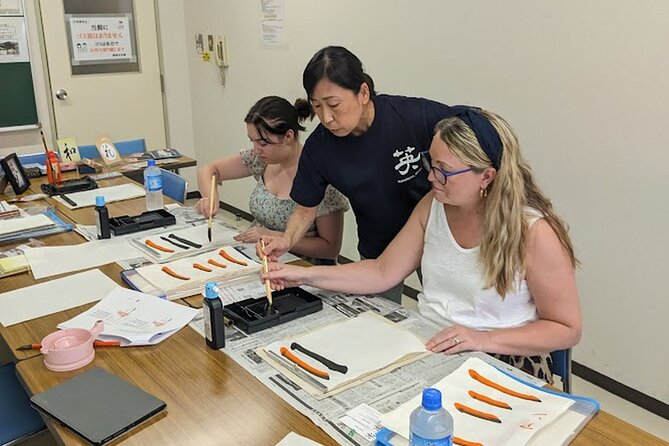
- Private instruction with Yuko-sensei and Kenji-san: Only your group takes part, so you can ask questions freely and receive help with each stroke.
- A three-step lesson: Start with basic patterns, practice a harder character, then write a favorite Japanese word for your final piece.
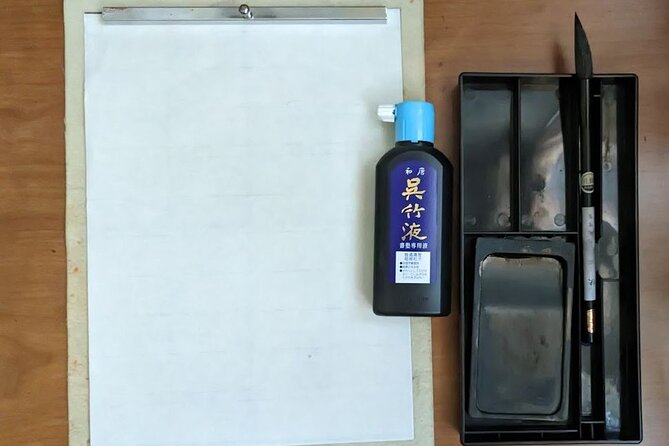
- Materials are supplied: Brushes, ink, paper, and a paper stone are prepared for you.
- A practical Tokyo location: The meeting point is at 3-chōme-15-1 Tsukiji, close to public transportation and within reach of Ginza.
- A souvenir you make yourself: Your calligraphy creations are yours to display at home.
- Easy to combine with food and shopping: Continue to Ginza for stores or Tsukiji food street for dinner after class.
Why this 90-minute class works well in Tokyo
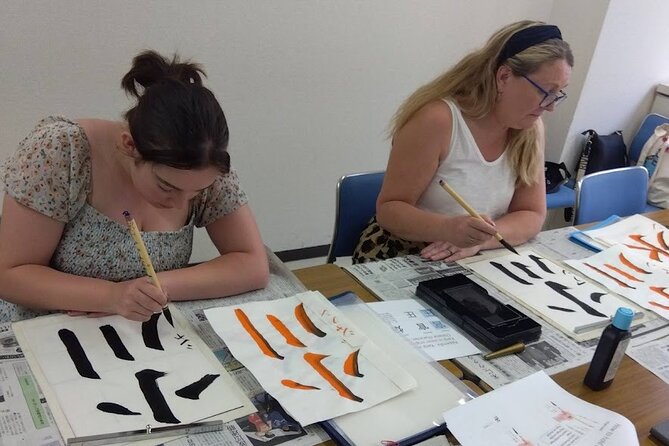
Tokyo offers endless sightseeing, but many activities leave you with only photographs. This class gives you something made by your own hand. You learn a small part of a traditional art, make mistakes without pressure, and leave with a personal reminder of your time in Japan.
Calligraphy also gives you a useful window into Japanese writing. During the class, you work with basic patterns and difficult characters, and you can learn about the difference between kanji, hiragana, and katakana. Those writing systems can look bewildering at first, so even a short explanation helps you notice more during the rest of your trip.
The format is private. That matters more than it may sound. You do not need to keep pace with strangers or wait while someone else receives help. If you are left-handed, have never held a calligraphy brush, or simply want to ask many questions, a private setting gives you room to do so.
The experience costs $51.24 per person. I see that as a fair price for a private lesson when the tools, instruction, and finished work are included. It is not the cheapest craft activity in Tokyo, but you are paying for direct teaching rather than a large group demonstration. The value is strongest for couples, families, or friends who want a shared activity with a physical souvenir at the end.
A few more Tokyo tours and experiences worth a look


Meeting near Tsukiji, with Ginza close by
The class begins at 3-chōme-15-1 Tsukiji, Chuo City, Tokyo 104-0045. The meeting point is near public transportation, but you should still allow enough time to find the exact address. Tokyo streets can be confusing, and arriving rushed is not the right mood for an activity built around careful brushwork.
The setting gives you two useful options before or after class. Ginza is nearby for department stores and higher-end shopping, while Tsukiji is known for its food street and is a natural place to continue your day. Dinner after the lesson is not included, but the location makes it easy to plan.
I would avoid scheduling this directly between two fixed attractions on the opposite side of Tokyo. The class lasts about an hour and 30 minutes, and the lesson is best enjoyed when you do not spend half your time watching the clock. Set aside extra time for reaching the meeting point and for the nearby food or shopping areas.
The activity ends back at the meeting point. Private transportation is not included, so you are responsible for reaching Tsukiji and continuing on afterward. Since the experience is near public transportation, most visitors should find the location practical, but check your route before leaving your hotel.
Step 1: Basic patterns and brush control
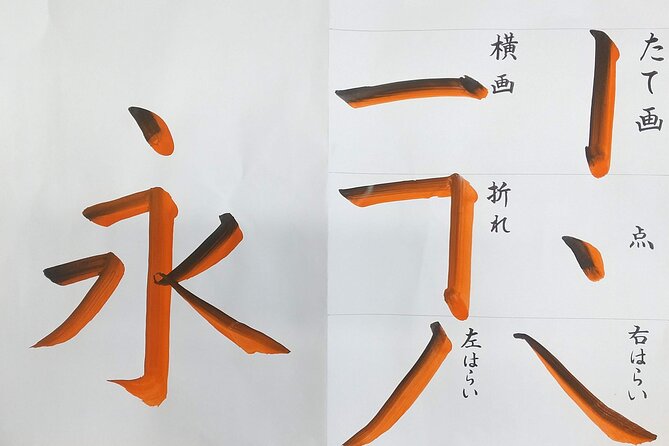
The first part of the class covers basic pattern writing. This is where you get used to the brush, ink, paper, and the controlled movements that make calligraphy different from ordinary handwriting.
You are not expected to arrive with artistic skill. The lesson moves step by step, and the instructor demonstrates the strokes before you try them. That makes this a good match for beginners who may feel nervous about producing something attractive.
Calligraphy rewards patience. You learn how much ink to use, how to guide the brush, and how individual strokes fit together. Even simple patterns require attention. That quiet concentration is part of the appeal, especially after several busy days in Tokyo.
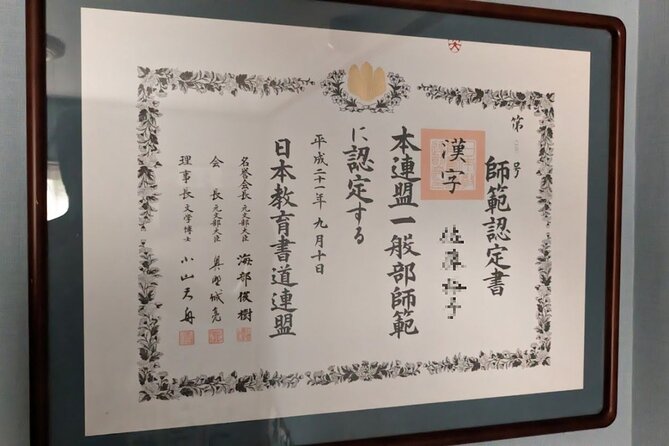
Yuko-sensei is described as a professional calligraphy writer authorized by the Japan Educational Calligraphy Federation. Her role is more than showing you how to copy a symbol. She helps explain why the form matters and guides you through the process with care.
Kenji-san assists during the lesson. His presence is useful for explanations and adds a relaxed, friendly tone. Several comments about the class highlight his humor and support, which can make the first attempts feel less formal.
Step 2: Trying a more difficult character
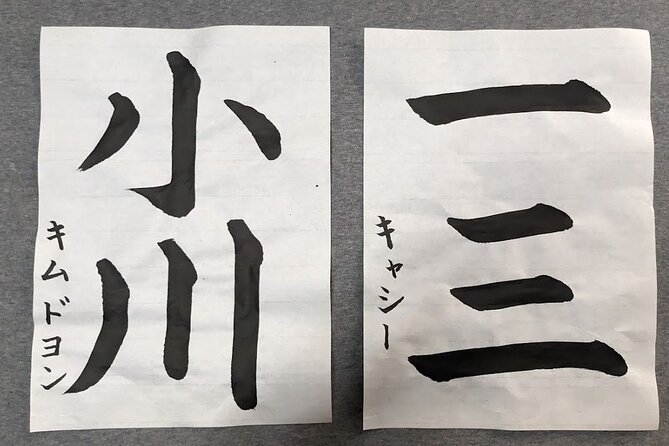
Once you have practiced the basic movements, the lesson asks you to try a difficult character. This is a useful middle step because it shows how quickly calligraphy becomes more complex.
You may find that a character looks simple on the page but is hard to reproduce with a brush. That is not a failure. The point is to understand the order, balance, and weight of the strokes. The instructor can correct your technique and help you see what needs changing.
This part is also where the private format earns its keep. You can ask why a line begins or ends in a certain way, request another demonstration, or repeat a character without feeling that you are holding up a group.
The lesson is educational without becoming a lecture. You learn through practice, which is far more useful than simply hearing an explanation about Japanese writing. If your interest goes beyond an introduction, the provider indicates that middle or next-level lessons may be available on a future visit. This session itself remains aimed at a beginner level.
Step 3: Choosing your Japanese word
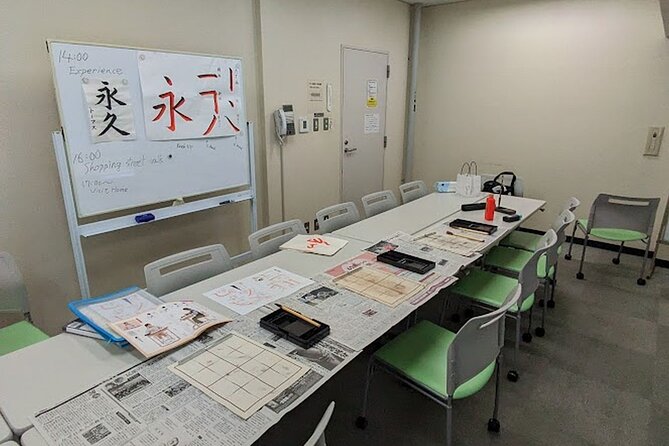
The final stage is the most personal. You choose one or more favorite Japanese words and use them to complete your calligraphy product.
The information supplied for the class does not list a fixed menu of words, so you should expect to discuss your choice with the instructor. This is a good chance to ask about meaning, writing system, and suitability before putting ink on the final sheet.
Choosing your own word gives the finished work more meaning than a preselected sample. You might choose a word connected to your trip, a personal value, or a name, as long as the instructor can help you write it correctly.
The final piece is intended for display at home. That makes the class especially appealing if you prefer souvenirs with a story. You are not just buying a decorative item in a shop. You are taking home the result of a lesson, including the imperfect marks that show you made it yourself.
Do not expect museum-quality calligraphy after one short class. Your work will be that of a beginner. The value comes from learning the process and receiving guidance, not from producing a flawless professional scroll.
A few more Tokyo tours and experiences worth a look



What the teaching style adds
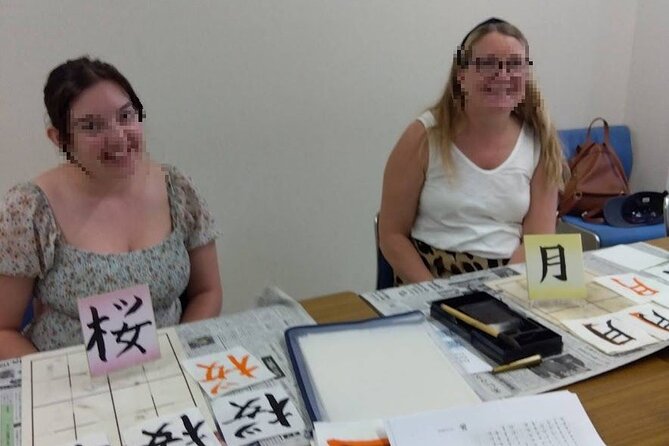
The class has received a perfect rating from 17 published evaluations, with 100 percent recommending it. The strongest pattern in the feedback is not simply satisfaction with the craft. It is praise for the patience, warmth, and personal attention of Yuko-sensei and Kenji-san.
That matters because calligraphy can be intimidating. A strict teacher or a crowded room could turn a creative activity into a test. Here, the teaching is described as supportive and careful, with strokes explained one by one.
You can also expect cultural context alongside the practical lesson. The class introduces the role of calligraphy in Japanese culture and explains parts of the writing system. One particularly useful detail is the chance to understand kanji, hiragana, and katakana in plain terms.
Photos may also be taken during the session and shared afterward. This is a helpful extra, especially if you want a record of the class as well as the finished work. The information does not specify how many photos are provided, so treat this as a possible memory aid rather than the main reason to book.
The instructors have received praise for working well with both adults and children. A family of four enjoyed a private lesson, and another booking involved an adult and a niece. The private setup should suit different skill levels within the same group.
Ginza shopping and Tsukiji food after class
The class itself is the main event, but its location improves the day. Ginza is close enough for shopping before or after the lesson. You might use the area for department stores, specialty shops, or a polished contrast to the market atmosphere around Tsukiji.
Tsukiji food street is another strong pairing. The meal is not included, and the activity does not provide private transportation, but you can easily plan dinner nearby once the calligraphy is finished.
This combination works well because the lesson occupies only part of your day. You can place it between other Tokyo plans without giving up an entire morning or afternoon. Still, do not treat the surrounding areas as formal stops on the tour. The class ends at the meeting point, and exploring Ginza or Tsukiji is up to you.
I would plan the food stop after the lesson rather than before if you want to keep your schedule simple. Ink and food are not ideal companions, and ending with Tsukiji snacks gives the day a clear finish. The exact restaurant or food option is not part of the activity, so make your own choice based on your appetite and budget.
Who should book this experience
I would recommend the class to first-time visitors who want a cultural activity with some substance but do not want to commit to a full-day workshop. It also suits families, couples, and small groups who value a private setting.
You do not need previous calligraphy experience. In fact, beginners are the clearest match because the lesson starts with basic patterns and builds from there.
This is also a good option for you if shopping and food are already part of your Tokyo plans. The Tsukiji location lets you add the class without sending you far from central sightseeing areas.
You may want to choose another activity if you are looking for a long, technical study of Japanese calligraphy. Ninety minutes is enough for an introduction and a finished piece, but not enough for advanced training.
The same applies if you want a large social workshop. This is private, with only your own group taking part. That brings better access to the teacher, but less chance to meet other people.
Price, timing, and cancellation details
At $51.24 per person, the price includes the calligraphy tools: brush, ink, paper, paper stone, and related materials. It also includes the private instruction and the work you create during the class.
The strongest value comes from the combination of teaching and take-home art. A standard souvenir may cost less, but it will not give you the same memory or understanding of how Japanese characters are formed.
The activity lasts approximately one hour and 30 minutes. Confirmation is received at booking, and the experience is available through a mobile ticket. Free cancellation is offered if you cancel at least 24 hours before the local start time. Cancellations or changes made less than 24 hours in advance are not accepted for a refund.
Personal travel insurance is not included. The activity is described as basically no risk, but normal travel coverage remains your responsibility.
Should you book the Tsukiji calligraphy class?
Book it if you want a calm, hands-on break from Tokyo’s busy sightseeing rhythm. You will learn basic brushwork, ask questions in a private class, and create a Japanese word that can go home with you. The warm teaching style of Yuko-sensei and Kenji-san is a major part of the appeal.
I would especially choose it for a family or small group. You can work at your own pace, and the class gives children and adults the same chance to try something new.
Skip it if you want advanced calligraphy training, a meal included in the price, or transportation between attractions. This is a focused beginner lesson near Tsukiji, not a full Tokyo tour.
For most visitors who want a personal souvenir and a closer look at Japanese writing, $51.24 is a reasonable price. Add Ginza shopping or Tsukiji food afterward, and the class becomes an easy, worthwhile part of a central Tokyo day.
FAQ
How long does the calligraphy experience last?
The class lasts approximately 1 hour and 30 minutes.
Where does the class begin and end?
It begins at 3-chōme-15-1 Tsukiji, Chuo City, Tokyo 104-0045, Japan, and ends back at the meeting point.
Is the class private?
Yes. Only your group participates, and no other group joins the activity.
Are calligraphy materials included?
Yes. Brushes, ink, paper, a paper stone, and other calligraphy tools are prepared for the class.
Do I need previous calligraphy experience?
No previous experience is stated as a requirement. The class begins with basic pattern writing and then moves to more difficult characters and a favorite Japanese word.
Can I cancel for a full refund?
Yes, if you cancel at least 24 hours before the experience start time. Cancellations or changes made less than 24 hours before the start are not accepted for a refund.
More Craft Workshops in Tokyo


More Ginza Tours in Tokyo
More Tsukiji Market Tours in Tokyo
More tours in Tokyo we've reviewed












Tsukiji Market Tours, compared.
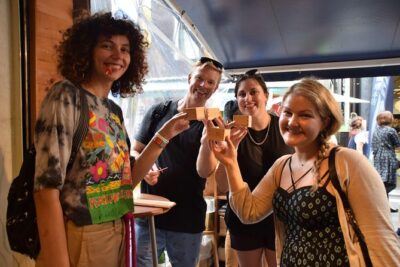 ★ 5.0Tokyo Tsukiji Fish Market Food and Culture Walking TourFrom $99
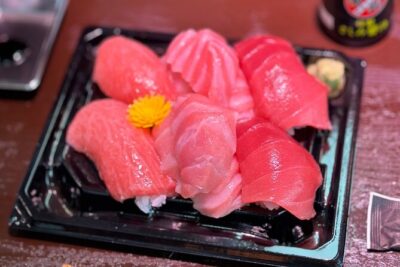 ★ 5.0Tokyo: Tsukiji Fish Market Food and Walking tourFrom $30
 ★ 4.9Tokyo: Tsukiji Fish Market Guided Walking TourFrom $222 hours
 ★ 5.0Tokyo Sushi Making Class in Tsukiji with Professional ChefFrom $49
 ★ 5.0Tsukiji Fish Market Guided Tour and Sushi Making with Pro ChefFrom $104
★ 4.7Tokyo: Tsukiji Fish Market Food and Culture Walking TourFrom $963 hours
★ 5.0Tsukiji Fish Market Guided Tour and Sushi Making with Pro ChefFrom $104
★ 4.7Tokyo: Tsukiji Fish Market Food and Culture Walking TourFrom $963 hours