Reviewed · FULL-DAY
From Tokyo to Kyoto and Nara: A Captivating Full-Day Private Tour
Kyoto’s temples and Nara’s deer are a long way from Tokyo, but the bullet train makes a one-day visit possible. This private tour takes care of the train booking and pairs you with a guide who meets you at your arrival station, so you can get straight to sightseeing instead of wrestling with Japanese rail websites.
In This Article
- Key points to know before booking
- What this Tokyo to Kyoto day really asks of you
- Starting with Nara Park and its free-roaming deer
- Todaiji and the Great Buddha Hall
- Kinkakuji, Kyoto’s Golden Pavilion
- Lunch under Kyoto Station at Porta Dining
- Gion and Kyoto’s old wooden streets
- Fushimi Inari and the red torii gates
- How the private guide changes the day
- The real cost beyond the $490 headline price
- Who will get the most from this tour
- Should you book this Tokyo to Kyoto day trip?
- FAQ
- How long does the tour last?
- Is the tour private?
- Are bullet train tickets included?
- Does the tour include local transportation?
- Is Tokyo pickup included?
- Are lunch and temple admission included?
- Can the tour itinerary be customized?
- What is the cancellation policy?
I like two things here: the private format, which lets you adjust the day, and the chance to see both Kyoto and Nara when your Japan schedule is tight. Guides including Ahmed, Yuka, Moto, Yuji Hino, Midori, and Kento have been praised for clear explanations, family-friendly help, and keeping the day moving.
The catch is serious: the advertised $490 group price does not include the bullet train, local transportation, Tokyo pickup, lunch, or two temple admissions. This is a fast, expensive day, and you should treat it as a highlights tour rather than a leisurely introduction to Kyoto.
Key points to know before booking
- Two famous cities in one 10-hour day: You can visit Nara and several Kyoto sights, but the pace leaves little room for wandering.
- Private guiding for up to 10 people: Your group receives personal attention rather than joining a large coach.
- Bullet train booking is arranged, but tickets cost extra: The stated estimate is ¥28,000 per person for a return trip.
- The route can be adjusted: Previous guests changed their plans before the day, and the private format gives you room to focus on your priorities.
- Nara’s deer are close to Todaiji: You get a memorable mix of open parkland, free-roaming deer, and one of Japan’s great Buddhist monuments.
- The full cost is much higher than $490: Add transport, pickup, rail tickets, food, entrance fees, and a possible tip before deciding.
What this Tokyo to Kyoto day really asks of you
This is a clever solution to a common Japan problem: you are based in Tokyo, but your schedule gives you only one spare day for Kyoto and Nara. The tour lasts about 10 hours, with the long Tokyo to Kyoto journey handled by bullet train and the sightseeing arranged around your arrival.
I would book it only if seeing these places in a single day matters more to you than taking your time. Kyoto alone can easily fill several days, while Nara deserves more than a quick stop if you want to explore beyond the main temple area.
The private setup makes the tight schedule more manageable. Your guide can help with station navigation, explain what you are seeing, suggest a lunch stop, and adjust the order of visits when train timing or your interests require it. One family found Moto especially good with a five-year-old, while other guests singled out Ahmed for photography, storytelling, and help getting around.
The experience requires a moderate level of fitness. You should expect walking through parks, temple grounds, shrine approaches, and station areas. The day also depends on good weather. If poor weather cancels the tour, you are offered another date or a full refund.
Other private tours in Tokyo

Starting with Nara Park and its free-roaming deer
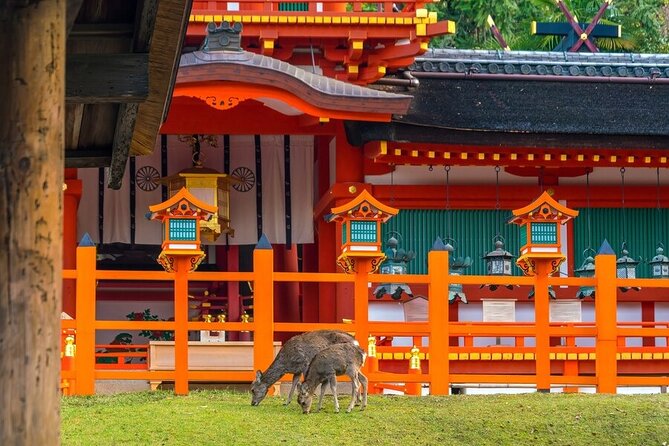
Nara Park gives you an immediate change of scene after the train journey. Deer roam freely across the park, and you can walk among them in an open setting rather than viewing them behind fences.
The deer are the star attraction, but they are still wild animals. If you feed them, keep your attention on their behavior and follow local instructions. One useful practical warning from the tour feedback is that the deer can become persistent when food is involved, so do not assume every close encounter will be calm.
You have about an hour here. That is enough for a pleasant walk and photographs, but not enough for a long exploration of the park’s many paths. I like this stop because it gives the day a relaxed opening before the more structured temple visits, though the comfort of that hour depends on how quickly you reach Nara and how much time remains for the rest of the route.
Todaiji and the Great Buddha Hall
Todaiji is the major cultural stop in Nara. Its Great Buddha Hall houses one of the world’s largest bronze Buddha statues, and the scale of the building is the reason this temple earns its place even on a rushed day.
A guide adds real value here. Yuji Hino, for example, explained small details such as the origin of the pathway stones and the meaning behind their arrangement. Those are the kinds of details you can easily miss when you walk through a famous temple with only an information panel for company.
The planned visit lasts about an hour. Admission is not included, with the stated combined cost for Todaiji and Kinkakuji listed as ¥1,300 per person. You should confirm the exact current fee when booking, since temple prices can change.
The stop is called the Todaiji Temple Cultural Center in the tour details, but the main attraction described is Todaiji’s Great Buddha Hall, with Kasuga Shrine also included in the Nara portion. Because the timing is tight, ask your guide exactly which parts of the Nara complex are included on your date.
Kinkakuji, Kyoto’s Golden Pavilion
Kinkakuji, also called the Golden Pavilion, is one of Kyoto’s most recognizable sights. The building shines beside its pond, and the surrounding gardens provide the composed setting that makes the famous view work so well in photographs.
You get about an hour here. That is enough to follow the visitor route, see the pavilion from its main viewpoints, and walk through the garden area. It is not enough for a slow visit with long pauses, repeated photographs, or a detailed look at every corner.
I like placing Kinkakuji in a one-day highlights plan because it delivers a clear visual payoff. The drawback is that it can feel like a quick picture stop if you are hoping for silence or extended contemplation. Your guide can explain the site’s cultural setting and help you use the limited time well, but the crowds and fixed walking route are beyond the guide’s control.
Admission is extra. Along with Todaiji, the stated entrance cost is ¥1,300 per person, though you should verify the current amount before departure.
Lunch under Kyoto Station at Porta Dining
Lunch takes place during a one-hour break at Porta Dining beneath Kyoto Station. This is a practical choice for a packed day because you have access to several Japanese food options without spending time searching for a restaurant across town.
Lunch is not included, so you pay for your own meal. The guide can suggest traditional food, and one particularly positive account praised a guide’s lunch recommendation. Still, you should tell your guide about food preferences or restrictions before the day if those affect your choice.
Do not expect a long restaurant meal with a leisurely pace. The break has to fit between major sights and the return train. I see Porta Dining as useful rather than romantic: it protects sightseeing time and reduces the chance that lunch will derail the schedule.
A few more Tokyo tours and experiences worth a look


Gion and Kyoto’s old wooden streets
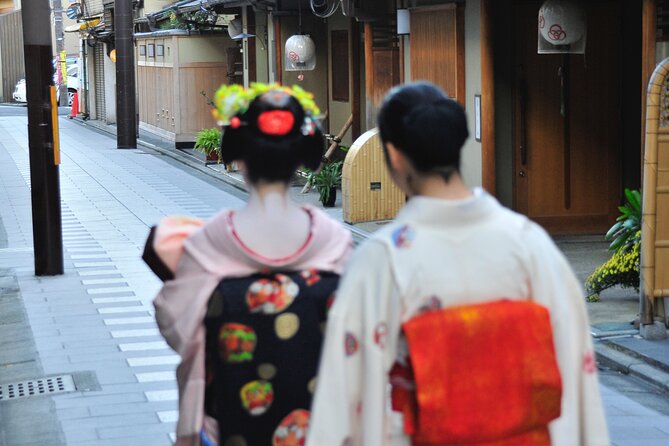
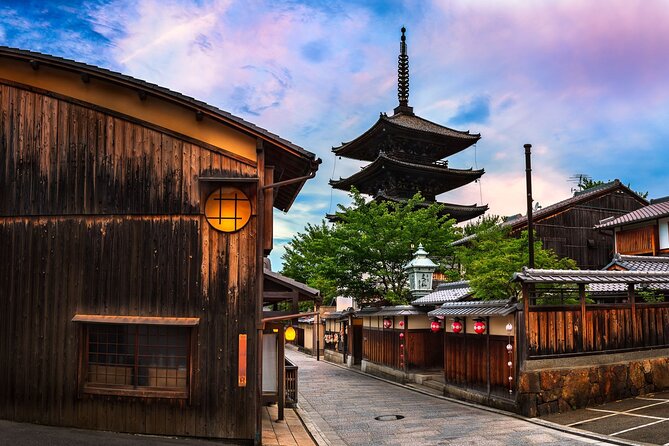
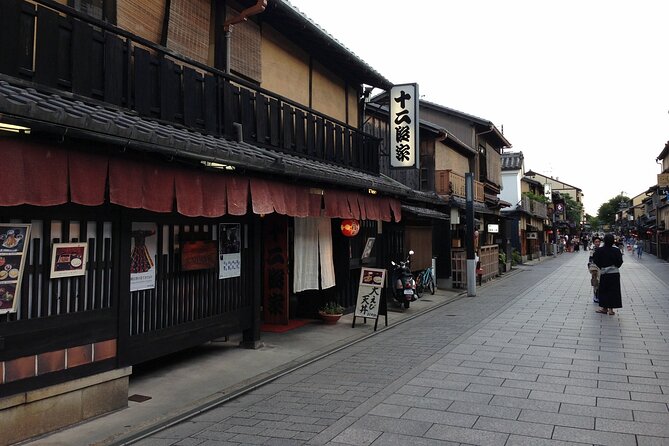
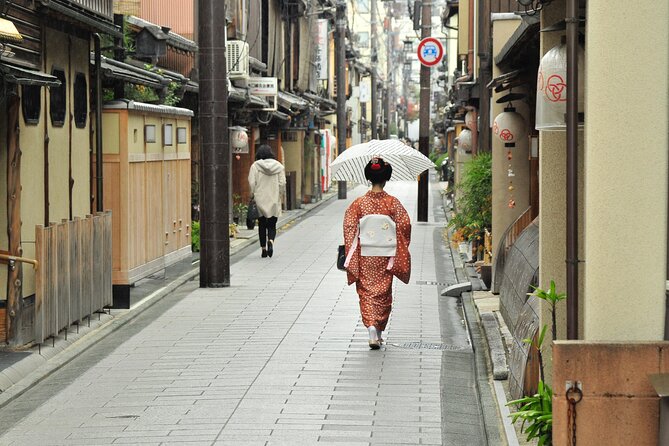
Gion offers a very different view of Kyoto. Its traditional wooden machiya houses and narrow streets reflect the city’s older character, and the area is closely associated with geisha culture.
You have about an hour to walk through the district. That is enough to take in the architecture and atmosphere, but not enough to cover every lane or wait around hoping to spot a geisha. Please be respectful with photography and avoid blocking doorways or following people.
This is one of the better places to let the guide respond to your interests. You might prefer old houses, cultural customs, photographs, or a simple walk after the busy temple grounds. Since the tour is private, you can ask for more explanation here instead of accepting a fixed script.
Gion also exposes the limits of the day. Kyoto’s pleasures often come from moving slowly, noticing small details, and returning after sunset. A one-hour visit gives you a taste, not a full experience of the district.
Fushimi Inari and the red torii gates
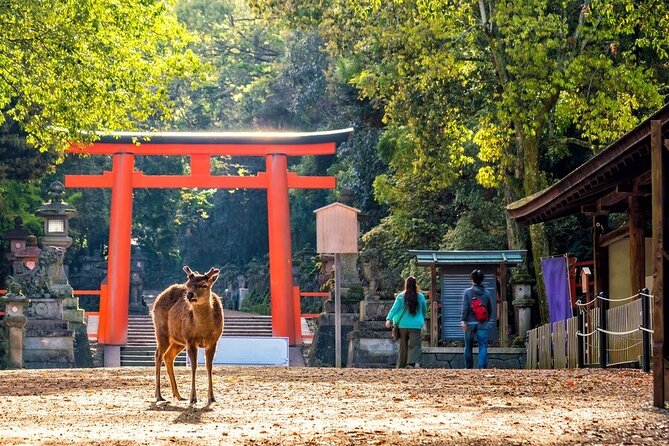
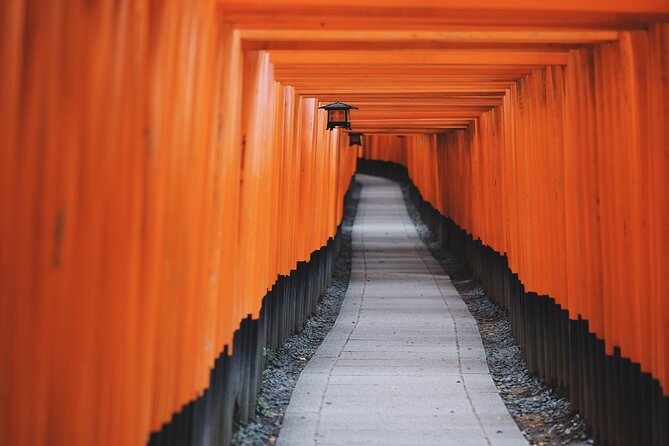
Fushimi Inari Taisha is known for its long paths of red torii gates rising through wooded slopes. Even a short visit gives you the unmistakable sight that makes this shrine one of Kyoto’s most popular stops.
The tour allows about an hour. You can walk through the lower gate section and see how the repeated torii create changing views as the path climbs. You will not have time to complete every trail, so tell your guide if you want the most scenic short walk rather than an attempt to reach the upper mountain areas.
Fushimi Inari is free to enter, which helps balance the paid temple stops. It is also physically more demanding than simply looking at the pavilion at Kinkakuji. Wear comfortable shoes and be ready for steps and uphill walking.
The order of the stops may matter. Fushimi Inari can work well later in the day, but train delays, crowds, and traffic can change the plan. A flexible guide is especially helpful here, since the shrine can be visited briefly or given more time if you are willing to shorten another stop.
How the private guide changes the day
The strongest part of this experience is the human help. A private guide can keep a family together, explain customs that are not covered in English, take photographs, and help you make decisions when the clock is tight.
Several guides receive specific praise. Ahmed Abu Tayeh is described as accommodating, a good storyteller, and helpful with city navigation. Yuka is praised for explaining Japanese history and culture. Moto worked well with a young child, while Kento is described as friendly and bilingual in English. Yuji Hino added useful explanations at Todaiji, and Midori was noted for warmth and close attention.
The guide names suggest that the exact personality and approach may vary by date. I would tell the provider what matters most to you: temples, photography, family pacing, food, cultural explanation, or seeing as many headline sights as possible.
The tour provider is Ahmed Abu Tayeh, but the person guiding you may be one of the other named guides. Confirm this if having a particular guide is important to you.
The real cost beyond the $490 headline price
The $490 price covers the group booking for up to 10 people, but it is not the final bill. The listed extras can add up quickly:
- Return bullet train tickets from Tokyo to Kyoto: about ¥28,000 per person, depending on ticket type
- Transportation during the tour: up to ¥100,000 in cash for groups of up to five, with the supplied details asking larger groups to confirm the amount
- Tokyo Station pickup guide cost: ¥60,000 in cash, if you choose Tokyo Station pickup
- Todaiji and Kinkakuji admissions: ¥1,300 per person as stated
- Lunch: paid separately
- Gratuity: appreciated but not required
The transportation wording needs careful clarification. Ask exactly what the ¥100,000 covers, which vehicle or local transfers it applies to, and how the figure changes for your group size. Also confirm the Tokyo pickup charge before paying, since it is separate from the tour price.
For a large group, the base price can offer reasonable value because $490 is charged per group rather than per person. For one or two people, the added rail and transport costs make this a costly day. Its value comes from saving planning time and making an ambitious route possible, not from being a cheap way to visit Kyoto.
Who will get the most from this tour
I would recommend this experience to you if you are on a business trip, have a very short stay in Japan, or strongly want to see Kyoto and Nara from a Tokyo base. It also suits families and first-time visitors who prefer one person to handle the day’s transport arrangements and cultural explanations.
The private format is useful if you need flexibility. A previous guest changed the plan twice before settling on the right version, which is exactly the kind of adjustment a private booking can support.
I would not choose it for a relaxed Kyoto holiday. You spend substantial time getting between cities, and each major stop receives roughly an hour. If your priority is Arashiyama, the bamboo forest, or a slower look at Gion, ask in advance if that can replace one of the listed stops. One account describes visiting Arashiyama, but it is not part of the main six-stop plan provided here.
You should also think twice if you dislike early starts, long rail days, or frequent transitions. The tour is efficient, but efficiency is not the same as ease.
Should you book this Tokyo to Kyoto day trip?
Book it if your choice is between this focused day and seeing no Kyoto or Nara at all. The combination of bullet train planning, private guiding, Todaiji, Kinkakuji, Gion, and Fushimi Inari gives you a strong first look at two important destinations.
Skip it if you can spare more time. Kyoto and Nara reward slower visits, and the extra costs are substantial once rail tickets and transportation are added.
Before confirming, get the total price in writing, clarify the pickup arrangement, ask which guide is assigned, and agree on your must-see stops. If you accept the pace and budget, this is a practical way to turn one free day in Tokyo into a memorable sweep through central Japan.
FAQ
How long does the tour last?
The tour lasts approximately 10 hours.
Is the tour private?
Yes. Only your group participates, with a maximum group size of 10 people.
Are bullet train tickets included?
No. Bullet train tickets from Tokyo to Kyoto and back are extra. The stated estimate is ¥28,000 per person, depending on the ticket type.
Does the tour include local transportation?
No. Transportation costs are listed separately and may be up to ¥100,000 in cash for up to five travelers. You should confirm the exact amount for your group.
Is Tokyo pickup included?
No. Tokyo Station pickup has a separate guide cost of ¥60,000, paid in cash to the guide, according to the supplied details.
Are lunch and temple admission included?
No. Lunch is extra. Admission to Todaiji and Kinkakuji is also extra, with the listed amount at ¥1,300 per person.
Can the tour itinerary be customized?
Yes. The private format allows flexibility according to your interests. You should discuss requested changes before the tour.
What is the cancellation policy?
You can cancel at least 24 hours before the start time for a full refund. Cancellations or changes made within 24 hours are not accepted for a refund. If poor weather cancels the experience, you are offered another date or a full refund.
More Full-Day in Tokyo
More Private Tours in Tokyo

More tours in Tokyo we've reviewed












Full-Day, compared.
 ★ 4.5From Tokyo: Mount Fuji Full-Day Sightseeing TripFrom $6810 hours
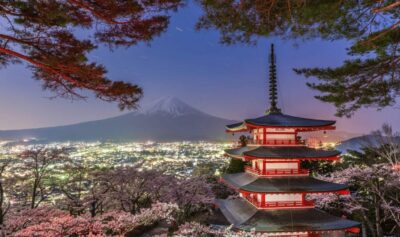 ★ 4.9From Tokyo: Mount Fuji Full Day Customizable Private TourFrom $407
 ★ 5.0Tokyo Private Full-Day Tour by Car or VanFrom $321
 ★ 4.5Tokyo: Mt. Fuji and Kawaguchiko Full-Day English Guided TourFrom $82
 ★ 4.7From Tokyo: Must-Visit Mount Fuji Highlight Full-Day TourFrom $6911 hours
 ★ 4.5Mt. Fuji, Hakone Full-Day Private Tour with English Driver GuideFrom $495