Reviewed · IMPERIAL PALACE & SHOGUN TOURS
Tokyo: Edo Castle and Imperial Palace Guided Tour
Tokyo’s Imperial Palace grounds preserve a striking link between samurai power and imperial tradition. This walking tour takes you through the former Edo Castle site, where massive gates, guard posts, stone foundations, and gardens tell the story better than a palace interior ever could.
In This Article
- Key points to know
- Why Edo Castle still matters in central Tokyo
- Meeting beside the Wadakura Fountain
- Entering through Otemon Gate
- Reading the castle defenses at three historic stops
- The Honmaru area and the Tenshu reconstruction model
- Panoramic views from the Tenshu-dai
- A quiet finish in Ninomaru Garden
- What you actually see at the Imperial Palace
- How much value do you get for $24?
- Who should choose this walking tour?
- Practical details before you reserve
- Should you book the Edo Castle and Imperial Palace tour?
- FAQ
- Where does the Edo Castle and Imperial Palace tour begin?
- Where does the tour end?
- What language is the tour offered in?
- Are the Imperial Palace buildings open during the tour?
- What sites are included on the route?
- Is admission included in the $24 price?
- What should I bring?
- Is the tour suitable for wheelchair users or people with mobility impairments?
- Can I cancel for a full refund?
I like the clear route through Otemon Gate and the castle ruins, and I like the quiet pause in Ninomaru Garden, especially beside the koi pond. The Wadakura Fountain adds a modern royal detail to the story. The main drawback is that the tour does not enter the palace buildings, and one previous participant felt the route could be done independently.
Key points to know
- Begin at the Wadakura Free Rest Area: Look for the guide holding a yellow sign outside the entrance.
- Walk through Otemon Gate: This imposing entrance introduces the castle’s careful defense system.
- See several samurai-era posts and ruins: Doshin Bansho, Hyakunin Bansho, and the Ote San-no-mon Gate Ruins are included.
- Reach the Tenshu-dai: The former castle tower site offers broad views of the surrounding area.
- Slow down in Ninomaru Garden: This is the most peaceful section, with a pond and koi fish.
- Expect an outdoor history tour: Palace buildings are closed to the public, and the route is not suitable for wheelchairs or people with mobility impairments.
Why Edo Castle still matters in central Tokyo
Edo Castle was once the seat of the shoguns, the military rulers who governed Japan for centuries. Today, the same broad grounds connect that period with the Imperial Palace, the home associated with Japan’s emperors.
That contrast gives this tour its main appeal. You are not simply walking through a city park. You are following the changing center of Japanese power, from fortified samurai headquarters to the modern imperial compound.
The setting is surprisingly calm for central Tokyo. The grounds offer open space, trees, gardens, stone walls, and long views. You get a welcome break from traffic and tall buildings, while still being close to the heart of the city.
The experience costs $24 per person. That is a reasonable price if you want someone to explain the gates, guard stations, and royal connections as you walk. If you already know Edo-period history and are comfortable reading signs or using a guidebook, you may decide to explore the grounds on your own, which is the chief value question here.
A few more Tokyo tours and experiences worth a look


Meeting beside the Wadakura Fountain
Your meeting point is outside the Wadakura Free Rest Area, in front of the entrance. The guide waits with a yellow sign, so keep your eyes open as you approach the building.
The meeting point is more than a place to gather. The guide introduces the Wadakura Fountain, which was built to commemorate a royal wedding. This gives the tour an early link to the Imperial Palace’s more recent story before you move toward the older castle remains.
You will want to arrive ready to walk. Bring comfortable shoes and water, since the activity takes place outdoors. Food and drinks are not included, and hotel pickup and drop-off are not provided.
The exact tour duration and group size are not specified. That makes it sensible to leave room in your schedule rather than planning a tight connection immediately afterward.
Entering through Otemon Gate
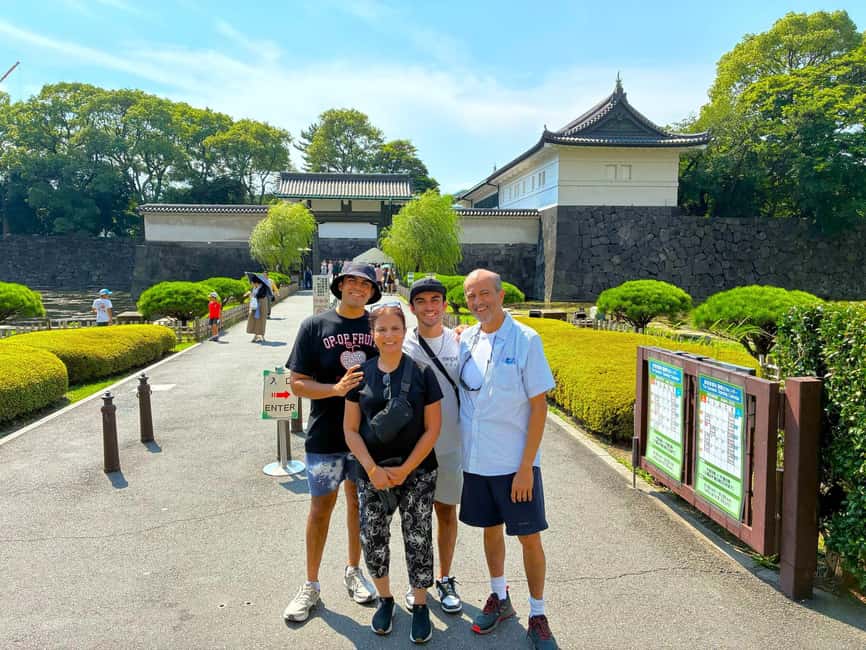
Otemon Gate is one of the most memorable stops because it makes the castle’s defensive planning easy to picture. Large entrances were not just grand architectural statements. They controlled movement, slowed unwanted arrivals, and gave guards several chances to inspect people entering the castle.
Your guide explains the gate in the context of the shoguns and their samurai retainers. The value here is not just seeing an old structure. It is learning to read the route as a security system.
Take time to look at the scale of the entrance and the surrounding stonework. The gate helps you understand that Edo Castle was designed to protect authority as much as to display it.
The route is outdoors and involves walking between several areas. Uneven ground or distances between stops may be tiring for some people, and the experience is specifically not suitable for wheelchair users or people with mobility impairments.
Reading the castle defenses at three historic stops
After Otemon Gate, the tour visits the Ote San-no-mon Gate Ruins, Doshin Bansho, and Hyakunin Bansho. These names can blur together if you see them without explanation. With a guide, they become pieces of a larger plan.
The Ote San-no-mon Gate Ruins show how much of the castle has survived only in fragments. Ruins can seem modest beside a complete building, but here the remaining foundations and layout help you picture the former approach.
Doshin Bansho was connected with castle guards. Hyakunin Bansho refers to a guard post associated with a larger body of samurai. These stops bring the castle down from the level of shoguns and emperors to the people who watched gates, checked movement, and kept the compound secure.
I like this part of the route because it gives the tour practical detail. You are not only hearing about famous rulers. You are seeing the working machinery of a fortified seat of government.
This is also where the guide adds the most value over a self-guided stroll. The remains do not explain themselves fully. If your interest is mainly photography, you can see the sites on your own. If you want to understand why each post existed, the live commentary earns part of the $24 cost.
The Honmaru area and the Tenshu reconstruction model
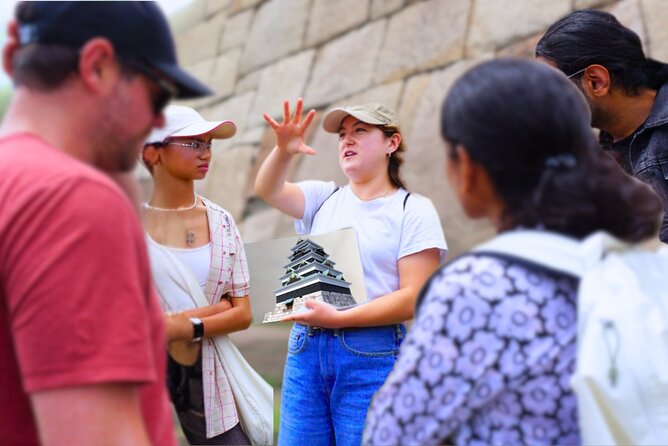
The tour continues into the Honmaru area, the central section of the former castle. Here, you see an impressive reconstruction model of the Tenshu, or main castle tower.
The model matters because the original tower is no longer standing. A scale reconstruction gives you a sense of the building’s former height and presence, helping you connect the open grounds with the fortified complex that once occupied them.
Do not expect a restored palace interior or a fully rebuilt castle. This is a site of remnants, models, walls, gardens, and open space. Some people will find that atmospheric and honest. Others may want more intact architecture.
The Honmaru stop works best if you enjoy using imagination. The tour asks you to picture the castle through its traces rather than presenting a complete building from the past.
Other guided tours in Tokyo



Panoramic views from the Tenshu-dai
The Tenshu-dai marks the former base of the castle tower. From here, you can enjoy wide views of the surrounding area.
The view gives the tour a useful pause. After hearing about gates, guard posts, and controlled access, you can look out across the grounds and understand the strategic advantage of height. A tower site was not merely decorative. It helped project authority and survey the area around the castle.
Bring a camera, but remember that flash photography is not allowed. The tour includes a commemorative photo opportunity, which gives you a simple memento of the visit.
The view is broad rather than a dedicated observation-deck experience. You should come for the connection between the former tower site and the present-day city, not for a dramatic skyline attraction alone.
A quiet finish in Ninomaru Garden
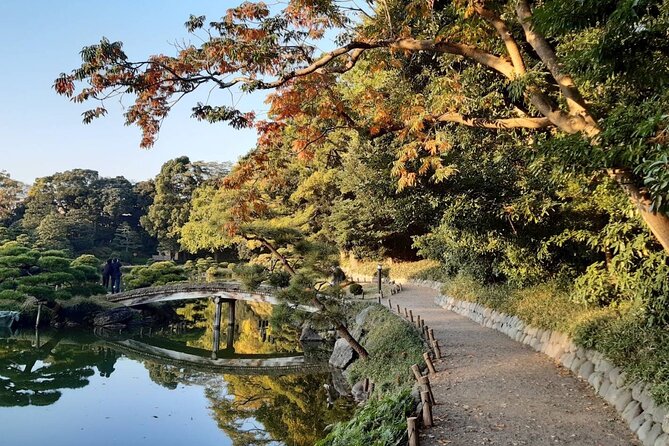
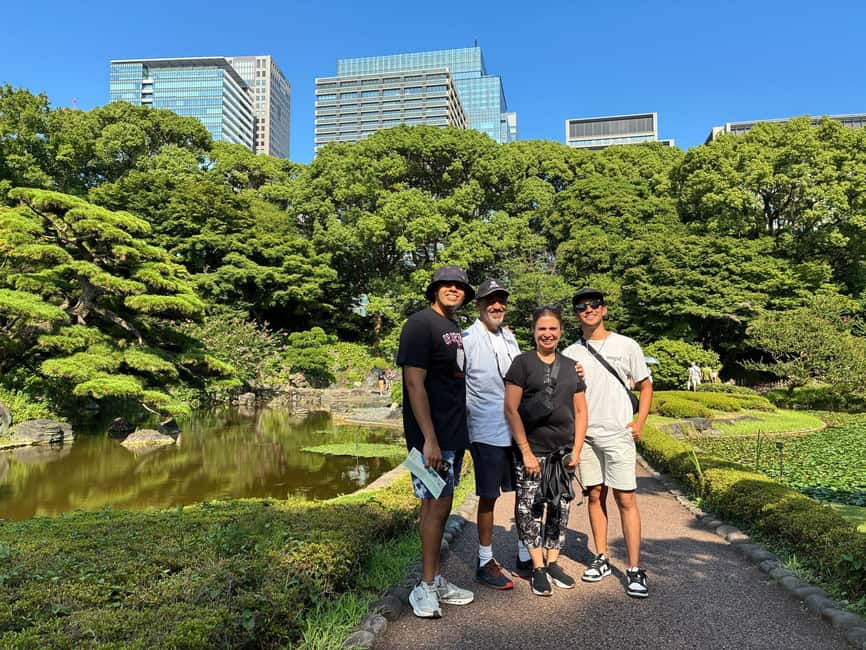
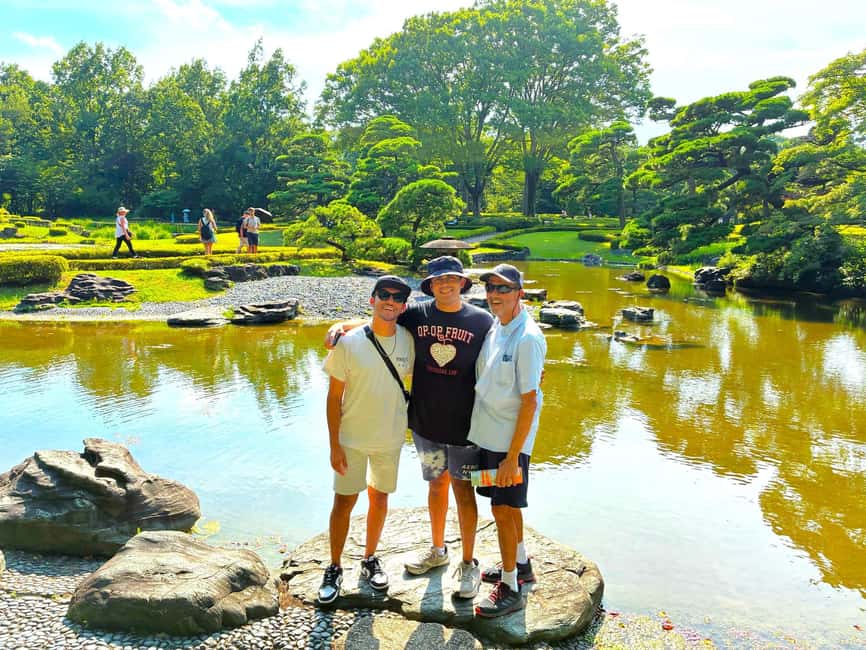
Ninomaru Garden is the gentlest part of the outing. Its paths and pond create a marked change from the defensive stops near the gates.
The koi fish in the pond add a small but memorable detail. You can slow down, take photographs without flash, and enjoy the garden’s calm atmosphere while the guide explains its place within the castle grounds.
I especially like that the itinerary does not treat the garden as a quick photo stop. It gives you a chance to absorb the contrast between military power and carefully ordered beauty.
Ninomaru Garden also helps balance the tour. If every stop focused on walls, guards, and political power, the experience could feel dry. The garden shows another side of the former castle compound and gives your feet a short mental break, even though the tour remains a walking activity.
What you actually see at the Imperial Palace
It is important to set your expectations correctly. You do not enter the Imperial Palace’s palace buildings. Those buildings are not open to the public on this activity.
Instead, you explore the palace outer garden and the former Edo Castle grounds. That still gives you access to a meaningful part of the site, but it is not an indoor palace tour.
This distinction should shape your booking decision. If you want rooms, furnishings, or a close look at palace interiors, this is not the right experience. If you want the grounds, the castle remains, the gardens, and the story connecting shoguns with emperors, the route offers a useful introduction.
The title may sound broader than the actual access. Read it as a guided outdoor tour of the Imperial Palace area and Edo Castle remains, not as entry into the working palace buildings.
How much value do you get for $24?
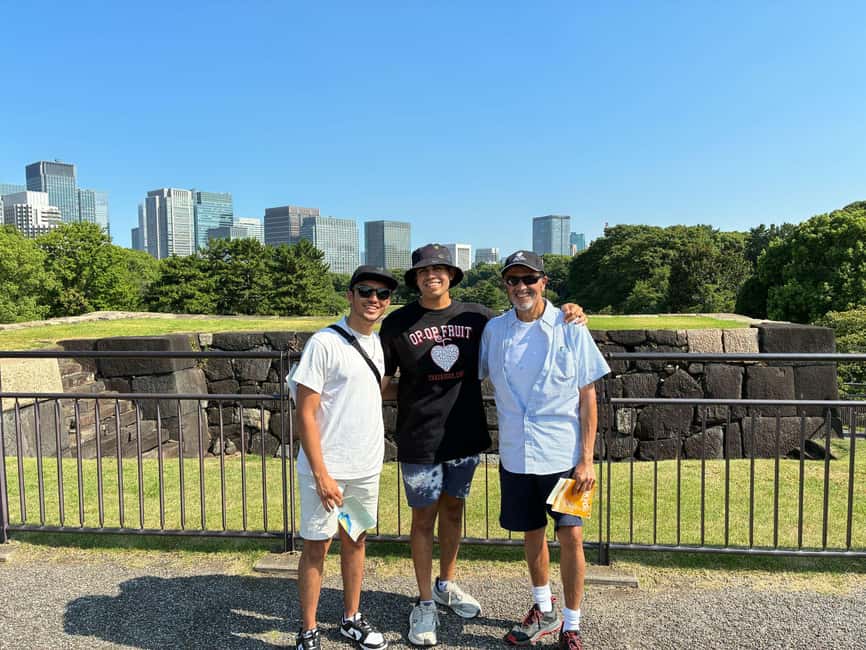
At $24, the price is modest for central Tokyo, especially because admission to Edo Castle and the Imperial Palace area is included. You also receive a live English-speaking guide and a commemorative photo opportunity.
The strongest value comes from interpretation. Otemon Gate, Doshin Bansho, Hyakunin Bansho, and the gate ruins are more useful when someone explains how they fit together. The guide turns scattered remains into a story about castle defense, samurai service, and political change.
Still, this is not a must-book purchase for everyone. One 2 out of 5 assessment specifically argued that the route could be done independently. That criticism is fair in one sense. The grounds are public, the key stops are visible, and independent visitors can walk at their own speed.
The tour earns its price if you want structure, an English explanation, and help noticing details that you might otherwise pass. It is less valuable if you prefer wandering alone, already understand the site, or mainly want photographs.
Who should choose this walking tour?
I would recommend it to first-time visitors who want a short introduction to Tokyo’s political and architectural past. It suits people who enjoy seeing physical traces rather than only visiting polished museum displays.
It also works well for anyone curious about the difference between the shogunate and the imperial tradition. The route gives you both in one setting, which is more efficient than treating them as unrelated subjects.
Families with older children may find the gates and guard posts interesting, but the activity is not suitable for children under six. The walking format and mobility restrictions make it a poor choice for very young children, wheelchair users, and people with mobility impairments.
Photography fans should bring a camera, but remember the no-flash rule. People who want food, drinks, transportation, or hotel service included will need to arrange those separately.
The tour is offered in English. No guide names are provided, so you should book for the route and subject rather than expecting a particular named guide.
Practical details before you reserve
Meet outside the Wadakura Free Rest Area, in front of the entrance. Look for the yellow sign held by the guide.
The activity ends back at the same meeting point, which makes the outing easier to fit into a Tokyo sightseeing day. You will not need to arrange a separate return transfer.
Wear comfortable shoes and carry water. The route includes several outdoor stops, and the lack of a stated duration means you should avoid scheduling another fixed activity too closely afterward.
Smoking is not allowed, and flash photography is prohibited. Palace buildings are not part of the visit, so keep your expectations focused on the outer garden and Edo Castle remains.
You can reserve now and pay later, which helps if you are still shaping your Tokyo plans. Cancellation is allowed up to 24 hours before the activity for a full refund.
Should you book the Edo Castle and Imperial Palace tour?
Book this tour if you want an affordable, guided introduction to the former castle grounds, especially if Otemon Gate, samurai guard posts, the Tenshu-dai, and Ninomaru Garden sound more appealing than palace interiors.
Skip it if you prefer to explore independently or want access inside the Imperial Palace buildings. The route is easy to understand as a self-guided outing, and the guide is the main reason to pay rather than walk alone.
For most first-time visitors interested in Tokyo’s past, $24 is a fair trade for context and a planned route. Just reserve it as an outdoor Edo Castle and Imperial Palace grounds tour, not as a palace interior visit.
FAQ
Where does the Edo Castle and Imperial Palace tour begin?
Meet outside the Wadakura Free Rest Area, in front of the entrance. The guide will be holding a yellow sign.
Where does the tour end?
The activity ends back at the same meeting point near the Wadakura Free Rest Area.
What language is the tour offered in?
The tour is offered in English.
Are the Imperial Palace buildings open during the tour?
No. The palace buildings are not open to the public during this activity. You explore the palace outer garden and the former Edo Castle grounds.
What sites are included on the route?
The route includes the Wadakura Fountain, Otemon Gate, the Ote San-no-mon Gate Ruins, Doshin Bansho, Hyakunin Bansho, the Honmaru area, the Tenshu reconstruction model, the Tenshu-dai, and Ninomaru Garden.
Is admission included in the $24 price?
Yes. Admission to Edo Castle and the Imperial Palace area is included, along with a live tour guide and a commemorative photo opportunity.
What should I bring?
Bring comfortable shoes, a camera, and water.
Is the tour suitable for wheelchair users or people with mobility impairments?
No. The activity is not suitable for wheelchair users or people with mobility impairments.
Can I cancel for a full refund?
Yes. You can cancel up to 24 hours in advance for a full refund.
More Guided Tours in Tokyo
More Imperial Palace & Shogun Tours in Tokyo


More tours in Tokyo we've reviewed












Imperial Palace & Shogun Tours, compared.
 ★ 4.9Tokyo: Imperial Palace Japanese History Walking TourFrom $32
 ★ 4.9Tokyo: Imperial Palace and Shogun Walking TourFrom $162 hours
 ★ 5.0Imperial Palace East Garden and Edo Castle Walking Tour in TokyoFrom $25
 ★ 4.8Tokyo: Imperial Palace East Gardens Walking TourFrom $192h 30m
 ★ 4.5Tokyo: Imperial Palace, Sensō-ji Temple, & Tokyo Tower TourFrom $404 hours
 ★ 5.0Tokyo Castle, Imperial Palace, Shogun & Garden Walking TourFrom $31