Reviewed · ASAKUSA TOURS
Tokyo Asakusa Sensoji Temple Night Walking Tour
Tokyo Asakusa Sensoji Temple Night Walking Tour gives you a tidy introduction to one of Tokyo’s oldest neighborhoods after the daytime crowds have thinned. Over about 90 minutes, you’ll walk from the red lantern of Kaminarimon Gate to Sensoji Temple, then continue through old-style shopping and nightlife streets.
In This Article
- Key points to know
- Why Asakusa works so well after dark
- Kaminarimon Gate and the first ten minutes
- Nakamise Street: a quick look at Asakusa shopping
- Sensoji Temple after the main hall closes
- Hanayashikidori and old Tokyo atmosphere
- Hoppy Street and the final 20 minutes
- What $35 gets you
- How much walking to expect
- The guide makes the difference
- Who should book this Asakusa walk
- Booking, timing, and cancellation details
- Should you book the Tokyo Asakusa night tour?
- FAQ
- Where does the Tokyo Asakusa Sensoji Temple Night Walking Tour begin?
- Where does the walking tour end?
- How long does the tour last?
- How much does the tour cost?
- How large is the tour group?
- Can I enter Sensoji Temple’s main hall during the tour?
- Does the tour include food or drinks?
- Do I need to be physically fit for this experience?
- Can I cancel for a full refund?
I like the eight-person maximum, which keeps the walk personal, and I like the route’s finish on Hoppy Street, where Asakusa’s food and pub culture come into view. Guide Yugo is described as welcoming and well informed, a useful combination for families and first-time visitors. The main drawback is timing: Sensoji’s main hall closes at 6 p.m., so an evening tour may show you the temple grounds without letting you step inside.
Key points to know
- Kaminarimon Gate begins the evening with Tokyo’s most famous red lantern.
- Nakamise Shopping Street offers a quick look at snacks, crafts, and souvenirs.
- Sensoji Temple is best appreciated from its illuminated grounds after the main hall closes.
- Hanayashikidori adds a nostalgic old-Tokyo feel near Japan’s oldest amusement park.
- Hoppy Street ends the walk with izakayas, yakitori, oden, and local nightlife.
- The $35 price buys a small-group orientation, not meals, temple admission, or a long guided tour.
Why Asakusa works so well after dark
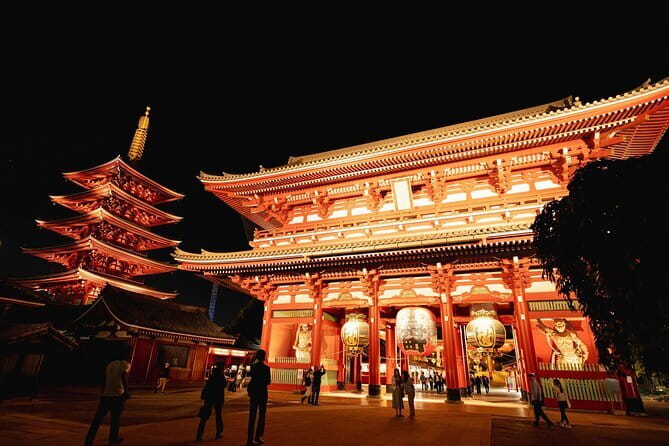
Asakusa gives you a different side of Tokyo. During the day, Sensoji and Nakamise Street can feel packed, with visitors pressing toward the temple’s main hall. At night, the area becomes easier to take in at a human pace, especially around the gates, temple grounds, side streets, and old-fashioned food spots.
I like this tour because it does not try to cover all of Tokyo. It focuses on one neighborhood and lets you see how its religious landmarks, souvenir shops, streets, and pubs fit together. That makes it useful early in a Tokyo visit, when you want a clear sense of place before exploring on your own.
The route is also easy to understand. You start at the Asakusa Culture Tourist Information Center, at 2-chome-18-9 Kaminarimon, close to public transportation. From there, you follow a mostly straightforward path toward Sensoji and finish on Hoppy Street at 2-chome-8 Asakusa.
A few more Tokyo tours and experiences worth a look



Kaminarimon Gate and the first ten minutes
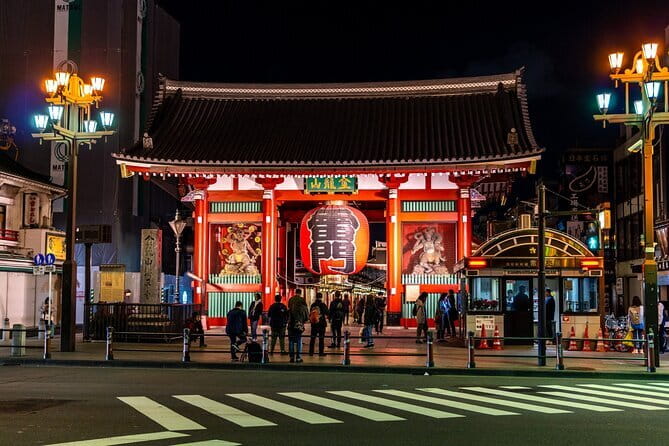
Kaminarimon means Thunder Gate, and it is the dramatic front door to Sensoji. Its large red lantern is the feature most people recognize, but the gate also has statues of Fujin, the god of wind, and Raijin, the god of thunder, on either side.
Your guide allows about 10 minutes here. That is enough time to get your bearings, take photographs, and hear why this gate matters before moving into the temple approach. The red lantern is especially effective in the evening, when lighting gives the gate a strong presence without the rush of a daytime photo stop.
This is also the easiest meeting point to find. Look for the Asakusa Culture Tourist Information Center near Kaminarimon. Since the tour uses a mobile ticket and the meeting place is near public transportation, you do not need to spend much time searching for an obscure office or shop entrance.
The short stop has a practical benefit. You are not standing through a long introduction before seeing anything. The tour gets moving quickly, which matters when the full experience lasts only an hour and a half.
Nakamise Street: a quick look at Asakusa shopping
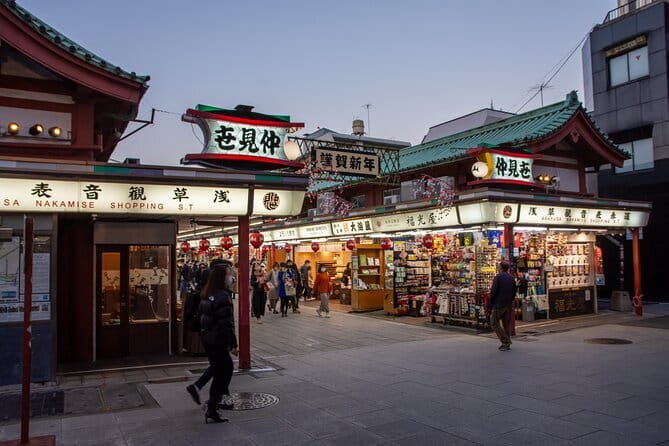
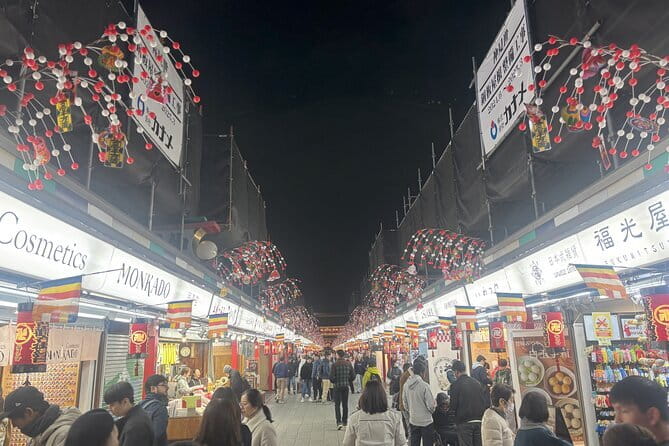
From Kaminarimon, the walk continues along Nakamise Shopping Street. This road leads toward Sensoji and is lined with shops selling traditional Japanese snacks, souvenirs, and crafts.
The planned stop lasts about 10 minutes, so think of it as an introduction rather than a shopping session. You’ll have time to notice the types of goods sold here and pick up ideas for a later visit. If you see a souvenir you want, you may be able to buy it during the tour, but the short schedule means you should not expect to browse every shop.
This is one reason the guide adds value. A local guide can point out the character of the street and help you decide what deserves a closer look later. You also get a useful sense of how Asakusa combines religious pilgrimage, local commerce, and tourism in a single corridor.
I would not plan to eat a full meal here during the walk. The route soon reaches streets better suited to food and drinks, and the tour is designed to keep you moving. Save your appetite for Hanayashikidori or Hoppy Street.
Sensoji Temple after the main hall closes
Sensoji is Tokyo’s oldest temple and is dedicated to Kannon, the goddess of mercy. It is the central landmark of the evening, with roughly 30 minutes set aside for the temple area.
The important timing detail is easy to miss: the main hall closes at 6 p.m. Since this is a night walk, you may not be able to enter it. You can still see the temple grounds, gates, and exterior illumination, but this is not the right tour if walking inside the main hall is your main goal.
That limitation does not make the stop pointless. Sensoji’s scale and appearance are easier to appreciate when your guide explains what you are seeing and you are not trying to navigate the area alone. The evening setting also gives the temple a calmer mood than a packed daytime visit.
Still, I would adjust expectations. This is a guided look at Sensoji as part of a neighborhood walk, not a private temple visit or a religious ceremony. If you want to explore the main hall interior, plan a separate visit during opening hours.
One past guest specifically wished the tour began about 30 minutes earlier so the temple might still be open. That is sensible advice for anyone who places temple access above the nighttime streets. The drawback is not the guide’s fault, but it is a real scheduling issue you should consider before booking.
Hanayashikidori and old Tokyo atmosphere
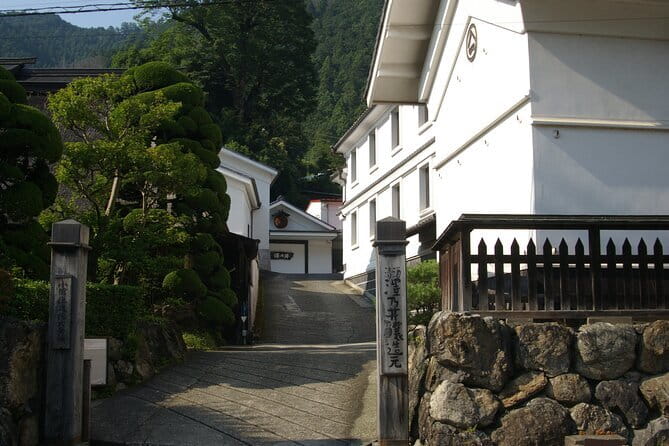
After Sensoji, the route heads to Hanayashikidori for about 20 minutes. Hanayashiki Street takes its name from nearby Hanayashiki, Japan’s oldest amusement park.
The street has shops, restaurants, and cafes, with traditional snacks, souvenirs, and local dishes. Compared with the grand scale of Sensoji, this part of the walk feels more local and informal. You get a look at the older entertainment side of Asakusa, where food, shopping, and amusement have long sat close to the temple district.
This stop is useful for planning the rest of your evening. The guide can give you ideas about places to eat and drink, and you can note spots to return to after the tour. Since the walk does not include meals, those suggestions may be as valuable as the sightseeing itself.
I like the change of pace here. Kaminarimon and Sensoji are major sights, while Hanayashikidori shows the neighborhood in smaller pieces. The tour becomes less about taking the perfect temple photo and more about understanding where Asakusa’s evening energy comes from.
Keep in mind that 20 minutes is still a short stop. You will see the street and its general character, but you will not have time to sample every food stall or compare every cafe. The tour gives you a useful first look, then leaves you free to return.
A few more Tokyo tours and experiences worth a look


Hoppy Street and the final 20 minutes

The walk ends on Hoppy Street, with about 20 minutes devoted to this well-known Asakusa food and drink area. Hoppy Street is lined with izakayas, Japanese-style pubs, and places serving Hoppy, a local drink associated with the area.
You’ll also find familiar Japanese pub foods such as yakitori, grilled chicken skewers, and oden, a hot pot dish. The relaxed atmosphere makes this a natural place to finish a night walk. Even if you do not order anything, you can see the kind of casual dining that helps define Asakusa after the temple gates and souvenir shops.
Ending here is a smart choice. The tour does not simply return you to the starting point and leave you wondering what to do next. Instead, it finishes in an area where you can continue your evening, find a meal, or use your guide’s suggestions to shape the rest of your night.
The tour price does not include food or drinks, so budget separately if you want to stop at an izakaya. The good news is that the end point gives you a practical choice. You can stay for dinner, browse nearby streets, or make your way back toward public transportation.
What $35 gets you
At $35 per person, this is priced as a short guided orientation rather than a full food tour or private cultural experience. You are paying for about 90 minutes with a local guide, a focused route, and a group capped at eight people.
That small group is the strongest value point. With only eight people maximum, you have a better chance of hearing explanations, asking questions, and staying together on busy streets. It also suits people who dislike large walking groups where the guide’s voice disappears into the crowd.
The price makes more sense if you are new to Asakusa or want help choosing where to return later. The guide connects five different settings: a famous gate, a shopping street, a temple, an old entertainment street, and a pub district. You could walk between these places on your own, but the guided structure saves you from piecing the neighborhood together yourself.
The value is weaker if you only want to photograph Sensoji. The temple is free to visit, the route does not include paid admissions, and the tour is short. You are buying context, direction, and company, not access to an exclusive site.
For solo visitors, couples, and families, the group format also offers a social benefit. The tour is designed for like-minded people in a small group, without the cost of hiring a private guide.
How much walking to expect
The tour lasts approximately 1 hour and 30 minutes and moves through several streets. You should be comfortable walking for the full duration and standing during explanations and photo stops.
A moderate level of physical fitness is recommended. The supplied details do not specify the exact distance, stairs, or surface conditions, so I would not treat this as a no-walking sightseeing option. Comfortable shoes are the sensible choice, especially if you plan to continue around Asakusa afterward.
The route begins near public transportation and ends on Hoppy Street, but it does not return you to the meeting point. That is convenient if you want to eat or drink after the walk, though you should be ready to make your own way onward from the final stop.
Because the route is compact and neighborhood based, it works well for an evening when you have other plans. It is not an all-night outing, and the 90-minute length leaves room for dinner or another Tokyo activity.
The guide makes the difference
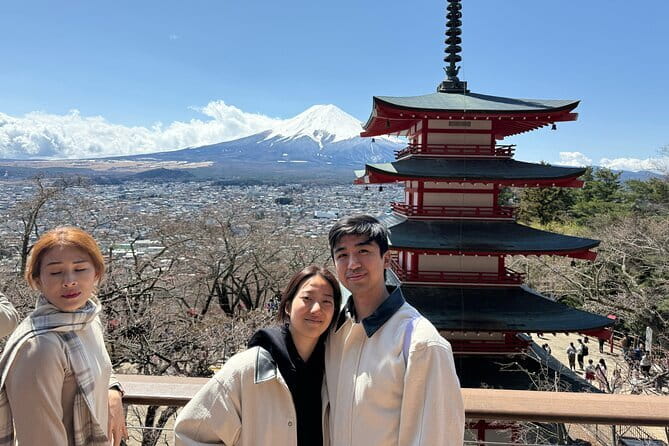
Guide Yugo receives the clearest personal praise in the available feedback. He is described as welcoming and well informed, and that matters on a tour that depends on explanation rather than admission to a ticketed attraction.
A good guide can make the difference between seeing a red gate and understanding why it is there. The same is true at Sensoji, where the grounds, temple buildings, shopping approach, and surrounding streets can feel like separate sights unless someone connects them for you.
I also appreciate that the route includes practical food and drink ideas. Many short sightseeing walks end at the final landmark. This one finishes where you can act on the advice, especially around Hoppy Street.
The tour has a 4.9 rating from 19 reviews, with 100 percent recommended. That is a small sample, so I would not treat it as a guarantee of every evening. Still, the feedback supports the main strengths: a friendly guide, a manageable group, and a clear neighborhood route.
Who should book this Asakusa walk
I would recommend this experience to you if you are visiting Tokyo for the first time and want an easy introduction to Asakusa. It is also a good fit if you prefer walking to riding between attractions, or if you want local suggestions for food and drinks after the main sightseeing is done.
Families may appreciate the short length and the variety of stops. There is a dramatic gate, a temple, shops, food streets, and an amusement park district, so the evening does not depend on one type of attraction.
History-minded visitors should enjoy the temple and gate explanations, but you should understand the limits. The tour does not provide lengthy museum-style lectures, and you may not enter Sensoji’s main hall because of the evening start.
I would hesitate to book it if you want a full meal included, a private guide, or an interior temple visit. I would also choose a different plan if you need a tour with no sustained walking.
Booking, timing, and cancellation details
You receive confirmation at booking, and the experience uses a mobile ticket. The meeting point is the Asakusa Culture Tourist Information Center, near public transportation, which makes the start practical for most visitors already in Tokyo.
The tour is booked an average of 25 days ahead, so I would reserve early if your Tokyo dates are fixed. The maximum group size is eight, and small groups can fill faster than large bus-style outings.
Free cancellation is available up to 24 hours before the start time for a full refund. Cancellations or changes made less than 24 hours before the start time are not accepted for a refund, and cut-off times follow Tokyo local time.
Should you book the Tokyo Asakusa night tour?
Book it if you want a friendly, compact introduction to Asakusa with a small group and a clear evening route. The combination of Kaminarimon, Nakamise, Sensoji, Hanayashikidori, and Hoppy Street gives you more than a single temple photo stop, and guide Yugo adds a personal touch.
The key decision is the temple timing. If entering Sensoji’s main hall is essential, look for an earlier visit or plan a separate daytime stop. If you are happy to see the temple grounds and then move into Asakusa’s food and nightlife streets, the $35 fee is reasonable for the orientation and local guidance.
FAQ
Where does the Tokyo Asakusa Sensoji Temple Night Walking Tour begin?
It begins at the Asakusa Culture Tourist Information Center, 2-chome-18-9 Kaminarimon, Taito City, Tokyo 111-0034, Japan.
Where does the walking tour end?
The tour ends on Hoppy Street, Hoppy St, 2-chome-8 Asakusa, Taito City, Tokyo 111-0032, Japan.
How long does the tour last?
The experience lasts approximately 1 hour and 30 minutes.
How much does the tour cost?
The listed price is $35 per person.
How large is the tour group?
The group is capped at a maximum of eight travelers.
Can I enter Sensoji Temple’s main hall during the tour?
You may not be able to enter. The main hall closes at 6 p.m., and this is an evening walking tour.
Does the tour include food or drinks?
The tour includes stops in areas with restaurants, cafes, izakayas, and local food, but the provided details do not include meals or drinks in the price.
Do I need to be physically fit for this experience?
A moderate level of physical fitness is recommended because the experience is a walking tour lasting about 90 minutes.
Can I cancel for a full refund?
Yes. You can cancel at least 24 hours before the start time for a full refund. Cancellations or changes made less than 24 hours before the start time are not accepted for a refund.
More Night Tours in Tokyo




More Temples & Meditation in Tokyo
More Asakusa Tours in Tokyo

More tours in Tokyo we've reviewed












Asakusa Tours, compared.
 ★ 4.8Tokyo: Japanese Dance Cabaret Theater Asakusa-Kaguwa TicketFrom $492 hours
 ★ 4.7Tokyo: Meiji Shrine, Asakusa, Skytree Bus Tour and CruiseFrom $12210 hours
 ★ 4.9Tokyo: Roll and Authentic Sushi Making Class in AsakusaFrom $581h 40m
 ★ 4.8Tokyo: Asakusa Walking Tour with Sensoji Temple VisitFrom $222 hours
 ★ 5.0Tokyo Asakusa Rickshaw TourFrom $42
 ★ 4.5Tokyo Panoramic 1 Day: Meiji Shrine, Asakusa, Odaiba and SKYTREE®From $85
![[Seasonal Limited] Mt. Fuji 5th Station &Hot Spring Day Tour - Mt. Fuji 5th Station at 2,300 meters](https://tokyoezine.com/wp-content/uploads/2026/08/seasonal-limited-mt-fuji-5th-station-hot-spring-day-tour.jpg)