Reviewed · MT FUJI DAY TRIPS
Private Mt Fuji, Hakone and Tokyo Tour – English Speaking Driver
Mount Fuji is the star here, but this private day also gives you Hakone’s hot-spring valley, lakeside views, rural springs, shopping, and a quick taste of Tokyo. The big advantage is your own vehicle, which saves you from piecing together trains, buses, and ropeways across a wide area.
In This Article
- Key points to know before booking
- A big Fuji day without the train puzzle
- Owakudani’s volcanic valley and black eggs
- Art in the mountains at the Hakone Open-Air Museum
- Oshino Hakkai and the water from Mount Fuji
- Lake Kawaguchiko, with only 10 minutes to spare
- The Mt Fuji Panoramic Ropeway
- Mt Fuji 5th Station, the highest planned point
- Gotemba Premium Outlets and the two-hour tradeoff
- A quick finish at Shibuya Crossing
- What $750 means for your group
- Timing, weather, and the practical limits
- Who should book this private Fuji tour?
- Should you book it?
- FAQ
- How long does the private Mt Fuji and Hakone tour last?
- Where does the tour start?
- How many people can join the private tour?
- Are attraction tickets included?
- What happens if bad weather blocks Mt Fuji’s 5th Station?
- Is this a fully guided tour?
I like the freedom to adjust the day with your driver, and I like the door-to-door format for a group of up to five. The main catch is time: this is an ambitious 10-hour outing, and weather, traffic, or road closures may force changes. Also, it is not a formal guided tour unless you pay extra for a guide.
Key points to know before booking
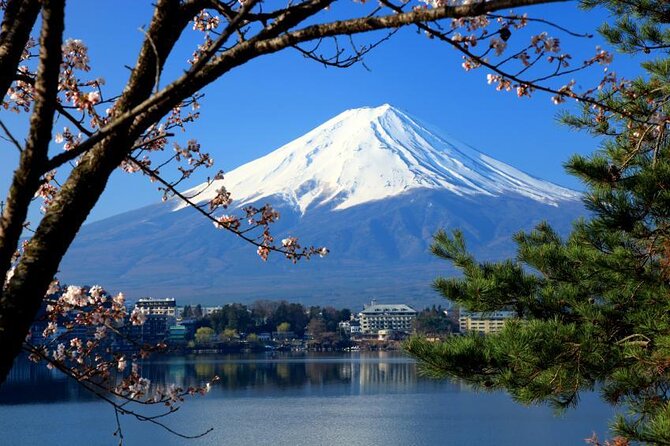
- Mount Fuji access depends on weather: If the 5th Station is closed or Fuji is hidden, the driver takes you as high as conditions allow, with no refund for that change.
- The route covers a lot of ground: Hakone, the Fuji Five Lakes area, Gotemba, and Shibuya make for a full day with plenty of driving.
- The private vehicle is the main luxury: Your group avoids unfamiliar train and bus connections and can discuss the order of stops with the driver.
- Several major stops cost extra: The Hakone Open-Air Museum, Mt Fuji Panoramic Ropeway, and Mt Fuji 5th Station have admission costs not included in the tour price.
- Shibuya is conditional: Shibuya Crossing can be included if your drop-off location is nearby, so do not treat it as a guaranteed full stop.
- The best value comes with five people: At $750 per group, five people pay about $150 each before attraction tickets.
A big Fuji day without the train puzzle

This tour is designed for people who want to see Mount Fuji and Hakone in one day without managing several transport systems. You begin at 7 a.m. from Shinjuku Station, or arrange pickup details as offered, then settle into private transportation for the long trip out of Tokyo.
That matters because the stops are spread across different parts of Kanagawa and Yamanashi prefectures. Hakone sits southwest of Tokyo, while the Fuji-area stops lie farther west. A private car makes the route possible in a single day, though it does not make the distances disappear.
Your driver speaks English and can offer local tips and recommendations. The wording of the experience is worth understanding: this is transport with assistance, not a full sightseeing tour led by a professional guide. If you want detailed commentary at each attraction, a guide can be arranged for an extra charge.
The private format is the strongest part of the plan. Your group alone takes part, with up to five people included in the $750 price. You can discuss the order of stops, spend more time at a favorite place, or trim a stop if traffic begins to eat into the day.
A few more Tokyo tours and experiences worth a look
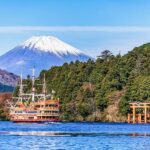
Owakudani’s volcanic valley and black eggs
The first listed stop is Owakudani Valley in Hakone, where volcanic activity gives the area its smell, steam, and unusual appearance. You can reach the view area by ropeway, though the ropeway experience and its operation can depend on conditions.
Plan about 45 minutes here. That is enough for a quick look and a taste of the local specialty, kuro-tamago, or black eggs. These are ordinary chicken eggs boiled in the valley’s hot spring water. Sulfur darkens the shells, turning them black while the inside remains an egg.
This is a short stop, not a long walk through Hakone. If the ropeway is operating and visibility is good, it gives you a fine first look at the volcanic valley. If weather is poor, the visit may feel less rewarding, since much of the appeal comes from the views and open air.
Art in the mountains at the Hakone Open-Air Museum
The Hakone Open-Air Museum changes the pace. Instead of another viewpoint, you get a large outdoor sculpture gallery set across 70,000 square meters of mountain grounds. Sculpture and nature share the space, making this more than a quick photo stop.
The planned visit lasts about one hour. That gives you time to see a portion of the grounds, but not every work in detail. Admission is not included, so add the museum ticket to your budget.
I like this stop because it gives the day some variety. The route could otherwise become a parade of lookouts and roadside attractions. The drawback is that one hour may feel short if you enjoy museums, gardens, and large-scale art. You may need to accept a sample rather than a full visit.
Oshino Hakkai and the water from Mount Fuji
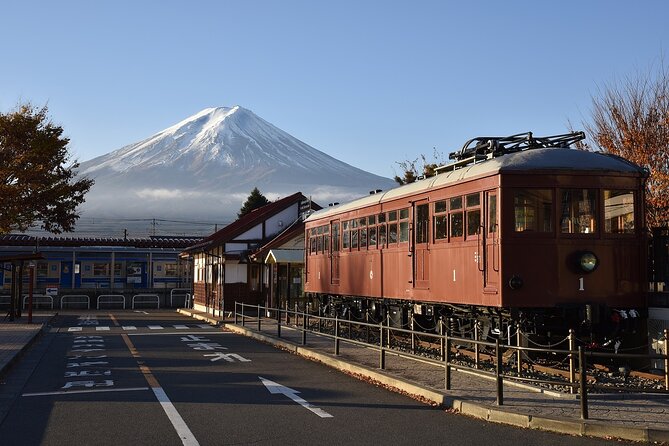
Oshino Hakkai offers a quieter rural setting. Its eight springs are fed by water from Mount Fuji’s underground aquifer, and the springs are recognized as a natural monument of Japan.
You have about 45 minutes here. That is enough to see the springs and take in the village setting, but the stop remains brief. I would use it for clear photos, a short walk, and a pause from the vehicle rather than expecting a long cultural visit.
This is one of the more distinctive stops because it connects Fuji to water, farming country, and local village life. It also helps you see that Mount Fuji is not only a summit or a postcard. The mountain shapes the surrounding area in less obvious ways.
Lake Kawaguchiko, with only 10 minutes to spare
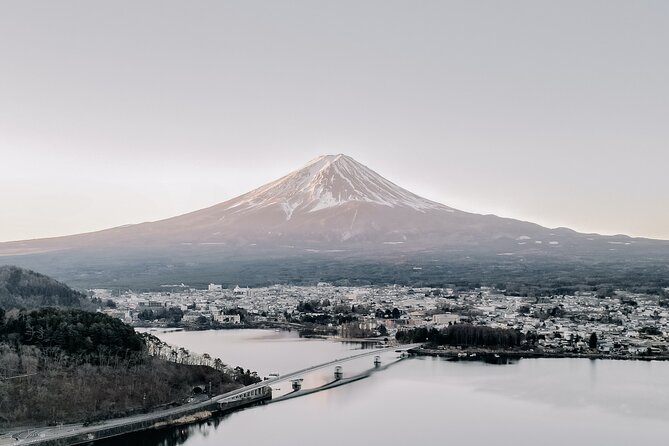
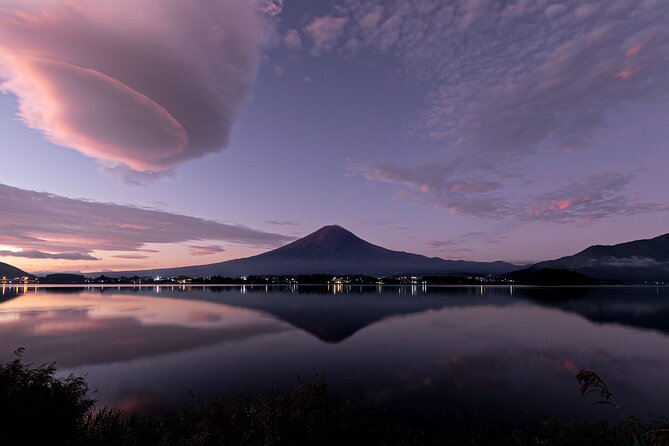
Lake Kawaguchiko is the most accessible of the Fuji Five Lakes and a popular resort area with hot springs, attractions, and Fuji views. The listed stop is only 10 minutes, so this is best understood as a quick lakeside viewpoint rather than a full lake visit.
That short time is a practical warning. You can stop for a look and photographs, but you will not have time for a relaxed lakeside outing, a long meal, or a broad tour of the resort area. If the lake view is important to you, ask the driver early in the day how much time the traffic and mountain conditions allow.
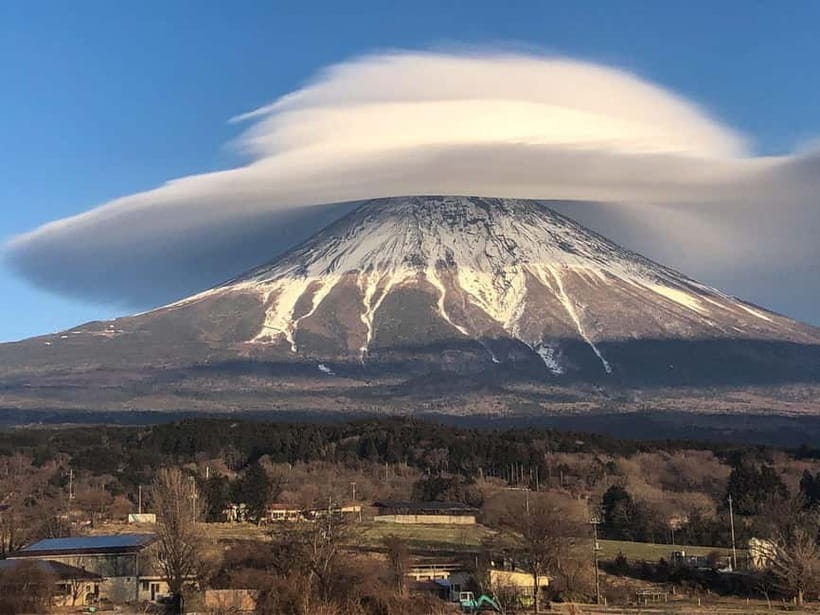
Clear weather makes a major difference here. Fuji views are never guaranteed, and clouds can gather around the mountain even when Tokyo looks bright. The tour allows the route to change when weather or traffic interferes, but it does not offer a refund simply because the mountain is hidden.
A few more Tokyo tours and experiences worth a look
The Mt Fuji Panoramic Ropeway
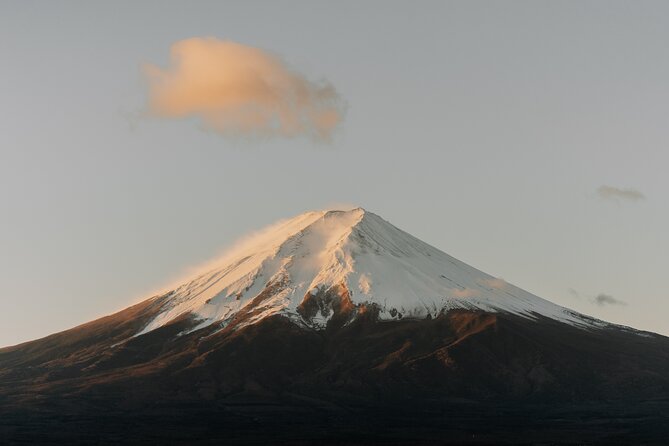
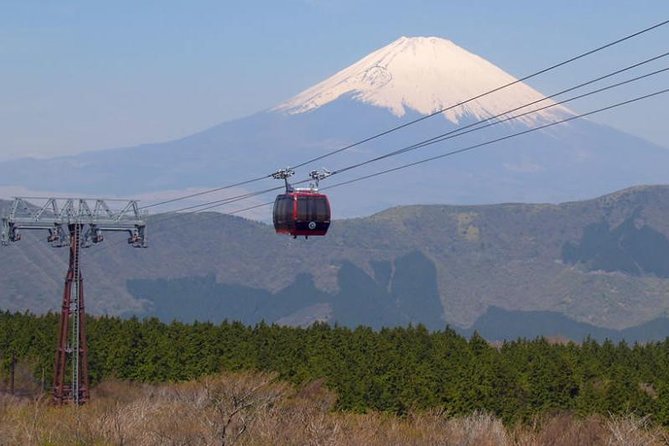
The Mt Fuji Panoramic Ropeway climbs about 400 meters from the eastern shore of Lake Kawaguchiko to an observation area near the top of Mt Tenjo. The ride gives you a high viewpoint over the lake and, when conditions cooperate, toward Mount Fuji.
The scheduled time is one hour, and admission is not included. That extra ticket is important to remember when comparing the $750 group price with a standard car transfer.
This stop works well for you if you want a clear, organized viewpoint without hiking. It also gives the day another angle on the region, looking across the lake rather than only toward the mountain from ground level.
There is a possible timing problem. A ropeway line, weather hold, or traffic delay can affect the rest of the route. Since the day includes several major stops, you should be ready for your driver to adjust the schedule.
Mt Fuji 5th Station, the highest planned point
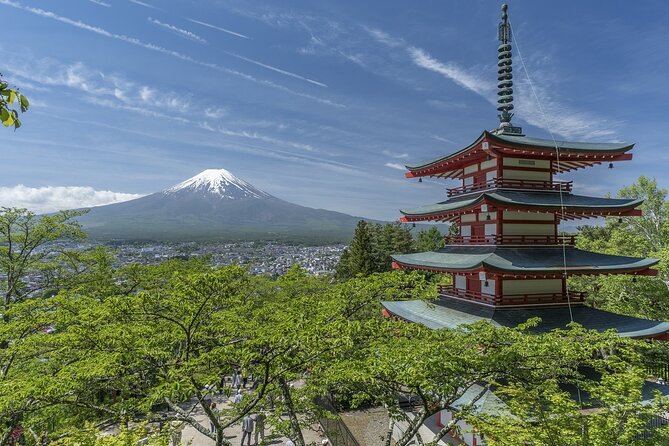
The 5th Station is the tour’s most direct encounter with Mount Fuji. It sits about halfway up the mountain and is a common starting point for climbers and hikers. You can experience the high-mountain atmosphere without committing to a climb.
The planned visit is two hours, the longest stop of the day. Admission is not included. The extra time makes sense because the 5th Station is not just a quick viewpoint. You have room to look around, take photographs, and enjoy the setting before beginning the return route.
Access is not guaranteed. If the 5th Station cannot be reached because of weather, the vehicle goes to the highest elevation point available. If the mountain is not visible from the base or the 5th Station, the tour still operates, and cancellation or refund is not offered for that reason.
That policy is fair to understand before you book. Mount Fuji is a natural sight, not a scheduled performance. If seeing the summit clearly is the whole purpose of your trip, choose a date with a flexible cancellation plan and keep your expectations sensible.
Gotemba Premium Outlets and the two-hour tradeoff
Gotemba Premium Outlets is given two hours, which makes it one of the day’s largest stops. The outlet center sits in the Fuji area and can appeal to you if shopping is part of your Japan plan.
The supplied details also point to local products and regional agriculture, including Shizuoka green tea and horseradish from the prefecture. That gives the stop a local connection, though the main activity here is shopping rather than sightseeing.
Two hours at the outlets is a clear tradeoff. If you want brand-name shopping and a break from viewpoints, it may be useful. If you would rather spend more time at the lake, museum, or Fuji 5th Station, ask about the schedule before setting out. A private tour gives you more say, but the day still has a fixed end.
A quick finish at Shibuya Crossing
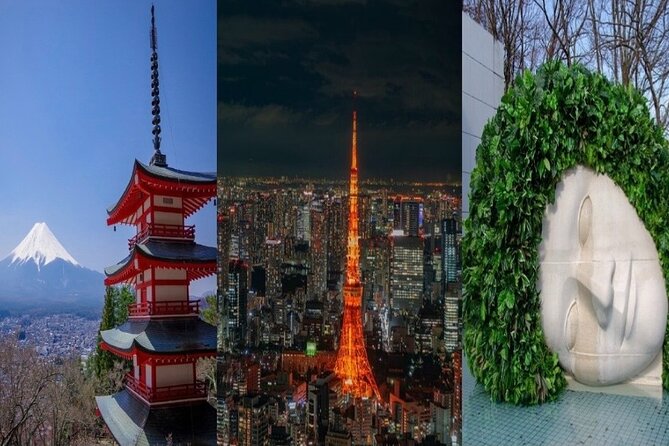
The final listed stop is Shibuya Crossing, the famous scramble crossing outside Shibuya Station. The planned visit is only 20 minutes, so expect a fast look and photographs rather than a full Shibuya evening.
This stop is also conditional. Shibuya Crossing can be covered if your drop-off location is nearby. The activity ends back at the meeting point, and the stated meeting point is Shinjuku Station, so confirm exactly where the vehicle will finish before relying on this stop.
I see Shibuya as a bonus rather than a reason to book the tour. The real value lies in the Fuji and Hakone route. If your hotel or final destination is near Shibuya, the stop may fit neatly into your return. If not, traffic and the long drive back may make it impractical.
What $750 means for your group
The price is $750 per group of up to five people. With five people, that works out to about $150 each before attraction tickets. With two people, the same vehicle costs about $375 each, so the value depends heavily on group size.
You also need to budget for the Hakone Open-Air Museum, the Mt Fuji Panoramic Ropeway, and Mt Fuji 5th Station, since those admissions are not included. Owakudani, Oshino Hakkai, Lake Kawaguchiko, and the listed Gotemba stop do not show an admission charge.
For a group of four or five, I think the price can make sense because you are paying for a private vehicle, a full day, and simpler transport across a difficult route. For one or two people, compare it with public transport and decide how much your time and convenience are worth.
The driver’s local advice adds value, especially if you are still working out what to see elsewhere in Japan. Just remember that detailed guiding is an optional extra. You are buying a private driving experience first.
Timing, weather, and the practical limits
The tour lasts about 10 hours, including commuting. That phrase matters. The eight listed stops cannot all receive long, relaxed visits within that window, especially with Tokyo traffic and mountain roads in the mix.
Traffic congestion, bad weather, and other conditions can change the schedule or visiting points. The route may be rearranged, shortened, or adjusted to reach the highest safe point near Fuji.
The 7 a.m. start is sensible. It gives you the best chance of making the long route work and leaves room for delays. It also means this is an early, full day, not a gentle outing with a late start.
Free cancellation is available up to 24 hours before the start time for a full refund. Changes made inside that 24-hour window are not accepted, unless poor weather causes the operator to cancel, in which case you are offered another date or a full refund.
Who should book this private Fuji tour?
I would recommend it most strongly to a group of up to five that wants maximum transport ease and a broad sample of Fuji and Hakone in one day. It suits first-time visitors who do not want to decode regional buses and train changes.
It also fits families, older visitors, or anyone who values a private vehicle and a flexible route. The driver can provide tips and help shape the day, while your group avoids sharing the schedule with strangers.
I would hesitate if you want a slow, detailed visit at every stop. The itinerary is ambitious, and the short Lake Kawaguchiko visit makes that clear. I would also think twice if a guaranteed Fuji view is essential, since weather controls access and visibility.
The strongest praise in the available feedback focuses on the driver’s care, local knowledge, and thoughtful planning. One guest had the good fortune to see Fuji clearly while leaving the area, which captures the reality of this trip: timing and weather may reward you, but nature gets the final say.
Should you book it?
Book this tour if you have one free day, a group of several people, and a high priority on seeing Mount Fuji without handling the transport yourself. The private format, early start, and English-speaking driver make a complicated route much easier.
Skip it if you want a deep visit to Hakone, a long stay at the lake, or a guaranteed summit view. Before booking, confirm pickup and drop-off details, ask which stops can be shortened, and set aside money for the paid attractions. With those limits understood, this is a useful and flexible way to connect Tokyo with Fuji country in a single demanding but rewarding day.
FAQ
How long does the private Mt Fuji and Hakone tour last?
The tour lasts approximately 10 hours, including commuting time.
Where does the tour start?
The stated meeting point is Shinjuku Station at 3-chōme-38-1 Shinjuku, Shinjuku City, Tokyo. The start time is 7 a.m. Pickup is offered, so confirm the exact pickup arrangement when booking.
How many people can join the private tour?
The price covers one group of up to five people. Larger groups can be arranged for an additional cost.
Are attraction tickets included?
Admission is not included for the Hakone Open-Air Museum, Mt Fuji Panoramic Ropeway, or Mt Fuji 5th Station. The listed stops at Owakudani, Oshino Hakkai, Lake Kawaguchiko, and Gotemba Premium Outlets have no admission charge shown.
What happens if bad weather blocks Mt Fuji’s 5th Station?
If the 5th Station cannot be reached, the vehicle goes to the highest elevation point possible. If Fuji is not visible, the tour is not canceled or refunded for that reason.
Is this a fully guided tour?
No. It is a private activity with an English-speaking driver who can provide tips and recommendations. A formal guide can be arranged for an additional cost.
More Private Tours in Tokyo


More Hakone Day Trips in Tokyo
More Mt Fuji Day Trips in Tokyo

More tours in Tokyo we've reviewed












Mt Fuji Day Trips, compared.
 ★ 5.0Mt Fuji and Hakone 1-Day Bus Tour Return by Bullet TrainFrom $163
 ★ 4.0Mt Fuji & Hakone Cruise, Drum Show Bullet Train 1 Day from TokyoFrom $149
 ★ 4.4Tokyo Mt Fuji 5th St & Hakone Cruise Bus Tour w/Bullet TrainFrom $15410 hours
 ★ 4.5From Tokyo: Mount Fuji Full-Day Sightseeing TripFrom $6810 hours
 ★ 4.7Tokyo: Mt. Fuji Tour, Hakone Ropeway, Owakudani, Lake AshiFrom $5410 hours
 ★ 4.4Tokyo:Mt.Fuji,Kawaguchiko Oishi Park,Arakurayama Sengen ParkFrom $5410 hours