Reviewed · NIGHT TOURS
Tokyo After 5: Authentic Japanese Food & Drink Night Tour
Tokyo After 5 gets to the good stuff in an appealingly local way: you cook monjayaki on a hot grill in Tsukishima, then settle into a small Yurakucho drinking alley for yakitori, beer, or sake. It is a food tour, subway ride, and gentle introduction to Tokyo nightlife rolled into one.
In This Article
- Key details before you book
- What this Tokyo night tour is really like
- Mitsukoshi Ginza and an after-hours start
- Tsukishima Monja Street and the tabletop grill
- Yurakucho Yakitori Alley after dark
- Food, drinks, and dietary limits
- The guide makes or breaks the evening
- Walking, timing, and practical comfort
- Is $122.33 a fair price?
- Who should book Tokyo After 5?
- Should you book it?
- FAQ
- How long does Tokyo After 5 last?
- Where does the tour begin?
- Where does the tour finish?
- What food is included?
- How many drinks are included?
- Can I buy extra drinks?
- Are subway fares included?
- Is the tour suitable for children?
- Can vegetarians, vegans, or people avoiding gluten join?
- How large is the group?
I like the small maximum of eight people and the fact that your guide handles the ordering and subway moves. Guides such as Yuko and Mizuki have made this evening especially warm and easy for many participants. The main caution is that the tour can feel light on food and explanation if your guide speaks limited English, and the advertised three eateries may amount to two substantial restaurant stops.
Key details before you book
- Cook your own monjayaki: The cabbage-based Tokyo specialty is prepared on a griddle at your table in Tsukishima.
- Finish in Yurakucho: The final stop is a genuine local-style alley lined with small places serving yakitori and drinks.
- Two drinks are included: Choose from options such as sake, beer, or a soft drink, with extra drinks available to buy.
- The group is capped at eight: This keeps the evening more personal, though the guide quality can vary.
- Expect a fair amount of walking: You will walk through Ginza, use the subway twice, and cover ground between stops.
- Food restrictions are a serious issue: Vegetarian, vegan, and gluten-free choices are not available on this tour.
What this Tokyo night tour is really like
This is not a grand restaurant crawl. It is a short, social introduction to ordinary Japanese eating places, with a few sightseeing touches along the way. You begin in polished Ginza and finish among compact drinking spots in Yurakucho, so the evening gives you two very different views of central Tokyo.
The price is $122.33 per person. That is not cheap for three and a half hours, especially if you judge the outing by the amount of food alone. You are also paying for a local English-speaking guide, two subway tickets, help with menus, and the confidence to enter places you might otherwise walk past.
I would think of this as a guided orientation rather than a dinner replacement. Come hungry, but do not assume you are receiving a large multi-course meal. The strongest value comes from the cultural setting, the cooking experience, and the guide’s ability to explain what you are eating.
The tour meets at 5 pm in front of the Lion statue outside Mitsukoshi Ginza. Arrive early. The start is punctual, and the meeting point is easy to identify at the corner of Chuo Street. From Ginza Station, you can reach the area by public transport, but give yourself time to find the correct street-level exit.
A few more Tokyo tours and experiences worth a look

Mitsukoshi Ginza and an after-hours start
The first 15 minutes are used to gather the group and set the evening in motion. Ginza is one of Tokyo’s most polished districts, with department stores, bright signs, luxury shops, and wide streets. At this hour, offices are closing and the city’s dinner traffic is beginning.
You may enter Mitsukoshi Ginza, where the food department gives you an early look at Japanese sweets and prepared foods. This part can be enjoyable if you like department-store food halls, but it is not a full tasting session. A wagashi treat may be handed out, and some groups have also stopped at the famous Itoya stationery store.
I like the contrast here. Ginza is not the rough-edged Tokyo many people picture, and a department store visit may seem an odd beginning for a food walk. Yet Japanese department-store basements are closely tied to food culture, gift buying, and careful presentation.
The drawback is time. A visit to a shop or department store can feel like a shopping detour if your priority is eating. One particularly unhappy experience included a long wait for elevators and a look at small plants grown under artificial lights. You should know that the early Ginza portion may be more about orientation and city life than about food.
Tsukishima Monja Street and the tabletop grill
The first major food stop is Tsukishima Monja Street, reached by subway. Two subway tickets are included, which removes the nuisance of working out fares and routes during a busy evening. Your guide leads the way, but you still need to stay alert at stations and on crowded sidewalks.
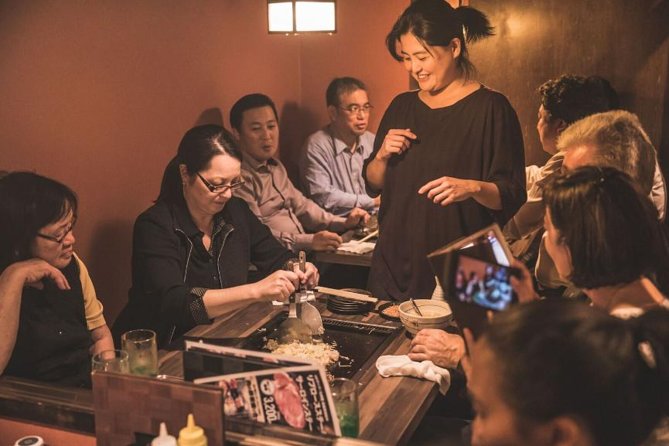
Tsukishima is known for monjayaki, a Tokyo specialty that looks very different from the firm pancakes many people expect. The mixture is soft and loose, with cabbage and other ingredients cooked directly on a hot tabletop griddle. You may help prepare it, then use a small spatula to eat it from the grill.
This is the most hands-on part of the evening. You hear the mixture sizzle, learn how the dish came about, and share the cooking process with the group. The pleasure is less about polished presentation and more about figuring out how to cook and eat something unfamiliar.
The portion can be modest. It may include cabbage, seafood such as shrimp or mussels, and a few small samples. If you normally eat a full dinner, you may still be hungry after this stop. The dish also has a soft texture that will not suit everyone, so an open mind helps.
Your guide’s explanation matters here. A good guide such as Yuko can turn the dish into a lesson about local eating habits and make the cooking easy to follow. If the explanation is brief, monjayaki can seem like a small plate of cabbage rather than a meaningful Tokyo specialty.
The restaurant itself is part of the appeal. You are not simply handed a sample at a counter. You sit around a grill, take part in the cooking, and eat in a setting tied to the neighborhood. That makes this stop more valuable than a quick tasting, even if it does not fill you up.
Yurakucho Yakitori Alley after dark
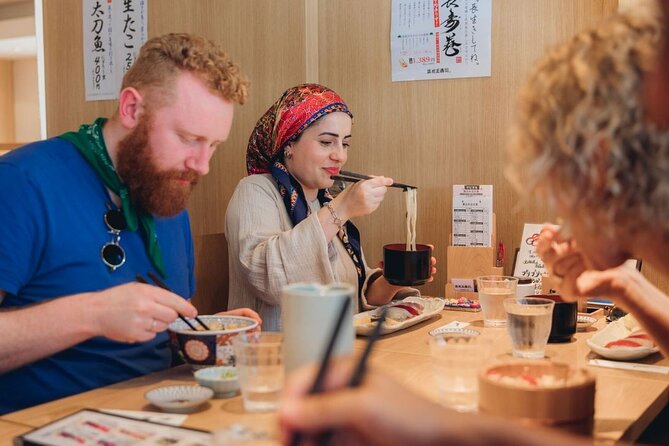
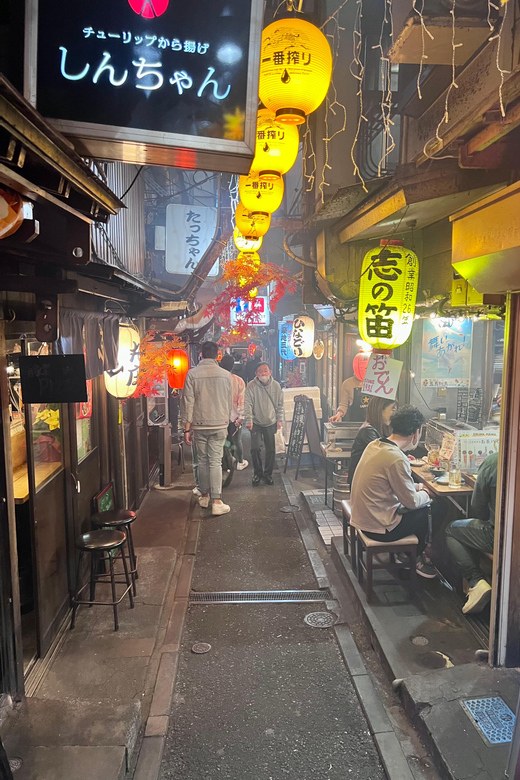
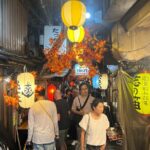
After Tsukishima, the tour uses the subway again and heads to Yurakucho Sanchoku Inshokugai, often called Yurakucho Farm to Table Dining Alley. This is the evening’s most atmospheric stop, with small bars and restaurants gathered beneath and around the railway area.
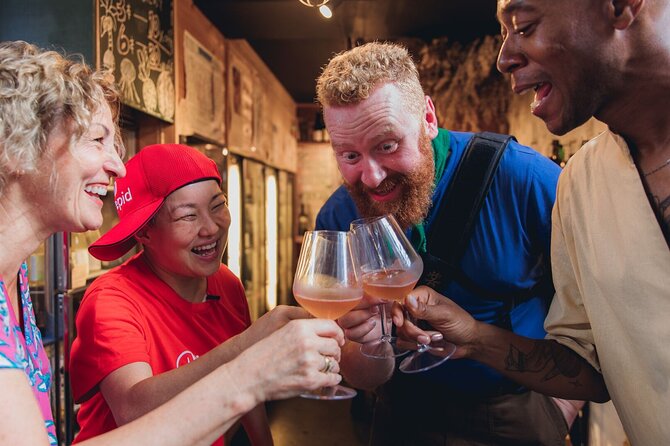
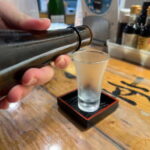
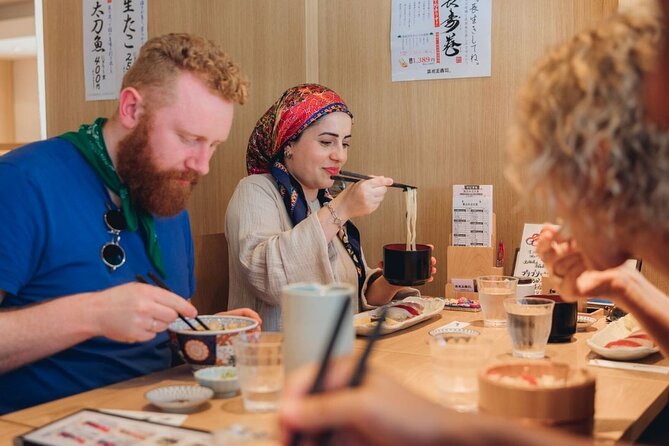
Here you receive yakitori, grilled meat on skewers, with the possibility of different cuts and textures. The skewers are usually served with tare, a savory sauce that varies from one shop to another. You also receive one of the included drinks, such as sake or beer. A soft drink is available for anyone under the legal drinking age.
This is where the tour feels most like a night out rather than a lesson. Office workers may be winding down, the bars are compact, and the setting has a distinctly local after-work character. You do not need to find the right alley or work out how to order. Your guide gets you there and helps bridge the language gap.
I would clarify one point before booking: the food may not match your idea of standard chicken skewers. One person received chicken cartilage, while another found the grilled meat underdone for their taste. If you are particular about cuts, doneness, or texture, ask your guide what is being served before you eat it.
The final stop can also feel like a full dinner in some groups, with yakitori, beer, and several small dishes. In other cases, the food is fairly limited. Your experience depends partly on the chosen establishment and partly on how much your guide explains and orders.
You can remain in the bar after the official tour ends, or continue elsewhere in Tokyo. The stated ending point is near Ginza Station, so you are well placed for more nightlife or an easy trip back to your hotel.
Food, drinks, and dietary limits
The included food centers on three Japanese items: wagashi, monjayaki, and yakitori. Wagashi is a traditional Japanese sweet, and it usually appears early in the evening. Monjayaki is the main interactive dish. Yakitori provides the grilled, savory finish.
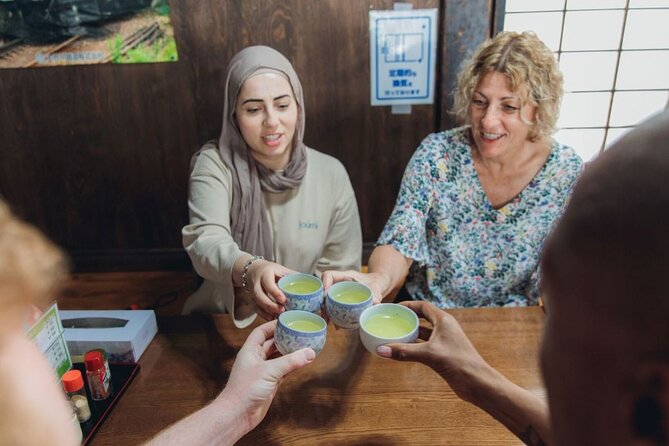
Two local drinks are included. Depending on your age and the options available, these may be sake, beer, or a soft drink. Japan’s legal drinking age is 20, and anyone under 20 receives non-alcoholic drinks.
Additional drinks are not included. That matters in an izakaya-style setting, where ordering another beer or sake is easy. If you want the tour to remain close to its advertised price, stick with the two included drinks.
This is not a suitable choice for vegetarian, vegan, or gluten-free diners. The establishments cannot cater to all dietary needs, and the tour specifically states that those options are unavailable. If you have a serious allergy or strict food requirement, I would choose a different food experience rather than hope for substitutions.
The tour also works best for people willing to try unfamiliar cuts and textures. Yakitori may include more than breast or thigh meat, and monjayaki is not a neat, firm pancake. You can ask questions, but the food is designed as a local experience rather than a customized menu.
A few more Tokyo tours and experiences worth a look

The guide makes or breaks the evening
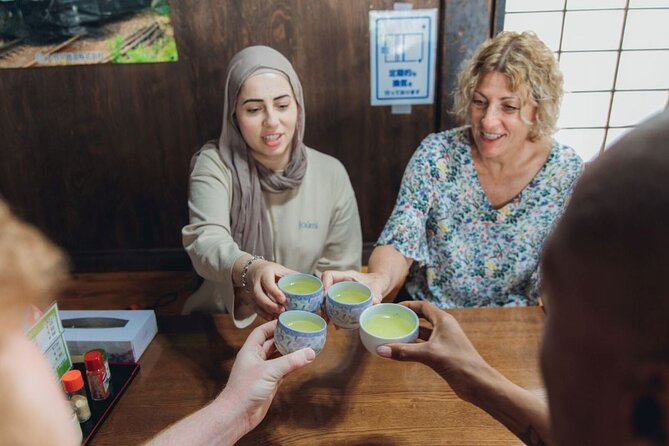
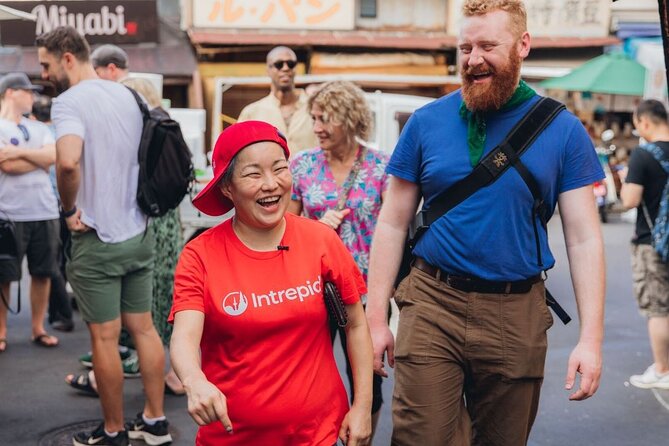
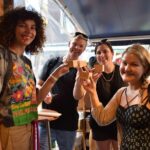
The group maximum is eight, a useful size for cramped restaurants and narrow Tokyo streets. A small group lets you share the grill without feeling lost in a crowd, and it gives you a better chance to ask about food customs, neighborhoods, and later plans.
Guide quality appears to be the biggest variable. Yuko has been especially effective at explaining monjayaki, managing the subway transfers, and helping people understand the evening’s food. Mizuki has also been praised for courtesy, humor, and clear explanations. Shoehi and Rocky have been singled out for creating a friendly atmosphere and looking after their groups.
Those names are useful examples, but you cannot assume you will be assigned one of them. The provider is Intrepid Urban Adventures Japan, and guides differ in style and English ability. If your guide gives little background or walks too far ahead, the tour loses much of its value.
Keep your group together. The route includes stations, stairs, busy streets, and transfers. One poor experience involved the guide moving quickly enough that other group members had to make sure nobody was left behind. Comfortable shoes are essential, and you should not treat this as a slow stroll.
Walking, timing, and practical comfort
The tour lasts about three hours and 30 minutes. The schedule includes roughly 15 minutes at the meeting point, 15 minutes in Ginza, about 90 minutes around Tsukishima Monja Street, and about 75 minutes in Yurakucho.
That timetable sounds relaxed, but the transfers and restaurant changes add up. Some people found the walk to the first substantial meal longer than expected, and one group described the pace as fast. Tokyo’s stations can also involve stairs, corridors, and long walks between platforms and exits.
Wear comfortable shoes and keep your hands free. A small bag is easier to manage in narrow eateries and on the subway. If you are traveling with children, note that the minimum age is 12. The tour is near public transportation, and most people can take part, but the moderate walking should still be considered.
The meeting point is Mitsukoshi Ginza at 4-chome 6-16 Ginza, Chuo City. The tour finishes at Ginza Station, 4-chome 1-2 Ginza. Both locations are central, which makes the tour easy to add to an evening in Ginza.
The activity requires good weather. If poor weather causes cancellation, you can choose another date or receive a full refund. Otherwise, cancellation is free up to 24 hours before the start time, with no refund for a later cancellation.
Is $122.33 a fair price?
I would call the price reasonable only if you value guidance and access more than quantity. Two subway tickets are included, along with two drinks, food at several stages, and a small-group guide for 3.5 hours. You also gain help entering local-style places where menus and ordering may be difficult.
If you mainly want dinner, the price is harder to defend. The food portions can be small, and the number of substantial eateries may be two rather than three. You could spend less eating in Ginza or Yurakucho on your own, though you would lose the explanations, route planning, and social side of the evening.
The tour is booked an average of 52 days ahead, so popular dates may fill early. I would reserve it near the start of your Tokyo stay if you want guide recommendations for later meals and nightlife. The guide can also help you understand what to order after the tour.
Who should book Tokyo After 5?
I would choose this tour if you are new to Tokyo, enjoy trying unfamiliar food, and want a friendly introduction to evening neighborhoods without planning every step yourself. It is also a good fit for solo visitors and couples who like meeting a small group over shared dishes.
It suits people who want to cook monjayaki, sample local sweets, drink sake or beer, and see the shift from department-store Ginza to after-work Yurakucho. The social setting is part of the fun, especially when the guide is active and the group is willing to try new things.
I would skip it if you need a large dinner, have strict dietary restrictions, dislike seafood or unusual meat cuts, or want a focused culinary tour with detailed food instruction at every stop. I would also be cautious if a slow pace is important to you.
Should you book it?
Book Tokyo After 5 if your goal is a guided taste of Tokyo nightlife, not a lavish meal. The monjayaki grill is the evening’s most distinctive activity, while Yurakucho offers the strongest sense of local after-work life. Guides such as Yuko and Mizuki can make the route feel personal and informative.
Before paying, accept three conditions: the food may be lighter than expected, the walking can be brisk, and the guide assignment affects the amount of explanation you receive. For curious eaters who want help navigating Tokyo after dark, the experience can be a useful first-night choice. For serious food enthusiasts or diners with dietary limits, spend the money elsewhere.
FAQ
How long does Tokyo After 5 last?
The experience lasts approximately three hours and 30 minutes.
Where does the tour begin?
It begins at Mitsukoshi Ginza, in front of the Lion statue facing Chuo Street, at 4-chome 6-16 Ginza, Chuo City, Tokyo.
Where does the tour finish?
The tour ends near Tokyo Metro Ginza Station at 4-chome 1-2 Ginza, Chuo City, Tokyo.
What food is included?
The included food consists of wagashi, monjayaki, and yakitori, along with other small dishes that may be served at the local establishments.
How many drinks are included?
Two drinks are included. These may be sake, beer, or a soft drink.
Can I buy extra drinks?
Yes. Additional drinks are available for purchase and are not included in the tour price.
Are subway fares included?
Yes. Two subway tickets needed for the tour are included.
Is the tour suitable for children?
The minimum age is 12. Anyone under 20 will receive non-alcoholic drinks because the legal drinking age in Tokyo is 20.
Can vegetarians, vegans, or people avoiding gluten join?
The tour does not offer vegetarian, vegan, or gluten-free options. The restaurants cannot cater to all dietary requirements.
How large is the group?
The maximum group size is eight people.
More Evening Experiences in Tokyo

More Food Experiences in Tokyo
More Night Tours in Tokyo
More tours in Tokyo we've reviewed












Night Tours, compared.
 ★ 5.0Tokyo Night Foodie Tour in Shinjuku – Seasonal Sushi, Wagyu BeefFrom $111
 ★ 4.6Tokyo: Legend Samurai Entertainment Night in Kanda ShrineFrom $44
 ★ 4.5The Dark Side of Tokyo – Night Walking Tour Shinjuku KabukichoFrom $25
 ★ 4.8Tokyo: Night Foodie Tour in ShinjukuFrom $164
 ★ 5.0Tokyo: Daikoku JDM Car Meet & Night Car Culture TourFrom $99
 ★ 5.0Yoshimoto Comedy Night OWARAIFrom $21