Reviewed · IMPERIAL PALACE & SHOGUN TOURS
Tokyo: Imperial Palace, the history of Japan (ENGLISH GUIDE)
The most interesting part of this Imperial Palace tour is that you are not simply looking at formal gardens. You are walking across the former base of Edo Castle, the power center of Japan more than 350 years ago, while your guide explains how that fortress became part of today’s Imperial Palace grounds. The castle itself is gone, but the ruins and surviving clues make the missing buildings part of the story.
In This Article
- Key points to know before you book
- Why Edo Castle makes this more than a palace walk
- From Wadakuramon Fountain Park to Otemon Gate
- Walking through the eastern gardens
- The castle ruins and the missing main keep
- Special Koi and trees from across Japan
- A guide-led look at Japan’s transition to the present
- Group size, pace, and the $40 price
- Practical tips for a smoother visit
- Who will get the most from this Imperial Palace tour?
- Should you book it?
- FAQ
- Where does the Imperial Palace tour start?
- What gate do you enter during the tour?
- Does the tour include the inner palace?
- What language is the tour conducted in?
- What happens if I arrive late?
- Can I cancel for a refund?
I like the mix of political history and quiet garden scenery. I also like the chance to see a special breed of Koi found only here, along with trees representing different prefectures of Japan. Guide Nicolas, a Franco-Japanese guide, has been praised for answering questions on mythology, language, the Imperial family, and Japan beyond the usual sightseeing script.
The main drawback is simple: this is not a tour of the inner palace. You stay in the eastern gardens and former castle grounds, and the tour takes place in good weather or bad. Also check the language carefully before booking, since the title refers to an English guide while the supplied tour details list French as the guide language.
Key points to know before you book
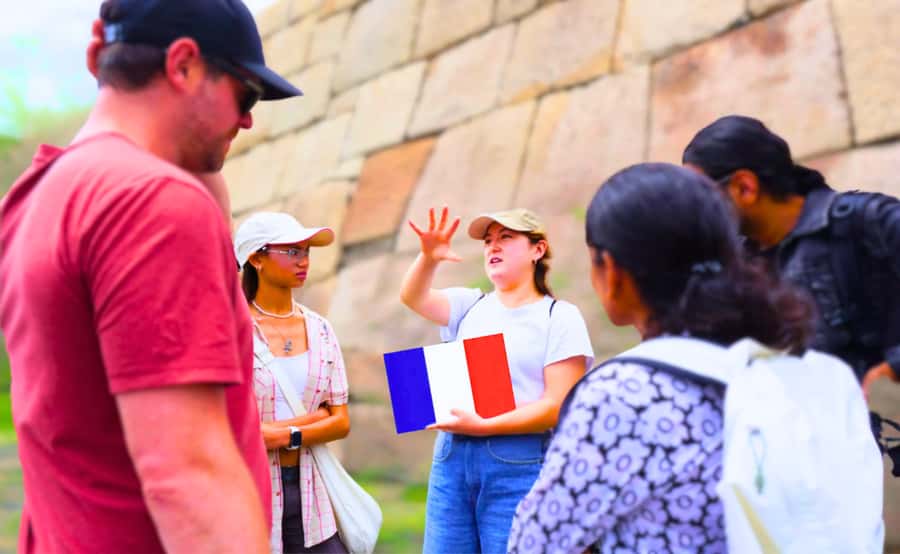
- Edo Castle is the real subject: You explore the former castle base, palace ruins, old soldiers’ barracks, and a miniature model of the former palace.
- The gardens add breathing room: Paths, water, Koi, and trees from across Japan soften what could otherwise be a purely historical walk.
- Nicolas may be your guide: The experience is listed with a French guide, and Nicolas is specifically praised for his explanations and wide-ranging answers.
- Small groups can feel personal: One recent group had five people, making conversation easy, though group size is not guaranteed.
- The meeting point is near Tokyo Station: Meet by the Starbucks near the fountain in Wadakuramon Fountain Park, then walk to Otemon Gate.
- The price is $40 per person: That is fair if you want context and conversation, but less compelling if you only want to stroll the gardens alone.
Why Edo Castle makes this more than a palace walk
Tokyo’s Imperial Palace can seem sealed off from ordinary sightseeing. Much of the inner palace is not open to the public, and the current Imperial residence is not the main focus here. The eastern gardens offer a different kind of access: you can walk through the former Edo Castle grounds and see where Japan’s political story took shape.
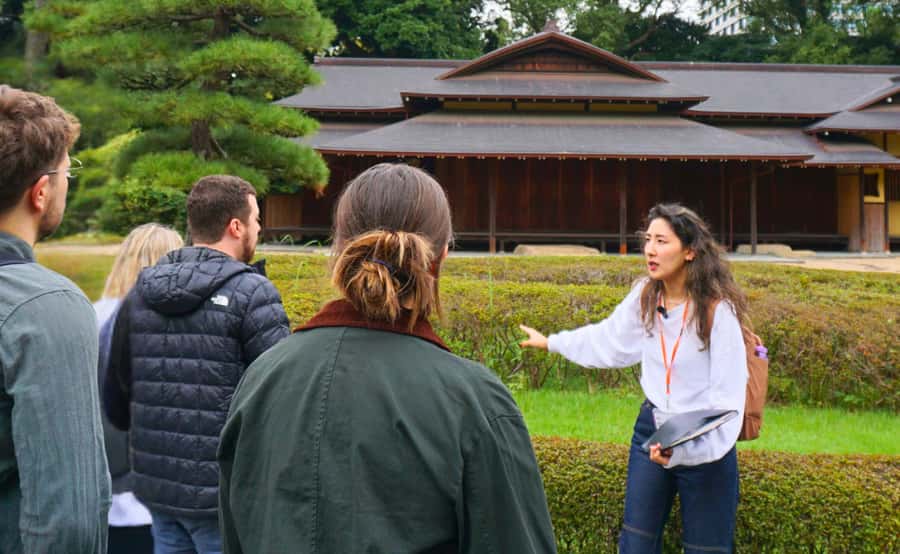
Your guide begins with the site’s earlier role as a fortified base. Edo Castle was far more than a residence. It was the center of the Tokugawa shogunate, the military government that controlled Japan for more than two and a half centuries. The tour connects that older power structure with the country you see today.
That link is the main value of the experience. Instead of treating the gardens as pretty scenery with a few stone walls, the guide helps you read the site. A gate, foundation, barracks area, or open courtyard becomes part of a larger explanation about power, warfare, government, and the Imperial family.
The tour also covers why the main castle no longer exists. The supplied details do not state the exact explanation, so your guide’s account will matter here. You will also see a miniature structure of the former palace, which helps you picture buildings that are no longer standing.
A few more Tokyo tours and experiences worth a look


From Wadakuramon Fountain Park to Otemon Gate
The meeting point is convenient if you are already using Tokyo Station or Otemachi Station. From either station, you walk about five to ten minutes to Wadakuramon Fountain Park, then head toward the Starbucks near the fountain.
This is the part of the tour where you should allow a little extra time. Tokyo Station has several exits and can be confusing, while the palace grounds are large and formal. The guide will hold a sign marked SUNRISE ADVENTURE, which should make the final meeting easier.
Do not cut it close. If you have not arrived within ten minutes of the meeting time, the group may leave without you. That rule is especially important here because the tour begins with a walk toward the main gate, not with a guide waiting inside the gardens.
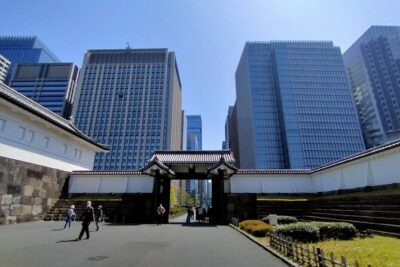
Once everyone meets, the group heads to Otemon Gate, the large main entrance to the eastern gardens. Passing through a major gate gives the visit a proper sense of arrival. You are leaving the modern business district and entering a place shaped by military planning and court life.
Walking through the eastern gardens
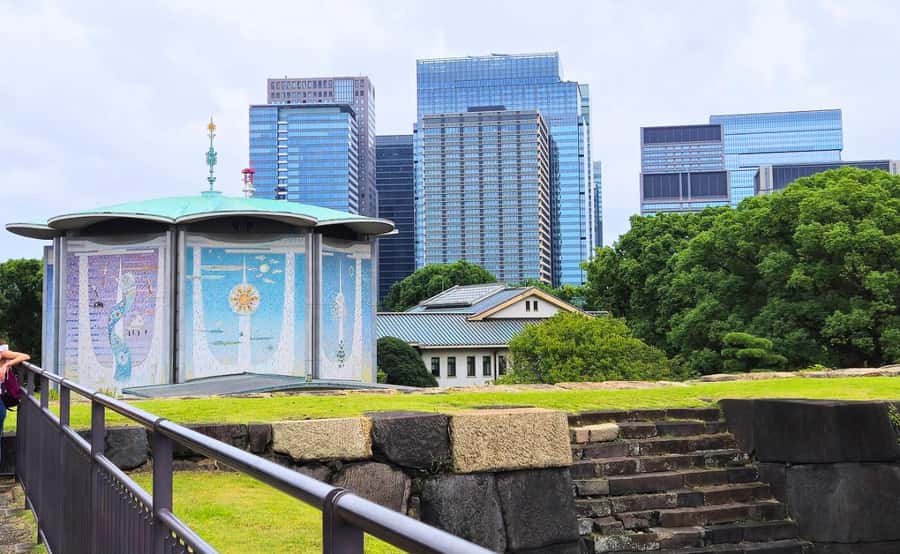
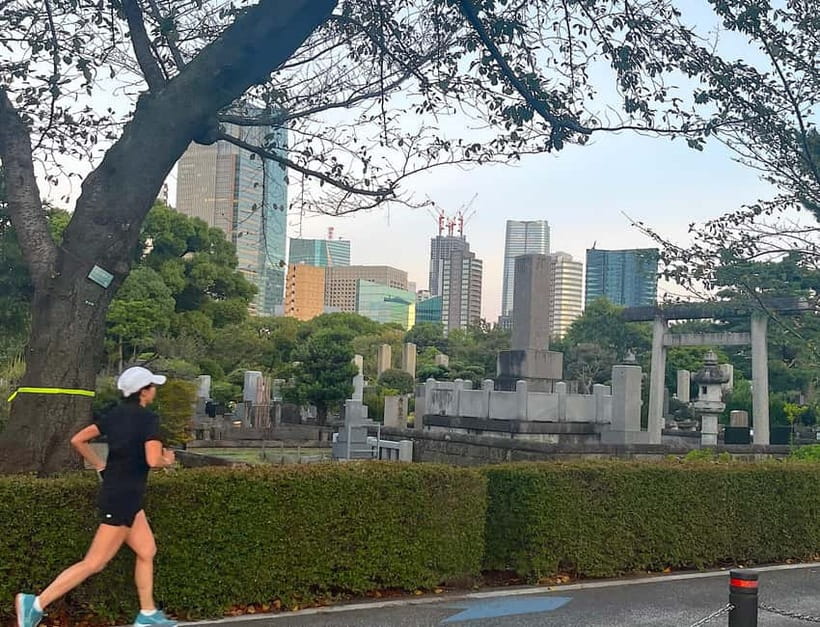
The gardens are one of the strongest parts of this experience. They give you a calm setting for a subject that could otherwise feel heavy with dates and names. The paths lead through landscaped areas, open spaces, old foundations, and palace-related remains.
I like tours that use scenery as part of the explanation rather than treating it as decoration. Here, the gardens help you understand the size and character of the former compound. The contrast between Tokyo’s busy streets and the quiet palace grounds also gives the history room to breathe.
Your guide points out trees from different prefectures of Japan. This detail adds a national dimension to the visit. You are not just looking at one historic site in Tokyo. You are seeing plant life connected with regions across the country, which gives the grounds a sense of Japan as a whole.
The gardens also offer good photo spots. You can expect opportunities to photograph paths, water, greenery, gates, stonework, and palace remains. The scenery changes with the weather, so bring clothing that suits the forecast and shoes you can walk in comfortably.
There is no promise of a particular seasonal display, and the tour is not presented as a formal botanical visit. The point is the combination of garden setting and historical interpretation. If your priority is flowers, plant labels, or a long period of independent photography, you may find the guided pace less flexible.
The castle ruins and the missing main keep

The former castle area gives the tour its strongest physical evidence. Even when a building has vanished, its foundations and surrounding space can show how important it once was. Your guide explains the former castle layout and the reason the main structure disappeared.
That explanation is useful because many visitors arrive expecting a Japanese castle silhouette. Instead, you find ruins, open ground, and traces of the old complex. The absence of the castle is not a failure of the site. It becomes a lesson in Japan’s changing political and architectural past.
You will also hear about the former soldiers’ barracks. This is a valuable counterpoint to the palace and castle story. Edo Castle was not only a place of rulers and ceremony. It needed guards, soldiers, workers, and a system capable of running a huge compound.
A miniature model of the former palace helps fill in what the ruins cannot show. Models are especially useful here because they let you connect the surviving foundations with the scale and shape of the buildings that once occupied them.
Do not expect a preserved interior or a restored castle room. This is an outdoor historical walk, and much of the interpretation depends on your guide’s storytelling. That makes the quality of the explanation important. Nicolas is described as comfortable discussing Japanese mythology, the language, the Imperial family, and wider questions about Japan, so you may get more from the visit if you arrive ready to ask questions.
Special Koi and trees from across Japan
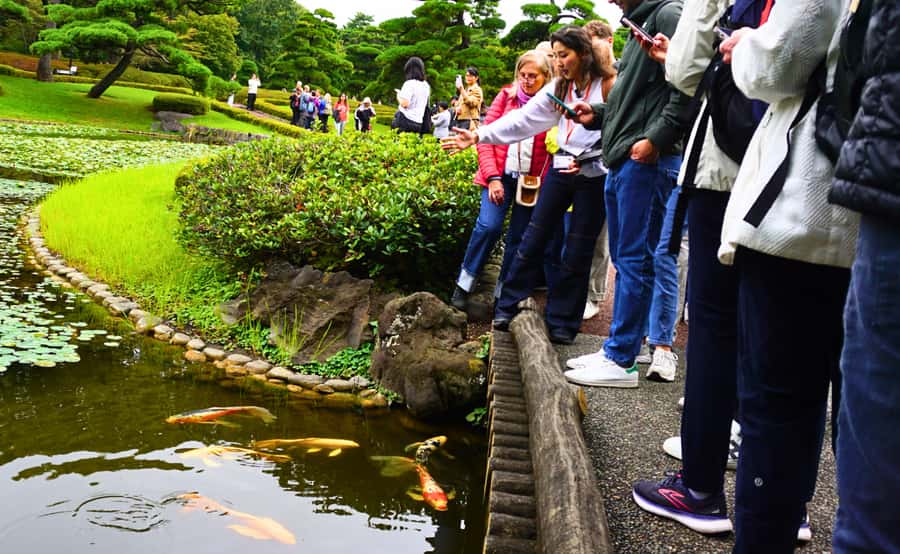
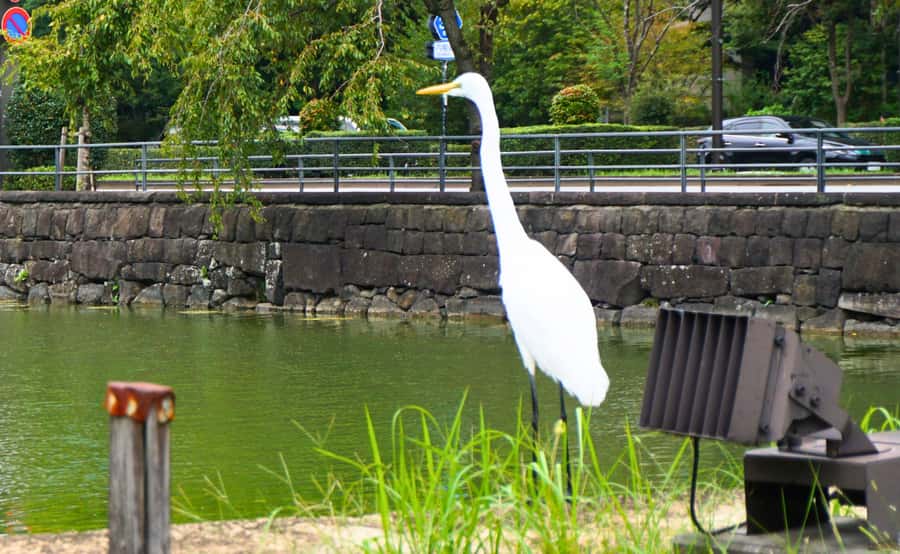
The Koi are a small but memorable part of the route. The tour introduces a breed that can only be found here, giving you something specific to look for instead of a general promise of garden scenery.
This detail works well for families and for anyone who likes a small surprise within a history tour. The fish also provide a pause between explanations about castle buildings, military life, and the Imperial household.
The trees from different prefectures serve a similar purpose. They are easy to pass without context, but a guide can explain why they are present and how they fit into the grounds. These details turn a walk through a landscaped park into a lesson in how the palace site represents Japan.
Still, keep your expectations measured. The experience does not promise a long wildlife visit or a special feeding session. The Koi are one stop within a broader historical walk, not the central attraction.
Other guided tours in Tokyo



A guide-led look at Japan’s transition to the present
The tour promises a broad subject: how Japan became the country it is today. That can sound ambitious for a walk through one set of gardens, but Edo Castle is a useful place to begin because it connects military rule, the Imperial family, and modern Tokyo.
A good guide can make these links clear without turning the tour into a classroom lecture. The strongest version of this experience will help you understand why the site mattered, how authority changed over time, and why the palace grounds remain important now.
The feedback associated with Nicolas points to a conversational style. He is described as answering many questions about Japanese mythology, the language, Japan in general, and the Imperial family. That matters because Japan’s history is not a single straight line. You may want to ask about customs, symbols, or terms that come up during the walk.
The tour is also listed as a French-language experience, despite the product title referring to an English guide. Treat this as a booking detail worth confirming before payment. If you need an English tour specifically, ask the operator to verify the guide language and scheduled guide before you commit.
Group size, pace, and the $40 price
At $40 per person, this is priced as a guided interpretation experience rather than a simple garden admission. The historical walking tour is included, while access to the inner palace is not.
I think the price is reasonable if you want a guide to explain what you are seeing. The value is in the context: Edo Castle’s role, the former barracks, the palace ruins, the missing main castle, the Koi, and the trees from different prefectures. You are paying to connect those pieces.
The value is weaker if you already know Japanese history or prefer to explore at your own pace. The eastern gardens can be appreciated without a guide, and the tour does not provide inner-palace access or a special behind-the-scenes entry.
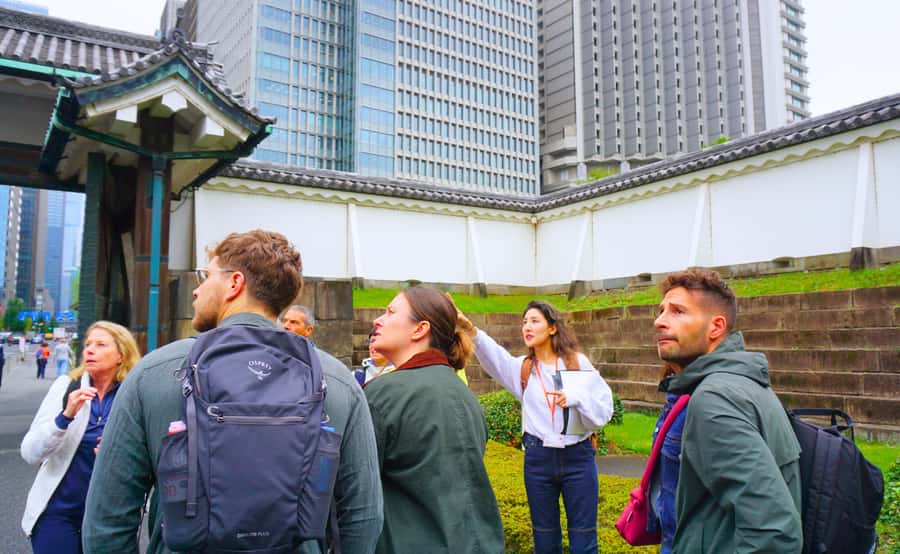
One small group had five people, which made it easy to talk with Nicolas and other members of the group. That sounds like an ideal setup for questions and a friendly exchange, but you should not assume every departure will have the same number of people.
The tour ends back at the original meeting point. That makes planning easier, especially if you want to continue around Tokyo Station or Otemachi afterward.
Practical tips for a smoother visit

Wear shoes suitable for walking and clothing that fits the weather. The tour runs in good weather or bad, so rain protection, sun protection, or an extra layer may make the difference between enjoying the gardens and simply trying to finish.
Arrive before the meeting time. Tokyo Station and Otemachi Station are both close, but the route through the station area and park can take longer than expected. Look for the Starbucks near the fountain in Wadakuramon Fountain Park and the guide’s SUNRISE ADVENTURE sign.
Keep your camera ready, but listen for the explanations behind the photo stops. The best images here are not only garden views. Stone walls, gates, old foundations, water, trees, and the contrast between the historic grounds and central Tokyo all help tell the story.
The rules are straightforward. Smoking, drones, alcohol, drugs, littering, and skateboards are not allowed. You also should not expect to enter the inner palace, since that is specifically excluded.
The booking terms are flexible: you can reserve and pay later, and cancellation is allowed up to 24 hours before the tour for a full refund. These terms are useful if your Tokyo schedule is still moving around, but the ten-minute late-arrival rule remains firm.
Who will get the most from this Imperial Palace tour?
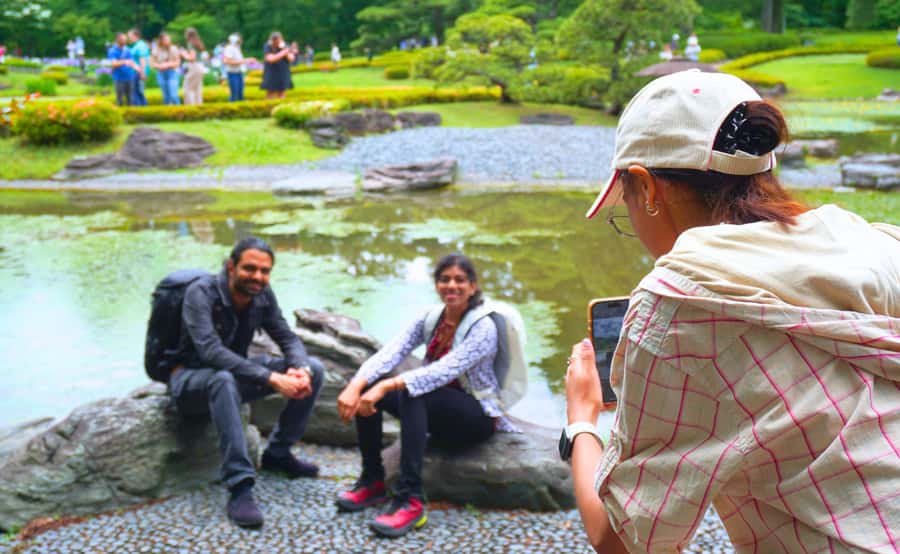
I would choose this tour if you want a readable introduction to Japanese history tied to a real place. It suits first-time visitors who want more than photographs, history fans who enjoy ruins and political stories, and curious visitors who like asking questions along the way.
It is also a good choice if you enjoy smaller, social tours. The experience can become more than a scripted walk when the guide has time to discuss mythology, language, and daily life in Japan.
Families may like the mix of castle remains, fish, gardens, and stories. The Koi and miniature palace give younger visitors something concrete to watch and picture, while the broad history helps adults understand the setting.
I would hesitate if you are looking for inner-palace access, a restored castle interior, or a purely English-language experience that has not been confirmed. I would also think twice if rain would spoil your day, since the tour goes ahead in poor weather.
Should you book it?
Book this Imperial Palace tour if you want the eastern gardens to make sense, not just look attractive. At $40, it offers fair value for a guide-led walk through Edo Castle’s former grounds, especially when you can ask about the Imperial family, Japanese mythology, language, and the country’s political changes.
Before booking, confirm the guide language. The supplied details identify French as the tour language, while the title says English guide. If that point is settled and you enjoy history with a personal guide, this is a worthwhile way to place modern Tokyo in its proper setting.
FAQ
Where does the Imperial Palace tour start?
Meet at the Starbucks near the fountain in Wadakuramon Fountain Park. Tokyo Station and Otemachi Station are both about a five to ten-minute walk away.
What gate do you enter during the tour?
The group walks to Otemon, the large main gate of the eastern Imperial Palace gardens, and enters the grounds there.
Does the tour include the inner palace?
No. Access to the inner palace is not included. The tour visits the eastern gardens, former Edo Castle grounds, ruins, and related outdoor areas.
What language is the tour conducted in?
The additional information lists French as the guide language, while the experience title refers to an English guide. Confirm the language with Sunrise Adventure before booking if English is essential for you.
What happens if I arrive late?
If you do not arrive within ten minutes of the meeting time, the group may begin the tour without you. Arrive early enough to find the fountain and Starbucks.
Can I cancel for a refund?
You can cancel up to 24 hours in advance for a full refund. The reservation also offers a reserve-and-pay-later option.
More Historical Tours in Tokyo



More Guided Tours in Tokyo
More Imperial Palace & Shogun Tours in Tokyo


More tours in Tokyo we've reviewed





Imperial Palace & Shogun Tours, compared.
 ★ 4.9Tokyo: Imperial Palace Japanese History Walking TourFrom $32
 ★ 4.9Tokyo: Imperial Palace and Shogun Walking TourFrom $162 hours
 ★ 5.0Imperial Palace East Garden and Edo Castle Walking Tour in TokyoFrom $25
 ★ 4.8Tokyo: Imperial Palace East Gardens Walking TourFrom $192h 30m
 ★ 4.5Tokyo: Imperial Palace, Sensō-ji Temple, & Tokyo Tower TourFrom $404 hours
 ★ 5.0Tokyo Castle, Imperial Palace, Shogun & Garden Walking TourFrom $31