Reviewed · ASAKUSA TOURS
Asakusa: A Big-picture History Walk to Know Japan
Asakusa is often sold as a quick stop for a red gate, a temple photo, and a snack. This two-hour walk takes a smarter route. It uses the Sumida River, Kaminarimon, Nakamise, Sensō-ji, and Asakusa Shrine to explain how Japan changed from a closed feudal society into a modern world power.
In This Article
- Five things to know before booking
- Why this short Asakusa walk works
- Starting beside the Ginza Line
- The Sumida River and Japan’s closed country
- Buddhism and Shinto from the information center
- Kaminarimon, dragons, and the famous red lantern
- Nakamise turns shopping into a history lesson
- Hōzōmon and the medieval comparison
- Sensō-ji, Tokyo’s oldest Buddhist temple
- Asakusa Shrine and a thousand years of coexistence
- What $58 buys you in two hours
- Who should book this walk
- Should you book the Asakusa history walk?
- FAQ
- Where does the Asakusa history walk meet?
- How long does the tour last?
- What language is the tour conducted in?
- Which places are included on the route?
- Is a guide included?
- Are headsets provided?
- Are snacks included?
- Can children join the tour?
- What happens if the tour is cancelled?
I like two things here. First, the guide connects small details, such as a Buddhist vajra or a dragon carving, to much larger ideas. Second, the tour makes Buddhism and Shinto easy to understand without drowning you in religious vocabulary. Guides such as Choco, Sachi, Amy, and Yoko are praised for keeping families and adults involved.
The main drawback is its pace. You cover a compact part of Asakusa, not all of Tokyo, and much of the value comes from listening closely. The headsets can add an echo for some people, and the walk involves a moderate amount of standing and walking.
Five things to know before booking
- The Sumida River opens the story: Learn how Japan’s long period of isolation ended, and why the Netherlands kept a narrow trading link with Japan.
- Buddhism and Shinto are explained on site: The tour shows how to approach a temple and shrine, rather than treating them as interchangeable photo stops.
- Ukiyo-e connects Asakusa to Europe: Nakamise becomes a lesson in how Japanese woodblock prints influenced Western Impressionist painters.
- The religious pairing is the big surprise: Sensō-ji and Asakusa Shrine share the same grounds, reflecting more than 1,000 years of Buddhist and Shinto coexistence.
- The tour suits curious families and adults: An eight-year-old enjoyed the fortune-telling activity, while teenagers and adults responded well to the historical explanations.
- The price buys interpretation, not admission: At $58 per person, you are paying for a certified guide, a structured route, snack tastings, and context at every stop.
Why this short Asakusa walk works
The clever idea is to treat Asakusa as a small map of Japan. In a short distance, you move from the river that once connected Japan to foreign powers, through a famous shopping street, and into two major religious sites.
I like this approach because Asakusa can otherwise feel like a string of attractive but disconnected sights. You see a huge lantern, colorful shops, temple roofs, incense, and shrine buildings. Without explanation, the visit can remain pleasant but shallow. Here, each stop answers a basic question: What is this? Why is it here? What does it tell you about Japan?
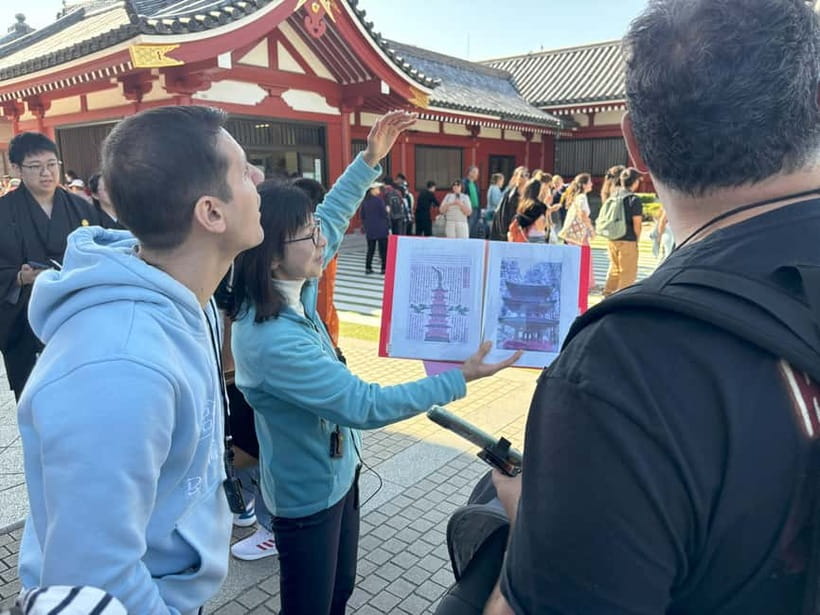
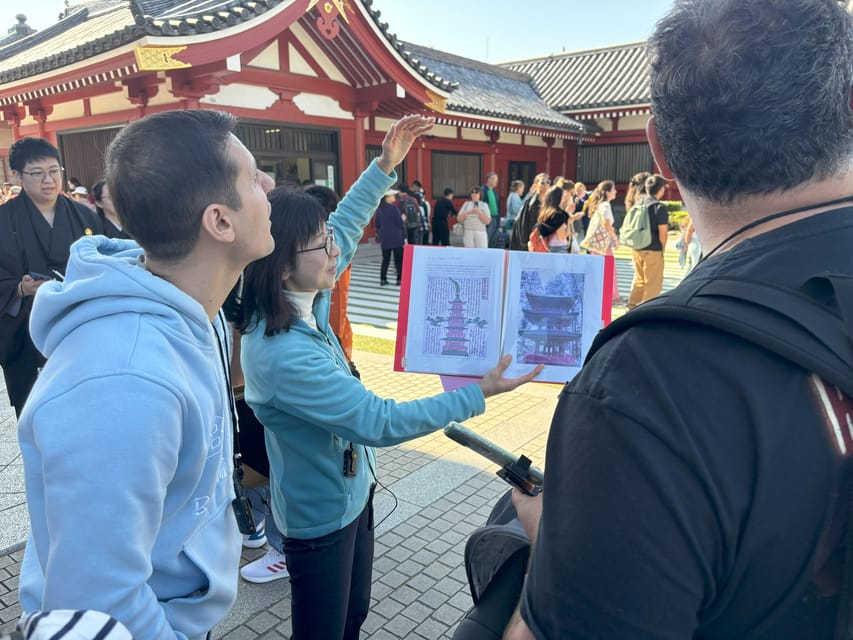
The English-speaking guides take different personal approaches, but the strongest pattern is clear explanation. Sachi is especially good at keeping young people involved, while Amy has used printed images to make difficult ideas easier to follow. Choco has a friendly style that works for adults and children, and Yoko combines local-area advice with lessons about Asakusa’s spiritual life.
The activity is rated 4.6 from 77 ratings, which fits the experience well. It is not a grand tour of Tokyo. It is a focused orientation walk that helps you make more sense of places you may visit again on your own.
A few more Tokyo tours and experiences worth a look


Starting beside the Ginza Line
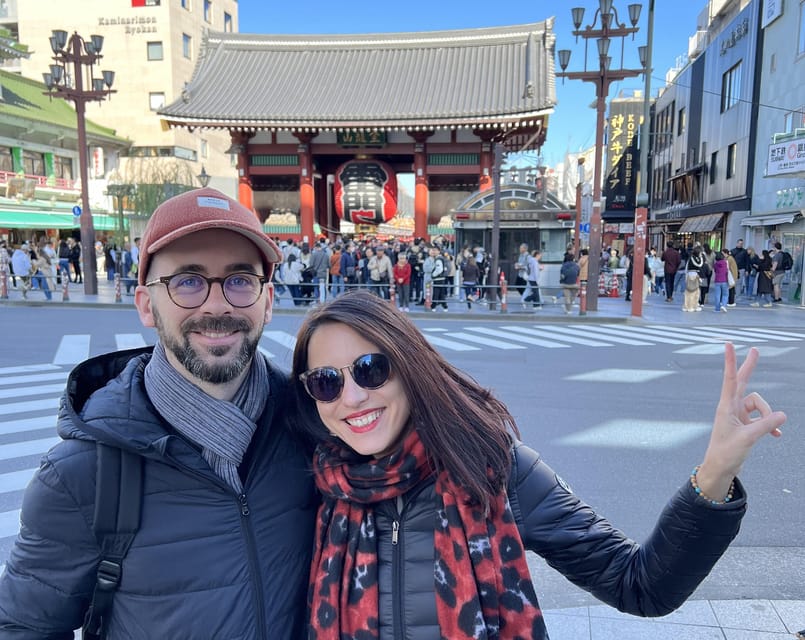
Meet at 2-chōme-20-6 Kaminarimon, in front of the Burger King beside Exit 4 of Asakusa Station on the Ginza Line. Step outside the exit rather than waiting underground. This is a simple meeting point, but give yourself enough time to find it, since Asakusa has several rail and subway stations and the exits are not interchangeable.
The tour lasts two hours. That is long enough for a serious introduction but short enough to fit into a busy Tokyo day. I would place it near the beginning of your Asakusa visit. Once you understand the symbols and customs, you can return to the temple and shrine later with a better eye.
Wear comfortable shoes and bring water. The walk operates in rain, so weather-ready clothing matters. You are outdoors much of the time, and there are periods of standing while the guide explains a site.
The Sumida River and Japan’s closed country
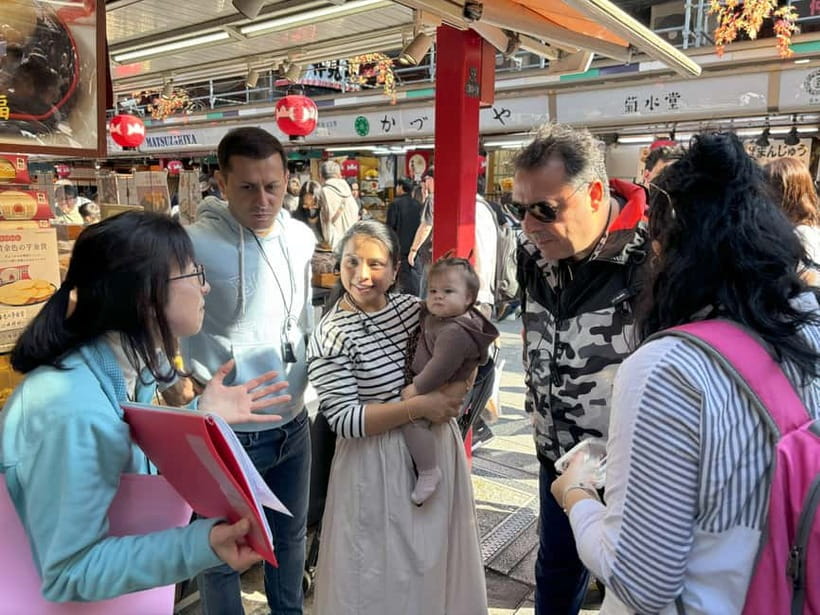
The first stop is Tokyo Cruise Asakusa Pier, where the guide uses the river as a starting point for Japan’s foreign relations. This is a good choice. A riverfront gives you physical space to think about ships, trade, defense, and the relationship between Tokyo and the wider world.
You learn why the Edo shogunate restricted foreign contact for more than 200 years. The Netherlands was the one European country allowed to maintain a limited trading relationship, a detail that helps explain how some Western knowledge still reached Japan during the period of isolation.
The story then moves to Admiral Perry and the American ships that pressured Japan to reopen. The guide links this turning point with modern Tokyo, including Odaiba’s former gun batteries and the Statue of Liberty replica facing the Pacific.
This section is especially useful if you know Japan mainly as a modern technology center. It shows that Japan’s opening was not a smooth, voluntary change. It was a major political shock that helped set the stage for rapid modernization.
You will not board a boat on this tour. The pier is a viewing and teaching point, not a cruise. That distinction matters if you are comparing this activity with a river sightseeing trip.
Buddhism and Shinto from the information center
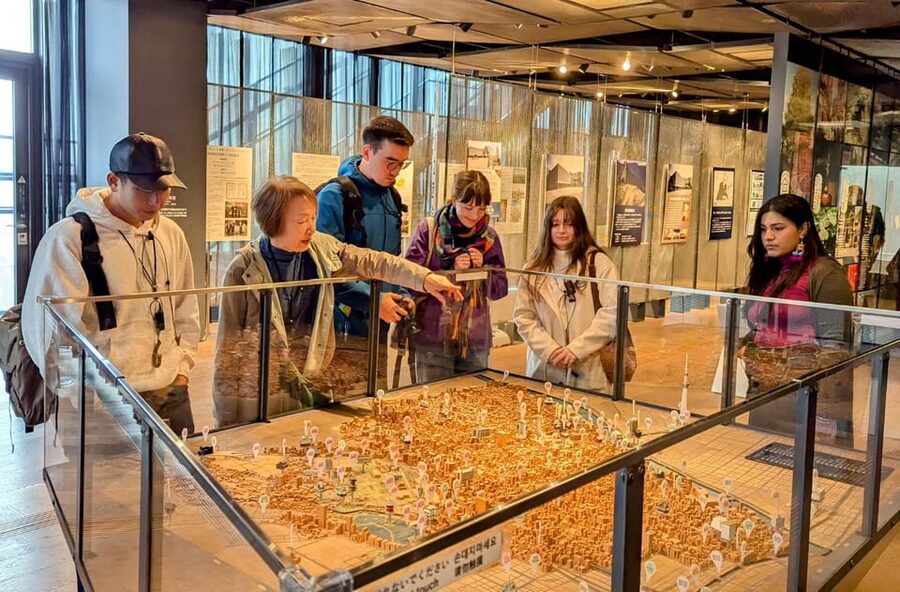
At the Asakusa Culture Tourist Information Center, the guide introduces Buddhism and Shinto before you enter the major religious sites. This preparation pays off later.
Many first-time visitors see a torii gate, a temple roof, incense, and people praying, but are unsure which traditions they belong to. The tour gives you a working framework. Shinto is Japan’s native religious tradition, while Buddhism arrived from outside Japan and developed alongside local beliefs.
The point is not to force every practice into a neat Western category. Instead, you learn to notice visual and ritual differences. That makes the later stops more meaningful, particularly when the guide explains how prayer works in each tradition.
The information center is also a practical place to get your bearings in Asakusa. The stop lasts about 15 minutes, so expect a brisk introduction rather than a long lecture.
Kaminarimon, dragons, and the famous red lantern
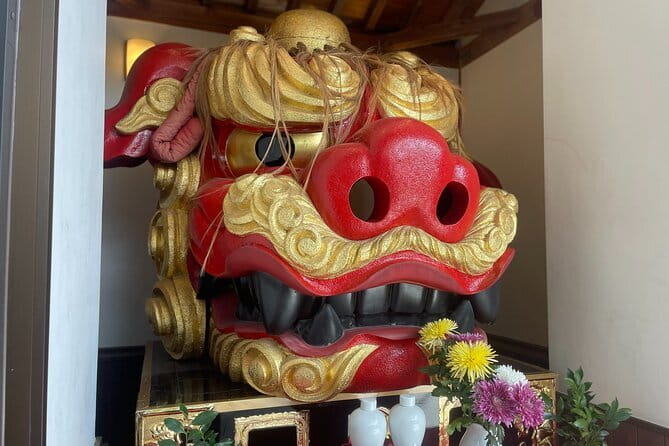
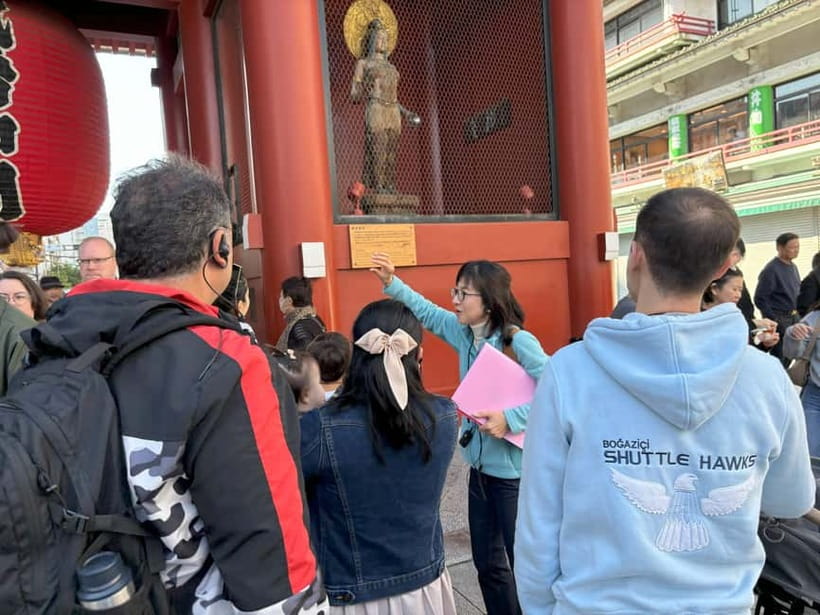
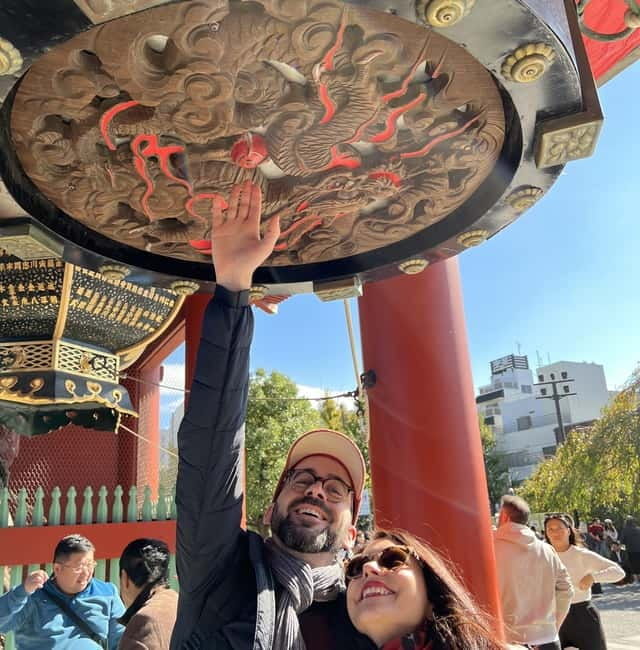
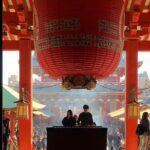
Kaminarimon, or Thunder Gate, is Asakusa’s most recognizable entrance. Its giant red lantern makes an easy photograph, but the guide uses the gate for a lesson in cultural symbolism.
One memorable topic is the difference between Japanese and Western dragons. In many European stories, dragons are enemies to defeat. The Japanese dragon has a different role and is not treated as a simple symbol of evil. This contrast is a quick way to see how similar-looking images can carry very different meanings.
The value here is learning to stop treating decoration as background. Once someone explains the symbols, you begin to look at temple and shrine architecture with more care. You may still want the photograph, but you also understand what you are looking at.
Kaminarimon is a public thoroughfare and a famous meeting place, so expect people, movement, and photo stops. The guide must keep the group together without blocking the entrance. A headset is provided for groups of three or more, which helps in a noisy setting, though one person found the sound slightly echoing.
Other walking tours we've reviewed in Tokyo


Nakamise turns shopping into a history lesson
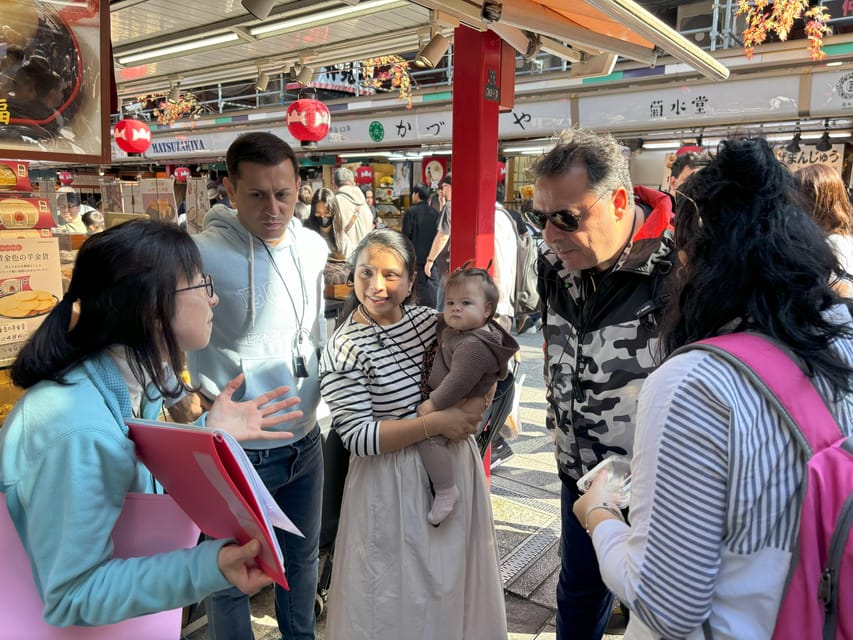
Nakamise Shopping Street leads from Kaminarimon toward Sensō-ji. The shopfronts sell snacks, souvenirs, traditional goods, and small gifts. It is tempting to rush through while looking for something to eat, but this is where the tour spends its longest single period, about 30 minutes.
The guide discusses Buddhist symbols, including the vajra, also called tokko. You learn how an object that looks decorative can carry religious meaning. The conversation then shifts to ukiyo-e woodblock prints and their surprising journey to Europe.
Japanese woodblock prints influenced Western artists, including Impressionist painters. This is one of the tour’s best global connections because it turns a local art form into part of a much larger artistic exchange. The point is not simply that European painters admired Japanese prints. You also learn to notice the sorts of qualities that made the prints influential, such as unusual framing and fresh approaches to space and composition.
Nakamise is also where the tour feels most like ordinary Asakusa life. You are not in a quiet museum. You are walking through a commercial street that serves both worshippers and sightseers. Traditional snack tastings are included, giving you a small taste of the area without turning the activity into a food tour.
Keep your expectations realistic. The snack tasting is an added feature, not a full meal. If you want time to shop, take photographs, and browse every stall, you may need to return after the tour.
Hōzōmon and the medieval comparison
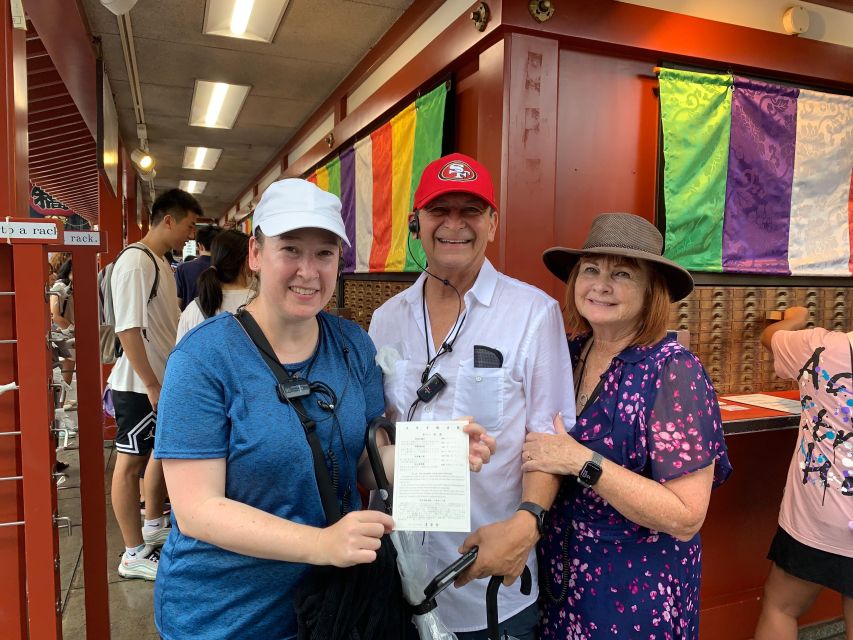
Hōzōmon Gate, also called the Treasure Gate, provides another visual lesson before you reach the main temple. The guide uses this stop to compare Japan and Europe around 1,000 years ago.
The surprising point is that people in Japan and Europe shared some similar ways of thinking during the medieval period. That does not mean the societies were alike in every way. It means that people separated by great distances still developed comparable concerns about religion, authority, protection, and the organization of society.
This comparison helps correct a common travel mistake: seeing Japan as completely cut off from all familiar human ideas. The country developed its own institutions and artistic forms, but its people were dealing with many questions that would feel recognizable to Europeans of the same broad era.
Hōzōmon is also a useful pause before Sensō-ji. The route moves from street commerce to a more formal religious setting, and the guide helps you notice that change.
Sensō-ji, Tokyo’s oldest Buddhist temple
Sensō-ji is the central sight of the walk. It is Japan’s oldest Buddhist temple, and its scale and history can make it hard to know where to begin. The guide gives you a clear way in.
You learn how to read the temple setting and how Buddhist prayer differs from Shinto prayer. That distinction is one of the most practical parts of the experience. Instead of copying what someone else is doing, you get an explanation of the actions and their religious setting.
The guide also returns to the comparison between Japan and Europe, this time through the medieval period. The goal is to show that religious buildings were not just places of private belief. They shaped public life, art, authority, and community.
Sensō-ji can be crowded, and the atmosphere changes depending on the day. During the Sanja Matsuri, one participant saw a mikoshi parade, an event that added a vivid local dimension to the historical explanation. A festival cannot be promised, but if your visit overlaps with one, the guide can help explain what you are seeing.
Families should know that the historical focus leans toward adults, but children can join. An eight-year-old particularly enjoyed the fortune-telling activity near the temple entrance. That gives younger children something hands-on while the adults listen.
Asakusa Shrine and a thousand years of coexistence
The final stop is Asakusa Shrine, located on the same grounds as Sensō-ji. For many people, this is the moment when the tour’s earlier lessons click into place.
A Buddhist temple and a Shinto shrine sharing one religious complex may seem unusual if you expect religions to occupy separate spaces. In Japan, Buddhist and Shinto practices coexisted for more than 1,000 years. The guide explains why this arrangement developed and how worshippers could take part in both traditions.
This is more than an architectural curiosity. It gives you a useful lens for the rest of Japan. Religious life here does not always fit the either-or pattern many people bring from home. A person may visit a shrine for one purpose and a temple for another without seeing a contradiction.
Ending here is a strong choice. You finish with a practical understanding of how to behave respectfully at both kinds of site, plus a broader idea about Japanese culture that you are unlikely to get from photographs alone.
What $58 buys you in two hours
The price is $58 per person. There are no hotel transfers or major admission costs included, so the value depends on how much you want interpretation.
If you only want to see Kaminarimon and Sensō-ji, you can do that independently. Asakusa is easy to explore on foot, and the main sights are close together. The fee makes more sense if you want a guide to explain the political history, religious practices, art connections, and cultural symbols in one organized visit.
You receive a certified guide, the walking tour, traditional snack tastings, and headsets for groups of three or more. You can also reserve now and pay later, and cancellation is free up to 24 hours before the activity.
The tour may be good value for a first visit, especially if you have limited time in Tokyo. It is less useful for someone who prefers to wander silently or already has a strong grasp of Japanese history and religion.
Who should book this walk
I would recommend it to first-time visitors who want a framework for Japan rather than a list of photo stops. It also fits families with older children and teenagers, since the guides can adjust their explanations and add simple activities such as temple fortune telling.
It is a good match for you if you want:
- A short introduction before exploring Asakusa alone
- Clear explanations in English
- Help understanding temple and shrine manners
- Connections between Japanese history and Europe
- A guide who can answer questions as you walk
- A compact route with no hotel-transfer time
Think twice if mobility is a serious concern. The activity involves a moderate amount of walking and is not recommended for people with mobility impairments, although the supplier asks people with mobility issues to contact them in advance and will try to help.
The tour runs rain or shine. Bring water, wear comfortable shoes, and dress for the forecast.
Should you book the Asakusa history walk?
Book it if you want Asakusa to make sense. The best parts are the explanation of Japan’s isolation, the clear comparison of Buddhism and Shinto, the ukiyo-e connection to Western art, and the final lesson about religious coexistence at Sensō-ji and Asakusa Shrine.
Skip it if you only want free time for shopping and photographs. Two hours is a firm schedule, and the route covers a small part of the district. For most first-time visitors, though, $58 is a fair price for a compact lesson that gives the rest of your Japan trip more context.
FAQ
Where does the Asakusa history walk meet?
The meeting point is in front of the Burger King restaurant next to Exit 4 of Asakusa subway station on the Ginza Line, station G19. Step outside Exit 4 when you arrive.
How long does the tour last?
The tour lasts two hours.
What language is the tour conducted in?
The live tour guide speaks English. An English audio guide is also included.
Which places are included on the route?
The route includes Tokyo Cruise Asakusa Pier, Asakusa Culture Tourist Information Center, Kaminarimon, Nakamise Shopping Street, Hōzōmon Gate, Sensō-ji Temple, and Asakusa Shrine.
Is a guide included?
Yes. A certified guide leads the walking tour.
Are headsets provided?
Headsets are provided for groups of three or more so you can hear the guide more clearly.
Are snacks included?
Yes. Traditional snack tastings are included.
Can children join the tour?
Children younger than six may join without charge. Families are welcome, although the historical focus is recommended mainly for adults.
What happens if the tour is cancelled?
The tour requires a minimum number of participants. If that number is not reached, the supplier will notify you at least 24 hours before the start, and you will receive a full refund.
More Historical Tours in Tokyo

More Walking Tours in Tokyo
More Asakusa Tours in Tokyo
More tours in Tokyo we've reviewed




Asakusa Tours, compared.
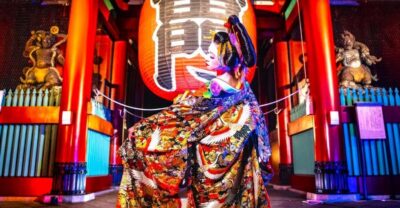 ★ 4.8Tokyo: Japanese Dance Cabaret Theater Asakusa-Kaguwa TicketFrom $492 hours
 ★ 4.7Tokyo: Meiji Shrine, Asakusa, Skytree Bus Tour and CruiseFrom $12210 hours
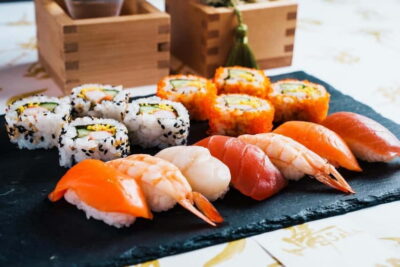 ★ 4.9Tokyo: Roll and Authentic Sushi Making Class in AsakusaFrom $581h 40m
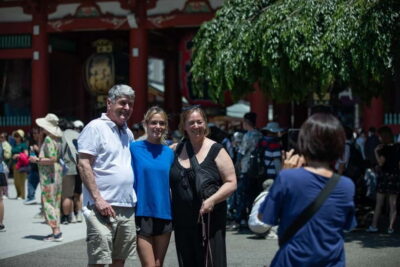 ★ 4.8Tokyo: Asakusa Walking Tour with Sensoji Temple VisitFrom $222 hours
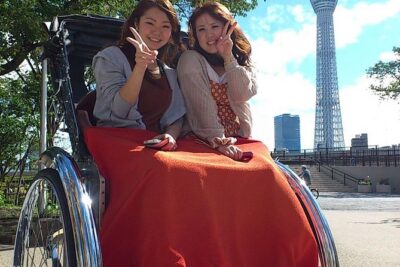 ★ 5.0Tokyo Asakusa Rickshaw TourFrom $42
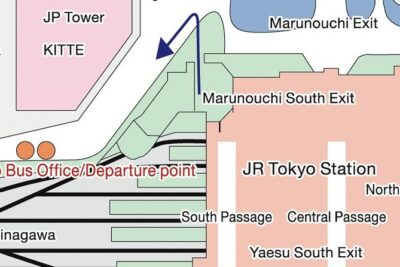 ★ 4.5Tokyo Panoramic 1 Day: Meiji Shrine, Asakusa, Odaiba and SKYTREE®From $85