Reviewed · GUIDED
Private Tokyo Tour with Licensed Guide & Vehicle (Max 15 persons)
Tokyo is a city where a short list of sights can eat up a whole day. This private tour solves that problem with a car, driver, and licensed English-speaking guide, letting you choose three or four stops from a long menu of Tokyo highlights. You might visit Meiji Jingu, Senso-ji, Shibuya Crossing, Tsukiji, or Akihabara without learning the city’s rail map first.
In This Article
- Key Points Before You Book
- What This Private Tokyo Tour Really Offers
- Imperial Palace: Edo-Era Atmosphere in the Center
- Takeshita Street and Harajuku Fashion
- Senso-ji and Old Asakusa
- Kappabashi Street for Kitchen Culture
- Meiji Jingu: Quiet Trees and Shinto Tradition
- Tsukishima Monjya Street and Tokyo Food
- Ginza for Department Stores and Fine Shopping
- Shibuya Crossing and Hachiko
- Akihabara for Anime, Electronics, and Gachapon
- Yanaka Ginza and Ueno Park
- Tokyo Tower and Tsukiji Market
- How to Build a Sensible Six-Hour Route
- Comfort, Group Size, and Accessibility
- The Guides Make the Difference
- Should You Book This Tokyo Tour?
- FAQ
- How long is the private Tokyo tour?
- How many people can join the private tour?
- How many sights can I visit?
- Is hotel pickup and drop-off included?
- Is transportation included?
- Are meals included?
- Are admission fees included?
- Are child car seats available?
- Can I cancel for a full refund?
I like the custom planning and the fact that your guide can shape the day around food, shopping, history, culture, children, or mobility needs. I also like the two-person team: the guide explains what you are seeing while the driver handles Tokyo traffic and drops you close to key entrances.
The catch is simple: six hours is not long enough for everything. The listed stops are tempting, but choosing twelve would be impossible. This is best treated as a focused introduction, not a complete Tokyo tour.
Key Points Before You Book
- Choose three or four sights: The long stop list is a menu, not a promise that you will visit every place.
- Ride in a private vehicle: Hotel pickup and drop-off save time and reduce the strain of Tokyo’s large train system.
- Get a licensed English-speaking guide: Guides such as Yoshi, Kazu, Taku, Hideki, and Mari have tailored days to family interests, food requests, history, shopping, and accessibility needs.
- Mix old and new Tokyo: Pair Senso-ji or Meiji Jingu with Shibuya, Ginza, Akihabara, or Tokyo Tower.
- Plan early for crowded sights: An early start helps at Senso-ji, especially on a Saturday or during a busy season.
- Budget for extras: Lunch, personal purchases, and some admission fees are not included.
What This Private Tokyo Tour Really Offers
This is not a fixed sightseeing circuit. It is a private car tour built around your priorities, with the practical help of a guide and driver working together.
The price is listed as $553.58 per group of up to four people. That may look steep beside a train-based day, but the value changes when you divide it among a family or small group. You are paying for a private vehicle, hotel pickup and return, a licensed guide, route planning, and the ability to avoid repeated transfers across a city that spreads widely.
For a group of four, the cost works out to about $138 per person before meals and admission fees. Larger groups can reach 15 people, although the stated price is for up to four, so you should confirm the cost for your party before booking.
The strongest part of the experience is the flexibility. Guides have adjusted plans for teenagers, older parents, children, wheelchair users, specific shops, dietary needs, cherry blossom viewing, and limited time before a cruise. One guide, Taku, prepared a detailed schedule and visual notes about Japanese history, religion, customs, and geography. Another, Mari, recommended a tonkatsu restaurant and helped plan the next day.
That personal planning matters in Tokyo. You might want broad sightseeing, but you might instead need a day that moves at an easier pace. You can ask to focus on food, anime, temples, shopping, gardens, or photography. Just remember that each added interest means fewer stops.
Other guided tours in Tokyo
Imperial Palace: Edo-Era Atmosphere in the Center
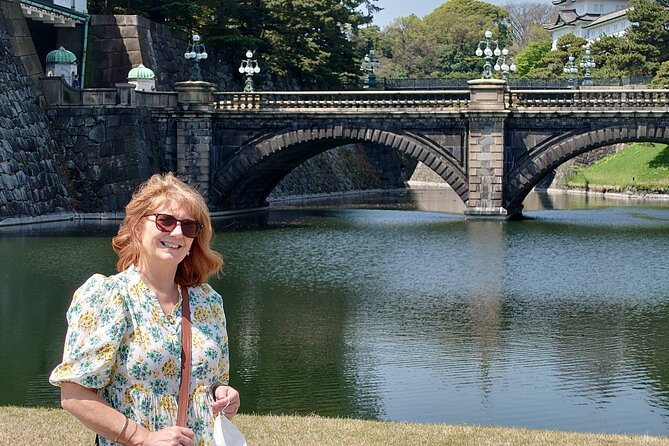
The Imperial Palace area gives you a quick look at Tokyo’s political and historic core. The grounds include remnants connected with the Edo period and natural surroundings that feel surprisingly calm for such a central location.
The planned stop is about 30 minutes. That is enough for photos and an overview, but not for a slow garden visit or a detailed exploration of every remaining structure. If you care most about Japanese history, tell your guide in advance so this stop gets enough attention.
Some guides use maps, photographs, charts, and simple timelines to explain the city. That extra context can make a short palace visit more meaningful than simply taking a picture at the nearest gate.
Takeshita Street and Harajuku Fashion
Takeshita Street is the stop for youthful Harajuku style, kawaii goods, and clothes you may not find elsewhere. It is a good choice for teenagers, shoppers, and anyone curious about a very specific side of modern Japanese pop culture.
Thirty minutes gives you a taste rather than a full shopping session. If you want to buy clothing, cosmetics, character goods, or snacks, agree with your guide about priorities before you arrive. Shopping takes time, and browsing freely can easily replace another planned stop.
The private format helps here. Your guide can point you toward the kind of shop you want instead of sending you into the street with only a general direction. One family used the time for a dog café and an otter café, showing how useful the custom approach can be for children and teens. Those activities are not guaranteed parts of the tour, so request them ahead of time if they matter to you.
Senso-ji and Old Asakusa
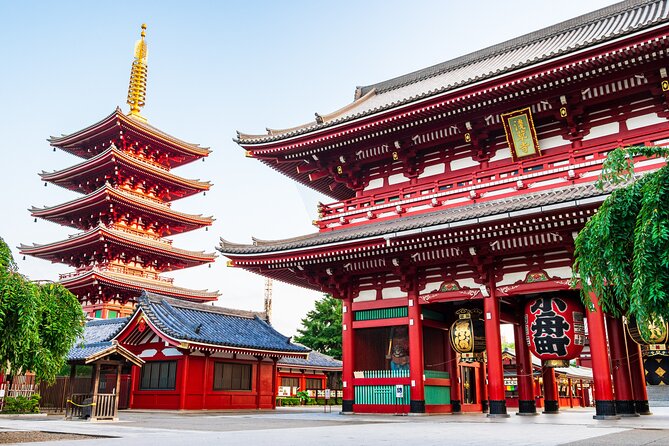
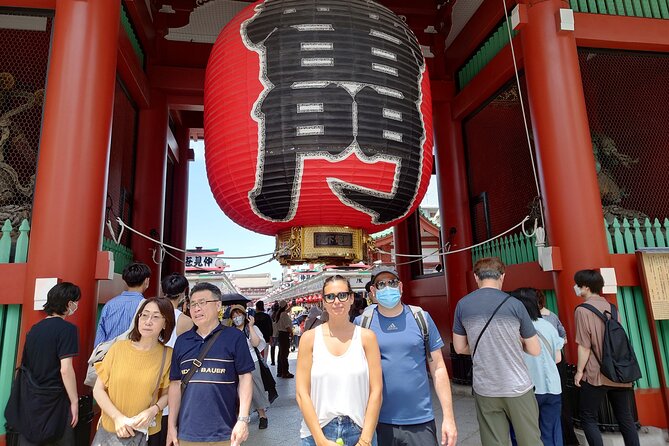
Senso-ji is one of the best choices for a first Tokyo visit. The temple and surrounding Asakusa area offer a strong sense of older Tokyo, with traditional religious architecture, small shops, souvenirs, and street food.
Look for dango, small mochi balls, and agemanja, a fried sweet filled with red bean paste. The nearby shopping street is useful for gifts, but it can become intensely crowded.
Here is the practical advice: choose an 8 or 9 a.m. start if Senso-ji is important to you. An early visit can be much easier, especially on a Saturday. A 30-minute stop works for a quick introduction and photos, but you may want more time if you plan to eat, shop, and examine the temple grounds.
One family with a wheelchair found the area difficult when crowds grew. The private vehicle helped with drop-offs at accessible points, but the temple area itself can still be hard to move through when packed. Tell the operator about mobility needs before the tour.
Kappabashi Street for Kitchen Culture
Kappabashi Dogugai is a fun choice for cooks, food lovers, and shoppers seeking something more distinctive than a standard souvenir. The street is known for Japanese cooking tools and remarkably realistic plastic food displays.
You can browse utensils and look for a miniature food model keychain. The stop is listed at 30 minutes, which is enough to see the displays and make a few purchases, but serious kitchen shoppers may want to trade away another stop.
This is one of the tour’s more original options. It shows everyday Japanese food culture rather than only famous monuments. Ask your guide to include it if you would rather shop for knives, dishes, or restaurant-style goods than visit another observation deck.
Other private tours in Tokyo

Meiji Jingu: Quiet Trees and Shinto Tradition
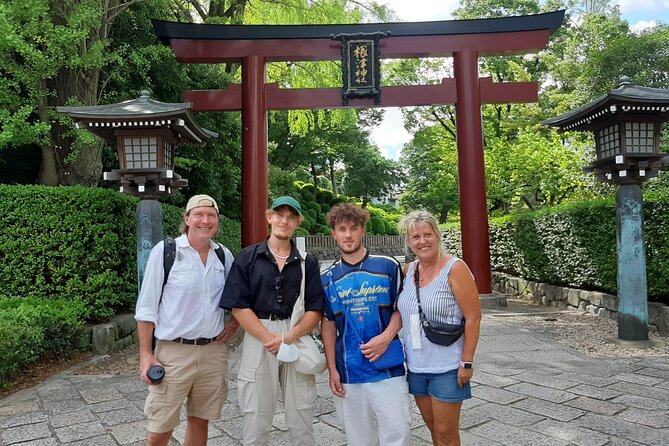
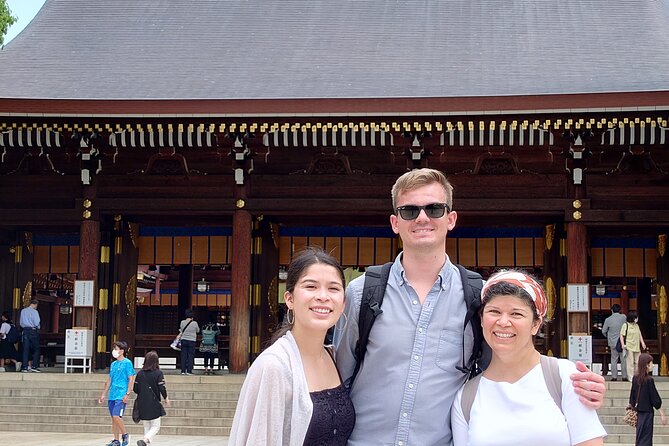
Meiji Jingu offers a welcome change of pace. Set among old trees, the shrine gives you room to slow down and learn about Shinto practice in the middle of Tokyo.
The stop takes about 30 minutes, and admission to the shrine itself is not listed as included. The setting is peaceful, but do not confuse a short visit with a full study of the shrine. You will have time to walk in, see the main area, take photos, and ask questions.
Several guides have used photographs and charts to explain Japanese religion and customs. That can be especially helpful here, where a respectful visit depends on understanding what you are seeing. For many people, Meiji Jingu becomes the emotional center of the day because it feels so different from the city streets outside.
Tsukishima Monjya Street and Tokyo Food
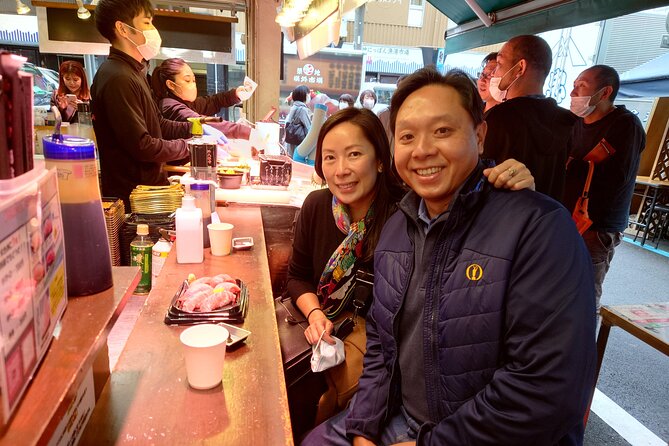
Tsukishima Monjya Street is the food-focused choice. Monjayaki is a Tokyo specialty, and the area has restaurants where you can try it in a local setting.
The tour allows about 30 minutes, though a proper meal may require more time. Lunch is not included, and you should expect to pay for food yourself. If eating is central to your day, tell the guide so the schedule does not leave you with only a rushed taste.
The food focus can also be adjusted for dietary needs. One guide arranged lunch around restrictions and explained how to use sauces and side dishes at a tonkatsu meal. That kind of help is valuable if Japanese menus or dining customs feel unfamiliar.
Ginza for Department Stores and Fine Shopping
Ginza is aimed at shoppers who enjoy polished department stores, luxury brands, and high-quality goods. You can browse major department stores or look for pearls at Mikimoto.
This is not the stop for bargain hunting. It makes sense if you want a special purchase, a refined department-store food hall, or a look at Tokyo’s upscale retail district. Thirty minutes is short for serious shopping, so name a specific store before the car arrives.
The private vehicle is useful here because you can be dropped near your chosen destination rather than navigating a large station and several city blocks with shopping bags.
Shibuya Crossing and Hachiko
Shibuya Crossing gives you one of Tokyo’s most recognizable modern scenes. People move across the intersection in several directions at once, while the nearby statue of Hachiko recalls the loyal dog known throughout Japan.
The stop is particularly good for first-time visitors and for photos. It is also easy to overestimate how much you can do nearby in 30 minutes. If you want time at the crossing, Hachiko, and a shop or café, you may need to cut another stop.
Some guides have added nearby points of interest or adjusted the schedule for a particular request. The value here comes less from a long explanation and more from getting positioned efficiently, understanding what you are seeing, and moving on without losing time.
Akihabara for Anime, Electronics, and Gachapon
Akihabara is the choice for anime fans, technology fans, and anyone fascinated by Japan’s game and character culture. You can look for anime goods, electronics, and gachapon capsule-toy machines.
A short stop works as an introduction, especially if someone in your group has a clear target. It will not satisfy a serious collector who wants to visit many stores. Tell your guide the characters, products, or shops you care about.
This stop is also useful for families. One six-hour group added an anime-area drive-through and a convenience-store visit because a daughter wanted to see those everyday Japanese details. The guide’s ability to add small personal requests is one reason this tour works better than a rigid bus route.
Yanaka Ginza and Ueno Park
Yanaka Ginza Shopping Street offers a more old-fashioned shopping experience, with small stores, snacks, and the possibility of seeing the area’s famous stray cats. Croquettes are a local treat to look for.
It is a gentle alternative to Ginza or Harajuku. You will find a more neighborhood-like setting, but the 30-minute stop still limits how much you can browse and eat.
Ueno Park is allotted only 10 minutes, so think of it as a quick look, not a park visit. The area includes museums, a zoo, Toshogu Shrine, and Shinobazu Pond. It is also known for cherry blossom parties. If flowers are your goal, say so clearly. One guide reshaped an entire day around late cherry blossoms and took an older parent to three gardens.
Tokyo Tower and Tsukiji Market
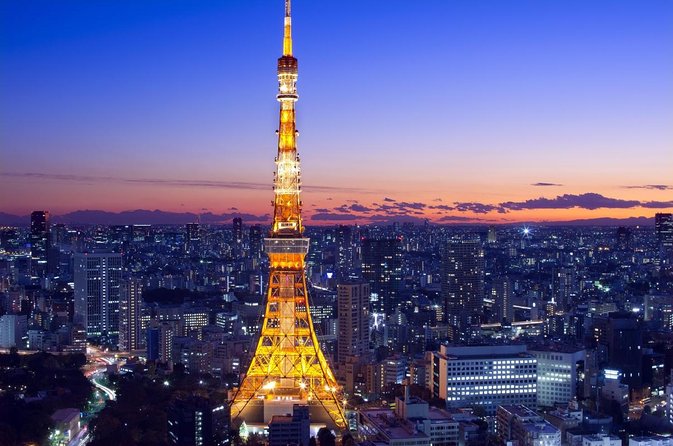
Tokyo Tower is a good photo and city-view stop. The tour includes access only up to the main deck, and the top deck is not included. Admission is not included either, so check the current cost before you commit to it.
The 30-minute allocation may be tight if lines are long. One family found that an observation tower could consume about 90 minutes once elevator queues and movement inside were counted. If Tokyo Tower is a must, consider making it one of your main stops rather than squeezing it between several others.
Tsukiji Fish Market refers to the old market area and its outer-market food shops. It is a strong choice for eating, browsing, and trying unusual foods. You will pay for purchases yourself, and 30 minutes can pass quickly if you stop at several stalls.
How to Build a Sensible Six-Hour Route
Do not choose four places simply because they sound good on paper. Tokyo traffic, walking, elevator lines, meals, photos, and shopping all take time.
A sensible plan might pair:
- Meiji Jingu, Takeshita Street, Shibuya Crossing, and Ginza for modern Tokyo with a touch of tradition.
- Imperial Palace, Senso-ji, Tsukiji, and Tokyo Tower for a first look at history, food, and landmarks.
- Senso-ji, Kappabashi, Akihabara, and Yanaka Ginza for culture, shopping, anime, and neighborhood streets.
- Meiji Jingu, a garden or blossom location, Tsukiji, and one favorite shopping district for an easier-paced day.
Ask for an early pickup if Senso-ji or Tsukiji matters most. Give the agency your interests weeks ahead if possible. Guides such as Taku, Koji, Hideki, and Hiromi have prepared personalized schedules in advance, and that planning can prevent a rushed day.
Comfort, Group Size, and Accessibility
The tour is private, so only your group participates. The maximum group size is 15, making it suitable for a family reunion or larger party, though a group that size will need firm priorities and clear timing.
A private car is a real benefit for older family members, young children, or anyone who finds Tokyo’s train stations tiring. Guides and drivers have helped with wheelchair access, close drop-offs, tickets, vendors, and getting mobility equipment in and out of the vehicle. Accessible routes can still be difficult at crowded sites, especially Senso-ji.
Only a limited number of car seats and booster seats are available. Rear-facing car seats are not available, so contact the provider directly if your children need seating equipment. Service animals are allowed, and most people can participate.
The Guides Make the Difference
The guide is central to the experience. Yoshi has tailored tours for teenagers and older parents. Kazu has shaped first-visit itineraries around family wish lists. Taku has used visual material and a detailed timetable for travelers focused on history and culture.
Other guides have helped with food, shopping, mobility, and changes during the day. Mari recommended a tonkatsu lunch, Noripy offered useful local food and sightseeing advice, and Sam fit Shibuya, Senso-ji, the Imperial Palace, Ginza, and an anime area into a short visit.
The quality of the day will depend partly on the guide assigned to you, so be specific about what you want. The strongest experiences come when you communicate before pickup rather than deciding everything after the car arrives.
Should You Book This Tokyo Tour?
Book it if you have only one day in Tokyo, are traveling with family, dislike complicated transfers, or want a guide to connect temples, food, shopping, and city life. It is also a smart choice for groups with older relatives or mobility concerns.
Skip it if you prefer long visits at museums, unhurried meals, or independent wandering. Six hours can feel rushed, and admission fees and lunch add to the cost.
For most first-time visitors, I would choose four well-matched stops and start early. Used that way, the $553.58 group price buys comfort, local guidance, and a useful first map of Tokyo rather than a frantic attempt to collect every landmark.
FAQ
How long is the private Tokyo tour?
The tour lasts approximately six hours.
How many people can join the private tour?
The tour can accommodate groups of up to 15 people. The listed price of $553.58 is for a group of up to four.
How many sights can I visit?
The included service describes a customizable tour of three to four sites from the available choices.
Is hotel pickup and drop-off included?
Yes. Pickup and drop-off are offered at hotels in Tokyo.
Is transportation included?
Yes. A private vehicle and driver are included, along with a licensed local English-speaking guide.
Are meals included?
No. Lunch and other personal expenses are not included.
Are admission fees included?
Some stops have no admission charge, but admission is not included for Meiji Jingu, Ueno Park attractions, and Tokyo Tower. Tokyo Tower access is limited to the main deck, not the top deck.
Are child car seats available?
Only a limited number of car seats and booster seats are available. Rear-facing car seats are not available, and you must contact the provider directly if you need a seat.
Can I cancel for a full refund?
Yes, if you cancel at least 24 hours before the experience start time. Cancellations or changes made less than 24 hours before the start time are not refunded or accepted.
More Private Tours in Tokyo
More Guided Tours in Tokyo
More tours in Tokyo we've reviewed












Guided, compared.
 ★ 5.0Tokyo 6hr Private Tour with Government-Licensed GuideFrom $155
 ★ 4.9Tokyo: Shinjuku Local Bar and Izakaya Guided Walking TourFrom $343 hours
 ★ 4.8Tokyo: Private City Highlights Tour with Local GuideFrom $1064 - 8 hours
 ★ 4.9Tokyo: Tsukiji Fish Market Guided Walking TourFrom $222 hours
 ★ 5.0Tokyo 4hr Private Tour with Government-Licensed GuideFrom $109
 ★ 5.0Tokyo Guided Small-Group Biking TourFrom $106