Reviewed · IMPERIAL PALACE & SHOGUN TOURS
Tokyo: Imperial Palace East Gardens Walking Tour
Tokyo’s Imperial Palace East Gardens give you two very different views of the city: quiet ponds and clipped trees on one side, huge stone defenses and the remains of Edo Castle on the other. This 150-minute walking tour makes sense of both, explaining the shoguns, emperors, castle layout, and Japanese garden design as you go.
In This Article
- Key points to know before you book
- Why these gardens matter in Tokyo
- Meeting at Wadakura Fountain Park
- Walking through the former Honmaru compound
- Ninomaru Garden and the art of restraint
- Stone walls, guard houses, and castle clues
- How the 2.5 hours feel on foot
- What you are paying for at $19
- Who will get the most from this walk
- Practical details that shape the visit
- Should you book the Imperial Palace East Gardens tour?
- FAQ
- Does the tour enter the Imperial Palace?
- How long does the walking tour last?
- What language is the tour offered in?
- Where does the tour meet?
- What does the tour include?
- Is the tour wheelchair accessible?
I like the tour’s focus on Honmaru and Ninomaru, since you see both the military heart of Edo Castle and one of its most graceful gardens. I also like the practical style of guides such as Mei, Kei, Wakana, and Tatsie, who use maps, photos, humor, and plenty of time for questions.
The main catch is simple: you do not enter the Imperial Palace itself. The tour covers the East Gardens, which are former Edo Castle grounds, so visitors expecting palace rooms or an inside look at the royal residence should adjust their plans.
Key points to know before you book
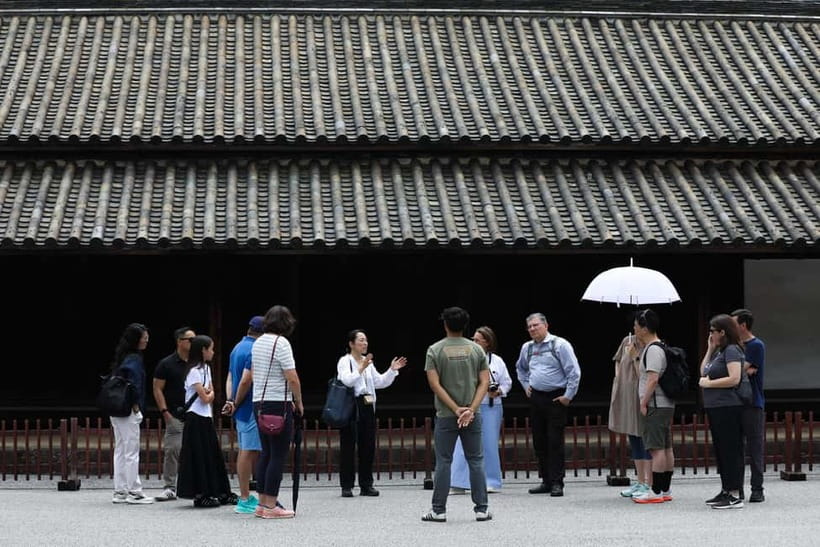
- Honmaru reveals the castle beneath modern Tokyo: See foundation stones, gates, and defensive remains from the main compound of Edo Castle.
- Ninomaru offers the calmest part of the walk: Ponds, bridges, stone lanterns, carefully shaped trees, and bonsai create a classic Japanese garden setting.
- The guide adds the missing story: English-speaking guides explain the Tokugawa shoguns, emperors, samurai customs, military design, and modern Japan.
- Season matters: Cherry blossoms can brighten the gardens in spring, while late November and fall bring striking red, orange, and gold foliage.
- The meeting point is easy to identify: Meet your guide near Starbucks Coffee at Kokyo Gaien Wadakura Fountain Park.
- The price is modest for a guided visit: At $19 per person, you are paying mainly for interpretation and a carefully paced route, not for palace admission.
Why these gardens matter in Tokyo
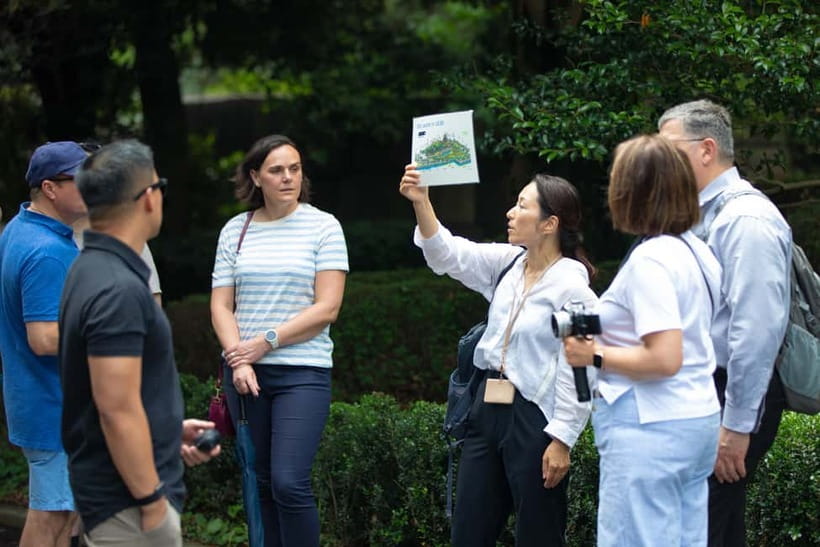
Tokyo can feel like a city built at full speed. The East Gardens offer a useful pause, but they are not just a pretty park. They occupy part of the former Edo Castle grounds, once the center of power for the Tokugawa shoguns during the Edo period.
That setting gives the walk its real value. You are not looking at isolated ruins and random trees. You are walking through the former stronghold and residence of the rulers who controlled Japan for centuries. A guide can point out how the castle was arranged and why walls, gates, guard houses, and watch towers were placed where they were.
The tour also helps you connect old Tokyo with the modern Imperial Palace area outside the gardens. You see a capital built over its own past. There are no grand castle buildings left to dominate the view, so the explanation matters. Without it, the foundations and stonework can be easy to pass without understanding what they once meant.
I would not choose this tour only for a castle photo. I would choose it if you want a clear introduction to the political and military story behind central Tokyo, with a garden walk built into the experience.
A few more Tokyo tours and experiences worth a look


Meeting at Wadakura Fountain Park
The tour begins near Starbucks Coffee at Kokyo Gaien Wadakura Fountain Park. Your guide waits nearby, and the group returns to the same area after the walk.
This is a useful arrangement because you do not need to find a second meeting place after the tour. Still, give yourself time to locate the fountain park and Starbucks before the start. The supplied coordinates are 35.68299330000001, 139.7611971, so saving the location on your phone is sensible.
The meeting area also sets the tone. You begin in central Tokyo, close to one of the city’s best-known imperial districts, then move toward the gardens and the old castle grounds. The contrast between the surrounding city and the quieter garden paths is part of the appeal.
Your guide may be one of several English-speaking hosts. Mei appears repeatedly in the feedback and is praised for warmth, humor, patience, and the ability to answer questions. Kei is often singled out for clear explanations and a friendly manner. Wakana is praised for good pacing and helpful explanations, while Tatsie is noted for making information about shoguns, customs, and the gardens easy to follow.
The exact guide matters on a history-heavy walk, but the pattern is clear: the strongest part of the experience is the personal explanation rather than any special access.
Walking through the former Honmaru compound
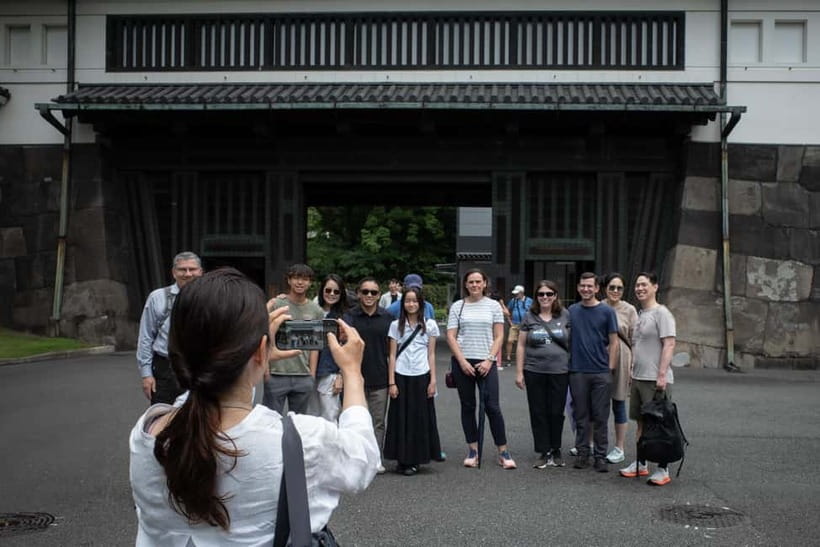
The first major historical focus is the Honmaru area. This was the main compound of Edo Castle, the center of the Tokugawa shoguns’ power. Today, you see remnants rather than intact rooms, including castle foundations, gates, and defensive structures.
That may sound less dramatic than a preserved European fortress. It can also be more rewarding if you enjoy reading a place through what remains. The broad foundations help you picture the scale and arrangement of the compound, while the gates and walls hint at how movement through the castle was controlled.
A guide can explain the castle as a working system rather than simply a residence. Defensive design, controlled entrances, guard posts, and watch points all reveal the concerns of the people who ran the castle. The stonework is not merely decorative. It shows how the castle protected its most important areas and managed access.
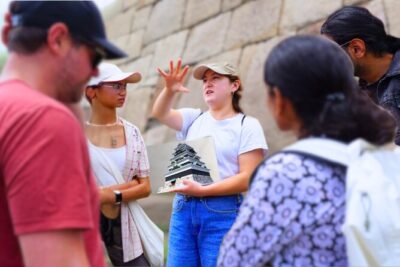
One particularly useful feature, mentioned by several people who enjoyed the tour, is the use of visual aids. Mei has used printed and laminated maps and old images to explain the layout and show how the grounds once looked. This is a smart addition because the remains alone do not always make the original plan obvious.
You should expect a walking interpretation of the site, not a preserved interior visit. If you need to see ornate rooms, armor displays, or a complete castle tower, this will feel limited. If you want to understand how Edo Castle functioned and why so little of it survives, the open foundations and defensive remains give the guide plenty to work with.
Ninomaru Garden and the art of restraint
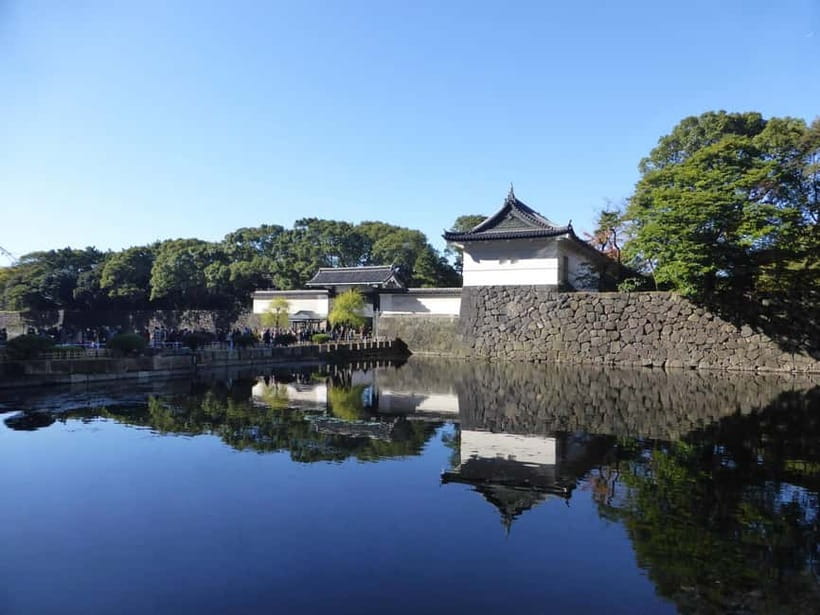
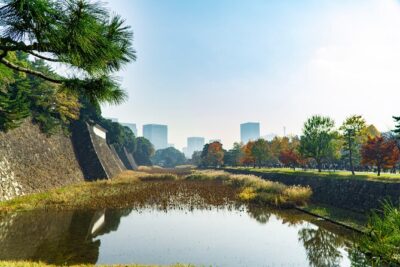
Ninomaru Garden brings a sharp change in mood. After the hard lines of walls and castle foundations, you move into a more carefully composed setting of greenery, ponds, bridges, stone lanterns, shrubs, and shaped trees.
The design is traditional Japanese in spirit, with quiet views arranged for contemplation rather than spectacle. You might find yourself paying attention to a small bridge, the curve of a pond, or the balance between a stone and a pruned tree. The garden rewards slowing down.
This is also the part of the tour that works well for visitors who are less interested in military history. The guide can connect the garden to Japanese customs and traditional design, while you get time to appreciate the setting itself. Several guides are praised for leaving room for photographs and allowing the group to take in the garden instead of filling every minute with speech.
The East Gardens are manicured, but they do not feel like a formal museum corridor. Their appeal comes from the shift between open lawns, historic stonework, water, and small garden details. You get a broad sense of the grounds, then moments that invite closer attention.
The garden is especially attractive in seasonal conditions. Spring brings cherry blossoms, while fall can bring red, orange, and yellow foliage. Late November has been described as a particularly good time for autumn color. Seasonal timing is never guaranteed, so do not book solely on the promise of blossoms or peak foliage, but these changes can make the same route feel quite different.
Stone walls, guard houses, and castle clues
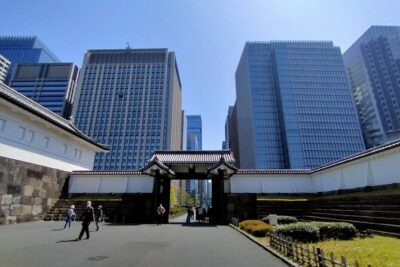
The East Gardens preserve more than the main ruins. Along the route, you can see stone walls, guard houses, and watch towers that help fill in the castle’s defensive story.
These features are easy to overlook if you visit alone. A wall may seem like a wall until you understand its position within the castle. A guard house becomes more interesting when you learn what it suggests about surveillance and controlled entry. The tour’s guide turns scattered remains into a readable plan.
I particularly like this kind of interpretation because it asks you to look closely. You are not simply moving from one famous sight to another. You are learning to spot the practical details that made Edo Castle secure and difficult to cross.
The tour also brings in the larger story of samurai rule, the shoguns, and the later role of the emperors. Guides have mixed historical explanation with light comments about the modern royal family, Japanese culture, and customs. That balance helps keep the walk from becoming a dry lecture.
The best guides seem to adjust their style to the group. Mei is praised for answering questions patiently and offering help beyond the formal tour, including suggestions for other places to visit, restaurants, and ways to get around Tokyo. Fuku is praised for making the walk fun and informative, while Midori is noted for personalizing the experience despite poor weather.
Other walking tours we've reviewed in Tokyo




How the 2.5 hours feel on foot
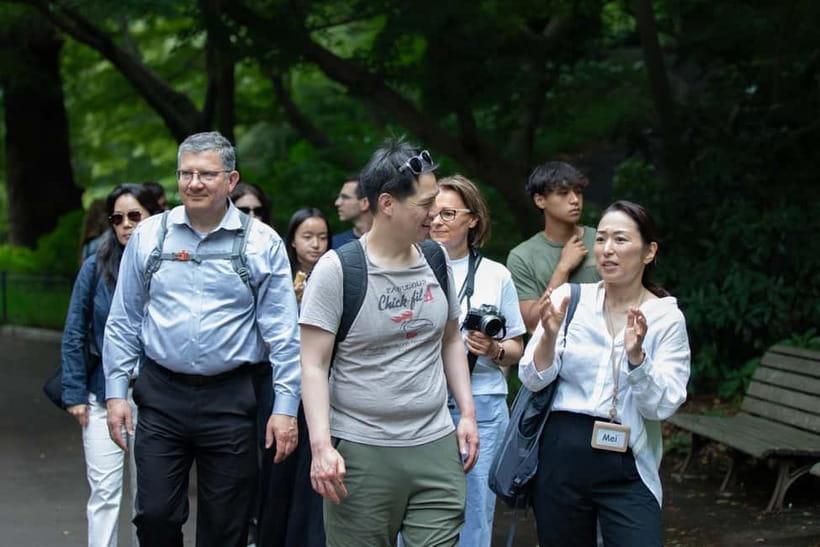
Two and a half hours is long enough to give the gardens proper attention, but short enough to fit into a busy Tokyo day. The route is primarily a guided walk, so wear shoes that you can use comfortably for an extended period.
The pacing appears to be one of the tour’s strengths. You move through the historical areas, stop for explanations, then have time to look and take photos. Several comments describe the pace as comfortable rather than rushed. That matters in a garden, where racing from one point to the next defeats the purpose.
You should also plan for changing weather. The walk has gone ahead in rain, with guides helping keep the group comfortable and engaged. Still, bring suitable clothing and shoes. The gardens are an outdoor setting, and bad weather can affect how long you want to linger at each stop.
The experience is listed as wheelchair accessible. Since this is a walking tour through gardens and historic grounds, you may still want to confirm the current route and conditions when booking if access needs are important to you. The available information does not specify the exact surface or any route limitations.
Because the group size is not provided, I would not assume a private tour or a very small group. The guide-led format means you should be ready to stay with the group and listen at designated stops.
What you are paying for at $19
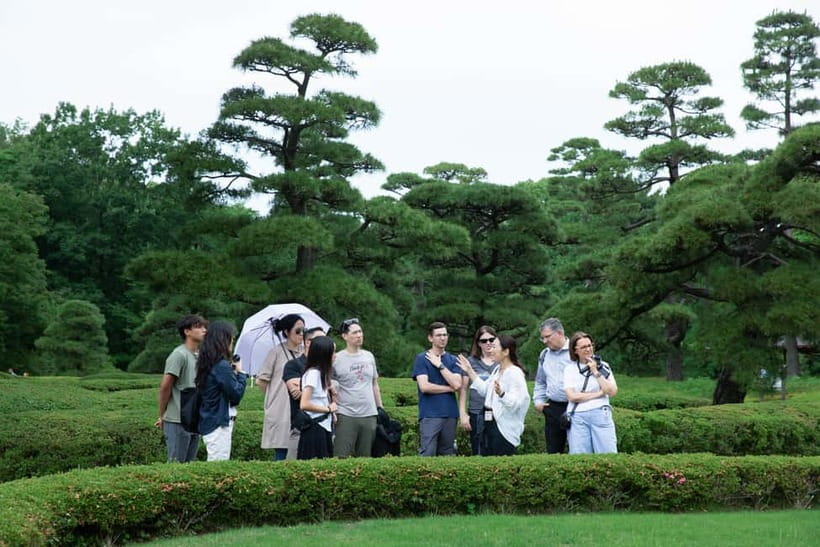
At $19 per person, this is a low-cost guided activity for central Tokyo. The walking tour and guide are included. Entry to the Imperial Palace is not included, and the tour does not go inside the palace.
That distinction is important. You are not paying for exclusive access or a palace interior. You are paying for a guided reading of the East Gardens and former Edo Castle grounds. For first-time visitors, that can be a good use of money because the main benefit is context.
A self-guided visit may show you the same ponds, foundations, and walls. It will not necessarily explain how Honmaru related to Ninomaru, why the defensive features mattered, or how the shoguns fit into Japan’s political story. If those questions interest you, $19 is a fair price for two and a half hours of interpretation.
The value is also strongest for visitors with limited time in Tokyo. You return to the same central meeting area, and the experience gives you nature, architecture, and political history in one outing. It is not a full Imperial Palace visit, but it is a tidy way to understand one of the most important historic areas in the city.
Who will get the most from this walk
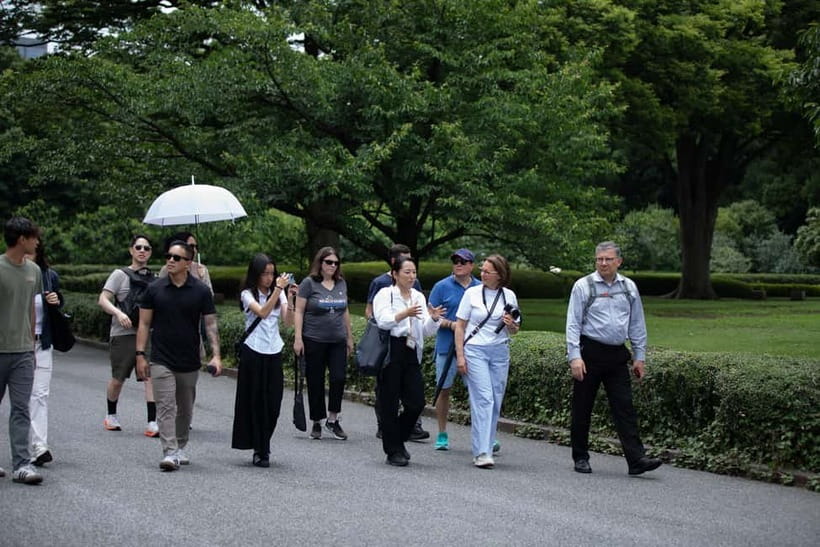
I would recommend the tour to first-time visitors who want a clear introduction to Japan’s feudal past without committing to a full-day museum or castle trip. It also suits families, since the guides use stories, humor, maps, and visual aids rather than relying only on formal dates.
History fans will appreciate the focus on castle planning, samurai rule, and the Tokugawa shoguns. Garden lovers will enjoy Ninomaru, the ponds, stone lanterns, bonsai, and seasonal planting. Photographers should consider spring or fall, when blossoms or foliage can add color to the route.
This is also a good choice if you want to ask questions. Guides such as Mei, Kei, Wakana, and Loc are repeatedly described as friendly and willing to explain details. The English-language format gives you a chance to ask about customs, the imperial family, Japanese culture, and the relationship between old and modern Tokyo.
I would hesitate if your main goal is to enter the Imperial Palace, see royal rooms, or explore a fully rebuilt castle. You should also think twice if you dislike outdoor walking or prefer to explore entirely at your own pace. The tour gives structure, which is useful for some people and restrictive for others.
Practical details that shape the visit
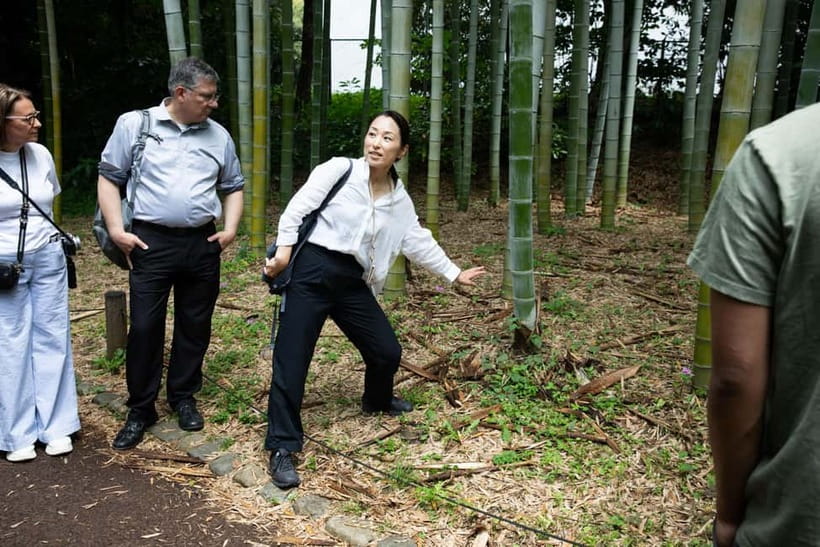
The tour is conducted in English and lasts 150 minutes. It begins and ends near Starbucks Coffee at Kokyo Gaien Wadakura Fountain Park, with the guide waiting nearby at the start.
You can cancel up to 24 hours in advance for a full refund, and the reserve-now, pay-later option lets you hold a place without paying immediately. Starting times vary, so check availability for your date.
The tour does not include entry to the Imperial Palace. More precisely, it does not go inside the palace at all. The focus is the East Gardens and the historic remains of Edo Castle.
For the best visit, I would do three things:
- Save the meeting-point coordinates before leaving your hotel.
- Wear comfortable shoes and prepare for sun or rain.
- Choose spring for cherry blossoms or fall for foliage if seasonal scenery matters most.
Do not expect the gardens to look the same in every season. The historical remains remain, but the mood changes with the trees, flowers, and weather.
Should you book the Imperial Palace East Gardens tour?
Book it if you want the old story behind modern Tokyo, especially the shoguns, Edo Castle, and the relationship between military defenses and traditional gardens. The modest price, central meeting point, English guide, and steady two-and-a-half-hour route make it an easy addition to a Tokyo itinerary.
The strongest reason to book is the guide. A good host turns Honmaru foundations and stone walls into a castle you can picture, then shifts the mood in Ninomaru Garden with details about design and culture. Guides such as Mei, Kei, Wakana, Loc, and Tatsie have made the experience especially personable, with humor, maps, photo help, and time for questions.
Skip it if you want to go inside the palace or need a complete castle building. For everyone else, this is a thoughtful, affordable way to see a quiet side of central Tokyo while learning why the ground beneath those gardens mattered so much.
FAQ
Does the tour enter the Imperial Palace?
No. The tour does not go inside the Imperial Palace. It visits the East Gardens, which occupy part of the former Edo Castle grounds.
How long does the walking tour last?
The tour lasts 150 minutes, or two and a half hours.
What language is the tour offered in?
The tour is offered in English with a live guide.
Where does the tour meet?
Your guide waits nearby Starbucks Coffee at Kokyo Gaien Wadakura Fountain Park. The coordinates are 35.68299330000001, 139.7611971.
What does the tour include?
The price includes the walking tour and guide. Entry to the Imperial Palace is not included.
Is the tour wheelchair accessible?
Yes, the activity is listed as wheelchair accessible. The supplied information does not give detailed route or surface conditions, so confirm any specific access needs when booking.
More Walking Tours in Tokyo
More Imperial Palace & Shogun Tours in Tokyo



More tours in Tokyo we've reviewed












Imperial Palace & Shogun Tours, compared.
 ★ 4.9Tokyo: Imperial Palace Japanese History Walking TourFrom $32
 ★ 4.9Tokyo: Imperial Palace and Shogun Walking TourFrom $162 hours
 ★ 5.0Imperial Palace East Garden and Edo Castle Walking Tour in TokyoFrom $25
 ★ 4.5Tokyo: Imperial Palace, Sensō-ji Temple, & Tokyo Tower TourFrom $404 hours
 ★ 5.0Tokyo Castle, Imperial Palace, Shogun & Garden Walking TourFrom $31
 ★ 4.7Tokyo: Edo Castle & East Garden of the Imperial Palace TourFrom $422 hours