Reviewed · TEMPLES & MEDITATION
Make a temple stamp book with artist
The best part of this two-hour experience is that you make a Japanese goshuin book with your own hands, then use it at a local shrine. You choose from more than 100 kimono fabrics, fold and glue the pages, and finish with a first shrine stamp.
In This Article
- Key points to know
- Turning Kimono Fabric Into a Personal Goshuin Book
- Why the Fabric Choice Matters
- Folding and Gluing the Pages
- Your First Goshuin at a Local Shrine
- Learning How to Visit a Shinto Shrine
- What Two Hours Feels Like
- The Value of $38 Near Shibuya
- Meeting Point and Practical Planning
- Who Will Enjoy This Workshop Most
- What the Strongest Praise Tells You
- Should You Book This Goshuin Workshop?
- FAQ
- Where does the goshuin workshop take place?
- How long does the activity last?
- Who leads the experience?
- How many people can join the group?
- What will I make during the workshop?
- How many fabrics can I choose from?
- Do I receive a shrine stamp during the activity?
- Is the shrine stamp included in the price?
- Does the activity run in bad weather?
- Is the workshop accessible for people with mobility impairments?
- Can I cancel the booking?
I like the wide fabric choice and the small group size, capped at eight people. I also like that Chikako Oshiro connects the craft to real shrine customs, so you leave with more than a souvenir. The main drawback is that the shrine stamp fee is extra, and the route includes about 10 steps.
Key points to know
- Choose from over 100 kimono fabrics: Pick a cover that feels personal, colorful, traditional, or quietly elegant.
- Make a real goshuin notebook: Learn how to fold and glue the pages rather than buying a finished book.
- Visit a local shrine afterward: Put the craft to use by collecting your first goshuin stamp.
- Learn formal shrine manners: Chikako explains how to approach and visit a Shinto shrine properly.
- Small and English-speaking: The group is limited to eight, with instruction in English.
- Convenient Shibuya-area setting: You meet near popular sightseeing spots, but the activity itself focuses on local culture.
Turning Kimono Fabric Into a Personal Goshuin Book
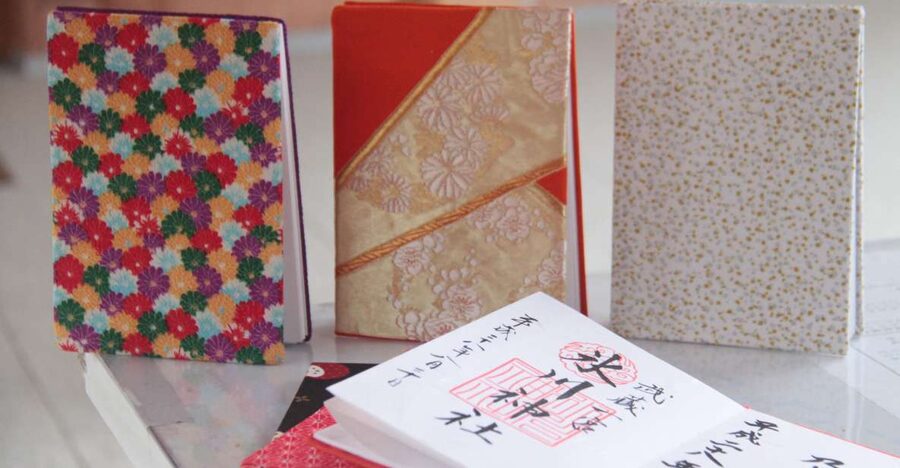
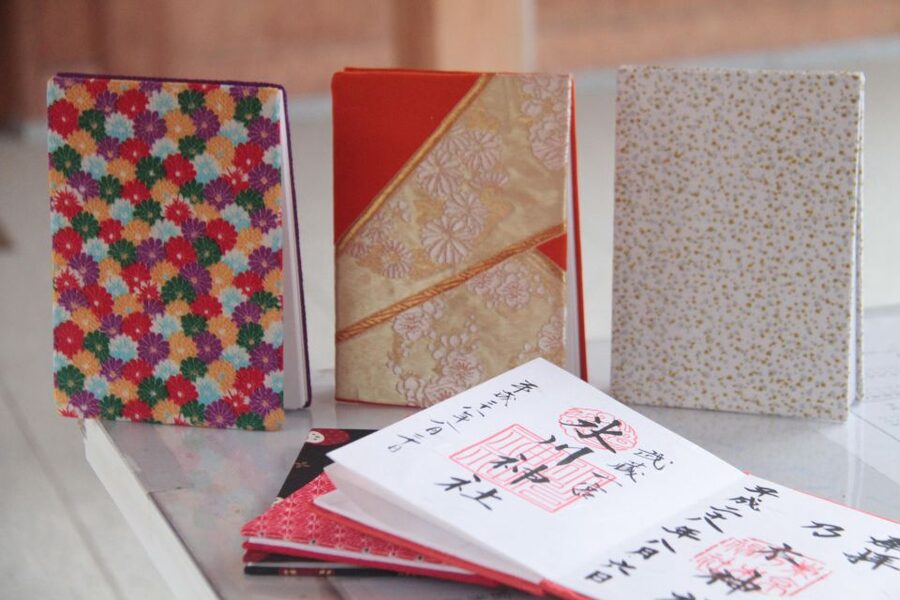
A goshuin book is a notebook used to collect calligraphic stamps from Japanese temples and shrines. Each place has its own stamp and writing, making the book a record of places you visited rather than a standard souvenir picked up in a shop.
This workshop begins with the cover. You look through more than 100 different kimono fabrics and select your favorite. That choice gives the activity a personal start. You might choose a bold pattern, a soft traditional design, or something that matches the rest of your Japan trip.
The fabric is not just decoration. Kimono cloth carries a strong visual connection to Japanese clothing and craft, and using it for your notebook makes the finished item feel tied to Japan. You are not simply stamping a name into a blank book. You are creating the object that will hold those stamps.
Chikako Oshiro then shows you how to make the notebook by folding and gluing papers together. The process is hands-on, but the instructions are designed to be clear. You do not need special craft skills, and all workshop materials are provided.
That distinction matters. A bought goshuin book is easy and practical, but making one gives you a better sense of how the object is put together. You also get a story to tell each time you use it later.
A few more Tokyo tours and experiences worth a look


Why the Fabric Choice Matters
The fabric selection is likely to take some time, especially if you enjoy design. More than 100 options create plenty of room for personal taste, but they also mean you may need to make a decision from a very large spread of patterns.
I suggest thinking about how you want to use the book after this session. If you plan to collect many stamps, choose a cover you will still like after several weeks of sightseeing. If you want the notebook mainly as a keepsake, pick the fabric that best recalls your time in Tokyo.
The workshop also includes explanations about the significance of the traditional fabrics. That adds useful context without turning the session into a lecture. You learn why the material feels connected to Japanese culture while doing something practical with it.
The finished book should have more meaning than a mass-produced souvenir because you selected the cover and assembled the pages yourself. It is also compact, useful, and easy to carry in your day bag.
Folding and Gluing the Pages
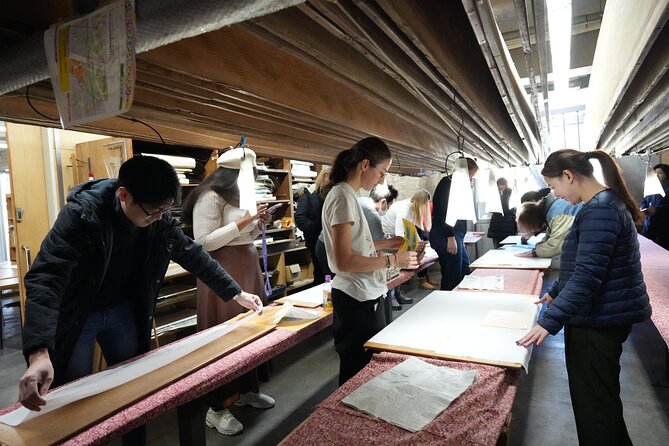
The craft work is the central part of the session. You learn to fold and glue the paper into a proper goshuin notebook, with Chikako guiding you through the steps.
This kind of activity suits people who like a clear task with a physical result. You can watch the book take shape as the session progresses. It is also a good change of pace from visiting one sight after another, especially if your Tokyo schedule has been full of large stations, shopping streets, and major attractions.
The work may feel slower than buying a notebook, but that is the point. You are given time to make something rather than rush through a demonstration. One useful detail is that extra glue can be provided for later stamps, which may help if you continue the hobby during your trip.
The group limit of eight is helpful here. A small class makes it easier to see the instructions and ask questions in English. It also keeps the craft session more personal than a large workshop where you might spend much of the time waiting for help.
Your First Goshuin at a Local Shrine
After the notebook is made, you visit a nearby local shrine and collect your first goshuin stamp. This gives the craft a clear purpose right away. You do not finish the book and then wonder what to do with it. You use it before the experience ends.
The stamp fee is not included, so bring a little extra money for that part. The activity price covers the workshop fee, but the shrine charges separately for the goshuin.
The local shrine visit is also more useful than simply being shown a famous landmark. You learn how the notebook connects to everyday religious customs in Japan. Each shrine and temple has its own stamp, so your book can grow as you visit more places.
It is worth understanding that goshuin are not ordinary tourist stickers. They are collected in a dedicated book, and the visit carries a formal side. Chikako explains the proper way to visit the shrine, including the formal etiquette expected at the site.
The experience does not promise a long shrine tour or a series of major monuments. Its value comes from learning the basic practice and having a first stamp to begin your collection.
Learning How to Visit a Shinto Shrine
For many visitors, shrine etiquette can feel uncertain. You may see people bowing, washing, praying, and moving through the grounds, but not know which actions matter or when to do them.
This workshop gives you a guided introduction. Chikako teaches you how to visit formally, so you can approach future shrine visits with more confidence and respect.
That lesson is one of the strongest reasons to book this activity. The craft is enjoyable, but the etiquette instruction travels with you. You can use what you learn at other shrines during the rest of your time in Japan.
The focus is practical rather than abstract. You make the notebook, go to a shrine, and collect the first stamp. The order makes sense, and it keeps the cultural information connected to something you are doing.
The shrine visit also adds a quieter local stop to a Tokyo itinerary. The meeting area is close to popular tourist spots around Shibuya, but the activity is not built around the biggest sightseeing crowds. That makes it a sensible option when you want a cultural activity near the center of your plans.






What Two Hours Feels Like
Two hours is a useful length for this experience. You have enough time to choose fabric, make the notebook, receive instruction, and visit the shrine without giving up half a day.
The session is structured around two different moods. The workshop is seated, creative, and focused. The shrine portion gets you moving and places the craft in its cultural setting.
The schedule may feel full if you want to examine every fabric at length or ask many questions. Still, the small group should help the class move at a steady pace. You should arrive ready to choose a fabric and follow the folding and gluing instructions.
The activity takes place rain or shine. Since the shrine visit is part of the plan, bring weather protection suitable for the day. Rain does not cancel the experience, so this is worth considering when planning a tightly scheduled Tokyo itinerary.
There are about 10 steps to reach the classroom and shrine. The experience is not suitable for people with mobility impairments, and children under three cannot join. These details matter more here than they might in a standard seated craft class because both the workshop and shrine visit are included.
The Value of $38 Near Shibuya
At $38 per person, this is not the cheapest way to obtain a notebook. You could buy a ready-made goshuin book elsewhere for less. The price makes more sense if you want instruction, fabric choice, materials, and a shrine visit in one short activity.
You are paying for the creative session and the cultural guidance, not just for the finished object. The English instruction is also useful if you want to understand what you are doing rather than copy a few steps without context.
The first shrine stamp costs extra, so include that in your small activity budget. The separate fee is normal for the shrine portion, but it is still something to know before you arrive.
The location adds value for many visitors. Because the workshop is near popular Shibuya sightseeing spots, you can fit it into a day that already includes that part of Tokyo. It works well in the morning or as a break from shopping and major attractions.
I would consider the price fair for someone who values a hands-on cultural activity. If you only want a souvenir, buy a notebook. If you want to understand the custom and make your own version, the workshop offers more.
Meeting Point and Practical Planning
The meeting point is in front of an entrance located between a drug store and Cozy Corner, the cake shop. Read the location details carefully before setting out, since meeting points near busy commercial areas can be easy to miss.
The provider is Chikako Oshiro, and the activity is conducted in English. The group is limited to eight people, which is a useful balance between social energy and personal help.
The session lasts two hours, but you should allow a little extra time around it if you have another booking. The activity includes both a classroom portion and a shrine visit, and the shrine stamp fee is not part of the listed price.
Cancellation is flexible up to 24 hours before the start time for a full refund. You can also reserve now and pay later, which helps if your Japan schedule is still changing.
Because the activity runs in all weather, check the forecast before leaving and dress for the shrine walk. The available information does not specify how long the outdoor portion lasts, so avoid scheduling a tight connection immediately afterward.
Who Will Enjoy This Workshop Most
I would recommend this activity to first-time visitors who want a simple way into Japanese shrine customs. You do not need prior knowledge of goshuin, shrine etiquette, or bookbinding.
It is also a good fit for people who prefer making something over watching a performance. The finished goshuin book gives you a useful object, and the first stamp gives you a clear beginning for a collection.
Families with older children may enjoy the fabric choice and craft work, but children under three are not allowed. The step access also means this is not a good option for anyone with mobility limits.
Couples and friends can make different choices from the fabric selection, then compare the results at the shrine. Solo participants should find the small group format comfortable, especially since the instructor speaks English.
I would be less likely to suggest it to someone who has very little interest in crafts or religious customs. The workshop is built around both. You may find the pace too slow if your main goal is to cover as many Tokyo sights as possible.
What the Strongest Praise Tells You
The most consistent strengths are the kind instructor, clear help with making the book, the choice of fabric, and the visit to a local Shinto shrine. Those points show what the experience does well: it joins a simple craft to a real cultural practice.
One particularly useful detail is that the instruction continues beyond the finished book. You learn how goshuin work, hear about shrine customs, and then receive the first stamp. That sequence gives the activity a sense of purpose.
The fabric selection also receives strong attention because it is not an afterthought. You get to choose your cover from a very large selection, and the materials are provided.
The experience has earned a 4.9 rating from 10 reviews, which suggests a very positive early record. I would still judge it by your interests. A high rating does not change the fact that the stamp fee is extra, the activity runs in rain, and steps are involved.
Should You Book This Goshuin Workshop?
Book it if you want a small, personal cultural experience near Shibuya and like the idea of leaving with something you made. The combination of more than 100 kimono fabrics, English instruction, formal shrine guidance, and a first goshuin stamp gives the two hours a clear purpose.
Skip it if you only want a ready-made souvenir, dislike craft activities, or need step-free access. For everyone else, $38 is a reasonable price for a hands-on introduction to goshuin collecting, especially if you plan to visit more shrines during your Japan trip.
FAQ
Where does the goshuin workshop take place?
The experience takes place on Honshu, Japan, near popular tourist spots in Shibuya. The meeting point is in front of the entrance located between a drug store and Cozy Corner, a cake shop.
How long does the activity last?
The workshop and shrine visit take about two hours. Starting times vary, so check availability when booking.
Who leads the experience?
The experience provider is Chikako Oshiro. Instruction is provided in English.
How many people can join the group?
The activity is limited to eight participants, making it a small-group experience.
What will I make during the workshop?
You will make an original goshuin notebook by choosing kimono fabric and learning how to fold and glue the papers together.
How many fabrics can I choose from?
You can choose from more than 100 different kimono fabrics.
Do I receive a shrine stamp during the activity?
Yes. After making the notebook, you visit a local shrine and collect your first goshuin stamp.
Is the shrine stamp included in the price?
No. The workshop fee is included, but the stamp fee at the shrine is separate.
Does the activity run in bad weather?
Yes. The activity takes place rain or shine.
Is the workshop accessible for people with mobility impairments?
No. The activity is not suitable for people with mobility impairments, and there are about 10 steps leading to the classroom and shrine. Children under three are also not permitted.
Can I cancel the booking?
You can cancel up to 24 hours in advance for a full refund. The activity also offers a reserve-now, pay-later option.
More Temples & Meditation in Tokyo



More tours in Tokyo we've reviewed












Temples & Meditation, compared.
 ★ 4.7Tokyo: Meiji Shrine, Asakusa, Skytree Bus Tour and CruiseFrom $12210 hours
 ★ 4.8Tokyo: Asakusa Walking Tour with Sensoji Temple VisitFrom $222 hours
 ★ 4.5Tokyo: Kamakura & Enoshima Day Trip including Temple TicketsFrom $589 hours - 570 minutes
 ★ 4.5Tokyo: Nikko Toshogu Shrine and Kegon Waterfall TourFrom $8410h 30m
 ★ 4.5Tokyo Panoramic 1 Day: Meiji Shrine, Asakusa, Odaiba and SKYTREE®From $85
 ★ 5.0Asakusa Senso-ji Temple and Old Tokyo Walking TourFrom $20