Reviewed · SHOPPING TOURS
Kappabashi Knife Shopping Tour with Government-Licensed Guide
Japanese knives are the main event here, and that makes this more useful than a standard Tokyo sightseeing walk. You visit Tsukiji Outer Market and Kappabashi, where shops cater to professional cooks as well as home kitchens, while a licensed English-speaking guide explains the different knife types and helps you make sense of the choices.
In This Article
- Key points at a glance
- Why this tour works for knife shoppers
- Starting at Tsukiji Outer Market
- Comparing knives on Kappabashi Dougu Street
- Asakusa brings the sightseeing back in
- The walking and train format matters
- What the private format adds
- Who will get the most from this experience
- Booking details worth knowing
- Should you book the Kappabashi knife tour?
- FAQ
- How long does the tour last?
- Which places are included?
- Is a guide included?
- Is the tour private?
- Is transportation included?
- Is hotel pickup provided?
- Are Tokyo Skytree tickets included?
- Can I cancel for a full refund?
I like two things right away: the tour combines knife shopping with three classic Tokyo areas, and it is private, so your group can keep its own pace. I also like that the guide handles the route on foot and by train, an honest taste of getting around Tokyo. The tradeoff is stamina: four hours of walking, shopping, and transit can feel long, especially in hot, rainy, or crowded weather.
Key points at a glance
- Knife shopping in two different districts: Compare shops in Tsukiji with the specialist kitchen stores of Kappabashi.
- A licensed English-speaking guide: Get help understanding Japanese cooking knives rather than guessing from labels.
- Private group format: Only your party takes part, with no combining of separate groups.
- Three useful Tokyo stops: Tsukiji, Kappabashi Dougu Street, and Asakusa are all built into the route.
- A practical local transit lesson: The outing is on foot and by train, with transportation fares paid separately.
- Flexible finish: You may end your day in Asakusa or continue near Tokyo Skytree, though Skytree admission costs extra.
Why this tour works for knife shoppers
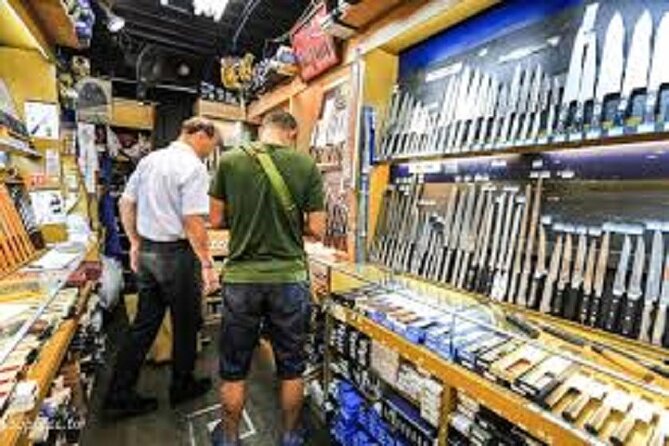
Kappabashi is Tokyo’s kitchen-supply district, and it is the reason to book this experience. The street has long served restaurants and food businesses, so the shops are not aimed only at souvenir hunters. You can look at Japanese kitchen knives alongside other cooking tools and equipment, with reasonable prices available in the district.
That matters because buying a knife in Japan can be confusing. Blade shapes, sizes, and uses vary, and a knife that looks impressive may not suit the way you cook. Your guide introduces the different types used in Japanese cooking and gives you a clearer way to compare them. You still make the final choice, but you are less likely to buy based only on a shiny blade or a beautiful wooden handle.
The Tsukiji stop adds a useful contrast. Tsukiji Outer Market is closely tied to restaurants, retailers, and food professionals, with about 400 shops packed into a compact area. Here, you can see the food culture that gives Japanese kitchen tools their purpose. The market is not simply a scenic place for photos. It is a working commercial district where freshness and specialized equipment matter.
I like this pairing. Tsukiji gives you the food-market setting, while Kappabashi gives you time to focus on the tools. If your main goal is to buy a knife, Kappabashi is the stronger stop. If you want to understand why these tools are part of daily Japanese food culture, Tsukiji makes the purchase feel more connected to the city.
Other guided tours in Tokyo
Starting at Tsukiji Outer Market
The first stop lasts about an hour. You meet your guide within the designated Tokyo pickup area, and the guide collects you on foot rather than by private car. If hotel pickup is offered for your booking, understand that it means a walking meeting point, not a chauffeured transfer.
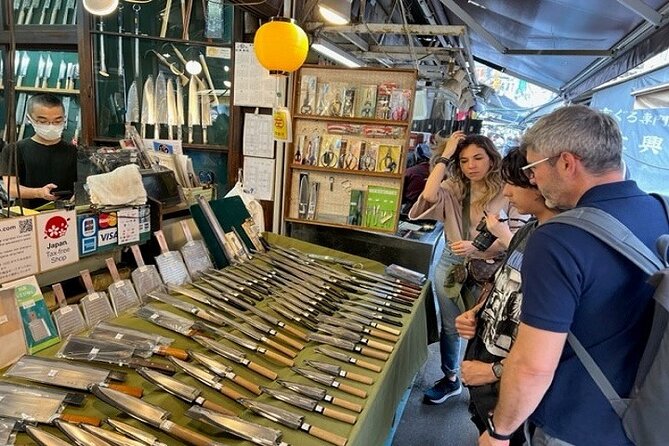
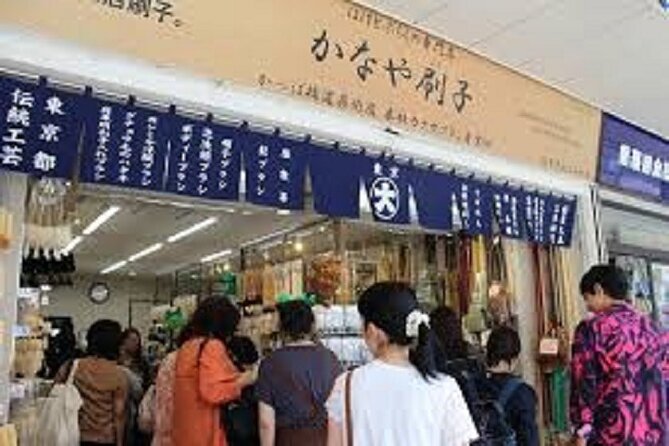
Tsukiji Outer Market is made up of a tight cluster of shops serving restaurants, retailers, and other buyers. The area measures roughly 400 meters and contains around 400 shops, so the setting feels dense and purposeful. You might find food shops, kitchen goods, and small specialist businesses packed close together.
Your guide explains why top Japanese chefs come here for fresh ingredients and kitchen knives. That context is one of the stronger parts of the stop. You are not just pointed toward a store and left to browse. You get a short introduction to the role Tsukiji plays in Tokyo’s food trade, then move toward the practical shopping side of the tour.
The limitation is time. One hour goes quickly in a market with this many small shops. You should not expect to inspect every aisle or make a long food crawl. Think of Tsukiji as an introduction and a chance to see the market’s connection to cooking, not as a full market tour.
Comparing knives on Kappabashi Dougu Street
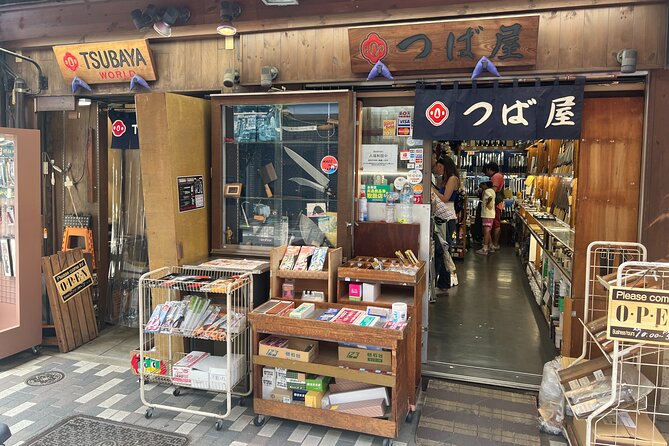
The second stop is Kappabashi Dougu Street, also called Kappabashi Dogugai. It sits in Taito City between Ueno and Asakusa, along the west side of Asakusa’s main entertainment area. The street is known as a supplier to the food and beverage trade, which gives it a more practical feel than a typical shopping arcade.
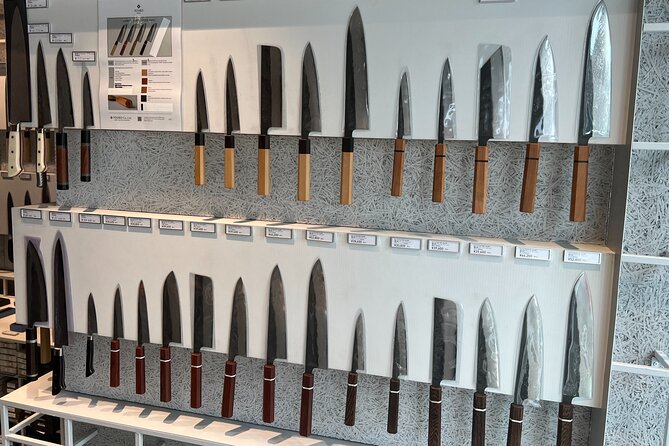
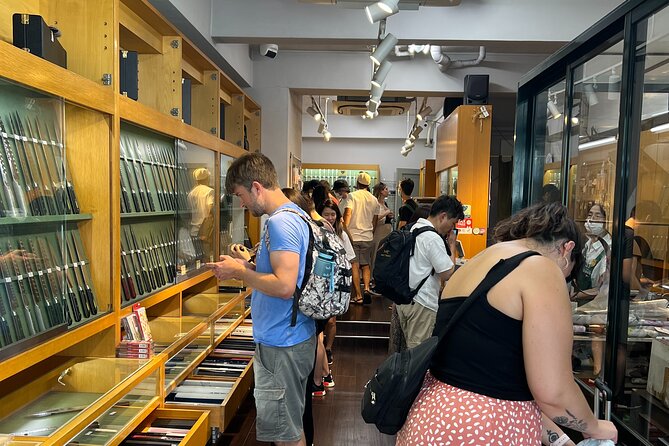
This is where you should plan to spend your attention. The tour takes you to famous, high-quality knife shops and introduces different Japanese kitchen knives. The exact stores and brands are not specified, so you should treat the route as guided shopping rather than a guaranteed visit to one particular maker.
That distinction is important. If you already have a specific brand or blade style in mind, ask the guide early in the tour whether it is likely to be available along the route. If you are still deciding, the guide’s explanation of knife types may be more valuable than a fixed shopping list.
Kappabashi also sells a wide range of kitchenware at reasonable prices. Even if you decide not to buy a knife, you can browse tools and restaurant supplies that show how much equipment supports Japanese cooking. One of the most amusing features is the collection of plastic food displays. These models copy dishes sold in restaurants across Japan, and the shops offer a close look at this familiar part of Japanese dining culture.
The one-hour stop may feel brief if you are serious about shopping. A knife purchase can involve comparing several blades, considering price, and asking questions about use. Keep your priorities clear before you arrive. Decide if you want a general-purpose knife, a specialized Japanese style, or simply a well-made kitchen tool to take home.
Asakusa brings the sightseeing back in
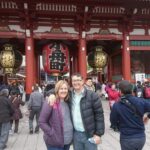
The third listed stop is Asakusa, also planned for about an hour. This gives the tour a cultural and visual change after the market and kitchen-supply districts. Asakusa includes Nakamise-dori, the shopping street running from Kaminarimon Gate toward Senso-ji Temple, along with many smaller retro shopping streets and alleys.
The value here is variety. You can spend the first part of the outing thinking about knives and food businesses, then finish among temples, old-style shopping streets, and classic Tokyo sights. If your group is not ready to stop, Asakusa is also a sensible place to continue on your own after the guided portion.
The provided schedule lists about one hour at each of the three main stops, but the whole experience lasts approximately four hours. That extra time accounts for moving between districts, walking to stations, and using local trains. Do not read the schedule as three full hours of uninterrupted sightseeing.
Asakusa can also serve as the tour’s practical endpoint. The guide may help you finish near the area, and you can continue your day there at your own pace. Tokyo Skytree is another possible finish, but both admission fees for you and the guide are excluded. The tour does not include a private vehicle or Skytree entry, so budget for those costs if you choose that option.
The walking and train format matters
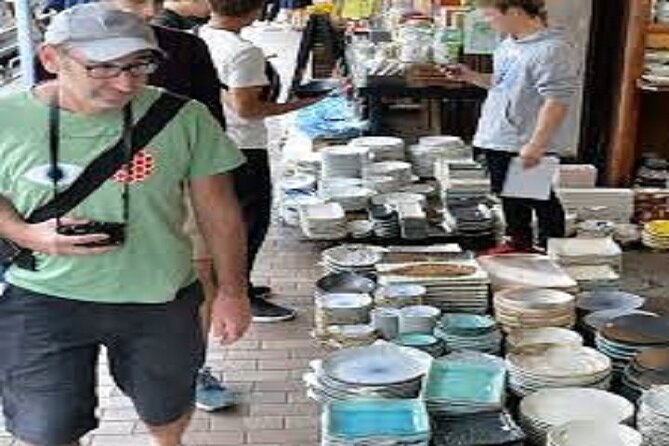
This is not a vehicle-based shopping trip. You walk between meeting points, shops, and stations, then use public transportation as needed. Transportation fees are not included, and the guide’s included service is described as meeting you on foot within the designated Tokyo area.
I see that as both a benefit and a warning. The benefit is that you learn a little about moving through Tokyo instead of being carried from one door to the next. You also avoid wasting time in road traffic. The warning is that you need comfortable shoes and enough energy for a half-day on city streets.
Weather will affect the experience. The guide specifically advises you to watch your stamina and health, which is sensible for a walking route. Bring water, allow room in your luggage for purchases, and avoid scheduling an exhausting evening immediately afterward if you know long city walks wear you down.
The route uses trains, but exact stations and fares are not supplied. You should expect to pay local transportation costs separately. The guide’s directions are part of the service, and the experience has been praised for making the walking and train logistics manageable. Still, you remain responsible for keeping up with the group and handling your own personal expenses.
Other shopping tours in Tokyo

What the private format adds
Only your group participates, and separate groups are not combined. This is a meaningful advantage for knife shopping because your interests can shape the conversation. A person buying a first Japanese knife needs different help from an experienced cook looking for a specialized blade.
A private tour can also feel less rushed at a shop. You can ask why one knife suits a certain cooking task, request a comparison, or decide to move on without waiting for strangers. The guide can also point out details in Tsukiji and Asakusa that fit your group’s interests.
The downside is price. At $107.50 per person, this is not the cheapest way to reach Kappabashi. You are paying for a licensed guide, private attention, route planning, and the combination of shopping with sightseeing. You are not paying for lunch, train fares, entrance tickets, a private vehicle, or the knife itself.
The value improves when two or more people in your party want the same kind of help. Group discounts are offered, though the exact discount is not provided, so check the total before booking. If you only want to browse Kappabashi independently, you can spend less by going on your own. If you want a guide to explain knife categories and handle the route, the fee is easier to justify.
Who will get the most from this experience
I would recommend this tour to a home cook, food-focused visitor, or anyone who wants to bring back a useful Japanese purchase rather than another decorative souvenir. It also suits a first visit to Tokyo because Tsukiji, Kappabashi, and Asakusa give you three different views of the city in one morning or afternoon.
It works well for a private family or friend group with mixed interests. One person can focus on knives, another can enjoy the market, and everyone gets time in Asakusa. The licensed guide helps connect the stops so the tour does not feel like a random series of shops.
You should think twice if you dislike walking, need long meal breaks, or want a fully planned food tasting. Lunch is not included, and the tour is not described as a cooking class or a guided meal experience. It is also not ideal if you want a guaranteed visit to a named knife maker, since the available details do not specify individual shops.
Most people can participate, and service animals are allowed. Even so, the walking format remains the main practical concern. Comfortable footwear and realistic expectations will make a bigger difference than trying to cover too much after the tour.
Booking details worth knowing
Confirmation is provided at booking, and mobile tickets are available. Free cancellation applies if you cancel at least 24 hours before the local start time. Changes or cancellations inside that window are not accepted for a refund, and the experience requires a minimum number of participants, so a provider cancellation may result in another date, another experience, or a full refund.
The tour is operated by Japan Guide Agency. A licensed local English-speaking guide is included, but no guide name is provided in the available information. Pickup is offered within a designated area, though the meeting and pickup service is on foot.
Plan for separate costs for transportation, lunch, personal purchases, and any entrance fees. Tokyo Skytree is optional in the sense that you can finish near it, but neither your admission nor the guide’s admission is covered.
Should you book the Kappabashi knife tour?
Book it if you want help choosing Japanese kitchen knives and like the idea of pairing that shopping with Tsukiji and Asakusa. The private format, licensed English-speaking guide, and walking-and-train route give the outing a personal, useful character.
Skip it if your only aim is to enter Kappabashi, browse quietly, and buy a knife without guidance. You can do that independently for less. At $107.50 per person, this experience makes the most sense when you value explanation, local navigation, and a compact introduction to three distinctive Tokyo districts.
FAQ
How long does the tour last?
The experience lasts approximately four hours.
Which places are included?
The route includes Tsukiji Outer Market, Kappabashi Dougu Street, and Asakusa. You may also finish near Tokyo Skytree.
Is a guide included?
Yes. A licensed local English-speaking guide is included.
Is the tour private?
Yes. Only your group participates, and separate tour groups cannot be combined.
Is transportation included?
No. Transportation fees are not included. The tour takes place on foot and uses trains as needed.
Is hotel pickup provided?
Pickup is offered within a designated area of Tokyo, but pickup is on foot rather than by private vehicle.
Are Tokyo Skytree tickets included?
No. Admission fees for both you and the guide are not covered if you visit Tokyo Skytree.
Can I cancel for a full refund?
Yes, if you cancel at least 24 hours before the experience start time. Cancellations or changes made less than 24 hours in advance are not refunded or accepted.
More Shopping Tours in Tokyo
More Guided Tours in Tokyo


More tours in Tokyo we've reviewed












Shopping Tours, compared.
 ★ 5.0Tokyo Tsukiji Fish Market Food and Culture Walking TourFrom $99
 ★ 5.0Tokyo: Tsukiji Fish Market Food and Walking tourFrom $30
 ★ 4.9Tokyo: Tsukiji Fish Market Guided Walking TourFrom $222 hours
 ★ 5.0Tsukiji Fish Market Guided Tour and Sushi Making with Pro ChefFrom $104
★ 4.7Tokyo: Tsukiji Fish Market Food and Culture Walking TourFrom $963 hours
★ 5.0Tsukiji Fish Market Guided Tour and Sushi Making with Pro ChefFrom $104
★ 4.7Tokyo: Tsukiji Fish Market Food and Culture Walking TourFrom $963 hours
 ★ 5.0Tsukiji Fish Market: Street Food & Culture Walking TourFrom $33