Reviewed · WORKSHOPS
Manga Lesson with a Professional Japanese Manga Artist in Nakano
Creating manga in Tokyo means more than sketching an anime face with a felt-tip pen. At Manga School Nakano, you work through the real production process with dip pens, ink, correction tools, white highlights, and adhesive screen tones. The finished page is yours to take home, not just a quick drawing made for a photo.
In This Article
- Key points before you book
- Starting at Manga School Nakano in Arai
- A short lesson in manga tools and technique
- From pencil sketch to finished character
- Learning with Nao Yazawa and other professional artists
- Why this works for beginners and serious hobby artists
- A finished souvenir with more meaning than a shop purchase
- Is $67.77 good value in Tokyo?
- Timing, booking, and small practical concerns
- Who should book this Nakano manga lesson?
- Should you book Manga School Nakano?
- FAQ
- How long is the manga lesson?
- Where does the activity take place?
- Does the activity return to the meeting point?
- Who teaches the class?
- Are beginners allowed to join?
- What tools are included?
- Can a private group take the class together?
- Is the lesson taught in English?
- What is the cancellation policy?
I especially like two things here: the teacher adjusts the lesson for everyone from a first-time doodler to an experienced artist, and the class uses traditional tools that many visitors would not handle on their own. Nao Yazawa is praised for her patient, clear teaching, and families with children, teens, and adults can work at different levels in the same session.
The main consideration is the location and booking setup. The class is near public transportation, but finding the school may take some care, and you need to request your preferred time rather than assume every slot is open. Confirm the meeting details closely before setting out.
Key points before you book
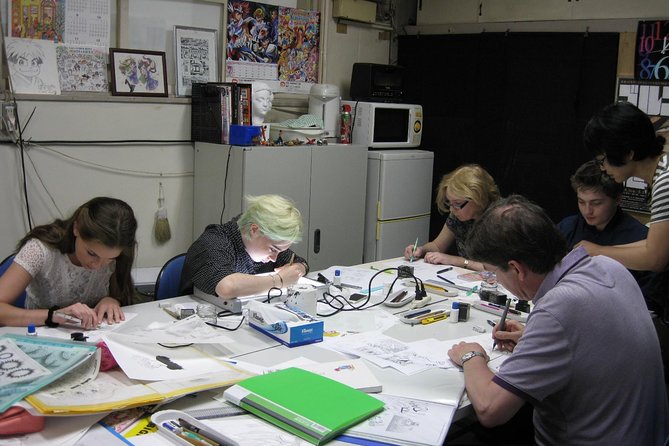
- Traditional manga production: Work through drafting, inking, black fills, corrections, white highlights, and screen tones.
- Professional instruction: Nao Yazawa is one named instructor, and the school uses professional manga artists for the class.
- Good for mixed abilities: Beginners can copy from references, while practiced artists can ask for more tailored guidance.
- A real keepsake: Finish a manga-style character drawing and take it home.
- Private group format: Only your own party participates, with solo tuition and two-to-four-person options available.
- Two hours in Nakano: The session includes the tools and instruction, but not drinks, so plan accordingly.
Starting at Manga School Nakano in Arai
Your lesson begins at Manga School Nakano, at Japan, 165-0026 Tokyo, Nakano City, Arai, 2-chōme 7-13, Nangoku Building. The activity returns to this same meeting point, so there is no second stop to arrange or separate transport to find.
The class is listed at about two hours. That is enough time to create a finished page while still leaving room for a short introduction to manga techniques and its development. It is not a full art course, though. You get a focused practical lesson, not a long survey of Japanese comics or a complete professional portfolio workshop.
Take the meeting instructions seriously. One piece of feedback about this class points to trouble finding the building and limited English at the location. Your booking message provides the activity time and details, but I would still save the address, allow extra time, and check the exact entrance before the lesson.
The class is conducted in English without an interpreter. That matters if you are nervous about learning technical steps in another language, but the teaching is described as precise and direct. Demonstrations, visual references, and the step-by-step format also give you something to follow while you work.
A few more Tokyo tours and experiences worth a look



A short lesson in manga tools and technique
The opening includes a brief talk about manga methods and the art form’s history. This gives the practical work some context: manga drawing is not simply about producing expressive eyes or dramatic hair. The page depends on a sequence of stages, and the teacher shows how those stages fit together.
You get to try tools that are unusual outside a manga studio:
- Manga paper
- Dip pens
- Three types of specialized pen nibs
- Ink
- Screen tones
- White ink for highlights
- Correction materials
The nibs are a particularly useful part of the lesson. Different nibs produce different line qualities, and that small change affects hair, clothing, facial features, and motion lines. You can feel the difference between drawing with a familiar marker and controlling a pen designed for manga line work.
Screen tones are another strong reason to take this class. These sheets add gray areas, textures, shadows, and effects to a page. Applying them neatly takes patience, and the process gives you a better sense of how traditional manga pages were built before digital tools became common.
The supplies are provided, which makes the price easier to judge. You do not need to buy a full set of pens, nibs, ink, paper, and tones before learning if you even enjoy the process. If the tools appeal to you, the instructor can also point you toward a Tokyo shop where you may buy supplies afterward.
From pencil sketch to finished character
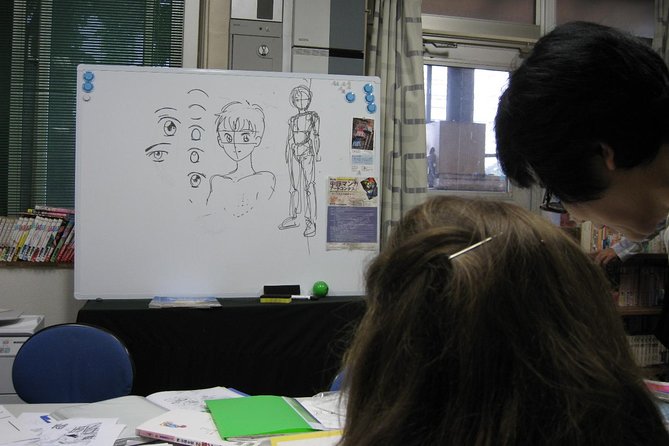
The central part of the class follows a clear order. You begin with a pencil draft, building the character before committing to permanent ink. This stage is forgiving and gives the instructor a chance to review your proportions and offer corrections.
Beginners can choose from manga references to copy with help. That is a sensible option if you arrive with enthusiasm but no drawing background. You are not expected to invent a complete character from nothing while also learning unfamiliar tools.
More experienced artists can use the same structure to work on specific weak points. You might focus on facial expressions, cleaner line control, inking, or the use of screen tones. The teaching is adjusted to your level, so the class can feel like an introduction for one person and a skills session for another.
Once the pencil drawing is ready, you ink over it. This is where the special nibs matter. The lines become permanent, and the teacher can help you decide where to use a fine line, a heavier line, or a change in pressure.
Next comes erasing. You remove the original pencil marks so the page shows a clean ink drawing. It is a simple step, but it changes the character of the work. What looked like a rough sketch begins to resemble a finished manga page.
You then paint black areas, correct mistakes, and add highlights with white ink. The correction stage is useful for beginners because it shows that a professional page is not created in one flawless pass. Manga artists build, clean, adjust, and refine.
The final step is pasting screen tones. These gray patterns and textures can suggest shade, fabric, atmosphere, or movement. The finished page has more depth than a plain black-and-white line drawing, and you leave with something that reflects several real manga processes.
Learning with Nao Yazawa and other professional artists
Nao Yazawa is the instructor most often named in the available class details. She is described as a professional manga artist and series creator with a long career. Her teaching style is a major part of the experience, especially for families or groups with very different levels.
You can expect patient guidance rather than a lecture followed by independent work. The instructor reviews and corrects your drawing as you proceed, then demonstrates the next step. That keeps the session moving and reduces the chance that you spend half the class stuck on one face or hand.
This approach works well for children. A young manga fan can choose a familiar character or reference, while an adult can receive help at a slower or more advanced level. Several family combinations are specifically suited to this format: parents and children, siblings, couples, and even three generations can share the two hours.
The class also leaves room for conversation about manga and anime. That can make the session feel personal without turning it into a fan convention. You are there to draw, but discussing favorite characters and series can help the instructor understand what you want to create.
I would not book this expecting a silent, formal art-school studio. The experience is social and encouraging, with the teacher working beside you. If you prefer a highly structured solo workshop with no conversation, this may feel more relaxed than you want.
Why this works for beginners and serious hobby artists
A complete beginner can take part without drawing skills. The reference images, demonstrations, and corrections give you a practical route from a blank sheet to a finished character. You still need to do the work, but you are not left to guess what comes next.
The best benefit for a beginner is learning the order of operations. Manga art can seem complicated when you see a finished page, but the class breaks it into manageable tasks: draft, ink, erase, fill, correct, highlight, and tone.
For an artist with more experience, the value is different. You get access to traditional manga materials and direct feedback on how to use them. The class can help you understand why a page looks like manga, rather than simply showing you how to imitate its surface style.
The two-hour limit is both useful and restrictive. It keeps the activity manageable during a busy Tokyo visit, but you will not master every technique in one sitting. If your group takes longer with drawing or conversation, the final screen-tone work may feel rushed.
Some sessions have run longer when the group was enjoying the work, but you should treat two hours as the planned duration. Do not schedule an important train, meal, or timed attraction immediately afterward.






A finished souvenir with more meaning than a shop purchase
Your completed drawing is the main souvenir. Unlike a mass-produced print, it records the exact tools and steps you learned in Nakano. Even an imperfect page can remind you how dip-pen lines felt and how much work goes into a polished manga panel.
The class is especially good for a child or teenager who already loves manga. The drawing gives them something tangible to keep, and the lesson may help turn casual interest into a more focused creative hobby.
Adults without much artistic confidence can also get value from it. The instructor’s job is not to judge your talent but to guide the process. The finished result may not look like a professional artist’s page, but the format gives you a fair chance to produce something worth showing at home.
For families, the shared activity is stronger than simply buying manga merchandise. Everyone works at the same table, but each person can choose a different reference or work at a different level. That makes it suitable for a mixed-age group, provided everyone is willing to spend two hours drawing.
Is $67.77 good value in Tokyo?
At $67.77 per person, this is not a bargain basement craft class. The price makes more sense if you value direct teaching from a professional artist, the use of supplied manga tools, and a completed piece to take home.
You are paying for more than paper and ink. The class includes guidance through a specialized process that would be difficult to recreate without knowing which nibs, tones, and corrections to use. It also saves you from buying supplies that may sit unused after the trip.
The value improves for a private group. Only your party participates, and the teacher can respond to your group’s pace and ability. A family of four can share one experience while each person receives individual help, which is more useful than a general demonstration with no personal correction.
For a solo visitor, check that you select single-person tuition. The group lesson is not intended for one person booking alone. If you are booking for two to four people, choose the matching group option.
The strong 4.9 rating from 77 ratings and 99 percent recommendation mark suggests a consistently well-received activity, but you should still match the format to your interests. If you are not interested in drawing, the hands-on work may feel long. If manga is a major reason for your Tokyo visit, the specialized materials make the cost easier to justify.
Timing, booking, and small practical concerns
You choose a preferred departure time in the special requirements field when booking. The time is subject to availability, and the local supplier may offer another option if your first choice is already taken. Wait for the confirmed activity time and details through the Viator message system before finalizing the rest of your day.
A mobile ticket is provided, so you do not need to print a voucher. Keep the booking information easy to access on your phone, along with the school address.
Drinks are not included. This is a small point, but two hours of concentrated drawing can feel longer if you arrive thirsty. Have water before the class, since the supplied inclusions cover the professional artist and manga tools, not refreshments.
Free cancellation is available up to 24 hours before the local start time for a full refund. Changes or cancellations inside that 24-hour window are not accepted for a refund, so confirm your schedule before the cutoff.
Most people can participate, and the school is near public transportation. The information provided does not give a detailed accessibility description, so contact the supplier if you need specific assistance or have concerns about the building.
Who should book this Nakano manga lesson?
I would recommend it first to manga and anime fans who want to make something rather than only buy something. It is also a strong choice for children, teens, and adults who already draw or want a gentle introduction to Japanese manga methods.
Families benefit from the private format and flexible instruction. One child can be a total beginner while a parent works at a higher level, and the teacher can move between them. Couples and friends can also make matching portraits or separate characters.
Solo artists should choose the single-person option and use the time for focused instruction. If you already draw manga, tell the school what you want to improve so the class can be shaped around your aims.
I would be more cautious if your Tokyo schedule is packed or if you want a quick activity with no concentration required. Two hours at a desk is a commitment, and the finished page depends on your willingness to work through each stage. The location also deserves extra planning because finding the correct building may not be effortless.
Should you book Manga School Nakano?
Book this class if you want a hands-on Japanese art experience with real manga tools, patient instruction, and a souvenir you create yourself. Nao Yazawa appears to be an excellent fit for families and beginners, while the professional materials give experienced artists a reason to attend too.
Before paying, select the correct solo or group tuition, request your preferred time, and save the address carefully. If those details suit your plan, $67.77 buys a personal, practical lesson that feels far more distinctive than a standard sightseeing stop.
FAQ
How long is the manga lesson?
The class lasts approximately two hours.
Where does the activity take place?
It takes place at Manga School Nakano in Arai, Nakano City, Tokyo, at 2-chōme 7-13, Nangoku Building, postal code 165-0026.
Does the activity return to the meeting point?
Yes. The activity ends back at Manga School Nakano.
Who teaches the class?
The lesson is run by a professional manga artist. Nao Yazawa is one named instructor associated with the experience.
Are beginners allowed to join?
Yes. All skill levels are welcome, including people with no previous drawing experience. Beginners can choose from manga references and receive step-by-step help.
What tools are included?
The class provides manga tools and materials such as manga paper, screen tones, manga pens, dip pens, ink, specialized nibs, correction materials, and white ink for highlights.
Can a private group take the class together?
Yes. This is a private activity for your own group. Solo participants should choose single-person tuition, while groups of two to four should select the matching group tuition.
Is the lesson taught in English?
Yes. The class offers instruction in English without interpreters.
What is the cancellation policy?
You can cancel at least 24 hours before the local start time for a full refund. Cancellations or changes made less than 24 hours before the start time are not accepted for a refund.
More Workshops & Classes in Tokyo


More tours in Tokyo we've reviewed








Workshops, compared.
 ★ 5.0Sushi Making Tokyo Roll and Authentic Japanese Sushi ClassFrom $59
 ★ 4.9Tokyo: Roll and Authentic Sushi Making Class in AsakusaFrom $581h 40m
 ★ 4.9Tokyo: Sushi Making Class in a Happi Coat near a Famous SpotFrom $421h 30m
 ★ 4.8Chopstick Making Workshop in GinzaFrom $251 hour
 ★ 5.0Tokyo Sushi Making Class in Tsukiji with Professional ChefFrom $49
 ★ 5.0Ramen & Gyoza Cooking Class in Tokyo with Local Supermarket VisitFrom $122