Reviewed · TOKYO FOOD TOURS
Tokyo: Authentic Food Tour in Ginza and Shimbashi
Ginza is known for designer shops, polished department stores, and high prices. This tour shows you another side of the district: small restaurants and local food stops reached on foot, with a guide to explain what you are eating and how Tokyo’s food culture works. I especially like the three-stop route through Ginza, Yurakucho, and Shimbashi, and the chance to ask an English-speaking local for advice on the rest of your Tokyo trip.
In This Article
- Key points at a glance
- Why this Ginza food walk is worth considering
- Meeting at Tokyu Plaza Ginza
- Ginza: finding local food behind the polished streets
- Yurakucho: a short walk and another food setting
- Shimbashi: finishing among local dining spots
- What the guides add to the meal
- What $146 really gets you
- Walking, group size, and practical limits
- Who will enjoy this experience most?
- Should you book the Ginza and Shimbashi food tour?
- FAQ
- How long does the Tokyo Ginza and Shimbashi food tour last?
- Where does the tour meet?
- Where does the tour finish?
- Which neighborhoods does the tour visit?
- How long is spent in each food area?
- Is the tour conducted in English?
- How many people can join the group?
- Is the tour suitable for wheelchair users?
The small-group limit of 10 people keeps the walk personal, and guides such as Doren, Reo, Ryota, and Yota have earned praise for being friendly, funny, and helpful. The main point to consider is the $146 price, which is a serious sum for three hours, especially since the exact dishes, drinks, and restaurant names are not specified in advance.
Key points at a glance

- Three food stops: Spend about 50 minutes each in Ginza, Yurakucho, and Shimbashi.
- A different side of Ginza: Move beyond the luxury shops and discover local restaurants that are easy to miss on your own.
- Small English-speaking group: The tour accepts no more than 10 participants.
- Food plus local advice: Ask about Japanese customs, restaurant manners, and how to shape the rest of your Tokyo plans.
- Traditional sweets included: The experience covers various dishes as well as Japanese desserts.
- Easy walking route: Each transfer takes about five minutes, but wheelchair users cannot take part.
Why this Ginza food walk is worth considering

I like food tours that help you understand a city instead of simply feeding you. This one uses three central Tokyo neighborhoods as a dining route, giving you a quick look at how Ginza changes as you move toward Yurakucho and Shimbashi.
Ginza is often presented as Tokyo’s luxury address. That is only half the story. The district also has long-standing food traditions, compact restaurants, basement food halls, casual drinking spots, and places that can be hard for a first-time visitor to enter with confidence. A local guide removes much of the guesswork.
You are not just walking from one restaurant to another. You can ask why a dish is served in a certain way, how to behave in a Japanese restaurant, and where to eat after the tour. That practical conversation may be the most useful part of the evening, particularly if this is your first visit to Japan.
The experience has a 4.9 rating from 33 ratings, with the strongest praise aimed at the guides. Doren was described as an excellent companion for a relaxed evening, while Reo was praised for sharing both food and everyday Japanese life. Ryota was noted for his humor and interesting conversation, and Yota received warm marks for his knowledge of Tokyo’s food scene and culture.
One useful feature is the small group size. With a maximum of 10 people, you should have a fair chance to speak with the guide. If the group is smaller, the walk may feel close to a private tour. One participant reported that the other bookings did not arrive, turning the outing into a private experience.
A few more Tokyo tours and experiences worth a look
Meeting at Tokyu Plaza Ginza
The meeting point is in front of the BOSS store at Tokyu Plaza Ginza. You should come up from Ginza Station through exit C2 or C3. Once at street level, look for the BOSS store directly in front of those exits.
This is a smart meeting spot because the building is easy to identify, but Tokyo station exits can still confuse you. Give yourself extra time if you are unfamiliar with the Ginza underground network. The stated coordinates are 35.672245025634766, 139.7624053955078, which can help if you use a map app.
The tour begins and ends at the same building. That makes the route easier to manage than a one-way food walk, and you will not need to work out a return train route from Shimbashi at the end.
Ginza: finding local food behind the polished streets

The first food section lasts about 50 minutes in Ginza. You will walk only about five minutes from the starting point before reaching the first area for regional food.
The useful contrast here is between Ginza’s public image and its dining life. The broad streets and luxury storefronts can make the neighborhood feel formal, yet food is a major part of its identity. Your guide takes you toward places that are not obvious from the main shopping streets.
The exact dishes are not fixed in the information provided, so you should not book this expecting a guaranteed sushi, ramen, or wagyu tasting. Instead, think of the stop as an introduction to Japanese food chosen by the local guide. The tour promises various dishes and traditional desserts, with an emphasis on foods loved by local people.
That flexibility can be a strength. Tokyo’s food scene is wide, and a guide can choose places that fit the day and the group. It is also the reason you should ask before booking if you need a specific dish, have allergies, or follow a restricted diet. No dietary details are provided.
This first stop may be the most useful for getting comfortable. You can watch how the guide orders, see how the restaurant works, and ask questions before the group reaches the next neighborhood.
Yurakucho: a short walk and another food setting

After the Ginza stop, you walk for about five minutes to Yurakucho. The food visit here lasts another 50 minutes, giving the route a steady rhythm: eat, walk, eat again.
The short transfers matter. You get movement between meals without spending much of the three-hour experience on trains or buses. You also see how close these central districts are, even though each has its own feel.
Yurakucho is part of the same central Tokyo zone, but it gives the route a useful change of scene. Rather than keeping you in one dining area, the guide links three neighborhoods that you could easily visit separately but might not connect on your own.
The tour describes this stop as another regional food visit, but does not name the restaurant or dish. That means you should judge the experience by its range and guidance rather than by a fixed menu. If you want a carefully advertised list of 15 dishes or several named eateries, one of the more structured Shinjuku food tours may suit you better.
I see Yurakucho as the point where the tour becomes more than a meal near a famous shopping district. You are using food to read the city, moving through different parts of central Tokyo while talking with someone who lives in the local food culture.
Shimbashi: finishing among local dining spots

The final food section takes place in Shimbashi and lasts about 50 minutes. From Yurakucho, the walk again takes around five minutes, so the whole route remains compact and manageable.
Shimbashi is a good final neighborhood for a food-focused walk because it is closely tied to after-work eating and drinking. The supplied details do not promise a nightlife tour or a set number of drinks, so you should not assume alcohol is included. What you can expect is another stop for regional food and conversation with the guide.
Ending here also gives the experience a clear progression. You begin in Ginza, where luxury retail dominates the streetscape, continue through Yurakucho, and finish in Shimbashi, a district with a more casual dining reputation. The route lets you compare three nearby parts of Tokyo instead of treating Ginza as one single experience.
The guide’s cultural advice may be particularly helpful at this point. You can ask about restaurant etiquette, ordering, local customs, and places to eat later in your trip. Several of the strongest comments about the tour focused on this personal exchange rather than on one particular dish.
At the end, you return to Tokyu Plaza Ginza. Since the route loops back to the starting point, you can plan the rest of your night without having to retrieve luggage or navigate to a distant finish.
A few more Tokyo tours and experiences worth a look
What the guides add to the meal

A food tour depends heavily on the person leading it, and this experience appears to place real weight on the guide’s personality. Doren, Reo, Ryota, and Yota are the names connected with especially strong experiences.
Doren was praised for making the evening relaxed while offering useful advice about Tokyo’s food culture. Reo was described as considerate and passionate, with a focus on both food and the Japanese way of life. Ryota was remembered for being funny and engaging, and Yota for having a strong grasp of Japanese culture and Tokyo’s food scene.
You should still allow for some variation. A guide-led tour is personal by nature, and each guide may explain different customs or choose a different balance of food and conversation. That is not necessarily a flaw. It means you should come ready to ask questions rather than wait for a formal lecture.
This is also a good tour for itinerary help. If you have another day in Tokyo and are unsure about where to eat, ask for suggestions during the walk. The tour specifically aims to help you plan the rest of your time in Japan, and the small group format makes those questions easier to ask.
What $146 really gets you

At $146 per person, this is not a bargain meal. You are paying for more than food, but the value depends on how much you want local guidance.
The price covers a three-hour guided walk, visits to three food areas, an English-speaking guide, and access to restaurants that may be difficult to identify or approach alone. It also buys convenience. You do not have to research several places, work out the route, or worry as much about ordering in an unfamiliar setting.
Still, the available details do not state how many individual dishes are served, whether drinks are included, or the total amount of food. That makes the price harder to compare with tours that publish a fixed dish count and beverage allowance. You should see this as a food and culture tour, not simply a three-hour all-you-can-eat event.
The value is strongest for first-time visitors, solo visitors who want company, and anyone nervous about entering small Japanese restaurants. If you already know Tokyo well and are comfortable choosing restaurants alone, $146 may feel high.
Free cancellation up to 24 hours before the start gives you some flexibility, and you can reserve now and pay later. Check the available start times before booking because the total duration is fixed at three hours, but no universal departure time is stated.
Walking, group size, and practical limits

The route includes three short walks of about five minutes each. It is not described as a strenuous walk, but you should still expect to be on your feet between meals and to move through central city streets.
The tour is not suitable for wheelchair users. No other mobility or dietary information is provided, so contact the provider before booking if you have access needs or food restrictions.
The maximum group size is 10. That is small enough for direct conversation, but it is not a private tour by default. If you want a guaranteed private outing, this experience does not promise one. The occasional small booking can create that feeling, but it is not something you should count on.
The meeting point and finish point are both at Tokyu Plaza Ginza, which simplifies the day. You can reach the starting place from Ginza Station exits C2 or C3, with the BOSS store as your visual marker.
Who will enjoy this experience most?

I would recommend this tour to you if you want a friendly introduction to Tokyo food without spending hours studying restaurant guides. It is especially useful on your first or second day, when advice about Japanese dining customs and good areas for later meals can shape the rest of your visit.
It also suits solo visitors and couples who want a social evening. The small group gives you people to talk with, while the guide provides a local point of contact.
Families may need to think about the food and the walking pace, since no child-specific menu or family format is described. People with serious dietary restrictions should ask before paying, because the supplied details do not explain substitutions.
You may prefer another tour if you want a fixed list of dishes, named restaurants, a market setting, or a larger food count. Other Tokyo options focus on Shinjuku, Shibuya, Ueno, or Tsukiji, and some advertise specific combinations such as sushi, ramen, and local favorites. This Ginza route is less about checking off famous foods and more about finding out how to eat well in central Tokyo.
Should you book the Ginza and Shimbashi food tour?
Book it if you value a personable guide, local restaurant advice, and a compact walk through three important central neighborhoods. The best reason to choose it is not a promised signature dish. It is the chance to eat in places you might not find alone while asking practical questions about Japanese food and daily life.
Think twice if $146 must include a large, clearly defined meal, or if you need guaranteed dishes, drinks, or accessibility details. With the menu left open, the experience is better suited to curious eaters who enjoy a little surprise.
For a first visit to Tokyo, I think the route makes sense. Ginza gives you the polished setting, Yurakucho adds variety, and Shimbashi finishes the evening with another local food stop. If you choose it, arrive early at the BOSS store, bring questions for the guide, and treat the tour as both dinner and a head start on the rest of your Tokyo plans.
FAQ
How long does the Tokyo Ginza and Shimbashi food tour last?
The experience lasts three hours.
Where does the tour meet?
The meeting point is in front of the BOSS store at Tokyu Plaza Ginza. From Ginza Station, use exit C2 or C3 to reach street level.
Where does the tour finish?
The route returns to Tokyu Plaza Ginza, the same place where it starts.
Which neighborhoods does the tour visit?
The route includes Ginza, Yurakucho, and Shimbashi.
How long is spent in each food area?
The schedule allows about 50 minutes in each of the three food areas.
Is the tour conducted in English?
Yes. The tour has a live English-speaking guide.
How many people can join the group?
The group is limited to 10 participants.
Is the tour suitable for wheelchair users?
No. The experience is not suitable for wheelchair users.
More Food Experiences in Tokyo
More Tokyo Food Tours in Tokyo
More Ginza Tours in Tokyo


More tours in Tokyo we've reviewed












Tokyo Food Tours, compared.
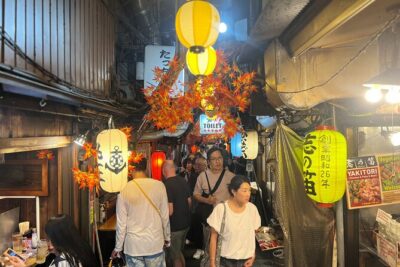 ★ 5.0Tokyo: Shinjuku Food Tour (13 Dishes at 4 Local Eateries)From $86
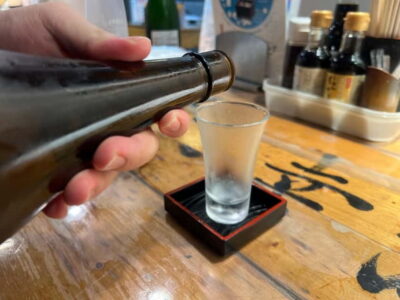 ★ 4.9Tokyo: Shinjuku Food Tour (13 Dishes and 4 Eateries)From $97
 ★ 5.0Tokyo Night Foodie Tour in Shinjuku – Seasonal Sushi, Wagyu BeefFrom $111
 ★ 5.0Eat and Drink Like a Local: Tokyo Ueno Food Tour-Taverns&RamenFrom $95
 ★ 5.0Tokyo: Shibuya Food Tour (13 dishes and 4 Eateries)From $77
Tokyo: Shinjuku Food Tour – 15 Dishes, 3 Drinks, 4 EateriesFrom $723 hours
★ 5.0Tokyo: Shibuya Food Tour (13 dishes and 4 Eateries)From $77
Tokyo: Shinjuku Food Tour – 15 Dishes, 3 Drinks, 4 EateriesFrom $723 hours