Reviewed · JDM & CAR CULTURE
Tokyo: Daikoku JDM Car Meet & Night Car Culture Tour
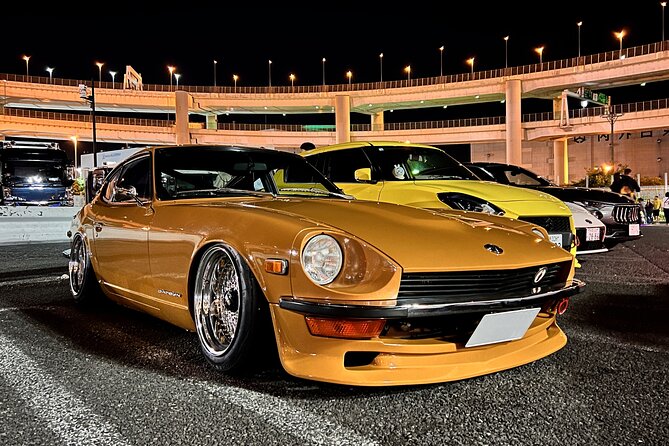
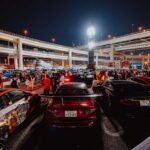
Daikoku Parking Area is not a museum or a staged motor show. It is a real highway rest stop where the cars change from night to night. You might see classic Japanese sports cars, modern performance machines, luxury models, European cars, and the occasional American car. The fun comes from not knowing exactly what will be parked there.
In This Article
- Key points at a glance
- Why Daikoku works best as a real car meet
- Meeting in Shibuya and choosing your ride
- A PIT Autobacs, Japan’s car store on a grand scale
- Tatsumi Parking Area and the expressway rhythm
- The night drive through Tokyo and Yokohama
- One hour at Daikoku Parking Area
- Guides who make the difference
- Is the $99.49 price good value?
- Who should book this night out?
- Should you book the Daikoku tour?
- FAQ
- How long does the Tokyo Daikoku car tour last?
- Where does the tour start?
- What vehicle options are available?
- Does every tour visit Daikoku Parking Area?
- Can I request a particular car at the meet?
- Is the tour suitable for children?
- What happens if bad weather cancels the tour?
I like the small-group format, which leaves room for car talk with guides such as Michael, Mori, Kareem, and Sasa. I also like that the drive includes more than Daikoku: A PIT Autobacs, Tatsumi Parking Area, the Rainbow Bridge, Tokyo Tower, Tokyo Skytree, and Yokohama Bay views all add context. The main caution is simple: no specific car sightings are guaranteed, and bad weather or a quiet night can reduce the spectacle.
Key points at a glance
- Daikoku is the main event: Spend about an hour at one of the Tokyo area’s best-known car gathering spots.
- The drive is part of the tour: Cross the Rainbow Bridge, follow Tokyo’s expressways, and pass views of Tokyo Tower, Skytree, Haneda, and Yokohama.
- A PIT Autobacs adds a shopping stop: Browse Japan’s flagship automotive store and see how local car culture reaches beyond the parking lot.
- Tatsumi offers a second car stop: This smaller highway rest area gives you another chance to see enthusiasts taking a break on the expressway.
- You choose the vehicle style: Options include a JDM Legend car, a Premium Sports Sedan, or a Performance Van.
- Saturday usually gives you the best odds: The meet can be active on other nights, but the size and mix of cars vary with weather and timing.
Why Daikoku works best as a real car meet
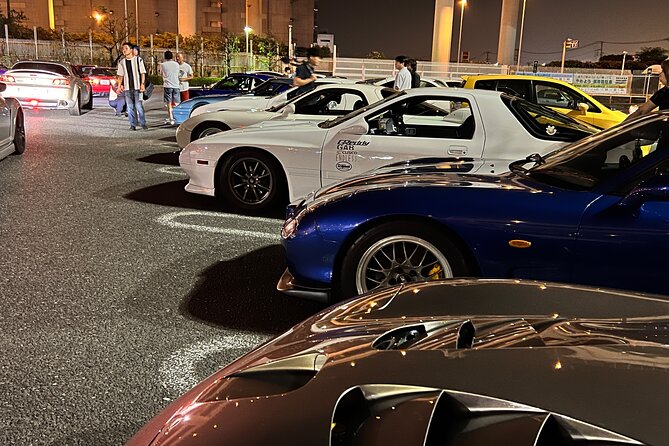
The appeal of this tour is the setting. Daikoku PA is part of the expressway system near Yokohama, not a permanent attraction with a fixed display. Cars arrive, leave, and sometimes gather in large numbers. That makes the visit feel more like an evening with local enthusiasts than a standard sightseeing stop.
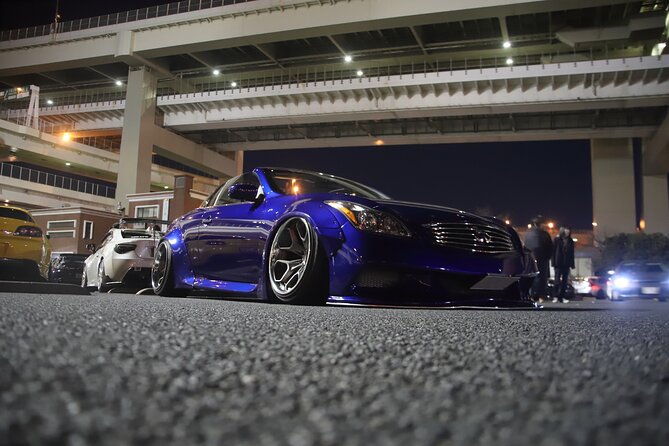
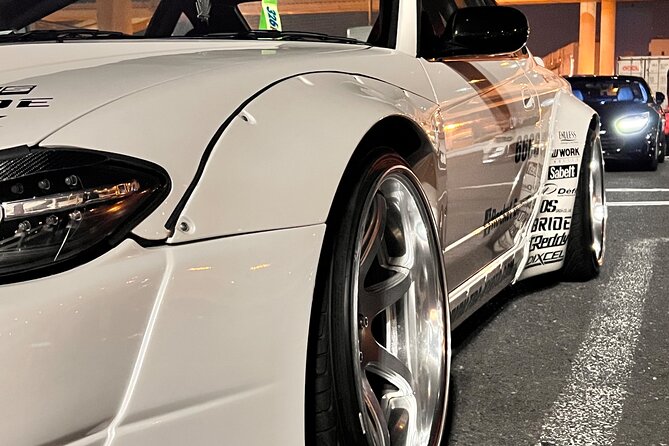
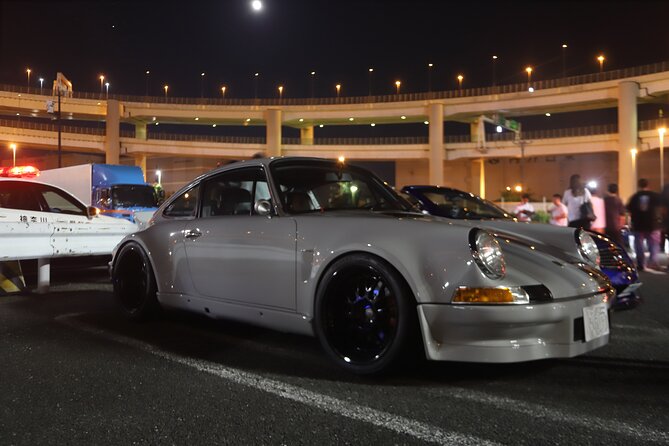
You may find JDM icons, modified cars, performance sedans, luxury vehicles, and unusual imports parked side by side. The range matters. This is not limited to the cars made famous by films and social media. Japanese car culture also includes European and American models, and the mix can be surprisingly broad.
The guide gives you a way into that world. Michael is described as having an engineering and automotive background, while Mori, Kareem, Karim, and Sasa are also praised for their enthusiasm and car knowledge. You are not simply driven to a parking area and left to wander. The guide can explain what you are seeing, discuss Japanese car culture, and adjust the conversation to your interests.
Still, set your expectations correctly. You are not guaranteed a row of rare supercars or an action-film-style street race. One night may bring a large gathering, while another may be quieter. Rain, cold, timing, and police closure can all change the evening. The most honest way to view it is as a chance to see a living car scene, not a guaranteed greatest-hits show.
A few more Tokyo tours and experiences worth a look
Meeting in Shibuya and choosing your ride
The tour begins at Dōgenzaka Center Building in Shibuya, at 2-chōme 29-8, near public transportation and only a short distance from Shibuya Crossing. Give yourself extra time to arrive. Traffic can be slow, especially after work, and a late arrival can create stress before the drive even starts.
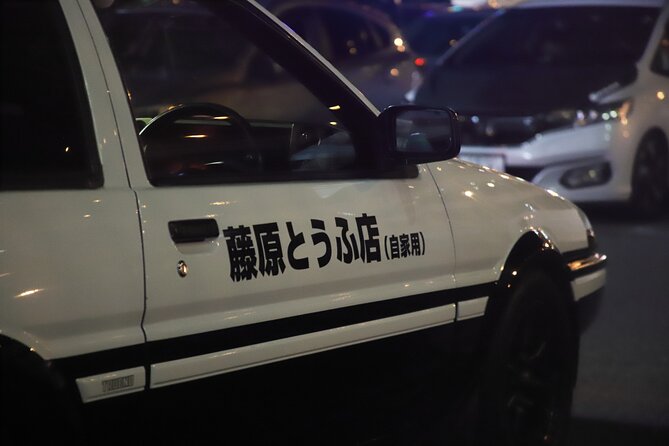
Your selected vehicle depends on the booking option. The choices listed are a JDM Legend car, a Premium Sports Sedan, and a Performance Van. Past rides have included a Lexus LS460 and a twin-turbo Skyline, although the exact car cannot be treated as guaranteed. The vehicle choice affects the mood of the evening, but the guide and route are more important than chasing a particular model.
The luxury vans have comfortable capacity for five and a maximum capacity of six. The full tour can take up to 10 people, so a larger party may be split between vehicles during the driving portions. For four or five people, the Small Group Performance Van option is specifically recommended.
Families can join. A booster seat is available, and small folding strollers may fit in the sedan or van depending on their size. If you book an RX-7 option, pay attention to the seat guidance: the rear seat is best for people under 170 centimeters who are slim, and the front seat is recommended for those under 185 centimeters.
A PIT Autobacs, Japan’s car store on a grand scale
The first major stop is A PIT Autobacs in Koto. The timing allows roughly 25 minutes to reach the store and about 25 minutes there. Admission is included.
This is a useful stop because it shows the everyday side of Japanese car culture. A PIT Autobacs is a flagship automotive store, and you can browse car-related products rather than only looking at finished vehicles in a parking lot. Depending on the day, you might also see interesting cars gathered around the store.
You do not need to be an expert to enjoy this stop. If you like accessories, parts, detailing products, or the design of car shops in Japan, it gives you plenty to look at. If you are traveling with a serious enthusiast, this is where they may want extra time.
The tradeoff is that 25 minutes passes quickly. You will not have time to inspect every shelf or shop at length. The stop works best as a focused look at a major automotive retailer, followed by the main event at Daikoku.
The schedule can change on weekdays. Tatsumi or A PIT Autobacs may sometimes be replaced by Umihotaru or Gaienmae, but every version of the tour visits Daikoku. This is worth checking if one particular stop is the reason you are booking.
Tatsumi Parking Area and the expressway rhythm
After A PIT Autobacs, the group makes a quick trip to Tatsumi No. 1 Parking Area for Hakozaki. The published timing includes about 10 minutes on the road and 15 minutes at the stop.
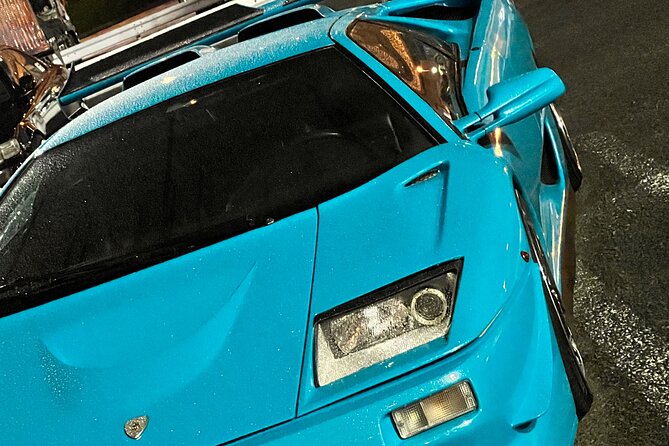
Tatsumi is smaller and more low-key than Daikoku. It is a place where car enthusiasts stop while making loops on the expressway, so the attraction is the possibility of seeing cars in a less famous setting. You may find the stop quieter, or you may catch an interesting group arriving during your short break.
Do not judge Tatsumi as a second Daikoku. Its value is different. It helps you understand that car culture is spread across the highway network, not concentrated in one famous parking area. It also breaks up the longer drive and gives you another chance to stretch your legs.
The short stop can be affected by weather and activity levels. One party found it less appealing in the rain and did not stay long. That is a fair point: this is an outdoor stop with a limited schedule, not a full attraction.
The night drive through Tokyo and Yokohama
A large part of the tour happens from the car. This is important because the route offers views you do not get from the subway. The itinerary passes Roppongi Hills, with its offices, shopping, and restaurants, before heading toward the Rainbow Bridge.
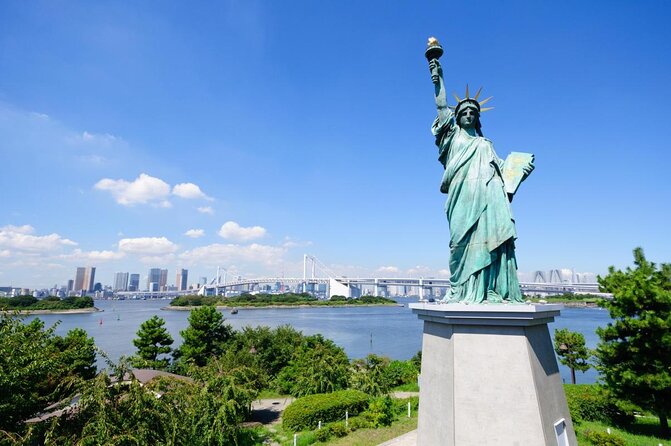
Crossing the Rainbow Bridge at night is one of the strongest parts of the route. From the road, you can look toward Odaiba, the man-made island known for residences, shopping, and leisure facilities. The unusual Fuji TV building is also visible from the area.
The drive continues along the expressways toward Daikoku. You may see Tokyo Skytree from the Furukawa Line, then pass near Haneda Airport through tunnels beneath the runways. If timing and conditions cooperate, you might see aircraft taxiing above the tunnel entrances. That detail is not guaranteed, but it adds a nice bit of drama to the route.
Near Daikoku, the Yokohama Bay Bridge and Yokohama skyline come into view. Yokohama is a major port, so cruise ships may also be visible. These sights give the tour value even if the car meet is quieter than expected.
The return route brings more city views, including Yokohama’s Minatomirai area, Yokohama Port, Tokyo Tower from the C1 Loop Highway, and another look across the Rainbow Bridge from the Odaiba side. If you enjoy urban night scenery, you will find the drive worthwhile on its own.
The driving can feel quick and powerful in a performance-oriented car, but safety is a priority. The guides are there to deliver an exciting ride without turning it into reckless entertainment. You should enjoy the expressway views and car talk, not expect illegal racing.
A few more Tokyo tours and experiences worth a look


One hour at Daikoku Parking Area
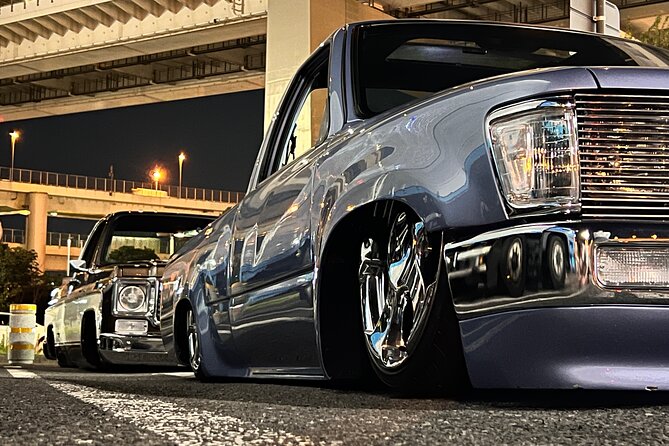
The route allows about 40 minutes to reach Daikoku from the previous stop and roughly 60 minutes at the parking area. That gives you enough time to walk around, look at the cars, take photos, and talk with the guide.
The one-hour stop is a good compromise. You get more than a brief photo stop, but the tour does not pretend that you can spend an entire night there. Since cars arrive and leave constantly, the timing may work in your favor. A group that looks ordinary at first can change quickly as new vehicles pull in.
The best approach is to look at the whole scene, not just search for one famous model. Notice the mix of factory cars, modified vehicles, luxury cars, and rare imports. Ask your guide what makes a car notable. A passionate guide can help you see details that would otherwise pass unnoticed.
Police may close Daikoku, particularly when the gathering becomes too large or disruptive. That does not mean the tour fails, but it can shorten the stop or change the mood. Another parking area may offer a second look at the scene, and the guide may adjust the route according to conditions.
This is also where expectations matter most. If you expect a nonstop parade of movie-style street racers, you could leave disappointed. If you want a real glimpse of people meeting around their cars, with an unpredictable mix and a relaxed local feel, the stop makes sense.
Guides who make the difference
The strongest part of the tour is the guide’s conversation. Michael is repeatedly praised for explaining cars clearly, sharing personal automotive background, and keeping the ride friendly and safe. Mori receives similar praise for his JDM knowledge and warm manner. Kareem, Karim, and Sasa are also named as guides who bring enthusiasm to the evening.
That variety matters because this is not a scripted museum tour. The guide can respond to your questions and talk with the car enthusiasts in your group. One family with young adults found that Michael could keep up with long car conversations, while another group appreciated his ability to include children.
You should tell the guide what interests you. Maybe you want JDM history, tuning culture, engineering details, Japanese highway routes, or simply a comfortable night drive with good city views. The more specific you are, the more useful the conversation can become.
Language preferences can be accommodated when possible, but they are not guaranteed. If language is important to your booking, ask before paying.
Is the $99.49 price good value?
At $99.49 per person, this is not a cheap way to get from Shibuya to Yokohama. You are paying for several hours of private road transport, a small-group setting, a guide, multiple car-related stops, and a route that would be awkward to recreate independently.
The value is strongest for a car enthusiast who would otherwise spend time and money trying to reach Daikoku alone. The guide provides the route, driving, local context, and vehicle. You also get A PIT Autobacs, Tatsumi, and the night views, not just a single parking lot.
The value is weaker if you are only mildly curious about cars. Much of the evening involves highway travel and conversation about vehicles. One four-star assessment made this clear: a car-loving partner enjoyed the stops more than the person who was less interested. You should book this for a shared interest, or at least a genuine wish to see Tokyo from the road.
Food, drinks, and souvenirs are not included. Plan to eat beforehand or afterward. All fees and taxes, the guide, transportation, and listed car-related visits are included.
Who should book this night out?
I would choose this tour for:
- JDM fans who want to see cars in a real local setting
- Parents traveling with teenagers or young adults who can talk cars for hours
- Anyone who wants a Tokyo night tour from the expressway rather than the subway
- Small groups that want more personal conversation than a large bus tour provides
- Visitors curious about Japanese, European, and American car culture in Japan
I would think twice if your main goal is a guaranteed sighting of a particular model. I would also reconsider if you dislike sitting in a car for long stretches or have no interest in automotive conversation.
Saturday evening is generally the safest choice if your priority is a busy meet. Other nights can still be rewarding, including Wednesdays and Sundays, but the number of cars changes. Morning and evening departures are available, so you can fit the ride around the rest of your Tokyo plans.
The experience requires good weather. If poor weather forces cancellation, you are offered another date or a full refund. You can cancel for a full refund up to 24 hours before the start time, but changes or cancellations inside that window are not refunded.
Should you book the Daikoku tour?
Book it if you want car culture plus a night drive, not just a photo at Daikoku. The combination of A PIT Autobacs, Tatsumi, the expressway route, Tokyo landmarks, Yokohama views, and an hour at the meet gives the evening a fuller shape than a direct transfer would.
I especially like the chance to travel with guides such as Michael or Mori, who can turn the ride into a long conversation rather than dead time between stops. Pick Saturday if you want the best odds of a large gathering, choose the vehicle that suits your group, and arrive early at the Shibuya meeting point.
Skip it if you need a fixed display of rare cars or expect Hollywood-style action. For everyone else who wants a relaxed, personal look at Japan’s night car scene, the $99.49 fare is a fair price for a memorable and unusual side of Tokyo.
FAQ
How long does the Tokyo Daikoku car tour last?
The tour lasts approximately 3 to 4 hours and begins and ends at the Shibuya meeting point.
Where does the tour start?
The meeting point is Japan, 150-0043 Tokyo, Shibuya, Dōgenzaka, 2-chōme 29-8, at Dōgenzaka Center Building.
What vehicle options are available?
You can select a JDM Legend car, a Performance Van, or a Premium Sports Sedan, depending on the booking option.
Does every tour visit Daikoku Parking Area?
Yes. Daikoku is included on every version of the experience. On some weekdays, Tatsumi or A PIT Autobacs may be replaced by Umihotaru or Gaienmae.
Can I request a particular car at the meet?
No. Specific car sightings cannot be guaranteed because the vehicles present change with the day, time, weather, and other conditions.
Is the tour suitable for children?
Most people can participate, and the tour is family-friendly. A booster seat is available. Small folding strollers may fit in the sedan or van depending on their size.
What happens if bad weather cancels the tour?
Because the tour requires good weather, a cancellation caused by poor conditions offers you a different date or a full refund.
More Evening Experiences in Tokyo
More Night Tours in Tokyo
More JDM & Car Culture in Tokyo
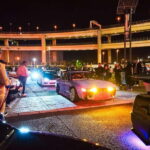
More tours in Tokyo we've reviewed












JDM & Car Culture, compared.
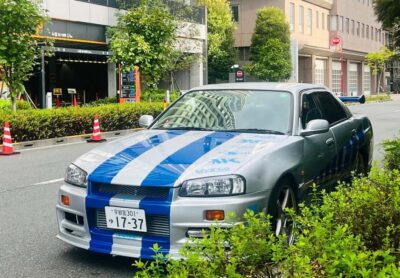 ★ 4.8Tokyo: Fast & Furious Tokyo Drift 3 Experience (Kaila Yu SP)From $157
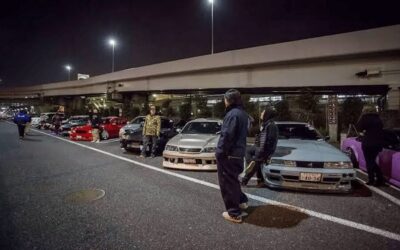 ★ 4.8Tokyo: FAST&FURIOUS EXPERIENCE Daikoku Tokyo Car ClubFrom $157
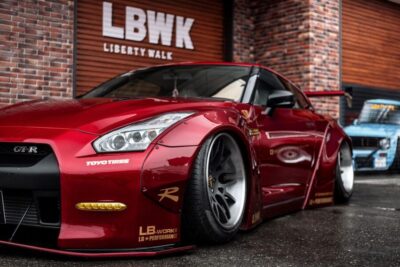 ★ 4.8Tokyo Drift: GT-R Car Club R35 Liberty Walk Daikoku meetingFrom $240
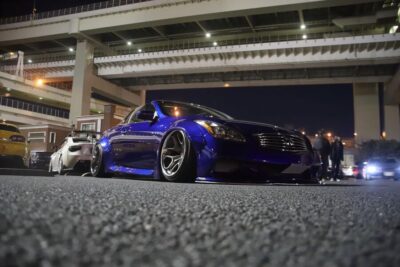 ★ 4.8Tokyo: Daikoku JDM Fast Furious Drift Style Car ExperienceFrom $123
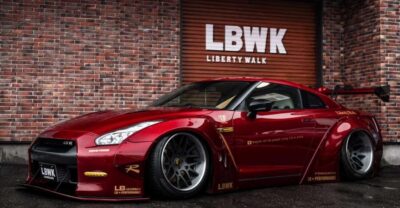 ★ 4.8Tokyo Drift: GO Daikoku Car Meet R34 Skyline Car ClubFrom $246
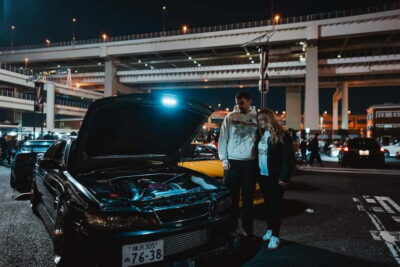 ★ 4.7Tokyo Drift: Daikoku PA Supreme Car Experience 大黒PAFrom $583 hours