Reviewed · HAKONE DAY TRIPS
Exciting Hakone – One Day Tour from Tokyo
Hakone packs a surprising amount into one day: a bullet train, a twisting mountain railway, cable cars, ropeways, a lake cruise, and a steaming volcanic valley. I like the way this private tour for up to five people turns a complicated day of transfers into one guided outing, and I like that hotel pickup and drop-off in Tokyo’s 23 wards are included. You also get a useful mix of transport and scenery, rather than spending the whole day on a coach.
In This Article
- Key points at a glance
- Why this Hakone day works from Tokyo
- 8:30 a.m. pickup and the Shinkansen to Odawara
- Hakone-Yumoto to Gora on the mountain railway
- Cable car and ropeway toward Owakudani
- One hour among Owakudani’s volcanic pools
- Ropeway down to Lake Ashi
- The 30-minute Lake Ashi cruise and Hakone Shrine
- The return by bus and Shinkansen
- What the $208.49 price really covers
- Guides and the personal feel
- Who should book this Hakone tour
- Should you book it?
- FAQ
- How long does the Hakone tour last?
- Where does the tour begin?
- Is the tour private?
- Is transportation included in the price?
- Will I definitely see Mt. Fuji?
- What happens if the ropeway or boat cannot operate?
- Is lunch included?
- How much walking is involved?
I especially like the chance to see Owakudani’s bubbling volcanic pools and travel across Lake Ashi on the pirate-style sightseeing boat. Guides including Akira, Hideaki, and Yumiko Sano have been praised for being attentive, polite, flexible, and good at handling the many transport changes. The main consideration is cost: the $208.49 tour price does not include the Shinkansen, Hakone Free Pass, admissions, or lunch, so your final bill will be higher.
Key points at a glance
- Seven ways to experience Hakone: Combine the Shinkansen, local trains, mountain railway, cable car, ropeway, sightseeing boat, and bus in one day.
- Owakudani’s active volcano zone: See steam and bubbling pools, then try the famous black egg boiled in hot spring water.
- A private group of no more than five: You get a more personal day than on a large sightseeing bus.
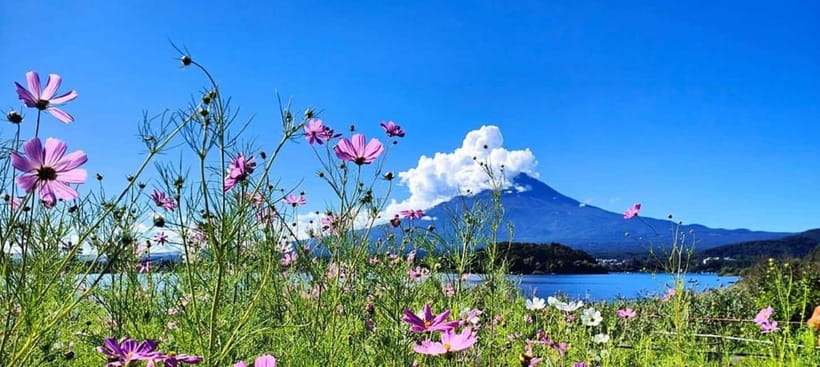
- Mt. Fuji depends heavily on weather: Winter offers about an 80 percent chance of a view, while summer can fall below 30 percent.
- Hotel pickup removes much of the stress: Meet your guide in your Tokyo hotel lobby at 8:30 a.m.
- Weather can change the route: Strong winds, snow, or other natural hazards may stop the ropeway or Lake Ashi cruise.
Why this Hakone day works from Tokyo
Hakone is close enough to visit from Tokyo, but the day is not simple to plan. You must connect long-distance rail with local trains, the mountain railway, cable cars, ropeways, a lake boat, and a bus. A missed connection or closed ropeway can throw off the whole plan.
That is the practical value of this experience. Your guide meets you at your hotel lobby, helps direct the rail journey, and stays with you through the changes. Guides such as Akira, Hideaki, and Yumiko Sano have shown a useful mix of quiet commentary and hands-on help. Yumiko, in particular, has helped with ticket purchases and adjusted the day around personal requests.
The group limit of five matters. You are not being moved through Hakone with dozens of strangers, and the guide can react when weather or transport causes a change. It is still a long day, though, and much of it follows a fixed sequence. This is best for you if you want to see Hakone’s main sights efficiently rather than choose one hot-spring town and linger there.
A few more Tokyo tours and experiences worth a look
8:30 a.m. pickup and the Shinkansen to Odawara
The day begins at 8:30 a.m. in your Tokyo hotel lobby, provided your hotel is in one of the 23 wards. From there, you travel to Tokyo or Shinagawa Station with your guide before boarding the Shinkansen to Odawara at about 9:26 a.m.
This is not the fastest Shinkansen service, but it still runs at about 260 kilometers per hour. The train gets you out of central Tokyo quickly and gives the day a memorable start. For many visitors, riding a bullet train is part of the Japan experience, even on a short hop.
You should know that the train fare is not included. The supplied cost is 6,560 yen per person for a round-trip discounted Shinkansen ticket. That adds a sizeable amount to the advertised tour price, but the rail journey also saves time compared with trying to reach Hakone entirely by slower local services.
At Odawara, you change to a train for Hakone-Yumoto, scheduled to leave around 10:13 a.m. The timing is tight enough that having a guide is useful, especially if you are unfamiliar with Japanese stations or need help buying the correct tickets.
Hakone-Yumoto to Gora on the mountain railway
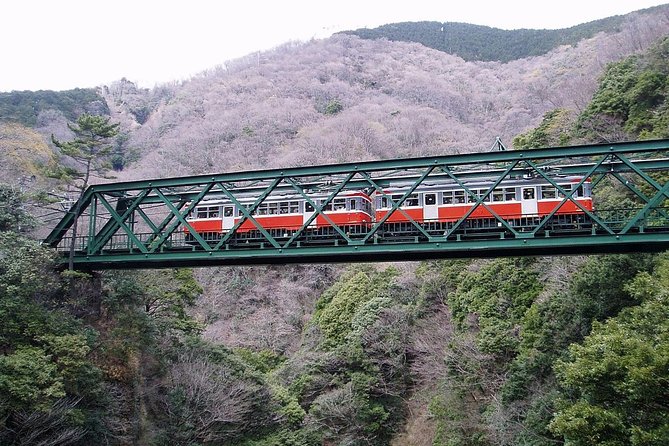
From Hakone-Yumoto, the mountain train climbs toward Gora at about 10:30 a.m. The ride takes roughly 40 minutes and is one of the day’s most distinctive sections. Instead of simply carrying you from one station to another, it winds through narrow valleys and gives you a first taste of Hakone’s wooded mountain setting.
The route is especially attractive from mid-June to mid-July, when hydrangeas along the railway are in bloom. That seasonal detail may shape your expectations. You are not guaranteed a major flower display outside this period, but the train ride remains worthwhile for its curves, slopes, and changing views.
This is also where the day begins to feel less like a city excursion and more like a countryside outing. I like this gradual change. You do not jump straight from Tokyo into a single attraction. The transport itself becomes part of the experience.
Still, you should expect a busy schedule. Hakone’s transport network is popular, and your guide must keep an eye on departures. You will have less freedom to stop at every small café or shop along the way, but you gain a much better chance of fitting the major sights into one day.
Cable car and ropeway toward Owakudani
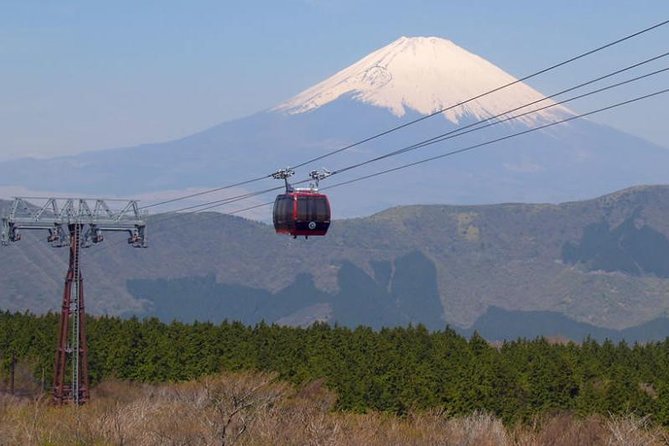
At Gora, the route continues by cable car and ropeway toward Owakudani. The combined journey takes about 20 minutes. From the ropeway, you can see Mt. Fuji on a clear day, along with Hakone’s mountain scenery.
This is one of the tour’s strongest visual moments, but weather controls the result. The chance of seeing Fuji is said to be about 80 percent in winter and less than 30 percent in summer, based on weather records for Fuji City. A clear winter day may give you the classic view you hope for. In summer, you should treat Fuji as a bonus, not a promise.
The ropeway may be suspended when snow, strong winds, or other natural hazards are forecast. That is not a small detail. It can remove one of the most scenic sections of the day, and it may also affect the boat later at Lake Ashi.
A good guide can make the difference here. When the cable car and boat were unavailable because of weather, Hideaki rearranged the day so the group could continue with other activities. That flexibility is one reason a private tour can be more useful than a rigid schedule.
One hour among Owakudani’s volcanic pools
Owakudani gives the day its most unusual stop. This is an active volcanic area where you can see steam and bubbling pools, rather than simply reading about volcanic activity in a museum. You have about one hour to walk around and take in the dramatic setting.
The famous local snack is a black egg boiled in the hot spring water. Its dark shell comes from the mineral-rich water, and it is one of Hakone’s best-known food traditions. You do not need to make the egg the main event, but trying one adds a simple, local touch to the stop.
The hour passes quickly. You will want time for photographs, a look at the volcanic activity, and perhaps the black egg. The area can also feel exposed in poor weather, so bring clothing suited to the forecast. The experience depends on what is open and safe on the day, and volcanic conditions or transport restrictions may alter the visit.
I like Owakudani because it gives the trip a clear sense of place. Hakone is not only a scenic mountain resort. It is also a volcanic region whose hot springs shape the local culture and tourism.
A few more Tokyo tours and experiences worth a look



Ropeway down to Lake Ashi
After Owakudani, you take another ropeway section toward Lake Ashi, usually about 20 minutes. The views shift from steaming volcanic ground to the broad waters of the lake, giving the day a good change of pace.
This part is scenic when the weather cooperates, but it is also one of the tour’s vulnerable links. Ropeway services can stop because of strong winds or snow. If that happens, your guide may need to replace this section with other activities or adjust the timing.
The changing conditions are worth keeping in mind when you book. If riding the ropeway and boat is your main reason for choosing the tour, you should be comfortable with the possibility that nature may cancel them. The tour offers a strong plan, not a weather guarantee.
The 30-minute Lake Ashi cruise and Hakone Shrine
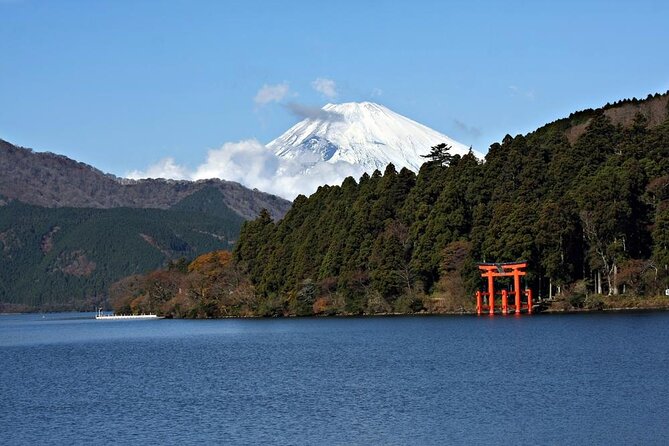
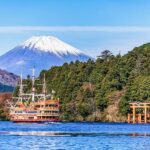
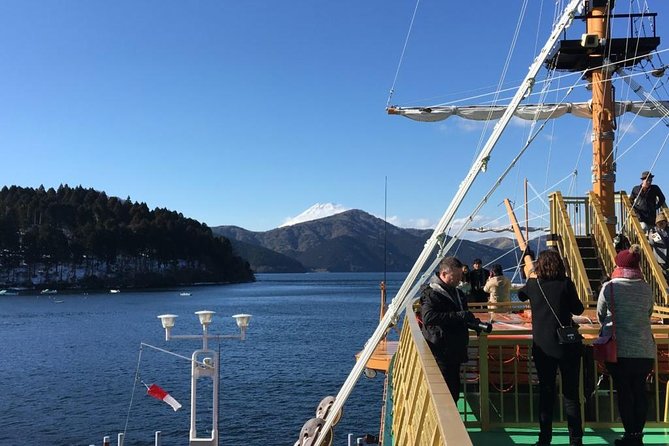
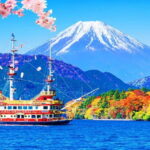
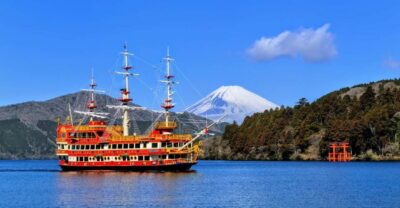
The Lake Ashi cruise lasts about 30 minutes. The sightseeing vessel is often described as a pirate ship, which gives this short crossing a playful feel. It is a chance to rest after the morning’s walking and transfers while seeing Hakone from the water.
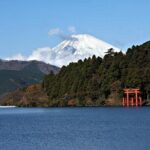
On a clear day, the lake adds another angle for mountain views. On a cloudy day, the boat still provides a change from trains and aerial transport, though the scenery will be less dramatic. Strong winds can suspend the cruise, so the same weather warning applies here.
After the cruise, you stroll around Hakone Shrine. This brings a quieter cultural stop to a day otherwise shaped by transport and natural scenery. The shrine visit also keeps the outing from becoming only a chain of viewpoints.
You should not expect a long, unhurried temple visit. The overall timetable must still carry you back to Odawara. Think of the shrine as a focused walk and a chance to see one of Hakone’s best-known cultural sites.
The return by bus and Shinkansen
Around 4:30 p.m., you take a bus from the Lake Ashi area to Odawara. This is a useful final stretch because it connects the lake region back to the main rail line without requiring you to retrace every earlier ride.
The return Shinkansen leaves Odawara at about 5:42 p.m., reaching Tokyo or Shinagawa around 6:16 p.m. You then travel back to your hotel. In practice, the full day runs close to ten hours, with an early start and a fairly late finish.
That length is both the strength and weakness of the experience. You cover a lot of ground and sample several sides of Hakone, but you will need energy for repeated boarding, walking, and transfers. The tour notes a moderate amount of walking, and most people can participate, but it is not a slow-paced spa day.
What the $208.49 price really covers
The advertised price is $208.49 per person, and the tour includes a professional guide, private arrangements, and hotel meeting service in Tokyo’s 23 wards. The group limit is five, so the price buys personal attention rather than a large bus setting.
But transport costs are separate. You must also pay 6,560 yen per person for the two-way discounted Shinkansen ticket and 6,000 yen per person for the Hakone Free Pass. Admission fees and lunch are also excluded.
That means you should compare the total cost, not just the headline price. For a couple or small family that values a private guide and does not want to plan the transport puzzle, the extra expense may be sensible. If you are comfortable navigating Japanese trains and ropeways yourself, an independent Hakone day can cost less.
The real value lies in time and support. Your guide can help you get through the stations, explain what you are seeing, adjust plans when weather closes a route, and keep the day moving. You are paying for that structure as much as for the sightseeing.
Guides and the personal feel
The strongest guide feedback centers on Akira, Hideaki, and Yumiko Sano. Akira has led groups through the trains, cable cars, two ropeway rides, the Lake Ashi boat, and the return bus, helping the many-part day feel manageable.
Hideaki has been described as polite and appropriately quiet, offering information when it is useful rather than filling every minute with talk. That style suits you if you prefer room to look around and enjoy the scenery.
Yumiko Sano brings strong English, courtesy, and flexibility. She has arrived early at the hotel, helped with Shinkansen ticket procedures, and adjusted the outing to suit the people in her group. The guide assigned to you may differ, but these examples give you a fair sense of the service style to expect.
Who should book this Hakone tour
I would choose this tour if you have only one day outside Tokyo and want Hakone’s main sights without building the route yourself. It suits couples, families with older children, and small groups that value a private guide.
It is also a good match if Japanese rail connections make you nervous. The day involves enough changes that support at the station can save real stress.
I would think twice if your priority is a long hot-spring soak, a relaxed lunch, or independent wandering. Those are not the focus here. You get volcano views, transport experiences, a lake cruise, and a shrine in one tightly managed day.
Children must be accompanied by an adult. Most people can take part, but expect moderate walking and a full schedule. Wear comfortable shoes and allow room in your expectations for weather changes.
Should you book it?
Book this tour if you want a big Hakone sampler with a private guide and hotel pickup. The mix of bullet train, mountain railway, ropeway, Owakudani, Lake Ashi, and Hakone Shrine gives you a memorable first look at the region.
Before paying, add the separate rail and Hakone pass costs, plus lunch and admission fees. Also accept that Mt. Fuji, the ropeway, and the boat depend on weather. If those conditions work for you, this is a practical and well-supported way to escape Tokyo for one energetic day.
FAQ
How long does the Hakone tour last?
The experience lasts about 10 hours. Pickup begins at 8:30 a.m., and you return to Tokyo or Shinagawa at about 6:16 p.m. before going back to your hotel.
Where does the tour begin?
Your guide meets you in the lobby of your hotel in Tokyo’s 23 wards at 8:30 a.m.
Is the tour private?
Yes. Only your group participates, and the maximum group size is five people.
Is transportation included in the price?
No. The two-way discounted Shinkansen ticket costs 6,560 yen per person, and the Hakone Free Pass costs 6,000 yen per person. Admission fees and lunch are also separate.
Will I definitely see Mt. Fuji?
No. Visibility depends on the season and weather. The stated chance is about 80 percent in winter and below 30 percent in summer.
What happens if the ropeway or boat cannot operate?
The ropeway and Lake Ashi cruise may be suspended because of snow, strong winds, or other natural hazards. The guide may rearrange the day and substitute other activities.
Is lunch included?
No. Lunch is not included in the tour price.
How much walking is involved?
A moderate amount of walking is involved, and most people can participate. Children must be accompanied by an adult.
More 1-Day Tours in Tokyo
More Hakone Day Trips in Tokyo
More tours in Tokyo we've reviewed












Hakone Day Trips, compared.
 ★ 5.0Mt Fuji and Hakone 1-Day Bus Tour Return by Bullet TrainFrom $163
 ★ 4.0Mt Fuji & Hakone Cruise, Drum Show Bullet Train 1 Day from TokyoFrom $149
 ★ 4.4Tokyo Mt Fuji 5th St & Hakone Cruise Bus Tour w/Bullet TrainFrom $15410 hours
 ★ 4.7Tokyo: Mt. Fuji Tour, Hakone Ropeway, Owakudani, Lake AshiFrom $5410 hours
 ★ 4.2Tokyo: Mt. Fuji 5th Station & Hakone Cruise 1-Day Bus TourFrom $12911 hours
 ★ 5.0Private Tour to Mt. Fuji and Hakone (Fully Licenced Operator)From $497