Reviewed · WALKING TOURS
Holiday Lights Walk Tour Hibiya Midtown Tokyo Station Marunouchi
Tokyo’s Marunouchi Christmas lights turn a central business district into a long evening stroll beneath 1.2 million champagne-gold bulbs. This 2.5-hour walk links Hibiya Midtown, luxury hotels, department-store displays, Marunouchi Brick Square, and the grand avenue leading to Oazo.
In This Article
- Key points at a glance
- Why Marunouchi works so well after dark
- The Peninsula Tokyo: a polished beginning
- Tokyo Midtown Hibiya and the Milky Way effect
- Kokusai Building: a quick photo stop
- Marunouchi Brick Square and the 15-meter tree
- Marunouchi Building: the evening’s main tree
- Shin-Marunouchi Building: art instead of sheer size
- Marunouchi Oazo and the 1.2-kilometer finale
- What the $26 price really covers
- Pace, weather, and what to bring
- Who will enjoy this walk most
- Should you book the Holiday Lights Walk?
- FAQ
- Where does the Holiday Lights Walk Tour begin?
- What time does the tour start?
- Where does the tour finish?
- How long does the walk last?
- What is included in the $26 price?
- How large can the group be?
- Can I cancel for a full refund?
I like the route’s variety: you get polished hotel decorations and photogenic trees, then a full 1.2-kilometer stretch of lights along Nakadori Street. I also like the friendly, personal feel described by guests who walked with Kodai, the guide, who helped with photos and pointed out less obvious spots. The main drawback is timing: the tour covers many stops in one evening, so you should expect a steady walk rather than a slow, leisurely look at every display.
Key points at a glance
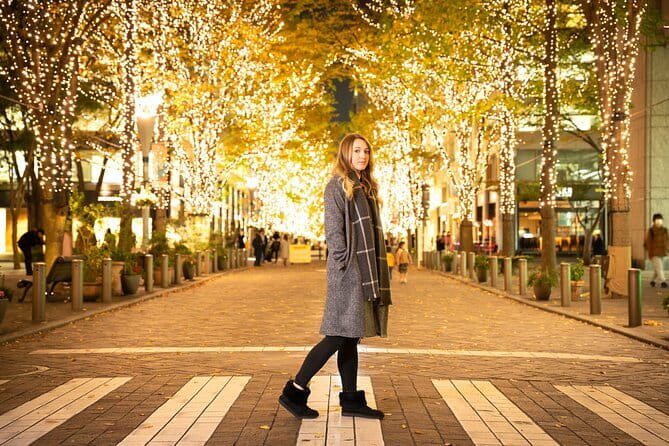
- 1.2 kilometers of champagne-gold lights: Nakadori Street provides the evening’s main illuminated route.
- Eight decorated locations: The walk moves from The Peninsula Tokyo and Hibiya Midtown to Marunouchi Oazo.
- Kodai may help with photos: His personal approach is a useful bonus if you are exploring alone or want group pictures.
- Large seasonal centerpieces: Marunouchi Brick Square has a 15-meter tree, while Marunouchi Building presents a much larger tree with a show every 15 minutes.
- A possible coffee stop: If the schedule stays on track, the group may pause for coffee near the end, but drinks are not included.
- A small-group format: Up to 40 people can join, so the feel may range from intimate to moderately busy.
Why Marunouchi works so well after dark
Marunouchi is more than a shopping district with decorations added for December. It occupies the area beside Tokyo Station and has long been tied to the city’s political, financial, and cultural life. Before the modern office towers and luxury stores, the district held the residences of feudal lords who served and protected the shogun in Edo, the old name for Tokyo.
That background gives the walk a useful sense of place. You are not simply moving between unrelated Christmas displays. You are crossing one of central Tokyo’s most important districts, where old power, modern commerce, hotels, restaurants, and public spaces meet within a compact area.
The evening starts near Yurakucho Station at The Stand, close to the Hibiya exit. The meeting time is 7:30 p.m., with pickup listed between 7:30 and 7:45. Arrive early enough to find the small meeting point without rushing. Tokyo’s station exits can be confusing, especially after dark and when you are trying to match a map pin to a storefront.
From there, the route heads toward Hibiya and then gradually north toward Tokyo Station. The route is practical for a first evening in this part of town because you finish at Marunouchi Oazo, not back at the starting point. That makes it easier to continue to Tokyo Station, find dinner, or return by train.
Other walking tours we've reviewed in Tokyo
The Peninsula Tokyo: a polished beginning
The first major stop is The Peninsula Tokyo, where the hotel garden provides the starting point for the illumination route. Its Christmas tree and small Christmas market create a refined opening rather than a loud street-fair atmosphere.
This is a good place to take your first photographs because the hotel setting gives the decorations a formal backdrop. You can expect about 10 minutes here, enough to see the tree and get oriented, but not enough for a long browse or a relaxed drink.
The tour fee does not cover food or beverages. If the small market has something you want, plan to pay for it yourself. That rule applies throughout the evening, including the possible coffee break near the end.
Tokyo Midtown Hibiya and the Milky Way effect
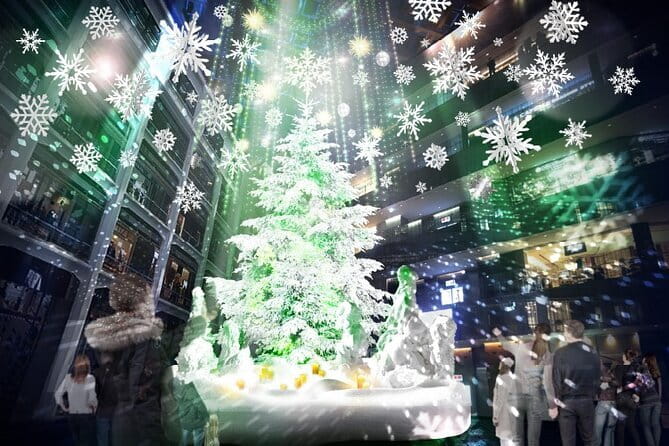
The next section brings you to Tokyo Midtown Hibiya, where the lawn and garden are lit in white to suggest the Milky Way. This changes the mood from the warm gold of Marunouchi’s main street to something cooler and more spacious.
The first Hibiya Midtown check-in lasts about 15 minutes. You then spend roughly 30 minutes at Step Square HIROBA, another part of the same complex. The longer stop makes sense here because the area includes a Christmas tree, broad illuminated views, and rooftop garden lighting.
I would pay attention to the contrast between the lower garden and the rooftop view. The wide sight lines are useful for photographs, while the white lighting works better as an overall scene than as a single close-up subject. If you prefer moving quickly from one famous landmark to another, this part may feel slightly long. If you enjoy taking pictures, it gives you more room to work.
The seasonal dates given for this display are November 17 through December 25. That matters because the Christmas program is not a year-round attraction, and the exact displays can change from one season to the next.
Kokusai Building: a quick photo stop
The Kokusai Building is the fourth Christmas check-in point. The stop is brief, about 10 minutes, but it is described as especially photogenic.
This is a useful reminder that the walk is not built only around giant trees. Some locations work because of the way the lights frame the building and surrounding public space. You will probably have enough time for photographs and a quick look, but not an extended visit.
The short pause also helps keep the group moving toward Marunouchi Brick Square. Wear comfortable shoes and keep your camera ready. The tour is designed as a connected walk, not a series of long stationary visits.
Marunouchi Brick Square and the 15-meter tree
At Marunouchi Brick Square, the centerpiece is a 15-meter Christmas tree with a classic look. The setting includes restaurants and luxury shops, so this stop feels more like a decorated urban plaza than a hotel display.
You have about 10 minutes here. That is enough to admire the scale of the tree and take pictures, though you may want to return later if you would like to eat in the area. Since the tour continues on schedule, do not count on having time for a full meal during the walk.
This is one of my favorite parts of the route in concept because it shows how Tokyo handles seasonal decoration: the tree is large and traditional, but the surrounding architecture remains sleek and modern. You get the old-fashioned Christmas image without leaving central Tokyo’s business core.
Marunouchi Building: the evening’s main tree
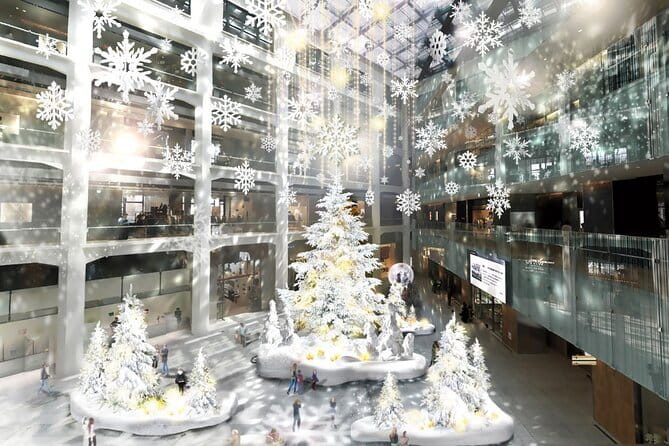
The Marunouchi Building provides the largest featured tree, described as about 30 meters high. A show takes place every 15 minutes, making this the stop with the clearest scheduled performance element.
The group spends around 20 minutes here. That gives you a reasonable chance to see one show cycle, although exact viewing time depends on when the group arrives. If the display is a priority, stay close to the guide and avoid wandering too far into the building.
Seasonal character displays are also associated with the Marunouchi area, including references to characters from the Super Mario series in the tour description. Some guest comments refer to Disney characters instead, which suggests that the themed program may change or be described differently from one season to another. If a particular character display matters to you, confirm the current year’s theme before booking.
The large tree and timed show make this a strong stop for families and fans of seasonal spectacles. It can also be the busiest-feeling part of the evening because the display draws people who are not part of the walking group.
Shin-Marunouchi Building: art instead of sheer size
The Shin-Marunouchi Building shifts the focus from height to design. Its Christmas art and tree provide another kind of photo opportunity, with the building’s contemporary setting shaping the display.
The scheduled stop is about 15 minutes. You can use this pause to compare the decoration styles. The Peninsula offers hotel elegance, Hibiya Midtown uses a wide field of light, Marunouchi Brick Square goes traditional and tall, and Shin-Marunouchi brings in more decorative art.
That variety keeps the walk from becoming repetitive. The drawback is that the route gives you only a short window at each place. If you like studying installations closely or reading every sign, you may feel hurried.
Marunouchi Oazo and the 1.2-kilometer finale
The final destination is Marunouchi Oazo, where the route ends after about 20 minutes. Oazo has Christmas art, a tree, and its own lighting, giving you one last decorated indoor and outdoor area before the tour wraps up.
The larger finish is Marunouchi Nakadori, the main avenue lined with approximately 1.2 kilometers of champagne-gold lights. This long tunnel of illuminated trees is the visual thread that ties the evening together. It is also the part where the walk itself matters most. You are not just stopping for photographs; you are moving beneath a continuous canopy of light through the center of Tokyo.
The end point is useful. Marunouchi Oazo is close to Tokyo Station, so you can continue your night from there. A coffee stop may be offered if the schedule is running on time, but it is not guaranteed and is not included in the price.
What the $26 price really covers
At $26 per person, this is a modestly priced guided walk rather than a package with meals or paid attractions. The fee includes the guide and all listed fees and taxes. Every stop itself is free, and you pay separately for anything you eat or drink.
The value comes from organization and company. A local guide connects several decorated areas that you could visit independently, while the fixed route reduces the need to plan a path through Hibiya and Marunouchi. If you already know the district and are comfortable navigating Tokyo at night, you could see many of the same public displays without paying for a guide.
I think the fee makes more sense if you are visiting during the holiday season for a short time, traveling alone, or want help taking photos. Kodai is specifically praised for explaining the sights, finding appealing photo locations, and taking pictures. That personal assistance can be worth more than the admission cost, since there is no ticketed attraction included.
The format may also work well for friends, couples, and solo visitors. One guest described it as easy to join alone or with friends, and the maximum group size is 40 people. That is not a tiny private group, so you should not expect a fully private experience. Still, the route appears to rely on direct guiding rather than a large coach-tour setup.
Pace, weather, and what to bring
The advertised duration is about two and a half hours. The stated stop times add up to a substantial portion of that period, with walking between locations filling in the rest. Expect to be on your feet for most of the evening.
Tokyo’s winter evenings can feel cold while you wait outside for photographs. Bring a warm layer, gloves if you need them, and shoes suited to walking on city streets. The tour does not list indoor seating or a meal as part of the fee, so do not plan on warming up over dinner during the route.
A phone with enough battery is important. You receive a mobile ticket, and the evening offers many photo opportunities. If you want pictures of yourself, ask Kodai early rather than waiting until the final stop. The guide’s help with photographs is one of the more useful personal touches attached to this experience.
Service animals are allowed, and the activity is near public transportation. Most people can participate, but the information provided does not promise a fully step-free route or describe seating at every stop. If you have specific mobility needs, ask the provider before booking.
Who will enjoy this walk most
I would choose this tour if you want a festive Tokyo evening without spending time researching every illumination site yourself. It suits first-time visitors who want a gentle introduction to Yurakucho, Hibiya, Marunouchi, and the area around Tokyo Station.
It also fits couples looking for a seasonal date-night walk, families interested in large trees and character decorations, and solo visitors who would like company and occasional help with photos. The guide’s personal explanations add more than a self-guided stroll, especially if this is your first visit to the district.
You may want to skip it if you dislike fixed schedules, crowds, or repeated photo stops. You should also look elsewhere if you expect drinks, dinner, or exclusive access. This is a public-space walking tour. Its strength is the route and the guide, not private entry to a paid attraction.
One detail deserves special attention: the tour description and guest comments do not use exactly the same character theme. The description refers to Super Mario displays, while comments refer to Disney characters. Holiday programs change, so confirm the current decorations if a specific franchise is the reason you are booking.
Should you book the Holiday Lights Walk?
Book it if you want an organized, photo-friendly evening that links the best-known Christmas displays around Hibiya and Marunouchi. The price is fair for a guided route, and Kodai’s help with explanations and pictures can make the night easier and more sociable.
Skip it if you prefer to wander at your own speed or already know the area. You can see the public lights without joining a tour, and the busy season may make some stops feel brief. For most visitors seeking a simple Christmas outing near Tokyo Station, though, the combination of grand trees, white garden lights, character displays, and the long golden avenue makes this a sensible seasonal choice.
FAQ
Where does the Holiday Lights Walk Tour begin?
The tour begins at The Stand, near the Hibiya exit of JR Yurakucho Station, at 2-chōme-9-1 Yūrakuchō, Chiyoda City, Tokyo.
What time does the tour start?
The start time is 7:30 p.m. Pickup is listed between 7:30 and 7:45 p.m.
Where does the tour finish?
The tour ends at Marunouchi Oazo, at 1-chōme-6-4 Marunouchi, Chiyoda City, Tokyo.
How long does the walk last?
The experience lasts approximately 2 hours and 30 minutes.
What is included in the $26 price?
The price includes the guide and all fees and taxes. Food, drinks, and alcoholic beverages are not included.
How large can the group be?
The activity can have a maximum of 40 participants.
Can I cancel for a full refund?
Yes. You can cancel up to 24 hours before the experience start time for a full refund. Cancellations or changes made less than 24 hours before the start time are not accepted for a refund.
More Walking Tours in Tokyo

More tours in Tokyo we've reviewed












Walking Tours, compared.
 ★ 5.0Tokyo Tsukiji Fish Market Food and Culture Walking TourFrom $99
 ★ 4.9Tokyo: Shinjuku Local Bar and Izakaya Guided Walking TourFrom $343 hours
 ★ 5.0Tokyo: Tsukiji Fish Market Food and Walking tourFrom $30
 ★ 4.8Tokyo: Asakusa Walking Tour with Sensoji Temple VisitFrom $222 hours
 ★ 4.9Tokyo: Tsukiji Fish Market Guided Walking TourFrom $222 hours
 ★ 4.7Tokyo Castle & Imperial PalaceーShogun Walking TourFrom $232 hours