Reviewed · ASAKUSA TOURS
Get to know the secret of Asakusa! Shrine and Temple Tour
Asakusa’s famous red gate and Senso-ji Temple are only the beginning. This private five-and-a-half-hour walk takes you to seven shrines and temples linked with the Seven Gods of Fortune, including small religious sites that many first-time visitors miss.
In This Article
- Key points to know before you book
- Why this private Asakusa route is different
- Starting at Matsuchiyama Shoden
- Imado Shrine and the Maneki Neko connection
- Hashiba Fudoson and Edo-period simplicity
- Lunch at Ishihama Saryo Raku
- Yoshiwara Shrine and Benzaiten
- Otori Shrine and the rooster market
- Asakusa Shrine beside Senso-ji
- Senso-ji, Asakusa’s great landmark
- Nakamise Shopping Street and Kaminarimon
- What the five-and-a-half-hour schedule feels like
- Is the $103.92 price good value?
- Who should choose this tour?
- Should you book the Asakusa shrine and temple tour?
- FAQ
- How long does the Asakusa shrine and temple tour last?
- Is this a private tour?
- What is included in the tour price?
- Are transportation, meals, and entrance fees included?
- What happens if I take the tour on a Wednesday?
- Can I cancel for a full refund?
I like the personal format, since your guide can adjust the pace and explain customs in a way that fits your questions. I also like the stamp-collecting system, which gives you a simple souvenir and a reason to notice each stop. The main drawback is the amount of walking, along with confusing extra-cost information for lunch and the teahouse, so check the final price before booking.
Key points to know before you book
- Seven lucky deities: Visit the sites connected with Bishamonten, Hotei, Benzaiten, Ebisu, and the other figures of good fortune.
- A private group: Only your party takes part, allowing the guide to adjust the route and pace.
- A useful cultural theme: The tour links worship, marriage, health, business, art, and prosperity with everyday Japanese beliefs.
- Collectible stamps: Pick up stamps at the shrines and temples as a free keepsake of the route.
- A long walking day: The stops are spread across Asakusa, and one account specifically notes that the walking is considerable.
- Lunch needs clarification: Food, transport, and costs at visited sites are generally yours to pay, with separate figures listed for the teahouse.
Why this private Asakusa route is different
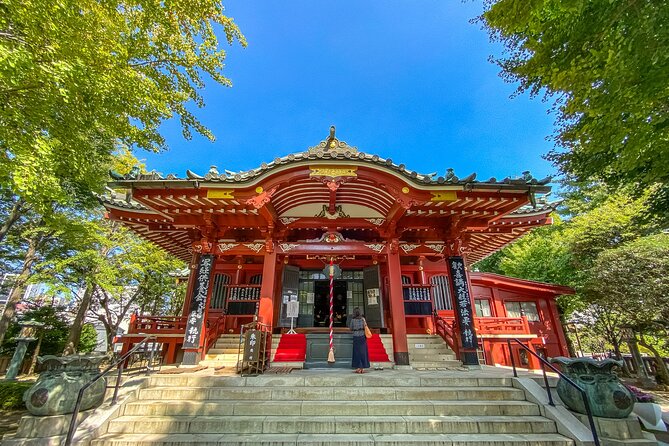
Most visitors to Asakusa follow the same short path: Kaminarimon Gate, Nakamise Shopping Street, and Senso-ji Temple. This tour gives you those major sights, but it begins and continues well beyond them.
The organizing idea is the Shichifukujin, or Seven Gods of Fortune. Each deity represents a different kind of good fortune. Bishamonten is linked with protection and prosperity, Benzaiten with art and marriage, Ebisu with business and good fortune, and Hotei with happiness and contentment. The exact appeal is not just the buildings. It is seeing how religious belief connects with wishes people still make today.
A private tour also changes the feel of the day. You are not trying to keep up with a large group or waiting for a guide to finish a speech. Guides named in past tour accounts include Nanako, Harada Taketsugu, Kazumi, Nobu-san, Tom Harada, and Eric. The strongest praise centers on their clear explanations, patience, photo help, and willingness to adjust the route.
That flexibility matters in Asakusa. You may want more time at Senso-ji, extra explanation at a small shrine, or help finding a particular souvenir. The tour is designed to respond to those requests, although the published stops and timing suggest you should not expect unlimited time at every site.
A few more Tokyo tours and experiences worth a look

Starting at Matsuchiyama Shoden
The first stop is Honryuin Matsuchiyama Shoden, usually called Matsuchiyama Shoden. Plan on about 25 minutes here.
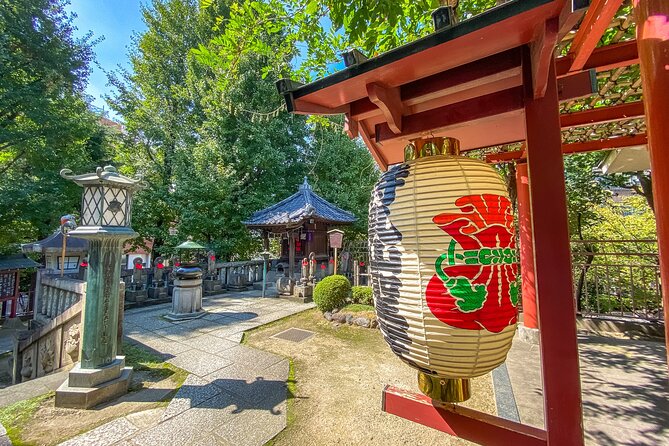
This temple is associated with health, good relationships, marriage, and successful business. Bishamonten, one of the Seven Gods of Fortune, is worshipped here. Your guide can give the religious symbols more meaning than you would get from a quick photograph and a glance at the entrance.
The opening stop also sets the tone for the day. It is not simply a parade of famous buildings. You are asked to think about what each place represents and why people come to pray there. Admission is free.
Imado Shrine and the Maneki Neko connection
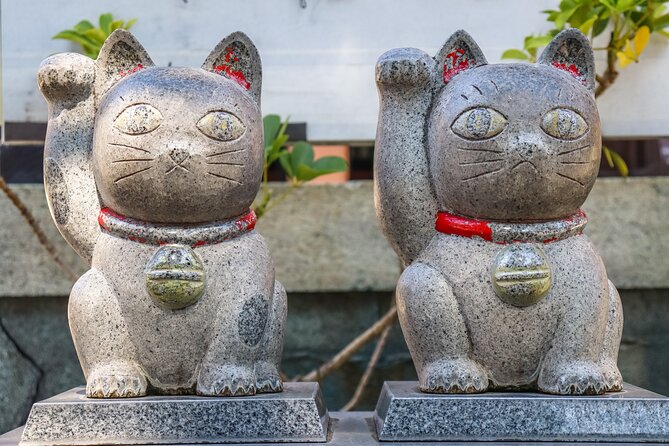
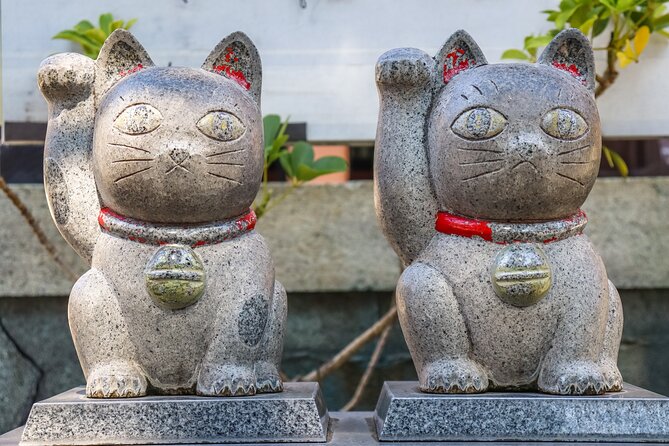
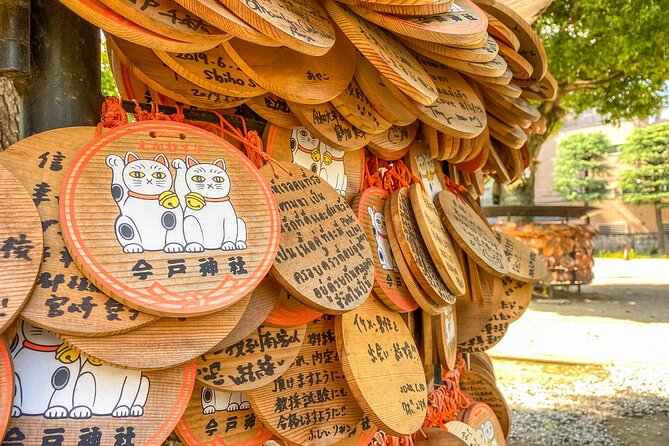
Next comes Imado Shrine, with about 20 minutes scheduled. The shrine is known for Maneki Neko, the familiar beckoning cat figure associated with good fortune. You will find Maneki Neko throughout the shrine grounds.
The site is also linked with marriage luck and has a strong appeal for women making wishes about relationships. This is one of the more visually distinctive stops, particularly if you enjoy Japanese folk symbols and small details that turn up in souvenirs and household decoration.
Twenty minutes is enough for an introduction and stamp collection, but not a slow, extended visit. If Maneki Neko is a special interest, tell your guide early so you can use the private format well.
Hashiba Fudoson and Edo-period simplicity
Hashiba Fudoson receives a shorter visit, around 15 minutes. It is described as a small, plain temple where you can appreciate Edo-period architectural style.
That modest scale is part of its value. Senso-ji has the big gate, bright colors, and crowds. Hashiba Fudoson offers a quieter look at the simple side of old Tokyo religious architecture. The stop may feel brief, especially after the larger sights, but it helps show that Asakusa’s religious character is not limited to its headline attraction.
Hotei-son, the cheerful deity associated with good fortune and good relationships, is connected with this stop. Your guide’s explanation is especially useful here because a small temple can be easy to overlook without context.
Lunch at Ishihama Saryo Raku
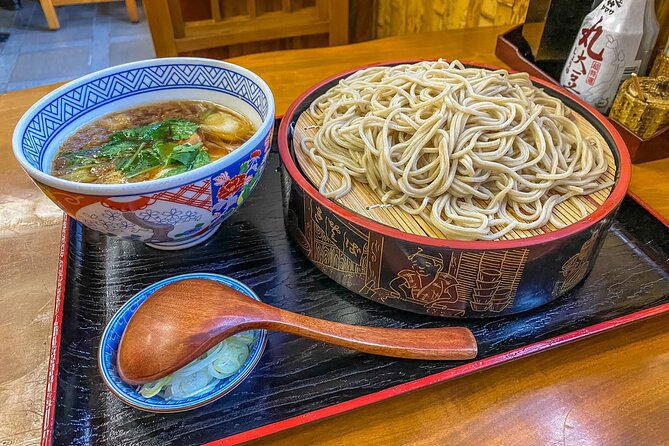
The itinerary allows about 40 minutes at Raku Ishihama Teahouse, located within the grounds of Ishihama Shrine. The food options listed include tempura bowls, soba, and sweets, along with other menu choices.
This is a practical pause in a walking-heavy morning. One account specifically praises lunch at a local restaurant, and another guide helped make the meal part of the day feel personal. Still, do not assume the meal is included in the advertised tour price.
The cost information needs careful attention. The tour details list estimated customer expenses of 4,800 yen per person, including about 300 yen for transport and 1,000 yen for a meal. They also list optional costs of 3,500 yen per person and separately show a Raku admission fee of 4,800 yen per person. These figures do not read consistently, so ask the operator what applies to your date and chosen meal before you pay.
Raku is closed on Wednesdays. On that day, the guide will take you to an alternative stop instead. If food is important to your plans, confirm the replacement and expected cost in advance.
A few more Tokyo tours and experiences worth a look

Yoshiwara Shrine and Benzaiten
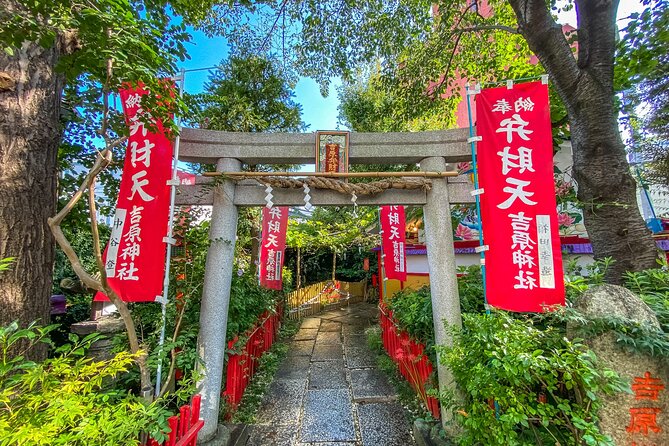
After lunch, the tour continues to Yoshiwara Shrine for about 20 minutes. Benzaiten, the only female deity among the Seven Gods of Fortune, is worshipped here.
Benzaiten is associated with art, marriage, and wishes made by women. This gives the stop a different focus from sites connected with wealth or protection. It is also a useful reminder that the Seven Gods are not one single type of lucky charm. Each figure has a particular role, and the tour uses that variety to explain Japanese customs.
The shrine is free to enter. As with the earlier stops, leave room in your day for the stamp. The stamps are included as a free souvenir, but the details of how they are issued can vary by site, so your guide will be the best source of help during the visit.
Otori Shrine and the rooster market
Otori Shrine is scheduled for around 20 minutes. Its most recognizable feature is a large, decorative rake. The shrine is famous for the Tori no Ichi, or Rooster Market, where people buy lucky rakes.
These rakes are connected with gathering good fortune and prosperity. The shrine’s symbol is Okame-san, a mask from Japanese Noh theater. This is a strong stop for anyone interested in the way theater, seasonal events, business hopes, and religious practice overlap.
The tour may not coincide with the Rooster Market, and the supplied details do not promise that the market will be operating during your visit. You should think of the rake and Okame-san as the key themes, rather than booking the tour specifically for a market experience.
Asakusa Shrine beside Senso-ji
The route then reaches Asakusa Shrine for about 15 minutes. This shrine has a close connection with Senso-ji, the area’s best-known Buddhist temple, but it is a separate religious site.
Asakusa Shrine is associated with Ebisu, one of the Seven Gods of Fortune. Ebisu is commonly linked with business and good luck. Seeing the shrine before Senso-ji helps you understand that the famous temple complex contains layers of religious history and practice, not just one single attraction.
The short timing makes this more of an explained stop than a long visit. That is fine if you want an overview of the Seven Gods route. If you prefer quiet reflection or detailed photography, ask your guide if the schedule can give you a few extra minutes here.
Senso-ji, Asakusa’s great landmark
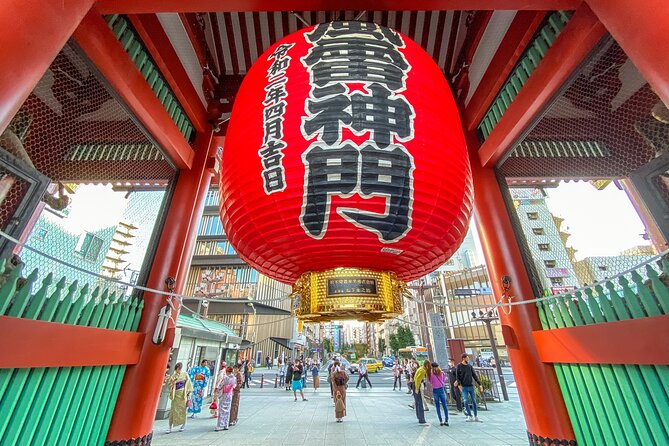
Senso-ji receives about 30 minutes, making it the longest major sightseeing stop. It is recognized as Tokyo’s oldest temple and is marked by the large red lantern at Kaminarimon Gate.
The vermilion buildings and lantern create the classic Asakusa scene, but the value of visiting with a guide is the explanation behind what you are seeing. One account describes a guide explaining the gate’s history and meaning before continuing through the area. Another recalls witnessing ceremonies at Senso-ji.
You will probably see more activity here than at the smaller shrines. The tour does not promise a full ceremonial program, so treat any ceremony as a possibility rather than a scheduled feature. The private format is useful for questions about etiquette, worship, and the difference between a shrine and a temple.
Thirty minutes passes quickly at Senso-ji, especially if you want photographs. The route includes the nearby shopping street afterward, so you will have another chance to enjoy the area rather than trying to purchase everything at the temple entrance.
Nakamise Shopping Street and Kaminarimon
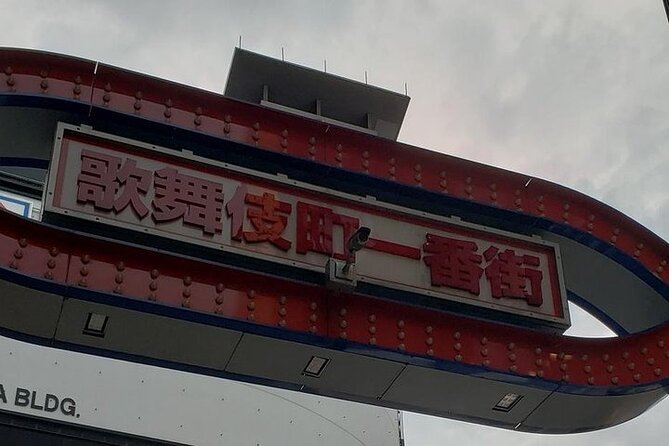
The final listed stop is Asakusa Nakamise Shopping Street, with about 20 minutes. This is the busy pedestrian area leading through the Kaminarimon approach to Senso-ji, lined with souvenir shops and food stands.
Your guide can point out recommended places for gifts and snacks. That is more useful than wandering every shop without a plan, particularly if you want traditional-style souvenirs or need to make quick purchases before the tour ends.
The limited time is the tradeoff. Twenty minutes lets you browse and get suggestions, but it may not be enough for a relaxed shopping session. If you want to buy several items, ask where to return after the tour. The tour finishes back at the meeting point according to one set of details, while another note says the finishing spot may differ from the start. Tell your guide if you want a different ending location and confirm the plan at the beginning.
What the five-and-a-half-hour schedule feels like
The full experience lasts about five hours and 30 minutes. The listed stop times add up to roughly three hours and 25 minutes, leaving the rest for walking, explanations, transfers, meal time, and the stamp collection.
That makes this a substantial walking outing, not a quick introduction. One past account calls it well paced, while another directly notes that there is quite a lot of walking but considers it worthwhile. Wear comfortable shoes and bring water or a snack. The meeting advice specifically suggests buying beverages or snacks before setting out.
Transportation costs are not fully included. The estimated transport amount is 300 yen per person, but the exact expense can depend on the route and any changes. Entrance to the shrines and temples is listed as free, while food and purchases are your responsibility.
Because the tour is private, your group can ask for a slower rhythm. Still, the route covers many sites in one day. If someone in your party has limited walking stamina, say so when booking and again at the meeting point.
Is the $103.92 price good value?
At $103.92 per person, this is not the cheapest way to see Asakusa. You can visit Senso-ji, Kaminarimon, and Nakamise on your own for little or no admission cost.
The price makes more sense if you value interpretation and convenience. A guide connects the seven sites into one story, explains the lucky deities, helps with stamps, points out symbols such as Maneki Neko and Okame-san, and can adjust the route for your group. Those services are harder to reproduce with a map and a few quick internet searches.
The private setup is also important. A couple, family, or small group receives the guide’s full attention instead of joining strangers. The value is strongest for first-time visitors who want cultural background, people curious about Japanese religious customs, and anyone who prefers asking questions as they go.
Budget carefully. The published figures include an estimated 4,800 yen in customer expenses, optional costs of 3,500 yen, and a separate 4,800 yen Raku figure. Since the wording is unclear, I would not book without asking for a precise breakdown of what is included in the $103.92 and what you should expect to pay locally.
Who should choose this tour?
I would choose this experience if you want Asakusa to be more than a photo stop at Senso-ji. The Seven Gods of Fortune give the day a clear purpose, and the smaller shrines add variety to the famous temple route.
It suits couples interested in marriage luck, families who enjoy collecting stamps, culture-focused visitors, and repeat Tokyo visitors who have already seen Kaminarimon and Nakamise. It also works well for anyone who wants a guide to help with photographs. Kazumi, one of the guides named in past accounts, is specifically noted for helping with photos and adjusting the route to requests.
I would be more cautious if you dislike walking, want a short highlight tour, or need every cost fixed in advance. The itinerary is full, and the meal and teahouse pricing needs clarification. Wednesday visitors should also confirm the alternative to Raku.
Should you book the Asakusa shrine and temple tour?
Book it if you want a personal guide, a full half-day, and a closer look at the religious side of Asakusa. The strongest reasons are the private format, the seven-deity theme, the stamp souvenir, and the guides’ reported strengths in explaining history, pacing the walk, and helping with photographs.
Skip it if your priority is simply Senso-ji and the shopping street, since those are easy to visit independently. Before committing, confirm the total yen cost, the Wednesday replacement for Raku if needed, and where the tour will finish. For the right person, this is a thoughtful way to turn a familiar Tokyo sightseeing area into a more meaningful day.
FAQ
How long does the Asakusa shrine and temple tour last?
The tour lasts approximately five hours and 30 minutes.
Is this a private tour?
Yes. The activity is private, and only your group participates.
What is included in the tour price?
A tour guide, the private tour, and necessary expenses for the guide are included.
Are transportation, meals, and entrance fees included?
Customer transportation, food and drinks, and costs incurred at visited sites are generally not included. The shrines and temples listed have free admission, while the Raku teahouse and meal costs require separate attention.
What happens if I take the tour on a Wednesday?
Ishihama Saryo Raku is closed on Wednesdays. The guide will show you an alternative spot instead.
Can I cancel for a full refund?
Yes, if you cancel at least 24 hours before the experience start time. Cancellations or changes made less than 24 hours in advance are not accepted for a refund.
More Temples & Meditation in Tokyo
More Asakusa Tours in Tokyo
More tours in Tokyo we've reviewed
Asakusa Tours, compared.
 ★ 4.8Tokyo: Japanese Dance Cabaret Theater Asakusa-Kaguwa TicketFrom $492 hours
 ★ 4.7Tokyo: Meiji Shrine, Asakusa, Skytree Bus Tour and CruiseFrom $12210 hours
 ★ 4.9Tokyo: Roll and Authentic Sushi Making Class in AsakusaFrom $581h 40m
 ★ 4.8Tokyo: Asakusa Walking Tour with Sensoji Temple VisitFrom $222 hours
 ★ 5.0Tokyo Asakusa Rickshaw TourFrom $42
 ★ 4.5Tokyo Panoramic 1 Day: Meiji Shrine, Asakusa, Odaiba and SKYTREE®From $85
![[Seasonal Limited] Mt. Fuji 5th Station &Hot Spring Day Tour - Mt. Fuji 5th Station at 2,300 meters](https://tokyoezine.com/wp-content/uploads/2026/08/seasonal-limited-mt-fuji-5th-station-hot-spring-day-tour.jpg)