Reviewed · DINNER EXPERIENCES
Tokyo Private dinner with Geisha
The rare part of this evening is not simply seeing a geisha perform. You sit down for a full-course kaiseki dinner while she dances, plays music, answers questions, and talks with you through an English-speaking guide. I like the personal setting, and I like that the evening takes place in Kagurazaka, a former geisha district with narrow lanes and traditional restaurants. The main drawback is the price: at $568.02 per person, this is a special-event splurge rather than a casual night out.
In This Article
- Key points to know before booking
- Why this Tokyo geisha dinner is different
- Meeting Ken in Kagurazaka at 7:30 pm
- Walking through old Kagurazaka
- What happens during the kaiseki dinner
- Dance, music, and conversation
- What the guide adds to the evening
- Who will get the most from this experience
- Timing, booking, and the strict cancellation rule
- Is $568.02 a fair price?
- Should you book the Tokyo geisha dinner?
- FAQ
- Where does the Tokyo geisha dinner take place?
- What time does the experience start?
- Where is the meeting point?
- How long does the experience last?
- Is the dinner private?
- What is included in the price?
- Are drinks and alcohol included?
- Does the activity finish at the meeting point?
- Can I cancel or change the booking?
I also like the private format. Only your group takes part, so you can ask about training, daily life, instruments, and customs without having to compete with a large room. Just remember that drinks, extra food, and alcohol are not included, and the strict nonrefundable policy means you should be certain before booking.
Key points to know before booking
- Kagurazaka setting: Walk into one of Tokyo’s old entertainment districts and visit a traditional ryotei restaurant.
- Private dinner: Your group takes part alone, creating a quieter setting for questions and conversation.
- Traditional arts: Expect geisha or maiko dance, music, and elegant conversation, with a shamisen musician included in some evenings.
- English support: A certified English-speaking guide, including guide Ken on reported occasions, explains etiquette and interprets during dinner.
- Kaiseki meal included: The price covers a full-course Japanese dinner, but not alcoholic drinks or extras.
- Three-hour plan: Meet at 7:30 pm at FamilyMart Kagurazaka-shita, then return to the same meeting point.
Why this Tokyo geisha dinner is different
Many people connect geisha culture with Kyoto, but Tokyo has its own geisha districts and traditions. Kagurazaka is one of the most atmospheric places to encounter that world. Its narrow, cobblestone streets and tucked-away restaurants give the evening a sense of place that a hotel ballroom would not.
The cultural value here comes from access and explanation. A geisha’s performance can look mysterious if you only see the finished dance. With a guide interpreting and explaining, you can ask about the years of training, the discipline behind the arts, and the customs that shape an evening like this.
You are not only watching a show. The format combines dinner, conversation, music, and a short walking introduction to the district. That combination makes the cost easier to understand, although it does not make the price small.
The evening is also designed to feel welcoming rather than stiff. The geisha may ask about your life and country, and the conversation can move in both directions. This is especially useful if you want cultural contact rather than a performance viewed from a distance.
Other private tours in Tokyo


Meeting Ken in Kagurazaka at 7:30 pm
The meeting point is the FamilyMart Kagurazaka-shita at 2-chome 10, Kagurazaka Hills 1F, in Shinjuku City. The tour begins at 7:30 pm, and the activity finishes back at this same meeting point.
Give yourself time to find the store. Kagurazaka’s streets can feel less direct than Tokyo’s broad avenues, and arriving early will let you settle down before the formal part of the night begins. The stated meeting point is near public transportation, but the tour does not include transportation to or from the area.
Guide Ken is specifically named in the experience accounts, and his role matters. He explains etiquette before dinner and interprets the conversation once you are seated. That support takes pressure off you. You do not need to know the correct greeting, understand every custom, or worry that a language gap will end the conversation.
The private arrangement also helps families and small groups. One account describes a family attending with two young children, which suggests the format can work for more than couples or adult cultural enthusiasts. Still, dinner begins in the evening, so you should consider your children’s bedtime and patience before paying the full price.
Walking through old Kagurazaka
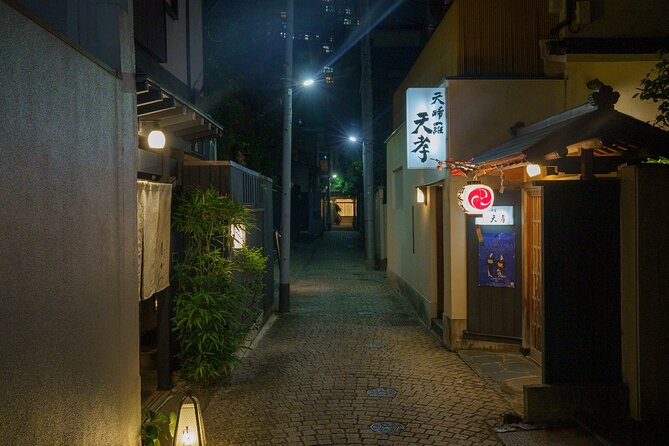
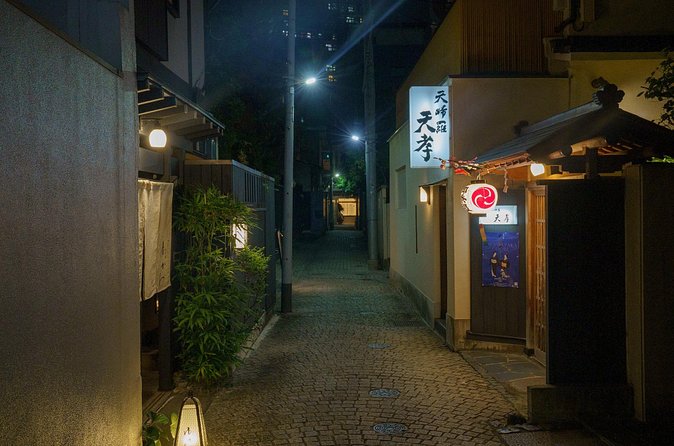
Kagurazaka is the setting, not just a meeting point. The area was once associated with geisha entertainment and still has an old-fashioned feel in its smaller lanes. Your guide points out traditional details and explains how the district developed into one of Tokyo’s better-known places for Japanese dining and nightlife.
Do not expect a long sightseeing walk or a list of major landmarks. This is a short introduction tied to the dinner. The appeal is the mood of the streets, the discreet entrances, and the feeling of being shown around a place that is easy to miss if you are exploring Tokyo alone.
The restaurant is described as a historic ryotei, a traditional Japanese restaurant. That setting is central to the evening. A ryotei is not simply a place to eat quickly. It provides a formal backdrop for the meal and performance, with customs that make more sense when your guide explains them.
The supplied information does not name the restaurant, so you should not book this expecting a particular famous dining room. The important promise is the traditional Kagurazaka setting and the private dinner with a geisha or maiko.
What happens during the kaiseki dinner
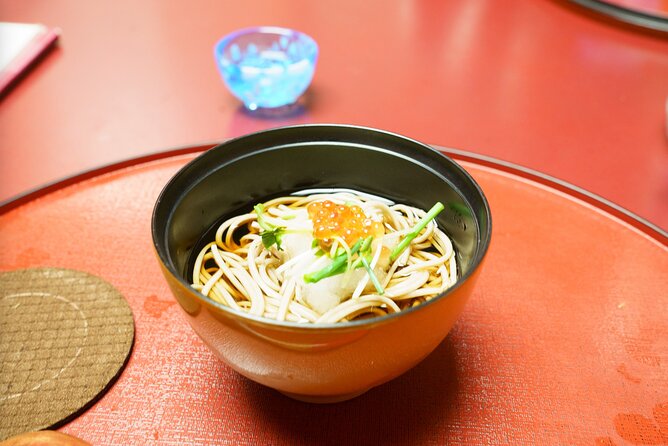
Dinner is a full-course kaiseki meal. Kaiseki is known for a series of carefully arranged dishes rather than one large plate, so the meal forms part of the cultural program. The listing does not provide a fixed menu, and the included details do not specify dietary accommodations, so ask the provider before booking if food restrictions matter to you.
The dinner gives the evening a natural rhythm. You eat, listen, ask questions, and watch the performance rather than sitting through a nonstop stage show. That pacing is one reason the experience can feel more personal than a standard cultural presentation.
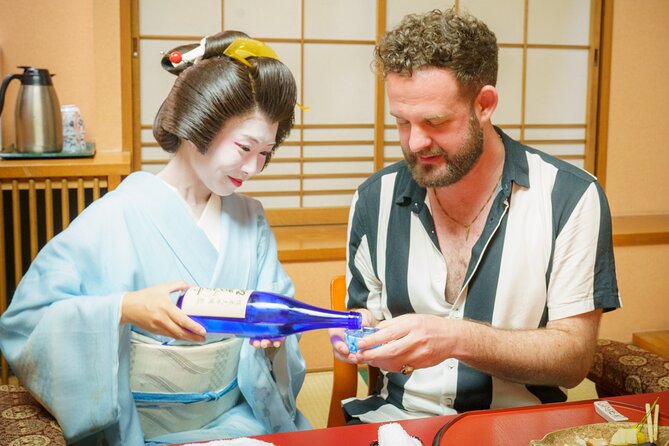
Your meal is included in the price, but additional food and drinks are not. Alcoholic beverages are also excluded. This matters because a traditional dinner can invite you to order sake or other drinks, but those costs are added separately.
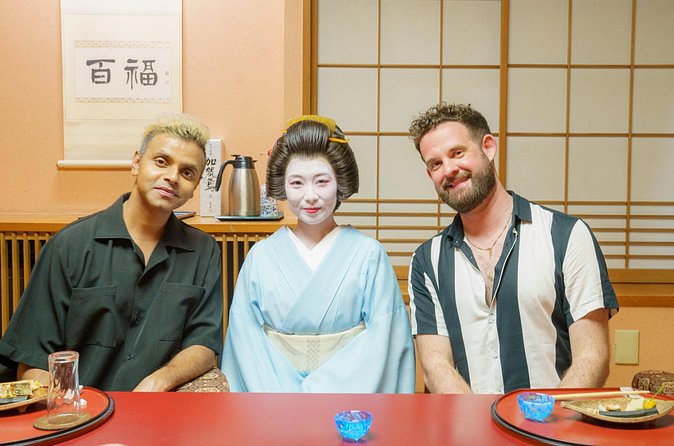
The price is $568.02 per person. That covers the dinner, geisha or maiko appearance, facility and landing fees, certified English-speaking guide, and a photo with the geisha. It does not cover gratuity or extras. Think of the fee as paying for access to a private cultural evening, not just paying for a meal.
Dance, music, and conversation
The performance includes traditional dances and musical elements. The geisha may play an instrument, and the evening can include shamisen music. One account describes a highly skilled shamisen player joining the program, adding a stronger musical focus to the night.
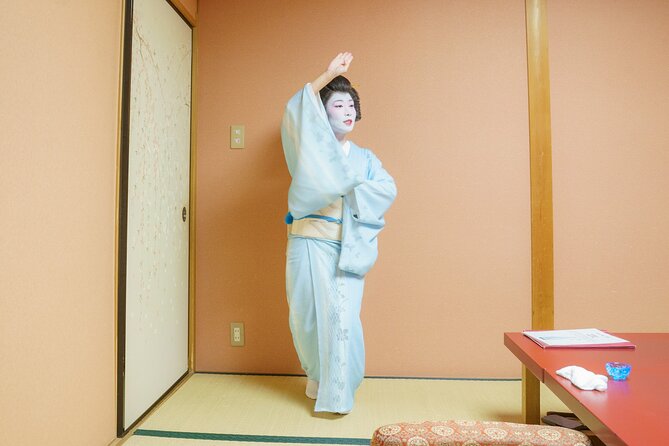
The dance is graceful rather than flashy. You are seeing an art form built on controlled movement, costume, posture, and musical timing. The guide’s explanations help you notice those details instead of treating the dance as a quick photo opportunity.
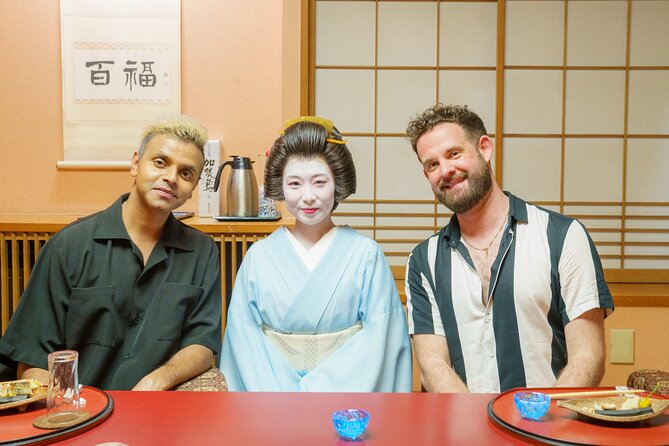
Conversation is just as important as the performance. You can ask about training, customs, and the demands of preserving traditional Japanese arts. The geisha may also ask about your home and daily life, which keeps the exchange from feeling like a one-way lecture.
This is where the private booking has real value. In a large group, questions may be limited to a short session. Here, your group has room for a more relaxed exchange, with the guide helping both sides understand one another.
A photo with the geisha is included. Treat the photograph as a small record of the evening, not the main event. The strongest part of the program is the chance to sit at the same table, listen, and ask thoughtful questions.
A few more Tokyo tours and experiences worth a look

What the guide adds to the evening
The guide is not merely there to lead you from a convenience store to a restaurant. The role includes etiquette, interpretation, and cultural context. That can make a big difference because geisha entertainment has its own rules and formal tone.
Before dinner, the guide explains how to behave and what to expect. This is useful for first-time visitors who may worry about saying the wrong thing. You can focus on the person and the performance instead of trying to guess the correct conduct.
During the meal, interpretation allows the conversation to move beyond simple greetings. You can ask about the geisha’s training, her work, and the traditions she helps maintain. Several accounts highlight the openness of the conversation and the guide’s help in making it flow.
Ken receives particularly warm attention in the supplied accounts. He is described as helpful, informative, and good at making the wider Tokyo visit more enjoyable. That praise should not be taken as a guarantee that every evening will feel identical, but it does show how important the guide’s personality is to this format.
Who will get the most from this experience
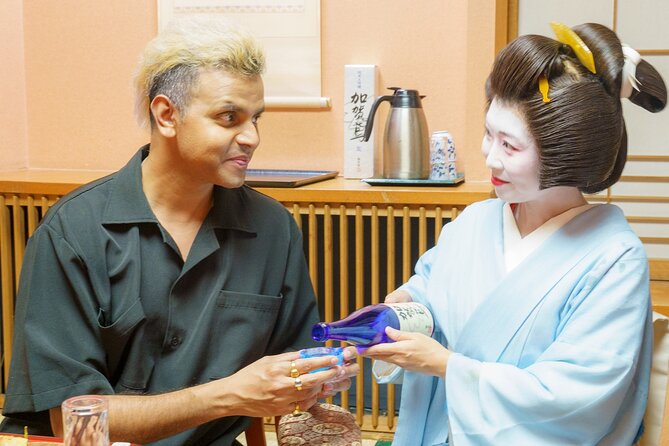
I would recommend this dinner to you if you have a serious interest in Japanese performing arts, etiquette, or cultural history. It suits people who want to ask questions and take part in a conversation, not simply watch a short dance.
It is also a strong choice for a special occasion. The setting, formal meal, and private performance give the night a sense of ceremony. Couples, families, and small groups can all fit the format, provided everyone is comfortable with a late, formal dinner.
You may want to skip it if your main goal is inexpensive local food. The fee is high, and the meal alone does not justify it for every budget. You should also think twice if you want a large-scale show with many performers, because this is built around a more intimate meeting.
The activity is designed so most people can participate, and it is near public transportation. The information does not promise wheelchair details or specific dietary arrangements, so contact the provider before booking if either issue is important.
Timing, booking, and the strict cancellation rule
The scheduled duration is about three hours, beginning at 7:30 pm. One account describes spending about four hours at the dinner, so the evening may run beyond the stated estimate. I would avoid booking a tight late-night connection afterward.
Confirmation is sent within 48 hours, subject to availability. The experience is often booked about 26 days in advance, which is a useful sign that you should not leave this decision until the last few days of a Tokyo stay.
The activity is nonrefundable and cannot be changed for any reason. If you cancel or request an amendment, the payment is not returned. That rule is unusually important here because the price is substantial. Check your schedule, dining needs, and group size before confirming.
Group discounts are available, but the information provided does not state the discount amount. If you are booking for several people, ask for the exact group rate rather than assuming the listed per-person price will apply unchanged.
Is $568.02 a fair price?
The short answer depends on what you value. If you compare the cost with an ordinary Tokyo dinner, it is expensive. If you compare it with a private cultural program that includes a full kaiseki meal, traditional entertainment, an interpreter, venue fees, and a photograph, the price becomes more understandable.
You are paying for several hard-to-arrange elements at once. A private introduction to a geisha, access to a traditional ryotei, English interpretation, and a meal in Kagurazaka would be difficult to organize independently, especially if you do not know the local customs.
Still, value is personal. Someone who has already attended several geisha performances may find the price hard to defend. Someone who has dreamed of sharing dinner with a geisha may consider it one of the defining evenings of a Japan trip.
The best way to judge it is to ask yourself what you want from the night. If the answer is food alone, choose another restaurant. If the answer is conversation, music, dance, and a guided connection to Japanese tradition, this package offers more.
Should you book the Tokyo geisha dinner?
Book it if you want a private, carefully explained introduction to geisha culture and can accept the high cost. The combination of Kagurazaka, kaiseki, traditional arts, and English interpretation gives you a rare evening with real cultural substance.
I would be especially inclined to book it for a small group that values conversation. Ken’s interpretation and etiquette guidance can help turn an intimidating formal dinner into a relaxed exchange. The included photo is a nice extra, but the conversation and live arts are the reasons to go.
Skip it if you need a flexible booking, have a strict budget, or mainly want a quick performance. The nonrefundable policy leaves no room for a change of plans, and the evening may last longer than the listed three hours.
For the right person, this is not just another Tokyo dinner. It is a costly but focused encounter with a living tradition, held in one of the city’s old entertainment districts.
FAQ
Where does the Tokyo geisha dinner take place?
The dinner takes place in Kagurazaka, Tokyo, at a traditional ryotei restaurant. The area is known for narrow streets and its former connection with geisha culture.
What time does the experience start?
The meeting time is 7:30 pm.
Where is the meeting point?
Meet at FamilyMart Kagurazaka-shita, Japan, 〒162-0825 Tokyo, Shinjuku City, Kagurazaka, 2-chome 10, Kagurahills 1F.
How long does the experience last?
The planned duration is approximately three hours. One account describes an evening lasting about four hours, so allow extra time if your schedule is tight.
Is the dinner private?
Yes. Only your group participates in the activity.
What is included in the price?
The price includes a full-course kaiseki dinner, a geisha or maiko, landing and facility fees, a certified English-speaking guide, and a photo with the geisha.
Are drinks and alcohol included?
No. Additional food and drinks, including alcoholic beverages, are not included.
Does the activity finish at the meeting point?
Yes. The experience ends back at the original meeting point.
Can I cancel or change the booking?
No. The experience is nonrefundable and cannot be changed for any reason. Confirmation is sent within 48 hours, subject to availability.
More Dinner Experiences in Tokyo
More Dining Experiences in Tokyo
More Private Tours in Tokyo


More tours in Tokyo we've reviewed




Dinner Experiences, compared.
 ★ 5.0Tokyo Bar Hopping Tour in Shinjuku (All-You-Can-Drink + Dinner)From $106
 ★ 4.8Tokyo: Sumo Show and Dining ExperienceFrom $7990 minutes - 2 hours
 ★ 4.6Sumida River: Japanese Traditional Yakatabune Dinner CruiseFrom $1032h 30m
 ★ 4.7Tokyo: Yakatabune Dinner Cruise with Japanese Show & DrinksFrom $104
 ★ 4.5Tokyo Bay Yakatabune Dinner/Day Cruise with Japan Show and DrinksFrom $65
 ★ 4.7Tokyo Bay: Traditional Japanese Yakatabune Dinner CruiseFrom $1083 hours