Reviewed · SAMURAI & NINJA EXPERIENCES
Tokyo : Authentic Samurai Experience in a Private Space.
The sharpest part of this 90-minute Tokyo experience comes near the end: you face a real samurai with a sword in hand. The encounter is carefully controlled, but it gives the session a pulse that a museum demonstration cannot match. Before that, you learn how to dress, stand, draw, swing, and sheath the blade.
In This Article
- Key points to know before you book
- Entering the old Japanese house
- Changing into formal samurai clothing
- Learning Bushido before the blade moves
- Practicing the Japanese sword
- Facing a real samurai
- Tea, conversation, and the Japanese photograph
- Is $322 worth the price?
- Who will enjoy this most
- Should you book the Bushido Experience?
- FAQ
- Where does the samurai experience take place?
- How long does the activity last?
- How many people can join?
- Is the experience available in English?
- Do I get to wear samurai clothing?
- Is the sword real?
- Is the sword encounter safe?
- Who cannot take part?
I like the tiny group of three, which gives the instructor room to correct your stance. I also like the old private house setting, the kimono dressing, and the quiet tea served afterward. The main consideration is the price, $322 per person, which is a serious outlay for 90 minutes. You also need to be comfortable handling a blade, even though safety is taken seriously.
Key points to know before you book
- Real sword handling: You can hold and use a real Japanese sword under close instruction.
- A private old house: The setting supplies the traditional atmosphere, including a Japanese photo opportunity.
- Small group format: With no more than three participants, instruction can be personal.
- Bushido beyond swordplay: You learn etiquette and the principles connected with the samurai way.
- Tea closes the session: Japanese tea gives you time to talk and settle down after the physical activity.
- Best for older children and adults: The activity is not suitable for children under 10, pregnant women, or people with mobility impairments.
Entering the old Japanese house
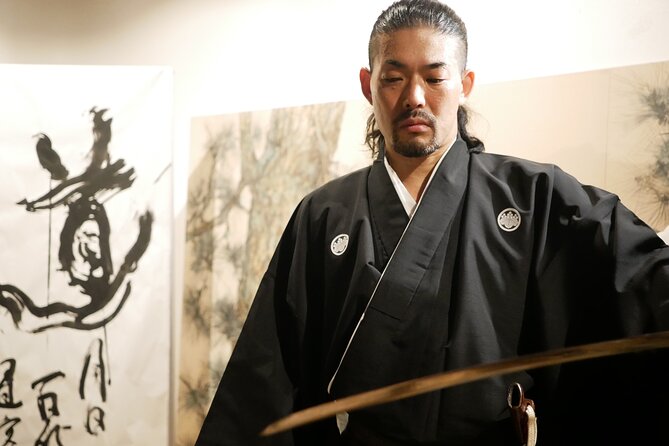
The meeting place is marked by a signboard. Follow its arrow and enter through the entrance. Since this is held in an old private house rather than a large attraction, the arrival feels more personal, but you should pay attention to the directions instead of expecting a prominent tourist office.
The house is part of the appeal. You are not simply standing in a modern studio while someone explains samurai customs. The traditional setting gives the formal clothing, sword etiquette, and tea service a natural home. It also provides the backdrop for a typical Japanese photograph at the end.
The group is limited to three people. That matters here. Sword work depends on small corrections: the angle of your wrists, the position of your feet, and the way you move the blade through the air. In a large class, you would spend more time watching other people. Here, the instructor can keep an eye on each participant.
The available languages are Japanese and English. The instructor has been praised for giving clear directions, answering questions, and using humor to help beginners relax. Even with a language difference, the movements are demonstrated in front of you, so you are not relying on long verbal explanations alone.
A few more Tokyo tours and experiences worth a look

Changing into formal samurai clothing
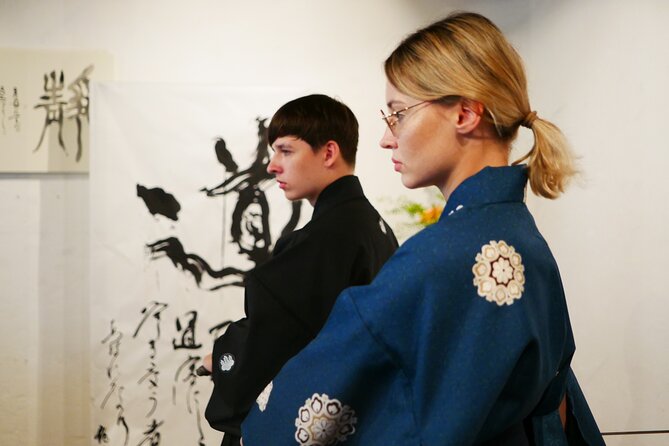
The session begins with the kimono dressing experience. This is not just a costume change for photographs. Putting on formal Japanese clothing slows the pace and signals that the activity is about manners and presentation as much as sword movement.
You receive help with the clothing, and Yukari is part of the hosting team. She assists with dressing, takes photographs, and later serves the tea. That personal help is useful because the clothing is unfamiliar to most visitors, and you can focus on the experience rather than trying to work out every layer yourself.
The formal dress also changes how you move. You become more aware of posture, hand position, and the need for controlled motion. That makes the following lessons feel connected rather than tacked on. First you prepare the body and clothing. Then you learn how a samurai is expected to carry himself.
If your main goal is a polished photo, you will get that opportunity in the old house. If your main goal is serious martial arts training, keep your expectations in check. This is a short cultural activity, not a multi-day sword school. You will learn basic handling and etiquette, but you will not leave as a trained swordsman.
Learning Bushido before the blade moves
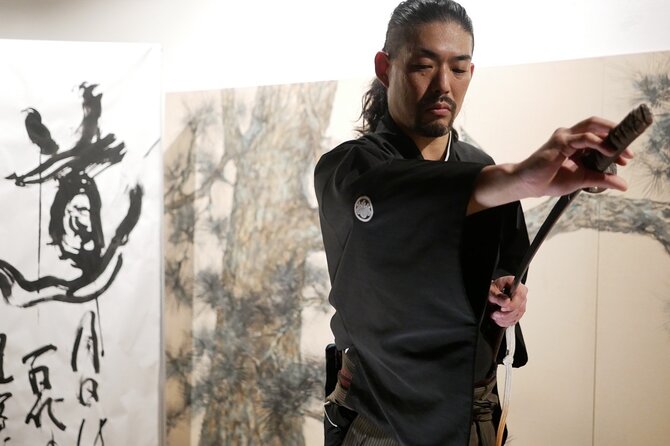
The instructor introduces Bushido, the code and philosophy associated with the samurai tradition. This part gives the sword work a frame. You are not simply told to swing a prop for a quick photograph. You learn that conduct, discipline, and respect are tied to the way the sword is handled.
The lesson starts at a beginner level, so you do not need previous martial arts experience. The instructor shows you how to hold the sword, how to draw it, and how to return it to its scabbard. You also work on basic stances and the etiquette connected with the blade.
A participant with experience in historical European martial arts found value in the attention given to clothing, drawing, sheathing, stances, and the cutting motion. That is a useful guide for deciding if this suits you. Beginners can follow the structure, while people with some combat or martial arts background may appreciate the differences between a katana and other weapons.
The lesson is methodical rather than frantic. That is good news if you are nervous about holding a real sword. The instructor corrects mistakes and offers tips, so you are not left guessing why a movement feels awkward.
One practical point is worth saying plainly: the blade is real. The safety instructions state that nobody will point the blade at you, but you should tell the team in advance if you dislike being near the edge. This is not a plastic sword photo session, and anyone uneasy around sharp weapons should think carefully before booking.
Practicing the Japanese sword
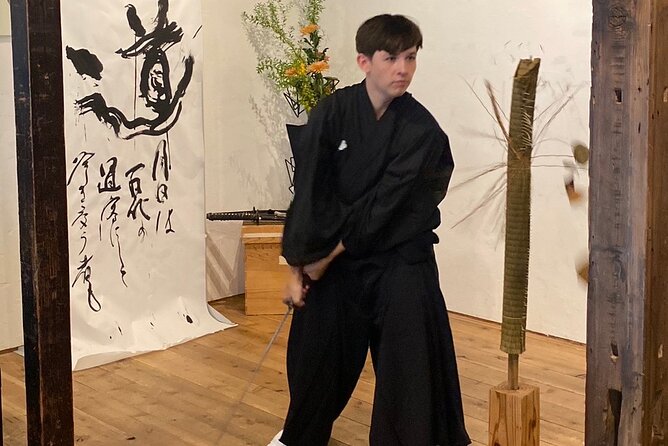
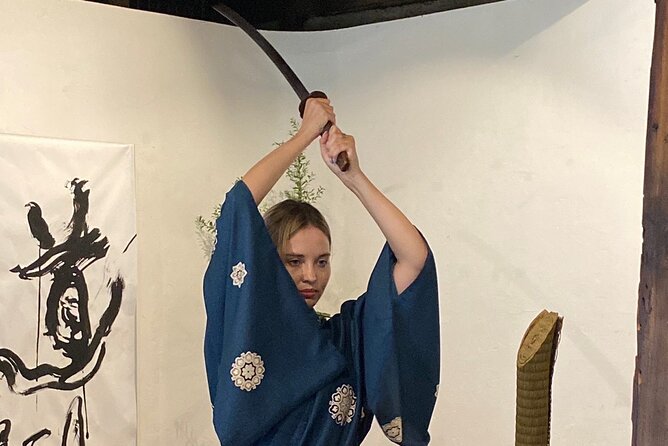
Once you understand the basic etiquette, you practice swinging the sword. The emphasis is on controlled movement and the cutting motion rather than speed. You may work through a sequence for a display, and you may want to ask for a few extra practice swings focused only on the cut.
That request is sensible. A full sequence can involve several details at once, including stance, grip, movement, and presentation. Isolating the cutting action helps you understand what the instructor is correcting. The small group makes that sort of question possible.
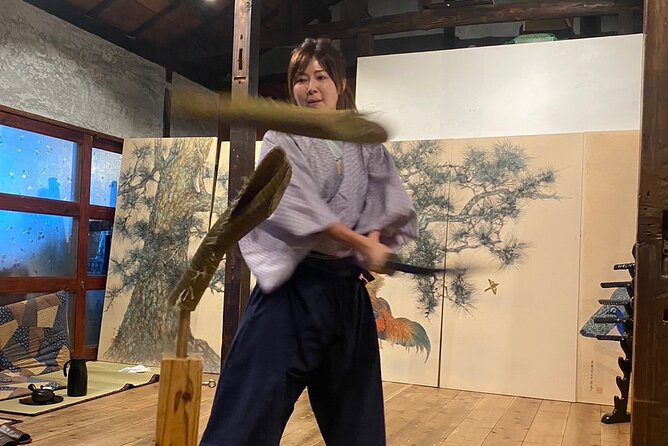
The activity may also include tatami cutting. This is one of the most hands-on parts of the program, and it gives the sword work a clear purpose. Cutting tatami is different from waving a sword for a photograph because it demands control and a clean motion. One participant with prior martial arts experience even tried a seated cut, which was described as difficult but possible.
You should treat that detail as a sign of the session’s practical side, not as a promise of an advanced cutting course. The exact level of practice depends on the instructor and the group. Ask questions during the lesson, especially if you want to understand how the sword is constructed or how a particular movement works.
One especially interesting request is to ask the guide to take apart the sword at the end. The instructor has been willing to show how the samurai sword is assembled in its different parts. That is a fine question for anyone interested in Japanese craftsmanship, weapons, or the mechanics behind the weapon. It may not be a standard timed segment, so ask politely if time allows.
Facing a real samurai
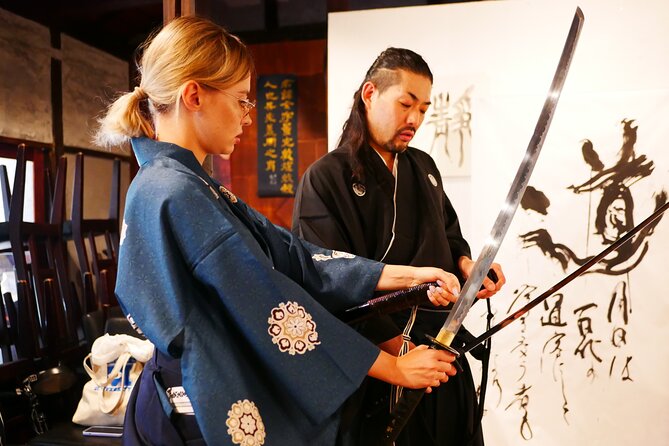
The final sword encounter is the dramatic centerpiece. You face a trained samurai while following the movements taught earlier. The wording can sound intense, but this is a guided activity with safety measures, not an uncontrolled fight.
You are not expected to improvise. The instructor has already introduced the stance, sword handling, and etiquette. The encounter lets you apply those basics in a more memorable setting. It also shows why the earlier practice matters: a small mistake in footwork or timing becomes more obvious when another person is moving in front of you.
The activity is designed to be approachable for beginners. The instructor’s patient manner helps keep the pressure low, and the small group means you can receive direct guidance. Still, you should not book this if the idea of a sword being used near you causes real distress. The safety rules reduce the risk, but they do not remove the basic fact that you are handling a real blade.
Pregnant women and people with mobility impairments should not take part. The activity also excludes children under 10. Those limits make sense given the standing, movement, clothing, and weapon handling involved.
Other private tours in Tokyo





Tea, conversation, and the Japanese photograph
After the sword work, Japanese tea is served. I like this ending because it changes the mood. You have just concentrated on posture and movement, perhaps taken part in a sword encounter, and then you sit down for a calmer cultural moment.
Yukari serves the tea and helps create time for conversation. You can ask follow-up questions, talk with the other participants, and consider the Bushido ideas introduced earlier. The tea is not an afterthought. It gives the session a graceful finish and makes the visit feel like a cultural exchange rather than a short stage performance.
The tea itself has received particularly warm praise, but remember that taste is personal. The larger value is the pause. If you are spending several days in Tokyo moving between crowded sights, this slower close may be exactly what you need.
Photographs are another important part of the experience. The old house provides a traditional background, and the hosting team can take pictures during the visit. You can leave with a visual record of the formal clothing and sword handling, not just a memory of a guide talking at you.
The photos are best understood as part of the experience, not the only reason to book. If you only want a costume portrait, a shorter photo activity may be better value. The price here pays for the instruction, the private setting, the real sword, the Bushido explanation, and the personal attention.
Is $322 worth the price?
At $322 per person, this is expensive for a 90-minute activity. The price becomes easier to justify if you value the combination of a small private setting, formal dress, a real sword, direct instruction, a guided encounter, tea, and photographs.
The three-person limit is the strongest value point. You are not paying for a seat in a large demonstration where the instructor must keep moving. You are paying for close attention during a skill that benefits from individual correction.
The setting adds value too. An old private house is more distinctive than a generic event room, especially if you want a traditional Japanese photograph. The experience also brings together several elements that are often sold separately: clothing, etiquette, Bushido, sword handling, and hospitality.
Still, I would not call it a bargain. If you are only mildly curious about samurai culture, $322 may feel steep. If you have a strong interest in Japanese swords, martial arts, or cultural traditions, the personal format gives the cost a better case.
Reserve now and pay later is available, and you can cancel up to 24 hours before the activity for a full refund. Starting times vary, so check availability when selecting your date. The activity ends on the spot after the tea and final conversation, with no further transport included.
Who will enjoy this most
I would recommend this to adults and children aged 10 or older who want active cultural participation rather than a passive history talk. It suits couples, friends, solo participants, and small family groups who can follow instructions and are comfortable with controlled sword handling.
It is especially well suited to:
- People interested in Bushido and Japanese customs
- Martial arts students who want to compare sword traditions
- Visitors looking for a private activity in a traditional setting
- Beginners who want patient instruction
- Anyone who values photographs and a personal cultural exchange
I would be cautious about booking it for someone who dislikes staged confrontations, has limited mobility, or feels nervous around sharp weapons. The instructor takes safety into account, but the activity still requires attention, movement, and a willingness to hold a real sword.
Should you book the Bushido Experience?
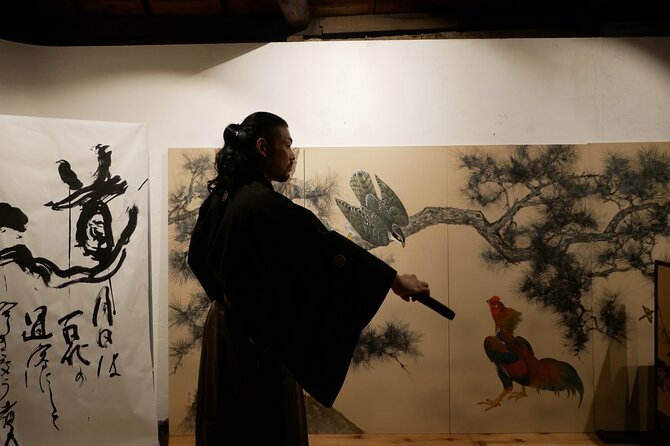
Book it if you want more than a costume photo. The strongest parts are the three-person group, the patient English-speaking instruction, the chance to handle a real sword, and the shift from active practice to tea in an old Japanese house.
Before paying $322, decide what you want from the visit. For a serious course in swordsmanship, this is too short. For a polished cultural introduction with hands-on practice, a controlled encounter with a samurai, and a traditional setting, it offers a memorable use of 90 minutes.
I would also contact the team in advance if you want extra practice swings or a look at how the sword comes apart. Those questions can add useful depth, especially for anyone interested in weapons and craftsmanship. If that blend of etiquette, clothing, movement, and hospitality sounds right, this is one of the more personal samurai activities available in Tokyo.
FAQ
Where does the samurai experience take place?
It takes place in an old private Japanese house in Honshu, Japan. A signboard near the meeting place points you toward the entrance.
How long does the activity last?
The experience lasts 90 minutes. Starting times depend on availability.
How many people can join?
The group is limited to three participants, allowing for direct instruction and individual corrections.
Is the experience available in English?
Yes. Instruction is available in Japanese and English.
Do I get to wear samurai clothing?
Yes. The experience includes dressing in formal samurai clothing, with help during the dressing process.
Is the sword real?
Yes. A real sword is included. The activity teaches you how to handle and swing it under instruction.
Is the sword encounter safe?
The session includes safety measures, and the information states that nobody will point the blade at you. Tell the team beforehand if you are uncomfortable with the blade edge.
Who cannot take part?
The activity is not suitable for pregnant women, people with mobility impairments, or children under 10. Scooter use is also not allowed.
More Private Tours in Tokyo
More Samurai & Ninja Experiences in Tokyo


More tours in Tokyo we've reviewed












Samurai & Ninja Experiences, compared.
 ★ 4.5Tokyo: Samurai Restaurant Show Ticket with 2 DrinksFrom $551h 30m
 ★ 4.6Tokyo: Samurai Ninja Museum Guided tour and ExperienceFrom $27
 ★ 5.0Skip the lines Basic Ticket at SAMURAI NINJA MUSEUM TOKYOFrom $28
 ★ 5.0Tokyo: Authentic Samurai Training at a DojoFrom $211
 ★ 5.0Best Samurai Experience in TokyoFrom $65
 ★ 4.6Tokyo: Legend Samurai Entertainment Night in Kanda ShrineFrom $44