Reviewed · ASAKUSA TOURS
Tokyo: Traditional Asakusa Music Show with Dinner
The best part of this three-hour evening is the change of pace: you begin above Asakusa, walk through its famous temple grounds, then settle into a local-style izakaya for dinner and live traditional music. I like the small-group history walk and the close-up sound of the shamisen, which feels far more immediate than a stage show across a large theater. I also like that your welcome drink can be beer, sake, a cocktail, or a soft drink.
In This Article
- Key points to know before booking
- Why this Asakusa evening works so well
- Meeting at the Asakusa Culture Tourist Information Center
- Walking from Kaminarimon to Sensoji
- Dinner at a traditional izakaya
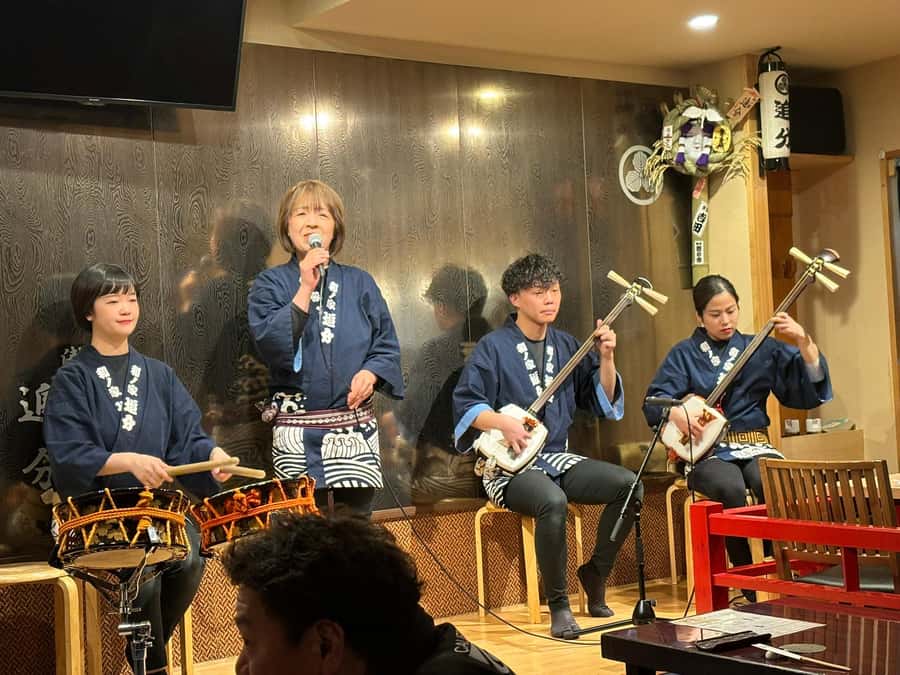
- Traditional music with shamisen and drums
- The guide makes the difference
- Timing, transport, and cancellation
- Who should book this experience
- Is the $140 price worthwhile?
- Should you book the Asakusa music dinner?
- FAQ
- How long does the Asakusa music dinner tour last?
- Where does the tour begin?
- How do I reach the meeting point by subway?
- Where does the tour finish?
- Is dinner included?
- Is a drink included?
- What kind of music will I hear?
- Is the tour offered in English?
- Does the tour include hotel pickup and drop-off?
The main thing to plan for is some walking before dinner, including the route through Sensoji. One person found the walk tiring and suggested telling the guide so a cab could be taken to the restaurant. The food is described as generous, and the dinner and music can make this a long evening for anyone hoping for a quick meal.
Key points to know before booking
- Start above Asakusa: Hear an explanation of the district from the observation deck at the Asakusa Culture Tourist Information Center.
- Walk through Sensoji: See Kaminarimon, Nakamise, Hozomon, and the main hall on the way to dinner.
- Eat in an izakaya: Dinner is served in a casual Japanese restaurant with a friendly, local feel.
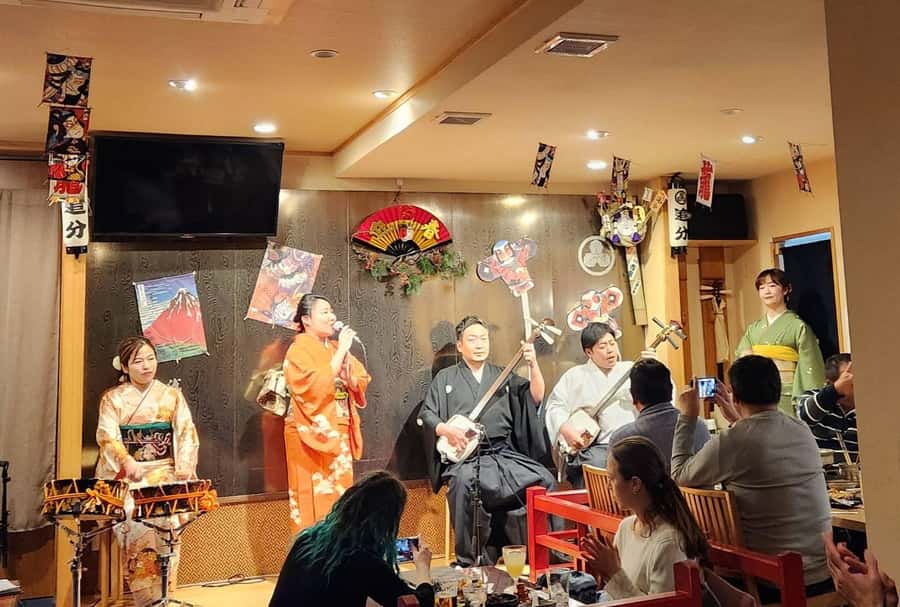
- Hear shamisen up close: Award-winning musicians perform traditional instruments, including shamisen and drums.
- Choose your first drink: Beer, sake, a cocktail, or a soft drink is included.
- Allow three hours: The tour returns to the meeting point and runs at a starting time selected during booking.
Why this Asakusa evening works so well
Asakusa can be confusing on a first visit. You have the famous Kaminarimon Gate, a grand temple, a shopping street, side lanes, restaurants, and a steady stream of people moving in every direction. This experience gives you a useful frame for the area before asking you to sit down for dinner.
I especially like the combination of place, food, and performance. None of these pieces has to carry the whole evening. The view explains the district, the walk gives you a sense of its layout, and the restaurant provides the setting for music that can be difficult to find on your own.
The entertainment also sounds like the real centerpiece. The shamisen, a traditional three-stringed instrument, has a strong, crisp sound that works well in a small room. Add drums and folk songs, and the performance becomes more than background music during dinner. You are there to listen as well as eat.
The experience costs $140 per person. That is not a cheap dinner, but the fee includes an English-speaking guide, the Asakusa orientation, dinner, one drink, and live music by professional performers. If you would otherwise pay separately for a guided walk, a dinner, and a cultural show, the price can make sense.
Still, value depends on what you want from an evening. If your priority is a quiet, inexpensive meal, this is too structured and too costly. If you want help understanding Asakusa and prefer a ready-made cultural night with no need to choose a restaurant or music venue, the package is easier to justify.
A few more Tokyo tours and experiences worth a look


Meeting at the Asakusa Culture Tourist Information Center
You meet in front of the entrance to the Asakusa Culture Tourist Information Center. The guide holds a sign, and the building is directly across from Kaminarimon, the Thunder Gate, so the meeting point is easy to recognize once you reach the area.
The center is close to both major subway stops. From Exit 1 of Tokyo Metro Asakusa Station on the Ginza Line, it is about a one-minute walk. From Exit A4 of Toei Asakusa Station on the Asakusa Line, allow about two minutes.
This is a smart place to begin. The seven-story building gives you an observation deck with a broad view over Asakusa and beyond. Rather than starting with a pile of dates and names, your guide points out the important places below and explains how they fit together.
That first view matters because Asakusa is best understood as a district, not just as one temple. From above, you can see the relationship between the temple grounds, the streets around them, and the wider area. You get your bearings before walking into the crowds.
Walking from Kaminarimon to Sensoji
From the information center, the tour heads through Sensoji. This is the route most first-time visitors want to see, but a guide adds context that is easy to miss when you are simply taking photographs.
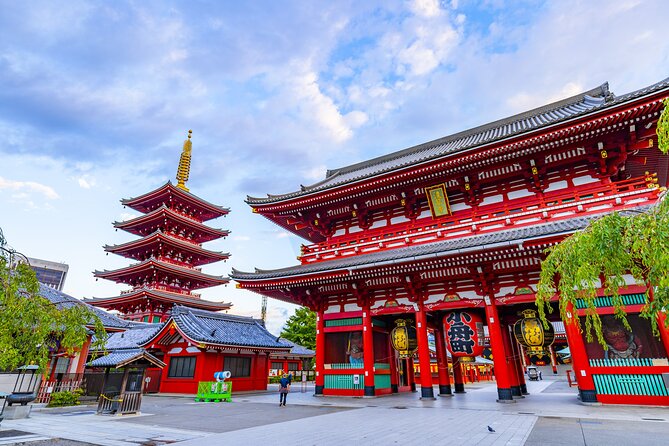
You pass through Kaminarimon, the large gate with its famous lantern, and continue along Nakamise shopping street. The street leads toward Hozomon, also called the Treasure Gate, and then to Sensoji’s main hall.
Each stop gives the walk a clear rhythm. Kaminarimon is the dramatic entrance. Nakamise is the commercial approach lined with shops. Hozomon marks another grand threshold, and the main hall brings you to the heart of the temple precinct.
The tour then leaves the main temple area and enters the older-feeling streets around Asakusa. The description points to the district’s connection with ordinary townspeople during the Edo period. You are not just moving between tourist sights, you are seeing how the area changes once the temple gates are behind you.
Expect some walking, and wear shoes you can use comfortably for several hours. The route is part of the experience, but it may not suit someone who needs to limit walking. If you are concerned, tell the guide at the start. A specific tip from the tour experience is that a cab may be used to reach the restaurant instead.
Dinner at a traditional izakaya
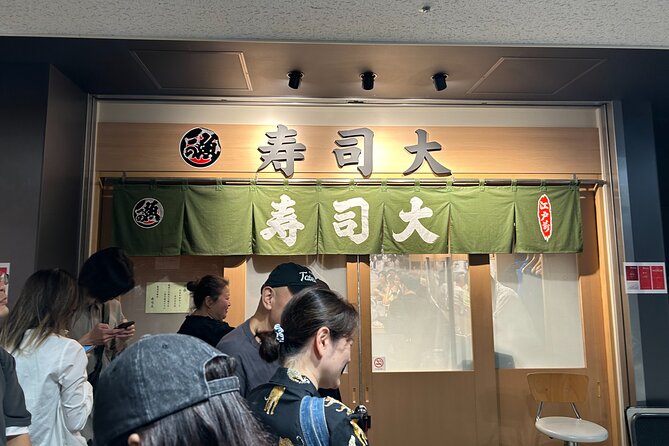
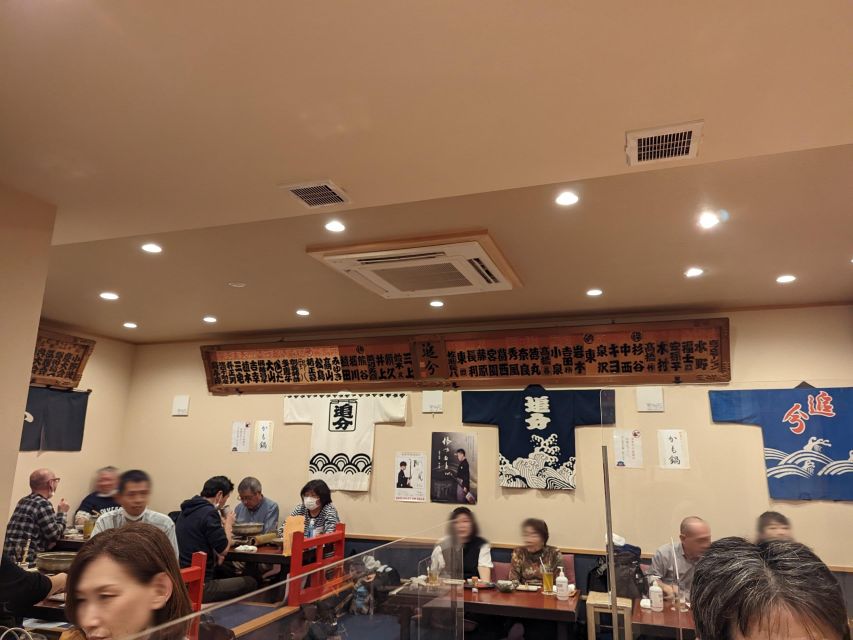
The restaurant is an izakaya, a casual Japanese dining place known for shared dishes and a relaxed atmosphere. This is not presented as a formal tasting menu. Instead, you can expect unassuming food of the sort associated with local neighborhood dining.
Dinner is included, as is one welcome drink. You can choose beer, sake, a cocktail, or a soft drink, which is useful if you do not drink alcohol or simply want something familiar after walking.
The supplied information does not list the exact dishes, so you should not book this expecting a specified menu. It does indicate that the portions can be generous. One person described being extremely full by the end of the meal, with plenty of food and laughter during the evening.
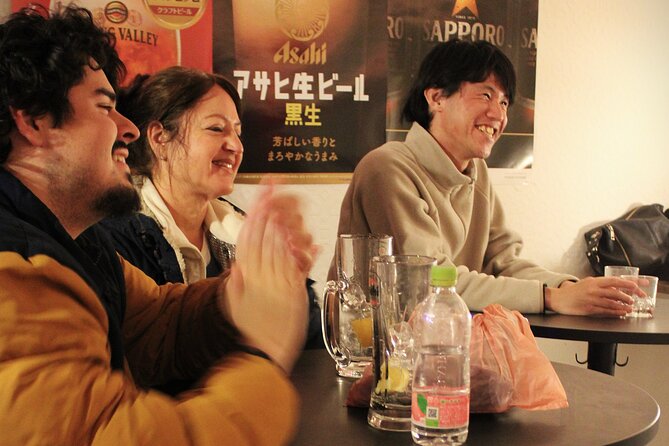
That detail helps set expectations. This is likely a social dinner rather than a silent cultural lecture with a few carefully arranged bites. The friendly restaurant setting is part of the appeal, especially if you want an evening that feels informal.
Extra drinks are not included, so keep that in mind when judging the final cost. Your first drink is covered, but additional orders will be separate.
Traditional music with shamisen and drums
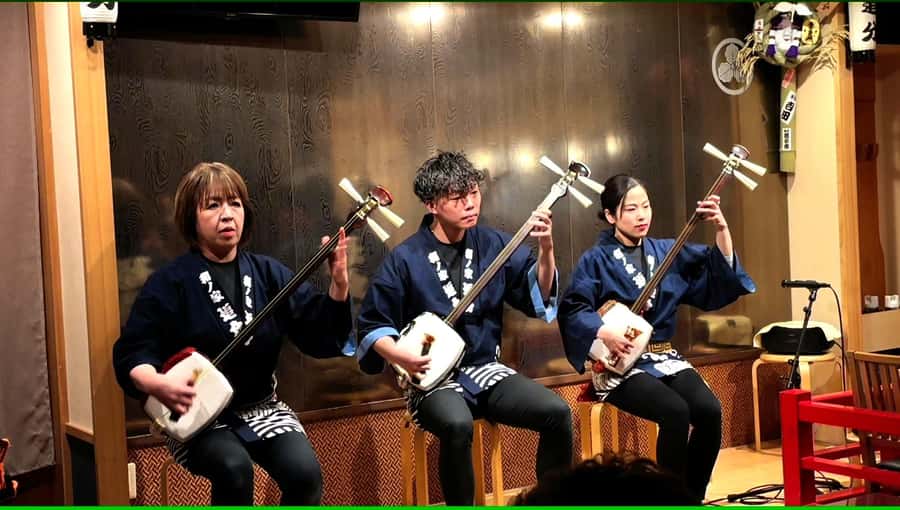
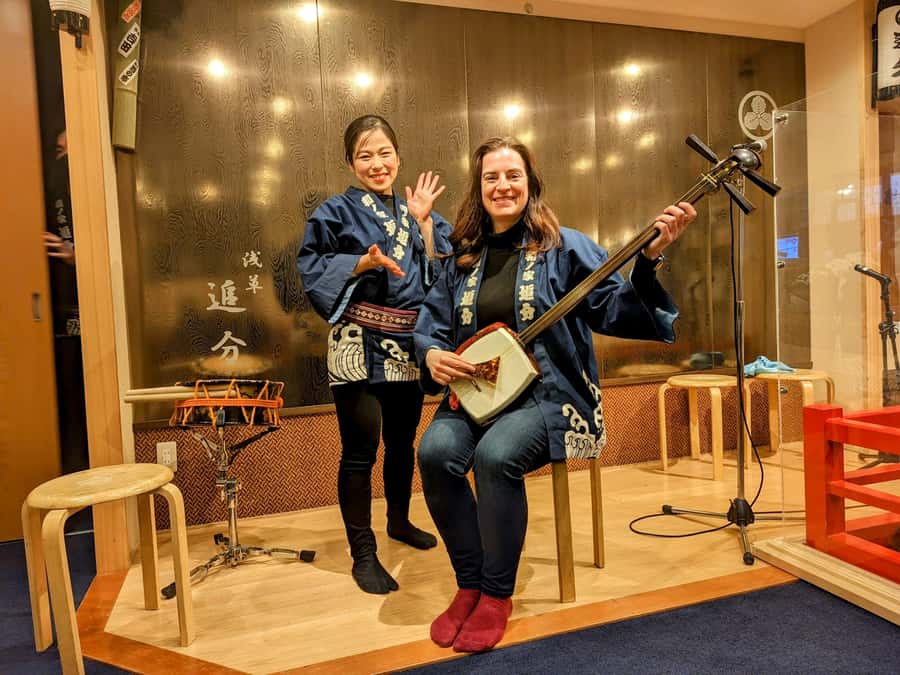
After you arrive, the guide explains the instruments and the music before the performance begins. That short introduction is useful because it gives you something to listen for rather than leaving you to guess what each instrument does.
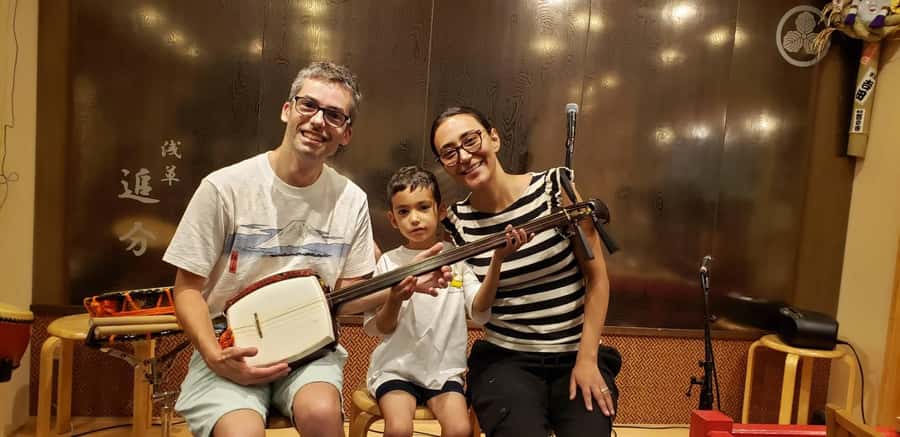
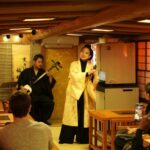
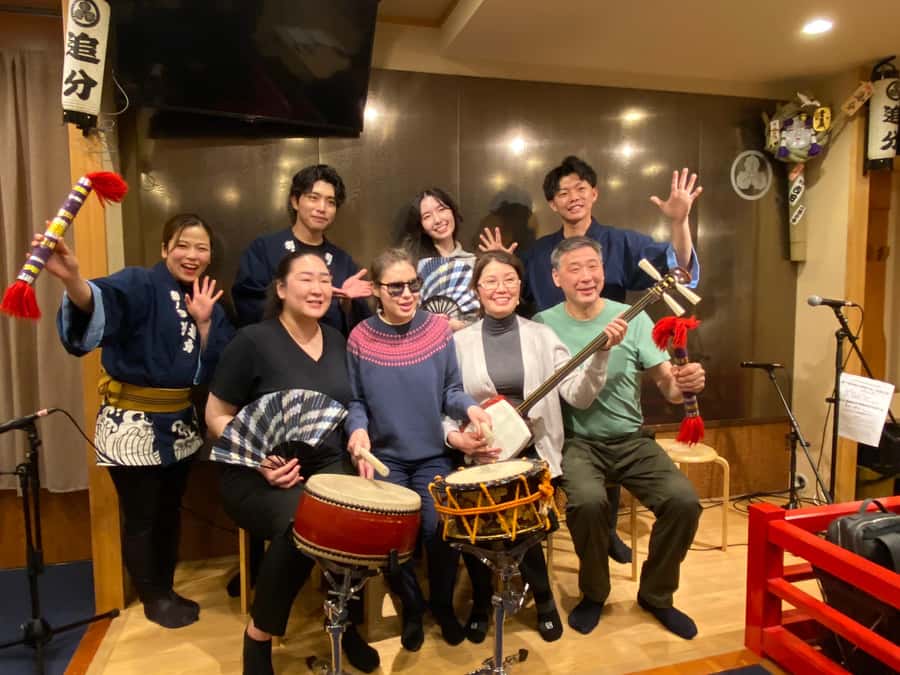
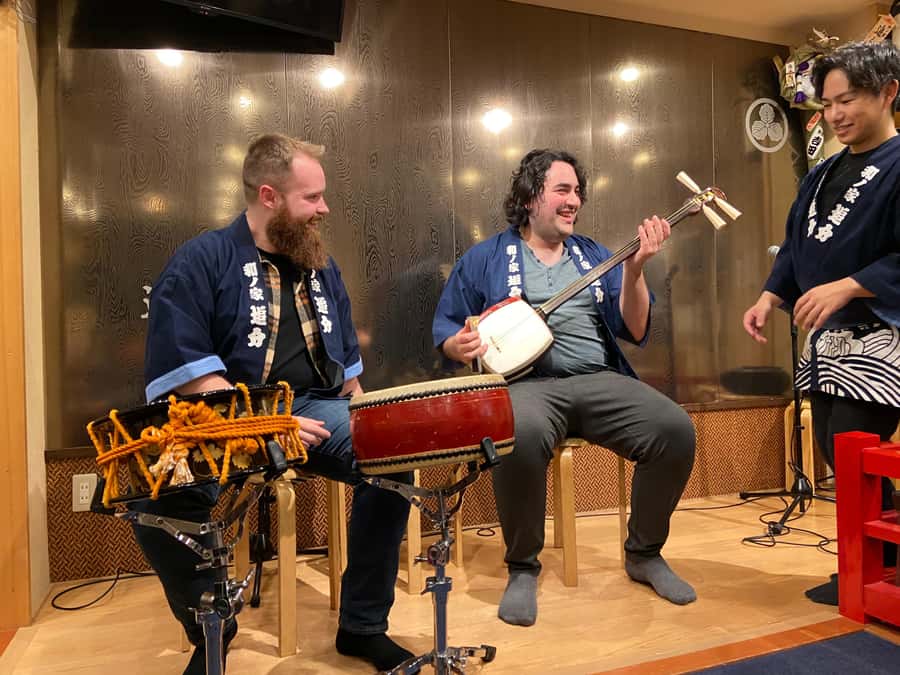
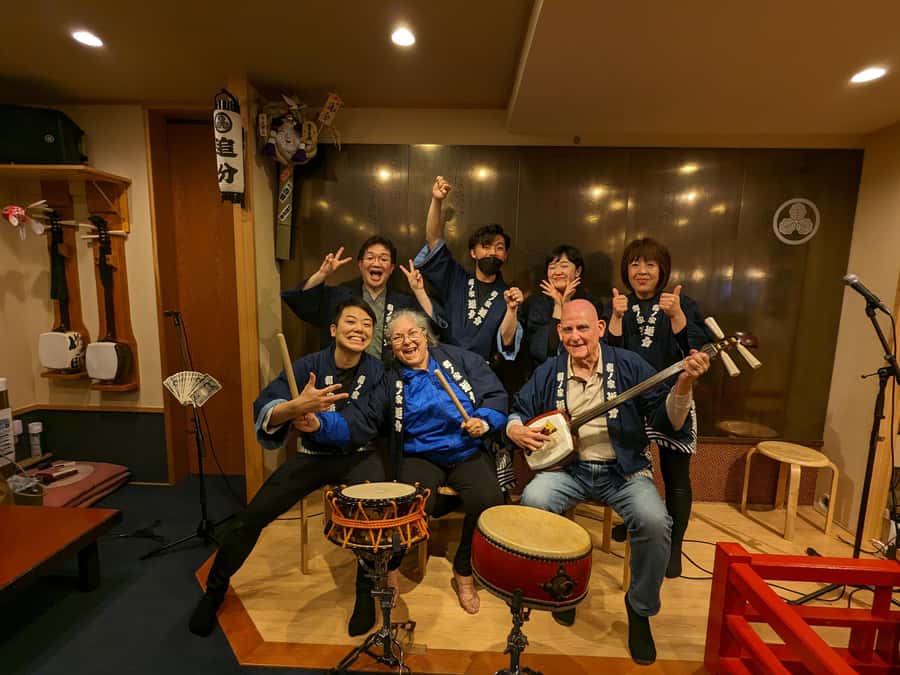
The main attraction is the shamisen. Its sound is forceful and clean, and in a restaurant setting you can hear its attack at close range. Traditional drums add weight and momentum, while folk songs bring a human voice into the performance.
This is not simply music playing behind dinner. The evening reaches its high point when the professional musicians take the room. The performers are described as award-winning, and the performance includes powerful shamisen playing and traditional folk songs.
I would choose this over a large, polished theater production if you want to feel close to the instruments. The tradeoff is that the restaurant setting may not offer the same stage lighting, seating plan, or formal presentation as a dedicated concert hall. Here, the appeal is proximity and atmosphere.
The music was the most strongly praised part of the experience, along with the guide and the meal. The combination of excellent musicians and a convivial dinner is what gives the night its character.
A few more Tokyo tours and experiences worth a look


The guide makes the difference
The tour is conducted in English, and the guide leads both the Asakusa walk and the restaurant visit. The guide’s role is important because the evening moves across several different parts of Japanese culture: temple architecture, neighborhood history, dining customs, and traditional instruments.
Akiko is specifically praised for making the experience enjoyable and for explaining the dinner and performance clearly. Guide quality can vary on any group tour, but this name is useful if you are comparing available dates and see her listed.
A good guide also helps with the practical transitions. You need to find the meeting point, follow the route through a busy district, arrive at the restaurant, and understand what is about to happen before the musicians begin.
The group is described as small, though no exact maximum size is provided. That is a meaningful advantage here. A smaller group can stay together more easily around Sensoji and should make the restaurant setting feel less like a large organized outing.
Timing, transport, and cancellation
The activity lasts three hours, but starting times depend on availability. Check the available time before booking, especially if you have a restaurant reservation, a theater ticket, or an evening train to catch.
The tour begins and ends at the Asakusa Culture Tourist Information Center. Hotel pickup and drop-off are not included, so you need to make your own way to the meeting point and return from there after the tour.
The meeting point is well served by the Ginza and Asakusa subway lines. Since the activity ends where it starts, you do not need to arrange a separate return transfer from an unfamiliar part of Tokyo.
You can cancel up to 24 hours ahead for a full refund, and the reserve-now, pay-later option keeps your plans flexible. Last-minute bookings may be possible, but the operator needs time to arrange the guide and restaurant, so earlier booking is safer.
Who should book this experience
This tour suits you if you want a well-shaped first evening in Asakusa. It covers the main sights without requiring you to research the neighborhood, then adds a dinner and music performance that would be harder to arrange independently.
It is a particularly good fit for first-time visitors who want historical explanation in plain English. It also works well for couples, families with older children, and anyone interested in Japanese music but unsure where to find a performance.
You should think twice if you dislike group activities, have strict dietary needs that have not been confirmed, or want complete control over the restaurant menu. The available details do not specify the dishes or address dietary requests, so ask the provider before paying if food restrictions are important.
The walking section is another consideration. You can ask about taking a cab to the restaurant, but the walk through Sensoji is a central part of the plan. This is not a sit-down show with a short transfer.
Is the $140 price worthwhile?
At $140, the experience sits in the special-evening category rather than the casual dinner category. You are paying for three connected services: a guided Asakusa visit, a meal with one drink, and live traditional music.
The strongest value comes if you were already planning to see Sensoji and wanted a cultural performance. Combining them saves you from arranging separate tickets, finding a suitable restaurant, and working out how to reach a traditional music venue.
The price is harder to defend if you mainly want a meal. You can spend far less in Asakusa on dinner alone, and the included drink does not cover additional beverages.
For me, the music is the deciding factor. Professional shamisen playing in a small restaurant, with an explanation from an English-speaking guide, gives the evening a clear purpose. If that sounds more appealing than a standard sightseeing meal, the cost is reasonable for a planned cultural night.
Should you book the Asakusa music dinner?
Book it if you want to understand Asakusa before dinner, enjoy some walking, and hear traditional Japanese instruments at close range. The best reasons are the clear route through Sensoji, the warm izakaya setting, and the highly praised combination of dinner, laughter, and strong live music.
Skip it if you need a low-cost meal, dislike fixed schedules, or cannot comfortably walk through the temple district. For everyone else, this is a practical way to turn a famous sightseeing area into a fuller evening, with the shamisen performance providing the memorable finish.
FAQ
How long does the Asakusa music dinner tour last?
The activity lasts three hours. Starting times vary, so check availability for the date you want.
Where does the tour begin?
You meet in front of the entrance to the Asakusa Culture Tourist Information Center, directly across from Kaminarimon Gate.
How do I reach the meeting point by subway?
The center is about a one-minute walk from Exit 1 of Tokyo Metro Asakusa Station on the Ginza Line. It is about a two-minute walk from Exit A4 of Toei Asakusa Station on the Asakusa Line.
Where does the tour finish?
The activity ends back at the Asakusa Culture Tourist Information Center.
Is dinner included?
Yes. Dinner at the izakaya restaurant is included in the price.
Is a drink included?
One welcome drink is included. You can choose beer, sake, a cocktail, or a soft drink. Extra drinks are not included.
What kind of music will I hear?
The performance includes traditional Japanese instruments such as shamisen and drums, along with traditional folk songs.
Is the tour offered in English?
Yes. An English-speaking guide leads the experience.
Does the tour include hotel pickup and drop-off?
No. You must travel to the meeting point yourself, and hotel pickup and drop-off are not included.
More Dining Experiences in Tokyo


More Shows & Performances in Tokyo
More Asakusa Tours in Tokyo

More tours in Tokyo we've reviewed




Asakusa Tours, compared.
 ★ 4.8Tokyo: Japanese Dance Cabaret Theater Asakusa-Kaguwa TicketFrom $492 hours
 ★ 4.7Tokyo: Meiji Shrine, Asakusa, Skytree Bus Tour and CruiseFrom $12210 hours
 ★ 4.9Tokyo: Roll and Authentic Sushi Making Class in AsakusaFrom $581h 40m
 ★ 4.8Tokyo: Asakusa Walking Tour with Sensoji Temple VisitFrom $222 hours
 ★ 5.0Tokyo Asakusa Rickshaw TourFrom $42
 ★ 4.5Tokyo Panoramic 1 Day: Meiji Shrine, Asakusa, Odaiba and SKYTREE®From $85