Reviewed · MT FUJI DAY TRIPS
Mt. Fuji and Lake Kawaguchi Scenic 1-Day Bus Tour From Tokyo
The best part of this 10-hour Mt. Fuji day tour is the variety. You get the classic pagoda-and-mountain view at Arakurayama Sengen Park, rural ponds at Oshino Hakkai, old-fashioned Honmachi Street, and the calm shoreline of Lake Kawaguchi, all without arranging several separate train and bus connections.
In This Article
- Five things to know before booking
- A full Fuji day without changing trains
- Arakurayama Sengen Park and the Fuji postcard view
- Honmachi Street and the Hikawa Clock Shop view
- Oshino Hakkai’s ponds and rural scenery
- The Kawaguchiko Lawson photo stop
- Lake Kawaguchi and the final lakeside pause
- What the guides add to the day
- Food, luggage, and practical planning
- Weather, traffic, and cancellation rules
- Who will get the most from this Fuji trip?
- Should you book the Mt. Fuji day tour?
- FAQ
- Where does the Mt. Fuji tour depart from?
- How long does the tour last?
- How large is the tour group?
- Which languages are available?
- What stops are included?
- Is lunch included?
- Are bathrooms available on the bus?
- What happens if Mt. Fuji is hidden by clouds?
- Can I cancel for a refund?
I like the efficient route and the small maximum group of 10 people. I also like the changing views: city streets, mountain villages, clear spring ponds, and lakeside scenery all make the day feel fuller than a single-photo-stop excursion. The main drawback is traffic and weather. Clouds can hide Mt. Fuji, and a long road delay can reduce time at the stops.
Five things to know before booking
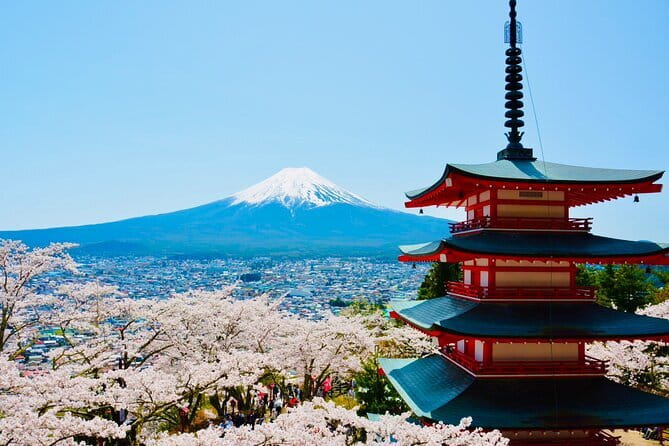
- Arakurayama gives you the classic Fuji view: Plan on about an hour, with time for the famous mountain, pagoda, seasonal trees, and Fujiyoshida City below.
- The tour covers five very different stops: You see Honmachi Street, Oshino Hakkai, Kawaguchiko Lawson, and Oishi Park after the first viewpoint.
- The group is capped at 10 people: That can make meeting the guide and returning to the vehicle easier than on a large coach.
- Lunch and dinner are not included: You can buy food during the stops, including local dishes such as eel rice, but bring spending money.
- Weather controls the main attraction: Mt. Fuji views are never guaranteed, and unsatisfactory photos do not qualify for a refund.
A full Fuji day without changing trains
At about $78.66 per person, this tour is priced as a convenient transport-and-sightseeing day rather than a deep cultural study. The cost includes parking, fuel surcharge, and an in-person guide in English, Mandarin, Korean, or Japanese. Admission to the listed stops is free, so you are mainly paying for the route, vehicle, coordination, and time saved.
That value makes sense if you want to see several Fuji-area sights in one day from Tokyo. Doing the same circuit independently would mean working out the timing between Tokyo, Fujiyoshida, Oshino, and Lake Kawaguchi, then keeping an eye on the final return connection. Here, you can sit back between stops, though traffic still affects the day.
The advertised duration is about 10 hours. Departure times vary by boarding location, so check both the meeting point and the exact time rather than assuming every departure leaves from Tokyo Station at the same hour. Arrive 15 minutes early and look for a guide holding a yellow flag marked Gogoday. Late arrivals and no-shows are not refunded.
The vehicle may change according to the number of people booked and the conditions that day. With a maximum of 10, the group should feel more manageable than a full-size sightseeing bus, but you still need to keep to the schedule. The bus has no bathroom, so use facilities before departure and at the stops.
A few more Tokyo tours and experiences worth a look
Arakurayama Sengen Park and the Fuji postcard view
The first major stop is Arakurayama Sengen Park, where you get the view most closely associated with a Fuji photo itinerary: Mt. Fuji, the Chureito Pagoda area, and the town of Fujiyoshida spread below. You have about one hour here.
The view changes sharply with the season. Cherry blossoms frame the mountain in spring, autumn leaves add color later in the year, and snow can make the winter scene especially striking. In clear weather, you can see why this viewpoint draws photographers. The fresh air and open outlook also provide a welcome change from Tokyo’s crowded streets.
You should use the hour carefully. This is not simply a quick pull-over for a photo. There are uphill sections and steps around the park, and you may need time to reach the best viewpoint, take pictures, and return to the meeting place. The schedule gives you a useful amount of time, but it is not an invitation to wander without watching the clock.
Clouds are the great question mark. Mt. Fuji can disappear even when the rest of the sky looks pleasant. The tour does not offer refunds because your pictures are poor or the scenery is hidden by weather, so book this with the right expectation: you are paying for access to the Fuji area and a well-planned day, not a guaranteed clear mountain.
Honmachi Street and the Hikawa Clock Shop view
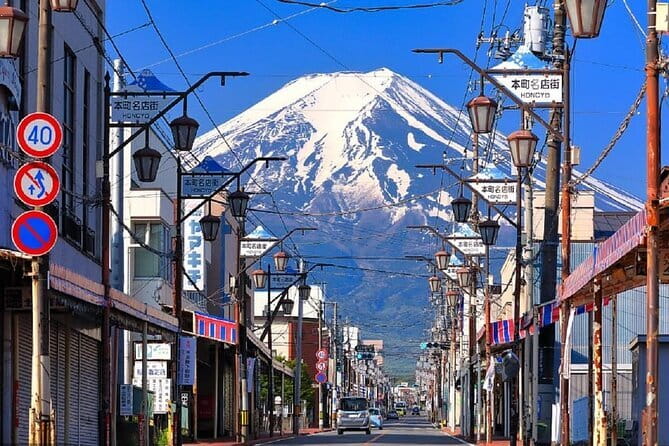
The short stop at the Hikawa Clock Shop lasts about 20 minutes. It brings you to Honmachi Street, a town scene framed by shop signs, lanterns, power lines, and Mt. Fuji at the far end when clouds stay away.
This is a different kind of Fuji photograph. At Arakurayama, the mountain is the star of a broad panorama. On Honmachi Street, it appears behind ordinary Japanese buildings and a working town. That contrast is part of the appeal. You get a glimpse of how the mountain shapes everyday views, not just carefully designed park outlooks.
Twenty minutes is enough for a quick look and a few pictures, but not for a leisurely shopping stop. Keep your camera ready and avoid treating the road as a photo studio. The street remains a public place, and the guide’s time limit matters.
Oshino Hakkai’s ponds and rural scenery
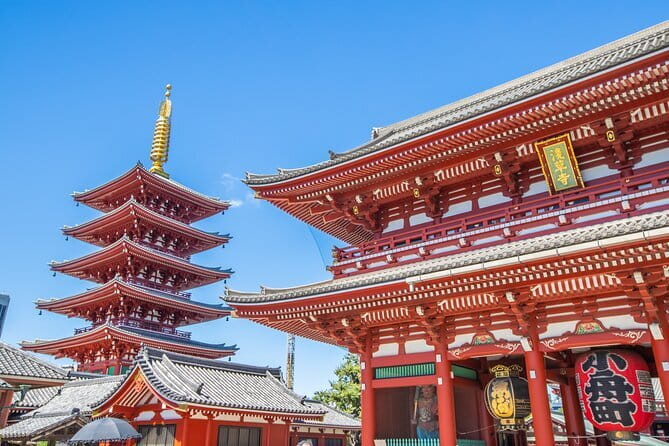
Oshino Hakkai is the longest stop, with about 90 minutes to explore. Its eight clear ponds collect snowmelt from Mt. Fuji, and the water, thatched-roof buildings, and waterwheels create a quieter setting than the city.
I find this stop valuable because it gives you a better sense of the Fuji region beyond the mountain itself. The ponds connect the area to the cycle of snow, springs, farming, and village life. You can look at the water, walk among the traditional-style buildings, and sample food at your own expense.
The stop is also useful for lunch. Food is not included, but you can purchase something during the visit. One meal noted from the experience was eel rice, so you may find local dishes that make the break more memorable than a convenience-store snack. The tour does not promise a particular restaurant or meal, so keep your choices flexible.
Ninety minutes sounds generous, but it passes quickly if you want to take photos, eat, and explore. If you are interested in the ponds and rural details, look beyond the main Fuji view. The waterwheels, roofs, and reflections give you plenty to notice even if clouds cover the mountain.
The Kawaguchiko Lawson photo stop
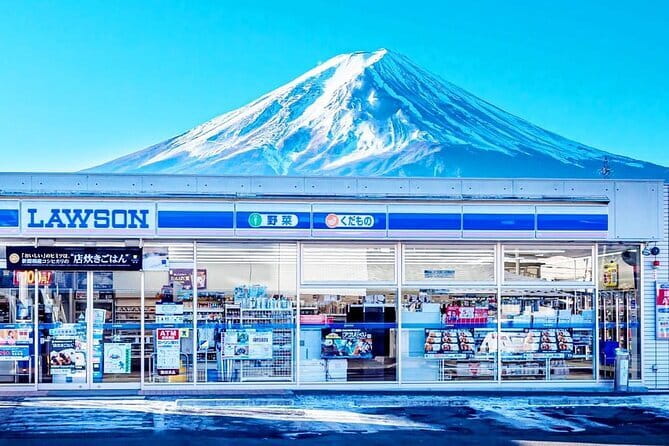
The 20-minute stop at LAWSON Kawaguchiko Station is aimed squarely at a familiar street photograph: the convenience store in the foreground with Mt. Fuji behind it.
The advice here is practical. Set up across the street, use portrait mode, and wait for a gap in the crowd. The composition can be striking because it combines a very ordinary Japanese convenience store with one of the world’s most recognizable mountains.
Please take the safety warning seriously. Do not step into traffic or cross carelessly for a picture. You have only 20 minutes, and this stop is about one quick composition rather than a long visit to the station area.
Cloud cover can spoil the intended shot, and the experience specifically does not refund you when the view is not what you hoped for. That policy is reasonable for a weather-dependent photo stop, but it is another reminder not to book the tour solely for one exact image.
A few more Tokyo tours and experiences worth a look



Lake Kawaguchi and the final lakeside pause
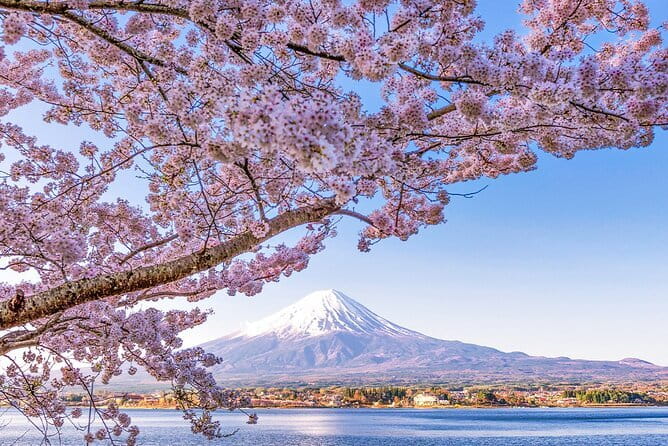
The final major stop is at Lake Kawaguchi, one of the five lakes around Mt. Fuji. You have about 50 minutes at Oishi Park, though the seasonal schedule can send the group to another nearby attraction instead.
Oishi Park is known for its lakeside views and the possibility of seeing an upside-down Mt. Fuji reflected in the water. A calm lake and a clear sky are needed for the full reflection, so conditions matter. Even without the reflection, the shoreline gives you a slower final look at the mountain after a day of viewpoints and village stops.
The seasonal alternatives add variety:
- Lavender at Oishi Park is featured from June through July.
- Azaleas and daisies are associated with July through September.
- Kochia is listed for October.
- The Lake Kawaguchi Autumn Leaves Corridor is used from October 20 through November 23.
- The Lake Kawaguchi Cherry Blossom Festival is listed from April 5 through April 14.
These dates are seasonal guides, not a promise that every flower will be at peak bloom. The actual stop can change with the season, weather, road conditions, or other operating needs. If your priority is a particular festival or flower display, confirm the schedule before booking.
After Oishi Park or its seasonal alternative, you begin the return to Tokyo. The day can feel long by this point, especially after an early start and a full list of stops. Still, ending by the lake gives you a calmer finish than adding another crowded attraction.
What the guides add to the day
This is primarily a sightseeing and transport experience, not a lecture-heavy Japan tour. You get an in-person guide, but the depth of explanation can depend on the individual leading your departure.
Mario has been noted for getting the group between stops smoothly and helping with photo opportunities. Brews has also been praised for enthusiasm, useful location summaries, and giving people room to explore within the fixed time. Those details point to the best role for the guide here: keeping the day moving, explaining enough to orient you, and helping you make the most of each viewpoint.
If you want detailed lessons about Japanese history, religion, geology, or local customs, this may feel light. If you prefer a guide who handles the route while you explore independently, that balance should suit you better. The tour’s language options are English, Mandarin, Korean, and Japanese.
Food, luggage, and practical planning
Breakfast, lunch, and dinner are not included. Bring money for food at the attraction stops, and do not count on eating at a specific place unless the guide confirms it on the day. The Oshino Hakkai visit is the most obvious time to find a meal.
Bathrooms are not available on the bus, but you can use facilities during the stops. Since road traffic can change the schedule, take bathroom breaks when you have the chance rather than waiting until the next stop.
The free baggage allowance is one piece. Excess baggage is charged at 2,000 yen per piece, so pack lightly if possible. Children under three ride free when they do not occupy a seat, but you must inform the operator in advance. Children aged three and older pay the adult rate, and anyone under 18 must be accompanied by a guardian.
People aged 70 and above need to complete a consent form. Most people can participate, but you should be ready for walking and standing at parks, streets, ponds, and lakeside viewpoints. The supplied details do not promise a fully step-free route, so ask the provider if you have specific mobility needs.
The operator sends basic information around 9 PM on the night before departure, including the guide’s phone number and the vehicle’s license plate number. Check your email or mobile phone that evening. This matters because one poor experience involved a missed meeting and no useful contact at the time, so do not rely on guessing the pickup details.
Weather, traffic, and cancellation rules
Mt. Fuji is a weather-dependent sight. The mountain may be partly hidden for much of the day and then appear briefly, as happened on one departure when a late surprise view saved the day. That possibility is worth remembering: a cloudy morning does not always mean a completely lost visit.
Traffic is the other major risk. The route leaves Tokyo and covers several popular destinations, so road delays can shorten the time at later stops. You should view the schedule as a target rather than a guarantee. The operator may adjust the itinerary because of weather, road conditions, or other factors.
You can cancel for a full refund up to 24 hours before the start time. Cancellations and changes made less than 24 hours before departure are not accepted for a refund. If poor weather causes the tour to be canceled, you are offered another date or a full refund. The same applies if the minimum number of participants is not reached.
Who will get the most from this Fuji trip?
I would choose this tour if you have one free day in Tokyo and want a broad introduction to the Mt. Fuji area without managing several local transport legs. It suits photographers, first-time visitors, couples, families with older children, and anyone who values a fixed route with several strong viewpoints.
It is also a good fit if you want both famous images and ordinary local scenes. Arakurayama and the Lawson stop deliver recognizable photographs, while Honmachi Street and Oshino Hakkai add town and village texture. Oishi Park then slows the pace before the ride back.
I would hesitate if you need a guaranteed clear view, a long hike, a detailed cultural tour, or a relaxed schedule with no traffic risk. You should also think twice if you dislike early meeting times, fixed stop durations, or buying your own meals.
Should you book the Mt. Fuji day tour?
Book it if convenience and variety matter more to you than a specialist guide or complete control of your day. For about $78.66, you get a guided small-group route, vehicle transport, fuel, parking, and five well-chosen Fuji-area stops.
Go in for the full day, not just the postcard. Mt. Fuji may be glorious from morning to evening, partly hidden, or visible only in brief openings. If you can accept that uncertainty and arrive early with light luggage, this is a practical way to see the mountain region from Tokyo in a single day.
FAQ
Where does the Mt. Fuji tour depart from?
The tour starts from Tokyo, with Tokyo Station listed as the starting point. Departure times vary by boarding location, so check your specific meeting point and time after booking.
How long does the tour last?
The experience lasts approximately 10 hours.
How large is the tour group?
The maximum group size is 10 people.
Which languages are available?
In-person guides may be available in English, Mandarin, Korean, or Japanese.
What stops are included?
The route includes Arakurayama Sengen Park, the Hikawa Clock Shop and Honmachi Street area, Oshino Hakkai, LAWSON Kawaguchiko Station, and Oishi Park or a listed seasonal Lake Kawaguchi attraction.
Is lunch included?
No. Breakfast, lunch, and dinner are not included. You can buy food at your own expense during the attraction stops.
Are bathrooms available on the bus?
No. Bathrooms are not available on the bus, so use facilities during the stops.
What happens if Mt. Fuji is hidden by clouds?
The itinerary may be adjusted because of weather, but poor visibility or unsatisfactory photos does not qualify for a refund. The mountain view is not guaranteed.
Can I cancel for a refund?
You can cancel up to 24 hours before the start time for a full refund. Cancellations or changes made less than 24 hours before the experience are not accepted. If the operator cancels because of poor weather or insufficient bookings, you are offered another date or a full refund.
More 1-Day Tours in Tokyo
More Mt Fuji Day Trips in Tokyo

More tours in Tokyo we've reviewed












Mt Fuji Day Trips, compared.
 ★ 5.0Mt Fuji and Hakone 1-Day Bus Tour Return by Bullet TrainFrom $163
 ★ 4.0Mt Fuji & Hakone Cruise, Drum Show Bullet Train 1 Day from TokyoFrom $149
 ★ 4.4Tokyo Mt Fuji 5th St & Hakone Cruise Bus Tour w/Bullet TrainFrom $15410 hours
 ★ 4.5From Tokyo: Mount Fuji Full-Day Sightseeing TripFrom $6810 hours
 ★ 4.7Tokyo: Mt. Fuji Tour, Hakone Ropeway, Owakudani, Lake AshiFrom $5410 hours
 ★ 4.4Tokyo:Mt.Fuji,Kawaguchiko Oishi Park,Arakurayama Sengen ParkFrom $5410 hours