Reviewed · ASAKUSA TOURS
Explore Asakusa’s historic landmarks
Asakusa gives you Tokyo at its most visually striking: a giant red lantern, a straight approach lined with snack stalls, and Senso-ji’s grand temple buildings. I like that this tour combines the classic sights with Hoppy Street and Hanayashikidori, so you get more than a quick photo stop. I also like the chance to ask a local guide how to pray, draw a fortune, and make sense of what you are seeing.
In This Article
- Key points at a glance
- Why this is a smart first look at Asakusa
- Meeting by Kaminarimon Gate
- Walking Nakamise-dori toward Senso-ji
- Senso-ji and the basics of temple etiquette
- Hanayashikidori and old Tokyo atmosphere
- Hoppy Street and the taste of post-war Asakusa
- The optional sushi-making class
- What the guide adds for you
- Is $35 a fair price?
- Timing, fitness, and who should book
- Should you book Explore Asakusa’s historic landmarks?
- FAQ
- How long does the Asakusa walking tour last?
- Where does the tour begin and end?
- What places are included in the walking route?
- Is the sushi-making class included?
- How many people can join the tour?
- What is the cancellation policy?
The possible catch is time. The walking portion is advertised at about 1.5 hours, but the full experience can run from 1 hour 30 minutes to 3 hours 30 minutes depending on the option you choose. At $35 per person, it is good value for orientation and interpretation, but it is not designed for a long, slow temple visit or a full food crawl.
Key points at a glance
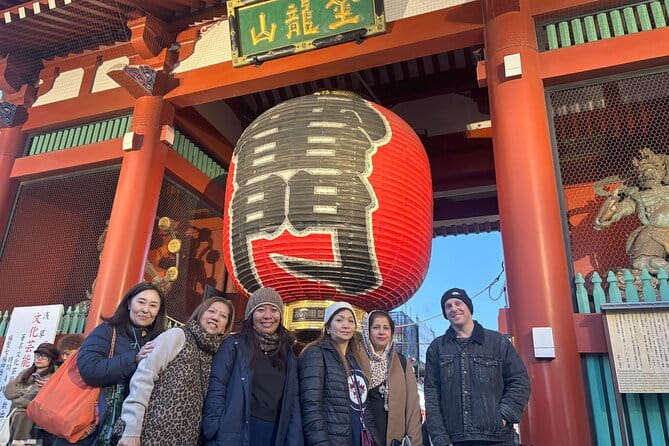
- Kaminarimon Gate starts the walk well: Meet at the Asakusa Culture Tourist Information Center, then begin beside Asakusa’s famous red lantern.
- Senso-ji gets more context: Your guide explains the temple’s story, worship customs, fortunes, and the meaning of nearby souvenirs.
- The route goes beyond the postcard view: Hanayashikidori and Hoppy Street reveal older neighborhood character and local eating culture.
- Small groups should feel manageable: The maximum is eight people, useful on narrow shopping streets and around busy temple grounds.
- The sushi option adds one hour: Choose a class at 12:30 to 13:30 or 15:30 to 16:30 after the 1.5-hour walk.
- Guide quality is central: Guides named in the feedback include Sachi, Andy, Kayoko, Yoshiko, and Chiharu, also called Sunny.
Why this is a smart first look at Asakusa
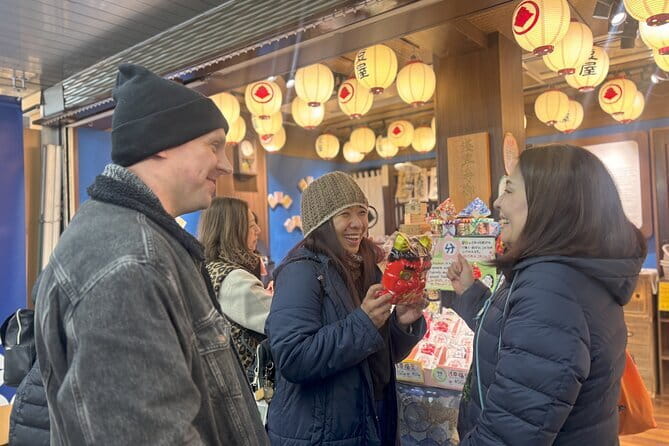
Asakusa can feel confusing at first. Senso-ji is easy to find, but the area spreads across temple courtyards, shopping lanes, old-fashioned streets, pubs, and food stops. A short guided walk helps you get your bearings before you return on your own.
The route is especially useful if you want cultural explanation rather than a simple escort from one landmark to the next. Your guide is expected to explain what the temple is for, how to behave at the worship areas, and why certain customs matter. That can make a short visit feel far more meaningful.
I also like the balance between famous and less polished Asakusa. Kaminarimon Gate and Nakamise-dori are the images most people come to see. Hoppy Street and Hanayashikidori show a different side, with old restaurants, local snacks, cafes, and the post-war atmosphere that gives the district its character.
The experience suits people who want a friendly introduction without spending half a day on a formal historical lecture. The group limit of eight is small enough for questions and photographs, though the exact feel will depend on how many people book your departure.
A few more Tokyo tours and experiences worth a look


Meeting by Kaminarimon Gate
The meeting point is the Asakusa Culture Tourist Information Center at 2-chome-18-9 Kaminarimon, Taito City. This is a practical place to start because it is close to Kaminarimon Gate and public transportation.
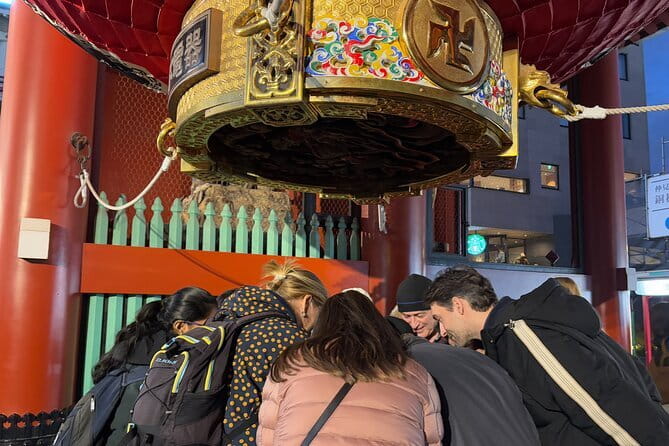
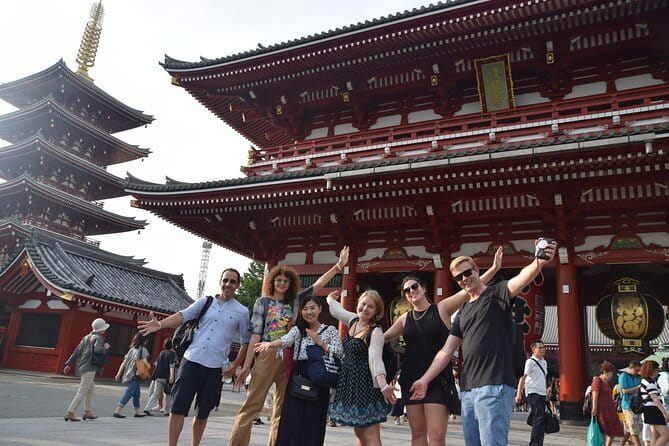
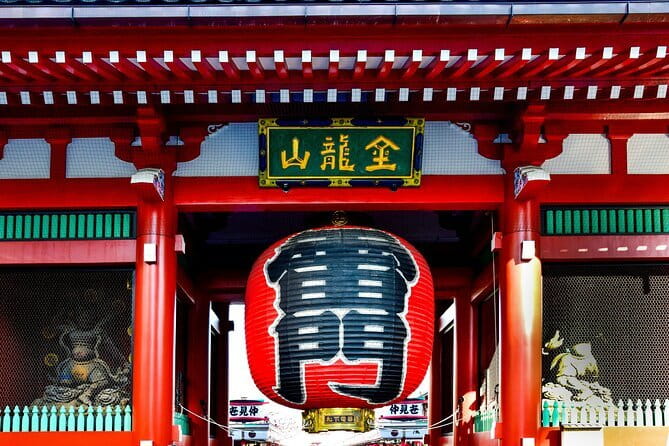
From there, you head toward the gate itself. Kaminarimon means Thunder Gate, and its enormous red lantern gives you one of Tokyo’s most recognizable photo opportunities. Statues of Fujin, the wind god, and Raijin, the thunder god, flank the entrance.
Your guide can help you look beyond the lantern. The gate is not simply a decorative entrance. It announces the approach to Senso-ji and sets the tone for a route where religious symbols, shopping, and daily life share the same space.
Plan to have your camera ready, but do not expect a long stop here. The listed time is about 10 minutes. That is enough for an introduction and pictures, but not enough for careful architectural study. If you want photographs without a crowd in every frame, your guide’s timing may matter more than the formal schedule.
Walking Nakamise-dori toward Senso-ji
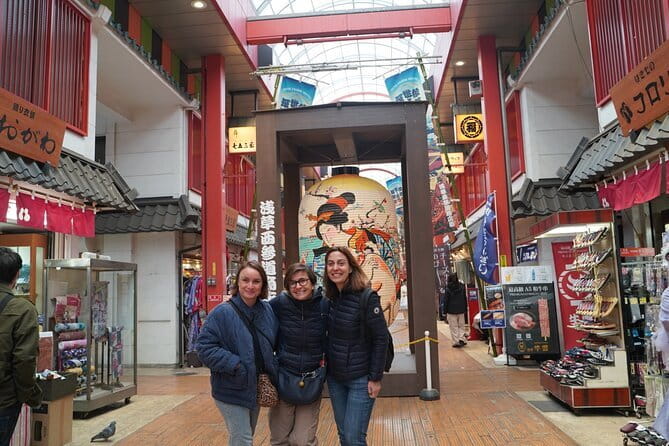
Nakamise-dori is the shopping street leading from Kaminarimon to Senso-ji. The lane is packed with shops selling traditional snacks, crafts, and souvenirs. It is a fun place to browse, but it can also be crowded, so keep the group together and watch your footing.
A guide adds value here by helping you understand what you are looking at. The shopping is not just a line of generic gift stores. You might find foods and objects tied to Japanese customs, along with items that make more sense once someone explains their use or meaning.
The scheduled stop is around 10 minutes, which means you should treat this as an introduction rather than dedicated shopping time. If you see something you want, note the shop and return after the tour. One guide, Andy, reportedly continued into a specific shopping area afterward and recommended places for gifts. That kind of practical help is useful, but it should be viewed as guide-dependent rather than a guaranteed extra stop.
The short timing is also sensible. Nakamise-dori is an approach route, not a quiet market. You will get more from it if you listen for the guide’s explanations and save serious shopping for later.
Senso-ji and the basics of temple etiquette
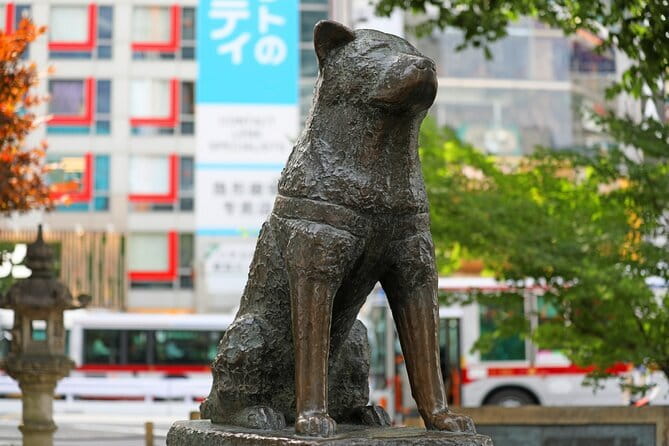
Senso-ji is Tokyo’s oldest temple and the main cultural focus of the walk. It is dedicated to Kannon, the goddess of mercy, and draws a steady flow of people who come to pray, take photographs, seek good fortune, or simply see one of the city’s major landmarks.
The planned visit lasts about 30 minutes. That gives your guide room to explain the temple’s background and show you how to behave respectfully. For a first visit, this may be the most useful part of the experience. Many people know how to photograph a temple, but fewer know what to do at a worship area or how fortunes fit into the visit.
Guides named in the feedback include Sachi, Kayoko, Yoshiko, and Chiharu, also known as Sunny. Their reported strengths include answering questions, explaining the religious and historical setting, helping with prayer and fortunes, and taking photographs. Andy is also described as friendly and helpful with local shopping advice.
Do not expect a private tour of every building or a specialist lecture in Buddhist art. This is a brisk introduction. The benefit is that you receive clear cultural signposts, then have the option to explore more deeply on your own.
Photography is part of the appeal. Your guide can help take pictures, and the route includes several strong backdrops. Still, remember that Senso-ji is a working religious site as well as a major attraction. Follow the instructions given at the temple, keep your voice down in worship areas, and avoid blocking people who are there to pray.
Hanayashikidori and old Tokyo atmosphere
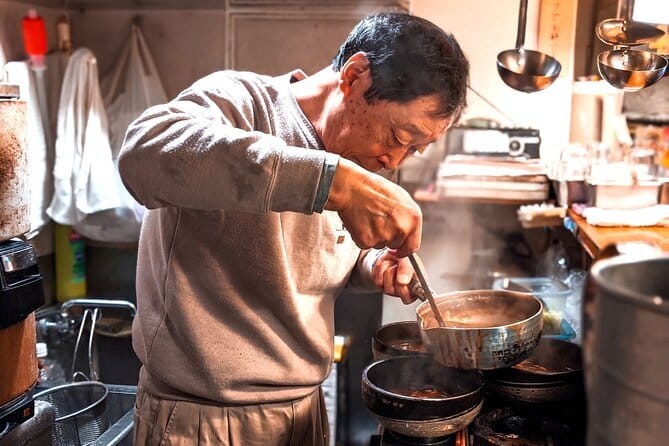
After the main temple area, the walk heads toward Hanayashikidori. The street sits near Hanayashiki, Japan’s oldest amusement park, and has a nostalgic feel that differs from the formal approach to Senso-ji.
The stop is planned for about 20 minutes. Here you can expect shops, restaurants, cafes, traditional snacks, and local food. The appeal is not one single must-see monument. It is the change in mood, from a grand religious entrance to an older neighborhood street where eating, shopping, and everyday Tokyo life overlap.
This is a good section for anyone who wants more than the standard Asakusa checklist. You can ask your guide where to return for a snack, dessert, or meal. Chiharu, also called Sunny, was particularly praised for pointing out places for lunch, dinner, and sweets around the shopping districts.
The limitation is that 20 minutes passes quickly. You will not have time to sample everything or browse every shop. Think of Hanayashikidori as a useful preview, especially if you plan to stay in Asakusa afterward.
Other historical tours in Tokyo

Hoppy Street and the taste of post-war Asakusa
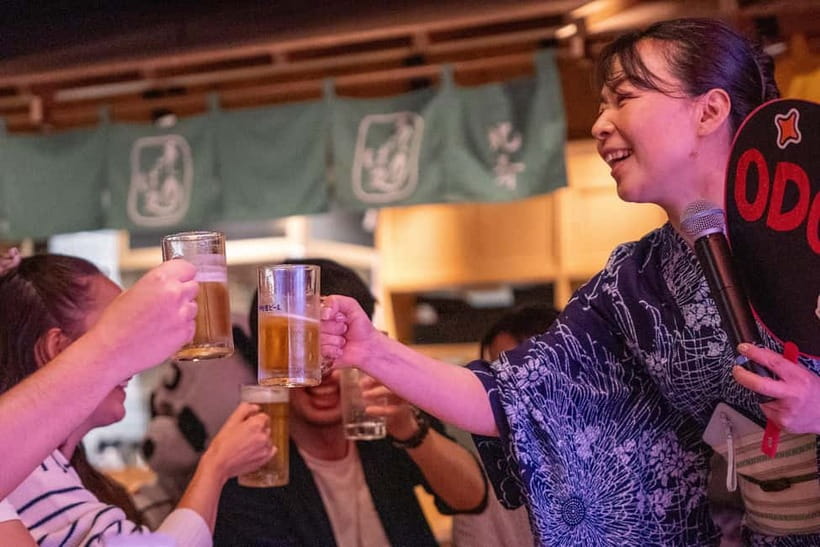
Hoppy Street is the route’s most distinctive change of pace. It is known for izakayas, the casual Japanese pubs that serve Hoppy, a local drink, along with food such as yakitori and oden.
The street retains a post-war atmosphere and has a more relaxed feel than the temple approach. Tables, pub fronts, and simple local dishes give you a glimpse of Asakusa as a place where people come to eat and drink, not only take pictures.
Your guide is meant to explain why the street has remained popular with local customers. That historical background is valuable because Hoppy Street can otherwise look like a row of restaurants with no clear story. With context, you begin to see how the area’s food culture connects to the older character of Asakusa.
The planned visit lasts around 20 minutes. That is enough to see the street and understand its role, but it is not a full izakaya evening. Food and drinks are not stated as included, so budget separately if you want to stop for Hoppy, yakitori, or oden.
This part may suit adults interested in local nightlife and casual food culture more than families seeking only major monuments. The guide can point out possibilities, but the scheduled walk does not promise a seated meal or a tasting session.
The optional sushi-making class
If you want a hands-on activity, you can add a one-hour sushi-making class after the 1.5-hour walking tour. The class times are 12:30 to 13:30 and 15:30 to 16:30.
This changes the experience from a short orientation into a longer half-day plan. It may be a good choice if you want a structured activity after the sightseeing, especially if your group prefers doing something practical rather than simply continuing to shop.
Check the timing carefully before booking. The walking portion and class are separate parts of the experience, and your chosen class time affects how the day fits around lunch, other sightseeing, and transport. The full duration can reach about 3 hours 30 minutes with the added option.
The available information does not specify the exact sushi menu, class size, teaching format, or what you prepare. I would choose this option for the added activity, not because the walking route itself needs more time. If your priority is Senso-ji and neighborhood orientation, the basic walk is likely enough.
What the guide adds for you
The strongest reason to book this experience is the guide. Asakusa is easy to photograph without help. It is harder to understand why the gate, temple, fortune slips, shopping street, and pub district belong to the same story.
Several guides are named in the feedback. Sachi is described as kind, attentive, and able to answer questions about the shrine and temple area. Andy is described as friendly and useful for shopping advice. Kayoko is praised for explaining shrine and temple history, prayer, and fortunes.
Yoshiko is noted for taking photographs and explaining the religious background of the area, as well as the purpose of Japanese souvenirs. Chiharu, known as Sunny, is described as helpful with temple history, shopping districts, and food recommendations.
You cannot choose a specific guide based on the information provided, so book this for the style of experience rather than one individual. English ability was specifically praised for one guide, and the feedback repeatedly points to friendly conversation, flexible answers, and willingness to help beyond the basic route.
One especially nice detail is that a guide helped a visitor make a special gift to remember the experience. That does not appear to be a standard advertised feature, so do not count on it. Still, it suggests that the best part of this tour may be the personal attention around the main route.
Is $35 a fair price?
At $35 per person, the price is reasonable if you want orientation, cultural explanation, and help with photographs. All the listed sightseeing stops have free admission, so you are paying for the guide’s time and local interpretation rather than entrance tickets.
That distinction matters. If you are comfortable reading signs, researching temple customs, and finding Hoppy Street yourself, you can visit Asakusa at no cost beyond transport and food. The tour earns its price by reducing guesswork during a first visit.
The maximum group size of eight also helps support the value. A small group gives you a better chance to ask about prayer, fortunes, shopping, and food. It should also make the walk easier to follow than a large coach-style outing.
The sushi option is a separate value decision. It adds one hour and a practical activity, but the supplied details do not say what ingredients or instruction are included. Choose it if making sushi is part of your Tokyo plans, not simply because you feel the walking tour is too short.
Timing, fitness, and who should book
The route requires a moderate level of physical fitness. You will walk between five stops, spend time on your feet, and move through shopping streets and temple grounds. The experience is not described as accessible for people who need special assistance, so contact the provider before booking if mobility is a concern.
Because the walk starts and ends at the same meeting point, it is easy to continue sightseeing in Asakusa afterward. This is one of its practical strengths. You can return to a shop, stop for food on Hoppy Street, or revisit Senso-ji at your own pace.
I would recommend it for:
- First-time visitors to Asakusa who want the main sights explained clearly
- People interested in Japanese worship customs and local food culture
- Couples, families, and small groups who value photographs and conversation
- Visitors who want shopping suggestions after seeing the famous approach
- Anyone who prefers a short introduction before exploring independently
I would be more cautious if you want a quiet, slow temple visit, a serious food tour, or detailed specialist history. The route is compact and broad. It gives you several useful impressions rather than studying one subject at length.
Confirmation is provided when you book, and mobile tickets make the process simple. Free cancellation is available up to 24 hours before the start time. Changes or cancellations inside that window are not accepted for a refund.
Should you book Explore Asakusa’s historic landmarks?
I would book this if Asakusa is new to you and you want to understand the area quickly. The route covers the essential photo stops, then adds Hanayashikidori and Hoppy Street, where the neighborhood feels less formal and more lived-in.
The best value comes from the guide’s explanations, not from the landmarks alone. Choose the basic walk for a compact introduction at $35. Add the sushi class if you want a longer activity and the scheduled time fits your day.
If you already know Senso-ji well, you may prefer to explore on your own and spend the money on food. For a first day in Tokyo, though, this is a sensible way to get oriented, learn respectful temple habits, and leave with a list of places worth returning to.
FAQ
How long does the Asakusa walking tour last?
The walking tour is approximately 1 hour 30 minutes. The overall experience can last from 1 hour 30 minutes to 3 hours 30 minutes, depending on whether you add the sushi-making option.
Where does the tour begin and end?
It begins at the Asakusa Culture Tourist Information Center, 2-chome-18-9 Kaminarimon, Taito City, Tokyo 111-0034, Japan. The activity ends back at the meeting point.
What places are included in the walking route?
The route includes Kaminarimon Gate, Nakamise Shopping Street, Senso-ji Temple, Hanayashikidori, and Hoppy Street.
Is the sushi-making class included?
The sushi-making class is an optional add-on. It lasts one hour and is available from 12:30 to 13:30 or from 15:30 to 16:30.
How many people can join the tour?
The activity has a maximum of eight participants.
What is the cancellation policy?
You can cancel up to 24 hours before the experience start time for a full refund. Cancellations or changes made less than 24 hours before the start time are not accepted for a refund.
More Historical Tours in Tokyo
More Asakusa Tours in Tokyo

More tours in Tokyo we've reviewed












Asakusa Tours, compared.
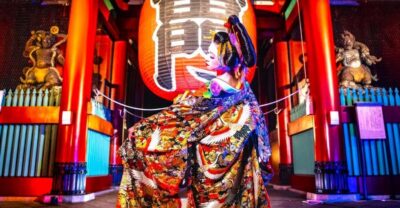 ★ 4.8Tokyo: Japanese Dance Cabaret Theater Asakusa-Kaguwa TicketFrom $492 hours
 ★ 4.7Tokyo: Meiji Shrine, Asakusa, Skytree Bus Tour and CruiseFrom $12210 hours
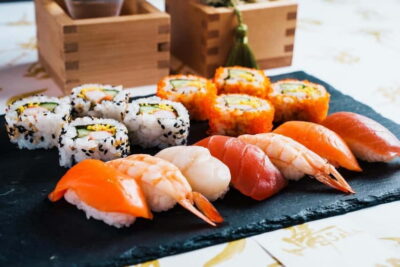 ★ 4.9Tokyo: Roll and Authentic Sushi Making Class in AsakusaFrom $581h 40m
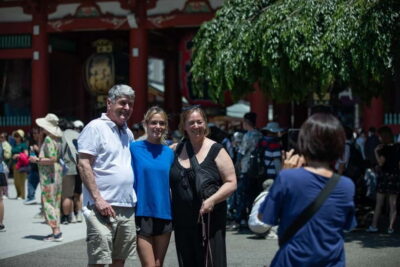 ★ 4.8Tokyo: Asakusa Walking Tour with Sensoji Temple VisitFrom $222 hours
 ★ 5.0Tokyo Asakusa Rickshaw TourFrom $42
 ★ 4.5Tokyo Panoramic 1 Day: Meiji Shrine, Asakusa, Odaiba and SKYTREE®From $85