Reviewed · GUIDED
Tokyo 6hr Instagram Highlights Private Tour with Licensed Guide
Tokyo’s best photo spots are scattered across a huge city, and this private tour solves that problem with a local guide and a short list of carefully chosen stops. In six hours, you can pair Senso-ji and its Thunder Gate with Shibuya Crossing, Meiji Jingu, Harajuku, or a quieter old neighborhood.
In This Article
- Key points to know before booking
- What this private Tokyo photo tour really offers
- Senso-ji and Asakusa: the classic first frame
- Hie Shrine: red torii without a Kyoto detour
- Shibuya Crossing and Hachiko: Tokyo in motion
- Meiji Jingu, Takeshita Street, and Harajuku
- Omoide Yokocho and Golden Gai after dark
- The Imperial Palace area and Tokyo’s formal side
- Gardens, old neighborhoods, and slower photographs
- Tsukiji, Akihabara, Odaiba, and Roppongi
- How much walking and transport to expect
- Is the $155.22 price good value?
- What the guide can add
- Who should book this experience?
- Final call: book it for focus, not for quantity
- FAQ
- How long is the Tokyo Instagram Highlights Private Tour?
- How many places can I visit?
- Is the tour private?
- Is hotel pickup included?
- Are transportation costs included?
- Are entrance fees included?
- Can I cancel for a full refund?
I like the one-to-one planning and the freedom to replace places you have already seen. I also like that guides such as Sam, Yoshi, Miho, Taku, Show, and Bruce have adjusted the day around family interests, weather, food, history, and photography goals. The main catch is simple: six hours usually means three or four areas, not all 20 options, and transport, meals, and entry fees cost extra.
Key points to know before booking

- Three or four stops, not a full city tour: Choose a focused route from major temples, shrines, shopping streets, gardens, markets, and neighborhoods.
- Private English-speaking guide: Your guide can shape the day around your photo goals, interests, and places already visited.
- Tokyo by public transport and on foot: Pickup is on foot within a designated area, and train or subway fares are not included.
- Strong choice for a short stay: Six hours can give you a useful first look at both old Tokyo and modern city life.
- Photography is the theme, not the only subject: You get photo locations plus background on Japanese history, religion, and daily culture.
- Allow for a busy walking day: One guest recorded 18,000 steps, so comfortable shoes matter.
What this private Tokyo photo tour really offers

The title may suggest a polished social-media shoot, but the practical value is different. This is a private sightseeing day built around good-looking places. Your guide helps you reach them, explains what you are seeing, and adjusts the route as the day develops.
You choose around three or four stops from a long menu. The major choices include Asakusa, Harajuku, Shibuya, Shinjuku, the Imperial Palace area, Tsukiji, Akihabara, Tokyo gardens, Odaiba, Shibamata, and Nezu. That range lets you build a day that feels traditional, modern, food-focused, quiet, or highly urban.
I would tell you to decide your priorities before the tour. Tokyo is too large for casual zigzagging. If you want Senso-ji, Meiji Jingu, Shibuya Crossing, and Takeshita Street, your day will feel very different from one built around Nezu, Koishikawa Korakuen, and Shibamata.
The private format matters here. You do not need to wait for strangers, defend your preferred photo stop, or follow a fixed group pace. Guides have changed schedules when people had already visited certain places, and they have shaped days around children, shopping, history, and social-media content.
Other guided tours in Tokyo
Senso-ji and Asakusa: the classic first frame
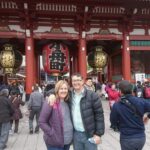
Senso-ji is one of the easiest places to understand why Tokyo works so well in photographs. You begin at Kaminarimon, the red Thunder Gate, then move toward Nakamise-Dori, the approach lined with shops and crowds. The temple buildings, lanterns, incense, and colorful details offer plenty to frame.
Your guide can add context about Buddhist worship and the role of the temple in Asakusa. That turns a quick photo stop into something more useful than a backdrop.
The listed visit time is about 30 minutes, which is enough for a brisk look and several photos, but not a slow exploration of every corner. Asakusa can also be crowded, so patience helps if you want a clean image. This is a strong choice for a first Tokyo day because it gives you a traditional setting without leaving central Tokyo.
Hie Shrine: red torii without a Kyoto detour
Hie Jinja offers one of the tour’s most distinctive photo settings: a tunnel of roughly 90 red torii gates. It gives you the visual feel of Kyoto’s Fushimi Inari without requiring a trip out of Tokyo.
The shrine is a good pick if you want something quieter and more distinctly Japanese than a city intersection. The repeated gates create strong lines for photographs, while the shrine itself gives your guide room to explain Shinto customs.
At about 30 minutes, this works well as part of a shrine-focused route. It may be less useful if your only goal is Tokyo’s loudest modern scenes. Pair it with Meiji Jingu for two different views of Shinto practice, or choose it instead of Meiji Jingu if the torii tunnel is your priority.
Shibuya Crossing and Hachiko: Tokyo in motion

Shibuya Crossing is the obvious modern Tokyo photograph. When the signals change, people move across the intersection from several directions, with giant screens and towers forming the backdrop.
The nearby bronze statue of Hachiko adds a small but meaningful human story to the stop. Your guide can connect the crossing and statue to the district’s wider role as a meeting place and shopping center.
Thirty minutes is enough for a look at the crossing and a photo near Hachiko. It is not enough to explore Shibuya in depth, so be realistic about what you want. If your goal is a particular elevated viewpoint or a long shopping session, say so while planning. The tour provides a guide and route flexibility, but it does not include a private vehicle or special viewing admission.
Meiji Jingu, Takeshita Street, and Harajuku

Meiji Jingu gives you a major change of mood. The shrine sits in a large wooded precinct at the edge of Shibuya, with sake barrels and traditional architecture providing very different images from the neon city.
The suggested visit is about 40 minutes. That makes Meiji Jingu one of the more substantial stops, and rightly so. You can photograph the sake barrels, shrine buildings, and broad paths while learning about Shinto traditions.
Nearby Takeshita Street brings you back to Harajuku’s youthful style. Its shops, crepe counters, rainbow cotton candy, and kawaii displays are built for bright, playful photographs. It is also a shopping street, so 30 minutes can disappear quickly if you want to browse.
These two stops work well together because they show Tokyo’s sharp contrasts. You move from a quiet shrine setting to a compact street filled with fashion and color. The drawback is walking and crowd pressure. Harajuku can feel packed, and the day may become tiring if you add too many central Tokyo stops.
Other private tours in Tokyo

Omoide Yokocho and Golden Gai after dark

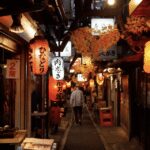
Omoide Yokocho is a narrow lane of small restaurants, bars, and shops near Shinjuku. It offers a close-up look at Tokyo’s back-alley character, with tight spaces, signs, cooking activity, and a slightly chaotic feel.
Shinjuku Golden Gai has a similar appeal but a stronger nightlife identity. Tiny bars fill narrow lanes and passageways, creating a setting that feels far removed from Tokyo’s wide roads and tall towers.
Both stops are listed at about 30 minutes. They are excellent for atmospheric street photographs, but you should remember that these are working dining and nightlife areas, not staged photo sets. Be respectful, especially around restaurant entrances and people eating.
Choose one of these if you want texture and mood. Choose both only if you are happy to give up another major sight. A private guide can help you decide which better fits your interests.
The Imperial Palace area and Tokyo’s formal side

The Imperial Palace grounds offer moats, stone walls, open spaces, and a sense of Tokyo’s political center. The experience here is mainly exterior scenery. You cannot enter the Imperial Palace interior on this tour.
The suggested stop lasts about 30 minutes and has no listed admission fee. It makes sense for visitors who want a broad, formal city image rather than shops, crowds, or small lanes.
I would not choose it simply because the name sounds important. The palace area is best when you want architecture, moats, and a calmer pause between busier districts. Your guide can explain the site’s connection to the former Edo Castle, which gives the setting more meaning.
Gardens, old neighborhoods, and slower photographs

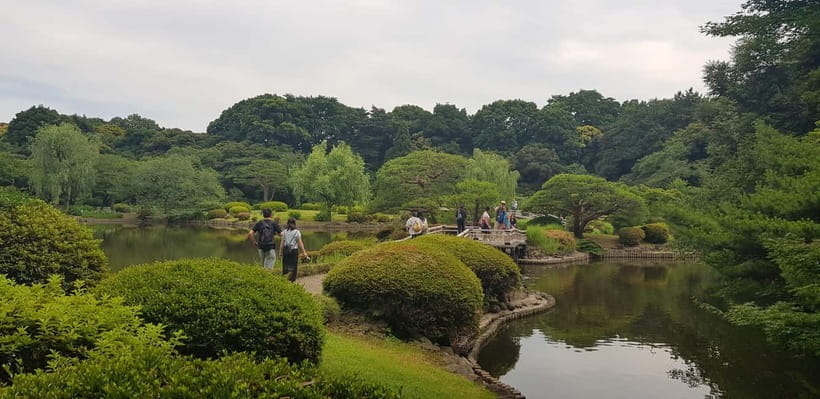
Tokyo’s gardens provide a calmer alternative to the standard highlights. Koishikawa Korakuen, Rikugien, and Hama Rikyu Gardens each offer ponds, bridges, paths, and carefully arranged views.
Koishikawa Korakuen and Rikugien are among the city’s noted Japanese gardens. Hama Rikyu sits beside Tokyo Bay and includes seawater ponds affected by the tide, along with a teahouse. These are especially useful choices if you care about seasonal plants, reflections, and space rather than crowds.
Admission is extra at these gardens. Shinjuku Gyoen also charges admission, with adult entry listed at ¥500, reduced rates for seniors and students with valid identification, and a group rate of ¥400. The time shown for some of these alternatives is only five minutes, which signals that they are possible suggestions rather than full visits in a normal six-hour plan.
Nezu and Shibamata offer a different kind of photo day. Nezu, along with nearby Yanaka, retains an old downtown feel and survived major wartime and natural damage. Shibamata, toward the eastern edge of Tokyo, has an old-style neighborhood atmosphere near the Edogawa River.
These areas require more careful route planning than the central highlights. If you want quiet streets and local character, they may be worth more to you than checking off another famous district.
Tsukiji, Akihabara, Odaiba, and Roppongi
Tsukiji is a useful choice for food-centered sightseeing. The old fish market area gives you shopfronts, food displays, and a chance to ask your guide where to eat. The listed time is only 10 minutes, so request more time if food is central to your plan. Lunch is not included.
Akihabara is the pick for electronics, anime, and Japanese pop culture. It is a good fit if you want colorful signs and a very specific side of modern Tokyo. Again, the suggested five-minute visit is only a quick option, not enough for serious shopping.
Odaiba offers a modern waterfront setting on a man-made island in Tokyo Bay, with shopping and entertainment facilities. Roppongi Hills gives you a city-within-a-city feel, with shops, restaurants, offices, apartments, a hotel, and art spaces.
These four options show why pre-tour planning matters. They are spread across different parts of Tokyo and do not naturally fit into one tight route with Senso-ji and Shibuya. Pick a theme instead of trying to collect every name.
How much walking and transport to expect
This is a walking tour, and pickup is on foot within a designated Tokyo area. There is no private vehicle. You should expect to use public transport when moving between districts, with fares paid separately.
One person reported reaching 18,000 steps, which is a useful warning even though your total will depend on the route. Wear supportive shoes, carry water, and avoid building a route that crosses the city repeatedly.
The six-hour length sounds generous, but Tokyo’s size changes the calculation. A 30-minute stop can require much longer when you add train transfers, station walking, crowds, and orientation. Your guide saves you research time, but cannot remove Tokyo’s distances.
Is the $155.22 price good value?
At $155.22 per person, this is not the cheapest way to see Tokyo. Its value depends heavily on group size and how much planning help you need. Group discounts may improve the rate, and a private guide can be more practical for families or friends with shared interests.
You are paying for a licensed local English-speaking guide, a private booking, route planning, and the ability to change direction. Transportation, food, entrance fees, and personal spending are extra, so budget for those separately.
The strongest value appears when you have only a couple of days in Tokyo. Several guides have helped people fit major sights into one day, and one guest described the tour as a major saving of time and energy. For a long stay, you may prefer to explore at your own pace and spend the money on a specialist food tour or a single paid attraction.
What the guide can add
The best part of this experience is not simply being led to a famous crossing or temple. A good guide links the photo to the place. Sam has been praised for making a family feel at ease, while Yoshi adjusted the schedule after some sights had already been seen. Miho has built tours around individual interests and explained history and culture in a simple, approachable way.
Taku connected Tokyo’s traditions to the places visited and helped with a restaurant choice near Tsukiji. Show communicated before the tour about preferences and helped shape a photo-focused day. Bruce prepared carefully around requested sights, including Meiji Jingu’s sake barrels and a Shinjuku Godzilla view.
Your assigned guide may be someone else, so do not book based on one name alone. Instead, send clear priorities before the day: traditional architecture, food, fashion, gardens, street scenes, family needs, or social-media images.
Who should book this experience?
I would choose this tour if you are visiting Tokyo for the first time, have limited time, or feel uneasy handling a large city on your own. It also fits families, friends, and photographers who want a private pace and a local interpreter.
It is less suitable if you expect professional photography equipment, a private car, guaranteed access to every named site, or a full-day visit to all 20 places. The experience is a guided sightseeing plan with photography in mind, not a studio shoot.
The tour has a 4.9 rating from 38 ratings and a 100 percent recommendation figure. Those numbers suggest a strong record, but the one critical experience points to an important concern: the name can create expectations of heavy social-media production. Clarify exactly what you want before booking.
Final call: book it for focus, not for quantity
Book this private Tokyo tour if you want a guide to turn a huge city into three or four well-chosen stops. It is especially useful on a short visit, with Senso-ji, Meiji Jingu, Shibuya, and Harajuku forming an easy first-day combination.
Skip it if you want to cover every district, avoid extra transport costs, or wander without a schedule. The smart approach is to choose a clear theme, accept the walking, and tell the guide what you have already seen. Done that way, the tour can give you good photos and a much better sense of how Tokyo’s old and new sides fit together.
FAQ
How long is the Tokyo Instagram Highlights Private Tour?
The tour lasts approximately six hours.
How many places can I visit?
The private tour includes a customizable selection of around three or four sites from the available choices.
Is the tour private?
Yes. Only your group participates, and you receive the guide’s attention throughout the experience.
Is hotel pickup included?
Pickup is offered on foot within a designated area of Tokyo. The tour does not include a private vehicle.
Are transportation costs included?
No. Public transportation fees are not included in the price.
Are entrance fees included?
Most listed outdoor stops have no admission fee. Entry fees for places such as Shinjuku Gyoen, Koishikawa Korakuen, Hama Rikyu Gardens, Rikugien Garden, and the Tokyo National Museum are not included. The Imperial Palace interior is not accessible on this tour.
Can I cancel for a full refund?
Yes. You can cancel at least 24 hours before the local start time for a full refund. Changes or cancellations made less than 24 hours before the start time are not accepted for a refund.
More Private Tours in Tokyo
More Guided Tours in Tokyo
More tours in Tokyo we've reviewed












Guided, compared.
 ★ 5.0Tokyo 6hr Private Tour with Government-Licensed GuideFrom $155
 ★ 4.9Tokyo: Shinjuku Local Bar and Izakaya Guided Walking TourFrom $343 hours
 ★ 4.8Tokyo: Private City Highlights Tour with Local GuideFrom $1064 - 8 hours
 ★ 4.9Tokyo: Tsukiji Fish Market Guided Walking TourFrom $222 hours
 ★ 5.0Tokyo 4hr Private Tour with Government-Licensed GuideFrom $109
 ★ 5.0Tokyo Guided Small-Group Biking TourFrom $106