Reviewed · ASAKUSA TOURS
Tokyo Zen Meditation at Kinryu-ji Temple and Asakusa Walking Tour
The heart of this Asakusa experience is not the famous red lantern or the crowds at Senso-ji. It is the chance to sit quietly on tatami inside Kinryu-ji Temple, where a monk teaches the basics of zazen, or seated Zen meditation. You will work on posture and breathing, then have time for Buddhist sutra copying, matcha, sweets, and questions.
In This Article
- Key points to know before booking
- Why Kinryu-ji gives this Asakusa walk its purpose
- Kaminarimon Gate: ten minutes with Tokyo’s best-known lantern
- Senso-ji: a short introduction to Asakusa’s oldest temple
- Zazen at Kinryu-ji: posture, breathing, and quiet attention
- Sutra copying and Buddhist writing
- Matcha, sweets, and a chance to ask honest questions
- Price, group size, and what the $60 covers
- Timing, clothing, and seasonal comfort
- Who will get the most from this experience
- Should you book the Kinryu-ji Zen experience?
- FAQ
- Where does the experience start and finish?
- How long does the tour take?
- Is transportation included?
- Is a monk present during the meditation?
- What other activities are included besides meditation?
- Do I need previous meditation experience?
- What should I wear?
- Is the temple air-conditioned?
- Can I cancel for a full refund?
I like the mix of famous sights and quiet local culture, and I like that the monk leads the meditation rather than a guide simply explaining Zen from the outside. The main consideration is comfort: you remove your shoes, sit on the floor, and deal with Tokyo’s heat or cold in a temple without air conditioning.
Key points to know before booking

- Two sides of Asakusa: See Kaminarimon Gate and Senso-ji before moving into a quieter temple setting.
- A real monk leads zazen: You learn basic posture and breathing rather than simply watching a demonstration.
- More than meditation: The session can include sutra copying, Buddhist writing, matcha tea, Japanese sweets, and a question period.
- A small group setting: The maximum group size is 15, which helps keep the temple visit personal.
- Simple but important preparation: Wear loose clothing, choose pants over a skirt, and bring socks because shoes must be removed.
- Good value for culture seekers: At $60 per person, the price covers the guide, Zen experience, tea, and sweets, but not transportation.
Why Kinryu-ji gives this Asakusa walk its purpose

Asakusa is one of Tokyo’s best places to see old religious traditions alongside modern city life. Kaminarimon and Senso-ji draw plenty of attention, but Kinryu-ji offers a slower, more personal look at Buddhist practice.
The temple dates back more than 400 years, with its history reaching to 1611. Its connection with Kamehime, the daughter of Tokugawa Ieyasu, gives the visit a useful link to Japan’s early Edo period. You are not simply entering an attractive old building. You are spending time in a working temple with a family atmosphere, where the priest lives on site.
That setting matters. Zazen can feel abstract if you only read about it in a guidebook. Sitting in the temple, removing your shoes, following instructions from a monk, and handling the quiet around you gives the practice a physical reality.
The experience is also friendly to beginners. You do not need previous meditation experience, Buddhist knowledge, or Japanese language skills. Guides including Miki, Hiro, and Yuko have helped interpret the monk’s explanations, making the session accessible to international visitors.
A few more Tokyo tours and experiences worth a look


Kaminarimon Gate: ten minutes with Tokyo’s best-known lantern
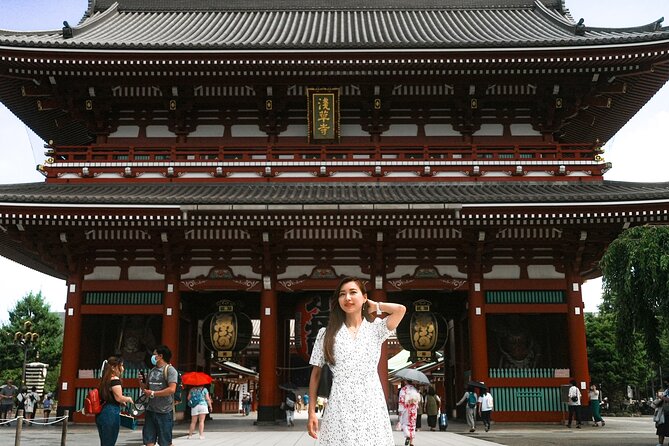
The meeting point is at Kinryu-ji Temple, only about two minutes on foot from Tawaramachi Station. The experience then includes a short visit to Kaminarimon Gate, the famous Thunder Gate at the entrance to Senso-ji.
Kaminarimon is easy to recognize. A huge red lantern hangs in the center, with the gods of wind and thunder, Fujin and Raijin, guarding the sides. You get about ten minutes here, enough for photographs and a quick explanation of why the gate matters.
This is a brief stop, not a full photography session. If you want clear pictures of the lantern, you may need to work around other people. The value comes from seeing the gateway in context before you move toward Senso-ji and then away from the busiest paths.
I like this opening because it gives you an instant sense of place. Asakusa’s religious identity is visible from the first stop, but the tour does not leave you trapped among the usual sightseeing crowds.
Senso-ji: a short introduction to Asakusa’s oldest temple

From Kaminarimon, you continue to Senso-ji, one of Tokyo’s oldest and most famous temples. It is dedicated to Kannon, the Buddhist goddess of mercy.
The stop lasts around 30 minutes. That is enough time to take in the main approach, understand the connection between Kaminarimon and the temple, and see one of Tokyo’s major religious landmarks. It is not enough for a detailed tour of every building, ritual, and nearby shopping street.
That short timing is worth keeping in mind. If Senso-ji is your main reason for visiting Asakusa, plan to return separately. The walking portion here is an introduction, not a full historical tour.
Still, the sequence works well. You begin with the public face of Asakusa, then leave the main tourist route for the quieter Kinryu-ji session. The contrast is the point. You see the place people photograph, then experience a less visible side of the neighborhood.
Zazen at Kinryu-ji: posture, breathing, and quiet attention

The main session at Kinryu-ji takes about 90 minutes. A monk explains how to sit, how to hold your posture, and how to use your breathing to settle your attention.
For a first attempt, this practical instruction is valuable. You are not expected to arrive already knowing how to meditate. The guide and interpreter can help you follow the monk’s directions, while the monk provides the religious and personal perspective.
The session may include two shorter periods of meditation rather than one long stretch. This is helpful if you are new to seated practice. A brief pause or change of activity can make it easier to return to the posture without becoming distracted by discomfort.
You should still prepare for floor sitting. The temple uses tatami, and shoes must come off. Loose clothing is the sensible choice, and pants are better than a skirt. Socks or stockings are required so you do not go barefoot.
The atmosphere is one of the strongest parts of the experience. The small temple, incense, tatami, and garden create a marked change from the noise outside. You might find that the meditation feels less like a formal lesson and more like a short reset in the middle of Tokyo.
Keep your expectations sensible. A 90-minute introduction will not turn you into a Zen practitioner. It can, however, show you how posture and breathing work together, and give you a clearer idea of why zazen has lasted as a daily practice.
Sutra copying and Buddhist writing

The cultural session can also include copying Buddhist sutras or writing Chinese characters. This is often the most hands-on part of the visit.
You follow the characters carefully, focusing on the shape and movement of the brush or pen rather than rushing to finish. One activity has included a sutra connected with longevity. Even if you cannot read the characters, the act of tracing them gives you another way to slow down.
This section is especially useful if sitting meditation feels difficult. You remain quiet and focused, but your hands have a clear task. It also gives you something tangible to remember the visit by, without turning the experience into a souvenir stop.
The exact balance between meditation, writing, tea, and conversation can vary. The supplied description specifically highlights Zen meditation, copying Buddhist sutras, and matcha, while individual sessions have included two meditation periods and Buddhist writing.
A few more Tokyo tours and experiences worth a look

Matcha, sweets, and a chance to ask honest questions

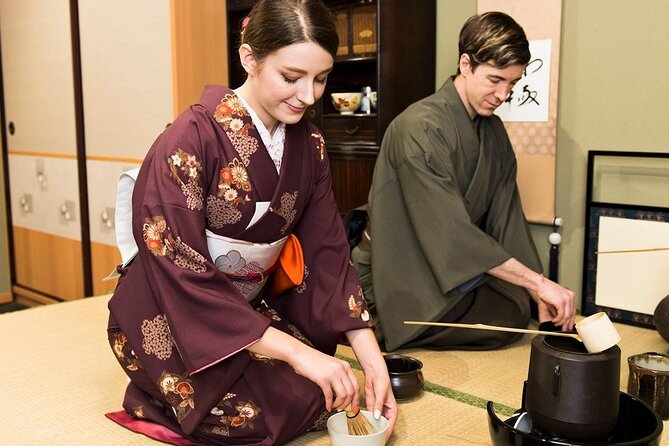
After zazen and the writing exercise, you enjoy matcha tea with Japanese sweets. The tea portion is not just a refreshment break. It introduces the care and attention associated with Japanese tea customs.
Some sessions have included green teas from Kyoto and Nagano, along with sweets. You learn how to enjoy the tea in a temple setting, with the pace slowing down after the concentration of meditation.
The question period is another reason this experience feels more personal than a standard sightseeing walk. You can ask the monk about Zen, meditation, temple life, or how to carry the practice into ordinary routines. The answers are translated when needed by guides such as Yuka, Hiro, or Miki.
This conversation is where the experience can move beyond ceremony. You are not required to accept every idea as your own. You can simply ask, listen, and decide what parts of Zen practice make sense for your life.
Price, group size, and what the $60 covers

The price is $60 per person. That is not the cheapest way to see Asakusa, since Kaminarimon and Senso-ji do not charge admission. You are paying mainly for access to the guided temple session, the monk’s instruction, interpretation, tea, sweets, and the small-group format.
For me, the value depends on your purpose. If you want a low-cost walking tour focused on Tokyo landmarks, this is more than you need. If you want a structured cultural activity with direct contact with a monk, the price is reasonable.
The maximum group size is 15. That is large enough to create a shared experience but small enough for questions and personal guidance. The exact group on your date may be smaller, and the temple setting should feel more intimate than a large coach tour.
The experience is often booked about 33 days ahead. That suggests you should reserve early if your Tokyo schedule is fixed, especially if you want a particular date. A mobile ticket makes the booking simple, and confirmation is provided at the time of booking.
Transportation is not included. You make your own way to Kinryu-ji at 2-chome 10-4 Kotobuki, Taito City. Tawaramachi Station is about a two-minute walk away, and the guide can take you to the station at the end if you are unsure of the route.
Timing, clothing, and seasonal comfort

The total duration is listed as about 1.5 to 3 hours. The variation likely reflects the walking and temple schedule, so allow a generous block of time rather than trying to fit in a tightly timed attraction afterward.
The activity asks for moderate physical fitness. You walk between Asakusa sights and sit on the floor during meditation. The description does not promise special seating or accessibility arrangements, so anyone who has difficulty with floor sitting should check before booking.
There is no air conditioning at the temple. Summer visitors should carry water and watch for heat exhaustion. In winter, wear warm clothes. This is a practical point, not a minor footnote: meditation requires stillness, and you will notice heat or cold more when you are sitting quietly.
Wear clothes that allow your knees and hips to bend comfortably. Pants are recommended, and socks or stockings are required. Avoid arriving in restrictive clothing or anything you would find awkward when sitting on tatami.
Free cancellation is available up to 24 hours before the start time for a full refund. Changes or cancellations made less than 24 hours ahead are not accepted for a refund, and the cut-off uses Tokyo local time.
Who will get the most from this experience
I would choose this for a first visit to Tokyo if you want one activity that combines major sights with a quieter cultural lesson. It suits people curious about Buddhism, meditation, Japanese etiquette, tea, or traditional arts.
It also works well at the end of a busy Tokyo trip. After crowded streets and packed schedules, 90 minutes of quiet can feel like a useful change of pace. Solo visitors can join the group easily, and couples or friends can share an activity that does not depend on shopping or food.
You do not need to be spiritual. You only need to be willing to sit quietly, follow instructions, and treat the temple with respect. The monk’s question period gives you room to approach the practice with curiosity rather than commitment.
I would be more cautious about booking it for young children, anyone who dislikes quiet activities, or anyone unable to sit on the floor. It is also not the best match if your priority is a long, detailed tour of Senso-ji.
Should you book the Kinryu-ji Zen experience?
Book it if you want direct contact with Japanese temple culture, not just another list of Tokyo photo stops. The strongest elements are the monk-led zazen, the calm setting, the sutra writing, and the chance to ask questions over matcha.
Skip it if you want a flexible Asakusa walk with no fixed meditation or floor sitting. At $60, the value comes from the guided temple access and the personal cultural exchange, not from the two free-entry landmarks.
For most curious visitors who can sit comfortably and plan for the weather, this is a thoughtful way to slow down in Asakusa. It gives you a landmark introduction, then shows you a quieter side of Tokyo that is easy to miss on your own.
FAQ
Where does the experience start and finish?
The experience starts and ends at Kinryu-ji Temple, located at 2-chome 10-4 Kotobuki, Taito City, Tokyo 111-0042. It is about a two-minute walk from Tawaramachi Station.
How long does the tour take?
The approximate duration is 1 hour 30 minutes to 3 hours. The Kinryu-ji temple session itself takes about 1 hour 30 minutes, with additional time for the Asakusa stops.
Is transportation included?
No. Transportation is not included, so you must make your own way to the meeting point. The guide can take you to the station at the end if you are unsure of the route.
Is a monk present during the meditation?
Yes. A real monk guides the zazen session and explains proper posture and breathing. A guide may assist with interpretation.
What other activities are included besides meditation?
The experience includes a Zen session and matcha tea with Japanese sweets. Sessions can also include copying Buddhist sutras or writing Buddhist characters, followed by time to speak with the monk.
Do I need previous meditation experience?
No previous experience is stated as a requirement. The monk teaches the basic techniques, making the activity suitable as an introduction to zazen.
What should I wear?
Loose-fitting clothing is recommended, with pants preferred over skirts. Shoes must be removed inside the venue, so you should wear socks or stockings.
Is the temple air-conditioned?
No. The venue has no air conditioning. Bring water and take care in summer, while winter visitors should wear warm clothing.
Can I cancel for a full refund?
Yes, if you cancel at least 24 hours before the experience start time. Cancellations or changes made less than 24 hours ahead are not accepted for a refund.
More Walking Tours in Tokyo


More Temples & Meditation in Tokyo
More Asakusa Tours in Tokyo
More tours in Tokyo we've reviewed












Asakusa Tours, compared.
 ★ 4.8Tokyo: Japanese Dance Cabaret Theater Asakusa-Kaguwa TicketFrom $492 hours
 ★ 4.7Tokyo: Meiji Shrine, Asakusa, Skytree Bus Tour and CruiseFrom $12210 hours
 ★ 4.9Tokyo: Roll and Authentic Sushi Making Class in AsakusaFrom $581h 40m
 ★ 4.8Tokyo: Asakusa Walking Tour with Sensoji Temple VisitFrom $222 hours
 ★ 5.0Tokyo Asakusa Rickshaw TourFrom $42
 ★ 4.5Tokyo Panoramic 1 Day: Meiji Shrine, Asakusa, Odaiba and SKYTREE®From $85