Reviewed · ASAKUSA TOURS
Tokyo Morning Tour: Meiji Shrine, Asakusa & Fish Market
Tokyo is at its best before the crowds build, and this tour makes good use of those early hours. You begin with the calm paths of Meiji Shrine, move to sushi and sashimi at Tsukiji Outer Market, then finish among the temples, snack stalls, and old streets of Asakusa.
In This Article
- Key points at a glance
- A well-shaped first morning in Tokyo
- Starting at Meiji Shrine near Harajuku
- Eating your way through Tsukiji Outer Market
- Asakusa, croquettes, sweets, and temple tradition
- The guides make the difference
- What the $83 price really buys you
- Timing, transport, and practical planning
- Who will enjoy this tour most
- Should you book it?
- FAQ
- How long is the Tokyo morning tour?
- Where does the tour begin?
- Where does the tour finish?
- Which places are visited?
- Is the tour conducted in English?
- Is food included in the tour price?
- Is public transportation included?
- Are admission fees included?
- Can I cancel for a full refund?
- Can I reserve now and pay later?
I like the smart mix of culture and food, and I like that the guides explain Shinto, Buddhism, and daily Japanese customs instead of simply pointing at buildings. The main drawback is the pace: 270 minutes covers three major areas, so you get a useful introduction rather than long, unhurried visits.
Key points at a glance

- Three very different Tokyo districts: Peaceful Meiji Shrine, food-focused Tsukiji, and temple-centered Asakusa give you a broad first look at the city.
- A morning food stop: Tsukiji includes opportunities to taste fresh sushi and sashimi, followed by croquettes and Japanese sweets in Asakusa.
- Strong cultural explanation: Guides including Yosuke, Lax, Lex, Remu, and Ken have been praised for explaining Japanese religion, customs, and local life in clear English.
- Useful for first-time visitors: The tour connects major sights and handles the cultural background that can be easy to miss on your own.
- Transport costs extra: Allow about 550 yen for public transportation during the tour.
- Flexible booking: You can cancel up to 24 hours before departure for a full refund and reserve without paying immediately.
A well-shaped first morning in Tokyo

The tour lasts 4.5 hours and begins in front of IKEA Harajuku. That starting point puts you near Meiji Shrine, so the day opens with a quiet cultural visit rather than a rush straight into shopping streets.
You finish in Asakusa, which is useful if you plan to continue sightseeing there after the guide leaves. The route is not a simple loop back to Harajuku, so think of it as a morning transfer across Tokyo with three substantial stops.
I like this format for a first full day in Japan. You get orientation, food, religion, and old Tokyo in one block of time. You also avoid spending your first morning figuring out train connections between districts.
The trade-off is time. The schedule gives about one hour at Meiji Shrine, 110 minutes at Tsukiji Outer Market, and one hour in Asakusa. That is enough to see the main character of each place, but not enough to explore every side street or shop.
A few more Tokyo tours and experiences worth a look

Starting at Meiji Shrine near Harajuku
Meiji Shrine is the quietest part of the tour. From the meeting point at IKEA Harajuku, you enter a very different setting, with shrine grounds and a slower rhythm than the surrounding Harajuku streets.
Your guide explains Shinto customs and the role of the shrine. This matters because Meiji Shrine can otherwise look like a pleasant walk through trees with a large wooden gate at the end. The rituals, offerings, and manners give the visit more meaning.
The hour here is well judged. You have time to see the shrine and listen without turning the stop into a lecture. Guides named in tour feedback, including Lex, Remu, Yosuke, and Yo Yo, have been especially praised for making the religious side accessible. Remu was noted for explaining the difference between Shinto and Buddhism, while Lex focused on shrine customs and the spiritual feel of the grounds.
One especially memorable detail from the guide experiences is a fire ceremony connected with the Buddhist portion of the day. The supplied schedule does not promise a ceremony on every departure, so do not book expecting one as a guaranteed feature. Still, the guides clearly place real attention on Japanese religious practice, not just photo stops.
I would give Meiji Shrine your full attention here. It is tempting to treat the visit as a quick walk before the food stop, but the contrast between this calm setting and later Tokyo districts is one of the tour’s best ideas.
Eating your way through Tsukiji Outer Market

The longest stop is Tsukiji Outer Market, with about 110 minutes for sightseeing and food. This is where the tour becomes most practical for a first-time visitor.
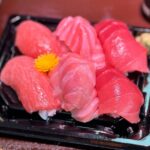
You can taste fresh sushi and sashimi around the market, then watch the movement of a food district that serves both local shoppers and sightseers. The tour description does not state that every food item is included in the $83 price, so I would budget separately for what you choose to eat.
That is not a minor detail. At a market, your appetite and curiosity can easily grow as you look around. You may want one sushi bite, then another small dish, then something sweet. Carry some yen and treat the food portion as a chance to choose rather than as a fixed meal.
The guide adds value by explaining what you are seeing. Tsukiji can feel confusing when you first arrive, with narrow lanes, food counters, and many choices competing for your attention. A good English-speaking guide helps you understand the district instead of leaving you to wander without context.
Martin’s guide, Yosuke, received particular praise for explaining Tsukiji as well as Japanese history, culture, and religion. That combination is useful because the market stop is more than a chance to eat. It shows how food fits into Tokyo’s everyday life.
The market is also the place where the tour may feel most crowded or fast-moving. The supplied information calls it lively, and the stop includes shopping and sightseeing as well as food. Keep your group in sight, listen for meeting instructions, and avoid planning an elaborate individual meal if you want to stay with the tour.
The 110-minute allocation gives you more breathing room than the one-hour visits. Even so, you cannot cover every stall. I would focus on the guide’s recommendations, choose a few small tastes, and save time to see the market itself.
Asakusa, croquettes, sweets, and temple tradition

The final stop is Asakusa, where you spend about an hour walking, shopping, sightseeing, and visiting Senso-ji Temple. This is the most old-Tokyo part of the route, with historic views and a very different mood from Meiji Shrine.
The food here is casual and snack-sized. You can try crispy croquettes and traditional Japanese sweets while walking through the district. Again, the description does not confirm that these purchases are covered by the tour price, so plan to pay for snacks yourself.
Senso-ji gives the stop a strong focus. The temple is one of the included admissions, and your guide explains Buddhist customs and the relationship between Buddhism and Shinto. That comparison is one of the most useful parts of the whole morning, especially if Japanese religious terms are new to you.
Several guide experiences describe the explanations as a major strength. Margaret’s visit with Yo Yo included discussion of a fire ceremony and the differences between the two faiths. Edith’s tour with Remu also focused on Shinto and Buddhism. These details suggest that the religious explanation is not an afterthought, though the exact content may vary by guide and departure.
Asakusa is also the most shopping-friendly stop. You have time to look at sweets and local snacks, but one hour passes quickly. If you want a long visit inside Senso-ji, a careful shopping trip, and several food stops, you will need to return on your own after the tour ends.
That ending works well. You finish in Asakusa rather than being taken back to the starting point, leaving you in one of Tokyo’s best areas for a longer afternoon. You can continue sightseeing there, although the tour does not include a return transfer.
The guides make the difference
This is a guide-led experience, and the guide matters a great deal because so much of the value comes from explanation. The tour uses English-speaking guides, and the names that appear in the strongest personal accounts include Yosuke, Lax, Lex, Yo Yo, Remu, and Ken.
The praise is consistent in a few useful ways. Lax is described as thoughtful, engaging, patient, and professional. Yosuke is praised for positive energy, clear English, care with families, and a strong grasp of Japanese culture and religion.
Lex is noted for making Meiji Shrine both informative and personal. Remu is associated with clear explanations of Shinto, Buddhism, and the fire ritual. Ken is praised for explaining Japanese culture in an enjoyable way.
You should not assume that you will receive a specific guide unless the booking confirms it. Still, the range of strong guide feedback is encouraging. It also tells you what kind of tour this is: the best part is not simply being driven or led to famous places, but having someone answer questions and connect the stops.
Families may find that personal attention particularly helpful. One account describes Yosuke taking care to keep a parent and child comfortable throughout the morning. Another describes a solo guest receiving what felt like a private tour when no one else joined. Group size is not stated as a fixed number, so you should not count on a private departure.
A few more Tokyo tours and experiences worth a look

What the $83 price really buys you

At $83 per person, this is not the cheapest way to visit Meiji Shrine, Tsukiji, and Asakusa. You can reach all three areas by public transportation on your own for much less than the tour price.
The question is what you are paying for. The fee includes an English-speaking guide, photos taken during the tour, historical explanations, and admission to Meiji Jingu Shrine, Tsukiji Fish Market, and Senso-ji Temple. Public transportation costs about 550 yen extra.
Food purchases are not listed among the included items. Since sushi, sashimi, croquettes, and sweets are central to the experience, I would treat the $83 as the cost of guiding, access, and structure, then set aside extra money for eating.
I think the price makes sense if you want a cultural guide on your first morning and prefer not to manage Tokyo’s train system right away. It is less compelling if you are confident navigating alone, want to spend a long time at each site, or prefer choosing your own restaurants.
The included photos are a useful extra, especially for families or solo visitors. Do not value them as the main reason to book, though. The real benefit is having someone explain why a shrine visit is different from a temple visit, what you are seeing at Tsukiji, and how the districts fit into Tokyo.
Timing, transport, and practical planning

The meeting point is in front of IKEA Harajuku. You should allow enough time to find the exact meeting area and arrive ready to leave on schedule. The tour ends in Asakusa, so keep your afternoon plans flexible enough to continue from there.
Public transportation is not included. The estimated fare is around 550 yen, which is modest, but you should still have an IC card or another way to pay for local trains and subway rides if possible. The supplied information does not specify the exact lines or transfers, so your guide will be the best source for the route on the day.
Wear shoes suitable for walking. The tour includes shrine grounds, market lanes, temple areas, shopping streets, and public transport. The schedule is not a strenuous hike, but standing and walking for much of 4.5 hours is likely.
Morning timing is a real advantage. Meiji Shrine is suited to a peaceful start, Tsukiji is a natural place for an early food visit, and Asakusa is easier to appreciate before your day becomes crowded with other plans.
The tour offers free cancellation up to 24 hours before departure and lets you reserve now and pay later. Starting times vary, so check availability for your chosen date before arranging breakfast or another morning activity.
Who will enjoy this tour most

I would recommend it first to visitors who have just arrived in Tokyo and want a clear introduction to the city. It gives you three strong reference points: modern Harajuku, the food culture of Tsukiji, and the temple streets of Asakusa.
It also suits anyone curious about Japanese religion. Meiji Shrine and Senso-ji are not presented as identical sacred attractions. The guide helps you see the difference between Shinto and Buddhism, which adds useful context to later visits around Japan.
Families can benefit from the short visits and food breaks. Children may respond better to sushi, croquettes, and sweets than to a long temple lecture, while parents get a structured route and a guide who can answer questions.
Solo visitors may also find the format comfortable. You have someone to talk with, help choosing what to focus on, and photos taken during the morning. If the group is small, the experience may feel quite personal, but no private-tour guarantee is provided.
I would hesitate if you dislike fixed schedules or want to linger. An independent visitor with a full Tokyo transit pass can spend two hours in one neighborhood and follow personal interests. This tour is about range and explanation, not total freedom.
Should you book it?

Book this tour if you want food, famous sights, and religious context in one well-organized morning. The strongest reason is the guide: Yosuke, Lax, Lex, Remu, Yo Yo, and Ken are all associated with clear explanations, warm care, and lively conversation.
Go in with realistic expectations. You will not master three districts in 270 minutes, and food purchases and transport cost extra. But you will get a useful first map of Tokyo, a calm start at Meiji Shrine, market tastes at Tsukiji, and a finish among the temples and snacks of Asakusa.
For a first or second day in Tokyo, I think the $83 price is fair if you value guidance and cultural understanding. For independent repeat visitors, it is probably better to choose one district and explore it slowly on your own.
FAQ
How long is the Tokyo morning tour?
The tour lasts 270 minutes, or 4.5 hours.
Where does the tour begin?
The meeting point is in front of IKEA Harajuku.
Where does the tour finish?
The tour finishes in Asakusa.
Which places are visited?
The tour visits Meiji Shrine, Tsukiji Outer Market, and Asakusa, including Senso-ji Temple.
Is the tour conducted in English?
Yes. The tour has a live English-speaking guide.
Is food included in the tour price?
Food is not listed among the included items. The experience includes opportunities to taste sushi, sashimi, croquettes, and traditional Japanese sweets, but the supplied information does not state that those purchases are covered.
Is public transportation included?
No. Public transportation costs about 550 yen per person.
Are admission fees included?
Admission to Meiji Jingu Shrine, Tsukiji Fish Market, and Senso-ji Temple is listed as included.
Can I cancel for a full refund?
Yes. You can cancel up to 24 hours in advance for a full refund.
Can I reserve now and pay later?
Yes. The booking option allows you to reserve your place and pay later.
More Shopping Tours in Tokyo

More Temples & Meditation in Tokyo
More Asakusa Tours in Tokyo
More tours in Tokyo we've reviewed
Asakusa Tours, compared.
 ★ 4.8Tokyo: Japanese Dance Cabaret Theater Asakusa-Kaguwa TicketFrom $492 hours
 ★ 4.7Tokyo: Meiji Shrine, Asakusa, Skytree Bus Tour and CruiseFrom $12210 hours
 ★ 4.9Tokyo: Roll and Authentic Sushi Making Class in AsakusaFrom $581h 40m
 ★ 4.8Tokyo: Asakusa Walking Tour with Sensoji Temple VisitFrom $222 hours
 ★ 5.0Tokyo Asakusa Rickshaw TourFrom $42
 ★ 4.5Tokyo Panoramic 1 Day: Meiji Shrine, Asakusa, Odaiba and SKYTREE®From $85