Reviewed · ASAKUSA TOURS
Private Japanese Sample Food Making and Asakusa History Tour
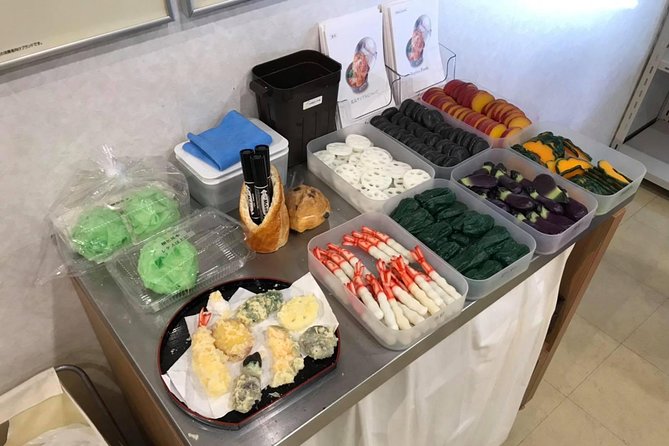
Japanese fake food is so lifelike that a wax omelet once fooled its maker’s wife. On this three-hour Asakusa tour, you get to try the craft yourself, making a small tempura display before walking through Kappabashi, Tokyo’s kitchen-goods district, and visiting Sensoji Temple.
In This Article
- Key points to know before booking
- Why fake food is worth your time in Japan
- Starting near Tawaramachi Station at 10 a.m.
- Making a tempura sampuru by hand
- Walking through Kappabashi, Tokyo’s Kitchen Town
- Sensoji Temple and Nakamise Dori
- What the $172.66 price really covers
- Guides, timing, and the family question
- Cancellation and other details to confirm
- Should you book this Asakusa experience?
- FAQ
- How long does the Japanese sample food and Asakusa tour last?
- Where does the tour begin?
- What days is the experience available?
- What will I make during the workshop?
- Is the tour suitable for children?
- Are wheelchairs and strollers permitted?
- Are meals and drinks included?
I like the hands-on workshop and the way the tour links a quirky craft with real neighborhood history. I also like the small format, capped at 15 people, with guides such as Mami and Hitomi offering help beyond the scheduled activity, including directions for a tax-free refund and onward travel. The main drawback is the price: at $172.66 per person, this is not a cheap sightseeing walk, especially since meals, drinks, and other fees are separate.
Key points to know before booking
- Make your own tempura sampuru: You work with wax and take your finished sample home.
- Kappabashi is more than a shopping street: It is the center of Tokyo’s restaurant-supply trade and a good place to see sample food displays up close.
- Sensoji gives the tour historical weight: You visit Tokyo’s oldest and most popular temple after the craft activity.
- The tour suits families: Children age 7 and older can participate, though ages 7 to 14 need an adult guardian.
- The schedule is limited: Tours run Tuesdays, Thursdays, and Sundays from 10 a.m. to noon, except on some holidays.
- Check the booking terms carefully: The supplied information gives both a four-day refund rule and a non-refundable policy, so confirm the exact terms before paying.
Why fake food is worth your time in Japan
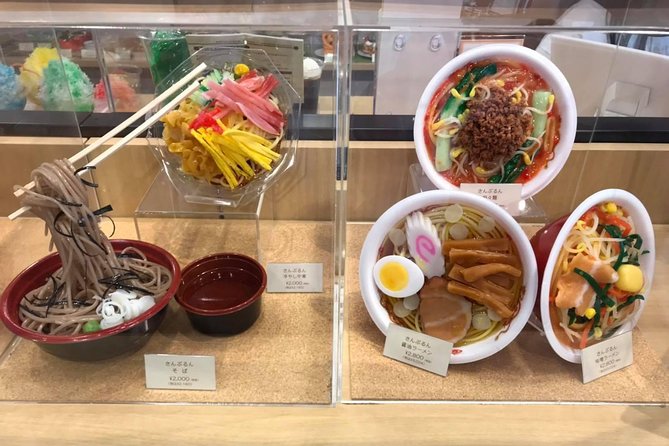
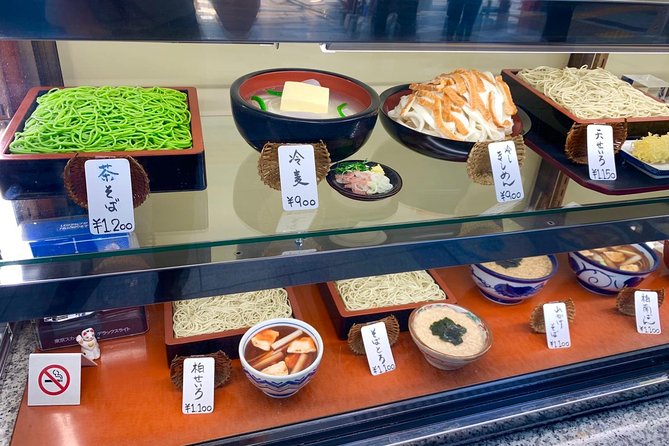
Look at a Japanese restaurant window and you may see bowls of ramen, plates of sushi, tempura, or rice dishes arranged with almost comic perfection. These are sampuru, Japanese food models made from plastic or wax. They are not mere decorations. They help you choose a meal when you cannot read every menu item, and they show the restaurant’s portion and presentation before you sit down.
The craft began in the 1930s with Takizo Iwasaki, an artisan from Gujo Hachiman. The familiar story says he made a wax omelet so realistic that his wife could not tell it from a real one. His company later became one of Japan’s largest sample-food makers and is estimated to control about 60 percent of the market.
Sampuru can take hours to make. Larger, detailed entrees may take up to a week, and artisans may spend ten years perfecting the work. A finished model can cost up to ten times the price of the real dish, sometimes reaching $500, or about 55,000 yen.
That background makes the workshop more than a novelty. You begin to notice the tiny choices in a restaurant display: the shine on a sauce, the curl of a shrimp, the angle of a piece of tempura. I like experiences that give you a new way to see ordinary streets, and this one does that quickly.
A few more Tokyo tours and experiences worth a look


Starting near Tawaramachi Station at 10 a.m.
The meeting point is the APA Hotel Asakusa Tawaramachi Station Mae, at 1-chome-2-3 Nishiasakusa. You should arrive by 9:45 a.m., giving yourself time to find the hotel and meet the English-speaking guide before the 10 a.m. start.
The area is close to public transportation, which makes the meeting point practical. The tour ends back there, so you do not need to work out a second pickup point in an unfamiliar part of Tokyo.
The experience is described as a private activity, meaning only your own group participates. At the same time, the workshop is also described as a small group capped at 15 people. Those details do not fit perfectly together, so I would confirm how the group size applies to your booking. If you are arranging a family outing or a group of friends, this is worth checking before you commit.
The activity operates in most weather, except during a typhoon or other extreme conditions. Wear comfortable clothes and shoes for walking. Since you put your hands into wax, skip nail polish or nail art if you can. The wax may remove some of it.
Making a tempura sampuru by hand
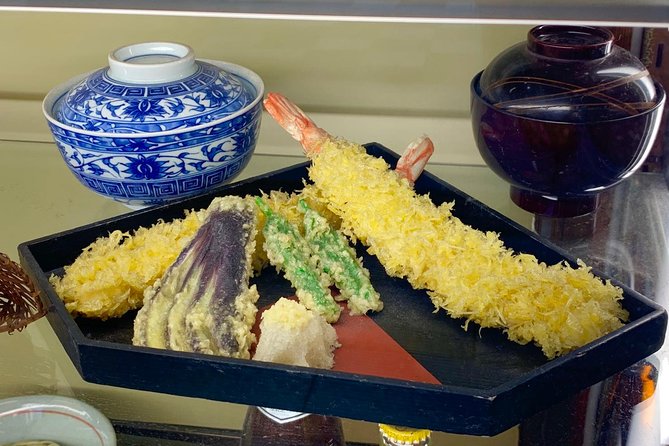
The workshop is the heart of the experience. Before you start, the guide explains how sampuru developed, why Japanese restaurants use it, and how the models are made. You also see different kinds of sample food before handling the materials yourself.
The class focuses on making tempura sampuru. The information provided does not specify every step or the exact finished design, so you should expect a guided introduction rather than a full professional training session. That is the right way to view it: you are learning the basic feel of a delicate trade and making a souvenir, not becoming a master artisan in one morning.
The activity is suitable for children from age 7, which gives families a creative option beyond temples and shopping. Children from 7 through 14 must stay with a guardian age 20 or older at all times. Adults should be ready to help younger children follow instructions and handle the wax carefully.
I especially like the take-home element. Many short Tokyo activities end with photographs and a fading memory. Here, you leave with something made during the tour. It may not look like a professional restaurant display, but its imperfections are part of the point. You can explain how it was made when you show it at home.
One practical limit is that food and drinks are not included. The sample is a craft item, not lunch. Do not book this expecting a meal or food tasting. If you are hungry after the workshop, an add-on lunch at Japan’s oldest tempura restaurant is available at checkout, though the supplied details do not give the price or full restaurant information.
Walking through Kappabashi, Tokyo’s Kitchen Town
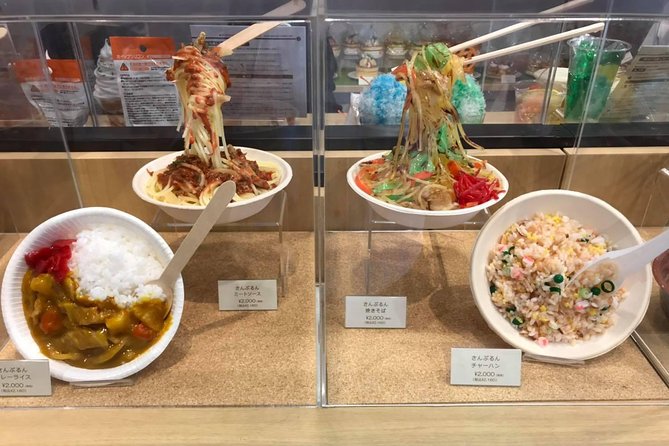
After the workshop, you explore Kappabashi Street, also called Kitchen Town. The street connects the Sensoji area with shops selling kitchen tools, restaurant supplies, tableware, cooking equipment, and sample food models.
This is one of the most useful parts of the tour because it shows the working side of Japanese food culture. You are not only looking at souvenirs. You are seeing the commercial district that supplies restaurants, chefs, and food businesses. The sample dishes in shop windows make more sense after you have tried to create one yourself.
Kappabashi is also a good place for photographs. Shop displays are colorful, precise, and often funny in their perfect presentation. You can compare the models you see in the stores with the piece you made in class. The guide’s explanation of the craft’s history adds meaning to what might otherwise look like a quick shopping stop.
Mami, one of the guides associated with the experience, has been especially helpful with practical details. She can assist with a tax-free refund and point you toward your next stop. That kind of help matters in Kappabashi, where you may find kitchen goods you did not plan to buy and need help understanding the purchase process.
The tour includes a walking visit rather than a shopping allowance. Any purchases, tax payments, or other costs are your responsibility. Keep that in mind if you are comparing the tour price with a basic neighborhood walk.
Sensoji Temple and Nakamise Dori
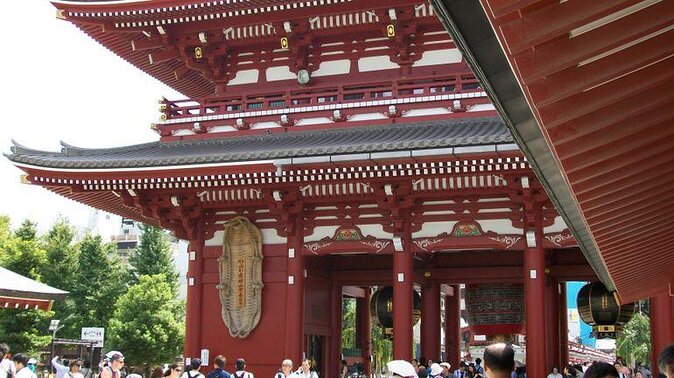
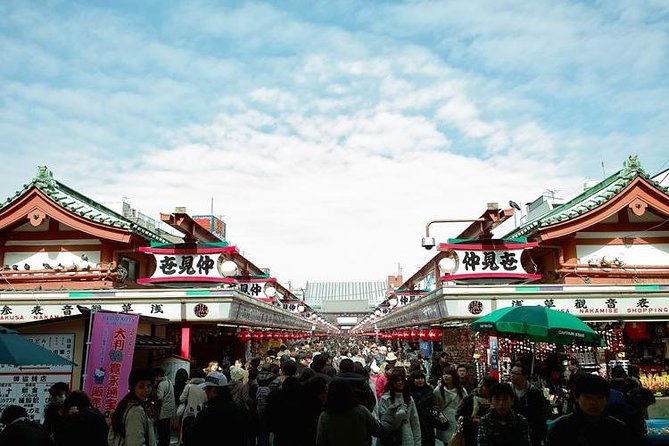
The final major stop is Sensoji, also called Asakusa Kannon Temple. It is Tokyo’s oldest and most popular temple, and it gives the tour a strong contrast with the modern craft workshop.
You visit the temple for about 30 minutes, with admission included. That is enough time to see the main areas and hear an introduction to the site, but it is not a long temple study. If you want quiet time for prayer, detailed architecture, or a slower look at the grounds, you may want to return on your own later.
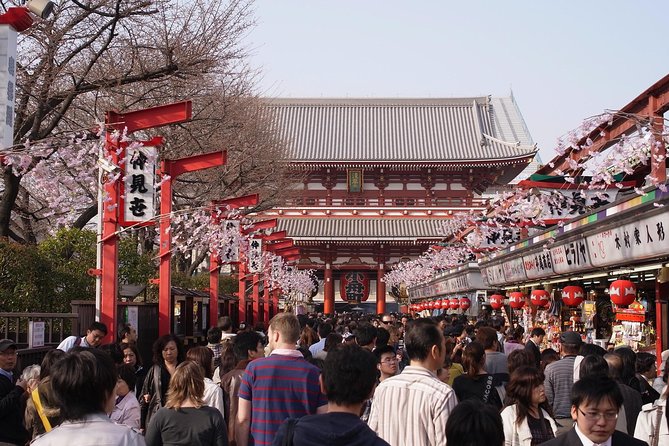
Nakamise Dori is the shopping street connecting Sensoji’s main gate with the main hall. It is a natural route through the district, lined with traditional-style shops and snack sellers. The tour uses the street to connect the temple’s religious setting with the everyday commercial life of Asakusa.
I like this pairing of stops. The temple shows an older side of Tokyo, while Kappabashi shows how food businesses operate today, and the workshop lets you take part in a craft that sits between art, commerce, and dining. You get three different views of the same neighborhood in a short time.
The tradeoff is pace. Three hours is enough for an introduction, but not enough for an unhurried exploration of both Kappabashi and Sensoji. If Asakusa is a major priority for you, consider returning later in the trip to spend more time at the temple, Nakamise Dori, and the surrounding streets.
A few more Tokyo tours and experiences worth a look

What the $172.66 price really covers
At $172.66 per person, this is a premium half-day activity. The value depends on how much you want the workshop rather than simply seeing Asakusa.
The price includes an English-speaking guide, the sampuru workshop, your take-home model, the Kappabashi and Sensoji walking tour, photographs, and explanations about the craft. It also saves you the trouble of finding a workshop, understanding the process, and connecting it with the neighborhood on your own.
The price does not include meals, drinks, shopping, or other fees. The included temple admission is useful, but it is not the main source of value. The handmade souvenir and guided workshop are what set this apart from a standard walking tour.
For a family, the cost can add up quickly. For a visitor who wants a memorable activity that works for children and adults together, it may be easier to justify. I would compare it with the cost of a basic Kappabashi and Asakusa walk, then ask yourself if making the food model is worth the extra money. For me, the answer depends on your interest in crafts. If you enjoy hands-on activities, the workshop carries the experience. If you mainly want temple sightseeing, you can see Sensoji and Nakamise Dori for less.
A four-hour or six-hour private Tokyo add-on is also available at checkout, before or after the food-making experience. It includes public transportation for you and the guide, but optional activity costs for both you and the guide are not included. This can make sense if you want the guide to help build a fuller day, but check the extra price and planned stops carefully.
Guides, timing, and the family question
The tour runs Tuesdays, Thursdays, and Sundays from 10 a.m. to noon, except on certain holidays. The listed meeting time is 9:45 a.m., and the activity lasts about three hours, so allow part of the afternoon for the experience and the return to the meeting point.
The guides are English-speaking, and the workshop includes translation and explanations. Hitomi is described as friendly and good at sharing memorable details about the area and the history of sample food making. Mami has helped with tax-free shopping and directions to the next stop. The guide can make a real difference here because the craft has many small details that are easy to miss without explanation.
The activity is accessible for wheelchairs and strollers, and most people can participate. Still, this is a walking tour, so you should consider your own comfort with moving between the workshop, Kappabashi, and Sensoji. The information confirms accessibility, but it does not provide details about the exact workshop layout or restroom facilities, so ask the operator if your group has specific mobility needs.
This is a good choice for families with children age 7 and older, couples wanting an unusual Tokyo activity, and anyone who likes food culture but does not want a cooking class based on eating. It also works well for first-time visitors who want a guide to connect several Asakusa sights.
It is less suitable if you want a slow, private temple tour, a full meal, or a long shopping session. The schedule has a clear purpose, and the workshop is the part you are paying for.
Cancellation and other details to confirm
The supplied booking information gives two different cancellation descriptions. One says you receive a full refund if you cancel at least four days before the start time, with no refund after that. Another says the activity is non-refundable and cannot be changed for any reason.
Because those terms conflict, confirm the policy shown at checkout before booking. A separate note says that once planning begins, a 15 percent service fee may be non-refundable after event details are sent. The guide waits up to 30 minutes if you are late. After that, the activity is treated as cancelled, so arrive early.
Confirmation is provided at booking, and mobile tickets are available. Group discounts may also be offered. Check the final total, the cancellation language, and any add-ons before payment.
Should you book this Asakusa experience?
Book it if you want to do something with your hands, learn why fake food is such a familiar part of Japanese restaurant culture, and see Kappabashi and Sensoji with an English-speaking guide. The workshop gives the day a clear center, and the take-home tempura model makes the memory last longer than a quick photo.
I would be more cautious if your budget is tight or if your main goal is temple sightseeing. At $172.66, the tour asks you to pay for the guided craft experience, not just the sights. For families, food fans, and curious first-time visitors, that can be a fair trade. For everyone else, visit Sensoji and Kappabashi independently and spend the savings on kitchen goods or lunch.
FAQ
How long does the Japanese sample food and Asakusa tour last?
The experience lasts approximately three hours and ends back at the meeting point.
Where does the tour begin?
It begins at APA Hotel Asakusa Tawaramachi Station Mae, 1-chome-2-3 Nishiasakusa, Taito City, Tokyo. The meeting time is 9:45 a.m. for a 10 a.m. start.
What days is the experience available?
It is available on Tuesdays, Thursdays, and Sundays from 10 a.m. to noon, except on some holidays.
What will I make during the workshop?
You will take part in a hands-on workshop making tempura sampuru, or Japanese sample food. You can take your finished sample home.
Is the tour suitable for children?
Yes. Children age 7 and older may participate. Children from 7 to 14 must be accompanied by a guardian age 20 or older at all times.
Are wheelchairs and strollers permitted?
The activity is described as accessible for wheelchairs and strollers. If you need specific information about the workshop space, contact the operator before booking.
Are meals and drinks included?
No. Meals, food, drinks, and other fees are not included. An add-on lunch at Japan’s oldest tempura restaurant is available at checkout.
More Private Tours in Tokyo



More Food Experiences in Tokyo
More Asakusa Tours in Tokyo

More tours in Tokyo we've reviewed












Asakusa Tours, compared.
 ★ 4.8Tokyo: Japanese Dance Cabaret Theater Asakusa-Kaguwa TicketFrom $492 hours
 ★ 4.7Tokyo: Meiji Shrine, Asakusa, Skytree Bus Tour and CruiseFrom $12210 hours
 ★ 4.9Tokyo: Roll and Authentic Sushi Making Class in AsakusaFrom $581h 40m
 ★ 4.8Tokyo: Asakusa Walking Tour with Sensoji Temple VisitFrom $222 hours
 ★ 5.0Tokyo Asakusa Rickshaw TourFrom $42
 ★ 4.5Tokyo Panoramic 1 Day: Meiji Shrine, Asakusa, Odaiba and SKYTREE®From $85