Reviewed · ASAKUSA TOURS
Tokyo: Asakusa Walking Tour & Comedy Night
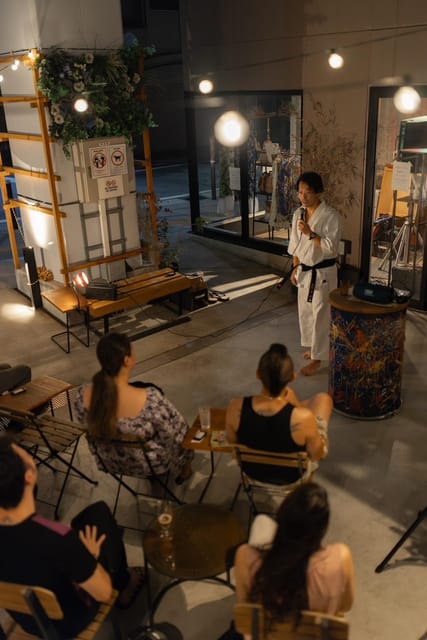
Asakusa is one of Tokyo’s best places to connect famous sights with everyday Japanese customs, and this experience adds an unusual second act: a standup comedy show led by your walking guide, Ryo. You’ll see Kaminarimon, Nakamise, Asakusa Shrine, and Senso-ji, then spend the evening in a small bar where Japanese culture becomes the subject of the jokes.
In This Article
- Key points to know before booking
- Why this Asakusa experience feels different
- Meeting Ryo beside Tokyo Cruise
- Kaminarimon and the first view of Senso-ji
- Nakamise Shopping Street and the walk toward the temple
- Asakusa Shrine and the meaning of three deities
- Senso-ji and the difference between shrine and temple
- One hour to explore Asakusa at your own pace
- From temple grounds to Asakusa Smile Bar and Cafe
- A comedy show about Japanese culture
- What the $43 price gets you
- Who will enjoy this most
- Should you book the Asakusa walk and comedy night?
- FAQ
- Where does the Asakusa walking tour begin?
- Where does the experience finish?
- How long does the activity last?
- What language is the tour conducted in?
- How large is the group?
- What places do you visit during the walk?
- Is the comedy show suitable for families?
- Can you cancel the booking?
I like the way the tour explains both Shinto and Buddhism at the actual places where you see them practiced. I also like the small group size, limited to 10 people, and the chance to get a better view of Asakusa away from the thickest crowds. The main consideration is timing: the published schedule describes segments that add up to slightly more than the advertised 210 minutes, so confirm the exact start and finish times when you book.
Key points to know before booking
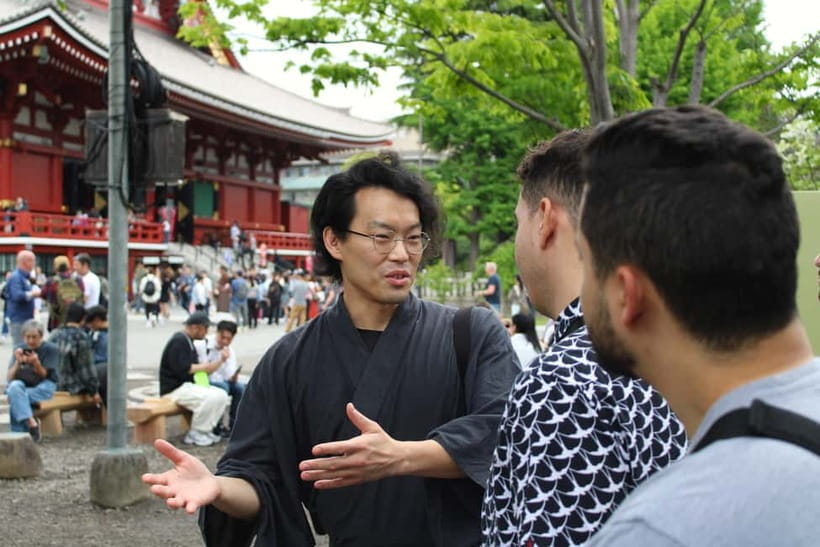
- Ryo leads both halves: You get the same English-speaking guide for the Asakusa walk and the comedy performance.
- The tour teaches shrine and temple manners: You’ll learn how to pray at a Shinto shrine and a Buddhist temple.
- The route covers Asakusa’s essential sights: Kaminarimon, Nakamise Shopping Street, Asakusa Shrine, and Senso-ji all feature.
- The comedy is mostly clean: The material focuses on Japanese history and culture, making it suitable for a family outing.
- Free time is built in: You have about one hour to explore Senso-ji’s temple area or shop for souvenirs.
- The evening ends in a small bar: The show takes place at Asakusa Smile Bar and Cafe, with time to chat and have a drink afterward.
Why this Asakusa experience feels different
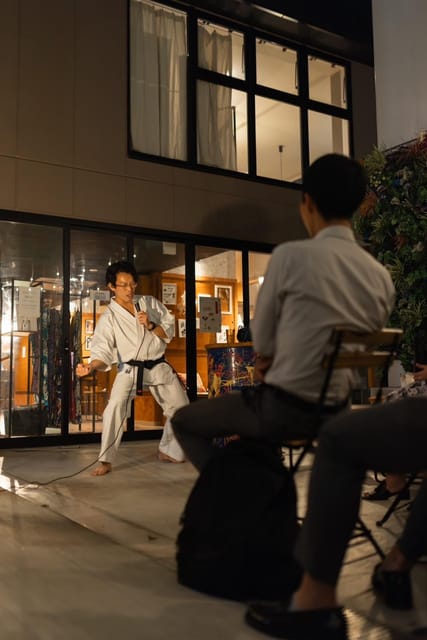
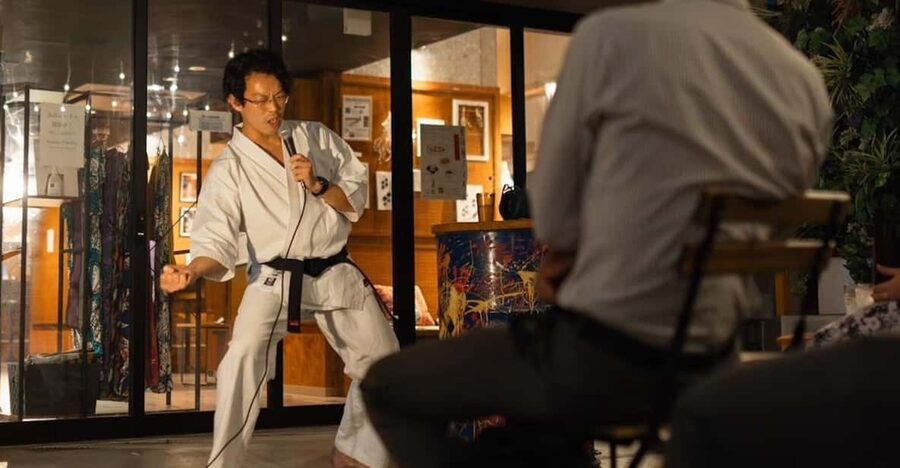
Many Asakusa walks end once you have seen the temple gate and taken a few photographs. This one keeps going. After the sightseeing, you join Ryo for a 45-minute comedy show that uses Japanese history and customs as material.
That combination works because Asakusa is not just a collection of old buildings. It is a place where religious practice, souvenir shopping, local entertainment, and Tokyo sightseeing all sit close together. Ryo’s format gives you a chance to ask questions during the walk, then hear some of the same cultural subjects treated in a lighter way later.
The experience lasts about three and a half hours according to the stated duration of 210 minutes, with a walk, free time, a casual meetup, and the show. The group is capped at 10 participants, which matters in Asakusa. The main streets can feel crowded, and a small group is easier to keep together near Kaminarimon and Nakamise.
The comedy portion is mostly clean rather than deliberately offensive. The supplied details make a playful distinction between cultural jokes and dirty jokes, so you should expect humor about Japan and its customs, not an adults-only performance built around explicit material.
A few more Tokyo tours and experiences worth a look


Meeting Ryo beside Tokyo Cruise
The meeting point is in front of Tokyo Cruise, the water bus station near Asakusa. It is about a one or two-minute walk from Asakusa Station on the Tokyo Metro Ginza Line.
This is a useful starting point because you can reach it without crossing a large part of Asakusa first. Give yourself enough time to find the station area, especially if you are arriving with luggage or navigating Tokyo’s many exits.
Ryo begins by introducing the area and showing you a view of Tokyo Skytree from the top of the Tourist Information Center. That opening helps you get your bearings before moving into the older religious quarter. You see modern Tokyo from above, then turn toward the landmarks that give Asakusa its character.
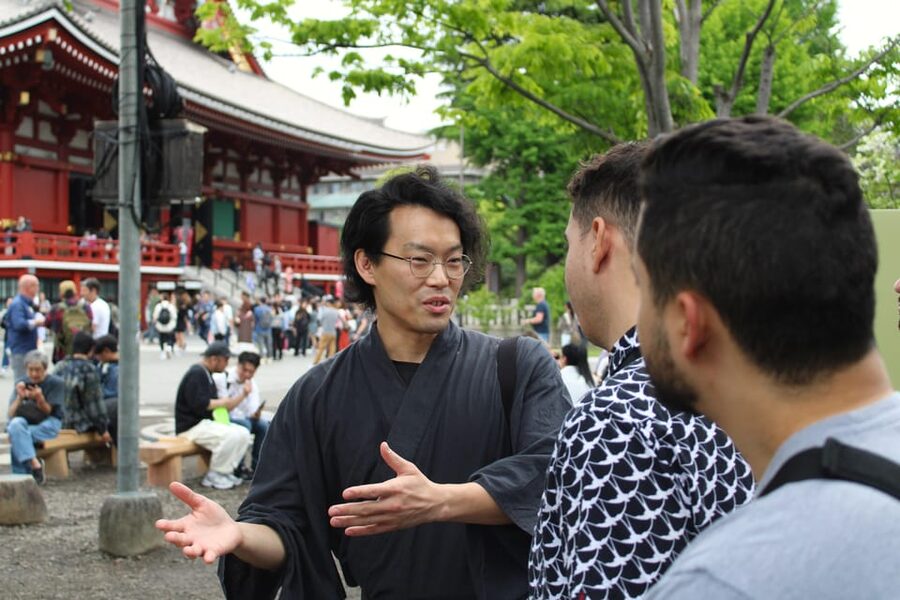
The guide speaks English, and the group size is limited to 10. That setup should suit you if you prefer questions and conversation over a large group following a flag. It also gives Ryo room to adjust explanations to the people in front of him.
Kaminarimon and the first view of Senso-ji
The first major stop is Kaminarimon, or the Thunder Gate. You have about 15 minutes for a guided visit and photographs.
This is the famous red entrance to Senso-ji, marked by its large lantern and guardian figures. It is one of Tokyo’s most photographed spots, so a short stop makes sense. You will have time to see the gate and hear why it matters, but this is not a long architecture lecture.
Ryo’s value here is context. Instead of treating Kaminarimon as a quick photo backdrop, he connects the gate to the temple complex beyond it and to the religious traditions you will encounter throughout the walk.
This area can be crowded. Stay close to the group and listen for the meeting instructions before you take photographs. If you want a longer look at the gate, the later free hour gives you a chance to return or explore the area at your own pace.
Nakamise Shopping Street and the walk toward the temple
From Kaminarimon, the route continues along Nakamise Shopping Street for about 15 minutes of guided sightseeing.
Nakamise leads toward Senso-ji and is lined with shops selling souvenirs, snacks, and traditional-style goods. The short guided visit is more about understanding the setting than making serious purchases. You will have more time to shop later, when the formal walk is over.
I like having the shopping street explained before free time begins. It helps you tell the difference between a quick browse and a purchase worth making. You can also note which shops or foods you want to revisit during the one-hour break.
Nakamise is a busy pedestrian route, so do not expect a quiet stroll. The benefit of joining a small group is that Ryo can point out details without the pace becoming too slow. The trade-off is that you will not stop at every shop.
Asakusa Shrine and the meaning of three deities
The walk then reaches Asakusa Shrine, with about 30 minutes for a guided visit.
This is one of the most useful parts of the experience because Ryo explains the relationship between the three deities associated with Asakusa Shrine and the principal image of Senso-ji Temple. Those connections can be difficult to understand if you simply walk from one gate to the next without an explanation.
You will also learn how to pray at a Shinto shrine. That instruction gives you practical help for the rest of your Japan trip. Many first-time visitors know that they should show respect but are unsure about the order of actions, where to bow, or how shrine practice differs from temple practice.
The stop is not just about facts. It gives you a way to observe the site with more care. You can notice where people wash their hands, how they approach the shrine, and how the space feels different from a Buddhist temple.
Ryo’s approach is especially helpful here because he explains customs at the place where they matter. The subject can seem abstract in a classroom, but at Asakusa Shrine you can connect the explanation with what you see around you.
A few more Tokyo tours and experiences worth a look




Senso-ji and the difference between shrine and temple
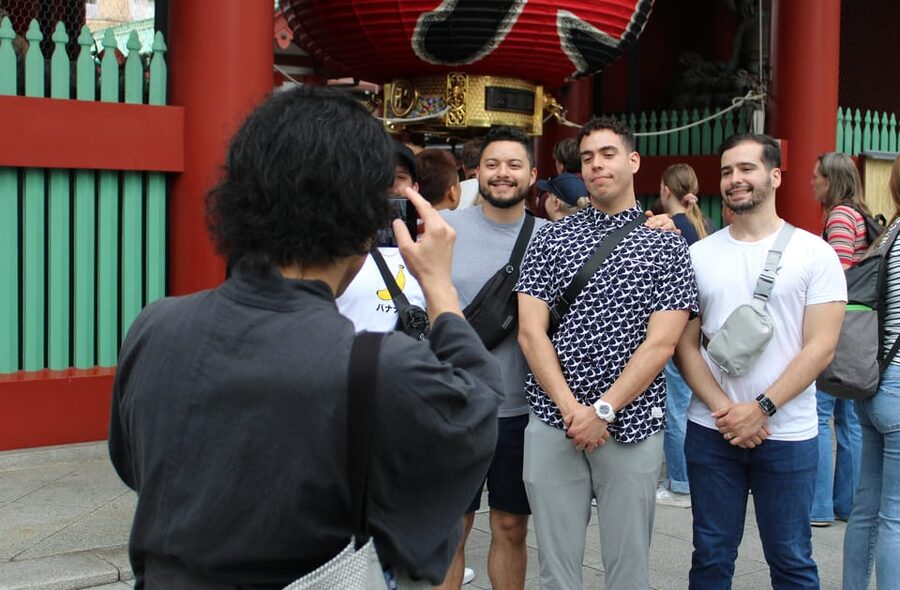
The route continues to Senso-ji Temple, where the guided portion lasts about 30 minutes.
Senso-ji is Asakusa’s central sight and one of Tokyo’s best-known Buddhist temples. Ryo explains the relationship between the temple and Asakusa Shrine, then teaches you the manners for praying at a Buddhist temple.
That distinction is important. Shinto shrines and Buddhist temples can appear side by side in Japan, and the buildings, rituals, and symbols are not interchangeable. This tour gives you a basic framework for understanding both traditions instead of leaving you with a collection of unfamiliar gestures.
The guide takes you to the main hall, where the formal walk ends. The temple grounds are a major attraction, but they are not a quiet museum. People come to pray, shop, photograph, and meet friends. You should expect activity around the main approaches.
A positive feature is that the tour does not rush you straight from Senso-ji into the next appointment. You get free time in Asakusa after the guided visit.
One hour to explore Asakusa at your own pace
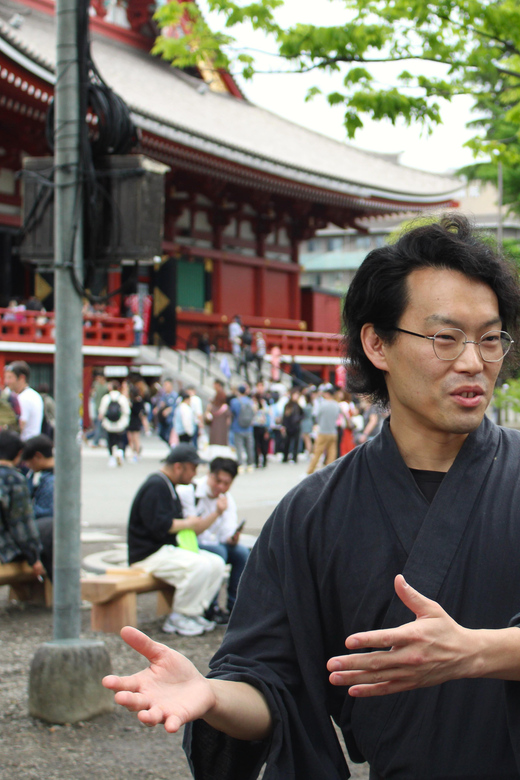
The planned free time lasts about one hour. You can look around the Senso-ji area, return to a shop on Nakamise, take photographs, or buy souvenirs.
This break is valuable because guided walks and personal sightseeing serve different purposes. During the walk, you are listening and keeping pace. During the free hour, you can stop where you want and decide what deserves more time.
You might use the hour to revisit the main hall, spend longer near Asakusa Shrine, or browse the shopping street. The supplied details specifically allow time for souvenirs, so you do not need to make every purchase while the group is moving.
The free period also creates a natural pause before the comedy night. You are not expected to stand through the entire 210-minute experience. If your day has already included a lot of walking, this break lets you set your own speed.
One point deserves attention: the published timing is not perfectly consistent. The experience is listed as 210 minutes, while the walk, free time, meetup, and show are described as 90, 60, 30, and 45 minutes. The itinerary also lists a 75-minute final program. Those figures do not all match, so check the day’s exact schedule rather than planning a tightly timed train or dinner immediately afterward.
From temple grounds to Asakusa Smile Bar and Cafe
The second part takes place at Asakusa Smile Bar and Cafe. The evening begins with about 30 minutes to meet the other participants and chat.
This is a simple idea, but it changes the tone of the experience. You move from a guided sightseeing walk into a social setting, with time to settle in before the performance begins. If you are traveling alone, this can be an easy way to meet a few people without committing to a large nightlife event.
The venue is described as a cute little bar, and Ryo performs there as the headliner. The setting is smaller and more personal than a major theater. That can make the show feel more connected to the walking tour, though you should not expect a polished theater production with elaborate staging.
The program itself lasts about 45 minutes according to the description. The itinerary labels the entire bar portion as 75 minutes, which likely includes the meetup and show. Again, use the exact start time supplied for your booking when planning the rest of your night.
A comedy show about Japanese culture
Ryo’s performance uses jokes to explain Japanese history and culture. This is the part that makes the experience more than a standard sightseeing walk followed by unrelated entertainment.
Comedy can point out habits and social rules in a way that a formal lecture cannot. You may remember a cultural idea more easily when it is tied to a joke, especially after you have just seen the temple, shrine, and shopping street in person.
The material is mostly clean, and the experience is presented as suitable for all family members. That makes it a reasonable choice if you want an evening activity without explicit comedy. The phrase mostly clean also means you should not assume every line will suit very young children, but the program is clearly not built around dirty jokes.
Ryo’s role as both guide and performer is the main draw. During the walk, you can ask questions about what you see. During the show, he offers a comic interpretation of the same country and customs. That continuity gives the night a clear shape.
After the show, you can have a drink and spend more time at the bar. The post-show social time is not a separate guided activity, but it gives you the option to keep talking rather than leaving as soon as the performance ends.
What the $43 price gets you
At $43 per person, this is not the cheapest way to see Senso-ji. You can visit the temple grounds and walk through Nakamise on your own for little or no cost.
The value comes from the added interpretation and the second half of the evening. You are paying for an English-speaking guide, a small group, instruction on shrine and temple manners, explanations of the relationship between Asakusa’s religious sites, and a live comedy show by the same person who led the walk.
I would consider the price fair if you want more than photographs and a basic introduction. It is less compelling if you already know Asakusa well, prefer independent sightseeing, or have no interest in standup comedy.
The one-hour free period also adds value. You get guided context without giving up all personal time. The included items are cultural jokes and insights on Japanese culture. Drinks, souvenirs, and other personal purchases are not listed as included, so budget separately for those.
Free cancellation is available up to 24 hours before the activity for a full refund, and you can reserve now and pay later. Those policies help if your Tokyo plans are still shifting, but the key decision remains the format: a historical walk followed by a social comedy night.
Who will enjoy this most
I would choose this experience if you are visiting Asakusa for the first time and want a guide who can explain customs in plain English. It is also a good fit if you enjoy meeting other people in a small group and want an evening activity with a local host.
Families may appreciate the mostly clean comedy, though the show format and late-day timing may suit older children better than very young ones. Couples and solo visitors can also make good use of the meetup and post-show conversation.
This may not be right for you if you want a silent temple visit, an exhaustive art history tour, or a full night of traditional Japanese performance. The walk covers several important places, but it is designed as an accessible introduction rather than a specialist study.
You should also allow flexibility around the end time because the listed segments do not align perfectly with the 210-minute duration. Do not book a nonrefundable dinner reservation or long-distance connection immediately afterward unless the operator confirms the timing.
Should you book the Asakusa walk and comedy night?
Book it if you want to see Asakusa’s major sights while learning how Shinto and Buddhism shape the rituals around you. The strongest feature is Ryo’s double role as guide and comedian. You get useful explanations at Kaminarimon, Asakusa Shrine, and Senso-ji, then hear those cultural subjects treated with humor in a small bar.
I especially like the balance of structure and free time. You follow a clear route, but you still have about an hour to explore on your own. The small group and reported attention to questions are also strong reasons to choose it.
Skip it if you want to spend the whole evening independently, dislike standup comedy, or need a tightly fixed schedule. For everyone else, $43 buys a distinctive Asakusa introduction rather than another quick temple photo stop.
FAQ
Where does the Asakusa walking tour begin?
Meet in front of Tokyo Cruise, the water bus station. It is about a one or two-minute walk from Asakusa Station on the Tokyo Metro Ginza Line.
Where does the experience finish?
The experience finishes at Asakusa Smile Bar and Cafe, where the comedy show takes place.
How long does the activity last?
The stated duration is 210 minutes. The walking tour, free time, meetup, and comedy show are described separately, and their listed timings do not align perfectly, so check the exact schedule when booking.
What language is the tour conducted in?
The live tour guide speaks English. English is the listed language for the activity.
How large is the group?
The experience is limited to 10 participants.
What places do you visit during the walk?
The route includes Kaminarimon, Nakamise Shopping Street, Asakusa Shrine, and Senso-ji Temple. The opening introduction also includes a view of Tokyo Skytree from the top of the Tourist Information Center.
Is the comedy show suitable for families?
The show is made mostly of clean jokes and focuses on Japanese history and culture. The activity information presents it as suitable for all family members.
Can you cancel the booking?
You can cancel up to 24 hours in advance for a full refund. You can also reserve now and pay later.
More Walking Tours in Tokyo



More Night Tours in Tokyo
More Asakusa Tours in Tokyo
More tours in Tokyo we've reviewed












Asakusa Tours, compared.
 ★ 4.8Tokyo: Japanese Dance Cabaret Theater Asakusa-Kaguwa TicketFrom $492 hours
 ★ 4.7Tokyo: Meiji Shrine, Asakusa, Skytree Bus Tour and CruiseFrom $12210 hours
 ★ 4.9Tokyo: Roll and Authentic Sushi Making Class in AsakusaFrom $581h 40m
 ★ 4.8Tokyo: Asakusa Walking Tour with Sensoji Temple VisitFrom $222 hours
 ★ 5.0Tokyo Asakusa Rickshaw TourFrom $42
 ★ 4.5Tokyo Panoramic 1 Day: Meiji Shrine, Asakusa, Odaiba and SKYTREE®From $85